
This lesson guides you through the technical requirements of managing weight distribution and axle loads for heavy goods vehicles in Italy. You will learn how to balance your cargo correctly to maintain vehicle stability, protect road surfaces, and adhere to strict Codice della Strada regulations. This knowledge is essential for both your professional theory exam and safe daily operations as a qualified driver.

Lesson content overview
Driving a heavy goods vehicle (HGV) requires a profound understanding of how cargo weight affects vehicle performance, safety, and legality. This lesson delves into the crucial skill of distributing a load's weight evenly across a vehicle's axles, a practice known as axle load management. Improper placement can lead to severe consequences, from legal violations and fines to compromised handling, steering, and braking performance. By mastering balanced load planning, drivers ensure their vehicles remain stable, controllable, and fully compliant with Italian traffic laws.
The distribution of weight on a heavy goods vehicle is not merely about staying within the overall gross vehicle mass (GVM) limits. Crucially, the weight must also be spread correctly across individual axles. Each axle has a maximum permissible load, and exceeding this limit, even if the total vehicle weight is legal, constitutes a violation and poses significant safety risks.
Correct axle load management is paramount for several reasons. It ensures compliance with legal limits, which prevents hefty fines and potential vehicle immobilization. Furthermore, it optimizes braking and steering performance, as the vehicle's dynamics are heavily dependent on how its weight is balanced. Proper distribution also reduces uneven tyre wear, prolonging tyre life and maintaining road grip. Critically, it mitigates the risk of rollover or loss of control, especially during emergency maneuvers or adverse conditions.
This lesson builds upon prior knowledge of vehicle dimensions and mass limits, understanding of axle configurations, and the basic principles of centre of gravity. It serves as a vital foundation for effective load securing and understanding complex vehicle dynamics.
Effective load distribution in goods vehicles is guided by several core principles, each contributing to safety, legality, and operational efficiency. Adhering to these principles is fundamental for professional drivers.
The practice of ensuring that the vertical load on every individual axle of a heavy goods vehicle remains within the maximum limits prescribed by law.
Axle load compliance is the bedrock of legal and safe goods transport. Italian traffic regulations, primarily the Codice della Strada, stipulate specific maximum loads for front, rear, and intermediate axles based on vehicle type and configuration. Exceeding these limits can lead to tyre damage, compromised braking effectiveness, and significant legal penalties. Drivers must not only calculate the total weight but also meticulously verify and adjust cargo placement to ensure each axle bears a permissible load before every journey.
The allocation of cargo weight across a vehicle's axles in such a way that front, rear, and any intermediate axles share loads proportionally to their design capacities.
Balanced weight distribution is crucial for optimising a vehicle's handling, braking, and tyre wear characteristics. When weight is distributed evenly, steering response is predictable, braking forces are effectively shared across all wheels, and tyres wear uniformly. An imbalance, such as a front-heavy or rear-heavy load, can drastically alter the vehicle's dynamics, making it harder to steer, increasing stopping distances, and reducing overall stability, especially in turns.
The systematic process of creating a detailed plan for cargo placement, specifying where goods should be positioned relative to the vehicle's axles to achieve desired load distribution and overall centre of gravity.
Load distribution planning is a proactive measure that guarantees both legal compliance and safe vehicle behaviour. This process involves more than simply filling the cargo space; it requires calculating the weight of individual items or groups of items and strategically placing them. Drivers often use load charts or calculation tools to determine the optimal placement that ensures all axle limits are respected. Proper planning reduces the need for last-minute adjustments and prevents situations where cargo must be partially unloaded or rearranged.
The continuous consideration and mitigation of cargo movement and its effects on axle loads during various driving maneuvers such as braking, acceleration, and cornering.
While static load distribution is planned before departure, drivers must also consider dynamic load shifts. During braking, momentum shifts weight forward onto the front axles; during acceleration, it shifts backward. Cornering can cause weight to shift laterally, increasing the load on the outer wheels. Effective dynamic load shift management involves not only proper initial distribution but also robust load securing. This prevents sudden changes in axle loads that could lead to tyre overload, loss of control, or damage to the cargo itself.
Understanding the specific terminology and principles related to weight management is essential for any professional driver. These concepts form the theoretical foundation for practical load planning.
The total vertical force exerted by a vehicle and its cargo onto a single axle, transmitted directly to the road surface.
Axle load is a fundamental measurement in heavy goods vehicle operation. It directly impacts tyre wear, the effectiveness of braking forces on that particular axle, and adherence to legal limits. The Codice della Strada (Italian Highway Code) defines specific maximum permissible loads for different axle types and vehicle configurations. For example, a single steering axle might have a different limit than a drive axle or a tandem axle group. It is a common misconception to believe that merely staying within the overall vehicle's gross weight automatically ensures compliance with individual axle limits. A 12-tonne truck, for instance, might have a legal front axle limit of 7.5 tonnes and a rear axle limit of 10.5 tonnes. Even if the total load is 12 tonnes, placing 8 tonnes on the front axle would result in an illegal overload, regardless of the rear axle's load.
The systematic allocation of cargo weight across the various axles of a heavy goods vehicle to achieve a balanced and legally compliant load.
Load distribution refers to how cargo weight is spread across the vehicle's length and width, impacting whether the vehicle is front-heavy, rear-heavy, or evenly balanced. This directly influences steering effort, braking balance, and overall vehicle stability. For example, placing all heavy cargo towards the rear of a truck creates a rear-heavy condition. This reduces the weight on the front steering axle, making steering less responsive and potentially causing the front wheels to lose traction, especially in wet conditions. Conversely, a front-heavy load can make steering excessively heavy and strain the front suspension and tyres. Italian regulations also include restrictions on cargo placement relative to the rear axle, often limiting how far the centre of the cargo can extend beyond the rear axle (e.g., typically not more than 1 metre for certain vehicles).
The hypothetical point where the entire combined weight of the vehicle and its load is considered to act vertically downwards.
The Centre of Gravity (CG) is a crucial factor determining vehicle stability, particularly during cornering and braking. Its position can be described in three dimensions:
Ignoring lateral CG shifts, caused by uneven loading across the width of the vehicle, is a common misunderstanding. For instance, placing all heavy cargo on one side of the vehicle shifts the lateral CG towards that side. This significantly increases the risk of rollover when turning in the direction of the heavier side, as centrifugal force acting through a higher, off-centre CG can overcome the vehicle's stability.
The physical arrangement and type of axles on a heavy goods vehicle, including the number of axles, their spacing, and whether they are steering, driven, or liftable.
The specific layout of axles (e.g., two-axle rigid, three-axle rigid, tandem drive axles, tridem axles, steering axles, driven axles, lift axles) significantly influences a vehicle's total load capacity and how that load can be distributed. Each configuration has unique load-bearing characteristics and legal limits.
Lift axles, for example, are additional axles that can be raised or lowered to adjust the number of axles in contact with the road. When engaged, a lift axle can help distribute weight more effectively, preventing individual fixed axles from being overloaded. However, incorrect use, such as leaving a lift axle disengaged when the load demands its use, can lead to overloading the remaining axles. Similarly, engaging a lift axle when not necessary can lead to unnecessary wear on the engaged tyres and increased fuel consumption.
The proportion of total braking force that is applied to the individual axles or axle groups of a vehicle during deceleration.
Braking distribution is the allocation of braking force among the axles when the vehicle decelerates. This is not static; it is heavily affected by axle loads. Heavily loaded axles require and receive proportionally more braking force to effectively slow the vehicle. Modern braking systems, such as Anti-lock Braking Systems (ABS) and Electronic Braking Systems (EBS), are calibrated to consider axle loads and distribute braking force dynamically.
A common misunderstanding is assuming that braking force remains constant irrespective of load distribution. In reality, an overloaded rear axle can lead to brake fade or premature lock-up of the rear wheels if the braking system cannot adequately compensate. This reduces overall braking efficiency and increases stopping distances, especially dangerous in emergency situations.
The crucial relationship where proper load distribution directly impacts the effectiveness and integrity of the measures used to secure cargo (e.g., tie-downs, nets, shoring).
Proper load distribution is a prerequisite for effective load securing. The two concepts are inherently linked. If a load is poorly distributed, creating excessive axle loads or an unstable centre of gravity, even the most robust securing devices may be compromised. Incorrect distribution can overload tie-downs, cause cargo to shift unexpectedly, or even deform the vehicle's structure.
Italian regulations specify requirements for securing loads, including the number and strength of securing devices based on cargo weight and type. It's crucial to understand that securing devices are designed to restrain cargo, not to compensate for a fundamentally unstable or illegally distributed load. For example, if the rear axle is heavily overloaded, the securing devices might not be strong enough to prevent the cargo from shifting forward under severe braking, leading to a sudden and dangerous change in axle loads.
The Codice della Strada (Italian Highway Code) and related ministerial decrees outline strict regulations regarding vehicle weight and axle loads for heavy goods vehicles operating in Italy. Compliance is mandatory for all professional drivers.
Italian law precisely defines the maximum permissible axle loads for various vehicle categories (C, C1, CE) and axle configurations. These limits are designed to prevent excessive wear on road infrastructure, maintain vehicle stability, and ensure braking efficiency. For instance, a single drive axle might have a maximum load of 11.5 tonnes, while a single steering axle typically has a lower limit.
Applicability: These rules apply to all heavy goods vehicle operations on Italian roads. Rationale: To prevent tyre damage, ensure correct braking distribution, and protect public road infrastructure from excessive stress. Example – Correct: A two-axle truck with a 7-tonne front axle limit is loaded such that 6.8 tonnes rests on its front axle. Example – Incorrect: The same vehicle carries 7.2 tonnes on the front axle, exceeding the legal limit, even if the total vehicle mass is within its overall limits.
For certain vehicles, especially those with rear-overhanging loads, the Codice della Strada stipulates limits on how far the cargo's centre of gravity can lie behind the rear axle line. This is crucial for maintaining steering control and preventing excessive leverage that could destabilize the vehicle or lead to a "wheelie" effect on the front axle.
Applicability: Vehicles with rear-overhanging loads, particularly rigid trucks. Rationale: To prevent rear axle overload, maintain effective steering, and reduce the risk of jackknifing in articulated vehicles or loss of control in rigid vehicles. Example – Correct: Cargo is positioned such that its effective centre of gravity is 0.7 metres behind the rear axle, respecting a 1-metre limit. Example – Incorrect: Cargo is loaded with its centre of gravity 1.5 metres behind the rear axle, violating the regulatory limit.
It is a mandatory legal requirement for drivers of goods vehicles to verify their load distribution before commencing a journey. This verification ensures that each axle is within its legal limits and that the load is appropriately secured. Failure to do so can result in substantial fines and may even lead to the vehicle being stopped until the load is corrected. Applicability: All vehicles transporting goods, regardless of size or category. Rationale: To ensure legal compliance and the safety of the driver and other road users. Example – Correct: Before departing, the driver uses on-board weighing systems, portable scales, or approved load distribution charts to confirm individual axle loads are compliant. Example – Incorrect: The driver proceeds with a heavy load without any verification, relying solely on visual assessment, leading to an overloaded front axle.
Vehicles equipped with lift axles must use them in accordance with manufacturer instructions and specific Italian regulations. A lift axle's primary purpose is to distribute weight more evenly or to reduce wear when the vehicle is lightly loaded. When a lift axle is engaged (lowered), its load capacity must be considered in the overall distribution, and it must be properly integrated into the vehicle's braking system if it is a braked axle. Applicability: Vehicles fitted with lift axles (e.g., rigid trucks, semi-trailers). Rationale: To ensure optimal load distribution, maintain braking performance, and comply with axle load limits. Example – Correct: A driver transporting a heavy load exceeding the capacity of the fixed axles engages the lift axle to distribute the weight across more wheels. Example – Incorrect: A driver leaves the lift axle disengaged when carrying a heavy load, causing the fixed axles to become severely overloaded.
For combination vehicles, such as an articulated truck (tractor and semi-trailer) under the CE category, the load distribution requirements extend to both components. Each vehicle (the tractor unit and the trailer) must have its axle loads measured and maintained within its respective legal limits. The kingpin weight (the load transferred from the semi-trailer to the tractor's fifth wheel) is a critical factor here, influencing the tractor's drive axle load. Applicability: Articulated vehicles and truck-trailer combinations. Rationale: To prevent overloading of either the tractor or the trailer, ensuring overall stability and safety. Example – Correct: The driver distributes cargo within the semi-trailer such that the loads on the trailer's axles and the kingpin weight transferred to the tractor's drive axle are all within legal limits. Example – Incorrect: The semi-trailer's rear tandem axle is overloaded, even though the tractor's axles are technically within their individual limits, making the entire combination illegal.
Even with clear regulations, violations in load distribution are common and often stem from oversight or misjudgment. Awareness of these scenarios can help drivers avoid them.
Load distribution is not a static concept; it must be adapted based on various external and internal factors to maintain safety and compliance.
These practical scenarios illustrate how load distribution principles are applied in everyday driving situations for goods vehicles.
Mastering weight distribution and axle load management is indispensable for professional goods vehicle drivers in Italy. Here’s a summary of the critical aspects:
This lesson covers the critical skill of distributing cargo weight correctly across a heavy goods vehicle's axles to ensure both legal compliance under Italian regulations and safe vehicle handling. You must understand that each axle has its own maximum permissible load independent of the total vehicle weight, and that improper distribution affects steering, braking, and tyre wear. The lesson explains how to plan load placement by considering the centre of gravity, rear overhang limits, and dynamic load shifts during driving maneuvers. It also covers the proper use of lift axles, braking distribution principles, and specific requirements for combination vehicles. Mastering these principles will prepare you for technical exam questions and enable you to create stable, legally compliant load plans for professional driving in Italy.
A short set of high-value points that capture the most important learning from this lesson.
Axle load compliance requires that each individual axle stays within its legal limit, regardless of whether the total vehicle weight is legal.
Balanced weight distribution across front and rear axles is essential for predictable steering, effective braking, and uniform tyre wear.
The vehicle's centre of gravity must be kept within safe longitudinal and lateral bounds to prevent rollover, especially during cornering.
Lift axles must be engaged when cargo weight exceeds the capacity of fixed axles, and disengaged when unladen or when additional traction is needed.
Dynamic load shifts during braking, acceleration, and cornering require robust load securing to maintain consistent axle compliance throughout the journey.
Explore all units and lessons included in this driving theory course.
Each axle type (steering, drive, tandem) has different maximum load limits defined in the Codice della Strada.
A rear-heavy load reduces front axle weight, making steering less responsive and increasing braking strain on rear wheels.
Cargo centre of gravity rear overhang is typically limited to approximately 1 metre beyond the rear axle line.
Kingpin weight from a semi-trailer transfers to the tractor's fifth wheel and must be included when calculating tractor axle loads.
Braking force distribution changes with axle loads; overloaded axles risk brake fade or premature wheel lock-up.
Failing to engage a lift axle when carrying heavy loads, causing fixed axles to exceed their legal limits.
Placing cargo with its centre of gravity beyond the permitted rear overhang, reducing steering control and stability.
Loading heavy items predominantly on one side, shifting the lateral centre of gravity and increasing rollover risk during turns.
Assuming that staying within gross vehicle mass automatically ensures compliance with individual axle load limits.
Neglecting to verify axle loads before departure, relying solely on visual assessment or estimated cargo weight.
Lesson content overview
A short set of high-value points that capture the most important learning from this lesson.
Axle load compliance requires that each individual axle stays within its legal limit, regardless of whether the total vehicle weight is legal.
Balanced weight distribution across front and rear axles is essential for predictable steering, effective braking, and uniform tyre wear.
The vehicle's centre of gravity must be kept within safe longitudinal and lateral bounds to prevent rollover, especially during cornering.
Lift axles must be engaged when cargo weight exceeds the capacity of fixed axles, and disengaged when unladen or when additional traction is needed.
Dynamic load shifts during braking, acceleration, and cornering require robust load securing to maintain consistent axle compliance throughout the journey.
Explore all units and lessons included in this driving theory course.
Each axle type (steering, drive, tandem) has different maximum load limits defined in the Codice della Strada.
A rear-heavy load reduces front axle weight, making steering less responsive and increasing braking strain on rear wheels.
Cargo centre of gravity rear overhang is typically limited to approximately 1 metre beyond the rear axle line.
Kingpin weight from a semi-trailer transfers to the tractor's fifth wheel and must be included when calculating tractor axle loads.
Braking force distribution changes with axle loads; overloaded axles risk brake fade or premature wheel lock-up.
Failing to engage a lift axle when carrying heavy loads, causing fixed axles to exceed their legal limits.
Placing cargo with its centre of gravity beyond the permitted rear overhang, reducing steering control and stability.
Loading heavy items predominantly on one side, shifting the lateral centre of gravity and increasing rollover risk during turns.
Assuming that staying within gross vehicle mass automatically ensures compliance with individual axle load limits.
Neglecting to verify axle loads before departure, relying solely on visual assessment or estimated cargo weight.
Explore search topics learners often look for when studying Weight Distribution and Axle Load Management. These topics reflect common questions about road rules, driving situations, safety guidance, and lesson level theory preparation for learners in Italy.
Browse additional driving theory lessons that cover connected traffic rules, road signs, and common driving situations related to this topic. Improve your understanding of how different rules interact across everyday traffic scenarios.
Understand the specific legal consequences, fines, and penalties under the Codice della Strada for exceeding axle load limits or improper weight distribution in Italy. Essential for C and CE license holders.

This lesson details the legal restrictions on the weight that can be supported by a single axle or a group of axles. It explains the importance of distributing the load correctly across the vehicle's length to prevent exceeding these limits, which can cause significant road damage and compromise vehicle safety. Learners will understand the relationship between load placement, axle pressure, and overall stability, particularly during braking and cornering.
This lesson provides a clear overview of the legal consequences for failing to comply with road transport regulations in Italy. It covers the system of fines for common offenses like speeding, overloading, and violations of driving hours. The lesson also explains the penalty point system that can lead to license suspension and touches upon the responsibilities and potential liability of the transport company.

This lesson provides a detailed overview of the legal framework for load securing in Italy, focusing on the relevant articles of the Codice della Strada. It outlines the driver's legal responsibility for ensuring the load is secure and covers the standards that securing equipment must meet. Learners will be made aware of the significant fines and other penalties that can be imposed for violations, reinforcing the importance of diligent compliance.

This lesson provides the practical knowledge needed to calculate the maximum permissible payload ('portata') for a goods vehicle. It explains how to subtract the vehicle's unladen weight (tare) from its maximum authorized mass to determine the available capacity for cargo. Mastering this calculation is essential for planning loads, ensuring legal compliance, and avoiding the risks associated with exceeding the vehicle's design limits.
This lesson defines 'sagoma limite', which refers to the maximum outline or silhouette a vehicle and its load can occupy. It then explores the serious repercussions of overloading, which include substantial legal fines, increased stress on vehicle components like brakes and suspension, and dangerously compromised handling and stability. Learners will understand that overloading is not just a legal issue but a critical safety hazard for the driver and all other road users.
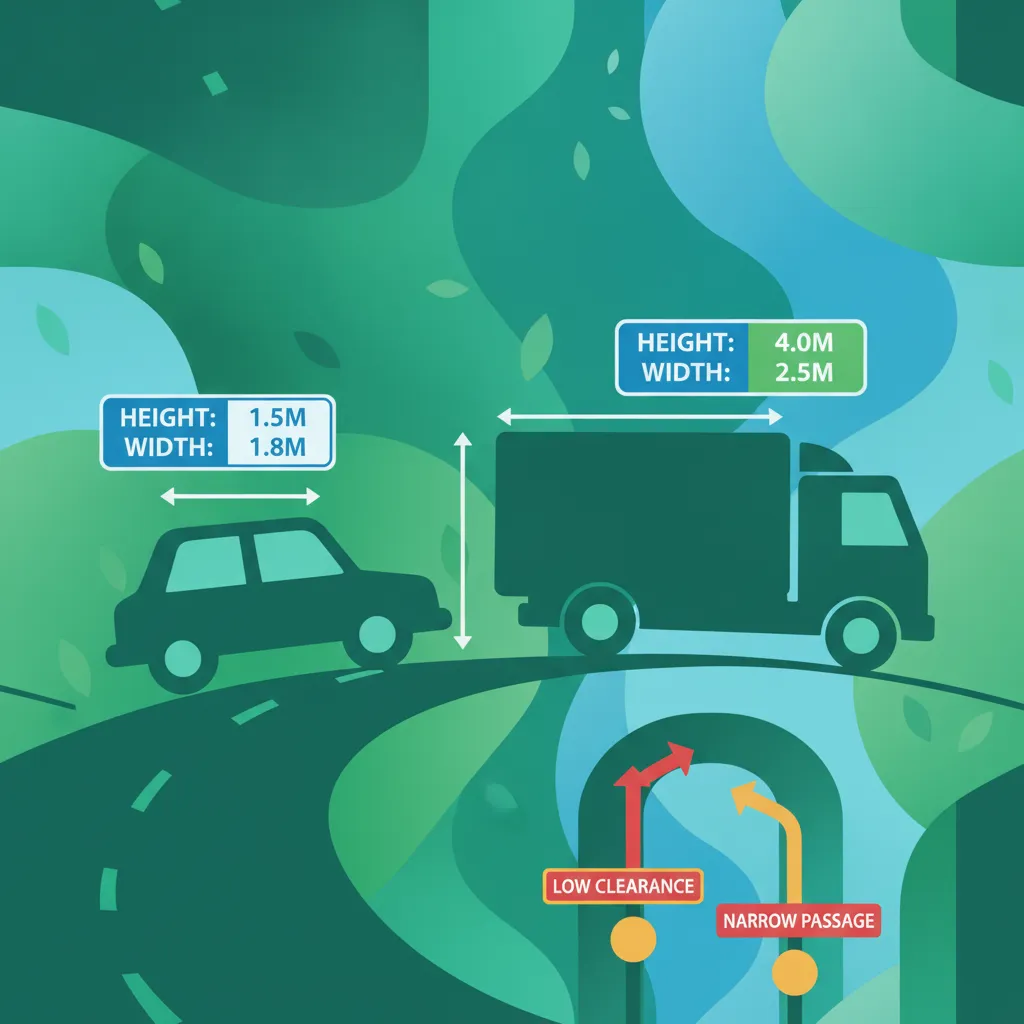
This lesson focuses on the specific dimensional limits that heavy goods vehicles must adhere to on Italian roads, as stipulated by the Codice della Strada. It covers the maximum permissible length, width, and height, explaining how these restrictions impact navigation through tunnels, under bridges, and within urban environments. Learners will also understand the conditions under which special permits for exceptional or oversized transport are required.
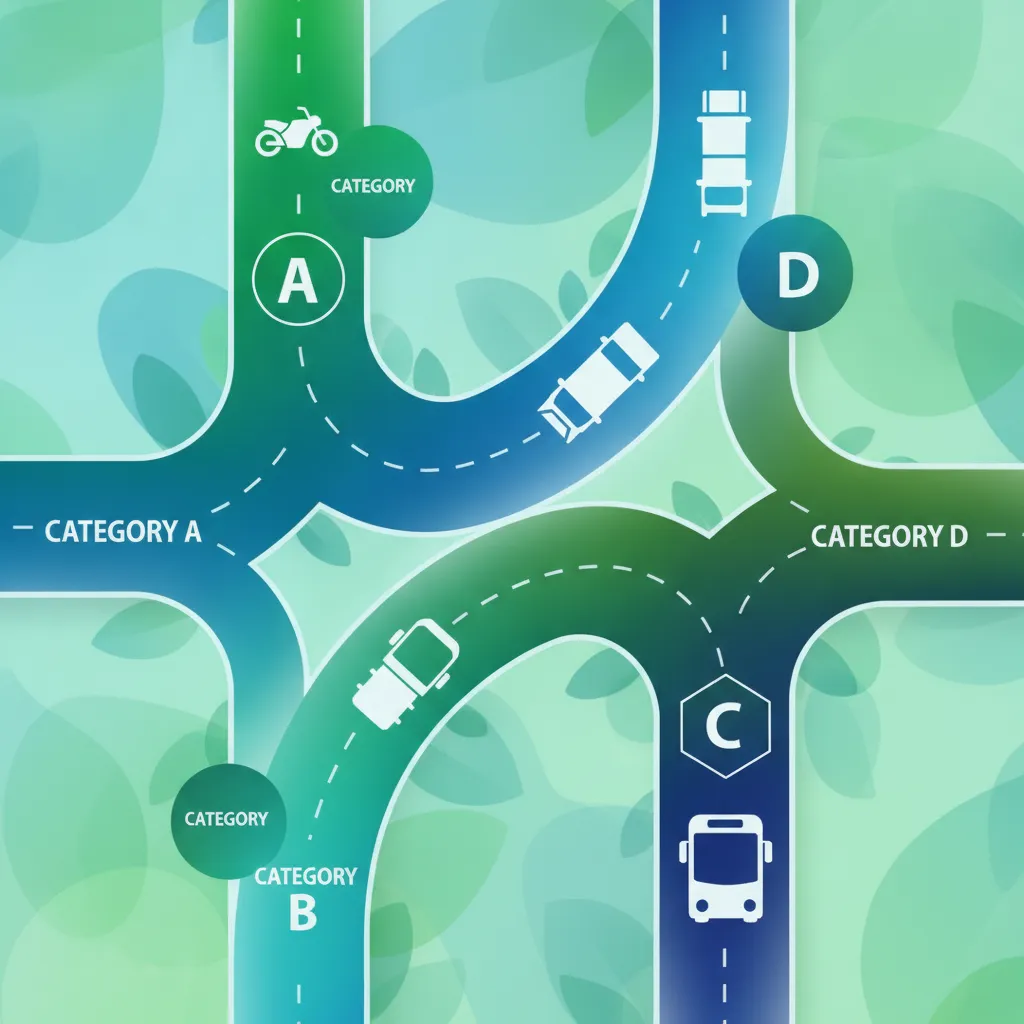
This lesson provides a detailed breakdown of the Italian goods vehicle licence categories, explaining the criteria that define each one. It covers the maximum authorized mass (MAM), vehicle configurations such as rigid trucks and articulated combinations, and the specific permissions granted by the C1, C1E, C, and CE licenses. Understanding these distinctions is fundamental to ensuring legal operation and choosing the correct qualification for specific transport tasks and vehicle types.

This lesson clarifies two fundamental weight concepts in Italian transport law: 'massa complessiva a pieno carico' (gross vehicle mass) and the vehicle's unladen mass. Learners will understand how to interpret these values from the vehicle's registration documents and use them to determine the maximum legal operating weight. This knowledge is crucial for calculating payload and ensuring compliance with the weight limits associated with the driver's license category.

This lesson delves into the specific articles of the Italian Codice della Strada that apply to heavy goods vehicles. It outlines the core legal and professional obligations of a driver, including the heightened duty of care owed to other road users and the responsibility for the vehicle's roadworthiness and load. Learners will understand the legal consequences of non-compliance, such as fines and sanctions, reinforcing the importance of adhering to all traffic regulations.
Explore how different cargo weight distributions and axle loads influence a heavy vehicle's steering, braking performance, and overall stability. Learn to anticipate and manage dynamic load shifts for safer driving.

This lesson explores the critical physics behind stopping a heavy vehicle. It breaks down the components of total stopping distance—thinking distance and braking distance—and explains how this is significantly increased by vehicle mass and speed. Learners will understand the necessity of maintaining a much greater following distance than a car to allow enough space to stop safely in all conditions.

This lesson explains the critical concept of the center of gravity (CoG) and its direct impact on a vehicle's susceptibility to rolling over. It demonstrates how placing heavy items high up raises the CoG, making the vehicle less stable in corners or during evasive maneuvers. Learners will understand the importance of loading the heaviest goods as low and as centrally as possible to maximize stability and reduce rollover risk.

This lesson vividly illustrates the dangers of a load that moves during transit. It explains how a sudden load shift during braking can increase stopping distance or cause a jack-knife, while a shift during cornering can easily lead to a rollover. By understanding these dynamic forces, learners will appreciate the absolute necessity of ensuring every piece of cargo is properly and robustly secured before starting a journey.
This lesson details the legal restrictions on the weight that can be supported by a single axle or a group of axles. It explains the importance of distributing the load correctly across the vehicle's length to prevent exceeding these limits, which can cause significant road damage and compromise vehicle safety. Learners will understand the relationship between load placement, axle pressure, and overall stability, particularly during braking and cornering.

This lesson covers the techniques for executing a controlled emergency stop in a heavy goods vehicle. It explains the function of Anti-lock Braking Systems (ABS) in preventing wheel lock-up and maintaining steering control during maximum braking effort. Learners will understand how to brace for the effects of rapid deceleration and anticipate potential load shifts, focusing on bringing the vehicle to a stop as quickly and safely as possible.

This lesson addresses two major hazards of articulated vehicle operation: jack-knifing and rear swing. It explains how a jack-knife occurs when the trailer skids and pushes the tractor into a sharp, uncontrolled angle, often due to harsh braking or slippery conditions, and covers prevention and correction techniques. The lesson also describes rear swing (tail swing), where the back of the trailer swings wide during tight turns, posing a risk to nearby objects and people.
Find clear answers to common questions learners have about Weight Distribution and Axle Load Management. Learn how the lesson is structured, which driving theory objectives it supports, and how it fits into the overall learning path of units and curriculum progression in Italy. These explanations help you understand key concepts, lesson flow, and exam focused study goals.
The test requires you to understand that exceeding axle limits compromises vehicle stability, braking, and road safety. You will face questions on how to distribute weight to avoid technical failures and legal penalties.
Yes, a high center of gravity significantly increases the risk of rollover, especially in curves. You must aim for the lowest possible center of gravity to keep the vehicle stable during transit.
Under Italian law, exceeding axle loads results in heavy fines and may force the immediate unloading of the vehicle. It is a critical safety violation that impacts both legal compliance and your professional reputation.
You must ensure weight is balanced across both the tractor and trailer axles. Improper distribution in an articulated combination can lead to dangerous jack-knifing or loss of steering control.
Start searching now to pinpoint exactly which Italian driving theory topics, road signs, or traffic rules you need to master. Use our advanced filters to build a custom practice session and ensure you're fully prepared for every aspect of your official driving licence exam.