
This lesson explores the essential concepts of sagoma limite and the serious safety and legal consequences of overloading heavy goods vehicles. Understanding these limits is critical for your C, C1, C1E, or CE theory exam and for ensuring professional safety on the road. You will build upon your foundation of vehicle dimension awareness to master the regulations mandated by the Italian Codice della Strada.
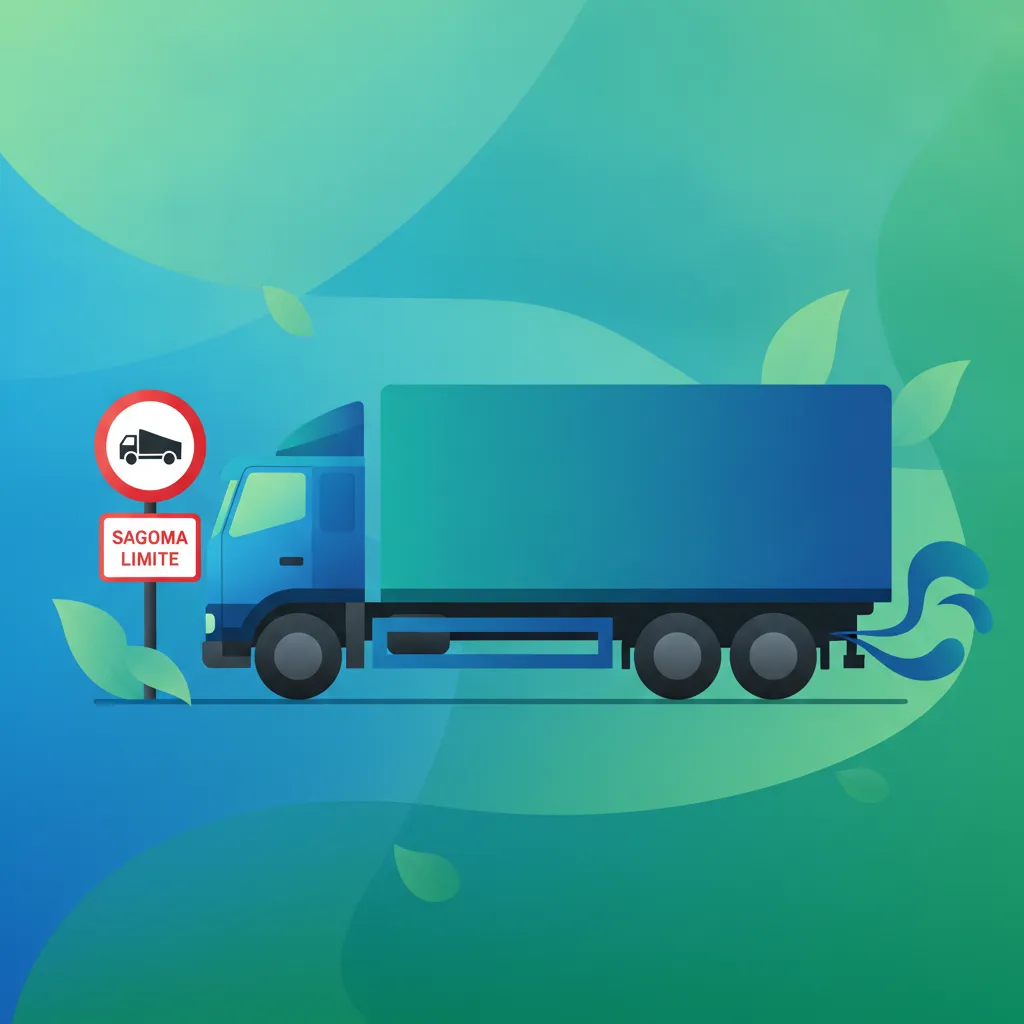
Lesson content overview
Driving heavy goods vehicles safely and legally in Italy requires a thorough understanding of their physical limitations and the regulations governing their use. This lesson, part of your Italian Goods Vehicle License Theory Course (C, C1, C1E, CE), delves into two critical concepts: sagoma limite (maximum outline) and the severe consequences of overloading. These principles are fundamental not only for legal compliance but, more importantly, for ensuring the safety of the driver, the vehicle, its cargo, and all other road users.
We will explore what sagoma limite means in practice, how it dictates the maximum dimensions your vehicle and its load can occupy, and why adhering to it is crucial for navigating Italy's road infrastructure. Subsequently, we will examine the multifaceted dangers of overloading, ranging from its detrimental mechanical impact on the vehicle to its serious legal and safety repercussions. A strong grasp of these topics is essential for responsible professional driving and is a direct precursor to effective load planning and vehicle safety assessments.
The concept of sagoma limite is a cornerstone of road safety and infrastructure preservation. It establishes the maximum external dimensions that a vehicle, inclusive of its load and all rigid protruding parts, is legally permitted to occupy while travelling on public roads. Adherence to these limits is non-negotiable for all goods vehicles operating within Italy.
The maximum external outline or silhouette (comprising height, width, and length) that a vehicle and its entire load are legally permitted to occupy on public roads. This includes all permanent and temporary protruding elements like mirrors, cargo, and extensions.
Sagoma limite essentially defines a three-dimensional envelope within which your heavy goods vehicle must fit. Its primary purpose is to ensure that vehicles can safely traverse the existing road network, including passing under bridges, through tunnels, navigating narrow urban streets, and maintaining adequate clearance from other traffic and roadside infrastructure. Without these limits, vehicles could easily become obstructed, cause damage to property, or create dangerous situations for themselves and others. It directly prevents incidents such as vehicles striking low bridges or obstructing multiple lanes due to excessive width or length.
The sagoma limite is broken down into specific maximum dimensions for height, width, and length. These limits are legally defined in the Codice della Strada (Italian Road Code) and may vary based on the specific vehicle class (C, C1, C1E, CE) and its configuration (e.g., a single rigid truck versus a truck and semi-trailer combination).
For professional drivers, understanding and adhering to sagoma limite has direct practical implications for every journey. Before setting off, it is imperative to verify that your vehicle, with its current load, does not exceed any of these legally defined dimensional boundaries. This often involves careful measurement of cargo that extends beyond the standard vehicle body and consulting route information for any specific height, width, or length restrictions on the planned journey.
Failing to respect these limits can lead to significant penalties, including substantial fines and potential vehicle immobilization. More importantly, it dramatically increases the risk of accidents, ranging from minor scrapes to catastrophic collisions, which can endanger lives and cause extensive property damage. Ignorance of these limits is not an acceptable defence and carries serious legal ramifications.
Overloading is a condition where a vehicle's actual mass or dimensions exceed the limits set by its manufacturer's certification or national regulations. It represents one of the most critical safety hazards in heavy goods vehicle operation, fundamentally compromising a vehicle's ability to operate safely and effectively.
Overloading can manifest in several ways, all of which are illegal and dangerous:
sagoma limite. This type of overloading is dimensional rather than weight-based, but its consequences are equally severe for safety and compliance.The rationale behind strict overloading regulations is deeply rooted in physics and safety. An overloaded vehicle is inherently more difficult to control, less responsive, and significantly more prone to mechanical failure. Every component of the vehicle, from its chassis to its brakes, tires, and suspension, is designed to perform optimally within specific load parameters. Exceeding these parameters pushes components beyond their design limits, leading to accelerated wear, reduced performance, and increased risk of catastrophic failure. Overloading is not merely a legal issue; it is a direct threat to the lives of the driver and all other road users.
The integrity and performance of a heavy goods vehicle are severely compromised when it is overloaded. The additional weight places immense strain on every critical component, leading to a cascade of negative mechanical impacts that directly translate into reduced safety.
One of the most immediate and dangerous consequences of overloading is its detrimental effect on the braking system. Increased mass means increased kinetic energy, which the brakes must dissipate to bring the vehicle to a stop.
An overloaded truck can easily double its stopping distance compared to a properly loaded one, creating a critical safety hazard. Always consider the physics of mass and kinetic energy when planning your load.
The suspension system is designed to absorb shocks, maintain tire contact with the road, and support the vehicle's weight. Overloading severely compromises these functions:
suspension sag. This reduces ground clearance and can cause components to bottom out, damaging the vehicle and its cargo.Tires are rated with a specific load index that indicates the maximum weight they can safely carry. Overloading directly violates this critical safety specification:
tire blowouts.The chassis is the fundamental structural frame of the vehicle. It is designed to withstand specific loads and stresses.
In Italy, violating weight and dimensional limits for goods vehicles is considered a serious offence under the Codice della Strada. The legal consequences are designed to deter unsafe loading practices and can be substantial, impacting both the driver and the transport company.
The primary legal consequences for overloading involve administrative fines and the accumulation of demerit points on the driver's license.
massa a pieno carico, axle load limits, or sagoma limite incurs fixed monetary penalties. The amount of the fine typically increases with the degree of overload.sagoma limite) of the Codice della Strada.Beyond fines and points, more severe consequences can arise, particularly for significant or repeated violations.
While most overloading offences result in administrative penalties, particularly severe incidents can escalate to criminal charges.
The risks and consequences of overloading are not static; they are amplified by various driving conditions and environmental factors. Furthermore, understanding common mistakes is key to preventing them.
sagoma limite and total mass limits apply to the entire combination. Improper load distribution between the tractor and trailer, or an excessively long trailer, can lead to instability and exceed legal dimensions.Many overloading violations occur not from intentional disregard but from a lack of awareness or miscalculation.
sagoma limite.
Ensuring compliance with sagoma limite and avoiding overloading is a critical responsibility that demands careful planning and verification before every journey. Professional drivers are expected to possess the knowledge and diligence to manage their loads safely and legally.
Key practical steps for responsible load planning include:
Know Your Vehicle's Limits: Always be aware of your vehicle's specific massa a pieno carico, individual axle load limits, and maximum permissible dimensions. These are usually found on the vehicle's registration documents and information plates.
Weigh Your Cargo Accurately: Use certified scales to determine the precise weight of all items being transported. Do not rely on estimates.
Distribute Weight Evenly: Plan the placement of cargo to ensure that weight is distributed optimally across all axles. Heavy items should be positioned to avoid overloading any single axle and to maintain a stable center of gravity.
Measure All Dimensions: Before departure, measure the overall height, width, and length of your vehicle, including any cargo that protrudes. Pay close attention to items extending beyond the vehicle's standard body.
Secure the Load Properly: Ensure all cargo is securely fastened to prevent shifting during transit. A shifting load can alter weight distribution, compromise stability, and potentially cause structural damage or accidents.
Check Your Route: Consult maps and navigation systems for any route-specific restrictions such as low bridges, narrow tunnels, or weight-restricted roads that might impact your chosen sagoma limite.
Perform a Pre-Trip Inspection: Visually inspect your vehicle. Look for excessive suspension sag, bulging tires, or any visible signs that indicate potential overloading or an improperly secured load.
By meticulously following these steps, you not only ensure compliance with the Codice della Strada but also significantly enhance road safety for yourself and everyone else. Responsible load management reduces mechanical wear, improves fuel efficiency, and ultimately contributes to a safer, more efficient, and legally compliant operation of your heavy goods vehicle.
Sagoma limite establishes the maximum external dimensions (height, width, length) that a goods vehicle and its load must not exceed on Italian roads, governed by Codice della Strada articles 118 and 119. Overloading is categorized into total mass, axle load, and dimensional exceedance, each posing serious safety risks. Mechanically, overloading compromises braking efficiency (causing extended stopping distances and brake fade), destroys suspension systems through excessive sag, creates tire blowout risks from heat buildup, and weakens chassis integrity over time. Legal consequences include substantial fines, demerit points, vehicle immobilization, and potential criminal liability if accidents cause injury or death. Responsible load planning requires knowing vehicle limits, weighing cargo accurately, distributing weight evenly across axles, measuring all dimensions including overhangs, securing loads properly, and checking route-specific restrictions before every journey.
A short set of high-value points that capture the most important learning from this lesson.
Sagoma limite defines the maximum three-dimensional envelope (height, width, length) a vehicle and its load can occupy on Italian public roads.
Overloading manifests in three forms: total mass exceedance, axle load exceedance, and dimensional exceedance—all illegal and dangerous.
Overloading dramatically increases stopping distances and causes brake fade, which can lead to complete brake failure.
Excessive weight destroys suspension components through permanent sag, reduces vehicle stability during cornering, and accelerates chassis deformation.
In Italy, overloading violations under Codice della Strada articles 118 and 119 result in administrative fines, demerit points, vehicle immobilization, and potential insurance voidance.
Explore all units and lessons included in this driving theory course.
The sagoma limite includes all protruding parts: mirrors, cargo extensions, and any temporary or permanent external elements.
Even if total mass is within limits, concentrating too much weight on a single axle constitutes dangerous axle load overloading.
An overloaded truck can double its stopping distance compared to a properly loaded vehicle at the same speed.
Overloading voids insurance coverage—if an accident occurs with an overloaded vehicle, claims will be denied.
Professional drivers must account for fuel weight, driver weight, and all cargo when calculating total mass, not just the cargo itself.
Assuming slight overloading is acceptable—any excess beyond legal limits is a violation and increases risk.
Ignoring fuel tank weight when calculating total vehicle mass, leading to accidental overload.
Failing to measure cargo overhangs, resulting in sagoma limite violations even when the main load appears compliant.
Relying on estimated cargo weights instead of using certified scales for precise measurements.
Not checking route-specific restrictions for low bridges, narrow tunnels, or weight-restricted roads before departure.
Lesson content overview
A short set of high-value points that capture the most important learning from this lesson.
Sagoma limite defines the maximum three-dimensional envelope (height, width, length) a vehicle and its load can occupy on Italian public roads.
Overloading manifests in three forms: total mass exceedance, axle load exceedance, and dimensional exceedance—all illegal and dangerous.
Overloading dramatically increases stopping distances and causes brake fade, which can lead to complete brake failure.
Excessive weight destroys suspension components through permanent sag, reduces vehicle stability during cornering, and accelerates chassis deformation.
In Italy, overloading violations under Codice della Strada articles 118 and 119 result in administrative fines, demerit points, vehicle immobilization, and potential insurance voidance.
Explore all units and lessons included in this driving theory course.
The sagoma limite includes all protruding parts: mirrors, cargo extensions, and any temporary or permanent external elements.
Even if total mass is within limits, concentrating too much weight on a single axle constitutes dangerous axle load overloading.
An overloaded truck can double its stopping distance compared to a properly loaded vehicle at the same speed.
Overloading voids insurance coverage—if an accident occurs with an overloaded vehicle, claims will be denied.
Professional drivers must account for fuel weight, driver weight, and all cargo when calculating total mass, not just the cargo itself.
Assuming slight overloading is acceptable—any excess beyond legal limits is a violation and increases risk.
Ignoring fuel tank weight when calculating total vehicle mass, leading to accidental overload.
Failing to measure cargo overhangs, resulting in sagoma limite violations even when the main load appears compliant.
Relying on estimated cargo weights instead of using certified scales for precise measurements.
Not checking route-specific restrictions for low bridges, narrow tunnels, or weight-restricted roads before departure.
Explore search topics learners often look for when studying Sagoma Limite and Overloading Consequences. These topics reflect common questions about road rules, driving situations, safety guidance, and lesson level theory preparation for learners in Italy.
Browse additional driving theory lessons that cover connected traffic rules, road signs, and common driving situations related to this topic. Improve your understanding of how different rules interact across everyday traffic scenarios.
Understand critical Italian Codice della Strada rules for vehicle mass, axle loads, and sagoma limite (outline limits) for C and CE licenses. Ensure legal compliance and safe operation of heavy goods vehicles.
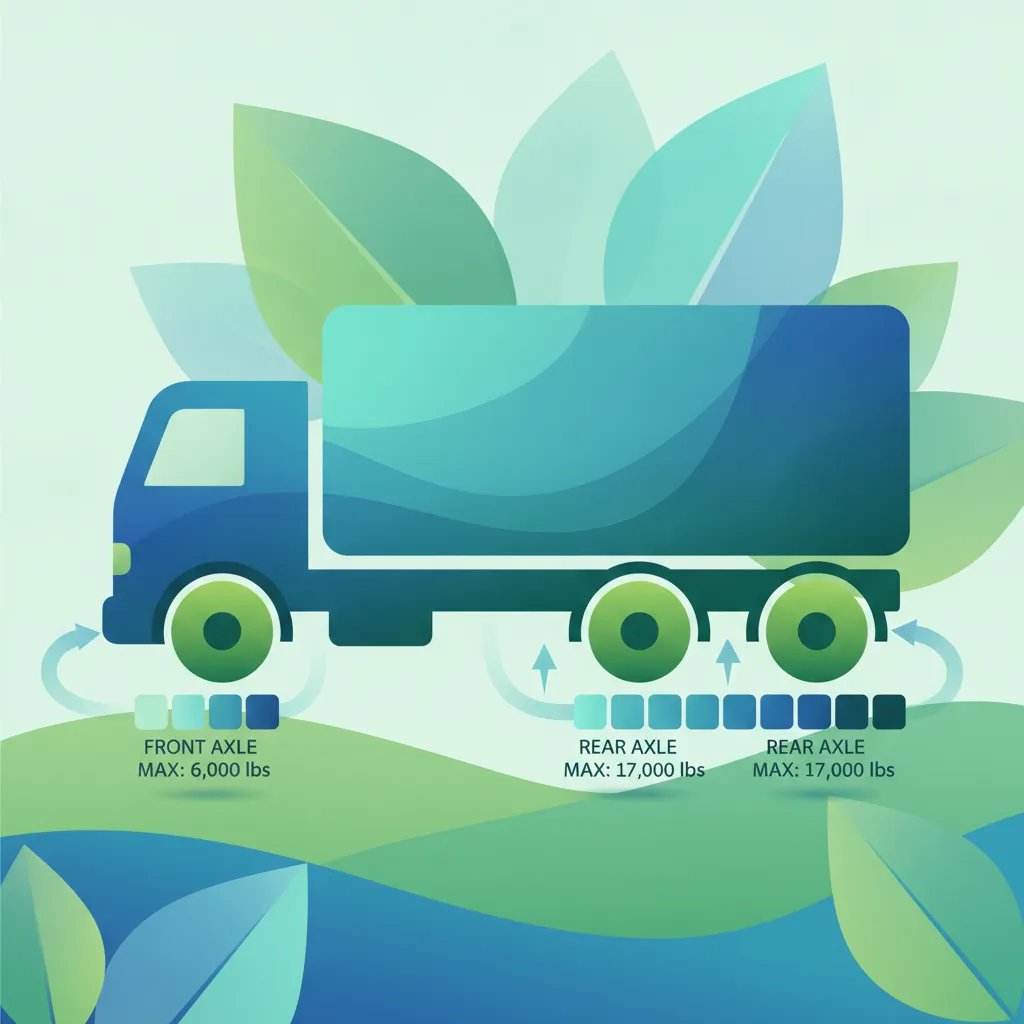
This lesson details the legal restrictions on the weight that can be supported by a single axle or a group of axles. It explains the importance of distributing the load correctly across the vehicle's length to prevent exceeding these limits, which can cause significant road damage and compromise vehicle safety. Learners will understand the relationship between load placement, axle pressure, and overall stability, particularly during braking and cornering.

This lesson focuses on the practical skill of distributing the load's weight evenly across the vehicle's axles. It explains how improper placement can overload one axle while underloading another, leading to legal violations and poor vehicle handling, steering, and braking performance. Learners will understand how to create a balanced load plan that respects legal axle limits and ensures the vehicle remains stable and controllable.

This lesson synthesizes the unit's concepts through practical, real-world examples of load planning. Learners will work through scenarios that require calculating payload, distributing weight across axles, and checking dimensions to ensure full compliance with 'sagoma limite'. These exercises reinforce the importance of meticulous pre-trip planning to guarantee a safe, legal, and efficient transport operation from start to finish.
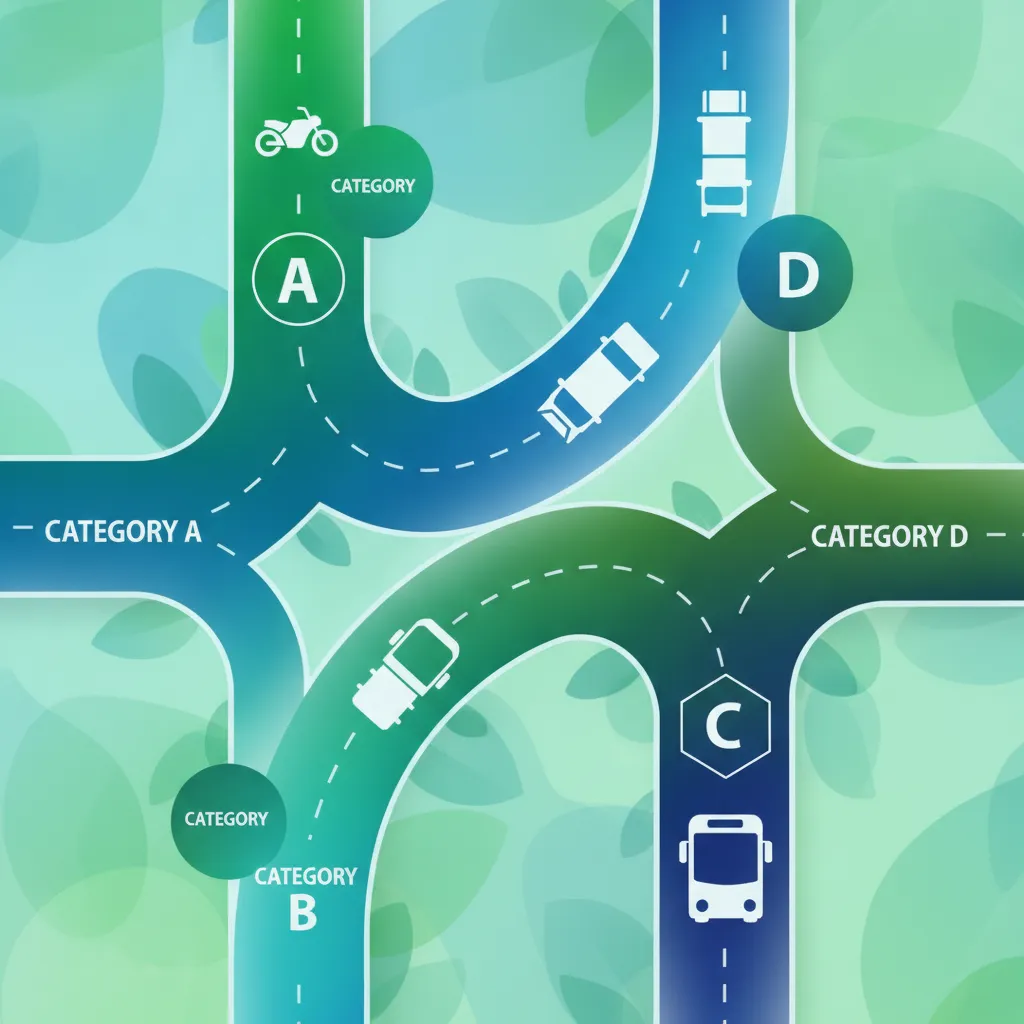
This lesson provides a detailed breakdown of the Italian goods vehicle licence categories, explaining the criteria that define each one. It covers the maximum authorized mass (MAM), vehicle configurations such as rigid trucks and articulated combinations, and the specific permissions granted by the C1, C1E, C, and CE licenses. Understanding these distinctions is fundamental to ensuring legal operation and choosing the correct qualification for specific transport tasks and vehicle types.

This lesson clarifies two fundamental weight concepts in Italian transport law: 'massa complessiva a pieno carico' (gross vehicle mass) and the vehicle's unladen mass. Learners will understand how to interpret these values from the vehicle's registration documents and use them to determine the maximum legal operating weight. This knowledge is crucial for calculating payload and ensuring compliance with the weight limits associated with the driver's license category.
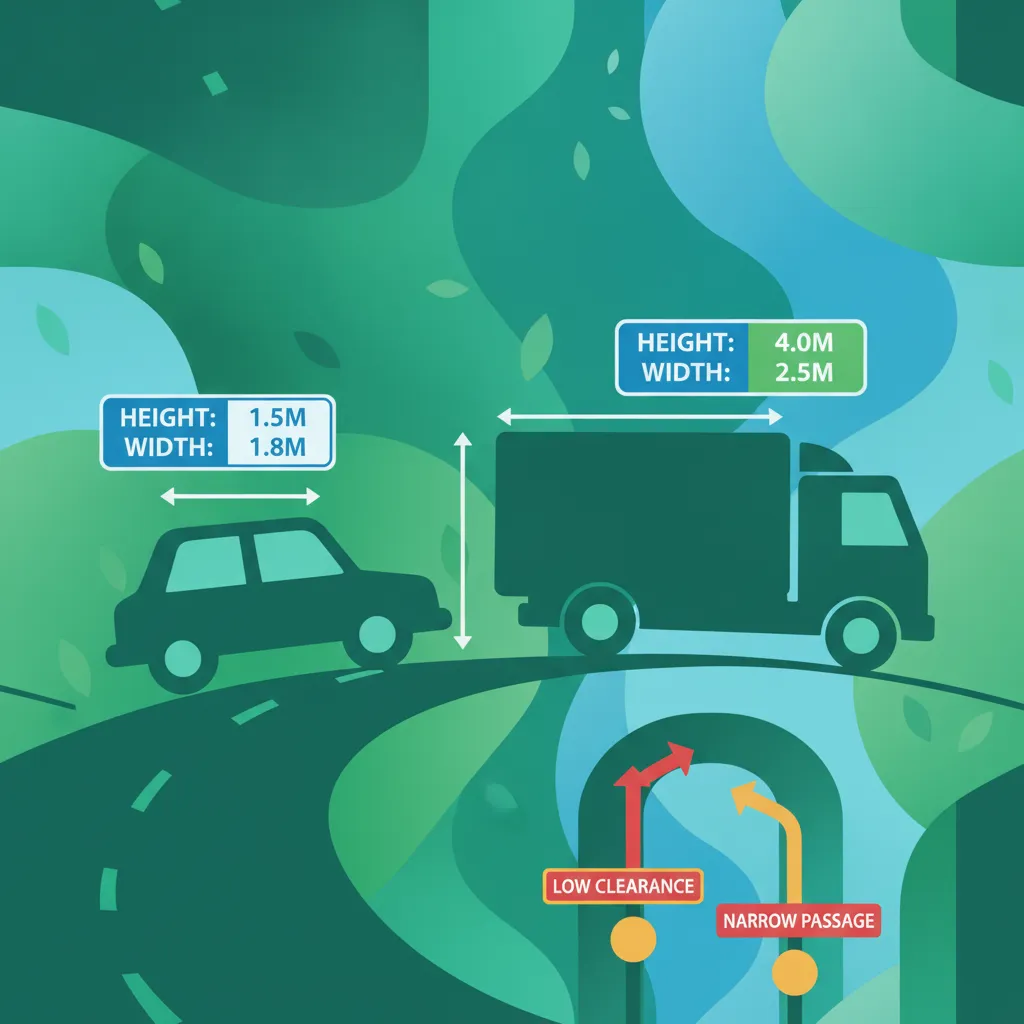
This lesson focuses on the specific dimensional limits that heavy goods vehicles must adhere to on Italian roads, as stipulated by the Codice della Strada. It covers the maximum permissible length, width, and height, explaining how these restrictions impact navigation through tunnels, under bridges, and within urban environments. Learners will also understand the conditions under which special permits for exceptional or oversized transport are required.

This lesson provides the practical knowledge needed to calculate the maximum permissible payload ('portata') for a goods vehicle. It explains how to subtract the vehicle's unladen weight (tare) from its maximum authorized mass to determine the available capacity for cargo. Mastering this calculation is essential for planning loads, ensuring legal compliance, and avoiding the risks associated with exceeding the vehicle's design limits.

This lesson bridges the gap between general traffic laws and their specific application to heavy goods vehicles. It examines how rules regarding speed limits, lane discipline, overtaking, and priority are modified or have special considerations for trucks due to their size, weight, and reduced maneuverability. Drivers will learn to correctly interpret road signs and signals within the context of operating a large vehicle, ensuring safe and compliant integration with other traffic.
Explore the severe mechanical, safety, and legal repercussions of overloading goods vehicles in Italy. Learn about fines, vehicle immobilization, and how overloading compromises critical systems like brakes and suspension.
This lesson provides a clear overview of the legal consequences for failing to comply with road transport regulations in Italy. It covers the system of fines for common offenses like speeding, overloading, and violations of driving hours. The lesson also explains the penalty point system that can lead to license suspension and touches upon the responsibilities and potential liability of the transport company.

This lesson delves into the specific articles of the Italian Codice della Strada that apply to heavy goods vehicles. It outlines the core legal and professional obligations of a driver, including the heightened duty of care owed to other road users and the responsibility for the vehicle's roadworthiness and load. Learners will understand the legal consequences of non-compliance, such as fines and sanctions, reinforcing the importance of adhering to all traffic regulations.
This lesson focuses on the specific dimensional limits that heavy goods vehicles must adhere to on Italian roads, as stipulated by the Codice della Strada. It covers the maximum permissible length, width, and height, explaining how these restrictions impact navigation through tunnels, under bridges, and within urban environments. Learners will also understand the conditions under which special permits for exceptional or oversized transport are required.
This lesson details the legal restrictions on the weight that can be supported by a single axle or a group of axles. It explains the importance of distributing the load correctly across the vehicle's length to prevent exceeding these limits, which can cause significant road damage and compromise vehicle safety. Learners will understand the relationship between load placement, axle pressure, and overall stability, particularly during braking and cornering.
This lesson bridges the gap between general traffic laws and their specific application to heavy goods vehicles. It examines how rules regarding speed limits, lane discipline, overtaking, and priority are modified or have special considerations for trucks due to their size, weight, and reduced maneuverability. Drivers will learn to correctly interpret road signs and signals within the context of operating a large vehicle, ensuring safe and compliant integration with other traffic.

This lesson provides a detailed overview of the legal framework for load securing in Italy, focusing on the relevant articles of the Codice della Strada. It outlines the driver's legal responsibility for ensuring the load is secure and covers the standards that securing equipment must meet. Learners will be made aware of the significant fines and other penalties that can be imposed for violations, reinforcing the importance of diligent compliance.

This lesson focuses on the specific regulations and techniques for operating a heavy vehicle on high-speed motorways. It covers mandatory lane discipline for trucks, the rules governing overtaking other heavy vehicles, and the specific speed limits that apply. Best practices for merging onto and exiting the motorway, maintaining safe following distances, and using the hard shoulder only in genuine emergencies are also detailed.

This lesson outlines the correct protocols for stopping to make a delivery in a public area. It covers the legal use of designated loading bays, the importance of making the vehicle highly visible with hazard lights, and ensuring that the parking brake is securely applied. The lesson stresses the need to conduct loading and unloading activities efficiently and safely, without causing undue obstruction or danger to other road users and pedestrians.

This lesson prepares drivers for incidents beyond a simple breakdown, such as losing part of the load onto the roadway or dealing with a spillage. It outlines the immediate priorities: ensuring personal safety, warning other traffic of the hazard, and notifying the authorities. The lesson also covers the fundamental principles of managing an accident scene, including protecting the area, assessing for casualties, and providing essential information to emergency services.
Find clear answers to common questions learners have about Sagoma Limite and Overloading Consequences. Learn how the lesson is structured, which driving theory objectives it supports, and how it fits into the overall learning path of units and curriculum progression in Italy. These explanations help you understand key concepts, lesson flow, and exam focused study goals.
Massa complessiva is the total weight of the vehicle including passengers and load, while portata is the payload capacity, which is the difference between the total mass and the curb weight.
Exceeding the sagoma limite means the vehicle exceeds allowed physical dimensions, creating a significant risk of colliding with tunnels, bridges, or overhead signs, and endangering other road users.
Overloading causes excessive strain on brake components, leading to brake fade and increased stopping distances, which makes the vehicle unpredictable and dangerous in emergency situations.
No, while fines are substantial, overloading can also lead to the suspension of the driving license, impounding of the vehicle, and severe liability if involved in a road traffic incident.
Start searching now to pinpoint exactly which Italian driving theory topics, road signs, or traffic rules you need to master. Use our advanced filters to build a custom practice session and ensure you're fully prepared for every aspect of your official driving licence exam.