
Navigating the rules regarding bike paths and road usage is a critical aspect of Polish traffic law. This guide clarifies when a cyclist is obligated to use a designated path marked by a C-13 sign and identifies the rare situations where road use is legally permitted. By mastering these regulations, you will better understand road safety, priority rules, and how to anticipate the actions of cyclists to pass your Polish driving theory exam with confidence.
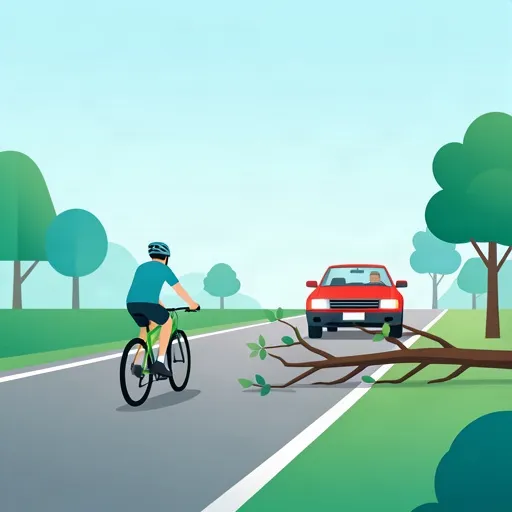
Article content overview
Navigating Polish roads requires a clear understanding of the specific hierarchy of traffic rules regarding bicycle infrastructure. As a learner driver, you must recognize that cyclists are not merely optional users of the road; they are participants in a system defined by strict legal mandates. The Polish Road Code (Prawo o ruchu drogowym) establishes a primary rule: whenever a designated cycle path or lane is available and follows your intended direction, you must use it.
The fundamental obligation for a cyclist in Poland is to utilize dedicated infrastructure. This means that if a bike path (droga dla rowerów) or a bike lane (pas ruchu dla rowerów) is marked, the cyclist is legally required to ride there rather than on the public road intended for motor vehicles. This rule is designed to segregate different types of traffic, thereby increasing overall safety and flow efficiency.
When you see a path marked with a C-13 sign, you can generally expect cyclists to be removed from the main carriageway. However, it is vital to distinguish between a pure cycle path and a shared path. A path shared by pedestrians and cyclists is marked with the C-13/C-16 combination sign. On such paths, cyclists have the right to ride, but they must exercise extreme caution and always yield to pedestrians.
Many learners worry about situations where a cyclist chooses to ride on the street despite the presence of a bike path. In Polish law, there are very specific, limited exceptions where a cyclist is legally permitted to use the sidewalk (chodnik) or the road instead of dedicated infrastructure. Understanding these exceptions helps you anticipate road user behavior, which is a frequent topic in the Polish driving theory exam.
A cyclist may use the sidewalk if:
Remember that even when a cyclist is legally riding on a sidewalk, they are required to move at a speed comparable to a pedestrian and must always yield to those on foot. Never assume a cyclist on the road is breaking the law; they may be navigating a section where infrastructure is absent or where safety dictates they avoid an poorly maintained path.
As a driver, your responsibility toward cyclists goes beyond just knowing where they should be. When you turn across a path used by cyclists or when a cyclist is riding on the road, you are bound by the duty of "particular caution." If you are turning into a side road and must cross a bike path or a cyclist’s lane, you must yield to any cyclist traveling straight through the intersection.
Furthermore, when overtaking a cyclist on a public road, the law is unambiguous: you must maintain a safety distance of at least one meter. This is not just a suggestion; it is a legal requirement to ensure the cyclist is not caught in your vehicle's wake or pressured into the gutter.
While cyclists often complain about the condition of paths—citing issues like uneven surfaces, high curbs, or pedestrian interference—these factors do not automatically grant a legal right to ride on the street. The theory exam focuses on strict compliance with signage. Unless there is a specific safety hazard defined by the law (such as extreme weather or the lack of safe alternatives on high-speed roads), the cyclist must stay on the designated path. As a future driver, your role is to observe, remain patient, and maintain a safe distance, regardless of whether you believe the cyclist's choice of lane is optimal.
Under Polish traffic law, cyclists are legally required to use designated bike paths marked with a C-13 sign whenever such infrastructure exists in their direction of travel. There are limited exceptions allowing cyclists to use sidewalks—specifically when escorting children under 10, during hazardous weather, or on roads with speed limits exceeding 50 km/h and sidewalks at least 2 meters wide—but even then they must yield to pedestrians and ride at pedestrian speed. Drivers must exercise particular caution when turning across bike paths, always yielding to cyclists proceeding straight through. When overtaking cyclists on the carriageway, a minimum 1-meter lateral distance is mandatory. Understanding these rules helps learner drivers anticipate cyclist behavior correctly and manage safe interactions during both the exam and real driving.
A short set of high-value points that capture the most important ideas from this article.
Cyclists must use designated bike paths (C-13 sign) whenever available in their direction of travel, as mandated by the Polish Road Code.
Cyclists may legally ride on the sidewalk only in three specific situations: escorting a child under 10, hazardous weather conditions, or roads with speed limits above 50 km/h with sidewalks at least 2 meters wide.
When a cyclist is on a shared path (C-13/C-16), they must yield to pedestrians at all times.
Drivers must exercise szczególna ostrożność (particular caution) when turning across a bike path or lane, yielding to cyclists traveling straight through.
The minimum lateral clearance when overtaking a cyclist on a public road is 1 meter—this is a legal requirement, not a suggestion.
C-13 sign marks a mandatory cycle path; C-13/C-16 marks a shared path where cyclists must yield to pedestrians.
Sidewalk cycling exceptions require: escorting a child under 10, dangerous weather, or speed limit above 50 km/h with sidewalk ≥2m wide.
Cyclists on sidewalks must ride at pedestrian speed and always yield to pedestrians.
Poor infrastructure quality alone (uneven surface, high curbs) does not give cyclists the legal right to use the carriageway.
When overtaking cyclists, maintain at least 1 meter of lateral distance at all times.
Assuming a cyclist riding on the road is breaking the law—they may be in a legally permitted exception like hazardous weather.
Failing to check for cyclists on bike paths before making a turn across that path.
Not maintaining the required 1-meter safety distance when overtaking cyclists.
Confusing shared paths (C-13/C-16) with mandatory-only cycle paths (C-13), not yielding to pedestrians on shared paths.
Believing that a cyclist must use the road if a bike path exists but is poorly maintained—the law only permits road use for specific documented hazards.
Article content overview
A short set of high-value points that capture the most important ideas from this article.
Cyclists must use designated bike paths (C-13 sign) whenever available in their direction of travel, as mandated by the Polish Road Code.
Cyclists may legally ride on the sidewalk only in three specific situations: escorting a child under 10, hazardous weather conditions, or roads with speed limits above 50 km/h with sidewalks at least 2 meters wide.
When a cyclist is on a shared path (C-13/C-16), they must yield to pedestrians at all times.
Drivers must exercise szczególna ostrożność (particular caution) when turning across a bike path or lane, yielding to cyclists traveling straight through.
The minimum lateral clearance when overtaking a cyclist on a public road is 1 meter—this is a legal requirement, not a suggestion.
C-13 sign marks a mandatory cycle path; C-13/C-16 marks a shared path where cyclists must yield to pedestrians.
Sidewalk cycling exceptions require: escorting a child under 10, dangerous weather, or speed limit above 50 km/h with sidewalk ≥2m wide.
Cyclists on sidewalks must ride at pedestrian speed and always yield to pedestrians.
Poor infrastructure quality alone (uneven surface, high curbs) does not give cyclists the legal right to use the carriageway.
When overtaking cyclists, maintain at least 1 meter of lateral distance at all times.
Assuming a cyclist riding on the road is breaking the law—they may be in a legally permitted exception like hazardous weather.
Failing to check for cyclists on bike paths before making a turn across that path.
Not maintaining the required 1-meter safety distance when overtaking cyclists.
Confusing shared paths (C-13/C-16) with mandatory-only cycle paths (C-13), not yielding to pedestrians on shared paths.
Believing that a cyclist must use the road if a bike path exists but is poorly maintained—the law only permits road use for specific documented hazards.
Explore related topics, search based questions, and concepts that learners often look up when studying Cyclist Road Rules in Poland. These themes reflect real search intent and help you understand how this topic connects to wider driving theory knowledge in Poland.
Find clear and practical answers to common questions learners often have about Cyclist Road Rules in Poland. This section helps explain difficult points, remove confusion, and reinforce the key driving theory concepts that matter for learners in Poland.
Yes, under the Polish Road Code, if a road for bicycles or a path for pedestrians and cyclists is designated for the direction the cyclist is traveling, they are legally obligated to use it.
Poor condition or discomfort does not generally exempt a cyclist from the duty to use the path. Exceptions are only made in extreme, legally defined circumstances, such as when weather conditions make the path unsafe for use.
Cyclists may use the sidewalk if they are caring for a child under 10 years old, if weather conditions are dangerous (e.g., severe snowfall or ice), or if the road has a speed limit higher than 50 km/h and no other bicycle infrastructure is available.
Drivers turning into a crossroad must exercise extreme caution and yield to cyclists who are already on the bike path, lane, or crossing, provided the cyclist is moving in the intended direction.
After finding your specific article, continue your targeted learning by exploring related topics or diving deeper into practice questions. Our extensive library ensures you have all the resources needed to confidently prepare for your Polish driving license theory exam. Discover more guides and solidify your understanding of Polish road rules.