
Clear windows are not just about personal comfort; they are a fundamental requirement for road safety and a focus area for your theoretical knowledge. You will learn how to effectively use your vehicle's climate control and ventilation systems to manage cabin moisture, ensuring you are prepared for challenging weather scenarios. Understanding these procedures helps you maintain proper visibility and stay compliant with Polish road safety standards during your journey.
Article content overview
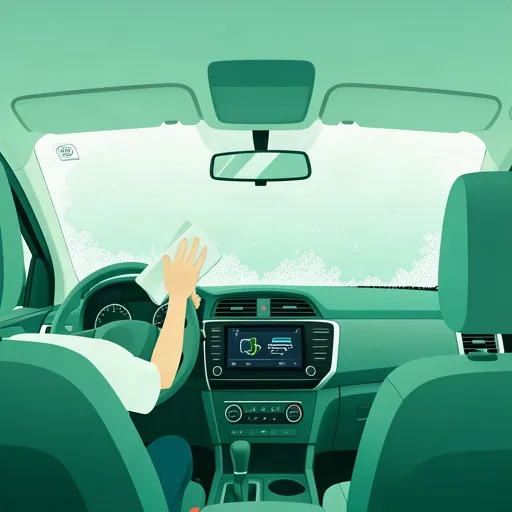
Maintaining perfect visibility is not just a comfort feature in your vehicle; it is a fundamental requirement of road safety and a key component of the Polish driving theory exam. When your windows fog up, your ability to monitor road signs, identify hazards, and assess the actions of other road users is severely compromised. In Poland’s variable climate, where autumn dampness and winter temperature shifts are common, knowing how to quickly clear condensation is a skill every driver must master. Failing to ensure a clear view of the road can lead to dangerous situations and reflects a lack of preparedness, which is often tested in theoretical scenarios regarding safe vehicle operation.
Fogging occurs when warm, moist air inside the cabin hits a cold windshield. This moisture condenses, turning into tiny water droplets that obscure your vision. According to Polish traffic regulations, a driver is obligated to ensure that the vehicle’s equipment, including windows and mirrors, allows for proper observation of the road. Driving with limited visibility due to neglect can be viewed as a violation of safety standards, potentially impacting your insurance coverage or leading to penalties if an incident occurs.
According to the Polish Road Traffic Act, the driver is responsible for maintaining the vehicle in a technical state that ensures safety, which includes full, unobstructed visibility through all required windows and mirrors at all times.
Whether your car is equipped with manual climate control or advanced automatic air conditioning, the objective remains the same: reduce cabin humidity and heat the glass. For modern vehicles with air conditioning, the system acts as a dehumidifier, which is significantly more effective than heating alone.
If your vehicle lacks air conditioning, you must rely on ventilation and temperature management. In these cases, cracking a window slightly can help exchange the humid cabin air with drier outside air, though this is less effective in heavy rain or extreme cold. Always ensure your cabin air filter is clean, as a clogged filter significantly reduces the efficiency of your ventilation system and promotes fogging.
A common mistake new drivers make is leaving the engine running while parked to "warm up" the car or clear the windows. In Poland, this practice is governed by specific regulations regarding stationary vehicles. Prolonged idling, generally considered to be over one minute, is prohibited in built-up areas and can lead to a fine under Article 60 of the Road Traffic Law, which covers prohibitions on excessive exhaust emissions and noise.
Be aware that "postój" (stationary vehicle) is defined as any stoppage of a vehicle not resulting from traffic conditions that lasts longer than one minute. You can be fined for idling your engine during this time, even if you are in the driver's seat attempting to clear your windows.
During autumn and winter, the contrast between exterior cold and interior heat creates high risks for sudden condensation. You should always prepare your vehicle before you begin your journey. Cleaning the interior of the glass with a quality microfiber cloth regularly prevents a film of dust and grease from building up, which often acts as a base for moisture to cling to.
This article teaches Polish drivers how to effectively clear fogged windows using proper climate control techniques, emphasizing that visibility is a legal requirement rather than just a comfort issue. Key procedures include activating air conditioning for dehumidification, setting airflow to defrost mode, using external air intake, and utilizing heated windows and mirrors. The content also highlights important Polish traffic law regarding idling restrictions, explaining that stationary vehicle stops over one minute in built-up areas can result in fines. Understanding these procedures is essential for both safe driving practice and passing theory exam scenarios about vehicle preparation and legal driving obligations in Poland.
A short set of high-value points that capture the most important ideas from this article.
Maintaining unobstructed visibility through all windows and mirrors is a legal requirement under Polish traffic regulations.
Air conditioning is the most effective tool for defogging because it actively removes moisture from cabin air.
Always use external air intake mode when defogging; internal recirculation keeps moisture inside the cabin.
Proper cabin air filter maintenance is essential for efficient ventilation and preventing fog buildup.
Heated rear windows and side mirrors should be activated immediately when fogging occurs.
Polish law obligates drivers to ensure vehicle equipment allows proper road observation at all times.
In Poland, prolonged vehicle idling (over one minute in built-up areas) is prohibited under Article 60 of the Road Traffic Law.
Cracking a window helps exchange humid air with drier outside air when no air conditioning is available.
'Postój' means a vehicle stoppage over one minute; 'Zatrzymanie' is a stop under one minute or caused by traffic conditions.
Regular interior glass cleaning prevents dust and grease buildup that traps moisture and worsens fogging.
Relying on heating alone without activating air conditioning, which is far less effective at removing humidity.
Using internal air recirculation mode while trying to defog, which traps moist air inside the cabin.
Attempting to drive with partially cleared windows, especially when only the front windshield is defogged.
Leaving the engine running while parked to warm up or defog, risking fines for prohibited idling.
Neglecting cabin air filter maintenance, which significantly reduces defogging efficiency.
Article content overview
A short set of high-value points that capture the most important ideas from this article.
Maintaining unobstructed visibility through all windows and mirrors is a legal requirement under Polish traffic regulations.
Air conditioning is the most effective tool for defogging because it actively removes moisture from cabin air.
Always use external air intake mode when defogging; internal recirculation keeps moisture inside the cabin.
Proper cabin air filter maintenance is essential for efficient ventilation and preventing fog buildup.
Heated rear windows and side mirrors should be activated immediately when fogging occurs.
Polish law obligates drivers to ensure vehicle equipment allows proper road observation at all times.
In Poland, prolonged vehicle idling (over one minute in built-up areas) is prohibited under Article 60 of the Road Traffic Law.
Cracking a window helps exchange humid air with drier outside air when no air conditioning is available.
'Postój' means a vehicle stoppage over one minute; 'Zatrzymanie' is a stop under one minute or caused by traffic conditions.
Regular interior glass cleaning prevents dust and grease buildup that traps moisture and worsens fogging.
Relying on heating alone without activating air conditioning, which is far less effective at removing humidity.
Using internal air recirculation mode while trying to defog, which traps moist air inside the cabin.
Attempting to drive with partially cleared windows, especially when only the front windshield is defogged.
Leaving the engine running while parked to warm up or defog, risking fines for prohibited idling.
Neglecting cabin air filter maintenance, which significantly reduces defogging efficiency.
Explore related topics, search based questions, and concepts that learners often look up when studying Clearing Foggy Windows Safely. These themes reflect real search intent and help you understand how this topic connects to wider driving theory knowledge in Poland.
Find clear and practical answers to common questions learners often have about Clearing Foggy Windows Safely. This section helps explain difficult points, remove confusion, and reinforce the key driving theory concepts that matter for learners in Poland.
Yes. Under Polish regulations, leaving a vehicle with the engine running on a 'postój' (stationary period longer than one minute) that is not due to traffic conditions can lead to a fine for excessive exhaust emissions and noise.
To clear fog effectively, you should use the external air intake. Using the internal circulation mode traps moisture inside the cabin, which actually makes the fogging worse.
The air conditioning system acts as a dehumidifier. By turning it on alongside your heating, you remove excess moisture from the air, which allows the windows to clear significantly faster.
If your car lacks AC, focus on directing warm air toward the windshield and slightly cracking a window to allow a draft to escape, which helps equalize moisture levels and vent out humid air.
Yes. A clogged or dirty cabin air filter restricts airflow and traps pollutants and moisture, making it much harder to keep your windows clear in damp or cold conditions.
After finding your specific article, continue your targeted learning by exploring related topics or diving deeper into practice questions. Our extensive library ensures you have all the resources needed to confidently prepare for your Polish driving license theory exam. Discover more guides and solidify your understanding of Polish road rules.