
Understanding how to interact safely with cyclists is a fundamental requirement for every driver in Poland and a core component of the state theory exam. This guide breaks down the legal priority rules, the significance of specific signs like D-6a, and the essential safety measures you must take to protect vulnerable road users. You will learn the exact circumstances under which you must yield to a cyclist and the proper procedures for sharing the road legally and responsibly.
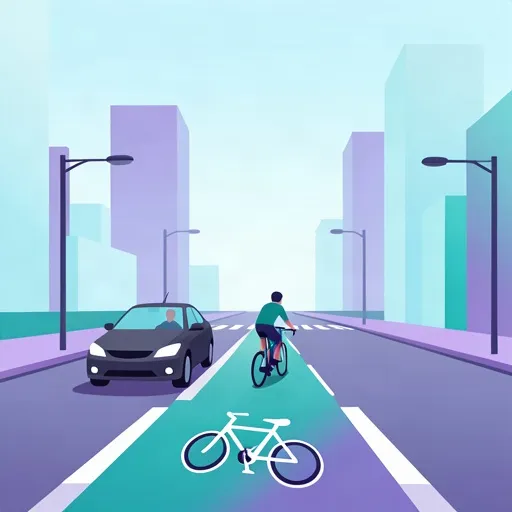
Article content overview
Interacting with cyclists is a fundamental aspect of driving on Polish roads. As vulnerable road users, cyclists are afforded specific protections under the Polish Road Traffic Act. For any learner preparing for the state theory exam, distinguishing between situations where a cyclist has the right of way and where they must yield is not only essential for passing the exam but critical for real-world safety. Misunderstandings in this area are a leading cause of traffic accidents and common points of failure in theory tests.
In Poland, cyclists are governed by specific regulations that define their rights and duties. While many drivers assume that cyclists always hold priority, this is a dangerous misconception. The law requires drivers to exercise particular caution when approaching cycle crossings or sharing the road with bicycle traffic. A core component of your training involves learning how to identify designated cycle paths and how to navigate around them without endangering those using them.
A requirement to increase your attention, observe the road environment more actively, and be prepared to reduce your speed or stop immediately if the situation dictates, especially when approaching crossings where vulnerable road users are present.
A common trap in the Polish driving theory exam involves scenarios at cycle crossings. You must be able to differentiate between a standard intersection and a dedicated cycle path crossing. When a bicycle path crosses the road, the rules regarding who has the right of way are strictly defined by the signs and road markings present at the location.
When you are performing a right turn and there is a cycle path running parallel to the road you are leaving, you are legally required to yield to the cyclist who is continuing straight along that path. This is a situation where the cyclist’s right of way is absolute. Failure to yield in this scenario is a frequent cause of dangerous collisions and will result in a negative score on your theory exam.
The Polish Road Traffic Act places a strong emphasis on the safety of cyclists during overtaking maneuvers. Drivers are mandated to keep a minimum lateral distance of at least 1 meter when passing a cyclist. However, road safety experts and examiners strongly recommend maintaining a distance of 1.5 meters to account for unexpected wobbling or wind gusts.
Never sound your horn to express frustration or impatience when behind a cyclist. Using an audible signal is only permitted in immediate danger. Intimidating a cyclist is a traffic offense that can lead to significant fines.
While cyclists are generally expected to use the roadway or designated cycle paths, there are specific legal exceptions where a cyclist may use the sidewalk. As a driver, you must be aware that if a cyclist is legally riding on the sidewalk, they may eventually need to rejoin the road.
| Scenario | Priority Status |
|---|---|
| Cyclist on a designated crossing | High (Driver must yield) |
| Car turning across a cycle path | High (Cyclist has priority) |
| Cyclist entering from a sidewalk | Variable (Depends on traffic rules) |
| Overtaking a cyclist | Mandatory 1m+ distance |
This article covers the essential regulations governing driver interactions with cyclists in Poland, focusing on priority rules at cycle crossings, the D-6a sign meaning, and mandatory overtaking distances. Learners must understand that cyclists have absolute priority when a car turns across a cycle path, and drivers must yield in this situation to pass both the exam and ensure real-world safety. The minimum lateral distance when overtaking is 1 meter, though 1.5 meters is recommended. Special caution is required at all cycle crossings, and drivers must remember that horn use near cyclists is restricted to genuine danger situations only.
A short set of high-value points that capture the most important ideas from this article.
When turning right across a parallel cycle path, cyclists continuing straight have absolute priority and drivers must yield
The D-6a road sign marks a dedicated cycle crossing requiring increased caution and reduced speed
Drivers must maintain at least 1 meter lateral distance when overtaking cyclists, with 1.5 meters recommended for safety
Particular caution (szczególna ostrożność) means actively scanning, increasing attention, and being ready to stop immediately
Cyclists may legally use sidewalks only under specific conditions: high-speed roads over 50 km/h, severe weather, or supervising children under 10
D-6a sign indicates a cycle crossing where cyclists have priority over intersecting traffic
Horn use near cyclists is permitted only in immediate danger, not for expressing impatience
Cycle crossings (przejazd dla rowerzystów) are distinct from standard road intersections with different priority rules
The principle of limited trust (zasada ograniczonego zaufania) applies—do not assume cyclists always follow rules correctly
Electric scooters (urządzenia transportu osobistego) share the same rules as cyclists under Polish law
Assuming cyclists always have priority in every situation is a dangerous misconception that leads to accidents
Forgetting to yield when turning right across a cycle path is a frequent cause of collisions and exam failures
Maintaining only the legal minimum 1m distance instead of the recommended 1.5m leaves no margin for unexpected cyclist wobbling or wind gusts
Sounding the horn to pressure or intimidate cyclists is a traffic offense, not an acceptable driving practice
Confusing a dedicated cycle path crossing with a standard intersection and applying the wrong priority rules
Article content overview
A short set of high-value points that capture the most important ideas from this article.
When turning right across a parallel cycle path, cyclists continuing straight have absolute priority and drivers must yield
The D-6a road sign marks a dedicated cycle crossing requiring increased caution and reduced speed
Drivers must maintain at least 1 meter lateral distance when overtaking cyclists, with 1.5 meters recommended for safety
Particular caution (szczególna ostrożność) means actively scanning, increasing attention, and being ready to stop immediately
Cyclists may legally use sidewalks only under specific conditions: high-speed roads over 50 km/h, severe weather, or supervising children under 10
D-6a sign indicates a cycle crossing where cyclists have priority over intersecting traffic
Horn use near cyclists is permitted only in immediate danger, not for expressing impatience
Cycle crossings (przejazd dla rowerzystów) are distinct from standard road intersections with different priority rules
The principle of limited trust (zasada ograniczonego zaufania) applies—do not assume cyclists always follow rules correctly
Electric scooters (urządzenia transportu osobistego) share the same rules as cyclists under Polish law
Assuming cyclists always have priority in every situation is a dangerous misconception that leads to accidents
Forgetting to yield when turning right across a cycle path is a frequent cause of collisions and exam failures
Maintaining only the legal minimum 1m distance instead of the recommended 1.5m leaves no margin for unexpected cyclist wobbling or wind gusts
Sounding the horn to pressure or intimidate cyclists is a traffic offense, not an acceptable driving practice
Confusing a dedicated cycle path crossing with a standard intersection and applying the wrong priority rules
Explore related topics, search based questions, and concepts that learners often look up when studying Cyclist Priority and Safety Rules. These themes reflect real search intent and help you understand how this topic connects to wider driving theory knowledge in Poland.
Find clear and practical answers to common questions learners often have about Cyclist Priority and Safety Rules. This section helps explain difficult points, remove confusion, and reinforce the key driving theory concepts that matter for learners in Poland.
No, cyclists do not always have priority. A driver is only obligated to yield to a cyclist who is already on a designated cycle crossing. If a cyclist is only approaching the crossing, you are not automatically required to stop, though you must exercise particular caution.
When overtaking a cyclist, drivers in Poland must maintain a side distance of at least 1 meter. Experts strongly recommend maintaining a distance of at least 1.5 meters to ensure maximum safety.
Generally, cyclists must use the road or a designated cycle path. Riding on the sidewalk is only permitted under specific conditions, such as when the weather is dangerous, when the speed limit on the road is higher than 50 km/h and no cycle path exists, or when the cyclist is caring for a child under 10 years old.
Sign D-6a indicates a cycle crossing, while sign D-6b indicates a combined pedestrian and cycle crossing. Both signs inform drivers that they are approaching a location where cyclists may enter the roadway, requiring increased vigilance and a speed reduction.
After finding your specific article, continue your targeted learning by exploring related topics or diving deeper into practice questions. Our extensive library ensures you have all the resources needed to confidently prepare for your Polish driving license theory exam. Discover more guides and solidify your understanding of Polish road rules.