
Navigating parking regulations in Poland requires a clear understanding of specific road signs and legal definitions that often appear on the theory exam. This article explains how to interpret common prohibitions, including the rules behind signs B-35 and B-36, and provides guidance on where you are strictly forbidden from stopping. By mastering these nuances, you will be better prepared to avoid fines and navigate real-world traffic situations with confidence.
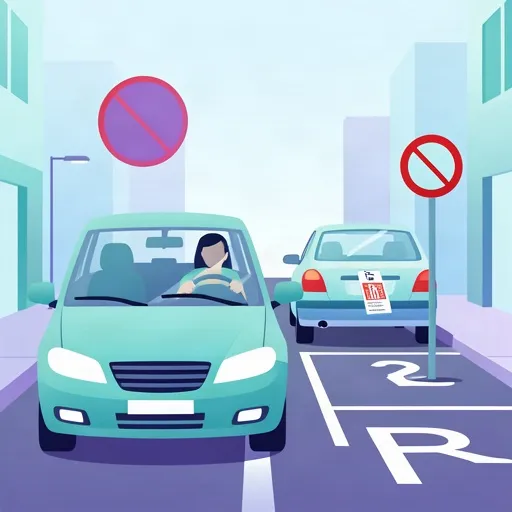
Article content overview
Understanding the nuances of stopping and parking in Poland is a fundamental requirement for every aspiring driver. The Polish driving theory exam frequently tests these concepts, often presenting situational questions designed to catch out candidates who do not fully grasp the legal definitions and the specific meanings of traffic signs. Whether you are navigating busy city centers or quiet rural roads, knowing exactly where you can and cannot leave your vehicle is essential for road safety and avoiding significant fines.
One of the most common pitfalls on the Polish theory exam involves the distinction between two essential prohibition signs: B-35 and B-36. While they may appear similar at a glance, the legal consequences and the rules governing their application differ significantly. Misinterpreting these signs is a frequent cause of both exam failure and real-world traffic penalties.
Remember that "stopping" refers to an intentional immobilization of the vehicle for a duration not exceeding one minute, or any duration if necessary for embarking or disembarking passengers. "Parking" (postój) refers to any immobilization of a vehicle that is not stopping. If you are uncertain, always prioritize finding a designated parking space to avoid a mandate.
Polish traffic law, specifically the Law on Road Traffic (Prawo o ruchu drogowym), outlines clear zones where you are forbidden from stopping, regardless of whether a sign is present. These rules are designed to maintain traffic flow and ensure pedestrian safety. Questions regarding these locations often feature diagrams where a driver is tempted to "just pop out for a moment," which is a classic exam trap.
As urban mobility changes, Poland has introduced specific parking solutions to manage traffic density. Signs such as P+R (Park and Ride) or K+R (Kiss and Ride) are becoming common. Understanding these is not just about passing the exam; it is about navigating the modern Polish transport ecosystem efficiently.
A designated area intended for very short stops, typically near airports or train stations, allowing drivers to drop off passengers without the intent of parking the car.
The exam authority often uses "situational context" to test your knowledge. For instance, you might be asked if you can stop to let a passenger out near an intersection. The correct answer relies on your knowledge of the 10-meter rule mentioned above. Furthermore, the exam will check if you notice supplementary plates (tabliczki) under signs, which might define the length of a zone or specify the hours of operation.
Polish parking rules distinguish between signs B-35 (no parking, allows stops under 1 minute) and B-36 (no stopping, forbids any immobilization). Key prohibited zones include areas within 10 meters of crossings, bridges, tunnels, and intersections. The legal definitions separate 'zatrzymanie' (stopping) from 'postój' (parking) based on duration and purpose. The theory exam frequently tests these distinctions through situational questions that trap candidates who think brief stops are always permitted near restricted areas.
A short set of high-value points that capture the most important ideas from this article.
B-35 prohibits parking (immobilization over 1 minute) but allows stopping under 1 minute
B-36 prohibits any immobilization including brief stops, even for passenger drop-off
Stopping is prohibited within 10 meters of intersections, pedestrian crossings, and railway crossings
The legal definition separates 'zatrzymanie' (stopping, under 1 minute) from 'postój' (parking, over 1 minute)
Supplementary plates under signs can modify the prohibition zone length or add time restrictions
B-35 = No Parking (allows brief stops under 1 minute)
B-36 = No Stopping (no immobilization allowed at all)
You cannot stop within 10 meters before pedestrian or railway crossings
Stopping is prohibited on bridges, in tunnels, and at intersections
K+R zones are for passenger drop-off only, not actual parking
Confusing B-35 and B-36, believing B-35 prohibits all stops including brief ones
Thinking you can stop 'just for a moment' near an intersection to let someone out
Parking partially on a 'pole wyłączone z ruchu' (excluded area) assuming partial encroachment is acceptable
Ignoring supplementary plates that modify sign restrictions (time limits, zone lengths)
Assuming B-36 allows stopping for passenger embarkation, which it does not
Article content overview
A short set of high-value points that capture the most important ideas from this article.
B-35 prohibits parking (immobilization over 1 minute) but allows stopping under 1 minute
B-36 prohibits any immobilization including brief stops, even for passenger drop-off
Stopping is prohibited within 10 meters of intersections, pedestrian crossings, and railway crossings
The legal definition separates 'zatrzymanie' (stopping, under 1 minute) from 'postój' (parking, over 1 minute)
Supplementary plates under signs can modify the prohibition zone length or add time restrictions
B-35 = No Parking (allows brief stops under 1 minute)
B-36 = No Stopping (no immobilization allowed at all)
You cannot stop within 10 meters before pedestrian or railway crossings
Stopping is prohibited on bridges, in tunnels, and at intersections
K+R zones are for passenger drop-off only, not actual parking
Confusing B-35 and B-36, believing B-35 prohibits all stops including brief ones
Thinking you can stop 'just for a moment' near an intersection to let someone out
Parking partially on a 'pole wyłączone z ruchu' (excluded area) assuming partial encroachment is acceptable
Ignoring supplementary plates that modify sign restrictions (time limits, zone lengths)
Assuming B-36 allows stopping for passenger embarkation, which it does not
Explore related topics, search based questions, and concepts that learners often look up when studying Polish Parking Rules and Signs. These themes reflect real search intent and help you understand how this topic connects to wider driving theory knowledge in Poland.
Find clear and practical answers to common questions learners often have about Polish Parking Rules and Signs. This section helps explain difficult points, remove confusion, and reinforce the key driving theory concepts that matter for learners in Poland.
Sign B-35 indicates a 'no parking' zone, meaning you may stop for up to one minute to drop off or pick up passengers. Sign B-36 indicates a 'no stopping' zone, where any immobilization of the vehicle is strictly forbidden unless required by traffic conditions or a technical breakdown.
Unless explicitly cancelled by another sign or a parking permit zone, a parking prohibition sign generally remains in effect until you reach the next intersection.
Parking on a sidewalk is strictly regulated. You may only do so in specifically marked areas or where the general rules of the road allow for partial parking, provided there is enough space left for pedestrians and you are not violating other specific prohibitions.
The only exceptions for stopping where a B-36 sign is present are situations forced by the rules of the road (e.g., waiting at a red light or in a traffic jam) or an emergency breakdown of the vehicle.
After finding your specific article, continue your targeted learning by exploring related topics or diving deeper into practice questions. Our extensive library ensures you have all the resources needed to confidently prepare for your Polish driving license theory exam. Discover more guides and solidify your understanding of Polish road rules.