Proper vehicle lighting is not just a technical formality; it is a fundamental pillar of road safety and a key component of the Polish driving theory examination. You will learn the correct usage of mandatory lighting systems, the legal expectations for keeping your car roadworthy, and how your vehicle's condition directly impacts your ability to navigate safely during night-time and poor visibility conditions.
Article content overview
Proper vehicle lighting is not merely a legal requirement for passing your driving theory exam in Poland; it is a fundamental pillar of road safety that directly influences your ability to navigate safely during autumn, winter, and low-visibility conditions. Understanding the technical requirements for external lighting and knowing when to use specific light types—such as światła mijania (low-beam) and światła drogowe (high-beam)—is critical for every driver. In Poland, the condition and correct operation of your vehicle’s lighting systems are strictly regulated under the Prawo o ruchu drogowym (Road Traffic Act), and failure to maintain them can lead to significant safety hazards, fines, and failure during the practical driving test.
Every passenger car in Poland must be equipped with a comprehensive set of external lights designed to ensure the vehicle is visible to others and that the driver has adequate visibility of the road ahead. The primary lights you must master for your theory exam include parking lights (pozycyjne), low-beam lights (mijania), high-beam lights (drogowe), and daytime running lights (do jazdy dziennej).
In Poland, you are required to drive with low-beam lights switched on 24 hours a day, regardless of the time or weather, provided the air transparency is normal. These lights are designed to illuminate the road in front of the vehicle without causing excessive glare to oncoming drivers.
These lights provide long-range illumination and are intended for use from dusk until dawn on unlit roads. You must switch them off or change to low-beam lights immediately if there is a risk of dazzling other drivers, pedestrians, or operators of rail vehicles.
Always remember that in Poland, you must switch from high-beam (drogowe) to low-beam (mijania) lights if an oncoming driver has already done so. Even if the other driver is technically in the wrong, your legal obligation is to prevent blinding them, which could lead to a collision.
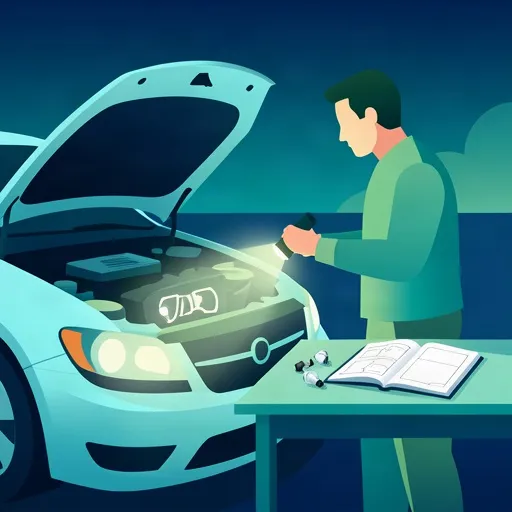
Maintaining your vehicle’s lights is a continuous responsibility of the driver. Authorities, including the Police and the Motor Transport Institute, frequently emphasize that faulty or misaligned lights significantly decrease a driver's ability to spot obstacles or pedestrians on the road. While many organizations host "open days" for free light inspections, the legal onus is on you to ensure your vehicle is compliant at all times.
A vehicle that is not roadworthy—for instance, one with a broken bulb or a missing emergency warning triangle—cannot safely operate in traffic. The warning triangle is a mandatory piece of equipment in Poland, and it must be used to warn other drivers about an immobilized vehicle. Note that simply carrying a modern emergency beacon is not a legal substitute for the traditional reflective triangle; you must possess the triangle to comply with technical regulations.
When driving, you must adjust your lighting strategy based on atmospheric conditions. Under normal air transparency, daytime running lights can be used instead of low-beam lights between dawn and dusk. However, if conditions worsen—such as during heavy rain, fog, or snow—the use of low-beam lights or front fog lights becomes mandatory.
| Light Type | Typical Usage Scenario |
|---|---|
| Pozycyjne | Illumination of the vehicle while parked or stopped. |
| Mijania | Mandatory for daily use; essential for all road conditions. |
| Drogowe | Only for unlit roads at night; must be dimmed to avoid glare. |
| Do jazdy dziennej | Daytime use only; cannot be used during dusk or bad weather. |
Article content overview
Explore related topics, search based questions, and concepts that learners often look up when studying Vehicle Lighting and Safety Rules. These themes reflect real search intent and help you understand how this topic connects to wider driving theory knowledge in Poland.
Find clear and practical answers to common questions learners often have about Vehicle Lighting and Safety Rules. This section helps explain difficult points, remove confusion, and reinforce the key driving theory concepts that matter for learners in Poland.
You must understand the function and usage of position lights (pozycyjne), low-beam lights (mijania), high-beam lights (drogowe), daytime running lights (do jazdy dziennej), and hazard warning lights (awaryjne).
No. High-beam lights should only be used from dusk till dawn on unlit roads, provided they do not dazzle other drivers, pedestrians, or rail operators. You must switch to low-beam lights if there is a risk of blinding others.
Yes, in Poland, you are legally required to drive with low-beam lights (mijania) on at all times, including during the day under normal air transparency, unless you are using daytime running lights.
A warning triangle is a mandatory piece of emergency equipment that must be placed on the road to signal a breakdown, whereas vehicle lighting maintenance is the ongoing responsibility of the driver to ensure all lamps are functional and correctly adjusted for road safety.
After finding your specific article, continue your targeted learning by exploring related topics or diving deeper into practice questions. Our extensive library ensures you have all the resources needed to confidently prepare for your Polish driving license theory exam. Discover more guides and solidify your understanding of Polish road rules.