
Welcome to the Engine and Powertrain Overview lesson for your Polish Category C truck driver's license. This crucial module introduces the core components and principles of the diesel engines and powertrains that power heavy goods vehicles. Understanding these systems is vital for safe operation, efficient driving, and passing the theory exam.
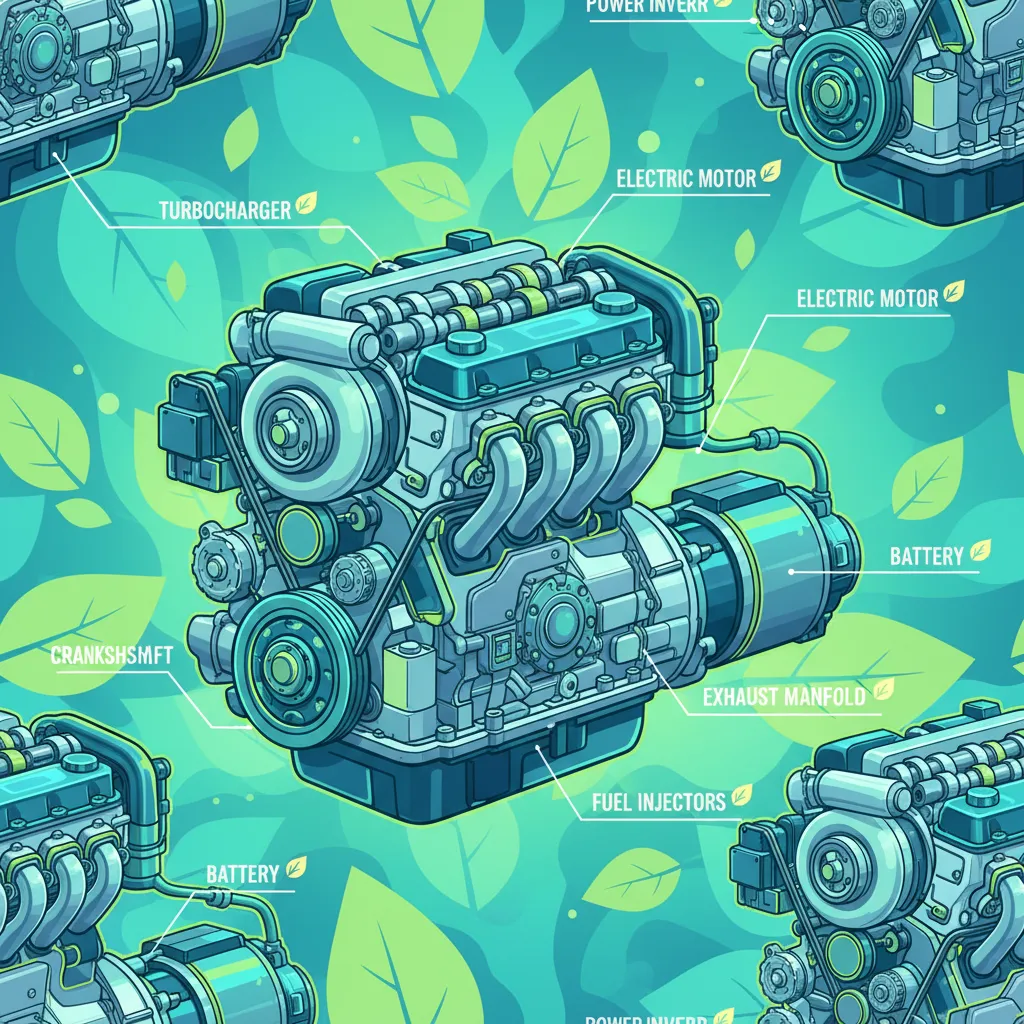
Lesson content overview
Welcome to this lesson within the Polish Category C Heavy Goods Vehicle Theory – Full Curriculum. As an aspiring professional truck driver, a fundamental understanding of your vehicle's engine and powertrain is paramount. This knowledge is not just about passing an exam; it’s essential for safe operation, fuel efficiency, and compliance with strict legal obligations, especially concerning speed control on challenging terrain. This chapter will delve into how a Category C heavy goods vehicle converts fuel into motive force and transmits it to the wheels, along with critical methods for managing vehicle speed.
At the heart of every heavy goods vehicle (HGV), particularly those in Category C, lies the diesel engine. Unlike petrol engines, diesel engines rely on compression ignition, a process where air is compressed to such a high temperature that when fuel is injected, it ignites spontaneously. This design characteristic allows diesel engines to generate immense torque, which is crucial for moving heavy loads.
Modern heavy truck diesel engines typically operate on a four-stroke cycle:
This continuous cycle, repeated across multiple cylinders, converts the chemical energy stored in diesel fuel into mechanical rotational energy, which is then sent through the powertrain to propel the vehicle. Understanding this cycle helps drivers appreciate the importance of engine speed (RPM) and its relationship to power delivery.
When discussing engine performance, two key terms frequently arise: torque and horsepower. While often confused, they describe different aspects of an engine's capability, both vital for heavy goods vehicles.
Torque is the rotational force an engine produces, measured in Newton-metres (Nm) in the metric system. It represents the "turning power" available at the crankshaft.
For Category C vehicles, high torque at low engine speeds (RPM) is critical. This characteristic allows a heavy truck to accelerate from a standstill, climb steep inclines, and pull immense loads without excessive engine strain. The engine's torque curve illustrates how much rotational force is available at different RPMs; drivers learn to keep the engine within its optimal torque band for efficiency and performance. For example, a heavy-duty diesel engine might produce peak torque of 1,800 Nm at a relatively low 1,200 to 1,500 RPM.
Horsepower, often measured in kilowatts (kW) or horsepower (HP), is the rate at which an engine can do work. It is derived from torque multiplied by engine speed.
While torque gets the load moving, horsepower determines how quickly the vehicle can reach and maintain speed under load. A higher horsepower rating means the engine can sustain higher speeds, accelerate more quickly over a given distance, and maintain momentum on long inclines. Knowing both the torque and horsepower characteristics of your specific truck is essential for making informed decisions about gear selection, particularly when merging onto motorways or navigating hilly terrain.
Most modern Category C diesel engines incorporate turbocharging to enhance their performance and efficiency. A turbocharger is a forced induction device that uses the engine's exhaust gases to spin a turbine. This turbine, in turn, drives a compressor that forces more air into the engine's combustion chambers.
A turbocharger is a device that increases an engine's power by compressing the air entering the engine, using exhaust gas energy to drive a turbine and compressor.
By packing more air into the cylinders, more fuel can be efficiently burned, leading to a significant increase in both power and torque. This is particularly beneficial for heavy vehicles, allowing smaller displacement engines to produce power comparable to much larger, naturally aspirated engines, thus improving fuel economy and reducing emissions. Turbocharging also helps maintain engine performance at higher altitudes, where the air is thinner.
Common types include single-turbo systems, twin-turbo configurations, and Variable Geometry Turbos (VGT). VGTs are particularly advanced, adjusting the angle of vanes within the turbine housing to optimize boost pressure across a wider range of engine speeds, thereby reducing turbo lag (the delay between pressing the accelerator and the turbo delivering full power). Drivers should anticipate turbo lag by applying progressive throttle inputs, especially during acceleration demands or when preparing for an overtake.
The efficiency and performance of a diesel engine are heavily reliant on its fuel injection system. This system is responsible for precisely metering and delivering fuel into the combustion chambers at extremely high pressures and at the exact right moment for optimal combustion.
The fuel injection system delivers a precise amount of diesel fuel into the engine's combustion chambers under high pressure and at specific timings.
Modern Category C trucks predominantly use Common-Rail Direct Injection systems. In this setup, a high-pressure pump delivers fuel to a common rail (a shared pipe) that supplies all the injectors. These injectors, which are electronically controlled by the Engine Control Unit (ECU), can then precisely deliver fuel into the cylinders multiple times during a single combustion cycle. This precision allows for finer control over combustion, resulting in:
Regular maintenance of the fuel system, including replacing fuel filters, is crucial. Clogged fuel filters can restrict fuel flow, leading to a loss of engine power, reduced fuel efficiency, and potentially engine stalling, posing a significant safety hazard.
The powertrain is the system of components that transmits the engine's power to the driving wheels. It's the critical link that converts the rotational force generated by the engine into the forward motion of the vehicle. Understanding each component is vital for efficient driving and troubleshooting.
The clutch is a mechanical device positioned between the engine and the gearbox. Its primary function is to engage or disengage the engine's power from the transmission.
A mechanical component that temporarily connects or disconnects the engine from the transmission, allowing for smooth gear changes or stopping the vehicle without stalling the engine.
When the clutch is engaged, power flows from the engine to the transmission. When disengaged (by pressing the clutch pedal in a manual vehicle), the connection is broken, allowing the driver to change gears smoothly without grinding. Improper clutch use, such as excessive slipping or rapid engagement, can lead to premature wear of the clutch plates, reduced fuel efficiency, and can even damage other powertrain components.
The gearbox, or transmission, is an assembly of gears that allows the driver to select different gear ratios.
The ratio between the rotational speed of the engine (input) and the rotational speed of the driveshaft (output) for a specific gear.
These ratios enable the engine to operate within its optimal torque and power band across a wide range of vehicle speeds.
Modern Category C trucks may feature manual transmissions with many gears (e.g., 12 or 16 speeds), Automated Manual Transmissions (AMTs) that shift gears electronically, or even fully automatic transmissions. Regardless of type, correct gear selection is paramount for maintaining engine efficiency, managing speed, and preventing strain on the engine and driveline.
The driveshaft (also known as a propeller shaft) is a robust rotating shaft that transmits torque from the gearbox to the differential.
A rotating shaft that transmits torque and rotational power from the transmission to the differential or final drive unit.
In heavy trucks, multiple driveshafts might be used, often with universal joints to accommodate changes in angle due to suspension movement. These shafts must be balanced and properly aligned to prevent vibrations, which can cause discomfort, accelerate wear on bearings, and potentially lead to component failure. Regular inspections are necessary to ensure their integrity.
The differential is a clever gear assembly located in the drive axle(s). Its crucial function is to split engine torque between the driving wheels while allowing them to rotate at different speeds.
A mechanical device, typically found in the drive axle, that allows the wheels on the same axle to rotate at different speeds while still receiving power from the engine.
This is essential when turning, as the outer wheel needs to cover a greater distance than the inner wheel. Without a differential, the wheels would be forced to rotate at the same speed, causing one wheel to slip, leading to reduced traction, tire wear, and instability, especially in turns. Heavy trucks may use various types, including open differentials, limited-slip differentials, or locking differentials, the latter often used for improving traction in off-road or slippery conditions. Misuse of a differential lock, such as engaging it on dry, high-traction surfaces, can severely impede steering and damage the driveline.
The final drive, or axle ratio, refers to the last set of reduction gears in the differential assembly that delivers torque to the wheels.
The final gear reduction ratio between the driveshaft and the wheels, typically housed within the differential assembly, which determines the overall torque delivered to the wheels.
This ratio has a significant impact on the vehicle's overall performance characteristics:
Manufacturers select final drive ratios to optimize vehicles for specific applications, such as long-haul highway cruising or heavy-duty construction work. Drivers must understand their vehicle's characteristics to select appropriate gears and manage speed effectively.
One of the most critical safety features and driving techniques for Category C heavy goods vehicles is engine braking. It allows drivers to decelerate the vehicle using the engine's resistance, significantly reducing reliance on the service (foot) brakes. This is especially vital on long, steep descents.
A method of decelerating a heavy vehicle by using the engine's internal resistance, compression, or auxiliary braking systems (like exhaust brakes or retarders) to control speed without excessive use of the service brakes.
There are several mechanisms through which engine braking operates:
Compression Braking (Engine Brake / Jake Brake): This system uses the engine's compression cycle to create a braking effect. When activated, it opens the exhaust valves near the top of the compression stroke, releasing compressed air and preventing it from pushing the piston back down. This dissipates energy and acts as a powerful brake. It generates a distinct loud noise, and its use may be restricted in some urban areas (though less common in Poland than in some other countries for modern quiet engines).
Exhaust Braking: This system works by restricting the flow of exhaust gases through a valve in the exhaust manifold or exhaust pipe. This restriction creates back-pressure, which increases resistance against the engine's pistons, thus slowing the vehicle. It's less powerful than compression braking but effective for moderate descents.
Retarder Systems: These are auxiliary braking systems separate from the engine's primary combustion cycle, but often integrated with the powertrain.
Retarders offer significant and continuous braking power without wear on service brakes and are often modulated by a stalk on the steering column. Many heavy trucks operating in Europe are equipped with retarders, especially those over 12 tonnes.
In Poland, the proper use of engine braking for heavy goods vehicles is not just a best practice; it is often a legal requirement. The Polish Road Traffic Act (§ 32-4) mandates that drivers of heavy vehicles take appropriate measures to control their speed, particularly on prolonged descents, to prevent overheating and loss of effectiveness of the service brakes.
This means drivers must anticipate descents and proactively engage engine braking. Relying solely on service brakes on long or steep gradients is dangerous and can lead to brake fade, where brakes lose their effectiveness due to excessive heat.
Effective engine braking requires foresight and proper technique:
Anticipate the Descent: Before starting a long or steep downhill section, assess the gradient, length, vehicle load, and current speed.
Select the Correct Gear: Down-shift to a gear that allows the engine to maintain a safe, controlled speed without exceeding its maximum permissible RPM (rev-limit). A good rule of thumb is to select the same gear you would use to climb the same hill.
Activate Engine Brake/Retarder: Engage the engine brake or retarder system at the beginning of the descent. These systems are most effective at higher engine RPM within their operating range.
Monitor Speed and RPM: Allow the engine braking system to regulate your speed. Use short, firm applications of the service brakes only if additional deceleration is needed, ensuring they remain cool. Avoid riding the service brakes continuously.
Avoid Over-revving: Never down-shift to a gear that would cause the engine RPM to exceed the manufacturer's specified rev-limit. This can cause severe engine or transmission damage.
Regular maintenance and diligent pre-trip inspections are crucial for the longevity and safe operation of a heavy goods vehicle's engine and powertrain. Drivers are legally obligated to ensure their vehicle is in proper working order.
Compliance with Polish and EU regulations is a cornerstone of professional heavy vehicle operation.
Understanding engine and powertrain principles is best applied through practical scenarios.
Setting: A 12-tonne truck, fully loaded, is approaching a 10% downgrade that extends for 2 kilometers on a rural mountain road.
Correct Behavior: The driver anticipates the descent well in advance. Before reaching the steep part, they down-shift to a gear (e.g., 3rd or 4th) that allows the engine to maintain a controlled speed (e.g., 60 km/h) without exceeding the rev-limit, utilizing the engine brake or retarder. They monitor the speed and only use the service brakes intermittently for minor speed adjustments, ensuring they remain cool.
Incorrect Behavior: The driver remains in a high gear (e.g., 6th), relying heavily and continuously on the foot brakes. The service brakes rapidly overheat, leading to brake fade and a dangerous loss of stopping power, risking an uncontrolled descent.
Setting: Navigating heavy city traffic with frequent stops and starts, moderate load, and wet road conditions.
Correct Behavior: The driver uses first gear to initiate movement, then quickly shifts to second gear at approximately 1,200 RPM, which is typically near the engine's peak torque. They use progressive throttle inputs to accelerate smoothly, keeping the engine within its optimal torque band. Gentle acceleration and braking are crucial in wet conditions to maintain traction and stability.
Incorrect Behavior: The driver excessively revs the engine to 2,500 RPM before shifting, leading to wasted fuel and unnecessary emissions. Alternatively, they might attempt to start in too high a gear, straining the engine and causing jerky acceleration or stalling.
Setting: Cruising at 80 km/h on a flat motorway with a fully laden truck.
Correct Behavior: The driver selects the highest appropriate gear (e.g., 8th or 9th if available) that allows the engine to operate efficiently at around 1,500-1,800 RPM (close to peak torque). This minimizes fuel consumption, reduces engine wear, and keeps noise levels down.
Incorrect Behavior: The driver maintains a lower gear (e.g., 6th), causing the engine to run at unnecessarily high RPM (e.g., 2,200 RPM). This leads to increased fuel consumption, higher engine wear, and potentially reduced comfort due to engine noise and vibrations.
This lesson has provided a comprehensive overview of the engine and powertrain components vital for Category C heavy goods vehicles. We've explored:
A thorough understanding of these systems empowers you to operate heavy vehicles safely, efficiently, and in full compliance with traffic laws, particularly on challenging Polish roads and across Europe.
This lesson covers the essential principles of diesel engines and powertrains for Category C heavy goods vehicles in Poland. It explains how diesel engines generate high torque at low RPM through the four-stroke cycle, distinguishes between torque (rotational force) and horsepower (work rate), and describes how turbocharging and common-rail fuel injection enhance performance and efficiency. The powertrain components—clutch, gearbox, driveshaft, differential, and final drive—work together to transfer power to the wheels, with different gear ratios and axle ratios optimizing the vehicle for various driving conditions. Engine braking, including compression brakes, exhaust brakes, and retarders, is legally mandated in Poland for controlling speed on descents, preserving service brakes, and ensuring safety.
A short set of high-value points that capture the most important learning from this lesson.
Diesel engines use compression ignition to generate high torque at low RPM, essential for moving heavy loads.
Torque is the rotational force (turning power) measured in Nm, while horsepower is the rate of work output; both are critical for HGV performance.
Turbocharging forces more air into cylinders, allowing smaller engines to produce greater power and improve fuel efficiency.
The powertrain transfers engine power through the clutch, gearbox, driveshaft, differential, and final drive to the driving wheels.
Engine braking is legally required in Poland on descents to prevent brake fade and maintain safety.
Explore all units and lessons included in this driving theory course.
Select the same gear for descents as you would to climb the same hill to maintain safe control.
Turbo lag causes a delay in power delivery; apply progressive throttle inputs to compensate.
Higher numeric axle ratios favor torque and acceleration; lower ratios favor cruising speed and fuel economy.
Polish law mandates engine braking on long descents to prevent service brake overheating.
Keep engine RPM within the optimal torque band (typically 1,200-1,800 RPM for heavy diesel engines) for efficiency.
Relying solely on service brakes during long descents, leading to dangerous brake fade.
Staying in too high a gear when descending, causing loss of engine braking effectiveness.
Engaging the differential lock on dry, high-traction surfaces, which can damage the driveline.
Allowing engine RPM to exceed the rev-limit when down-shifting, risking severe engine or transmission damage.
Neglecting fuel filter replacement, which can restrict fuel flow and cause engine stalling.
Lesson content overview
A short set of high-value points that capture the most important learning from this lesson.
Diesel engines use compression ignition to generate high torque at low RPM, essential for moving heavy loads.
Torque is the rotational force (turning power) measured in Nm, while horsepower is the rate of work output; both are critical for HGV performance.
Turbocharging forces more air into cylinders, allowing smaller engines to produce greater power and improve fuel efficiency.
The powertrain transfers engine power through the clutch, gearbox, driveshaft, differential, and final drive to the driving wheels.
Engine braking is legally required in Poland on descents to prevent brake fade and maintain safety.
Explore all units and lessons included in this driving theory course.
Select the same gear for descents as you would to climb the same hill to maintain safe control.
Turbo lag causes a delay in power delivery; apply progressive throttle inputs to compensate.
Higher numeric axle ratios favor torque and acceleration; lower ratios favor cruising speed and fuel economy.
Polish law mandates engine braking on long descents to prevent service brake overheating.
Keep engine RPM within the optimal torque band (typically 1,200-1,800 RPM for heavy diesel engines) for efficiency.
Relying solely on service brakes during long descents, leading to dangerous brake fade.
Staying in too high a gear when descending, causing loss of engine braking effectiveness.
Engaging the differential lock on dry, high-traction surfaces, which can damage the driveline.
Allowing engine RPM to exceed the rev-limit when down-shifting, risking severe engine or transmission damage.
Neglecting fuel filter replacement, which can restrict fuel flow and cause engine stalling.
Explore search topics learners often look for when studying Engine and Powertrain Overview. These topics reflect common questions about road rules, driving situations, safety guidance, and lesson level theory preparation for learners in Poland.
Browse additional driving theory lessons that cover connected traffic rules, road signs, and common driving situations related to this topic. Improve your understanding of how different rules interact across everyday traffic scenarios.
Explore the intricacies of advanced diesel engine technology, including modern turbocharging, common-rail fuel injection, and complex powertrain mechanics. Essential theory for understanding heavy vehicle performance and efficiency.

This lesson provides an in-depth look at the transmission and drivetrain systems in heavy trucks. It explains the differences between manual and automated manual transmissions and details the function of components like the clutch, drive shafts, and differential. Learners will study effective gear shifting strategies that account for load and terrain, ensuring efficient power delivery, improved fuel economy, and reduced mechanical wear on the entire drivetrain system.
This lesson focuses on optimizing powertrain performance through skilled driving techniques. It teaches learners how to select the correct gears and shift points by understanding the engine's torque curve, which is crucial for both efficient acceleration and fuel economy. Additionally, the content details the proper application of engine braking and retarders to control speed on descents, preserving the service brakes and maintaining vehicle control without excessive fuel use.

This lesson provides an overview of powertrain technologies in modern buses, including diesel, hybrid, and electric systems. It covers the function of engines and transmissions and their impact on acceleration and fuel economy. Emphasis is placed on understanding emissions standards like Euro 6 and the principles of efficient power management.
This lesson is dedicated to the critical braking systems of heavy goods vehicles. It provides a detailed explanation of the air brake system, including the compressor, air tanks, and brake chambers, and highlights the safety function of the dual-circuit design. Learners will also differentiate between various types of auxiliary braking systems, such as engine brakes and retarders, and understand their role in managing speed and preventing service brake overheating on steep gradients.

This lesson provides a detailed breakdown of vehicle classifications relevant to the Category C licence. It explains the concept of 'dopuszczalna masa całkowita' (permissible total weight) and how it defines a vehicle's category. Learners will identify different truck types, such as rigid vehicles, based on their axle configurations and understand the specific roadworthiness and registration requirements for each class, ensuring correct vehicle operation under the law.

This lesson explores the key components responsible for vehicle stability and control. It compares different suspension technologies, like traditional leaf springs and modern air suspension, and explains their impact on ride quality and load handling. Learners will also study the principles of hydraulic power steering and the importance of correct wheel alignment, as well as understand how different axle configurations affect load distribution and maneuverability.
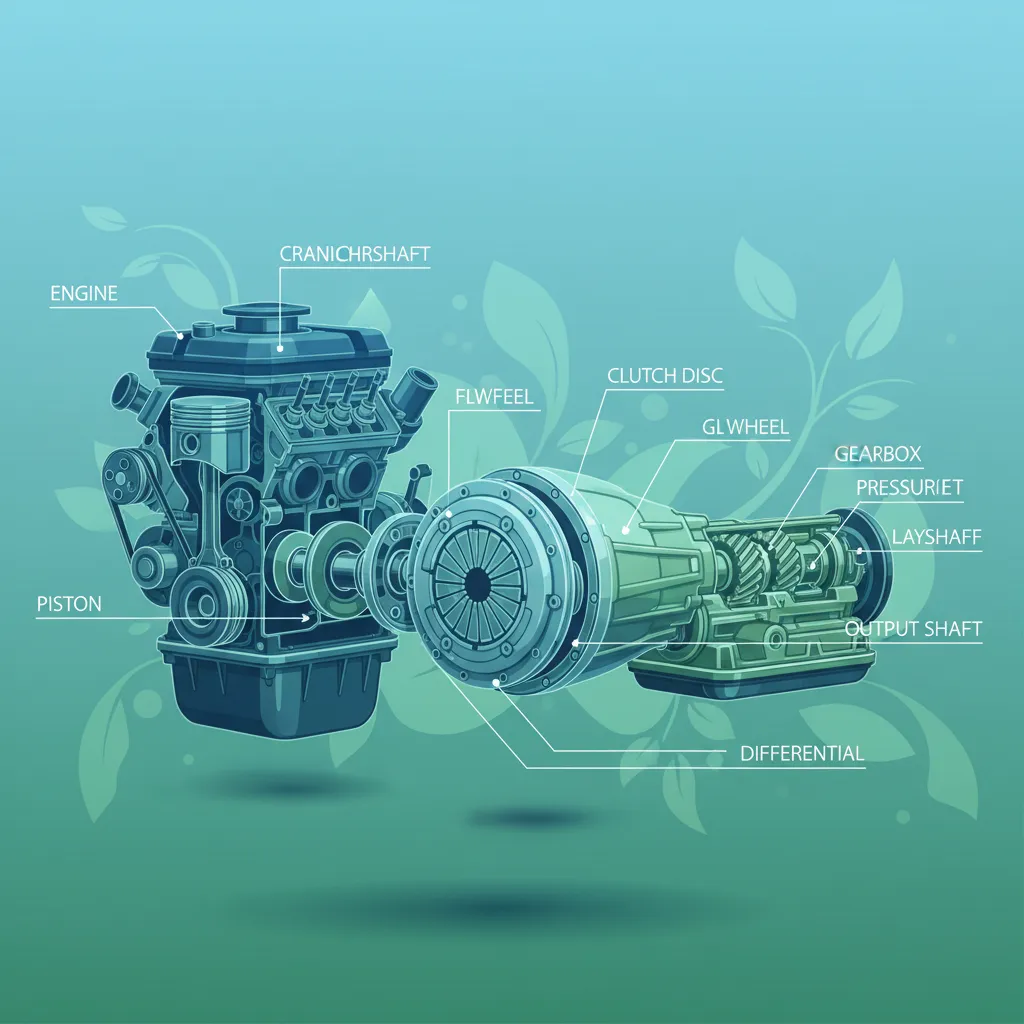
This lesson introduces the core powertrain components of a tractor, detailing how the engine generates torque and how the gearbox translates this power into usable speed ranges. It explains the role of the clutch in managing power transfer, including proper engagement techniques for smooth acceleration. The lesson also covers the impact of gear selection on fuel efficiency and vehicle control on various terrains.
This lesson explains the specialized techniques required for initiating movement and bringing a heavy, loaded truck to a halt. It emphasizes fine clutch and throttle control to overcome inertia without causing driveline stress or cargo shift. Learners will also study methods for smooth, gradual braking that account for the vehicle's significant momentum, ensuring safety, passenger comfort, and the integrity of the cargo while minimizing wear on the braking system.
This lesson introduces the principles of eco-driving, a set of techniques designed to minimize fuel consumption and emissions. It explains how factors like smooth acceleration, maintaining a steady speed, and anticipating traffic flow can lead to significant fuel savings. Learners will understand the benefits of reducing unnecessary idling, using cruise control effectively on appropriate terrain, and planning routes to avoid congestion, contributing to both economic and environmental sustainability.
Master engine braking techniques, including compression brakes and retarders, for safe speed control on descents. Understand legal requirements and best practices for heavy goods vehicles in Poland.
This lesson is dedicated to the critical braking systems of heavy goods vehicles. It provides a detailed explanation of the air brake system, including the compressor, air tanks, and brake chambers, and highlights the safety function of the dual-circuit design. Learners will also differentiate between various types of auxiliary braking systems, such as engine brakes and retarders, and understand their role in managing speed and preventing service brake overheating on steep gradients.
This lesson focuses on optimizing powertrain performance through skilled driving techniques. It teaches learners how to select the correct gears and shift points by understanding the engine's torque curve, which is crucial for both efficient acceleration and fuel economy. Additionally, the content details the proper application of engine braking and retarders to control speed on descents, preserving the service brakes and maintaining vehicle control without excessive fuel use.
This lesson focuses on the critical procedures for executing an emergency stop with an air-braked vehicle. It explains how to apply firm, steady pressure to the brake pedal to achieve maximum braking force without locking the wheels, which could lead to a loss of control. The content also discusses the response time of air brake systems and how to manage the significant forces of deceleration when the vehicle is fully loaded, ensuring the quickest possible stop in a crisis situation.
This lesson explains the specialized techniques required for initiating movement and bringing a heavy, loaded truck to a halt. It emphasizes fine clutch and throttle control to overcome inertia without causing driveline stress or cargo shift. Learners will also study methods for smooth, gradual braking that account for the vehicle's significant momentum, ensuring safety, passenger comfort, and the integrity of the cargo while minimizing wear on the braking system.
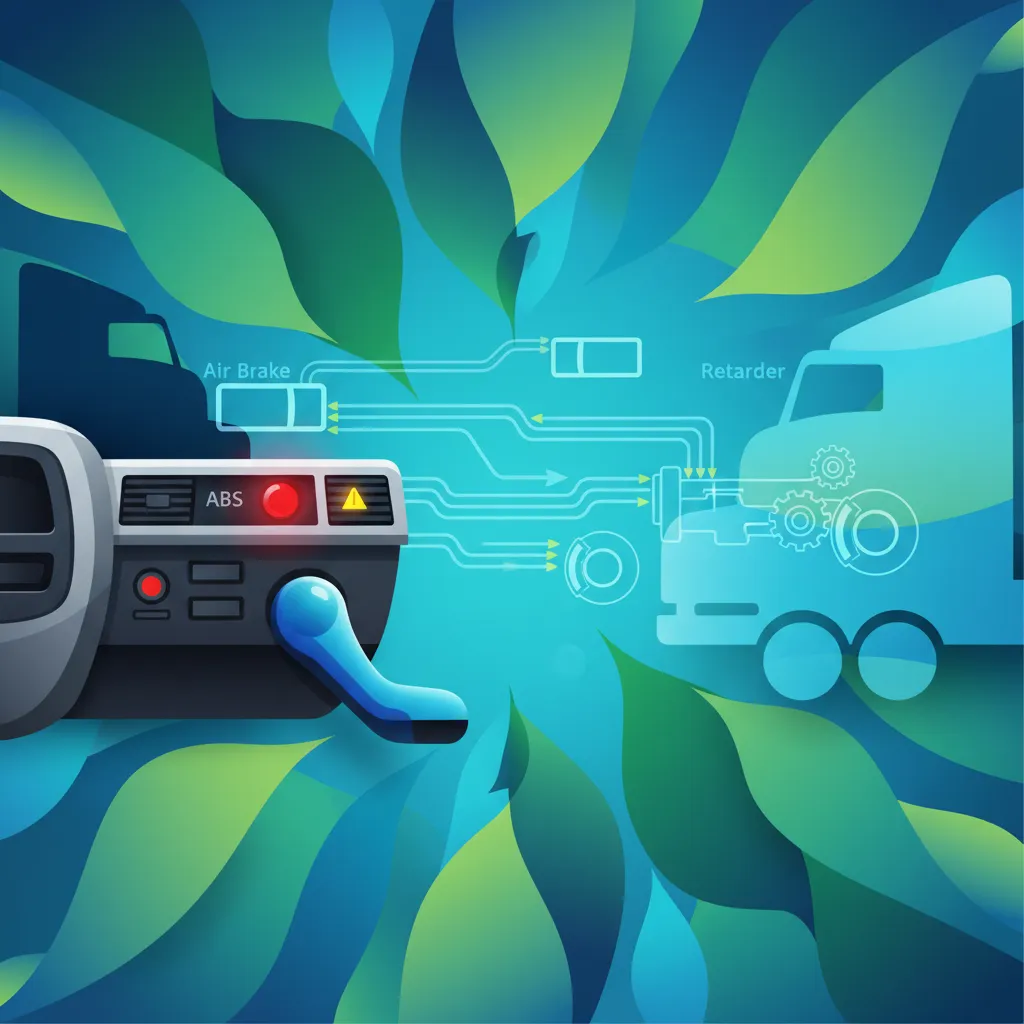
This lesson covers the braking mechanisms specific to large passenger vehicles, focusing on air brake systems and retarders. Learners will understand the components and operation of service and parking brakes, as well as the function of ABS and ESC. It also addresses strategies for emergency braking and the importance of regular maintenance for optimal performance.
This lesson provides essential knowledge for responding to sudden and dangerous vehicle malfunctions. It outlines step-by-step procedures for handling a catastrophic tire blowout, managing a loss of braking power, and reacting to a shift in cargo that destabilizes the vehicle. The focus is on maintaining as much control as possible, bringing the vehicle to a safe stop away from traffic, and activating hazard warnings to protect the scene and other road users.

This lesson teaches the fundamentals of safely reversing a bus using mirrors, cameras, and alarms. It covers low-speed control essential for depot navigation, where precise steering is required to avoid collisions. Specific techniques for handling articulated buses and coordinating with ground staff are also discussed to ensure safe maneuvers.

This lesson addresses the high-risk maneuver of reversing a large truck. It provides systematic techniques for using mirrors and, if available, cameras to monitor the vehicle's path, while strongly emphasizing the importance of managing extensive blind spots. Learners will study procedures for maneuvering within tight spaces like loading docks and yards, including the proper use of a spotter (banksman) to ensure the area is clear and to provide guidance, minimizing the risk of collisions.
Find clear answers to common questions learners have about Engine and Powertrain Overview. Learn how the lesson is structured, which driving theory objectives it supports, and how it fits into the overall learning path of units and curriculum progression in Poland. These explanations help you understand key concepts, lesson flow, and exam focused study goals.
Torque is the rotational force that the engine produces, essential for accelerating from a standstill or climbing hills with heavy loads. Horsepower measures the rate at which the engine can do work, indicating its overall power output at higher speeds. Both are critical for different aspects of HGV operation.
Diesel engines are preferred for HGVs due to their higher torque output at lower RPMs, greater fuel efficiency compared to gasoline engines, and durability under heavy loads. They are also better suited for the demanding work cycles of commercial transport.
A turbocharger uses exhaust gases to spin a turbine, which in turn drives a compressor. This compressor forces more air into the engine's cylinders, allowing for more fuel to be burned efficiently. The result is increased power and torque, especially at higher altitudes or under load, without significantly increasing engine size.
Engine braking, also known as dynamic or exhaust braking, uses the engine itself to slow the vehicle down, much like downshifting on a manual car but often amplified by dedicated systems. It's crucial for managing speed on long descents, saving wear on service brakes, and preventing overheating.
The engine is the source of power, while the powertrain is the complete system that delivers that power to the drive wheels. It includes the engine, transmission, driveshaft, differential, and axles. Understanding both is key for Category C drivers.
Build custom practice sessions tailored precisely to your needs. Focus on areas requiring improvement, review specific Polish road signs, or master complex traffic rules to ensure full preparation for your official driving license exam.