
This lesson delves into the crucial transmission and drivetrain systems of heavy goods vehicles. You will learn about manual and automated manual transmissions, understand the role of components like the clutch, drive shafts, and differential, and master effective gear shifting strategies. This knowledge is essential for efficient power delivery, fuel economy, and reducing wear, directly preparing you for relevant questions in your Polish Category C theory exam.

Lesson content overview
The transmission and drivetrain are fundamental systems in any heavy goods vehicle (HGV), acting as the crucial link between the engine's power output and the wheels that move the truck. For aspiring Category C drivers, a deep understanding of these components and their proper operation is not merely theoretical knowledge; it is essential for ensuring efficient power delivery, optimizing fuel economy, reducing mechanical wear, and maintaining vehicle safety across diverse road conditions and loads. This lesson will provide a comprehensive overview, equipping you with the expertise needed for both the Polish Category C theory exam and responsible real-world driving.
At its heart, the drivetrain is responsible for transmitting the engine's rotational force, known as torque, to the driving wheels. This complex series of mechanically linked components ensures that the power generated by the engine is effectively converted and delivered to propel the heavy goods vehicle. Mastering the selection of the correct gear ratio and managing the flow of power through the drivetrain is paramount for achieving optimal traction, precise speed control, and maintaining the engine's performance within its most efficient operating range.
Improper management of the drivetrain can lead to significant safety hazards, such as stalling on steep inclines or overheating service brakes on descents due to a lack of engine braking. From a physics perspective, the drivetrain demonstrates principles of torque multiplication, rotational speed conversion, and friction management, all of which dictate a vehicle's acceleration and deceleration capabilities. Furthermore, Polish road regulations specifically require drivers to operate vehicles in a gear appropriate to their speed, load, and road grade to prevent undue strain on the drivetrain and uphold overall road safety.
Transmissions are sophisticated mechanisms designed to alter the gear ratio between the engine and the drive wheels, thereby controlling the vehicle's torque and speed output. Heavy goods vehicles typically employ either a manual transmission or an automated manual transmission, each with distinct operational characteristics.
A Manual Transmission (MT) requires the driver to manually select gears using a gear lever and to operate the clutch pedal simultaneously. This traditional system offers drivers direct control over gear selection, allowing for precise adjustments to match varying road conditions, load weights, and desired engine RPMs (revolutions per minute). While demanding a higher level of driver skill and coordination, particularly during frequent shifting, MTs can provide optimal control in challenging situations, such as delicate maneuvering or when maximum engine braking is required.
An Automated Manual Transmission (AMT) combines elements of both manual and automatic systems. In an AMT, the clutch actuation and gear selection are handled by an electro-hydraulic system, reducing the driver's workload significantly. The driver initiates gear changes via a selector lever or paddles, but the system manages the precise timing of clutch engagement and disengagement. AMTs reduce driver fatigue, especially in congested traffic, and often feature sophisticated electronic control units (ECUs) that optimize shift points for fuel efficiency. However, it is crucial for drivers to understand that an AMT does not negate the need for gear knowledge; incorrect choices, even if initiated by the driver, can still lead to suboptimal performance or increased wear.
The clutch is a vital component that acts as the intermediary between the engine and the transmission, enabling the driver to connect or disconnect engine power to the gearbox smoothly. This controlled coupling is essential for starting the vehicle from a standstill, changing gears without stalling the engine, and bringing the vehicle to a stop.
The heavy truck clutch assembly typically comprises several key components:
When the clutch pedal is fully engaged (pedal up), the pressure plate clamps the friction disc against the flywheel, transmitting engine torque to the transmission. Depressing the clutch pedal releases the pressure plate, disconnecting the engine's torque from the gearbox, thereby allowing for a gear change without grinding gears or stalling the engine.
Correct clutch usage is paramount for the longevity of the drivetrain and smooth vehicle operation. Improper use can lead to premature wear, overheating, and even stalling.
When starting or changing gears, depress the clutch pedal fully to ensure complete disengagement. Release the clutch smoothly and progressively, allowing the engine RPMs to match the transmission speed as the clutch friction disc gradually engages with the flywheel. This "feathering" action is critical for heavy loads.
Common mistakes include "riding the clutch," where the pedal is partially engaged for extended periods, generating excessive heat and wear. Abrupt clutch release can cause harsh jerks, especially with a heavy load, potentially damaging drivetrain components or upsetting the cargo. Using the clutch as a brake by partially engaging it while holding the vehicle on an incline is also highly discouraged due to the rapid wear it causes.
The gearbox, also known as the transmission, is an intricate assembly of gears designed to provide multiple gear ratios, allowing the driver to select the appropriate amount of torque and speed for any driving situation. It is the central component that converts the high rotational speed and relatively low torque of the engine into the lower rotational speed and higher torque required to move a heavy truck.
Inside the gearbox, various sets of gears are arranged. Each gear set consists of at least two meshing gears (a driving gear and a driven gear) that create a specific gear ratio. A high gear ratio (e.g., 10:1 for 1st gear) means the engine rotates ten times for every one rotation of the transmission output shaft, multiplying torque significantly for starting or climbing. Conversely, a low gear ratio (e.g., 1:1 or less for top gear) provides less torque multiplication but allows higher road speeds at lower engine RPMs for cruising.
In a manual transmission, synchronizers are crucial for smooth gear engagement. These devices are designed to match the rotational speeds of the input shaft and the gear that is about to be selected, preventing gear grinding and making shifting easier. Without synchronizers, the driver would have to perfectly rev-match the engine speed manually, which is a highly skilled maneuver.
Shift forks are components that physically move the gear collars or sleeves along the transmission shafts, engaging the desired gear set. The gear lever, operated by the driver, is mechanically linked to these shift forks. It is vital to allow gears to engage fully before releasing the clutch; forcing gear engagement can lead to serious damage to the gear teeth and synchronizers.
Once the power has been processed by the gearbox, it must be transmitted to the drive wheels, often located at a distance from the transmission and requiring flexibility to accommodate suspension movement. This is the role of the drive shafts and universal joints.
The propeller shaft, often referred to simply as the drive shaft, is a rotating shaft that transmits torque from the gearbox output shaft to the differential. Heavy trucks may have one or more propeller shafts, sometimes connected by intermediate bearings, depending on the chassis length and axle configuration.
Universal Joints (U-Joints) are flexible couplings located at each end of the propeller shaft (and sometimes within the shaft itself). Their primary function is to allow the transmission of torque through an angle, compensating for the angular misalignment and changes in length that occur as the vehicle's suspension travels up and down. Without U-joints, the rigid propeller shaft would bind or break due to chassis movement. Some modern trucks may also use Constant Velocity (CV) joints, which offer smoother operation at higher angles. Regular visual inspection of drive shafts and U-joints for wear, cracks, or excessive play is essential, as ignoring noises like squeaks or vibrations can lead to mechanical failure.
The differential is a complex gear assembly located in the drive axle(s) that performs a critical function: it splits the engine's torque between the left and right drive wheels while simultaneously allowing them to rotate at different speeds. This capability is absolutely essential for safe and controlled cornering. When a truck turns, the outer wheel travels a greater distance than the inner wheel, requiring it to spin faster. Without a differential, both wheels would be forced to rotate at the same speed, causing one wheel to drag or slip, leading to tire wear and loss of control.
There are several types of differentials, each designed for different operational needs:
The differential lock is a powerful tool for traction, but its use is strictly regulated and must be understood.
Important Rule: A locking differential must only be engaged at low speeds, typically not exceeding 30 km/h, and only when absolutely necessary (e.g., when a wheel is losing traction on a slippery surface). It must be disengaged before entering higher-speed travel or making turns on firm ground. Driving with the differential locked on dry pavement, especially at speed or during turns, causes severe drivetrain binding, excessive tire wear, and can lead to dangerous loss of control or mechanical damage. This is a mandatory safety regulation in Europe.
The final drive is the last stage of gear reduction in the drivetrain before power reaches the differential and, subsequently, the drive wheels. Often integrated within the axle housing, it consists of a set of gears (typically a pinion gear and a large ring gear) that further reduce the rotational speed from the propeller shaft and significantly increase the torque delivered to the wheels.
The gear ratio of the final drive is a critical factor in determining the overall performance characteristics of the heavy goods vehicle. A "higher" numerical final drive ratio (e.g., 4.10:1) provides more torque multiplication, which is beneficial for heavy hauling, climbing steep grades, and lower top speeds. A "lower" numerical ratio (e.g., 3.08:1) results in less torque multiplication but allows for higher road speeds at lower engine RPMs, promoting better fuel economy during highway cruising with lighter loads. Proper maintenance of the final drive oil is mandatory, as contamination or low levels can lead to rapid gear failure.
Effective gear ratio selection is a cornerstone of professional heavy goods vehicle driving. It allows the driver to match the engine's power output with the demands of the road, load, and desired speed, ensuring optimal torque, fuel efficiency, and reduced wear on the entire powertrain.
The weight of your cargo significantly influences your shifting strategy. A heavier load increases the vehicle's inertia and gravitational resistance, requiring more torque to accelerate and maintain speed. Therefore:
Road gradient is another critical factor:
Most modern diesel truck engines are designed to operate most efficiently within a specific RPM range, often referred to as the "sweet spot" or "green band," which is typically between 1200 RPM and 1800 RPM. Staying within this optimal band when cruising or accelerating gently minimizes fuel consumption and reduces engine wear.
Efficient Shifting: Shift up before reaching the engine's maximum RPM limit to avoid over-revving. Conversely, downshift before the engine RPM drops too low, preventing "lugging" which strains the engine and wastes fuel. Always aim to keep the engine working within its optimal efficiency band.
Effective speed management in heavy goods vehicles relies heavily on auxiliary braking systems to supplement the primary service brakes. Engine braking and retarders are indispensable for maintaining control, especially on long descents, and for preventing service brake fade.
Engine braking refers to the technique of using the engine's natural compression resistance to slow the vehicle. This is achieved by selecting a lower gear, which forces the engine to spin faster. When the accelerator is released, the engine acts as an air compressor, creating resistance that helps to decelerate the vehicle without engaging the service brakes. Many heavy trucks are also equipped with dedicated engine brake systems (often colloquially called "Jake brakes," after the Jacobs Vehicle Systems brand), which modify the engine's valve timing to further enhance this compression braking effect.
Using engine braking is crucial for:
In addition to engine braking, many heavy trucks are fitted with dedicated retarder systems that provide powerful auxiliary braking independent of the service brakes. These can be:
Retarders are highly effective and can sustain braking effort for extended periods without overheating, making them indispensable for heavy vehicles operating in mountainous or hilly terrain.
While an AMT significantly reduces the physical effort of shifting, it does not eliminate the need for driver knowledge and strategic input. Drivers operating trucks with AMTs must understand the system's capabilities and limitations.
AMTs typically offer different operational modes:
Even with an AMT, the driver remains responsible for selecting the appropriate gear for the conditions. In challenging terrain, relying solely on fully automatic mode might not always provide the most optimal or safest gear choice. Manual intervention is often required to proactively select a lower gear for engine braking or to maintain power on steep climbs.
Adherence to specific rules and regulations regarding drivetrain operation is not only crucial for safety and efficiency but is also legally mandated for heavy goods vehicle drivers in Poland and across the EU.
The driver must select a gear that appropriately matches the vehicle’s current speed and load, ensuring that the engine's revolutions per minute (RPM) remain within the manufacturer’s recommended operating range.
This rule is applicable in all driving scenarios, becoming particularly mandatory on steep gradients and during overtaking maneuvers. Operating an engine outside its recommended RPM range (e.g., over-revving or lugging) can be cited as driver negligence under vehicle misuse laws, leading to engine damage, unpredictable vehicle response, and compromise of road safety. For example, when ascending a 5% uphill gradient, shifting to 4th gear to maintain approximately 1800 RPM is correct, whereas remaining in 3rd gear and causing the engine to exceed 3500 RPM risks severe engine damage.
The vehicle must not be driven in neutral gear on any public road while in motion, unless it is specifically when starting from a complete standstill.
This is a mandatory rule under Polish road law (§38). Driving in neutral (coasting) deprives the driver of engine braking, significantly reduces vehicle control (as the engine is disconnected from the drive wheels), and can increase wear on the transmission due to sudden re-engagement. For instance, maintaining 4th gear while cruising at 80 km/h is correct, but coasting in neutral down a slope could lead to uncontrolled acceleration and loss of control.
When descending a gradient steeper than 4% for a distance exceeding 100 meters, the driver is legally obliged to use engine braking (by selecting a lower gear or engaging a retarder) to safely control and maintain vehicle speed.
This rule is mandatory under the Polish traffic code, which emphasizes the reduction of speed without over-reliance on service brakes. Its rationale is to prevent brake overheating (fade) and maintain vehicle control, which is vital for heavy vehicles. Correct behavior would be shifting to 3rd gear on a 6% descent to keep speed under 70 km/h, as opposed to continuously riding the service brake pedal.
Before commencing each trip, the driver is legally required to verify that the clutch, gearbox, drive shafts, and differential are in proper working condition, reporting any abnormal noises or signs of malfunction.
This forms a critical part of the pre-trip vehicle inspection checklist (covered in Lesson 2.5) and is mandatory for commercial vehicle roadworthiness. Its purpose is to prevent mechanical failures that could lead to accidents or breakdowns.
A locking differential may only be engaged at speeds not exceeding 30 km/h and must be disengaged before the vehicle enters high-speed traffic or maneuvers on firm surfaces.
This is a mandatory European vehicle regulation aimed at preventing excessive drivetrain stress and tire wear. Driving with the differential locked on dry pavement can cause severe "drivetrain binding" where the wheels are forced to rotate at the same speed even when turning, leading to damage.
Understanding common errors associated with drivetrain operation is crucial for preventing mechanical damage and ensuring safety.
Drivetrain management is not a one-size-fits-all approach; it must be adapted to various external and internal factors.
Understanding the direct consequences of your actions is key to safe and efficient HGV operation.
Mastering the mechanics of the transmission and drivetrain is fundamental for every professional Category C heavy goods vehicle driver. This lesson has detailed the intricacies of manual and automated manual transmissions, the critical role of the clutch, the functions of the gearbox, drive shafts, universal joints, and the differential. We explored advanced gear shifting strategies tailored for varying loads and terrains, emphasizing optimal RPM management for fuel efficiency and reduced wear.
Crucially, you have learned about the indispensable safety role of engine braking and retarders, particularly on descents, and gained a thorough understanding of Polish and EU legal obligations regarding gear selection, neutral driving, and differential lock usage. By internalizing these principles and avoiding common operational mistakes, you will not only ensure the longevity and reliability of your vehicle but, most importantly, significantly enhance your safety and the safety of other road users. This knowledge forms a vital bridge between theoretical understanding and the practical demands of operating heavy vehicles responsibly on national and international routes.
This lesson covers heavy goods vehicle transmission and drivetrain systems essential for Polish Category C drivers, explaining manual and automated manual transmissions, clutch operation, gearbox mechanics, drive shafts, and differentials. Key topics include proper gear shifting strategies based on load and terrain, RPM management for fuel efficiency, and the critical safety role of engine braking and retarders on descents. Polish and EU regulations mandate appropriate gear selection, prohibit coasting in neutral, and require engine braking on steep gradients. Understanding component functions, avoiding common operational mistakes like clutch riding and differential lock misuse, and applying contextual management for weather and road conditions ensures safe, efficient, and legally compliant HGV operation.
A short set of high-value points that capture the most important learning from this lesson.
The drivetrain transmits engine torque to the driving wheels, with gear ratios determining the balance between speed and torque multiplication for different driving conditions.
Manual transmissions offer precise driver control, while automated manual transmissions (AMT) reduce workload but still require driver knowledge for optimal gear selection.
Differentials allow drive wheels to rotate at different speeds during cornering, with locking differentials providing maximum traction but only at speeds below 30 km/h.
Engine braking is mandatory on descents steeper than 4% exceeding 100 metres to prevent brake fade and maintain vehicle control.
Polish law prohibits driving in neutral gear on public roads and requires selecting gears appropriate to speed and load to prevent engine lugging or over-revving.
Explore all units and lessons included in this driving theory course.
Clutch engagement should be smooth and progressive, especially with heavy loads, to prevent drivetrain damage; never ride the clutch or use it as a brake on inclines.
Optimal diesel engine operation typically falls within a 1200–1800 RPM efficiency band, with upshifting before redline and downshifting before the RPM drops too low.
Differential lock must be disengaged before high-speed travel or turning on firm surfaces to prevent drivetrain binding and dangerous handling characteristics.
Retarder systems (exhaust, hydraulic, electromagnetic) can sustain braking effort for extended periods without overheating, unlike service brakes.
Gear selection must adapt to load weight, road gradient, and weather conditions, with heavier loads and uphill terrain requiring lower gears.
Over-revving the engine in a low gear strains components and wastes fuel; always upshift proactively before reaching the RPM limit.
Coasting in neutral on descents eliminates engine braking and forces sole reliance on service brakes, risking dangerous brake fade.
Riding the clutch on hill starts generates excessive heat and causes rapid clutch disc wear; use the service brake or parking brake instead.
Driving with differential lock engaged at speed or on dry surfaces causes drivetrain binding, excessive tire wear, and potential loss of control.
Lugging the engine by using too high a gear with a heavy load results in poor fuel economy, increased emissions, and premature engine and transmission wear.
Lesson content overview
A short set of high-value points that capture the most important learning from this lesson.
The drivetrain transmits engine torque to the driving wheels, with gear ratios determining the balance between speed and torque multiplication for different driving conditions.
Manual transmissions offer precise driver control, while automated manual transmissions (AMT) reduce workload but still require driver knowledge for optimal gear selection.
Differentials allow drive wheels to rotate at different speeds during cornering, with locking differentials providing maximum traction but only at speeds below 30 km/h.
Engine braking is mandatory on descents steeper than 4% exceeding 100 metres to prevent brake fade and maintain vehicle control.
Polish law prohibits driving in neutral gear on public roads and requires selecting gears appropriate to speed and load to prevent engine lugging or over-revving.
Explore all units and lessons included in this driving theory course.
Clutch engagement should be smooth and progressive, especially with heavy loads, to prevent drivetrain damage; never ride the clutch or use it as a brake on inclines.
Optimal diesel engine operation typically falls within a 1200–1800 RPM efficiency band, with upshifting before redline and downshifting before the RPM drops too low.
Differential lock must be disengaged before high-speed travel or turning on firm surfaces to prevent drivetrain binding and dangerous handling characteristics.
Retarder systems (exhaust, hydraulic, electromagnetic) can sustain braking effort for extended periods without overheating, unlike service brakes.
Gear selection must adapt to load weight, road gradient, and weather conditions, with heavier loads and uphill terrain requiring lower gears.
Over-revving the engine in a low gear strains components and wastes fuel; always upshift proactively before reaching the RPM limit.
Coasting in neutral on descents eliminates engine braking and forces sole reliance on service brakes, risking dangerous brake fade.
Riding the clutch on hill starts generates excessive heat and causes rapid clutch disc wear; use the service brake or parking brake instead.
Driving with differential lock engaged at speed or on dry surfaces causes drivetrain binding, excessive tire wear, and potential loss of control.
Lugging the engine by using too high a gear with a heavy load results in poor fuel economy, increased emissions, and premature engine and transmission wear.
Explore search topics learners often look for when studying Transmission and Drivetrain Mechanics. These topics reflect common questions about road rules, driving situations, safety guidance, and lesson level theory preparation for learners in Poland.
Browse additional driving theory lessons that cover connected traffic rules, road signs, and common driving situations related to this topic. Improve your understanding of how different rules interact across everyday traffic scenarios.
Explore the detailed mechanics of heavy goods vehicle transmissions, differentials, and power transfer systems. Understand complex component functions and their impact on performance for Polish Category C drivers. Essential theory for safe operation.

This lesson explores the key components responsible for vehicle stability and control. It compares different suspension technologies, like traditional leaf springs and modern air suspension, and explains their impact on ride quality and load handling. Learners will also study the principles of hydraulic power steering and the importance of correct wheel alignment, as well as understand how different axle configurations affect load distribution and maneuverability.
This lesson focuses on optimizing powertrain performance through skilled driving techniques. It teaches learners how to select the correct gears and shift points by understanding the engine's torque curve, which is crucial for both efficient acceleration and fuel economy. Additionally, the content details the proper application of engine braking and retarders to control speed on descents, preserving the service brakes and maintaining vehicle control without excessive fuel use.
This lesson is dedicated to the critical braking systems of heavy goods vehicles. It provides a detailed explanation of the air brake system, including the compressor, air tanks, and brake chambers, and highlights the safety function of the dual-circuit design. Learners will also differentiate between various types of auxiliary braking systems, such as engine brakes and retarders, and understand their role in managing speed and preventing service brake overheating on steep gradients.
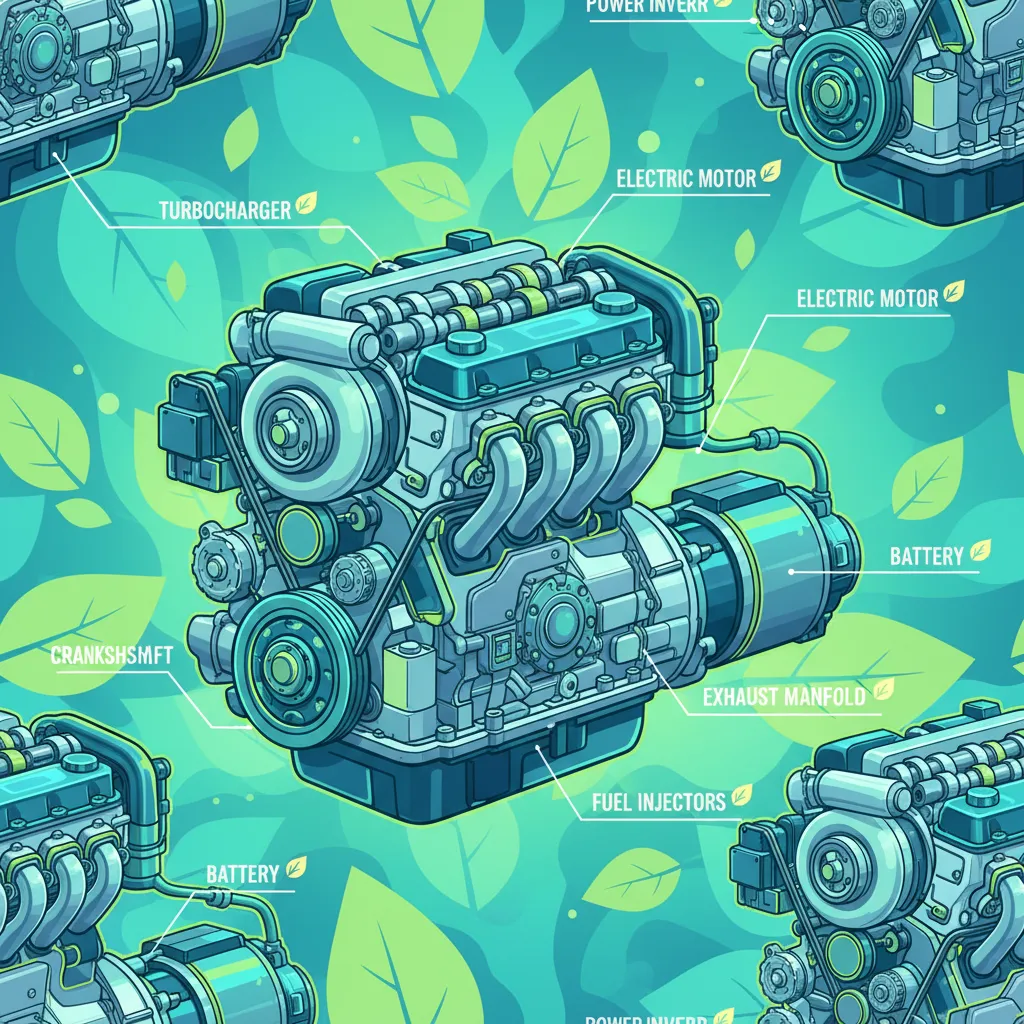
This lesson introduces the fundamental principles of the diesel engines that power Category C vehicles. It covers key concepts such as torque, horsepower, fuel injection, and the role of turbocharging in generating power efficiently. Learners will also analyze how the powertrain transfers energy to the wheels and understand the practical application of engine braking as a primary method for controlling vehicle speed, especially on long descents, to reduce wear on service brakes.
This lesson explains the specialized techniques required for initiating movement and bringing a heavy, loaded truck to a halt. It emphasizes fine clutch and throttle control to overcome inertia without causing driveline stress or cargo shift. Learners will also study methods for smooth, gradual braking that account for the vehicle's significant momentum, ensuring safety, passenger comfort, and the integrity of the cargo while minimizing wear on the braking system.
This lesson focuses on the braking systems found on Category T vehicles, covering both service brakes for motion control and parking brakes for stability. It examines how braking performance varies with load and terrain and outlines safe stopping distances. The lesson also explains the operation of the power take-off (PTO), describing how power is transferred to implements and the safety precautions required during use.

This lesson provides a detailed breakdown of vehicle classifications relevant to the Category C licence. It explains the concept of 'dopuszczalna masa całkowita' (permissible total weight) and how it defines a vehicle's category. Learners will identify different truck types, such as rigid vehicles, based on their axle configurations and understand the specific roadworthiness and registration requirements for each class, ensuring correct vehicle operation under the law.
This lesson explores the dynamic relationship between cargo weight and a vehicle's performance. It explains how increased mass raises kinetic energy, significantly lengthening braking distances and requiring earlier, more gradual brake application. Learners will also analyze how a heavy or poorly distributed load alters the vehicle's handling characteristics, particularly during cornering, and understand the necessity of adjusting speed and driving style to compensate for these effects.
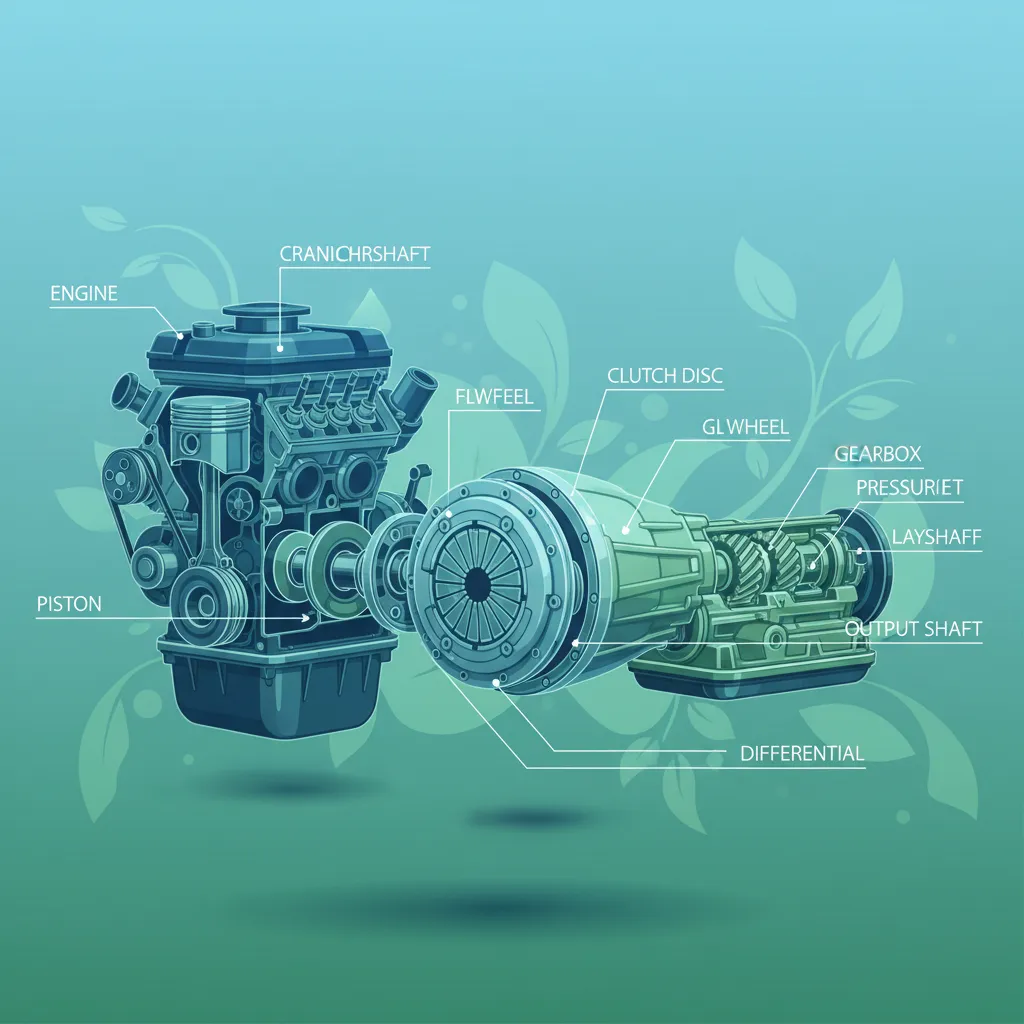
This lesson introduces the core powertrain components of a tractor, detailing how the engine generates torque and how the gearbox translates this power into usable speed ranges. It explains the role of the clutch in managing power transfer, including proper engagement techniques for smooth acceleration. The lesson also covers the impact of gear selection on fuel efficiency and vehicle control on various terrains.

This lesson provides an overview of powertrain technologies in modern buses, including diesel, hybrid, and electric systems. It covers the function of engines and transmissions and their impact on acceleration and fuel economy. Emphasis is placed on understanding emissions standards like Euro 6 and the principles of efficient power management.
Learn how to manage heavy truck transmissions and drivetrains effectively in various Polish driving conditions. Covers load, weather, and legal requirements for optimal performance and safety, focusing on practical theory application.
This lesson details the specific protocols for overtaking and changing lanes in a heavy goods vehicle. It explains the importance of calculating sufficient space and speed differential before committing to a pass, while constantly being aware of the large blind spots around the truck. The content also covers procedures for safely merging onto highways and maintaining correct lane positioning to facilitate smooth and predictable traffic flow for all road users.
This lesson explains the specialized techniques required for initiating movement and bringing a heavy, loaded truck to a halt. It emphasizes fine clutch and throttle control to overcome inertia without causing driveline stress or cargo shift. Learners will also study methods for smooth, gradual braking that account for the vehicle's significant momentum, ensuring safety, passenger comfort, and the integrity of the cargo while minimizing wear on the braking system.
This lesson provides a detailed breakdown of vehicle classifications relevant to the Category C licence. It explains the concept of 'dopuszczalna masa całkowita' (permissible total weight) and how it defines a vehicle's category. Learners will identify different truck types, such as rigid vehicles, based on their axle configurations and understand the specific roadworthiness and registration requirements for each class, ensuring correct vehicle operation under the law.
This lesson focuses on optimizing powertrain performance through skilled driving techniques. It teaches learners how to select the correct gears and shift points by understanding the engine's torque curve, which is crucial for both efficient acceleration and fuel economy. Additionally, the content details the proper application of engine braking and retarders to control speed on descents, preserving the service brakes and maintaining vehicle control without excessive fuel use.

This lesson provides a comprehensive breakdown of the right-of-way rules that govern intersections. It explains the clear directives given by traffic lights, stop signs, and yield signs, and clarifies the procedures at unmarked or uncontrolled intersections, where the 'priority to the right' rule often applies. Learners will understand the legal hierarchy of these rules to make correct, safe, and predictable decisions when navigating through any junction, reducing the risk of conflict with other traffic.

This lesson equips drivers with the skills to operate a large vehicle within the challenging confines of an urban environment. It addresses how to navigate narrow streets, deal with traffic calming measures, and manage frequent stop-and-go situations while being vigilant for pedestrians and other road users. The content also emphasizes the importance of meticulous route planning to avoid unsuitable roads and the use of anticipation to maintain smooth progress and minimize disruption in congested areas.
This lesson focuses on the specific challenges HGVs face when navigating roundabouts. It details the correct procedure for approach, including selecting the appropriate lane based on the intended exit and yielding to traffic already circulating. The content emphasizes the need to account for the vehicle's large turning radius and off-tracking to avoid encroaching on adjacent lanes or mounting curbs, ensuring a smooth and safe passage through the roundabout.
This lesson explores the key components responsible for vehicle stability and control. It compares different suspension technologies, like traditional leaf springs and modern air suspension, and explains their impact on ride quality and load handling. Learners will also study the principles of hydraulic power steering and the importance of correct wheel alignment, as well as understand how different axle configurations affect load distribution and maneuverability.

This lesson examines the signs that convey dimensional and weight restrictions, which are vital for safe tractor and trailer operation. It outlines how to read width, height, and weight limit signs and the legal implications of exceeding these limits. The lesson provides guidance on planning loads to comply with bridge and road classification restrictions found across Polish rural networks.
This lesson outlines the statutory speed limits that professional drivers of Category C vehicles must adhere to on Polish roads. It clearly distinguishes the maximum permitted speeds in built-up areas, on single carriageways, and on motorways. The content also explains how to interpret road signs that may indicate temporary or vehicle-specific speed restrictions, ensuring drivers remain compliant with the law and avoid penalties from speed enforcement measures.
Find clear answers to common questions learners have about Transmission and Drivetrain Mechanics. Learn how the lesson is structured, which driving theory objectives it supports, and how it fits into the overall learning path of units and curriculum progression in Poland. These explanations help you understand key concepts, lesson flow, and exam focused study goals.
Manual transmissions require the driver to operate the clutch pedal and select gears manually. AMTs, common in modern Polish HGVs, automate clutch and gear selection, often offering better fuel efficiency and reducing driver fatigue, though the driver can still intervene.
A heavier load requires lower gears for starting and accelerating, demanding more torque. When driving uphill with a heavy load, you'll need to downshift sooner to maintain power, while downhill might require using engine braking in a lower gear to control speed and prevent brake fade.
The differential allows the wheels on the same axle to rotate at different speeds, which is crucial when turning. Without it, the wheels would skid and scrub, especially with multi-axle HGVs. In Poland, understanding this helps predict vehicle behavior in turns.
Yes, improper gear shifting, such as forcing gears, shifting too early or too late under heavy load, or harsh clutch engagement, can lead to accelerated wear on the clutch, gears, and other drivetrain components, potentially causing costly repairs and breakdowns.
Engine braking helps control vehicle speed, especially on long descents, reducing reliance on service brakes and preventing overheating and fade. It's crucial for safety, particularly with heavy loads on Polish mountainous or hilly roads, and is often tested in the theory exam.
Build custom practice sessions tailored precisely to your needs. Focus on areas requiring improvement, review specific Polish road signs, or master complex traffic rules to ensure full preparation for your official driving license exam.