
Welcome to the 'Suspension, Steering, and Axle Configurations' lesson, a key part of Unit 2: Vehicle Construction, Systems, and Technical Inspection for your Polish Category C licence. Understanding these critical components is vital for safe operation and passing your theory exam, building on your knowledge of basic vehicle systems.

Lesson content overview
Driving a heavy goods vehicle (HGV) requires a deep understanding of its complex mechanical systems. Among the most critical components for safety, stability, and control are the suspension, steering, and axle configurations. These systems work in concert to absorb road shocks, provide directional control, and ensure that the immense weight of the vehicle and its cargo is distributed legally and safely.
This lesson, part of the Polish Category C Heavy Goods Vehicle Theory curriculum, will explore the intricate workings of these systems. We will delve into different suspension technologies, examine the principles of steering, and analyze how various axle arrangements impact a vehicle's performance and compliance with regulations. A thorough grasp of these topics is essential for any aspiring professional truck driver, ensuring optimal vehicle wear, efficient cargo transport, and, most importantly, safe operation on national and international routes.
The suspension system is the critical link between a vehicle's wheels and its chassis, playing a pivotal role in absorbing road irregularities and maintaining consistent tyre contact with the road surface. This continuous contact is fundamental for effective braking, steering, and overall vehicle stability, especially when carrying heavy and shifting loads. Without a functional suspension, every bump and dip in the road would directly transfer to the chassis, leading to excessive wear, driver discomfort, and a significant loss of control.
Heavy goods vehicles employ various suspension types, each with distinct characteristics tailored to different operational demands for load capacity, ride comfort, and durability. Understanding these differences is key to appreciating a vehicle's capabilities and limitations.
Leaf-spring suspension systems are among the oldest and most widely used designs in heavy vehicles due to their simplicity, robustness, and high load-carrying capacity. They consist of stacked layers of metal (leaves), typically steel, of varying lengths, bolted together. When a load is applied or the vehicle encounters a bump, the leaves flex, absorbing and distributing the energy. While extremely durable and reliable, leaf springs generally offer a firmer ride compared to more modern systems, which can impact driver comfort over long distances. They are particularly effective for heavy, consistent loads.
Air-bag suspension, also known as pneumatic suspension, utilizes inflatable air bags or bellows made of rubber and fabric to support the vehicle's load. These air bags are connected to an air compressor system, allowing the driver or an automated system to adjust the air pressure within the bags. This adjustability provides significant advantages, including variable ride height, superior ride comfort, and automatic load-leveling capabilities. A vehicle equipped with air-bag suspension can compensate for uneven cargo distribution or shifting loads by inflating or deflating individual air bags, thereby maintaining a level chassis and optimal tyre contact regardless of the load. This adaptability also helps in aligning the vehicle with various loading docks.
Coil-spring suspension systems, while more common in lighter vehicles, are sometimes found in specific heavy-duty applications, often paired with robust shock absorbers. These helical springs offer good ride comfort and flexibility. Hydraulic (oil-filled) damping is almost universally combined with any spring type – leaf, coil, or air – to control oscillations. Shock absorbers, which contain hydraulic fluid, dissipate the kinetic energy absorbed by the springs, preventing excessive bouncing and ensuring that the tyres remain firmly on the road. Without proper damping, a vehicle would continue to bounce uncontrollably after hitting an uneven surface.
Many modern HGVs utilize hybrid suspension systems that combine elements of different types to leverage their respective strengths. A common example is an air-leaf system, which integrates traditional leaf springs with air-bag elements. This configuration typically uses leaf springs for primary load support and robustness, while air bags are added to enhance ride comfort, provide load compensation, and allow for ride height adjustments. Such systems offer a good balance between high load capacity and improved driver comfort, adapting to a wider range of operational conditions.
Regular maintenance and pre-trip inspections are vital for ensuring the proper functioning of a heavy goods vehicle's suspension system. Drivers must check for any visible signs of damage, such as cracked leaf springs, leaking shock absorbers, or deflated air bags. For air suspension systems, verifying the air-bag pressure is a critical part of the daily routine.
Polish regulations, in line with broader EU standards, mandate that suspension components must be in good condition. The vehicle’s ride height, when loaded, must remain within manufacturer-specified limits, ensuring adequate ground clearance and preventing chassis contact with the road. Operating an HGV with a compromised suspension system not only puts the driver and other road users at risk but also violates legal requirements, potentially leading to fines and vehicle detention during roadside inspections.
The steering system is the driver's direct link to the vehicle's direction, translating subtle inputs from the steering wheel into precise movements of the wheels. For heavy goods vehicles, where loads are substantial and precision maneuvering is often required, the design and integrity of the steering mechanism are paramount for safety and efficiency.
Electric Power Steering (EPS) represents a more modern approach, using an electric motor and various sensors to provide steering assistance. Unlike HPS, EPS does not rely on an engine-driven pump, leading to improved fuel efficiency and reduced maintenance requirements. EPS systems can also offer variable assistance, adjusting the steering feel based on vehicle speed – lighter at low speeds for easy maneuvering and firmer at high speeds for better control and stability. As technology advances, EPS is becoming more prevalent in heavy vehicles, offering a more responsive and efficient steering experience.
Maintaining the integrity of the steering system is paramount for road safety. Drivers must regularly check for excessive play in the steering wheel, which could indicate worn components in the steering linkage or gear. Polish regulations specify a maximum permissible steering wheel play – typically around 5 millimeters – for roadworthiness. Any audible steering noises, stiffness, or difficulty in turning the wheel should prompt an immediate inspection. Power steering fluid levels (for HPS systems) must be adequate, and any leaks must be addressed promptly, as fluid loss can lead to a complete loss of power assistance, making the vehicle extremely difficult to steer. These checks are a mandatory part of any pre-trip inspection and ongoing maintenance.
The arrangement and function of a heavy goods vehicle's axles are fundamental to its load-carrying capacity, stability, and maneuverability. Axle configurations determine how the total weight of the vehicle and its cargo is distributed across the road surface, directly impacting compliance with legal limits and the vehicle's dynamic performance.
Heavy vehicles typically incorporate three primary types of axles, each serving a distinct purpose:
The number and grouping of axles significantly affect a vehicle's capacity and maneuverability:
These regulations are mandatory for all Category C vehicles operating on public roads. Failing to comply can result in severe penalties, including fines, the requirement to off-load excess cargo, and even vehicle detention. Therefore, proper load distribution and meticulous pre-trip checks of axle loads are indispensable for professional drivers.
Beyond the suspension and steering mechanisms themselves, the precise angular relationship of the wheels to the road and to each other, known as wheel alignment, is fundamental for handling stability, even tyre wear, and steering effort. Incorrect alignment can lead to dangerous handling characteristics, premature tyre degradation, and increased fuel consumption.
Incorrect camber can cause uneven tyre wear on one side of the tread, leading to reduced tyre life and compromised traction.
Most heavy goods vehicles use positive caster to enhance straight-line stability, which is crucial for long-haul driving and maintaining control with heavy loads.
An incorrect toe setting is one of the most common causes of rapid and irregular tyre wear. Even a slight deviation can cause the tyres to scrub across the road surface, leading to feathered edges and reduced fuel efficiency. Both front and rear axles, especially on multi-axle trucks and trailers, require precise toe alignment.
Misaligned wheels can lead to a multitude of problems:
After any major service involving suspension or steering components, or if unusual tyre wear is observed, a professional wheel alignment check is essential to ensure the vehicle operates safely and efficiently.
The way cargo is positioned within a heavy goods vehicle is not merely about fitting it in. It fundamentally dictates the vehicle's stability, handling, and adherence to legal weight limits. Proper load distribution and managing the vehicle's centre of gravity (CG) are paramount for safe operation.
To prevent issues arising from load transfer and ensure compliance, cargo must be distributed as evenly as possible across the vehicle's length and width. This means:
Drivers must monitor axle loads before departure, using weighing facilities or onboard load indicators to ensure compliance with Polish regulations. Shifting a single heavy pallet to one side, for example, can easily overload one side of an axle, even if the overall axle weight appears acceptable.
The centre of gravity (CG) is the theoretical point where the entire weight of the vehicle and its load is concentrated. For HGVs, the CG is typically higher than in passenger cars due to their size and the nature of their cargo.
Understanding and managing the CG is critical for safe driving, particularly on winding roads or during evasive actions. Ignoring the effect of a high or poorly positioned CG can have catastrophic consequences.
Compliance with legal standards is non-negotiable for operating heavy goods vehicles in Poland and across the European Union. These regulations are designed to ensure public safety, protect road infrastructure, and minimize environmental impact. Aspiring Category C drivers must be intimately familiar with these rules.
Polish road traffic law ("Prawo o ruchu drogowym") meticulously specifies maximum permissible axle loads. These limits are not merely guidelines; they are legally binding and strictly enforced.
The condition of the suspension system is a key element of roadworthiness inspections.
The integrity of the steering system is paramount for directional control.
Heavy goods vehicles have significantly larger turning radii compared to passenger cars.
Lift axles offer flexibility but are governed by specific usage rules:
Understanding potential pitfalls and adhering to best practices is crucial for safe and compliant HGV operation. Many common violations stem from a lack of awareness or negligence regarding suspension, steering, and axle configurations.
One of the most frequent violations is overloading a single rear axle, even if the vehicle's total weight is within limits. This often occurs due to poor load distribution, where cargo is concentrated over one axle instead of being evenly spread. Similarly, driving with a lifted rear axle while fully loaded is illegal and extremely dangerous. It reduces the tyre contact area, overloads the remaining axles, and severely destabilizes the vehicle.
Neglecting to check hydraulic power-steering fluid is a critical oversight. Low fluid levels can lead to a loss of power assistance, making steering difficult or impossible, especially at low speeds. Likewise, incorrect wheel alignment after tyre replacement is a common issue that often goes unchecked. This leads to rapid and uneven tyre wear, pulling to one side, and increased fuel consumption.
Many incidents in urban areas or construction sites occur because drivers fail to account for their vehicle's large turning radius. Attempting a sharp turn without sufficient clearance often results in collisions with street furniture, other vehicles, or curbs.
The performance and handling of HGV suspension, steering, and axles are not static; they are dynamically influenced by various external and internal factors. A skilled HGV driver understands how to adapt their driving and vehicle setup to these changing conditions.
Precise steering control is paramount when sharing the road with pedestrians and cyclists. Even slight turns require careful execution to avoid encroachment into their space. A well-maintained suspension system minimizes vehicle bounce and roll, contributing to a smoother ride and reducing the risk of unexpected movements that could surprise vulnerable road users. Visibility and predictive steering are key in urban environments.
The suspension, steering, and axle configurations are the backbone of a heavy goods vehicle's operational safety and efficiency. A comprehensive understanding of these systems empowers drivers to make informed decisions, conduct thorough pre-trip inspections, and operate their vehicles responsibly.
By mastering these concepts and consistently applying regulatory knowledge, Category C drivers contribute significantly to road safety, reduce vehicle wear, and ensure the efficient transport of goods.
This lesson covers the essential mechanical systems of heavy goods vehicles for Polish Category C drivers. Suspension systems—leaf springs, air-bag, and hybrid configurations—absorb road shocks and maintain tyre contact for stability and braking effectiveness. Hydraulic and electric power steering systems reduce driver effort while regular checks of steering play and fluid levels ensure safety. Axle configurations (single, tandem, tridem) and lift axles must comply with Polish and EU load limits, which are strictly enforced. Wheel alignment through precise camber, caster, and toe angles prevents premature tyre wear and handling issues. Proper load distribution is critical for legal compliance, vehicle stability, and managing the high centre of gravity that increases rollover risk in HGVs, especially during cornering and emergency maneuvers.
A short set of high-value points that capture the most important learning from this lesson.
Suspension systems (leaf-spring, air-bag, coil-spring) maintain tyre contact with the road and absorb road shocks while distributing vehicle load across axles
Hydraulic power steering (HPS) uses engine-driven hydraulic pumps to reduce steering effort, while electric power steering (EPS) offers variable assistance and improved fuel efficiency
Axle configurations (single, tandem, tridem) and lift axles determine load distribution, vehicle stability, and legal compliance with weight limits
Wheel alignment angles—camber, caster, and toe—directly affect tyre wear, handling, straight-line stability, and overall vehicle safety
A vehicle's centre of gravity (CG) rises with heavy loads, increasing rollover risk, making proper cargo placement and even weight distribution critical
Explore all units and lessons included in this driving theory course.
Steering wheel play must not exceed approximately 5 mm; excessive play reduces control and is a common technical inspection failure point
Wheel alignment involves three angles: camber (tyre inward/outward tilt), caster (forward/backward steering axis tilt), and toe (inward/outward wheel angle)
Tandem axle groups have maximum loads of approximately 18-19 tonnes depending on suspension type and tyre configuration; single rear axles are limited to 10 tonnes
Lift axles must be lowered when the axle group carries more than 40% of its rated capacity to ensure proper load distribution and legal compliance
Load transfer redistributes vehicle weight between axles during acceleration, braking, and cornering, affecting stability and tyre grip
Placing cargo unevenly concentrates weight on one axle, potentially exceeding limits even if total vehicle weight is legal
Keeping a lift axle raised while fully loaded reduces tyre contact area, overloads remaining axles, and severely destabilizes the vehicle
Neglecting daily power steering fluid level checks can lead to loss of power assistance, making steering difficult or dangerous
Failing to check wheel alignment after tyre replacement causes rapid, uneven tyre wear, vehicle pulling, and increased fuel consumption
Underestimating the turning radius of a loaded HGV in urban areas often results in collisions with curbs, signs, or other vehicles
Lesson content overview
A short set of high-value points that capture the most important learning from this lesson.
Suspension systems (leaf-spring, air-bag, coil-spring) maintain tyre contact with the road and absorb road shocks while distributing vehicle load across axles
Hydraulic power steering (HPS) uses engine-driven hydraulic pumps to reduce steering effort, while electric power steering (EPS) offers variable assistance and improved fuel efficiency
Axle configurations (single, tandem, tridem) and lift axles determine load distribution, vehicle stability, and legal compliance with weight limits
Wheel alignment angles—camber, caster, and toe—directly affect tyre wear, handling, straight-line stability, and overall vehicle safety
A vehicle's centre of gravity (CG) rises with heavy loads, increasing rollover risk, making proper cargo placement and even weight distribution critical
Explore all units and lessons included in this driving theory course.
Steering wheel play must not exceed approximately 5 mm; excessive play reduces control and is a common technical inspection failure point
Wheel alignment involves three angles: camber (tyre inward/outward tilt), caster (forward/backward steering axis tilt), and toe (inward/outward wheel angle)
Tandem axle groups have maximum loads of approximately 18-19 tonnes depending on suspension type and tyre configuration; single rear axles are limited to 10 tonnes
Lift axles must be lowered when the axle group carries more than 40% of its rated capacity to ensure proper load distribution and legal compliance
Load transfer redistributes vehicle weight between axles during acceleration, braking, and cornering, affecting stability and tyre grip
Placing cargo unevenly concentrates weight on one axle, potentially exceeding limits even if total vehicle weight is legal
Keeping a lift axle raised while fully loaded reduces tyre contact area, overloads remaining axles, and severely destabilizes the vehicle
Neglecting daily power steering fluid level checks can lead to loss of power assistance, making steering difficult or dangerous
Failing to check wheel alignment after tyre replacement causes rapid, uneven tyre wear, vehicle pulling, and increased fuel consumption
Underestimating the turning radius of a loaded HGV in urban areas often results in collisions with curbs, signs, or other vehicles
Explore search topics learners often look for when studying Suspension, Steering, and Axle Configurations. These topics reflect common questions about road rules, driving situations, safety guidance, and lesson level theory preparation for learners in Poland.
Browse additional driving theory lessons that cover connected traffic rules, road signs, and common driving situations related to this topic. Improve your understanding of how different rules interact across everyday traffic scenarios.
Understand the fundamental concepts of how weight is distributed across truck axles in Poland. This lesson covers legal axle load limits and the importance of balanced loading for Category C vehicle safety and compliance.
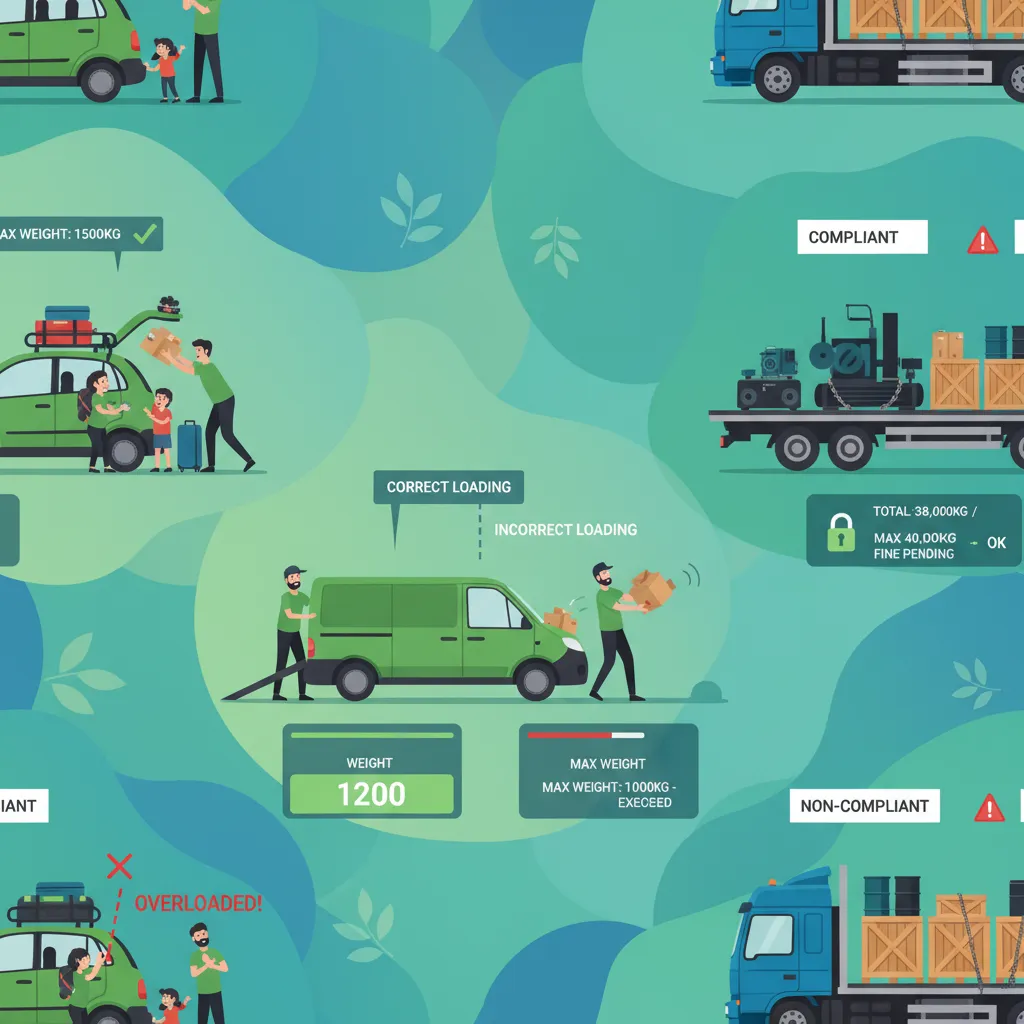
This lesson introduces the legal framework governing vehicle and axle weight limits in Poland and the EU. Learners will understand how to determine a vehicle's maximum permissible payload and interpret official load charts and documentation. The content covers the importance of correct weight distribution to avoid exceeding individual axle limits and explains the serious legal and safety consequences of operating an overloaded vehicle.

This lesson provides a detailed breakdown of vehicle classifications relevant to the Category C licence. It explains the concept of 'dopuszczalna masa całkowita' (permissible total weight) and how it defines a vehicle's category. Learners will identify different truck types, such as rigid vehicles, based on their axle configurations and understand the specific roadworthiness and registration requirements for each class, ensuring correct vehicle operation under the law.
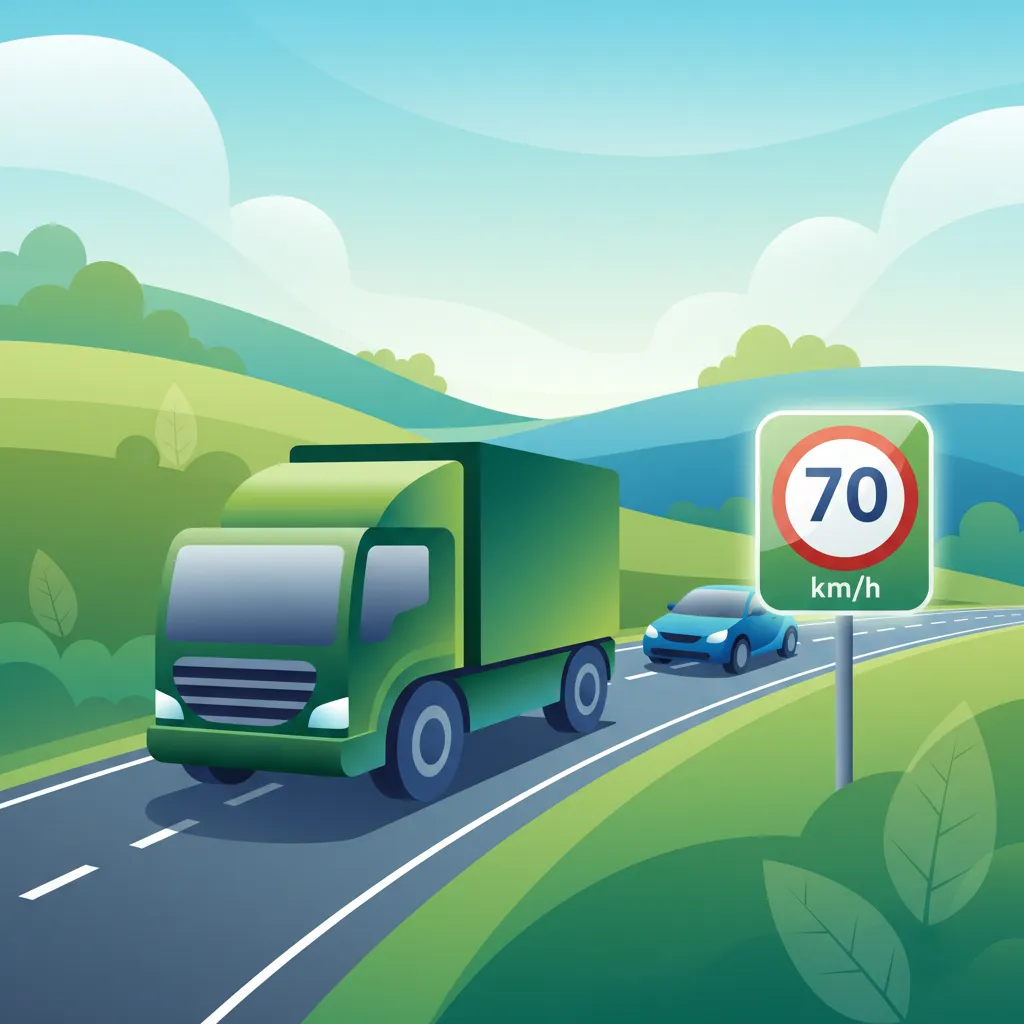
This lesson outlines the statutory speed limits that professional drivers of Category C vehicles must adhere to on Polish roads. It clearly distinguishes the maximum permitted speeds in built-up areas, on single carriageways, and on motorways. The content also explains how to interpret road signs that may indicate temporary or vehicle-specific speed restrictions, ensuring drivers remain compliant with the law and avoid penalties from speed enforcement measures.
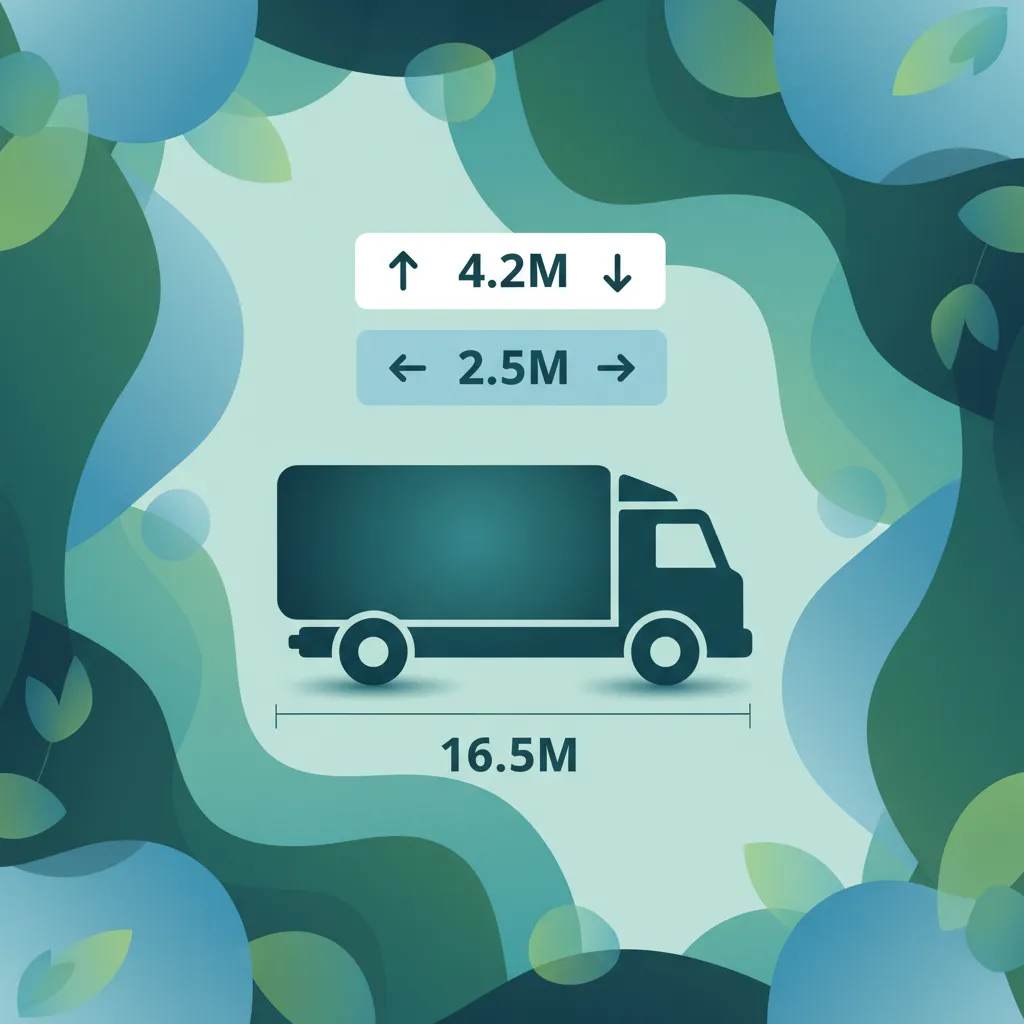
This lesson concentrates on the specific road signs that are of utmost importance to HGV drivers. It details how to interpret signs indicating maximum permissible weight, axle load, vehicle height, and overall length. Understanding these restrictions is crucial for effective route planning to avoid bridges with low clearance, roads with weight limits, or tunnels that cannot accommodate the vehicle's dimensions, thus preventing accidents and infrastructure damage.

This lesson outlines the essential legal paperwork associated with freight transport. It details the purpose and content of key documents like the load manifest, cargo declaration, and official weight certificates. Learners will understand their legal responsibility to verify that all documentation is accurate and complete before departure, and the importance of maintaining proper records for potential inspections by transport authorities or for cross-border customs procedures.

This lesson examines the signs that convey dimensional and weight restrictions, which are vital for safe tractor and trailer operation. It outlines how to read width, height, and weight limit signs and the legal implications of exceeding these limits. The lesson provides guidance on planning loads to comply with bridge and road classification restrictions found across Polish rural networks.

This lesson defines the scope of vehicles permitted under a Category B licence, primarily passenger cars up to 3,500 kg maximum permissible mass. It clarifies the rules on seating capacity and the regulations for towing trailers, distinguishing between a standard B licence and a B+E entitlement. Understanding these classifications ensures drivers operate vehicles legally and safely.
Explore the advanced principles of how suspension, steering, and axle configurations influence the handling and stability of heavy goods vehicles. Learn how these systems interact under various driving conditions for professional Category C drivers.

This lesson explores the dynamic relationship between cargo weight and a vehicle's performance. It explains how increased mass raises kinetic energy, significantly lengthening braking distances and requiring earlier, more gradual brake application. Learners will also analyze how a heavy or poorly distributed load alters the vehicle's handling characteristics, particularly during cornering, and understand the necessity of adjusting speed and driving style to compensate for these effects.

This lesson focuses on the crucial concept of the center of gravity (CoG) and its direct impact on truck stability. It explains how the height and lateral position of the load's CoG can affect the vehicle's susceptibility to rolling over, especially during cornering or sudden maneuvers. Learners will study principles for positioning and stacking cargo to maintain the lowest possible CoG, thereby enhancing dynamic stability and overall driving safety.

This lesson explains the specialized techniques required for initiating movement and bringing a heavy, loaded truck to a halt. It emphasizes fine clutch and throttle control to overcome inertia without causing driveline stress or cargo shift. Learners will also study methods for smooth, gradual braking that account for the vehicle's significant momentum, ensuring safety, passenger comfort, and the integrity of the cargo while minimizing wear on the braking system.

This lesson explains the critical concept of off-tracking, where the rear wheels follow a shorter path than the front wheels during a turn. Learners will understand how to calculate the required space for a turn and position the vehicle correctly before entering a corner to avoid striking curbs, signs, or other vehicles. The content provides practical strategies for safely navigating intersections and roundabouts by anticipating the vehicle's sweep path and maintaining adequate clearance.

This lesson delves into the physics of load management, teaching learners how to calculate payloads, locate the center of gravity, and distribute weight to preserve stability. The lesson addresses methods for securing cargo using straps and tie-downs, while also covering the effect of load shift on braking. Proper load planning ensures compliance with legal regulations and mitigates risks associated with trailer sway.

This lesson teaches the essential skill of calculating a heavy vehicle's total stopping distance. It breaks the calculation into two key parts: the driver's perception-reaction distance and the vehicle's braking distance. Learners will understand how factors such as vehicle mass, speed, road gradient, and the friction coefficient of the road surface dramatically influence the distance required to come to a complete and safe stop, emphasizing the need for large safety margins.

This lesson focuses on how different passenger loads alter a vehicle's dynamics. It explains the shift in the center of gravity and its effect on suspension, acceleration, and braking. Learners will study techniques to anticipate and compensate for these handling changes, ensuring speed and cornering are adjusted for passenger comfort and safety.

This lesson details the specific protocols for overtaking and changing lanes in a heavy goods vehicle. It explains the importance of calculating sufficient space and speed differential before committing to a pass, while constantly being aware of the large blind spots around the truck. The content also covers procedures for safely merging onto highways and maintaining correct lane positioning to facilitate smooth and predictable traffic flow for all road users.

This lesson teaches drivers how to adapt their speed, following distance, and control inputs to safely navigate adverse conditions. It covers the challenges posed by rain, snow, and ice, explaining the loss of traction and the increased risk of skidding or aquaplaning. The content provides specific strategies for driving in fog, which reduces visibility, and strong crosswinds, which can affect the stability of a high-sided vehicle, promoting a proactive and defensive driving mindset.

This lesson focuses on the specific challenges HGVs face when navigating roundabouts. It details the correct procedure for approach, including selecting the appropriate lane based on the intended exit and yielding to traffic already circulating. The content emphasizes the need to account for the vehicle's large turning radius and off-tracking to avoid encroaching on adjacent lanes or mounting curbs, ensuring a smooth and safe passage through the roundabout.
Find clear answers to common questions learners have about Suspension, Steering, and Axle Configurations. Learn how the lesson is structured, which driving theory objectives it supports, and how it fits into the overall learning path of units and curriculum progression in Poland. These explanations help you understand key concepts, lesson flow, and exam focused study goals.
Leaf spring suspension uses layered metal springs to absorb shock, offering robust durability but a firmer ride. Air suspension uses adjustable air bellows, providing a smoother ride, better load adaptation, and easier height adjustment, which is beneficial for loading and unloading.
Correct wheel alignment ensures that the wheels are parallel to each other and perpendicular to the road. This prevents uneven tire wear, improves fuel efficiency, and guarantees stable, predictable steering and handling, which is essential for safety, especially with heavy loads.
More axles generally mean a higher total load capacity as the weight is distributed over a larger area. Configurations like tandem or tri-axles provide greater stability under heavy loads and help comply with axle weight regulations, impacting both maneuverability and braking effectiveness.
Off-tracking refers to the tendency of the rearmost axles of a multi-axle vehicle to follow a path inside the path of the front axle during turns. The length of the wheelbase and the arrangement of axles directly influence the degree of off-tracking, requiring drivers to account for it during cornering.
Yes, the suspension system plays a role. A well-functioning suspension ensures that all wheels maintain consistent contact with the road surface, allowing the braking system to operate most effectively. An overloaded or poorly maintained suspension can compromise braking performance.
Build custom practice sessions tailored precisely to your needs. Focus on areas requiring improvement, review specific Polish road signs, or master complex traffic rules to ensure full preparation for your official driving license exam.