
Welcome to the crucial lesson on EU Transport Regulations and Cross-Border Requirements, part of your Polish Category C Heavy Goods Vehicle Theory preparation. Understanding these international rules is vital for safe and legal long-haul driving, ensuring you comply with standards across the European Union.

Lesson content overview
Operating a Heavy Goods Vehicle (HGV) in Europe, especially for international transport, demands a thorough understanding of a complex web of regulations. This lesson, designed for the Polish Category C Heavy Goods Vehicle Theory curriculum, focuses on the harmonized rules established by the European Union (EU) to ensure safety, fair competition, and efficient cross-border operations. Mastering these regulations is crucial for compliance, preventing fatigue-related accidents, and avoiding costly penalties during both domestic and international freight movements.
The core of EU road transport policy revolves around standardizing practices across member states. This harmonization aims to create a seamless single market for road transport while upholding rigorous safety standards and ensuring fair economic conditions for hauliers. We will explore the critical aspects of drivers' hours and rest periods, the rules governing cabotage operations, and the essential documentation required for smooth and legal journeys across EU borders and beyond.
The European Union actively works to standardize road transport rules across its member states. This regulatory harmonization is fundamental to the concept of a single market, where goods and services can move freely without unnecessary barriers. For the professional driver, this means that rules concerning driving times, rest periods, and vehicle documentation are largely consistent, regardless of which EU country they are operating in.
The primary goal of this standardization is multifaceted. Firstly, it enhances road safety by implementing uniform standards for driver behavior, particularly concerning fatigue management. Secondly, it fosters fair competition among hauliers by preventing individual countries from creating regulatory loopholes that could give domestic operators an unfair advantage or allow foreign operators to exploit less stringent rules. Lastly, harmonized regulations simplify cross-border logistics, making international trade more efficient and predictable.
Driver fatigue is a significant contributing factor to serious accidents involving Heavy Goods Vehicles. The sheer size and weight of these vehicles mean that accidents can have devastating consequences. EU regulations, particularly those governing drivers' hours and rest periods, are directly designed to mitigate this risk. By setting clear limits on driving time and mandating sufficient breaks and rest, the regulations acknowledge the physiological need for rest to maintain cognitive alertness, reaction time, and overall driving performance. Adherence to these rules is not merely a legal obligation but a fundamental safety practice that protects the driver, other road users, and the cargo.
While promoting a single market, the EU also recognizes the need to protect national transport markets from unfair competition. This is where cabotage rules come into play. Cabotage refers to the transport of goods within one Member State by a haulier from another Member State. Without regulation, foreign operators, potentially with different cost structures, could continually operate within a domestic market after completing an international delivery, creating an unfair advantage over local carriers. Cabotage limits aim to strike a balance: allowing legitimate intra-EU trade and flexible operations while preventing the exploitation of what could effectively become a "round-trip" operation purely within a foreign domestic market.
Uniform and mandatory documentation is the backbone of enforcement and traceability in cross-border road transport. Documents such as the CMR waybill, vehicle registration, insurance, and tachograph records provide a clear audit trail for enforcement authorities. They confirm the legality of the transport operation, ensure that safety standards are met, establish liability, and facilitate customs clearance where applicable. The absence or inaccuracy of these documents can lead to significant delays, fines, or even vehicle detention, highlighting their critical importance for every journey.
The bedrock of safety for professional HGV drivers in the EU is Regulation (EC) No 561/2006, often referred to as the EU Drivers' Hours Regulation. This comprehensive set of rules dictates the maximum driving times, mandatory breaks, and minimum rest periods drivers must observe. These limits are not arbitrary; they are based on extensive research into fatigue and its impact on driving performance, designed to ensure drivers remain alert and capable throughout their shifts.
A professional HGV driver must adhere to strict daily driving limits to prevent fatigue accumulation during a single working day. The normal daily driving limit is 9 hours. This means that within any 24-hour period, a driver typically cannot exceed 9 hours of actual driving time. However, this limit can be extended. A driver is permitted to drive for up to 10 hours on no more than two occasions within a week. This extended daily driving limit offers flexibility for longer routes, but its limited use prevents chronic fatigue. Drivers must carefully track their use of this extension to remain compliant. For example, a driver completing a 9-hour journey from Warsaw to Berlin would then typically take their daily rest. If a slightly longer journey is required, the 10-hour extension could be used, but only twice in the same week.
Drivers must remember that the 10-hour extension is not a daily allowance. Using it more than twice in a calendar week is a serious violation.
Regardless of the daily driving limit, drivers must take regular breaks to maintain alertness. After a maximum of 4 hours and 30 minutes of driving, a driver must take an uninterrupted break of at least 45 minutes. This break can be taken as a single 45-minute period or split into two parts: an initial break of at least 15 minutes, followed by a second break of at least 30 minutes. The 30-minute break must always come after the 15-minute break if split. This structure ensures that drivers do not drive for excessively long continuous stretches, allowing for mental and physical recuperation.
To combat cumulative fatigue over several days, the EU Regulation also sets limits on total driving time over a week and a bi-weekly period. A driver may not exceed 56 hours of driving in any single week. This weekly limit is crucial for planning longer-term operations. Furthermore, the bi-weekly driving limit states that the total driving time over any two consecutive weeks cannot exceed 90 hours. This means if a driver maxes out their 56 hours in one week, they would only have 34 hours available for the following week (90 - 56 = 34). This bi-weekly cap is designed to prevent drivers from consistently driving long hours week after week, ensuring sufficient recovery time.
After completing their driving and other work duties, drivers must take a minimum daily rest period. A regular daily rest period is at least 11 continuous hours within each 24-hour period. This regular daily rest can be split into two periods: the first period must be at least 3 continuous hours, and the second period must be at least 9 continuous hours. When split, the total rest period must still amount to at least 11 hours. Alternatively, a driver can take a reduced daily rest period of at least 9 continuous hours, but this is only permitted no more than three times between any two weekly rest periods. Any reduction in daily rest must be carefully compensated for later.
Beyond daily rest, a longer, more substantial rest period is mandated each week to ensure full recovery. A regular weekly rest period must be at least 45 continuous hours. This provides ample time for drivers to recuperate and spend time away from work. A driver may take a reduced weekly rest period of at least 24 continuous hours, but only once every two consecutive weeks. If a reduced weekly rest is taken, the missing hours (e.g., 45 - 24 = 21 hours) must be compensated for by an equivalent period of rest taken in one block before the end of the third week following the week in question. This compensatory rest must be attached to another rest period of at least 9 hours.
Effective route planning for international journeys must integrate these rest periods, accounting for potential delays or unexpected stops. Using designated safe and equipped rest areas is paramount for comfort and security.
Cabotage operations are a specific type of transport activity that is strictly regulated within the EU. Understanding these rules is vital for any haulier operating across national borders within the European single market.
Cabotage refers to the transport of goods within one EU Member State by a haulier whose principal place of business is in another EU Member State. For example, a Polish haulier delivering goods from Gdańsk to Kraków would be undertaking a domestic operation. If that same Polish haulier, after delivering goods from Poland to Germany, then picks up goods in Berlin to deliver to Munich, this would be a cabotage operation.
To prevent foreign hauliers from establishing a permanent presence in a domestic market after an international delivery, EU Regulation (EC) No 1072/2009 sets clear limits on cabotage. A haulier from one Member State, having delivered goods into another Member State (e.g., a Polish truck delivering to Germany), may then perform a maximum of three cabotage operations within that second Member State, or across several bordering Member States, within a seven-day period following the unloading of the international journey. All cabotage operations must be completed within these seven days. Additionally, within any 90-day period, a haulier should generally not exceed a certain number of cabotage operations without a new contract. The rules are complex, and the specific limitations can vary, but the intent is always to limit continuous domestic operations by foreign vehicles.
A common misunderstanding is that cabotage is unrestricted for EU-registered hauliers. This is incorrect. Strict limits apply regardless of the country of registration, and exceeding these limits can lead to severe penalties, including fines and potential revocation of operating licenses.
For any cabotage operation, the driver must be able to present specific documentation upon request by enforcement authorities. This typically includes:
These documents allow authorities to verify that the cabotage operations fall within the legal limits and are legitimate extensions of an international journey, rather than unauthorized domestic market penetration.
Smooth and legal cross-border transport relies heavily on correct and complete documentation. Drivers and operators must ensure all necessary paperwork is present and valid before embarking on an international journey.
The CMR Waybill (Convention on the Contract for the International Carriage of Goods by Road) is a standardized international transport document. It serves as a contract between the consignor (sender), the carrier (haulier), and the consignee (recipient). Its purpose is to detail the goods being transported, specify the terms and conditions of carriage, and establish liability in case of loss or damage.
The CMR Waybill is a legally binding document that accompanies goods transported by road internationally. It contains critical information such as the names and addresses of the sender and receiver, a description of the goods, weight, number of packages, and any special instructions. It also defines the carrier's liability.
Key elements required on a CMR Waybill include:
Failure to carry a valid CMR Waybill can lead to legal disputes over liability in case of incidents and may cause significant delays at border checks or during roadside inspections.
The Green Card is an international motor insurance certificate that proves your vehicle has at least the minimum compulsory third-party liability insurance cover required by the laws of the countries you will visit. For vehicles registered in the EU, the standard vehicle insurance policy often provides coverage across all EU member states. However, the physical Green Card may still be useful as proof of insurance, especially when crossing into non-EU countries or to provide clear documentation if involved in an accident abroad. Drivers should always carry proof of valid insurance.
Always check your specific insurance policy regarding coverage for international travel, particularly when venturing outside the EU or into countries with specific insurance requirements.
The tachograph is a legal requirement for most HGVs in the EU. This device records crucial data related to a driver's activities: driving time, other work, availability, and rest periods, along with vehicle speed and distance travelled. Both digital and analogue tachographs are in use, though digital tachographs are now standard for newer vehicles. Drivers must ensure their tachograph is functioning correctly, calibrated, and that their driver card (for digital tachographs) is inserted and used properly.
Tachograph Data Download and Retention:
Drivers must be prepared to present their tachograph records (driver card, printouts, or manual entries for the current day and previous 28 days) during roadside inspections. Failure to do so, or presenting incomplete/incorrect data, is a serious offense.
While the movement of goods between EU member states generally does not require customs checks, specific documentation becomes essential when transporting goods between an EU country and a non-EU country. This also applies to certain types of goods subject to special controls (e.g., hazardous materials, excise goods, certain agricultural products) even within the EU.
Common customs documents include:
Drivers must be fully aware of the customs requirements for their specific cargo and destination, ensuring all forms are correctly filled out and readily available to avoid delays at borders.
Ignorance of the law is no defense, and violations of EU transport regulations can lead to significant penalties for both the driver and the transport undertaking. Familiarity with common pitfalls is crucial for prevention.
Consequences for violations can range from substantial fines (for both the driver and company), driving bans, vehicle immobilisation, to more severe penalties such as imprisonment or revocation of operating licenses for repeat offenders.
Effective cross-border operations require more than just knowing the rules; they demand proactive planning and adaptability to various conditions.
Adverse weather conditions such as heavy rain, snow, ice, or fog significantly increase driving difficulty and fatigue. While legal driving limits remain unchanged, drivers should exercise professional judgment. It may be prudent to take additional breaks or even extend rest periods voluntarily if conditions make driving exceptionally taxing, even if it means delays. Reduced speeds and longer stopping distances in poor weather will naturally extend travel times, requiring adjustments to planned routes and schedules to avoid exceeding driving limits.
Many European cities have implemented specific restrictions for Heavy Goods Vehicles. These can include:
Drivers must check local regulations for their entire route, particularly for urban delivery points, well in advance of their journey.
The type of vehicle and its load significantly influence driving dynamics and driver workload.
The process of crossing a border varies significantly depending on whether it's an internal EU border or an external border (EU to non-EU country).
This lesson on EU transport regulations does not stand in isolation; it builds upon and informs other critical areas of the Polish Category C Heavy Goods Vehicle Theory curriculum.
Understanding these interdependencies helps paint a complete picture of responsible and professional HGV operation.
This lesson covers the EU regulatory framework for professional HGV drivers under Regulation 561/2006, establishing mandatory driving limits of 9 hours daily (extendable to 10 hours twice weekly), a 45-minute break after 4.5 hours of driving, and weekly/bi-weekly caps of 56/90 hours respectively. Daily rest must be at least 11 hours (reducible to 9 hours with limits), while weekly rest requires 45 hours (reducible to 24 hours with compensation). Cabotage rules under Regulation 1072/2009 limit foreign hauliers to three operations within seven days of an international delivery. Essential cross-border documentation includes the CMR waybill, Green Card insurance, tachograph records, and customs forms for non-EU routes. These regulations protect road safety by combating fatigue and ensure fair competition within the EU single market.
A short set of high-value points that capture the most important learning from this lesson.
EU Regulation 561/2006 sets maximum daily driving at 9 hours (extendable to 10 hours twice weekly) and requires a 45-minute break after 4.5 hours of continuous driving.
Weekly driving limits are capped at 56 hours, with a bi-weekly maximum of 90 hours to prevent cumulative driver fatigue over longer periods.
Regular daily rest must be at least 11 hours, but can be reduced to 9 hours no more than three times between weekly rest periods with later compensation.
Cabotage allows a maximum of three operations within another Member State within seven days after completing an international delivery.
The CMR waybill, Green Card insurance, and tachograph records are essential documents that must accompany every cross-border journey.
Explore all units and lessons included in this driving theory course.
The 10-hour extended daily driving limit can only be used twice per calendar week, not daily.
A 45-minute break can be split into 15 minutes plus 30 minutes, but the longer portion must always come last.
Reduced weekly rest of 24 hours requires compensation of at least 21 hours taken before the end of the third week following that week.
Tachograph driver card data must be downloaded every 28 days, and vehicle unit data every 90 days.
Internal EU borders have no systematic checks, but external borders (EU to non-EU) require full customs documentation.
Assuming the 10-hour extended driving limit can be used every day instead of limiting it to twice weekly.
Incorrectly splitting breaks (taking 30 minutes before 15 minutes) or failing to take the mandatory break after exactly 4.5 hours of driving.
Performing more than three cabotage operations within seven days after an international delivery, which violates Regulation 1072/2009.
Not having the CMR waybill or proof of the original international transport when performing cabotage, leading to fines and documentation violations.
Driving without a valid tachograph driver card inserted or failing to make manual entries when the card malfunctions.
Lesson content overview
A short set of high-value points that capture the most important learning from this lesson.
EU Regulation 561/2006 sets maximum daily driving at 9 hours (extendable to 10 hours twice weekly) and requires a 45-minute break after 4.5 hours of continuous driving.
Weekly driving limits are capped at 56 hours, with a bi-weekly maximum of 90 hours to prevent cumulative driver fatigue over longer periods.
Regular daily rest must be at least 11 hours, but can be reduced to 9 hours no more than three times between weekly rest periods with later compensation.
Cabotage allows a maximum of three operations within another Member State within seven days after completing an international delivery.
The CMR waybill, Green Card insurance, and tachograph records are essential documents that must accompany every cross-border journey.
Explore all units and lessons included in this driving theory course.
The 10-hour extended daily driving limit can only be used twice per calendar week, not daily.
A 45-minute break can be split into 15 minutes plus 30 minutes, but the longer portion must always come last.
Reduced weekly rest of 24 hours requires compensation of at least 21 hours taken before the end of the third week following that week.
Tachograph driver card data must be downloaded every 28 days, and vehicle unit data every 90 days.
Internal EU borders have no systematic checks, but external borders (EU to non-EU) require full customs documentation.
Assuming the 10-hour extended driving limit can be used every day instead of limiting it to twice weekly.
Incorrectly splitting breaks (taking 30 minutes before 15 minutes) or failing to take the mandatory break after exactly 4.5 hours of driving.
Performing more than three cabotage operations within seven days after an international delivery, which violates Regulation 1072/2009.
Not having the CMR waybill or proof of the original international transport when performing cabotage, leading to fines and documentation violations.
Driving without a valid tachograph driver card inserted or failing to make manual entries when the card malfunctions.
Explore search topics learners often look for when studying EU Transport Regulations and Cross-Border Requirements. These topics reflect common questions about road rules, driving situations, safety guidance, and lesson level theory preparation for learners in Poland.
Browse additional driving theory lessons that cover connected traffic rules, road signs, and common driving situations related to this topic. Improve your understanding of how different rules interact across everyday traffic scenarios.
Understand the in-depth requirements of EU transport law for Polish drivers. This lesson covers precise limits on driver hours, mandatory rest compensation, cabotage operational rules, and essential cross-border documentation for legal and compliant international freight.
This lesson provides a comprehensive overview of EU working-time regulations for professional bus drivers. It covers maximum daily driving hours, mandatory breaks, and weekly rest periods to prevent fatigue. You will learn the function of the tachograph for recording driving times and the legal responsibility to maintain accurate records for compliance.
This lesson focuses on the critical documentation every professional driver must carry and maintain. It covers the driver's licence, vehicle registration, and tachograph records, explaining their legal importance and proper management. Learners will also study the requirements for transport permits, cargo declarations, and safety inspection reports, ensuring full compliance with Polish and EU regulations to avoid penalties and operational delays during roadside checks.

This lesson offers a detailed guide to the use of the tachograph, an essential tool for ensuring compliance with drivers' hours regulations. It explains how to operate both analogue and digital tachographs, correctly use the driver card, and accurately record all periods of work, availability, breaks, and rest. Learners will understand the specific legal limits on driving time and the minimum required rest periods, as well as the procedures followed during roadside inspections by transport authorities.

This lesson focuses on the stringent health standards mandated for operating heavy goods vehicles. It details the required medical assessments, including vision, cardiovascular, and neurological checks, that prospective drivers must pass. Learners will understand the process of obtaining a medical certificate, the requirements for periodic renewals to ensure ongoing fitness for duty, and the legal implications of failing to meet these essential health criteria for professional driving.

This lesson outlines the essential legal paperwork associated with freight transport. It details the purpose and content of key documents like the load manifest, cargo declaration, and official weight certificates. Learners will understand their legal responsibility to verify that all documentation is accurate and complete before departure, and the importance of maintaining proper records for potential inspections by transport authorities or for cross-border customs procedures.

This lesson addresses the critical safety issue of driver fatigue. It explains the physiological causes of fatigue, including disruption to circadian rhythms, and teaches drivers to recognize its early warning signs. The content reviews the legal requirements for breaks and rest periods in detail and provides practical strategies for managing sleep hygiene and using alertness techniques to ensure they remain focused and responsive while on duty, thereby preventing fatigue-related incidents.
This lesson outlines the statutory speed limits that professional drivers of Category C vehicles must adhere to on Polish roads. It clearly distinguishes the maximum permitted speeds in built-up areas, on single carriageways, and on motorways. The content also explains how to interpret road signs that may indicate temporary or vehicle-specific speed restrictions, ensuring drivers remain compliant with the law and avoid penalties from speed enforcement measures.

This lesson explores the environmental impact of HGV operations and the regulations designed to mitigate it. It covers modern emission control systems and standards (e.g., Euro 6), and the importance of compliance with rules governing noise pollution. The content reinforces eco-driving techniques as a primary method for reducing fuel consumption and emissions, promoting the driver's role in achieving more sustainable and environmentally friendly logistics operations.

This lesson addresses the increasingly common restrictions on HGV access to urban areas and designated low-emission zones. It explains how to identify these zones through specific signage and understand the criteria for entry, which may be based on the vehicle's emission standard or subject to time-of-day limitations. Learners will become familiar with the necessity of obtaining special permits for city center deliveries and the legal consequences of violating these access regulations.
This lesson examines the compulsory training structure for professional Category C drivers. It outlines the required components of certified training programs, including both theoretical instruction and practical driving experience. Learners will understand the standards for competence assessment, the structure of the official licensing examinations, and the legal obligation to maintain accurate training records to demonstrate compliance with professional driver qualifications.
Learn how to effectively plan international journeys within the EU. This lesson focuses on navigating urban zone restrictions, customs procedures at external borders, and ensuring all necessary documentation is prepared for smooth and compliant cross-border logistics.
This lesson focuses on the critical documentation every professional driver must carry and maintain. It covers the driver's licence, vehicle registration, and tachograph records, explaining their legal importance and proper management. Learners will also study the requirements for transport permits, cargo declarations, and safety inspection reports, ensuring full compliance with Polish and EU regulations to avoid penalties and operational delays during roadside checks.
This lesson outlines the essential legal paperwork associated with freight transport. It details the purpose and content of key documents like the load manifest, cargo declaration, and official weight certificates. Learners will understand their legal responsibility to verify that all documentation is accurate and complete before departure, and the importance of maintaining proper records for potential inspections by transport authorities or for cross-border customs procedures.
This lesson addresses the increasingly common restrictions on HGV access to urban areas and designated low-emission zones. It explains how to identify these zones through specific signage and understand the criteria for entry, which may be based on the vehicle's emission standard or subject to time-of-day limitations. Learners will become familiar with the necessity of obtaining special permits for city center deliveries and the legal consequences of violating these access regulations.
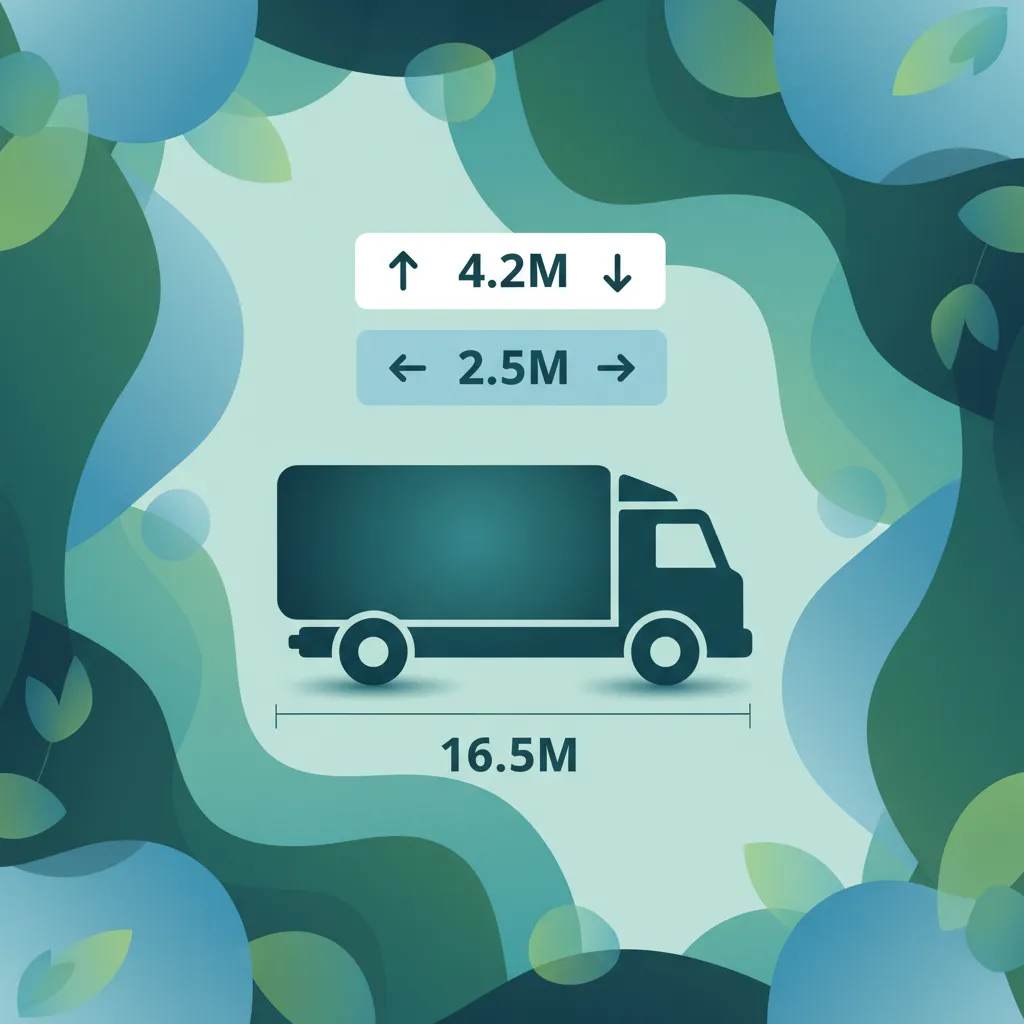
This lesson concentrates on the specific road signs that are of utmost importance to HGV drivers. It details how to interpret signs indicating maximum permissible weight, axle load, vehicle height, and overall length. Understanding these restrictions is crucial for effective route planning to avoid bridges with low clearance, roads with weight limits, or tunnels that cannot accommodate the vehicle's dimensions, thus preventing accidents and infrastructure damage.

This lesson provides a comprehensive breakdown of the right-of-way rules that govern intersections. It explains the clear directives given by traffic lights, stop signs, and yield signs, and clarifies the procedures at unmarked or uncontrolled intersections, where the 'priority to the right' rule often applies. Learners will understand the legal hierarchy of these rules to make correct, safe, and predictable decisions when navigating through any junction, reducing the risk of conflict with other traffic.
This lesson explores the environmental impact of HGV operations and the regulations designed to mitigate it. It covers modern emission control systems and standards (e.g., Euro 6), and the importance of compliance with rules governing noise pollution. The content reinforces eco-driving techniques as a primary method for reducing fuel consumption and emissions, promoting the driver's role in achieving more sustainable and environmentally friendly logistics operations.
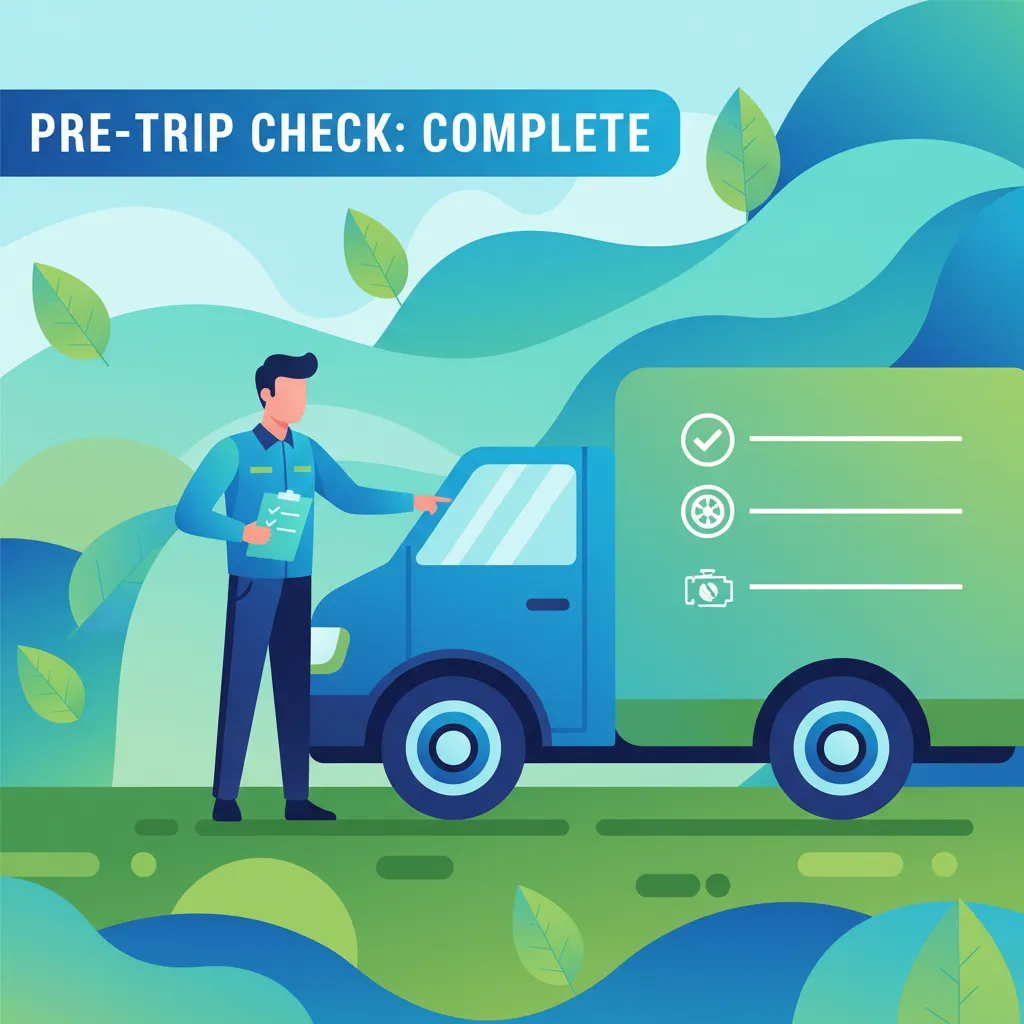
This lesson details the critical pre-trip inspection routine that every professional driver must perform. It provides a step-by-step checklist for visually inspecting essential components such as tires, brakes, lights, and fluid levels to identify potential safety hazards. Learners will understand the importance of verifying that mirrors are correctly adjusted, emergency equipment is present, and cargo securing points are intact, thereby ensuring the vehicle's roadworthiness and preventing roadside failures.
This lesson focuses on the stringent health standards mandated for operating heavy goods vehicles. It details the required medical assessments, including vision, cardiovascular, and neurological checks, that prospective drivers must pass. Learners will understand the process of obtaining a medical certificate, the requirements for periodic renewals to ensure ongoing fitness for duty, and the legal implications of failing to meet these essential health criteria for professional driving.
Find clear answers to common questions learners have about EU Transport Regulations and Cross-Border Requirements. Learn how the lesson is structured, which driving theory objectives it supports, and how it fits into the overall learning path of units and curriculum progression in Poland. These explanations help you understand key concepts, lesson flow, and exam focused study goals.
The primary EU regulation governs drivers' working hours, driving time, and mandatory rest periods to prevent fatigue. It sets daily and weekly limits for driving and requires specific minimum rest breaks. These rules are crucial for safety on Polish and EU roads and are frequently tested in the Category C exam.
Cabotage refers to a haulage company from one EU member state transporting goods within another EU member state on a temporary basis. There are specific rules and limitations on the number of operations allowed within a 7-day period to protect domestic transport markets. Exceeding these limits is illegal and carries penalties.
For cross-border operations, drivers typically need to carry their driving licence, vehicle registration documents, insurance papers, and specific transport documents like CMR consignment notes. Depending on the cargo and route, additional permits or certificates might be required. Understanding these requirements is vital for smooth border crossings and legal compliance.
While Poland adheres to EU regulations, there might be specific national interpretations or additional requirements on top of the EU framework. The core rules for driving times, rest, and documentation are harmonized across the EU to create a level playing field and ensure consistent safety standards for all HGV drivers operating internationally.
The EU regulations on drivers' hours and rest periods generally apply to most commercial road transport operations exceeding 3.5 tonnes. However, there can be exemptions for certain types of transport, such as those for non-commercial purposes or specific public services. It's important to be aware of the exact scope of application for your specific operation.
Build custom practice sessions tailored precisely to your needs. Focus on areas requiring improvement, review specific Polish road signs, or master complex traffic rules to ensure full preparation for your official driving license exam.