
Welcome to Unit 6, focusing on essential road signs and regulations for heavy goods vehicles in Poland. This lesson introduces the fundamental visual language of Polish road signs, covering warning, prohibitory, and informational categories. Mastering these signs is crucial for safe driving and passing your Category C theory exam.
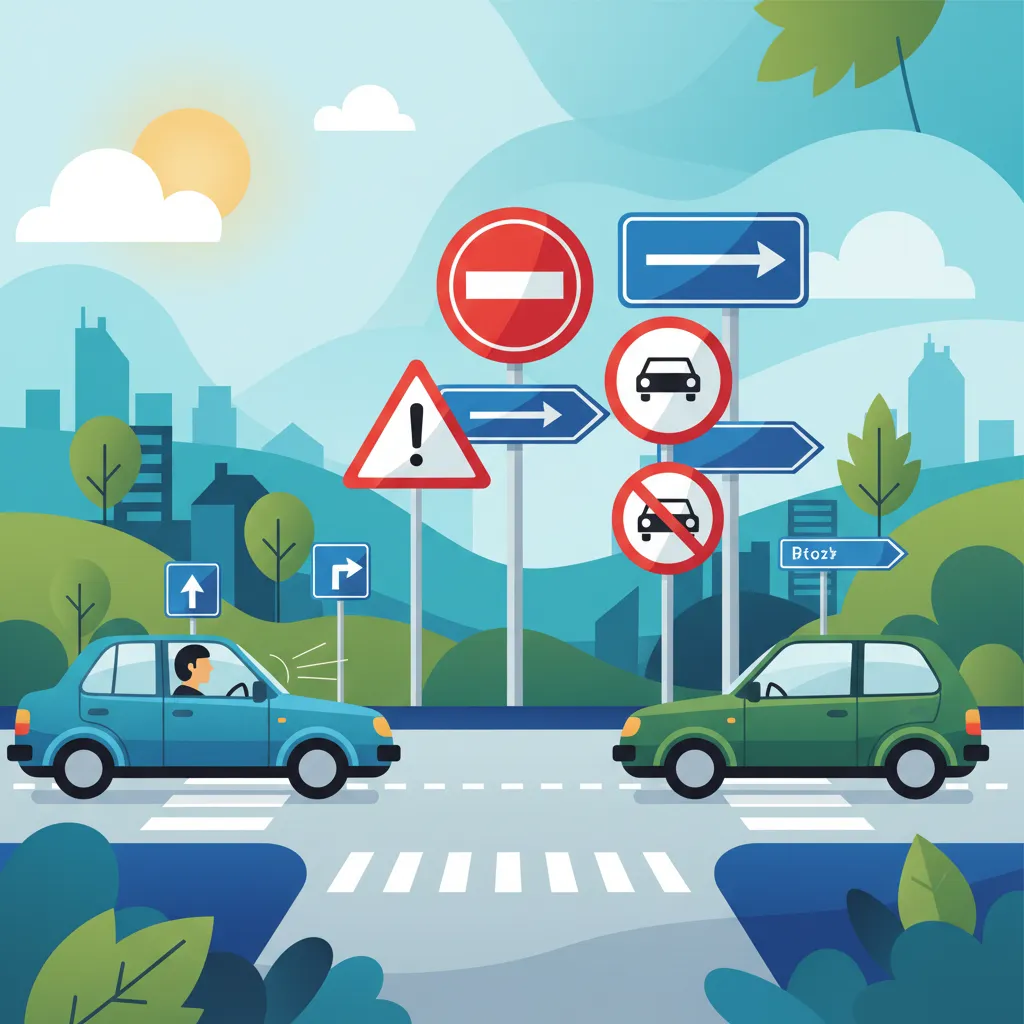
Lesson content overview
Driving a heavy goods vehicle (HGV) on Polish roads demands a comprehensive understanding of the national road sign system. These signs constitute a universal visual language, critical for ensuring safety, compliance, and efficient transport. For Category C drivers, interpreting these visual cues swiftly and accurately is not merely good practice but a legal and professional obligation. This lesson provides a foundational understanding of the Polish road sign system, with a specific focus on general warning and prohibitory signs, their visual characteristics, and their unique implications for heavy vehicles.
Road signs are fundamental elements of traffic management, designed to convey information, warnings, and regulations to drivers in a standardized manner. In Poland, as throughout Europe, this system relies on a consistent visual taxonomy of shapes, colours, and pictograms to ensure instant recognition, regardless of language barriers. For professional Category C drivers, mastering this visual language is paramount, given the unique operational characteristics and potential impact of HGVs on road safety and infrastructure.
The operation of heavy goods vehicles inherently involves greater responsibilities due to their size, weight, and momentum. Longer braking distances, wider turning radii, and increased potential for severe damage in an accident mean that anticipating road conditions and strictly adhering to regulations are critical. Road signs provide the necessary advanced warnings and mandatory instructions to mitigate these risks. Correctly interpreting and obeying signs ensures the safety of the driver, cargo, other road users, and the preservation of road infrastructure. Failure to comply can lead to serious accidents, significant legal penalties under the Polish Road Traffic Act, and substantial financial liabilities.
The effectiveness of the Polish road sign system is built upon several core principles that minimize cognitive load and maximize driver response time. A uniform approach to sign design allows drivers to recognize the general category of a sign (e.g., warning, prohibitory, mandatory) even before fully deciphering its specific pictogram or numerical value. This hierarchical visual coding ensures that safety-critical messages are prioritized. Every sign carries a statutory requirement, meaning its message is legally binding. For Category C drivers, an additional layer of interpretation is required, as certain signs have specific allowances or restrictions tailored to the characteristics of heavy vehicles, such as total weight, height, or maximum speed.
The visual language of Polish road signs is systematic, using specific shapes and colour palettes to categorize messages. This standardized approach allows drivers to quickly grasp the general nature of a sign's message. Understanding these fundamental design principles is the first step toward accurate interpretation.
Road signs act as a universal non-verbal communication system. By employing simplified pictograms instead of text, they transcend linguistic barriers, allowing drivers from diverse backgrounds to understand critical instructions. The consistent pairing of geometric shapes with specific colours is crucial for rapid identification, particularly at speed. A driver can instantly differentiate between a warning, a prohibition, or a piece of information simply by recognizing its shape and primary colour.
Warning signs alert drivers to potential hazards or unusual road conditions ahead, giving them time to react appropriately. In Poland, these signs are almost always red-bordered equilateral triangles with a white background and a black pictogram. The red border signifies danger, while the triangular shape universally denotes a warning.
This consistent design means that upon seeing a triangular sign, a driver immediately knows to anticipate an upcoming situation that may require a reduction in speed, increased vigilance, or a change in driving behaviour. For HGV drivers, this often translates to even earlier and more significant adjustments due to the vehicle's size and momentum.
Prohibitory signs indicate actions that are forbidden or restricted. These signs impose a mandatory legal restriction, and failure to obey them constitutes a traffic offense. In Poland, prohibitory signs are predominantly circular with a red border and a white background, featuring a black pictogram or number. The red circle is a powerful visual cue universally associated with prohibition or restriction.
These signs are designed to be unambiguous and demand immediate compliance, reflecting their critical role in preventing dangerous situations and ensuring the orderly flow of traffic.
While often categorized alongside prohibitory signs due to their regulatory nature, mandatory signs dictate a required action rather than forbidding one. In the Polish system, these are typically circular signs with a blue background and a white pictogram. They instruct drivers on specific directions or actions they must take.
Mandatory signs serve to control traffic flow, especially at intersections and roundabouts, ensuring that vehicles follow a predictable path. Non-compliance is a violation of traffic regulations.
Informational signs, generally rectangular or square with blue (directional) or green (service) backgrounds, provide guidance, directions, and information about facilities. While important for navigation, they do not impose mandatory actions or warnings in the same way as prohibitory or warning signs. They are complementary to the regulatory and warning signage system.
Warning signs are crucial for proactive driving, particularly for heavy goods vehicles. They act as an early alert system, giving drivers the necessary time to assess a situation and prepare for changes in road conditions or potential hazards.
The primary purpose of a warning sign is to inform drivers of a potential danger or a special condition that might not be immediately visible. By providing advance notice, these signs allow drivers to adjust their speed, position, and overall driving strategy safely. For Category C drivers, the extended stopping distances and reduced maneuverability of an HGV make these advance warnings even more critical, enabling them to anticipate and mitigate risks long before reaching the hazard itself.
Numerous warning signs exist to cover a wide array of potential hazards.
A-20) demand careful gear selection and controlled braking to prevent brake fade and loss of control. Uphill gradients (A-21) might require lower gears to maintain momentum without straining the engine.A-16 (Pedestrian crossing) or A-17 (Children) necessitate extreme caution and reduced speed, especially in urban areas or near schools. HGV drivers must be prepared to stop suddenly, as pedestrians, particularly children, may not always be aware of a large vehicle's stopping limitations.A-12a/b/c) indicating a narrowing road require HGV drivers to be extra vigilant, potentially slowing down and adjusting lane position to avoid collision with other vehicles or obstacles, especially in areas where side clearance is minimal.Roadwork warning signs are temporary but carry the same, if not greater, importance as permanent signs. They often feature an orange or yellow background to distinguish them and alert drivers to dynamic changes in the road environment. These signs may indicate reduced lane widths, uneven surfaces, temporary speed limits, or the presence of workers. HGV drivers must treat these signs with utmost seriousness, as roadwork zones can be particularly hazardous due to debris, sudden lane shifts, and the presence of personnel and machinery close to moving traffic. Ignoring temporary warnings can lead to severe accidents and legal repercussions.
Prohibitory signs are non-negotiable legal directives. Their purpose is to forbid specific actions or restrict access to certain road users, directly impacting how and where Category C vehicles can operate.
Every prohibitory sign represents a specific article of the Polish Road Traffic Act. Disregarding these signs is not merely a suggestion but a direct violation of the law, carrying fines, penalty points, and potentially more severe consequences in case of an accident. For HGV drivers, non-compliance can have amplified effects due to the scale of their vehicles, leading to more significant damage, injuries, and operational disruptions. The phrase "ignorance of the law is no excuse" applies with full force to these critical traffic control devices.
Some prohibitory signs impose absolute bans:
B-02): A red circle with a white horizontal bar, prohibiting all vehicles from entering the road or area. This is an absolute prohibition.B-1): A red circle with a white background and a red cross, prohibiting all vehicles from entering. This sign is rare but denotes a complete closure.B-5): A red circle with a white background and a black truck silhouette, prohibiting trucks (typically over 3.5 tonnes GVW) from entering. HGV drivers must be acutely aware of their vehicle's gross vehicle weight (GVW) and category to ensure compliance.These signs are critical for protecting sensitive areas, one-way streets, and infrastructure not designed for heavy vehicle loads or dimensions.
Speed limit signs (B-33) are circular, red-bordered, with a white background and a black number indicating the maximum permissible speed in km/h. While general speed limits apply to all vehicles, Category C drivers must often adhere to lower, HGV-specific speed limits, especially in urban areas or on certain types of roads.
Always be aware of your vehicle's specific speed limits, as these can be lower than general limits for passenger cars. Check your vehicle's documentation and local regulations.
Drivers must not only observe the posted limit but also adjust speed further based on weather, road conditions, and cargo.
The "No Overtaking" sign (B-25) is a red-bordered circle with a white background depicting a black car trying to overtake a black truck, crossed by a red diagonal line. This sign prohibits all overtaking maneuvers by all vehicles. A variation, B-26, specifically prohibits trucks from overtaking. These restrictions are typically found on two-lane roads, near intersections, on curves, or in areas with limited visibility, where overtaking would be inherently dangerous.
For HGV drivers, compliance is essential due to the extended time and distance required to complete an overtaking maneuver, which increases the risk of collision, especially with oncoming traffic.
Prohibitory signs related to parking, stopping, and waiting are crucial for maintaining traffic flow and safety, especially in urban areas.
B-35): A blue circle with a red border and a single red diagonal line. It prohibits stopping the vehicle, even for a short period, unless dictated by traffic conditions (e.g., traffic jam, red light).B-36): A blue circle with a red border and a red diagonal cross. It prohibits parking but generally allows for brief stops to pick up or drop off passengers or goods, provided the driver remains with the vehicle and does not impede traffic.For HGVs, these restrictions are particularly important, as improperly stopped or parked trucks can create significant obstructions, block visibility, and cause traffic congestion.
Beyond general prohibitions, Polish roads feature specific signs tailored to the unique characteristics of heavy goods vehicles. These signs address critical dimensions and weights, directly impacting HGV route planning and operational safety.
Weight restriction signs are vital for protecting infrastructure, especially bridges and road surfaces, from excessive loads.
B-18): A red-bordered circle with a white background and a numerical value (e.g., 12 t) indicates the maximum total weight (vehicle + cargo) permitted.B-19): Similar to B-18, but with a pictogram of an axle and a numerical value (e.g., 10 t), restricting the weight carried on a single axle.HGV drivers must always know their vehicle's current gross vehicle mass (GVW) and individual axle loads. Entering a zone with a restricted weight can lead to severe structural damage to the road or bridge, hefty fines, and potentially a vehicle breakdown or accident.
Over-dimensioned vehicles pose a significant risk to tunnels, bridges, and overhead structures.
B-16): A red-bordered circle with a white background, showing a black truck silhouette under a horizontal line with a height value (e.g., 4.0 m).B-15): Similar design, but with a width value (e.g., 2.5 m) between two vertical lines.Drivers must accurately measure their vehicle's total height and width, including any cargo, before attempting to pass through restricted areas. Collisions with overhead structures or side obstacles are highly dangerous and costly.
Some routes or urban areas restrict the length of vehicles to ensure maneuverability and prevent blockages.
B-17): A red-bordered circle with a white background, showing a black truck silhouette with a length value (e.g., 10 m). This applies to the total length of the vehicle, including any trailers.For long truck and trailer combinations, adherence to these signs is crucial, especially in tight turns, roundabouts, or congested urban environments where insufficient space can lead to dangerous situations.
Further prohibitions might include:
B-31): A sign specifying a minimum distance that must be maintained between vehicles (e.g., 50 m) for safety, particularly relevant for HGVs on motorways or in tunnels.B-13): Prohibits vehicles transporting hazardous materials from entering certain areas, often accompanied by specific class exemptions or alternative route directions.The effectiveness of road signs depends not only on their design but also on their placement and visibility. Regulations ensure that signs are positioned to give drivers ample time to perceive, understand, and react to their messages.
Polish regulations specify minimum distances for placing warning signs ahead of the hazard they indicate. This distance varies depending on the expected speed of traffic and the nature of the hazard. For instance, a warning sign for a sharp curve on a high-speed road will be placed further in advance than on a slow urban street. This is particularly crucial for HGV drivers, whose longer reaction and braking distances necessitate earlier warnings.
Temporary signs, often used during roadworks or special events, take precedence over permanent signs when they convey conflicting information. Their distinct orange or yellow backgrounds help draw attention to their temporary nature. HGV drivers must always prioritize temporary signage, as it reflects the current, dynamic conditions of the road. Ignoring them can lead to dangerous encounters with construction equipment or personnel.
Road sign visibility can be significantly affected by external factors:
Obedience to road signs is a cornerstone of safe driving and legal compliance in Poland. Non-adherence, particularly for heavy goods vehicle drivers, carries significant legal and safety implications.
The "Polski kodeks drogowy" (Polish Road Traffic Code) explicitly outlines the legal obligation for all drivers to obey traffic signs. Prohibitory signs, in particular, establish mandatory restrictions that drivers must follow unless specifically exempted (e.g., residents with specific permits in a restricted zone). This legal framework ensures uniform road usage and is designed to protect all road users and infrastructure.
Several common violations of prohibitory signs carry heightened risks for HGV drivers:
The consequences of violating road signs extend beyond legal penalties.
Effective road sign interpretation is not static; it requires dynamic adaptation to varying conditions and contexts. HGV drivers must integrate sign information with real-world variables.
Adverse weather (heavy rain, snow, ice, fog) dramatically reduces visibility and vehicle grip. When faced with a speed limit sign, for example, a Category C driver must assess whether the posted limit is still safe under current conditions. Often, the safe speed will be considerably lower than the sign's maximum. Similarly, warning signs for curves or slippery roads demand even greater caution and earlier speed reduction in wet or icy conditions.
The weight and configuration of an HGV significantly affect its performance and compliance requirements.
Warning signs depicting pedestrians, cyclists, or children require heightened awareness from HGV drivers. Due to their large blind spots and the severe consequences of a collision, HGV drivers must reduce speed and be prepared to stop instantly in areas frequented by vulnerable road users. Mandatory signs (e.g., "Turn Right Ahead") must be executed with extreme care, ensuring that no cyclists or pedestrians are caught in turning blind spots.
The Polish road sign system uses standardized shapes and colors to convey meaning instantly: triangular red-bordered signs warn of hazards, circular red-bordered signs prohibit actions, and blue circular signs mandate specific directions. For Category C drivers, understanding sign codes B-15 through B-19 is essential, as these cover height, width, length, gross weight, and axle load restrictions specific to heavy vehicles. The lesson emphasizes that HGV drivers must apply sign information dynamically based on weather conditions, cargo load, and vehicle configuration, while always prioritizing temporary signage over permanent signs. Compliance with Polish prohibitory signs is a legal requirement under the Polski kodeks drogowy, with violations carrying amplified consequences for HGVs due to their potential for greater damage and safety risk.
A short set of high-value points that capture the most important learning from this lesson.
Polish road signs use consistent visual coding: red-bordered triangles indicate warnings, red-bordered circles indicate prohibitions, and blue circles indicate mandatory actions
HGV drivers must know their vehicle's gross weight, axle load, height, width, and length to comply with category-specific restriction signs (B-15 to B-19)
Warning signs like steep gradients (A-20, A-21) and dangerous curves require earlier and more significant speed adjustments for HGVs due to longer braking distances and higher center of gravity
Temporary orange/yellow signs override permanent signage and reflect current road conditions that must be prioritized
Prohibitory signs carry full legal force under the Polski kodeks drogowy; violations result in fines, penalty points, and potential vehicle impoundment for HGVs
Explore all units and lessons included in this driving theory course.
Red-bordered triangle = warning; red-bordered circle = prohibition; blue circle = mandatory; rectangular/blue = informational
B-35 (No Stopping) prohibits all stops including brief ones; B-36 (No Parking) allows brief stops if driver remains with vehicle
HGV-specific speed limits are often lower than passenger car limits on the same road; always check vehicle documentation
Weight restriction signs B-18 and B-19 apply to current loaded mass, not just registered maximum
B-25 prohibits all vehicles from overtaking; B-26 specifically prohibits trucks from overtaking
Assuming 'empty' HGVs are exempt from HGV-specific restrictions; the vehicle category determines obligations, not current load
Confusing B-35 (No Stopping) with B-36 (No Parking); failing to recognize the single diagonal versus double diagonal distinction
Ignoring temporary roadwork signs due to focus on permanent speed limits or permanent restrictions
Failing to account for cargo height when approaching B-16 height-restricted areas like tunnels or bridges
Attempting to overtake in zones marked B-26 (No Overtaking for Trucks) due to impatience or underestimating the time required for HGV maneuvers
Lesson content overview
A short set of high-value points that capture the most important learning from this lesson.
Polish road signs use consistent visual coding: red-bordered triangles indicate warnings, red-bordered circles indicate prohibitions, and blue circles indicate mandatory actions
HGV drivers must know their vehicle's gross weight, axle load, height, width, and length to comply with category-specific restriction signs (B-15 to B-19)
Warning signs like steep gradients (A-20, A-21) and dangerous curves require earlier and more significant speed adjustments for HGVs due to longer braking distances and higher center of gravity
Temporary orange/yellow signs override permanent signage and reflect current road conditions that must be prioritized
Prohibitory signs carry full legal force under the Polski kodeks drogowy; violations result in fines, penalty points, and potential vehicle impoundment for HGVs
Explore all units and lessons included in this driving theory course.
Red-bordered triangle = warning; red-bordered circle = prohibition; blue circle = mandatory; rectangular/blue = informational
B-35 (No Stopping) prohibits all stops including brief ones; B-36 (No Parking) allows brief stops if driver remains with vehicle
HGV-specific speed limits are often lower than passenger car limits on the same road; always check vehicle documentation
Weight restriction signs B-18 and B-19 apply to current loaded mass, not just registered maximum
B-25 prohibits all vehicles from overtaking; B-26 specifically prohibits trucks from overtaking
Assuming 'empty' HGVs are exempt from HGV-specific restrictions; the vehicle category determines obligations, not current load
Confusing B-35 (No Stopping) with B-36 (No Parking); failing to recognize the single diagonal versus double diagonal distinction
Ignoring temporary roadwork signs due to focus on permanent speed limits or permanent restrictions
Failing to account for cargo height when approaching B-16 height-restricted areas like tunnels or bridges
Attempting to overtake in zones marked B-26 (No Overtaking for Trucks) due to impatience or underestimating the time required for HGV maneuvers
Explore search topics learners often look for when studying Polish Road Sign System: General and Prohibitory Signs. These topics reflect common questions about road rules, driving situations, safety guidance, and lesson level theory preparation for learners in Poland.
Browse additional driving theory lessons that cover connected traffic rules, road signs, and common driving situations related to this topic. Improve your understanding of how different rules interact across everyday traffic scenarios.
Understand the legal requirements and meanings of prohibitory and mandatory road signs specific to heavy goods vehicles (HGVs) in Poland. Essential theory for Category C drivers.
This lesson outlines the statutory speed limits that professional drivers of Category C vehicles must adhere to on Polish roads. It clearly distinguishes the maximum permitted speeds in built-up areas, on single carriageways, and on motorways. The content also explains how to interpret road signs that may indicate temporary or vehicle-specific speed restrictions, ensuring drivers remain compliant with the law and avoid penalties from speed enforcement measures.
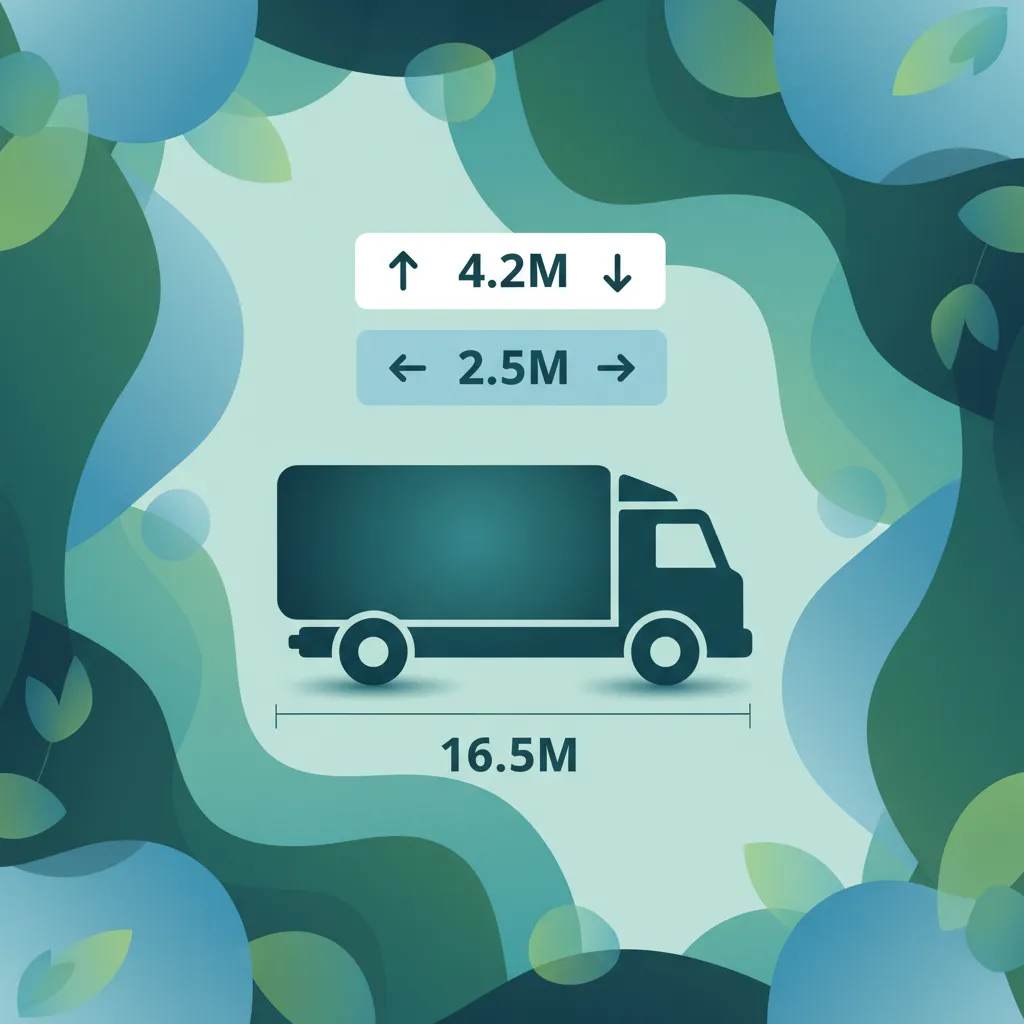
This lesson concentrates on the specific road signs that are of utmost importance to HGV drivers. It details how to interpret signs indicating maximum permissible weight, axle load, vehicle height, and overall length. Understanding these restrictions is crucial for effective route planning to avoid bridges with low clearance, roads with weight limits, or tunnels that cannot accommodate the vehicle's dimensions, thus preventing accidents and infrastructure damage.

This lesson provides a detailed breakdown of vehicle classifications relevant to the Category C licence. It explains the concept of 'dopuszczalna masa całkowita' (permissible total weight) and how it defines a vehicle's category. Learners will identify different truck types, such as rigid vehicles, based on their axle configurations and understand the specific roadworthiness and registration requirements for each class, ensuring correct vehicle operation under the law.
This lesson explains the function of circular prohibition signs, which impose legal restrictions on drivers. It details common prohibitions such as speed limits, 'no entry' signs, and restrictions on overtaking or parking. Compliance with these signs is mandatory, and this lesson ensures learners can correctly identify and obey them.
This lesson provides a comprehensive breakdown of the right-of-way rules that govern intersections. It explains the clear directives given by traffic lights, stop signs, and yield signs, and clarifies the procedures at unmarked or uncontrolled intersections, where the 'priority to the right' rule often applies. Learners will understand the legal hierarchy of these rules to make correct, safe, and predictable decisions when navigating through any junction, reducing the risk of conflict with other traffic.

This lesson examines the signs that convey dimensional and weight restrictions, which are vital for safe tractor and trailer operation. It outlines how to read width, height, and weight limit signs and the legal implications of exceeding these limits. The lesson provides guidance on planning loads to comply with bridge and road classification restrictions found across Polish rural networks.
This lesson reviews the core set of regulatory and warning signs that all road users must obey, emphasizing those that affect agricultural tractors such as speed limits, stop, and give-way signs. It clarifies the colour and shape conventions used in Polish signage, enabling drivers to quickly recognize and react to sign information. The lesson also addresses the placement of signs in rural environments where visibility may be compromised.

This lesson outlines the essential legal paperwork associated with freight transport. It details the purpose and content of key documents like the load manifest, cargo declaration, and official weight certificates. Learners will understand their legal responsibility to verify that all documentation is accurate and complete before departure, and the importance of maintaining proper records for potential inspections by transport authorities or for cross-border customs procedures.
Learn about critical road signs in Poland that restrict vehicle weight, height, and width, crucial for planning safe routes and avoiding violations as a Category C driver.
This lesson concentrates on the specific road signs that are of utmost importance to HGV drivers. It details how to interpret signs indicating maximum permissible weight, axle load, vehicle height, and overall length. Understanding these restrictions is crucial for effective route planning to avoid bridges with low clearance, roads with weight limits, or tunnels that cannot accommodate the vehicle's dimensions, thus preventing accidents and infrastructure damage.
This lesson outlines the statutory speed limits that professional drivers of Category C vehicles must adhere to on Polish roads. It clearly distinguishes the maximum permitted speeds in built-up areas, on single carriageways, and on motorways. The content also explains how to interpret road signs that may indicate temporary or vehicle-specific speed restrictions, ensuring drivers remain compliant with the law and avoid penalties from speed enforcement measures.
This lesson examines the signs that convey dimensional and weight restrictions, which are vital for safe tractor and trailer operation. It outlines how to read width, height, and weight limit signs and the legal implications of exceeding these limits. The lesson provides guidance on planning loads to comply with bridge and road classification restrictions found across Polish rural networks.
This lesson introduces the legal framework governing vehicle and axle weight limits in Poland and the EU. Learners will understand how to determine a vehicle's maximum permissible payload and interpret official load charts and documentation. The content covers the importance of correct weight distribution to avoid exceeding individual axle limits and explains the serious legal and safety consequences of operating an overloaded vehicle.
This lesson addresses the increasingly common restrictions on HGV access to urban areas and designated low-emission zones. It explains how to identify these zones through specific signage and understand the criteria for entry, which may be based on the vehicle's emission standard or subject to time-of-day limitations. Learners will become familiar with the necessity of obtaining special permits for city center deliveries and the legal consequences of violating these access regulations.
This lesson provides a comprehensive breakdown of the right-of-way rules that govern intersections. It explains the clear directives given by traffic lights, stop signs, and yield signs, and clarifies the procedures at unmarked or uncontrolled intersections, where the 'priority to the right' rule often applies. Learners will understand the legal hierarchy of these rules to make correct, safe, and predictable decisions when navigating through any junction, reducing the risk of conflict with other traffic.
This lesson provides a detailed breakdown of vehicle classifications relevant to the Category C licence. It explains the concept of 'dopuszczalna masa całkowita' (permissible total weight) and how it defines a vehicle's category. Learners will identify different truck types, such as rigid vehicles, based on their axle configurations and understand the specific roadworthiness and registration requirements for each class, ensuring correct vehicle operation under the law.
Find clear answers to common questions learners have about Polish Road Sign System: General and Prohibitory Signs. Learn how the lesson is structured, which driving theory objectives it supports, and how it fits into the overall learning path of units and curriculum progression in Poland. These explanations help you understand key concepts, lesson flow, and exam focused study goals.
Prohibitory signs, typically circular with a red border, indicate actions that are forbidden, such as speed limits or overtaking bans. Mandatory signs, usually circular with a blue background, instruct drivers to perform a specific action, like turning in a certain direction or using a specific lane.
Polish road signs follow a standardized system. Warning signs are typically triangular with a red border, alerting drivers to potential hazards. Prohibitory signs are usually circular with a red border, indicating restrictions. Mandatory signs are often circular with a blue background, showing required actions. Informational signs vary but are often rectangular or square, providing guidance or location details.
Yes, while many signs apply to all vehicles, some are specifically relevant or have different implications for HGVs. These often relate to weight, height, and length restrictions, as well as specific lanes or routes designated for larger vehicles. This lesson covers how to interpret these crucial signs.
Ignoring such signs can lead to immediate penalties, including fines and points on your driving licence. More importantly, it can create dangerous situations, increasing the risk of accidents. Adhering to these signs is a legal requirement and essential for road safety.
Absolutely. Understanding and correctly interpreting road signs, especially prohibitory and mandatory ones, is a fundamental part of the Polish Category C driving theory exam. Many questions will test your ability to recognize signs and understand the rules they represent.
Build custom practice sessions tailored precisely to your needs. Focus on areas requiring improvement, review specific Polish road signs, or master complex traffic rules to ensure full preparation for your official driving license exam.