
This lesson delves into the crucial topic of heavy goods vehicle access restrictions in Polish urban and environmental zones. Understanding these regulations is vital for Category C drivers to navigate cities legally and efficiently, preventing fines and ensuring smooth deliveries. It builds on your knowledge of general road signs by focusing on specific HGV limitations, preparing you for complex exam scenarios and real-world route planning.
Lesson content overview
As a professional driver in the Polish Category C Heavy Goods Vehicle Theory course, understanding access restrictions in urban and environmental zones is crucial. These regulations directly impact your route planning, delivery schedules, and legal compliance when operating heavy goods vehicles (HGVs) across Poland and the wider European Union. Failure to comply can lead to significant fines, vehicle impoundment, and increased operational costs. This comprehensive lesson will equip you with the knowledge to identify, understand, and adhere to these vital restrictions, ensuring safe and lawful navigation through complex urban landscapes.
Urban areas worldwide, and increasingly in Poland, are implementing designated zones with restricted access for certain vehicles. These measures aim to reduce traffic congestion, enhance road safety for vulnerable users like pedestrians and cyclists, and significantly improve air quality by limiting the entry of higher-polluting vehicles. For heavy goods vehicle drivers, distinguishing between these types of zones and their specific requirements is paramount.
Urban Zones, often referred to by local authorities as city-centre zones or historic district protection zones, are specific areas within city limits where access for HGVs is regulated. These regulations are typically based on the vehicle's physical dimensions (height, width, length), its gross vehicle weight (GVW), or its axle load. The primary purpose of an Urban Zone is to manage the flow of large vehicles through dense city street networks, protecting sensitive infrastructure, and ensuring the safety of inhabitants.
Imagine a historic town centre with narrow streets, old bridges, and residential buildings. Allowing unrestricted access for large, heavy trucks could lead to structural damage, traffic bottlenecks, and increased risk of accidents. Urban Zones address these concerns by setting clear boundaries for heavy vehicle movement.
Low-Emission Zones (LEZ), also known as Environmental Zones, are geographically defined areas where the entry of vehicles is restricted based on their emission standards. The core objective of an LEZ is to improve air quality by excluding or limiting access for vehicles that produce higher levels of pollutants such as nitrogen oxides (NOx) and particulate matter (PM). These zones are often established in areas with high population density or where air quality targets are not being met.
For HGVs, LEZ rules usually specify a minimum "Euro emission class" that a vehicle must meet to gain entry. This means that older, more polluting trucks may be prohibited from entering certain city centres, regardless of their dimensions or weight, unless they meet the required emission standard or have been retrofitted with approved emission reduction technology. Poland, like other EU member states, is increasingly adopting LEZs in its major cities to comply with EU air quality directives.
While Urban Zones focus on managing the physical impact of HGVs (size, weight), Low-Emission Zones specifically target the environmental impact (emissions). It is crucial to understand that a city might have both types of restrictions, sometimes overlapping.
The Euro emission standards are a series of regulations defining the permissible limits for exhaust emissions from new vehicles sold in the European Union. These standards are progressive, with each new Euro class (e.g., Euro I, Euro II, Euro III, Euro IV, Euro V, Euro VI) imposing stricter limits on pollutants like nitrogen oxides (NOx), hydrocarbons (HC), carbon monoxide (CO), and particulate matter (PM).
Your vehicle's Euro emission class is a critical factor for entry into Low-Emission Zones. This information is typically listed on your vehicle's registration documents (dowód rejestracyjny). Enforcement officers can verify this through roadside checks. Retrofitting an older vehicle with approved emission reduction systems can sometimes upgrade its effective Euro class, but this must be officially certified and reflected in the vehicle's documentation.
Do not assume your vehicle's age automatically dictates its Euro class. While newer vehicles generally meet higher standards, specific models or retrofits can vary. Always confirm your HGV's exact Euro class from its official documentation.
Recognizing the specific road signs that indicate Urban Zones and Low-Emission Zones is fundamental for HGV drivers. These signs provide immediate visual cues about the nature of the restrictions and are often accompanied by supplementary plates that detail specific conditions. Ignoring these signs constitutes a serious traffic violation under Polish law.
Urban Zones are typically indicated by specific prohibitory or regulatory signs that convey limitations based on vehicle dimensions or weight.
This is a general prohibitory sign that might be used to indicate a broader Urban Zone restriction for heavy vehicles.
More specific Urban Zone restrictions related to dimensions or weight will often use signs with a blue background and white symbols, or standard prohibitory signs with supplementary plates.
A blue square sign, sometimes labeled "U-Z" or similar local identifier, often depicts a white truck silhouette. Below this, a numerical value might be shown, indicating a specific height, width, or weight restriction for that zone. For instance, "3.5 m" would mean vehicles taller than 3.5 meters are prohibited, or "7 t" might restrict vehicles with a gross vehicle weight exceeding 7 tonnes.
These prohibitory signs are commonly used at the entry points to Urban Zones to specify particular dimension or weight limits.
While specific signage for LEZs can vary slightly across different EU countries, a common visual convention involves a symbol often incorporating an "E" (for emission or environment) within a circle, sometimes with a Roman numeral indicating the required Euro class.
A red circular sign with a white "E" inside, often accompanied by a Roman numeral such as "IV" or "V" (representing Euro IV or Euro V emission standards), clearly marks the beginning of a Low-Emission Zone. This sign informs drivers that only vehicles meeting or exceeding the specified Euro class are permitted to enter.
Both Urban Zones and Low-Emission Zones frequently use supplementary plates (tabliczki pod znakiem) placed below the primary restriction sign. These plates provide crucial additional information, such as:
Always pay close attention to supplementary plates. They often contain critical details that determine whether your vehicle can legally enter a restricted zone. Missing this information can easily lead to an unwitting violation.
For many HGVs, particularly those involved in essential deliveries, public services, or construction, gaining access to restricted zones is necessary. This is managed through a formal permit system, usually administered by municipal or regional authorities. A valid permit grants conditional access to specific restricted zones under defined terms.
Each municipality or region in Poland may have its own specific permit system, application procedures, and fees. Do not assume a permit from one city is valid in another. Always verify local requirements for each destination.
Compliance with urban and environmental access restrictions is not merely a matter of good practice; it is legally binding. The framework for these regulations in Poland draws from both national legislation and European Union directives.
The fundamental legal basis for road traffic in Poland is the Prawo o ruchu drogowym (Road Traffic Act). Article 46 of this act, and other related provisions, establish the principle that drivers must obey road signs, signals, and regulations pertaining to specific zones. This includes all signs for weight, height, width, and general vehicle access restrictions, which are directly applicable to Urban Zones.
Low-Emission Zones are often established in response to European Union directives, such as Directive 2008/50/EC on ambient air quality and cleaner air for Europe. This directive mandates member states to monitor and improve air quality, often leading to national implementation laws that enable local authorities to create LEZs. Polish regulations, such as various Rozporządzenia Ministra Infrastruktury (Regulations of the Minister of Infrastructure), specify how these directives are translated into national law, including setting emission class thresholds for vehicles.
Violating access restrictions in Urban or Low-Emission Zones carries serious legal and financial penalties:
Always be aware that enforcement may not always involve a physical stop. Many restricted zones use automatic cameras (ANPR) to identify non-compliant vehicles, issuing fines based on photographic evidence and vehicle registration data.
Effective management of urban and environmental zone restrictions requires careful planning and constant vigilance from HGV drivers. Integrating this knowledge into daily operations is key to avoiding penalties and ensuring smooth deliveries.
Before embarking on a journey, especially one involving urban areas, always:
Generally, emergency vehicles (police, ambulance, fire services) are exempt from most access restrictions when responding to an emergency. However, this exemption does not extend to commercial vehicles falsely claiming emergency status. Misuse of such exemptions will lead to severe penalties. Special exemptions for public utility vehicles (e.g., waste collection, road maintenance) are typically granted through specific, permanent permits.
Even experienced drivers can sometimes fall victim to common pitfalls regarding access restrictions. Awareness of these issues can help you avoid costly mistakes.
Mastering the rules surrounding Urban Zones and Low-Emission Zones is an indispensable part of being a professional Category C driver. By consistently applying the knowledge from this lesson, you will contribute to safer roads, cleaner urban environments, and ensure your own legal compliance.
Identify Signage: Learn to recognize primary signs for Urban Zones (dimension/weight restrictions) and Low-Emission Zones (emission class), as well as critical supplementary plates detailing time, days, or specific conditions.
Understand Regulations: Grasp the legal basis in Polish law (Prawo o ruchu drogowym) and EU directives that govern these zones.
Verify Vehicle Eligibility: Always confirm your HGV’s precise dimensions (height, width, length), current gross vehicle weight (GVW), and its official Euro emission class from vehicle documentation.
Obtain Necessary Permits: Apply for, secure, and correctly display all required temporary, permanent, or electronic permits before entering restricted zones. Ensure permits are current and valid for your specific vehicle.
Adhere to Time-Based Rules: Strictly respect any specified time windows or days during which access is permitted or restricted.
Plan Your Routes Meticulously: Use up-to-date HGV-specific navigation and consult local authority websites to plan routes that avoid unauthorized entry or factor in necessary permits.
Comply with Enforcement: Be prepared for roadside checks by enforcement officers, and have all required documentation (registration, permit) readily available.
Recognize Consequences: Be fully aware of the severe fines, potential license points, and other penalties for violating access restrictions.
Integrate Knowledge: Connect this understanding with other areas of your Polish Category C Heavy Goods Vehicle Theory curriculum, such as road sign interpretation, vehicle technical specifications, and cross-border transport regulations.
By mastering these concepts, you will safely and legally navigate urban and low-emission zones, contributing to safer roads and cleaner cities, and successfully fulfilling your role as a responsible heavy goods vehicle driver.
This lesson covers the two main types of restricted zones for HGVs in Poland: Urban Zones, which manage vehicle dimensions and weight to protect infrastructure and traffic flow, and Low-Emission Zones, which restrict access based on Euro emission standards to improve air quality. Key exam content includes recognizing specific road signs (B5, B15, B16, B18 for dimension/weight; red circular E-signs for emissions), knowing the Euro class progression from Euro I (1992) to Euro VI (2013), and understanding that permits are municipality-specific and must match your vehicle's exact registration details. Violations result in fines, penalty points, and potential vehicle impoundment, with enforcement increasingly using automatic camera systems.
A short set of high-value points that capture the most important learning from this lesson.
Urban Zones restrict HGVs based on physical dimensions (height, width, length) or gross vehicle weight, while Low-Emission Zones restrict based on Euro emission class
Your HGV's Euro emission class (Euro I through Euro VI) determines eligibility for Low-Emission Zones and is listed on your vehicle registration documents
Road signs B5, B15, B16, and B18 indicate specific dimension and weight restrictions; Low-Emission Zones use red circular signs with an 'E' symbol and Roman numeral
Permits for restricted zones come in temporary, permanent, and electronic forms, and must match your specific vehicle and be displayed correctly
Enforcement in restricted zones uses both roadside checks and automatic ANPR cameras, making documentation compliance essential
Explore all units and lessons included in this driving theory course.
Euro I began 1992; each subsequent class (II-1996, III-2000, IV-2005, V-2008, VI-2013) imposed stricter emission limits
Supplementary plates below restriction signs contain critical details: time windows, specific vehicle categories, or permit requirements that modify the primary sign
A permit from one Polish municipality is not automatically valid in another; each city maintains its own permit system and fees
Dimension signs apply to the entire zone or road section, not just the immediate obstacle like a bridge or tunnel
All applicable restrictions must be met simultaneously; if a zone has both height and weight limits, your vehicle must comply with both
Assuming Euro IV meets all LEZ requirements without checking supplementary plates, which may specify higher classes for specific vehicle weights
Interpreting time windows loosely (entering at 07:55 when the sign says 08:00-20:00) rather than strictly adhering to stated start and end times
Relying exclusively on GPS navigation without verifying physical road signs, which may show updated restrictions not yet in map data
Using an expired permit or one issued for a different vehicle registration, which is legally equivalent to having no permit
Overlooking cumulative restrictions: meeting the height requirement but exceeding the weight limit in a zone that has both
Lesson content overview
A short set of high-value points that capture the most important learning from this lesson.
Urban Zones restrict HGVs based on physical dimensions (height, width, length) or gross vehicle weight, while Low-Emission Zones restrict based on Euro emission class
Your HGV's Euro emission class (Euro I through Euro VI) determines eligibility for Low-Emission Zones and is listed on your vehicle registration documents
Road signs B5, B15, B16, and B18 indicate specific dimension and weight restrictions; Low-Emission Zones use red circular signs with an 'E' symbol and Roman numeral
Permits for restricted zones come in temporary, permanent, and electronic forms, and must match your specific vehicle and be displayed correctly
Enforcement in restricted zones uses both roadside checks and automatic ANPR cameras, making documentation compliance essential
Explore all units and lessons included in this driving theory course.
Euro I began 1992; each subsequent class (II-1996, III-2000, IV-2005, V-2008, VI-2013) imposed stricter emission limits
Supplementary plates below restriction signs contain critical details: time windows, specific vehicle categories, or permit requirements that modify the primary sign
A permit from one Polish municipality is not automatically valid in another; each city maintains its own permit system and fees
Dimension signs apply to the entire zone or road section, not just the immediate obstacle like a bridge or tunnel
All applicable restrictions must be met simultaneously; if a zone has both height and weight limits, your vehicle must comply with both
Assuming Euro IV meets all LEZ requirements without checking supplementary plates, which may specify higher classes for specific vehicle weights
Interpreting time windows loosely (entering at 07:55 when the sign says 08:00-20:00) rather than strictly adhering to stated start and end times
Relying exclusively on GPS navigation without verifying physical road signs, which may show updated restrictions not yet in map data
Using an expired permit or one issued for a different vehicle registration, which is legally equivalent to having no permit
Overlooking cumulative restrictions: meeting the height requirement but exceeding the weight limit in a zone that has both
Explore search topics learners often look for when studying Access Restrictions: Urban Zones and Environmental Zones. These topics reflect common questions about road rules, driving situations, safety guidance, and lesson level theory preparation for learners in Poland.
Browse additional driving theory lessons that cover connected traffic rules, road signs, and common driving situations related to this topic. Improve your understanding of how different rules interact across everyday traffic scenarios.
Understand the specific Polish regulations for accessing urban and low-emission zones with heavy goods vehicles. This lesson clarifies signage, necessary permits, emission class requirements, and common violations to ensure compliance with traffic laws.
This lesson outlines the statutory speed limits that professional drivers of Category C vehicles must adhere to on Polish roads. It clearly distinguishes the maximum permitted speeds in built-up areas, on single carriageways, and on motorways. The content also explains how to interpret road signs that may indicate temporary or vehicle-specific speed restrictions, ensuring drivers remain compliant with the law and avoid penalties from speed enforcement measures.

This lesson explores the environmental impact of HGV operations and the regulations designed to mitigate it. It covers modern emission control systems and standards (e.g., Euro 6), and the importance of compliance with rules governing noise pollution. The content reinforces eco-driving techniques as a primary method for reducing fuel consumption and emissions, promoting the driver's role in achieving more sustainable and environmentally friendly logistics operations.
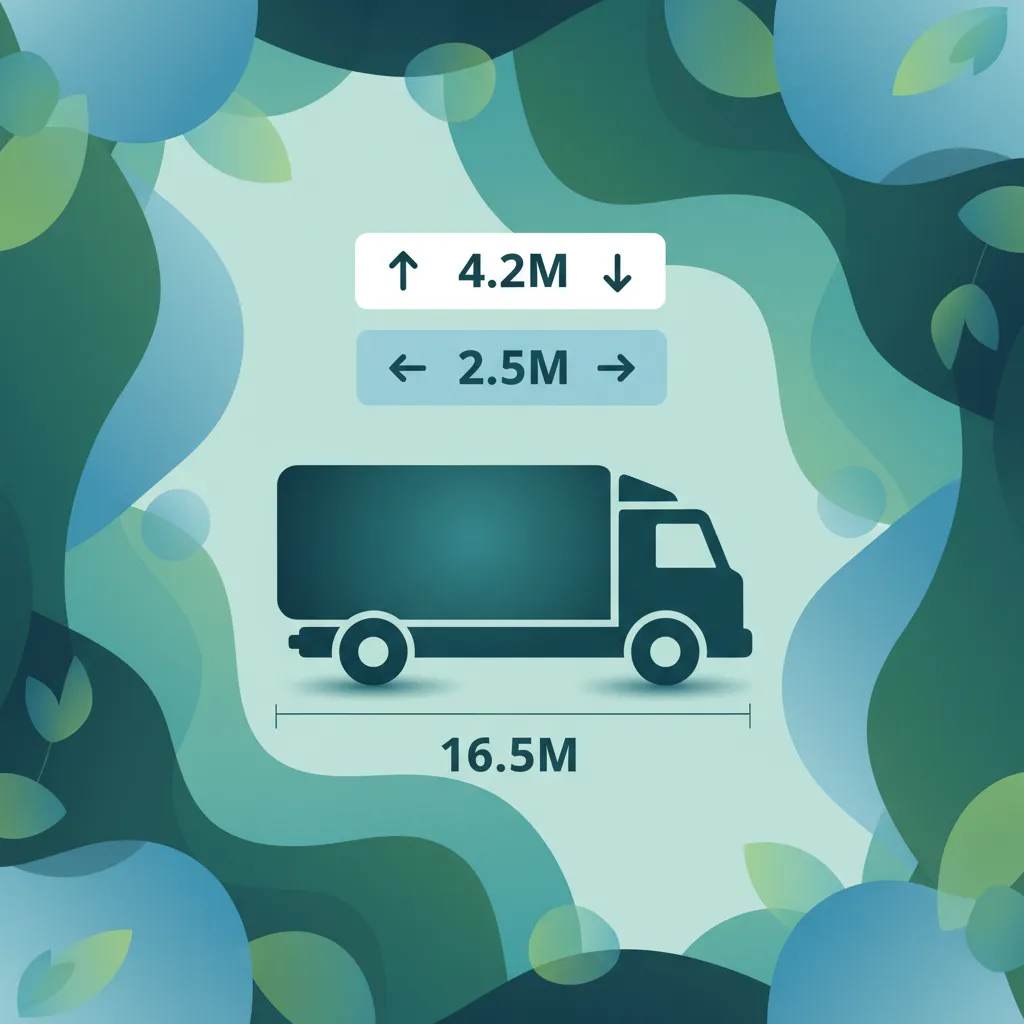
This lesson concentrates on the specific road signs that are of utmost importance to HGV drivers. It details how to interpret signs indicating maximum permissible weight, axle load, vehicle height, and overall length. Understanding these restrictions is crucial for effective route planning to avoid bridges with low clearance, roads with weight limits, or tunnels that cannot accommodate the vehicle's dimensions, thus preventing accidents and infrastructure damage.
This lesson focuses on areas with high pedestrian activity, requiring special caution. It covers the rules for 'living zones' (strefa zamieszkania), where pedestrians have priority and the speed limit is 20 km/h. The content also addresses regulations for school zones and other designated pedestrian areas to ensure the safety of the most vulnerable road users.

This lesson provides a detailed breakdown of vehicle classifications relevant to the Category C licence. It explains the concept of 'dopuszczalna masa całkowita' (permissible total weight) and how it defines a vehicle's category. Learners will identify different truck types, such as rigid vehicles, based on their axle configurations and understand the specific roadworthiness and registration requirements for each class, ensuring correct vehicle operation under the law.

This lesson outlines the essential legal paperwork associated with freight transport. It details the purpose and content of key documents like the load manifest, cargo declaration, and official weight certificates. Learners will understand their legal responsibility to verify that all documentation is accurate and complete before departure, and the importance of maintaining proper records for potential inspections by transport authorities or for cross-border customs procedures.
This lesson details the various parking regulations encountered in residential areas. It explains how to interpret signs indicating permitted parking zones, time restrictions, and areas where parking is prohibited. Correctly positioning the vehicle within marked bays and understanding rules about pavement parking are also covered to avoid fines and obstruction.
This lesson focuses on the critical documentation every professional driver must carry and maintain. It covers the driver's licence, vehicle registration, and tachograph records, explaining their legal importance and proper management. Learners will also study the requirements for transport permits, cargo declarations, and safety inspection reports, ensuring full compliance with Polish and EU regulations to avoid penalties and operational delays during roadside checks.

This lesson equips drivers with the skills to operate a large vehicle within the challenging confines of an urban environment. It addresses how to navigate narrow streets, deal with traffic calming measures, and manage frequent stop-and-go situations while being vigilant for pedestrians and other road users. The content also emphasizes the importance of meticulous route planning to avoid unsuitable roads and the use of anticipation to maintain smooth progress and minimize disruption in congested areas.
This lesson examines the signs that convey dimensional and weight restrictions, which are vital for safe tractor and trailer operation. It outlines how to read width, height, and weight limit signs and the legal implications of exceeding these limits. The lesson provides guidance on planning loads to comply with bridge and road classification restrictions found across Polish rural networks.
Learn about typical errors drivers make when entering restricted urban and environmental zones in Poland. This lesson focuses on recognizing confusing signage, managing permit validity, and understanding time-based restrictions to prevent costly fines.
This lesson equips drivers with the skills to operate a large vehicle within the challenging confines of an urban environment. It addresses how to navigate narrow streets, deal with traffic calming measures, and manage frequent stop-and-go situations while being vigilant for pedestrians and other road users. The content also emphasizes the importance of meticulous route planning to avoid unsuitable roads and the use of anticipation to maintain smooth progress and minimize disruption in congested areas.
This lesson concentrates on the specific road signs that are of utmost importance to HGV drivers. It details how to interpret signs indicating maximum permissible weight, axle load, vehicle height, and overall length. Understanding these restrictions is crucial for effective route planning to avoid bridges with low clearance, roads with weight limits, or tunnels that cannot accommodate the vehicle's dimensions, thus preventing accidents and infrastructure damage.
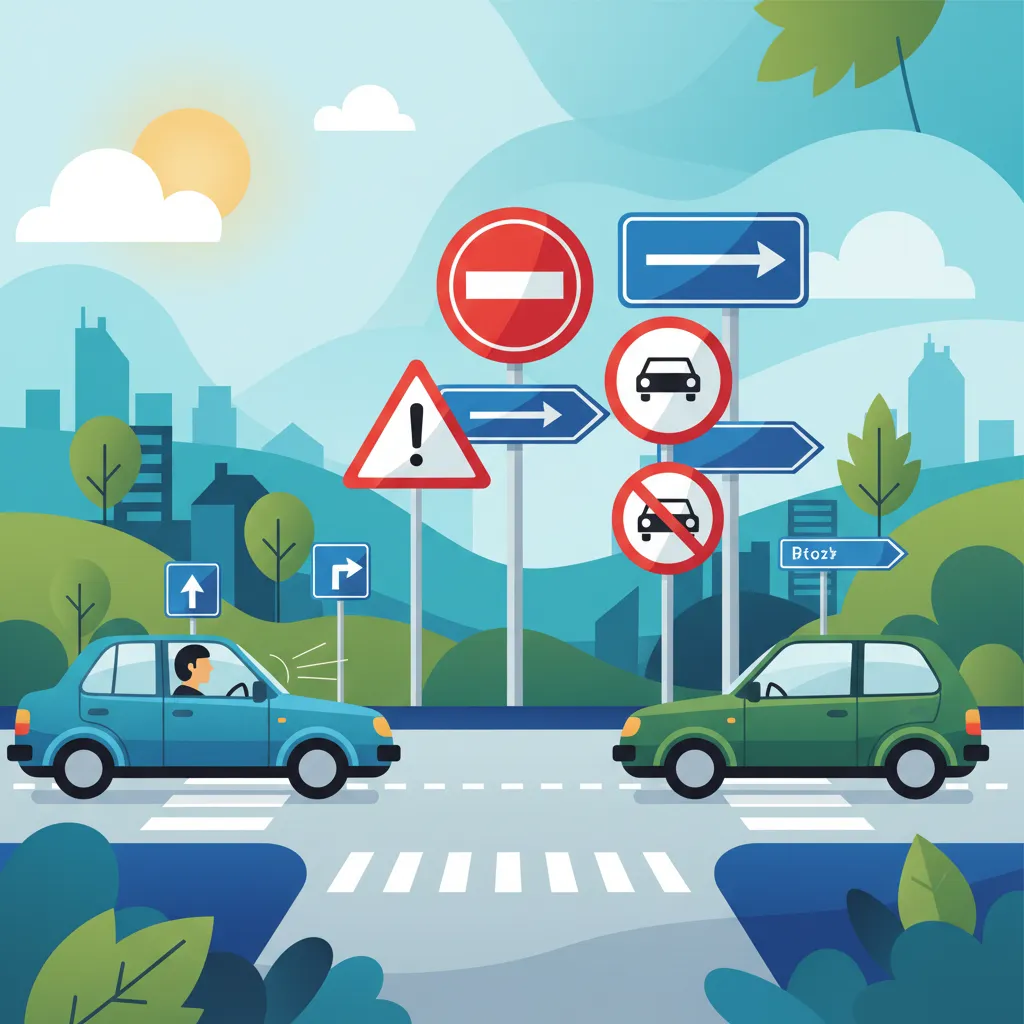
This lesson provides a foundational understanding of the Polish road sign system, categorizing signs into three main types: warning, prohibitory/mandatory, and informational. It explains the significance of different shapes and color codes, enabling drivers to quickly interpret their meaning and legal obligation. By mastering the visual language of road signs, learners will be equipped to make correct and safe decisions in any traffic situation they encounter.

This lesson defines what constitutes a 'built-up area' in Poland, marked by specific informational signs. It explains the default speed limit of 50 km/h that applies within these zones unless otherwise indicated. The content highlights the need for increased vigilance due to higher traffic density and the frequent presence of pedestrians.
This lesson outlines the statutory speed limits that professional drivers of Category C vehicles must adhere to on Polish roads. It clearly distinguishes the maximum permitted speeds in built-up areas, on single carriageways, and on motorways. The content also explains how to interpret road signs that may indicate temporary or vehicle-specific speed restrictions, ensuring drivers remain compliant with the law and avoid penalties from speed enforcement measures.
This lesson focuses on the specific challenges HGVs face when navigating roundabouts. It details the correct procedure for approach, including selecting the appropriate lane based on the intended exit and yielding to traffic already circulating. The content emphasizes the need to account for the vehicle's large turning radius and off-tracking to avoid encroaching on adjacent lanes or mounting curbs, ensuring a smooth and safe passage through the roundabout.
This lesson provides a comprehensive breakdown of the right-of-way rules that govern intersections. It explains the clear directives given by traffic lights, stop signs, and yield signs, and clarifies the procedures at unmarked or uncontrolled intersections, where the 'priority to the right' rule often applies. Learners will understand the legal hierarchy of these rules to make correct, safe, and predictable decisions when navigating through any junction, reducing the risk of conflict with other traffic.
This lesson highlights the professional driver's heightened responsibility to protect vulnerable road users. It focuses on the significant blind spots around a large truck, particularly during turns in urban areas where pedestrians and cyclists are common. The content teaches strategies for anticipating the unpredictable movements of these users, providing ample space when passing, and using warning signals to communicate intentions clearly, fostering a culture of shared road safety.
In this lesson, learners explore the temporary signs that appear during road construction or maintenance activities, focusing on how they alter normal traffic patterns. The content covers signs indicating lane shifts, temporary speed limits, detour routes, and equipment zones where workers are present. The lesson emphasizes the importance of slowing down, staying alert, and obeying temporary regulations to navigate safely through work zones while ensuring compliance.

This lesson addresses the high-risk maneuver of reversing a large truck. It provides systematic techniques for using mirrors and, if available, cameras to monitor the vehicle's path, while strongly emphasizing the importance of managing extensive blind spots. Learners will study procedures for maneuvering within tight spaces like loading docks and yards, including the proper use of a spotter (banksman) to ensure the area is clear and to provide guidance, minimizing the risk of collisions.
Find clear answers to common questions learners have about Access Restrictions: Urban Zones and Environmental Zones. Learn how the lesson is structured, which driving theory objectives it supports, and how it fits into the overall learning path of units and curriculum progression in Poland. These explanations help you understand key concepts, lesson flow, and exam focused study goals.
These zones aim to reduce air pollution, noise, and traffic congestion in sensitive areas. By restricting access to vehicles that do not meet specific emission standards or during certain hours, cities can improve air quality and the quality of life for residents. For Category C drivers, understanding this helps appreciate the importance of compliance.
Environmental zones are typically marked with specific road signs indicating the start and end of the zone, often featuring a vehicle symbol and an emission standard requirement (e.g., Euro 5). These signs might also specify the types of vehicles affected and the hours of restriction. Always look for accompanying informational panels.
Not always. Some zones might allow entry based purely on your vehicle's emission class (e.g., Euro 6 compliant vehicles). However, for many city centers or specific delivery times, a special permit may be mandatory, especially for older or larger Category C vehicles. Always check local regulations or your route plan.
Violating HGV access restrictions can lead to significant fines. Enforcement often involves automatic camera systems as well as police checks. Repeated violations can also impact your operator's licence and reputation, making compliance crucial for professional Category C drivers.
Yes, restrictions can vary. Some zones might apply to all HGVs, while others specify limits based on gross vehicle weight (GVW) or axle configuration. Emission standards are a common differentiator. Always check the specific signage and local bylaws as they apply to your particular Category C vehicle.
Build custom practice sessions tailored precisely to your needs. Focus on areas requiring improvement, review specific Polish road signs, or master complex traffic rules to ensure full preparation for your official driving license exam.