
This lesson is vital for all aspiring Category C HGV drivers in Poland, focusing on specific road signs that directly impact heavy vehicle operation. You will learn to correctly interpret signs indicating maximum permissible weight, height, and length. Mastering these restrictions is crucial for safe route planning, preventing costly infrastructure damage, and ensuring full compliance with Polish traffic laws during your professional driving career.
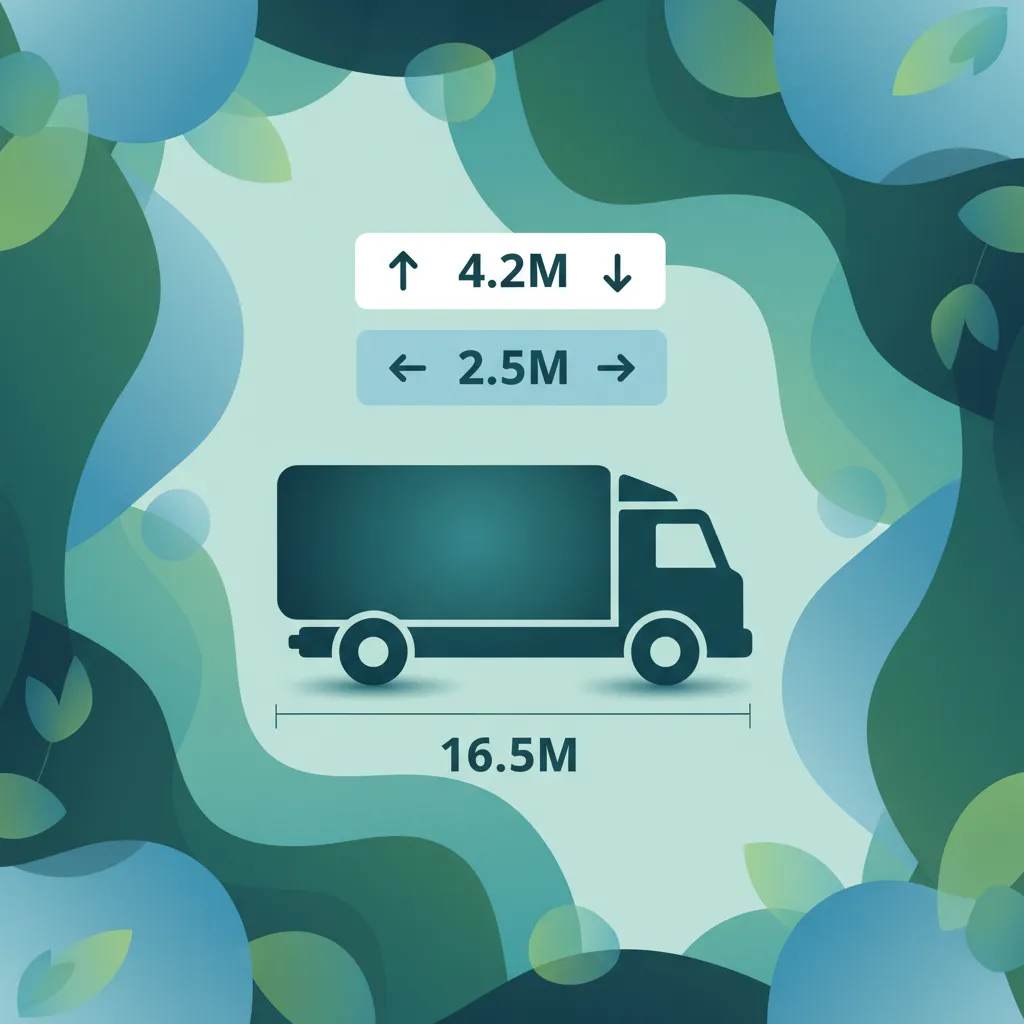
Lesson content overview
Navigating the road network with a heavy goods vehicle (HGV) requires a deep understanding of specific road signage, particularly those that impose restrictions based on a vehicle's weight and dimensions. For aspiring professional truck drivers pursuing the Polish Category C Heavy Goods Vehicle Theory certification, correctly interpreting these signs is not just a matter of compliance; it is paramount for safety, preventing infrastructure damage, and efficient route planning across Poland and within the EU.
This lesson provides an in-depth guide to these crucial road signs, explaining their meaning, the underlying principles, and the practical implications for HGV operations. We will explore signs related to maximum permissible weight, axle load, vehicle height, width, and overall length, preparing you to make informed decisions on the road.
Roads, bridges, tunnels, and other infrastructure elements are designed with specific load-bearing and clearance capacities. Over-weight or over-sized vehicles can exert forces beyond these capacities, leading to structural failures, accidents, and costly repairs. Dimensional and weight restriction signs are legally enforced directives that protect this infrastructure and ensure the safety of all road users.
Understanding these signs is a fundamental component of safe and legal HGV operation. It allows drivers to plan routes effectively, avoiding areas where their vehicle's characteristics would pose a risk or violate regulations. This knowledge directly supports broader topics like vehicle construction, load management, and route planning, all critical for professional drivers.
Always know your vehicle's exact dimensions and loaded weight before starting a journey. This proactive approach is the first step in complying with all road restrictions.
The Gross Vehicle Weight (GVW) is the total weight of the vehicle, including its own weight (curb weight), the cargo it carries, fuel, passengers, and any accessories. Road signs indicating maximum GVW limits are crucial for heavy goods vehicles as they prevent the overloading of road structures, particularly bridges and tunnels.
This sign, often depicted as a white circle with a red border and a numerical value in tonnes (e.g., "20t"), signifies an absolute limit for the entire vehicle combination. Drivers must calculate their loaded vehicle's GVW before departure and ensure it does not exceed the displayed limit. Violating this restriction can lead to significant fines and the mandatory re-routing or detention of the vehicle.
Do not confuse GVW with cargo weight. The sign refers to the entire vehicle's weight. A common misunderstanding is to only consider the weight of the goods, ignoring the truck's own weight and fuel.
Consider a scenario where a truck has a curb weight of 8 tonnes, carries 10 tonnes of cargo, and has 2 tonnes of fuel. Its total GVW is 20 tonnes. If a sign shows "18t", the driver must either reduce the cargo by 2 tonnes or find an alternative route that can accommodate a 20-tonne vehicle. Ignoring such a sign not only risks legal penalties but also contributes to the wear and tear or even collapse of critical infrastructure.
While GVW limits protect the overall structure of a road or bridge, maximum axle load signs address the localized stress points on specific components. These signs specify the highest permissible weight for any single axle or group of axles on a vehicle, expressed in tonnes.
This sign is typically a white circle with a red border, showing a numerical value in tonnes with an axle symbol beneath it (e.g., "8t" with a single axle icon). Sometimes, separate signs may specify limits for single axles versus dual or triple axle groups. Adherence to these limits is critical because concentrated weight on one axle can cause damage to bridge decks or asphalt layers, even if the vehicle's total GVW is within general limits.
Proper load distribution is key to complying with axle load restrictions. A heavy load positioned too far to the rear of a trailer, for instance, can excessively load the rear axle(s) even if the overall GVW is perfectly legal. Drivers must understand how cargo placement affects the weight borne by each axle. Incorrect distribution not only risks fines under the Polish Road Traffic Act but can also impact vehicle handling and braking stability. Regularly checking axle loads, especially after significant cargo changes, is a best practice for HGV drivers.
Maximum height restriction signs are vital for preventing collisions with overhead structures such as bridges, tunnels, overhead power lines, and signal gantries. These signs indicate the maximum vertical clearance allowed, typically expressed in meters.
The sign usually features a white circle with a red border, displaying a numerical height value in meters (e.g., "4.5m") between two vertical arrows pointing inwards. Drivers must accurately know their vehicle's total height, which includes the vehicle itself, any loaded cargo, and roof-mounted equipment like antennas or refrigeration units.
Colliding with a low bridge can cause catastrophic damage to the vehicle, severe delays, and structural damage to the infrastructure. It is a common misconception that vehicle height only refers to the cab or empty trailer. A loaded container or a specific type of cargo (e.g., excavators, oversized machinery) can significantly increase overall height. Before entering any restricted zone, verify your total height against the sign. If in doubt, always choose an alternative route.
Some height limits may be variable, especially in tunnels or construction zones, and indicated by electronic signs that can change based on conditions. Always observe the current displayed value.
Maximum width restriction signs are encountered on roads with limited lateral space, such as narrow urban streets, certain tunnels, or specially designated lanes. These signs define the greatest permissible horizontal width for a vehicle, measured in meters.
Similar to other prohibitory signs, this sign features a white circle with a red border, displaying a numerical width value in meters (e.g., "2.5m") between two horizontal arrows pointing inwards. It is crucial to measure the widest point of the vehicle, which includes side mirrors, mudguards, and any side extensions or parts of the cargo that protrude outwards.
Exceeding a width limit can lead to collisions with other vehicles, parked cars, cyclists, pedestrians, or fixed objects like guardrails and buildings. In densely populated urban areas, even a small overestimation of width can cause significant traffic disruptions and safety hazards. Drivers must be particularly vigilant about their vehicle's width when maneuvering through tight spaces or on roads with narrow lanes.
Maximum length restriction signs specify the longest permissible overall length for a vehicle or combination of vehicles, including any trailers and cargo overhangs. These limits are primarily put in place to ensure safe navigation on routes with tight bends, challenging roundabouts, or limited turning radii.
While B-1 is a general "no entry" sign, a length restriction would typically be indicated by a supplementary panel or a specific prohibitory sign (e.g., B-5 with a length symbol). The length limit is expressed in meters (e.g., "18m" for a tractor-trailer combination) between two horizontal arrows.
Operating a long vehicle requires precise maneuvering skills. Exceeding a length limit can make it impossible to safely navigate a roundabout or a sharp turn without encroaching on opposing lanes, blocking traffic, or even colliding with road furniture. Drivers of tractor-trailer combinations must calculate their combined length accurately, including any rear overhangs from cargo. Route planning software often takes these length restrictions into account, but the driver ultimately bears responsibility for observing the signs.
Sometimes, road signs will simultaneously present multiple limits, known as composite signs. These signs combine various restrictions, such as weight and height, on a single panel.
For example, a sign might display "20t, 4.5m". The practical meaning is that both displayed limits must be satisfied. A vehicle that is under the weight limit but over the height limit, or vice-versa, is still in violation. Drivers must treat composite signs as a conjunction of individual limits, meaning all parameters must be met. Misinterpreting these as "either/or" conditions is a common and dangerous mistake.
Compliance with dimensional and weight restrictions is mandated by Polish traffic law and aligned with EU directives. Violations carry significant penalties and can endanger public safety and infrastructure integrity.
Even experienced drivers can make mistakes if not vigilant. Understanding common pitfalls and contextual variations is crucial for HGV safety.
Mastering the interpretation and adherence to weight, height, and length restriction signage is a cornerstone of professional heavy goods vehicle driving. It ensures your safety, protects public infrastructure, and keeps you compliant with Polish and European transport regulations. By diligently measuring your vehicle's dimensions and weight, distributing loads correctly, and carefully observing all road signs, you contribute to safer roads for everyone. This knowledge forms a critical foundation for effective route planning, accident prevention, and responsible operation of Category C vehicles.
This lesson teaches Polish Category C HGV drivers how to interpret road signs for weight, height, width, and length restrictions. Key signs covered include B-18 for maximum GVW, B-15 for axle load limits, B-16 for height restrictions, and B-17 for width limits. Understanding these signs is essential for safe route planning and compliance with Polish and EU transport regulations. Common errors include misjudging total vehicle dimensions, improper load distribution, and misunderstanding composite signs that require all stated restrictions to be satisfied simultaneously.
A short set of high-value points that capture the most important learning from this lesson.
GVW restriction signs (B-18) prohibit vehicles whose total loaded weight exceeds the indicated limit, including the vehicle itself, cargo, fuel, and passengers.
Axle load signs (B-15) address localized stress on specific road components such as bridge decks, protecting infrastructure even when total GVW is within limits.
Height restriction signs (B-16) require knowing your vehicle's total height including cargo, roof-mounted equipment, and any accessories like antennas or refrigeration units.
Composite signs displaying multiple restrictions (e.g., weight AND height) require ALL displayed limits to be satisfied simultaneously — not as alternatives.
Accurate route planning must account for variations between motorways (higher limits) and rural or older urban roads (lower limits due to older infrastructure).
Explore all units and lessons included in this driving theory course.
Gross Vehicle Weight is the vehicle curb weight plus all cargo, fuel, passengers, and accessories — not just the cargo mass.
Axle load limits can be stricter than GVW limits on certain road sections, so both must be checked separately.
Total vehicle height includes the cab, loaded cargo, and all roof-mounted equipment — not just the trailer or empty vehicle height.
Vehicle width must include side mirrors, mudguards, and any side extensions or protruding cargo parts.
Composite restriction signs mean ALL conditions must be met — if you exceed even one parameter, you are in violation.
Confusing GVW with cargo weight alone and ignoring the vehicle's own weight and fuel when checking against weight limit signs.
Incorrectly distributing cargo so that individual axles exceed limits even when total GVW is within the legal range.
Treating composite signs as 'either/or' conditions — believing it is acceptable to exceed one limit as long as another is met.
Assuming vehicle height refers only to the cab or trailer height without accounting for loaded cargo or roof equipment.
Relying solely on route planning software without personally observing and verifying road signs during actual driving.
Lesson content overview
A short set of high-value points that capture the most important learning from this lesson.
GVW restriction signs (B-18) prohibit vehicles whose total loaded weight exceeds the indicated limit, including the vehicle itself, cargo, fuel, and passengers.
Axle load signs (B-15) address localized stress on specific road components such as bridge decks, protecting infrastructure even when total GVW is within limits.
Height restriction signs (B-16) require knowing your vehicle's total height including cargo, roof-mounted equipment, and any accessories like antennas or refrigeration units.
Composite signs displaying multiple restrictions (e.g., weight AND height) require ALL displayed limits to be satisfied simultaneously — not as alternatives.
Accurate route planning must account for variations between motorways (higher limits) and rural or older urban roads (lower limits due to older infrastructure).
Explore all units and lessons included in this driving theory course.
Gross Vehicle Weight is the vehicle curb weight plus all cargo, fuel, passengers, and accessories — not just the cargo mass.
Axle load limits can be stricter than GVW limits on certain road sections, so both must be checked separately.
Total vehicle height includes the cab, loaded cargo, and all roof-mounted equipment — not just the trailer or empty vehicle height.
Vehicle width must include side mirrors, mudguards, and any side extensions or protruding cargo parts.
Composite restriction signs mean ALL conditions must be met — if you exceed even one parameter, you are in violation.
Confusing GVW with cargo weight alone and ignoring the vehicle's own weight and fuel when checking against weight limit signs.
Incorrectly distributing cargo so that individual axles exceed limits even when total GVW is within the legal range.
Treating composite signs as 'either/or' conditions — believing it is acceptable to exceed one limit as long as another is met.
Assuming vehicle height refers only to the cab or trailer height without accounting for loaded cargo or roof equipment.
Relying solely on route planning software without personally observing and verifying road signs during actual driving.
Explore search topics learners often look for when studying Weight, Height, and Length Restrictions Signage. These topics reflect common questions about road rules, driving situations, safety guidance, and lesson level theory preparation for learners in Poland.
Browse additional driving theory lessons that cover connected traffic rules, road signs, and common driving situations related to this topic. Improve your understanding of how different rules interact across everyday traffic scenarios.
Understand critical Polish road signs for heavy goods vehicles (HGVs) related to gross vehicle weight, axle load, height, width, and length. Essential theory for Category C drivers to plan routes safely and legally.
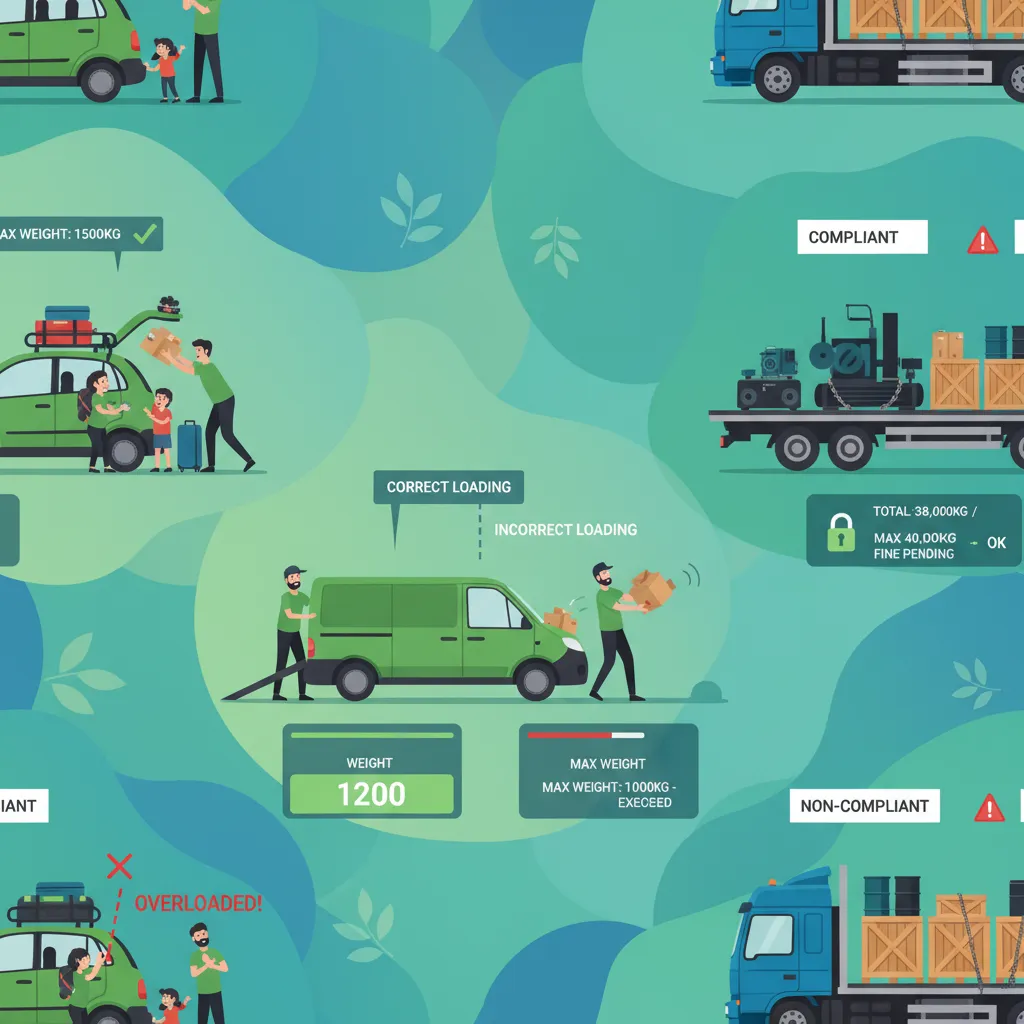
This lesson introduces the legal framework governing vehicle and axle weight limits in Poland and the EU. Learners will understand how to determine a vehicle's maximum permissible payload and interpret official load charts and documentation. The content covers the importance of correct weight distribution to avoid exceeding individual axle limits and explains the serious legal and safety consequences of operating an overloaded vehicle.

This lesson provides a detailed breakdown of vehicle classifications relevant to the Category C licence. It explains the concept of 'dopuszczalna masa całkowita' (permissible total weight) and how it defines a vehicle's category. Learners will identify different truck types, such as rigid vehicles, based on their axle configurations and understand the specific roadworthiness and registration requirements for each class, ensuring correct vehicle operation under the law.
This lesson outlines the statutory speed limits that professional drivers of Category C vehicles must adhere to on Polish roads. It clearly distinguishes the maximum permitted speeds in built-up areas, on single carriageways, and on motorways. The content also explains how to interpret road signs that may indicate temporary or vehicle-specific speed restrictions, ensuring drivers remain compliant with the law and avoid penalties from speed enforcement measures.

This lesson focuses on the stringent health standards mandated for operating heavy goods vehicles. It details the required medical assessments, including vision, cardiovascular, and neurological checks, that prospective drivers must pass. Learners will understand the process of obtaining a medical certificate, the requirements for periodic renewals to ensure ongoing fitness for duty, and the legal implications of failing to meet these essential health criteria for professional driving.

This lesson outlines the essential legal paperwork associated with freight transport. It details the purpose and content of key documents like the load manifest, cargo declaration, and official weight certificates. Learners will understand their legal responsibility to verify that all documentation is accurate and complete before departure, and the importance of maintaining proper records for potential inspections by transport authorities or for cross-border customs procedures.

This lesson provides an overview of the key EU regulations that harmonize the road transport industry across member states. It focuses on the standardized rules for drivers' hours and rest periods, which are designed to combat fatigue and enhance safety. The content also explains the principles of cabotage—the transport of goods within one member state by a haulier from another—and the necessary documentation for smooth and legal cross-border operations.

This lesson addresses the increasingly common restrictions on HGV access to urban areas and designated low-emission zones. It explains how to identify these zones through specific signage and understand the criteria for entry, which may be based on the vehicle's emission standard or subject to time-of-day limitations. Learners will become familiar with the necessity of obtaining special permits for city center deliveries and the legal consequences of violating these access regulations.

This lesson explores the environmental impact of HGV operations and the regulations designed to mitigate it. It covers modern emission control systems and standards (e.g., Euro 6), and the importance of compliance with rules governing noise pollution. The content reinforces eco-driving techniques as a primary method for reducing fuel consumption and emissions, promoting the driver's role in achieving more sustainable and environmentally friendly logistics operations.

This lesson examines the signs that convey dimensional and weight restrictions, which are vital for safe tractor and trailer operation. It outlines how to read width, height, and weight limit signs and the legal implications of exceeding these limits. The lesson provides guidance on planning loads to comply with bridge and road classification restrictions found across Polish rural networks.
This lesson examines the compulsory training structure for professional Category C drivers. It outlines the required components of certified training programs, including both theoretical instruction and practical driving experience. Learners will understand the standards for competence assessment, the structure of the official licensing examinations, and the legal obligation to maintain accurate training records to demonstrate compliance with professional driver qualifications.
Learn to interpret Polish road signs for vehicle weight, height, width, and length restrictions. Covers common mistakes, practical scenarios, and legal requirements for HGV drivers to ensure safe navigation and compliance.
This lesson examines the signs that convey dimensional and weight restrictions, which are vital for safe tractor and trailer operation. It outlines how to read width, height, and weight limit signs and the legal implications of exceeding these limits. The lesson provides guidance on planning loads to comply with bridge and road classification restrictions found across Polish rural networks.
This lesson outlines the statutory speed limits that professional drivers of Category C vehicles must adhere to on Polish roads. It clearly distinguishes the maximum permitted speeds in built-up areas, on single carriageways, and on motorways. The content also explains how to interpret road signs that may indicate temporary or vehicle-specific speed restrictions, ensuring drivers remain compliant with the law and avoid penalties from speed enforcement measures.
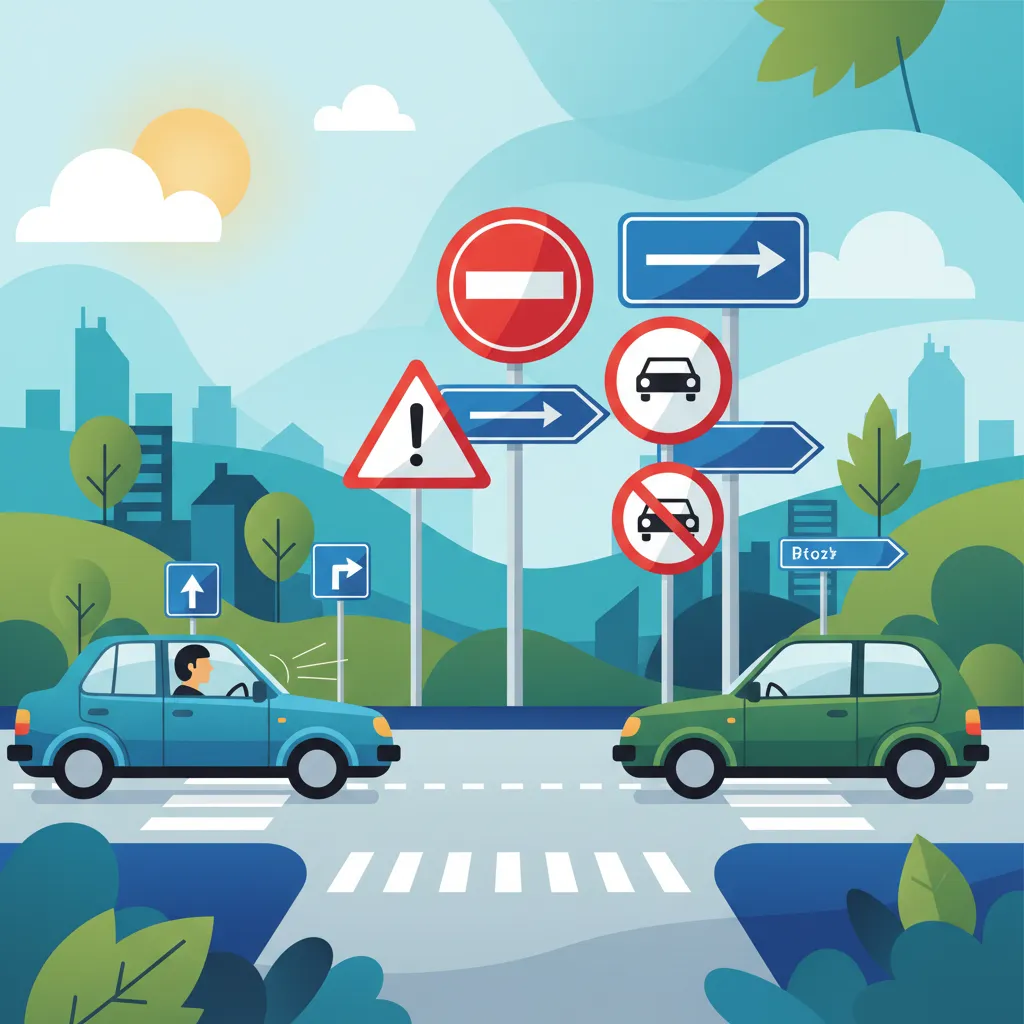
This lesson provides a foundational understanding of the Polish road sign system, categorizing signs into three main types: warning, prohibitory/mandatory, and informational. It explains the significance of different shapes and color codes, enabling drivers to quickly interpret their meaning and legal obligation. By mastering the visual language of road signs, learners will be equipped to make correct and safe decisions in any traffic situation they encounter.
This lesson provides a detailed breakdown of vehicle classifications relevant to the Category C licence. It explains the concept of 'dopuszczalna masa całkowita' (permissible total weight) and how it defines a vehicle's category. Learners will identify different truck types, such as rigid vehicles, based on their axle configurations and understand the specific roadworthiness and registration requirements for each class, ensuring correct vehicle operation under the law.
This lesson outlines the essential legal paperwork associated with freight transport. It details the purpose and content of key documents like the load manifest, cargo declaration, and official weight certificates. Learners will understand their legal responsibility to verify that all documentation is accurate and complete before departure, and the importance of maintaining proper records for potential inspections by transport authorities or for cross-border customs procedures.
This lesson introduces the legal framework governing vehicle and axle weight limits in Poland and the EU. Learners will understand how to determine a vehicle's maximum permissible payload and interpret official load charts and documentation. The content covers the importance of correct weight distribution to avoid exceeding individual axle limits and explains the serious legal and safety consequences of operating an overloaded vehicle.
This lesson addresses the increasingly common restrictions on HGV access to urban areas and designated low-emission zones. It explains how to identify these zones through specific signage and understand the criteria for entry, which may be based on the vehicle's emission standard or subject to time-of-day limitations. Learners will become familiar with the necessity of obtaining special permits for city center deliveries and the legal consequences of violating these access regulations.

This lesson provides a comprehensive breakdown of the right-of-way rules that govern intersections. It explains the clear directives given by traffic lights, stop signs, and yield signs, and clarifies the procedures at unmarked or uncontrolled intersections, where the 'priority to the right' rule often applies. Learners will understand the legal hierarchy of these rules to make correct, safe, and predictable decisions when navigating through any junction, reducing the risk of conflict with other traffic.
Find clear answers to common questions learners have about Weight, Height, and Length Restrictions Signage. Learn how the lesson is structured, which driving theory objectives it supports, and how it fits into the overall learning path of units and curriculum progression in Poland. These explanations help you understand key concepts, lesson flow, and exam focused study goals.
A maximum gross vehicle weight sign (e.g., 10t) indicates the total permissible weight of the entire vehicle, including its load. An axle load sign (e.g., 5t per axle) restricts the maximum weight that can be supported by any single axle or axle group. Both are crucial for Category C drivers to prevent fines and infrastructure damage in Poland.
If your Category C vehicle exceeds a posted restriction, you must not proceed. You are legally required to find an alternative route that accommodates your vehicle's dimensions and weight. Ignoring these signs can lead to significant fines, points on your license, and severe safety hazards or damage to infrastructure like bridges and tunnels.
While most HGV dimension restriction signs follow standard European conventions for design and symbols, specific numerical values (e.g., weight limits on certain roads) can vary significantly between countries, including within Poland. Always pay close attention to the exact numbers displayed on Polish signage, as local regulations may impose stricter limits.
It is essential to know your HGV's exact height, including any cargo or equipment on top, from the highest point to the ground. This should be measured when the vehicle is empty and then recalculated for laden conditions if the suspension changes. Always round up to be safe and use this measurement for route planning to avoid low clearances in Poland.
Common traps in the Polish Category C theory exam include confusing the actual laden weight with the maximum permissible mass (DMC), misinterpreting auxiliary plates that specify conditions (e.g., 'except for local traffic'), or not noticing specific signs for certain types of vehicles. Always read the question and signs carefully for all details.
Build custom practice sessions tailored precisely to your needs. Focus on areas requiring improvement, review specific Polish road signs, or master complex traffic rules to ensure full preparation for your official driving license exam.