
This lesson focuses on the critical family of regulatory signs in Poland, which mandate specific actions and prohibit certain behaviours. Understanding these signs is vital for motorcyclists to navigate traffic safely and legally, forming a key part of your Category A theory preparation.
Lesson content overview
Navigating the roads of Poland as a motorcyclist requires a thorough understanding of traffic regulations, with regulatory signs forming the cornerstone of these rules. These signs are not mere suggestions; they are legally binding commands that dictate mandatory actions, prohibitions, and special conditions for all road users, including those on two wheels. This lesson, part of your comprehensive Polish Motorcycle Theory – Comprehensive Licence Preparation for Category A course, will dive deep into the world of regulatory signs, emphasizing their specific implications for motorcyclists. Mastering these signs is crucial for ensuring your safety, maintaining legal compliance, and fostering predictable traffic flow on Polish roads.
Regulatory signs are a fundamental part of the Prawo o ruchu drogowym (Polish Road Traffic Act), translating legal requirements into clear visual instructions. They embody the state’s commitment to safety and order, ensuring that all drivers, regardless of vehicle type, adhere to a common set of rules.
A traffic sign that imposes a mandatory duty, restriction, or prohibition on road users, enforceable by law. They dictate actions such as stopping, yielding, maintaining speed limits, or prohibiting certain maneuvers.
Unlike warning signs that alert you to potential hazards or informational signs that provide guidance, regulatory signs demand immediate and absolute compliance. Disregarding them can lead to fines, penalty points on your license, or, more importantly, dangerous situations and collisions. For motorcyclists, the implications are often amplified due to the unique dynamics of two-wheeled vehicles, including their stability, braking characteristics, and interaction with other traffic.
Understanding the foundational principles behind regulatory signs helps motorcyclists develop a deeper appreciation for their importance and ensures consistent, safe behavior on the road.
Every regulatory sign imposes a mandatory duty or prohibition. Non-compliance is a legal infraction with potential penalties. For motorcyclists, this means diligently adhering to every command, as the consequences of a mistake can be severe given the rider's greater vulnerability compared to enclosed vehicle occupants. These obligations are universally enforced to ensure uniform conduct and reduce conflicts.
In situations where multiple signs apply, the most restrictive rule always prevails. For example, a temporary speed limit in a construction zone will supersede a general speed limit. Crucially, certain signs are designed specifically for motorcycles, such as reserved lanes or explicit prohibitions. Recognizing these specific instructions is vital, as they address the distinct performance and safety profile of motorcycles. Ignoring them can lead to dangerous maneuvers or legal infractions tailored to two-wheeled vehicles.
While the meaning of a regulatory sign remains constant, your required compliance might need adaptation based on external factors. Adverse conditions like rain, fog, or darkness significantly affect visibility, grip, and stopping distances, making strict adherence even more critical. Additionally, many signs are temporary, such as those for roadworks, and are only valid for a defined period or stretch of road. Motorcyclists must treat temporary signs with the same seriousness as permanent ones until an "end of restriction" sign is encountered.
This section details the most crucial regulatory signs you will encounter on Polish roads, explaining their meaning and specific considerations for motorcyclists.
The STOP sign (Znak STOP) is one of the most unambiguous regulatory signs. It commands an absolute halt. For motorcyclists, this means bringing your bike to a full, momentary stop with both feet ideally on the ground before the white stop line. If no line is present, you must stop before entering the intersection in a position that allows you to safely observe traffic on the intersecting road.
Motorcycle Tip: When stopping at a STOP sign, engage your front brake firmly but smoothly, and modulate the rear brake for stability. Keep your engine in first gear, ready to proceed, and actively scan left, right, then left again for oncoming traffic. Even if no traffic is visible, a full stop is legally required.
Failure to make a complete stop is a violation of the Polish Road Traffic Act. Many riders make the mistake of a "rolling stop" or "creeping" through, especially when traffic appears light. This common misunderstanding can lead to serious right-of-way accidents, as you are legally obliged to yield to all traffic on the intersecting road.
The Give Way sign (Znak Ustąp pierwszeństwa), also commonly referred to as a Yield sign, indicates that you must yield the right-of-way to vehicles already on or approaching the intersecting road. While it doesn't always demand a full stop like the STOP sign, you must be prepared to stop if necessary to allow other traffic to pass safely.
The blueprint mentions "Znak WYJAZD" in relation to Give Way. However, the standard Polish sign for "Give Way" is "Znak Ustąp pierwszeństwa" (A-7). "Wyjazd" translates to "exit" and typically refers to a location rather than a regulatory command. For the purpose of this lesson, we will focus on the widely recognized "Ustąp pierwszeństwa" sign.
For motorcyclists, this means reducing speed significantly, preparing to brake, and actively scanning for traffic. You must not proceed if doing so would force another driver to slow down or change direction. Riders sometimes assume they can "push through" if traffic is far away or visibility is momentarily obscured, which can lead to dangerous situations and rear-end collisions if you misjudge speed or distance.
The Priority Road sign (Znak Droga z pierwszeństwem przejazdu) informs you that you are on a road that has priority at upcoming intersections. This means that traffic from intersecting roads will have STOP or Give Way signs and must yield to you.
While on a priority road, motorcyclists may proceed without yielding at uncontrolled intersections. However, this does not grant immunity from other regulations, such as speed limits or no overtaking zones. You must still be attentive to other road users, anticipate potential hazards, and be prepared for unexpected actions, as not all drivers will correctly interpret priority rules. The priority ends when you encounter the End of Priority Road sign (Znak Koniec Drogi z pierwszeństwem przejazdu).
Speed Limit Signs (Znak Ograniczenia Prędkości) are ubiquitous and critical for safety. They specify the maximum speed you are legally allowed to travel in kilometers per hour (km/h). For motorcyclists, adhering to these limits is paramount due to factors like reduced stability, shorter braking distances compared to cars (but still significant), and greater vulnerability in a collision.
Subcategories include general speed limits applicable to all vehicles and, less commonly, vehicle-specific limits. The end of a speed limit is indicated by an End of Speed Limit sign (Znak Koniec Ograniczenia Prędkości), which is a white circular sign with a black diagonal line.
Important for Riders: Exceeding the speed limit is a punishable offense under Polish law. Motorcyclists often perceive a sense of agility that tempts them to push limits. However, higher speeds drastically increase stopping distances and the severity of crash outcomes. Always adjust your speed not just to the posted limit but also to prevailing road, weather, and traffic conditions.
The No Overtaking Sign (Znak Zakaz Wyprzedzania) prohibits all vehicles from overtaking the vehicle ahead. This restriction is typically placed in areas where overtaking would be unsafe, such as blind curves, narrow roads, near intersections, or before pedestrian crossings.
Crucially for motorcyclists, there are general prohibitions that apply to all vehicles, and sometimes specific prohibitions shown by a No Overtaking for Motorcycles sign (Znak Zakaz Wyprzedzania Motocykli). Riders must not assume these signs apply only to cars; they are equally binding for two-wheelers. Overtaking in a prohibited zone significantly increases the risk of head-on collisions, especially given a motorcycle's smaller profile which can make it less visible to oncoming traffic.
Prohibition signs are a broad category of circular signs with a red border and a black pictogram, indicating an absolute ban on a specific action or entry. Understanding these is vital for avoiding fines and ensuring safety.
The No Entry sign (Znak Zakaz Wjazdu) signifies that no vehicle is permitted to enter the road or area beyond the sign from that direction. This is common on one-way streets, exit ramps, or at the entrance to pedestrian zones. Motorcyclists must find an alternative route.
The No Motorcycles sign (Znak Zakaz Jazdy Motocyklem) is directly relevant to Category A riders. This sign prohibits motorcycles from entering a designated area, street, or zone. Such restrictions are often implemented in pedestrian-heavy city centers, residential areas to reduce noise, or environmentally sensitive zones. Ignoring this sign is a direct violation of traffic law.
Other common prohibition signs include:
Lane reservation signs are typically rectangular, often with a blue background and a white pictogram indicating a lane reserved for specific vehicle classes.
A Motorcycle Lane Reservation sign (Znak Rezerwacji Pasa Ruchu dla Motocykli), or a combined lane reservation (e.g., for bicycles and motorcycles), means that motorcyclists may only use this designated lane. Crossing the lane boundary into an adjacent general traffic lane is prohibited unless explicitly allowed by additional signage or road markings (like dashed lines).
Rider's Perspective: These lanes are designed to improve safety and flow for specific vehicles. Staying within your designated lane enhances predictability for other road users and reduces the risk of conflict, especially with cyclists.
The Minimum Speed Sign (Znak Minimalnej Prędkości) dictates the lowest speed at which you are legally allowed to travel on a given road segment. This sign is typically found on motorways (autostrady) or expressways (drogi ekspresowe) to ensure smooth traffic flow and prevent dangerous speed differentials.
Motorcyclists must maintain at least the posted minimum speed unless road or traffic conditions (e.g., heavy congestion, severe weather) make it unsafe to do so. Unjustified slow riding on such roads can impede traffic, cause frustration, and increase the risk of rear-end collisions.
The End of Restriction Sign (Znak Koniec Zakazu), often a white square with a black diagonal line or a circular sign with a diagonal line through a specific prohibition, signals the termination of a preceding regulatory instruction. For example, an End of Speed Limit sign (Znak Koniec Ograniczenia Prędkości) allows you to resume the general speed limit for that type of road.
Once you pass one of these signs, the previous prohibition (e.g., no overtaking, specific speed limit) no longer applies. However, this does not mean all restrictions are lifted; you must still adhere to general traffic laws and any other active signs. Misreading an end-of-restriction sign as a general "all clear" for all rules is a common mistake.
Even experienced riders can sometimes misinterpret or disregard regulatory signs. Understanding these common pitfalls can help you develop safer habits.
The effectiveness and required diligence in obeying regulatory signs can be significantly influenced by environmental and vehicle-specific conditions.
Here are some practical scenarios illustrating how regulatory signs directly influence a motorcyclist's actions and decision-making on Polish roads.
Scenario: You are riding your motorcycle in a bustling city center, approaching a T-junction marked with a STOP sign. Correct behavior: You smoothly decelerate, using both brakes to come to a complete halt just before the white stop line. You place both feet down for stability, engage first gear, and scan left-right-left. Seeing a safe gap in traffic, you proceed cautiously. Incorrect behavior: You slow down but don't fully stop, "rolling" through the intersection. You might misjudge the speed of an oncoming vehicle or fail to see a pedestrian crossing, leading to a dangerous situation or collision.
Scenario: You are on a scenic, winding rural road, following a car through a section marked by a No Overtaking sign, especially as you approach a blind curve. Correct behavior: You maintain a safe following distance behind the vehicle ahead, resisting the urge to pass. You prepare for the curve by reducing speed and selecting an appropriate gear, ensuring stability and control. Incorrect behavior: You disregard the sign, accelerate, and attempt to overtake the car on the inside of the blind curve. This drastically increases the risk of a head-on collision with unseen oncoming traffic or losing traction and control on the curve.
Scenario: You are riding through a city district that features a lane specifically reserved for motorcycles, indicated by a blue rectangular sign with a white motorcycle pictogram and matching road markings. Correct behavior: You safely enter and stay within the designated motorcycle lane. You use appropriate lane positioning within this space, maintaining a safe distance from other motorcycles or cyclists if it's a shared lane. Incorrect behavior: You decide the dedicated lane is too slow or congested and drift into an adjacent car-only lane without proper observation or signaling. This creates unpredictability and can lead to conflicts or collisions with motorists who expect you to remain in your reserved lane.
Scenario: You are transitioning from a high-speed road (e.g., 80 km/h) to a town entrance where the speed limit abruptly drops to 50 km/h. It's raining lightly, making the road surface wet. Correct behavior: As you pass the 50 km/h speed limit sign, you immediately begin to reduce your speed, accounting for the wet conditions by starting to brake earlier and more smoothly than you would on dry pavement. You are at or below 50 km/h as soon as you have passed the sign. Incorrect behavior: You maintain your higher speed for too long, only beginning to slow down well past the sign. On the wet road, this increases your stopping distance, making you a hazard and risking a fine for speeding in a reduced-grip environment.
Scenario: You are attempting to navigate through a historic city center and encounter a street marked with a "No Motorcycles" sign (Znak Zakaz Jazdy Motocyklem) and a "No Entry" sign (Znak Zakaz Wjazdu). Correct behavior: Upon seeing these signs, you immediately re-evaluate your route. You safely signal and turn onto an alternative street or road that allows motorcycle access, completely avoiding the prohibited zone. Incorrect behavior: You rationalize that "it's just a short distance" or "no one will notice" and enter the prohibited zone. This creates a conflict with pedestrians, disrupts local peace, and is a direct violation of traffic law, potentially leading to fines or other penalties.
Understanding and strictly adhering to regulatory road signs is a cornerstone of safe and legal motorcycle riding in Poland. These signs are not merely guidelines; they are enforceable commands that dictate your actions, prevent collisions, and ensure orderly traffic flow. From the absolute halt demanded by a STOP sign to the speed constraints imposed by a speed limit sign, each regulation plays a critical role in your journey.
Motorcyclists must pay particular attention to signs that specifically affect two-wheeled vehicles, such as lane reservations or direct prohibitions. Beyond simply knowing the signs, it's essential to integrate this knowledge with your practical riding skills, adjusting your behavior for varying conditions like adverse weather, different road types, and the load your motorcycle is carrying. By doing so, you not only comply with the Prawo o ruchu drogowym but also significantly enhance your safety and the safety of others on Polish roads. Continue to practice your observation skills, anticipate potential hazards, and always prioritize caution and compliance.
This lesson covers Polish regulatory signs that impose mandatory duties and prohibitions on motorcyclists, including STOP (B20), Give Way (A7), Priority Road (D1/D2), Speed Limit (B33/B34), No Overtaking (B25/B27), Prohibition (B2, B4, B29, B35, B36), Lane Reservation (C10), and Minimum Speed (C14) signs. Each sign carries legal obligations under the Prawo o ruchu drogowym, with the most restrictive rule prevailing when multiple signs apply. Motorcyclists must pay special attention to motorcycle-specific restrictions like lane reservations and No Motorcycles zones, while adjusting compliance for weather, road type, and vehicle load. Common violations include rolling stops, illegal overtaking in prohibited zones, and failing to adjust speed appropriately at transitions.
A short set of high-value points that capture the most important learning from this lesson.
Regulatory signs in Poland are legally binding commands from the Prawo o ruchu drogowym, not suggestions, and non-compliance carries penalties including fines and penalty points.
The most restrictive applicable rule always prevails when multiple signs conflict, including temporary signs for roadworks that supersede general limits.
Motorcyclists must recognize both general prohibition signs and motorcycle-specific signs like lane reservations (C10) and No Motorcycles (B4), which address two-wheelers directly.
Conditional factors like weather, road type, and vehicle load affect how you comply with signs by increasing braking distances and reducing visibility.
Understanding End of Restriction signs (B42, B34) is equally important as knowing the restrictions themselves to resume normal operation correctly.
Explore all units and lessons included in this driving theory course.
STOP sign (B20) requires a complete momentary halt with both feet down before the stop line, not a rolling stop.
Give Way (A7) demands yielding to all intersecting traffic and being prepared to stop, while Priority Road (D1) gives you right-of-way at uncontrolled intersections.
Speed Limit signs (B33) specify maximum speeds in km/h and must be adjusted immediately upon passing the sign, especially in wet conditions.
Lane reservations for motorcycles mean movement-only lanes—stopping or parking in them is prohibited.
Minimum Speed signs (C14) on motorways require maintaining the posted speed unless conditions make it unsafe.
Performing a rolling stop at STOP signs on seemingly empty roads, risking unseen cross-traffic collisions.
Attempting to overtake in No Overtaking zones (B25, B27) on curves or hills where visibility is reduced.
Drifting into adjacent lanes when using reserved motorcycle lanes, creating unpredictability for other road users.
Entering No Motorcycles zones (B4) with rationalizations like 'it's just a short distance,' violating traffic law.
Delaying speed reduction after passing a lower speed limit sign, especially when transitioning from highways to urban areas in wet conditions.
Lesson content overview
A short set of high-value points that capture the most important learning from this lesson.
Regulatory signs in Poland are legally binding commands from the Prawo o ruchu drogowym, not suggestions, and non-compliance carries penalties including fines and penalty points.
The most restrictive applicable rule always prevails when multiple signs conflict, including temporary signs for roadworks that supersede general limits.
Motorcyclists must recognize both general prohibition signs and motorcycle-specific signs like lane reservations (C10) and No Motorcycles (B4), which address two-wheelers directly.
Conditional factors like weather, road type, and vehicle load affect how you comply with signs by increasing braking distances and reducing visibility.
Understanding End of Restriction signs (B42, B34) is equally important as knowing the restrictions themselves to resume normal operation correctly.
Explore all units and lessons included in this driving theory course.
STOP sign (B20) requires a complete momentary halt with both feet down before the stop line, not a rolling stop.
Give Way (A7) demands yielding to all intersecting traffic and being prepared to stop, while Priority Road (D1) gives you right-of-way at uncontrolled intersections.
Speed Limit signs (B33) specify maximum speeds in km/h and must be adjusted immediately upon passing the sign, especially in wet conditions.
Lane reservations for motorcycles mean movement-only lanes—stopping or parking in them is prohibited.
Minimum Speed signs (C14) on motorways require maintaining the posted speed unless conditions make it unsafe.
Performing a rolling stop at STOP signs on seemingly empty roads, risking unseen cross-traffic collisions.
Attempting to overtake in No Overtaking zones (B25, B27) on curves or hills where visibility is reduced.
Drifting into adjacent lanes when using reserved motorcycle lanes, creating unpredictability for other road users.
Entering No Motorcycles zones (B4) with rationalizations like 'it's just a short distance,' violating traffic law.
Delaying speed reduction after passing a lower speed limit sign, especially when transitioning from highways to urban areas in wet conditions.
Explore search topics learners often look for when studying Regulatory Signs and Their Motorcycle Implications. These topics reflect common questions about road rules, driving situations, safety guidance, and lesson level theory preparation for learners in Poland.
Browse additional driving theory lessons that cover connected traffic rules, road signs, and common driving situations related to this topic. Improve your understanding of how different rules interact across everyday traffic scenarios.
Understand specific Polish prohibition signs like 'No Motorcycles' and 'No Overtaking', alongside dedicated lane reservation rules. Essential for safe and legal motorcycle navigation in Poland.
This lesson examines the variety of pavement markings that define lane structures, traffic flow, and special zones on Polish roads. Learners will study solid and broken lines, lane division markings, and the distinct symbols for bicycle lanes, bus lanes, and tram tracks, all of which affect motorcyclist positioning. The lesson also addresses surface texture indicators that signal changing road conditions, enabling riders to maintain correct lane discipline.
This lesson explains the function of circular prohibition signs, which impose legal restrictions on drivers. It details common prohibitions such as speed limits, 'no entry' signs, and restrictions on overtaking or parking. Compliance with these signs is mandatory, and this lesson ensures learners can correctly identify and obey them.
In this lesson, learners study warning signs that alert drivers to potential hazards, focusing on those that are particularly relevant to motorcyclists. The content includes signs indicating curves, slippery surfaces, animal crossings, tram tracks, and construction zones, each requiring specific riding adjustments. The lesson teaches riders how to interpret these signs to anticipate hazards, adjust speed appropriately, and maintain a safe distance from potential dangers.

This lesson introduces the fundamental principles of right-of-way on Polish roads, explaining how priority road signs determine the flow of traffic at intersections. Learners will explore the hierarchy of vehicle classes and the specific obligations that arise when approaching a yield line or a give-way sign. The content details the legal precedence of main road traffic over secondary road traffic, helping riders safely navigate intersections and avoid right-of-way infractions.
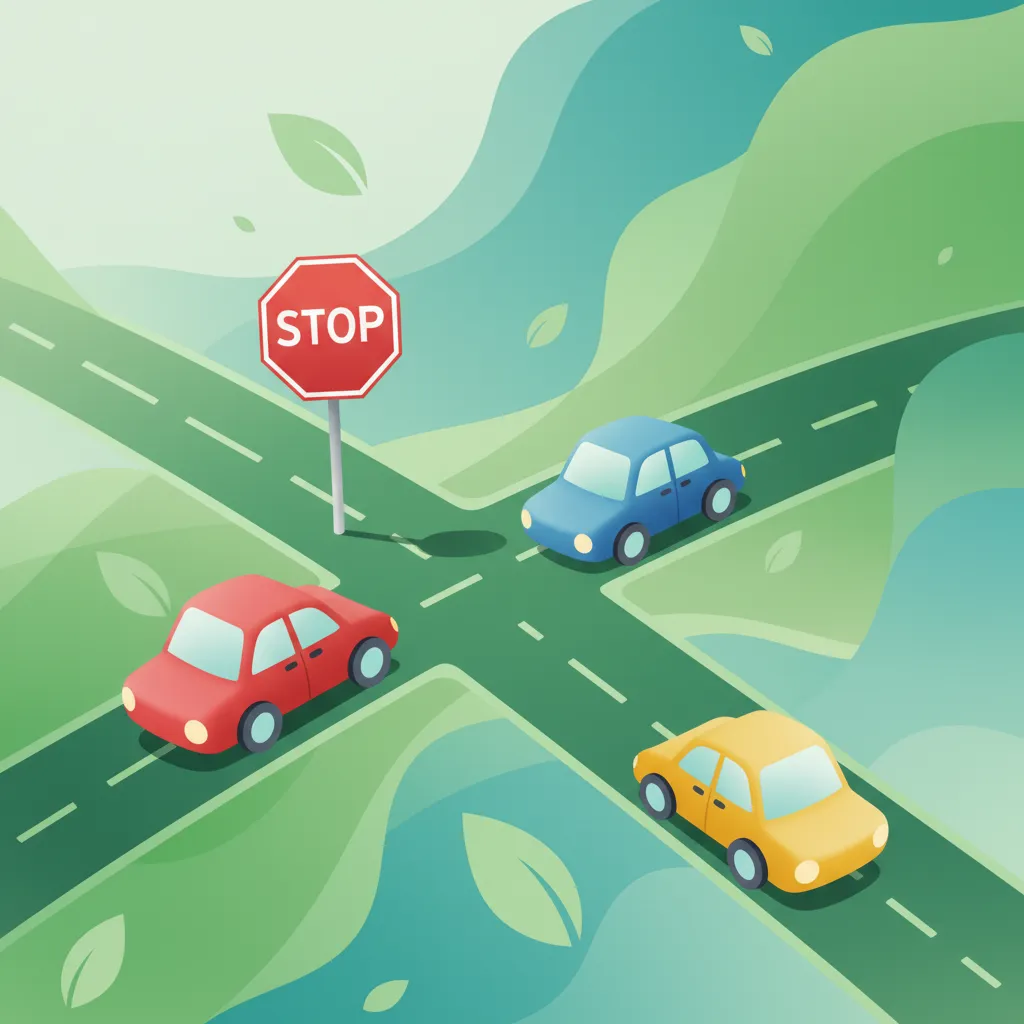
In this lesson, learners examine the specific actions required at stop signs and give-way intersections under Polish traffic regulations. The content explains the legal requirement for a full stop before the stop line, incorporating a visual scan of all directions before proceeding. It also covers the give-way protocol, where riders must yield to traffic already in the intersection or on the main road, emphasizing the need for correct positioning and observation.
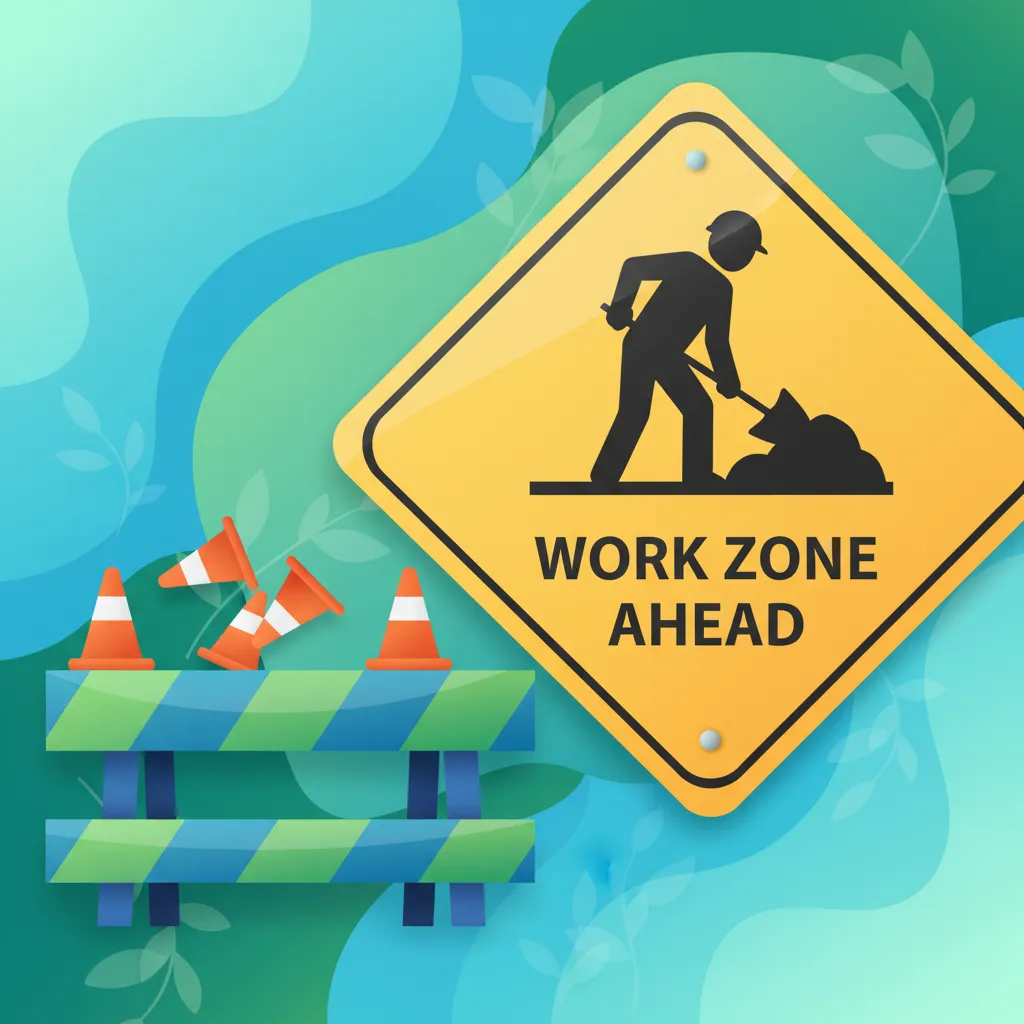
In this lesson, learners explore the temporary signs that appear during road construction or maintenance activities, focusing on how they alter normal traffic patterns. The content covers signs indicating lane shifts, temporary speed limits, detour routes, and equipment zones where workers are present. The lesson emphasizes the importance of slowing down, staying alert, and obeying temporary regulations to navigate safely through work zones while ensuring compliance.

This lesson focuses on informational signs that provide drivers with essential data for navigation and travel planning. Learners will explore signs indicating distances, highway exits, service areas, and speed zone changes, learning how these signs impact route selection and riding strategy. The lesson also addresses the interpretation of direction arrows and road number signs, enabling riders to integrate sign information into effective journey planning and maintain situational awareness.

This lesson examines the specific rules and etiquette for riding on Polish motorways and high-speed highways, focusing on proper lane positioning, entry via acceleration lanes, and maintaining appropriate following distances. Learners will study overtaking protocols at high speeds, proper use of deceleration lanes for exits, and techniques for aerodynamic positioning. The content also covers safe lane changes and emergency lane usage to ensure efficient travel.

This lesson focuses on the rules of lane usage for maintaining safe and efficient traffic flow. It covers the meaning of different lane markings, such as solid versus broken lines, and the general principle of keeping to the rightmost lane unless overtaking. Proper lane discipline is crucial for predictability and preventing conflicts on multi-lane roads.
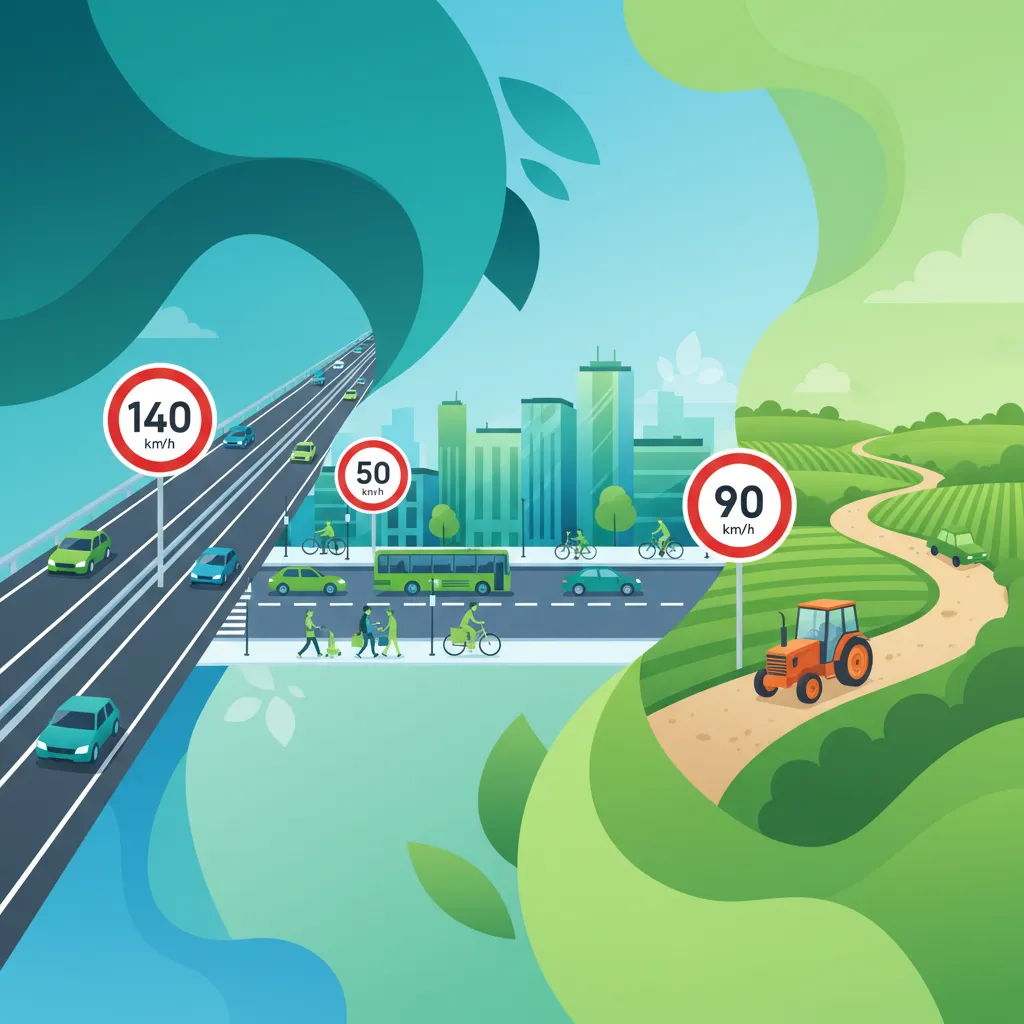
This lesson provides a comprehensive overview of the statutory speed limits applicable to different categories of Polish roads, including urban areas, residential zones, rural roads, highways, and motorways. Learners will examine the visual cues of speed limit signs and learn how speed limit transitions affect rider behavior. The content also covers how enforcement mechanisms impact compliance and the importance of real-time speed adaptation to remain within legal thresholds.
Master the critical Polish traffic rules for STOP signs, Give Way intersections, and various speed limits. Essential theory for safe motorcycle operation and compliance.
In this lesson, learners examine the specific actions required at stop signs and give-way intersections under Polish traffic regulations. The content explains the legal requirement for a full stop before the stop line, incorporating a visual scan of all directions before proceeding. It also covers the give-way protocol, where riders must yield to traffic already in the intersection or on the main road, emphasizing the need for correct positioning and observation.
This lesson provides a comprehensive overview of the statutory speed limits applicable to different categories of Polish roads, including urban areas, residential zones, rural roads, highways, and motorways. Learners will examine the visual cues of speed limit signs and learn how speed limit transitions affect rider behavior. The content also covers how enforcement mechanisms impact compliance and the importance of real-time speed adaptation to remain within legal thresholds.
This lesson introduces the fundamental principles of right-of-way on Polish roads, explaining how priority road signs determine the flow of traffic at intersections. Learners will explore the hierarchy of vehicle classes and the specific obligations that arise when approaching a yield line or a give-way sign. The content details the legal precedence of main road traffic over secondary road traffic, helping riders safely navigate intersections and avoid right-of-way infractions.
This lesson examines the variety of pavement markings that define lane structures, traffic flow, and special zones on Polish roads. Learners will study solid and broken lines, lane division markings, and the distinct symbols for bicycle lanes, bus lanes, and tram tracks, all of which affect motorcyclist positioning. The lesson also addresses surface texture indicators that signal changing road conditions, enabling riders to maintain correct lane discipline.
This lesson focuses on informational signs that provide drivers with essential data for navigation and travel planning. Learners will explore signs indicating distances, highway exits, service areas, and speed zone changes, learning how these signs impact route selection and riding strategy. The lesson also addresses the interpretation of direction arrows and road number signs, enabling riders to integrate sign information into effective journey planning and maintain situational awareness.
In this lesson, learners study warning signs that alert drivers to potential hazards, focusing on those that are particularly relevant to motorcyclists. The content includes signs indicating curves, slippery surfaces, animal crossings, tram tracks, and construction zones, each requiring specific riding adjustments. The lesson teaches riders how to interpret these signs to anticipate hazards, adjust speed appropriately, and maintain a safe distance from potential dangers.
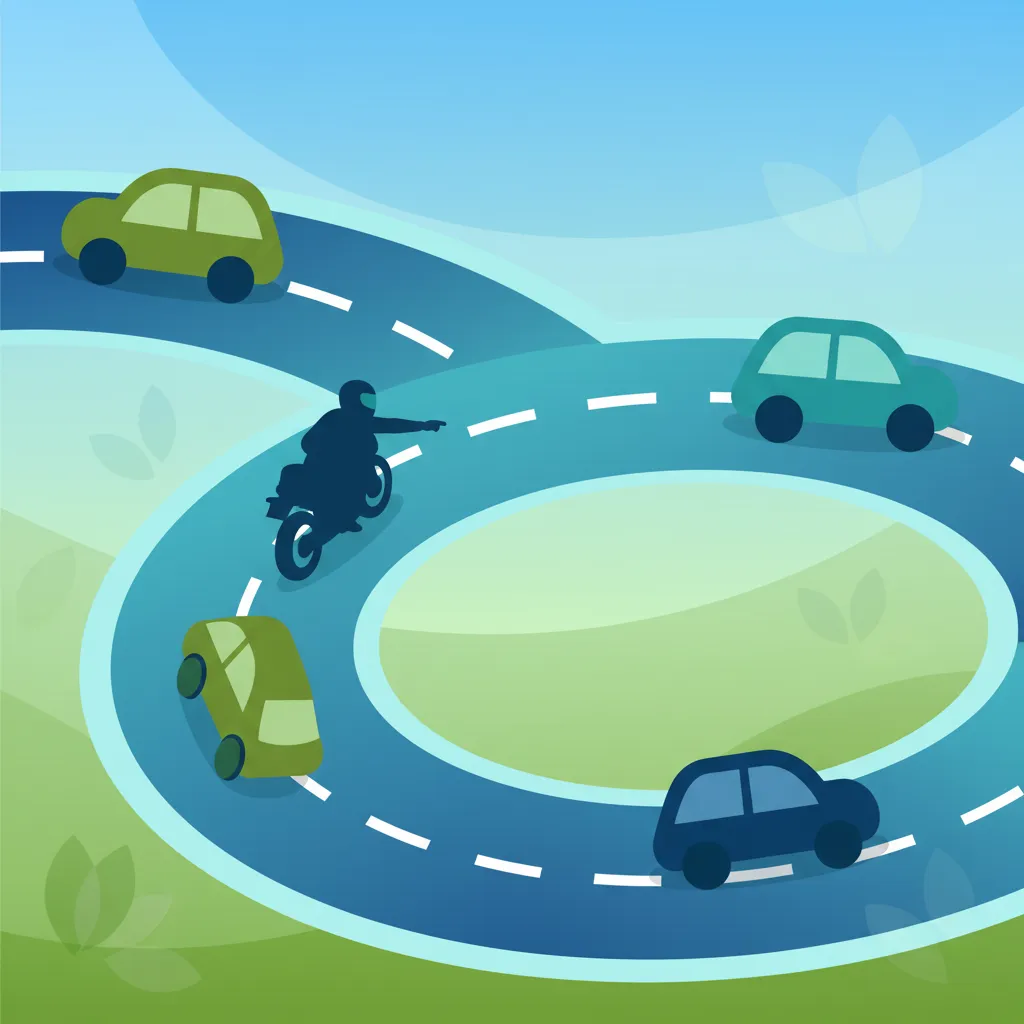
This lesson focuses on the proper techniques for negotiating roundabouts, which are common in Polish urban environments. Learners will learn the correct approach to entering a roundabout, yielding to circulating traffic, selecting the appropriate lane, and signaling intentions when exiting. The lesson also discusses speed adaptation for safe circulation and blind-spot checks before changing lanes within the roundabout, ensuring smooth and legal navigation.
In this lesson, learners explore the temporary signs that appear during road construction or maintenance activities, focusing on how they alter normal traffic patterns. The content covers signs indicating lane shifts, temporary speed limits, detour routes, and equipment zones where workers are present. The lesson emphasizes the importance of slowing down, staying alert, and obeying temporary regulations to navigate safely through work zones while ensuring compliance.
This lesson examines the specific rules and etiquette for riding on Polish motorways and high-speed highways, focusing on proper lane positioning, entry via acceleration lanes, and maintaining appropriate following distances. Learners will study overtaking protocols at high speeds, proper use of deceleration lanes for exits, and techniques for aerodynamic positioning. The content also covers safe lane changes and emergency lane usage to ensure efficient travel.
This lesson details the rules and best practices for driving on Poland's fastest roads. It covers the higher speed limits, the strict lane discipline of keeping right except to overtake, and prohibitions on stopping. The aim is to ensure drivers can handle the demands of sustained high-speed travel safely and efficiently.
Find clear answers to common questions learners have about Regulatory Signs and Their Motorcycle Implications. Learn how the lesson is structured, which driving theory objectives it supports, and how it fits into the overall learning path of units and curriculum progression in Poland. These explanations help you understand key concepts, lesson flow, and exam focused study goals.
Regulatory signs, like stop, yield, or speed limits, impose a legal obligation or prohibition that you MUST follow. Warning signs, on the other hand, alert you to potential hazards ahead, such as curves or pedestrian crossings, advising caution but not mandating a specific action. For motorcyclists, understanding this distinction is key to reacting appropriately to different traffic situations.
While most regulatory signs apply to all vehicles, some might have specific implications for motorcycles. For example, signs prohibiting certain vehicles or restricting lane usage can directly affect motorcyclists. It's essential to always consider how a sign's general rule applies to your specific type of vehicle and its capabilities on Polish roads.
Stop and yield signs are fundamental elements tested in the Polish Category A theory exam. Questions often assess your understanding of when to stop completely, when to yield to other traffic, and the correct procedure for proceeding safely. Mastering these signs is critical for both exam success and safe intersection navigation.
Ignoring a speed limit sign is a violation of Polish traffic law and can result in fines, penalty points, and potentially affect your licence. In the context of the theory exam, failing to identify or adhere to speed limits in scenario-based questions can lead to incorrect answers and a lower score. Always respect posted speed limits for safety and compliance.
A 'no overtaking' sign prohibits you from overtaking other vehicles. As a motorcyclist, it's crucial to obey these signs strictly, as overtaking in prohibited zones is dangerous and illegal. The exam often includes questions that test your ability to recognise these signs and understand the safe behaviour required.
Build custom practice sessions tailored precisely to your needs. Focus on areas requiring improvement, review specific Polish road signs, or master complex traffic rules to ensure full preparation for your official driving license exam.