
Master the art of safe motorcycle riding across Poland's varied landscapes, from bustling city streets to open rural roads and high-speed motorways. This unit delves into the unique challenges and necessary precautions for each environment, ensuring you're prepared for any scenario you'll encounter on your Category A license journey.
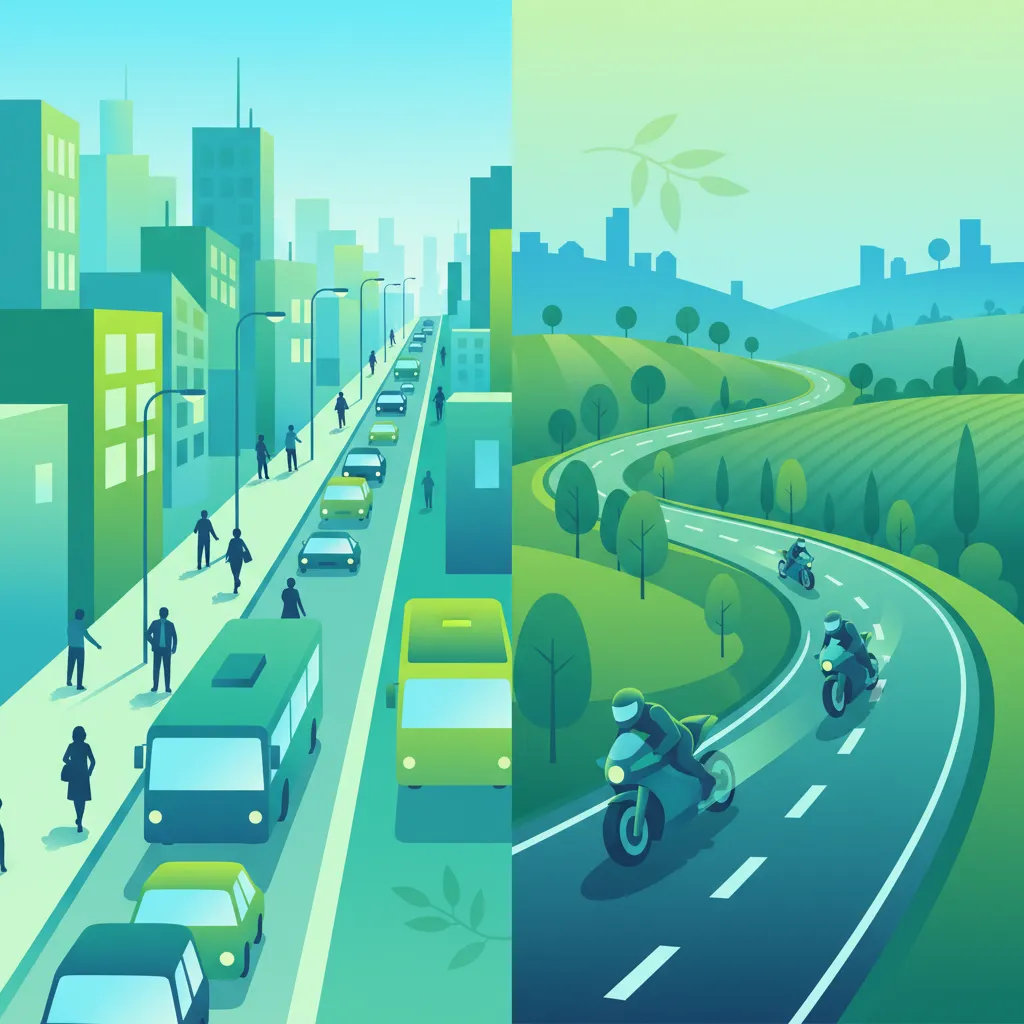
Browse all lessons that make up Safe Riding in Different Traffic Environments. Each lesson focuses on specific topics, learning objectives, and core concepts, helping you build essential knowledge and follow a clear, structured progression toward your study goals in Poland.
This lesson focuses on the unique demands of urban riding within Polish cities, addressing traffic lights, pedestrian zones, one-way streets, and the presence of tram tracks. Learners will study safe lane positioning on narrow roads, blind-spot management, and how to share the road with buses and cyclists. The content also covers strategies for navigating stop-and-go traffic, anticipating signal changes, and maintaining visibility in dense urban environments.
In this lesson, learners explore riding on rural and countryside roads, where road markings may be sparse and surface conditions varied. The content covers safe overtaking in single-lane sections, interaction with agricultural vehicles and animals, and the handling of gravel or uneven surfaces. Learners will also study the importance of anticipating curves and adjusting speed to light conditions, equipping them with the skills needed for safe countryside travel.
This lesson examines the specific rules and etiquette for riding on Polish motorways and high-speed highways, focusing on proper lane positioning, entry via acceleration lanes, and maintaining appropriate following distances. Learners will study overtaking protocols at high speeds, proper use of deceleration lanes for exits, and techniques for aerodynamic positioning. The content also covers safe lane changes and emergency lane usage to ensure efficient travel.
In this lesson, learners investigate complex junctions and intersections found across urban, rural, and highway environments, focusing on multi-lane configurations, traffic light coordination, and roundabout navigation. The content emphasizes priority rules, blind-spot assessment when merging, and safe lane selection for turning maneuvers. Learners will also consider interactions with cyclists and pedestrians, and the importance of adjusting approach speed for safe navigation.
This lesson addresses environmental factors that impact rider visibility, such as low light, night conditions, fog, and glare from headlights. Learners will explore strategies for riding safely in reduced visibility, including the use of reflective gear, proper headlamp settings, and appropriate eye protection. The content also covers hazard detection techniques in adverse weather and how to adjust speed to maintain safety, enhancing rider safety across all conditions.
Explore high-intent keywords and long-tail search topics learners use when researching Safe Riding in Different Traffic Environments. These terms reflect how people search for reliable study materials, structured explanations, and unit-level theory preparation support in Poland.
Find clear answers to the most common questions learners ask about Safe Riding in Different Traffic Environments. Understand how the unit is organized, what learning goals it supports, and how it contributes to your study progression with structured explanations and practical guidance tailored for learners in Poland.
Urban riding in Poland involves managing higher traffic density, more frequent intersections, pedestrian and cyclist interactions, and potential obstruction from parked vehicles. Rural roads, conversely, present challenges like blind corners, limited visibility, debris, and higher average speeds with fewer opportunities to stop. Understanding these differences is crucial for anticipating hazards.
On Polish motorways, motorcyclists must adhere to strict speed limits (generally 140 km/h for motorcycles, unless otherwise signed), maintain safe following distances, use designated lanes, and be aware of high-speed traffic. Lane splitting is generally not permitted unless clearly indicated by road markings or specific regulations. Proper lane positioning and signalling are vital for safety.
Road surface is critical everywhere, but challenges vary. Urban areas might have tram tracks, manhole covers, or wet patches from cleaning. Rural roads can have gravel, mud, or uneven surfaces. Motorways may have debris or expansion joints. Always check your path and adjust speed and braking accordingly, especially in adverse conditions.
A common mistake is failing to adjust riding behaviour to the specific environment. Riders might carry urban speed into rural areas or fail to anticipate the rapid approach of other vehicles on motorways. Lack of situational awareness, such as not scanning for hidden driveways in urban areas or not checking mirrors frequently enough on highways, is also a significant issue.
To improve hazard perception in urban settings, actively scan for potential conflicts: look at driveways for emerging vehicles, watch pedestrians near crossings, be aware of cyclists, and anticipate doors opening from parked cars. Maintaining a good following distance allows you more time to react to sudden stops.
Yes, in urban areas, pay close attention to signs related to pedestrian crossings, tram lines, one-way streets, and specific parking/stopping restrictions. On rural roads, warning signs for sharp bends, animal crossings, and slippery surfaces are key. On motorways, signs indicating lane reductions, speed limits, and service areas are paramount.
All included lessons
Lessons in Safe Riding in Different Traffic Environments
See who benefits most from studying Safe Riding in Different Traffic Environments. This overview explains how the unit supports different learning needs, what level of knowledge is helpful before starting, and how it fits into the overall study path in Poland.
This unit is essential for all aspiring Category A motorcycle license holders in Poland, particularly those who may be new to riding in diverse traffic conditions or need to refine their skills for different road types. It’s ideal for learners preparing for the official Polish theory exam.

Dive into our curated curriculum designed for Polish driving license aspirants. Select a course, follow its guided modules, and master every aspect of traffic rules and road signs necessary to pass your theory exam with confidence.
Polish Theory CurriculumExplore all units and lessons included in this driving theory course.
Dive into our curated curriculum designed for Polish driving license aspirants. Select a course, follow its guided modules, and master every aspect of traffic rules and road signs necessary to pass your theory exam with confidence.
Polish Theory Curriculum