
Navigate Polish roads with confidence by mastering informational road signs. This lesson, part of the 'Road Signs, Markings, and Surface Indicators' unit for Category A licence preparation, will equip you with the knowledge to interpret vital navigation aids and plan your routes effectively.

Lesson content overview
Navigating Polish roads safely and efficiently on a motorcycle requires a thorough understanding of informational signs. These signs, distinct from regulatory or warning signs, provide crucial data for route planning, travel decision-making, and maintaining situational awareness. By interpreting them correctly, motorcyclists can anticipate upcoming road features, locate essential services, and adapt their riding strategy, thereby enhancing safety and journey efficiency.
This lesson delves into the specific types of informational signs encountered across Poland, their practical implications for motorcycle riders, and how they integrate into effective route planning. Mastery of these signs is fundamental for all aspiring and current Category A license holders, ensuring compliance with Polish traffic law and promoting safer riding practices.
Informational signs are the rider's guideposts, offering silent yet vital communication about the road ahead. Unlike warning signs that alert to potential dangers or regulatory signs that command specific actions, informational signs empower riders with data to make informed choices. This data might include distances to destinations, the presence of service areas, upcoming exits, or changes in speed limits.
For motorcyclists, who are more exposed and have less forgiving stopping distances, the ability to process and act upon this information quickly and accurately is paramount. It reduces cognitive load, allowing more focus on dynamic traffic situations and hazard perception. Proper interpretation of these signs is not merely a convenience but a critical element of defensive riding and legal compliance on Polish roads.
Understanding the foundational principles behind informational sign design and placement is crucial for effective use by motorcyclists. These principles ensure consistency and predictability, allowing riders to make swift, safe decisions.
Informational signs are often categorised by their immediate relevance and scope. This information hierarchy allows riders to prioritise visual data based on their current stage of travel. For example, when beginning a long journey, a rider might focus on signs indicating primary route numbers and major city distances. As they approach a destination or need a break, their attention shifts to exit numbers, service area availability, and speed zone changes. This systematic approach prevents information overload and ensures the most critical data is processed first, especially at motorcycle speeds.
A key principle of road signage is advance warning. Informational signs are strategically placed a sufficient distance before a decision point or change in road condition. This placement provides motorcyclists with ample time to process the information, check their mirrors, signal, adjust speed, and safely execute any necessary manoeuvres, such as lane changes for an exit or deceleration for a new speed limit. Ignoring these advance warnings can lead to abrupt, unsafe actions, which are particularly hazardous for two-wheeled vehicles.
Polish road law, aligned with European standards, mandates standardisation of symbolism for all traffic signs. This means informational signs use uniform shapes (e.g., rectangular), colours (typically blue or green backgrounds with white text/symbols for motorways and expressways; white with black text for national/voivodeship roads), and universally recognised icons. This standardisation significantly reduces cognitive load, allowing riders to quickly recognise the sign's intent at a glance, regardless of location or specific language skills. This rapid recognition is vital for maintaining focus on the road and surrounding traffic.
For longer journeys, route continuity is maintained through consistent signage, such as numbered route markers. These signs reassure riders that they are on the intended road, reducing the need for constant navigation device checks. This continuous flow of information prevents disorientation on unfamiliar routes, allowing riders to confirm their path without diverting attention from the road.
Some informational signs, particularly those related to detours or temporary road conditions, have temporal relevance. They are only valid for a defined period. Motorcyclists must be aware that signs can be temporary and should verify that the information is still applicable, especially when encountering older signs or when returning to an area after a period. Acting on outdated information can lead to unsafe situations or unnecessary diversions.
Motorcyclists encounter various informational signs, each serving a specific purpose in route planning and navigation. Familiarity with these categories and their nuances is critical for safe and efficient travel in Poland.
Distance signs provide riders with crucial numerical data, typically in kilometres (km) or metres (m), indicating the length of a road segment, the distance to the next town, a major interchange, or a service area. These signs are indispensable for:
When riding a motorcycle, especially with varying loads or in windy conditions, your fuel consumption might differ from initial estimates. Always factor in a safety margin when planning refuelling stops based on distance signs.
Direction and exit signs are fundamental for navigating junctions, motorways, and expressways. They feature arrows, road numbers, and destination names, guiding riders toward their intended path.
Motorcyclists must pay close attention to these signs to ensure they are in the correct lane early enough, avoiding dangerous last-minute lane changes, which are particularly risky on a motorcycle due to stability and visibility issues.
Service area signs are crucial for long-distance motorcycle travel, indicating the availability of essential amenities along the route. These typically include:
These signs allow riders to plan strategic stops for rest, refuelling, and refreshment, combating fatigue and ensuring a continuous, safe journey. It is important to note that "service area" might sometimes refer to a basic rest stop without fuel, so always check the specific symbols shown.
Speed zone change signs are informational indicators announcing a forthcoming alteration in the legal speed limit. These signs are often accompanied by a distance marker, for instance, "50 km/h od 300 m" (50 km/h from 300 metres).
For motorcyclists, reducing speed well in advance is critical. Due to the physics of two-wheeled vehicles, sudden braking or sharp deceleration can destabilise the motorcycle, especially in adverse conditions. Timely speed reduction ensures control and safety.
These signs demand immediate attention and timely action from riders. Failure to adjust speed before or at the indicated point can lead to legal penalties and significantly increase accident risk.
Road number signs, often displayed within a shield or rectangle, provide the official identifier for the road you are travelling on. In Poland, these classifications include:
These signs serve as crucial navigation aids, allowing riders to confirm they are on the correct route, especially when used in conjunction with a map or GPS device. They maintain route continuity and help prevent accidental diversions onto incorrect roads.
Directional arrow signs are critical for guiding riders through complex intersections, roundabouts, or where lanes split. These arrow symbols point:
They are often combined with distance or destination information. While some directional arrows merely inform, those found on mandatory signs (typically white background with a red border) must be strictly followed. For motorcyclists, anticipating the correct direction and lane positioning based on these arrows is crucial for safe navigation, preventing last-minute swerving and conflicts with other traffic.
Compliance with informational signs is not merely a suggestion; it is a legal requirement under Polish road law, specifically the Ustawa Prawo o ruchu drogowym (Road Traffic Act). While informational signs do not impose explicit prohibitions like regulatory signs, they provide the context for applying other traffic rules safely and legally.
The legal framework surrounding informational signs is designed to enhance overall road safety and traffic flow. By providing predictable information and requiring advance action, the law aims to:
Even experienced motorcyclists can make mistakes when interpreting or reacting to informational signs. Awareness of these common pitfalls can help prevent unsafe situations and legal infringements.
Active scanning of the road ahead and checking mirrors frequently allows you to spot informational signs early. Combine sign information with your navigation device, but always trust official road signage over potentially outdated GPS instructions.
The interpretation and application of informational signs are not static; they change based on various environmental and situational factors. Motorcyclists must adapt their response to these conditions.
In areas with high pedestrian or cyclist traffic (often indicated by informational signs for crosswalks or bicycle lanes), informational signs (such as those indicating residential zones or pedestrian crossings) should prompt riders to reduce speed proactively. This ensures safe passage and readiness to yield, protecting vulnerable road users.
The diligent observation and correct interpretation of informational signs have a profound impact on a motorcyclist's safety and journey efficiency.
Psychologically, complying with informational signs reduces cognitive load. When a rider can anticipate actions rather than reacting abruptly, their mind is clearer, allowing for better hazard perception and quicker responses to unforeseen events. This is particularly vital for motorcyclists, who rely heavily on their senses and quick reflexes for safety.
Informational signs are a cornerstone of safe and efficient motorcycle riding in Poland. They provide a continuous stream of data that, when correctly interpreted and acted upon, empowers riders to make proactive decisions rather than reactive ones.
This lesson has covered:
By mastering these concepts, motorcyclists will be better equipped to plan their routes, manage their resources, and navigate the diverse road network of Poland with confidence and safety, thereby fulfilling their legal and ethical responsibilities as road users.
Explore all units and lessons included in this driving theory course.
Lesson content overview
Explore all units and lessons included in this driving theory course.
Explore search topics learners often look for when studying Informational Signs and Route Planning. These topics reflect common questions about road rules, driving situations, safety guidance, and lesson level theory preparation for learners in Poland.
Browse additional driving theory lessons that cover connected traffic rules, road signs, and common driving situations related to this topic. Improve your understanding of how different rules interact across everyday traffic scenarios.
Explore how informational road signs are interpreted in varied Polish traffic environments. Understand nuances for urban areas, motorways, and adverse weather, ensuring safe navigation and route planning.
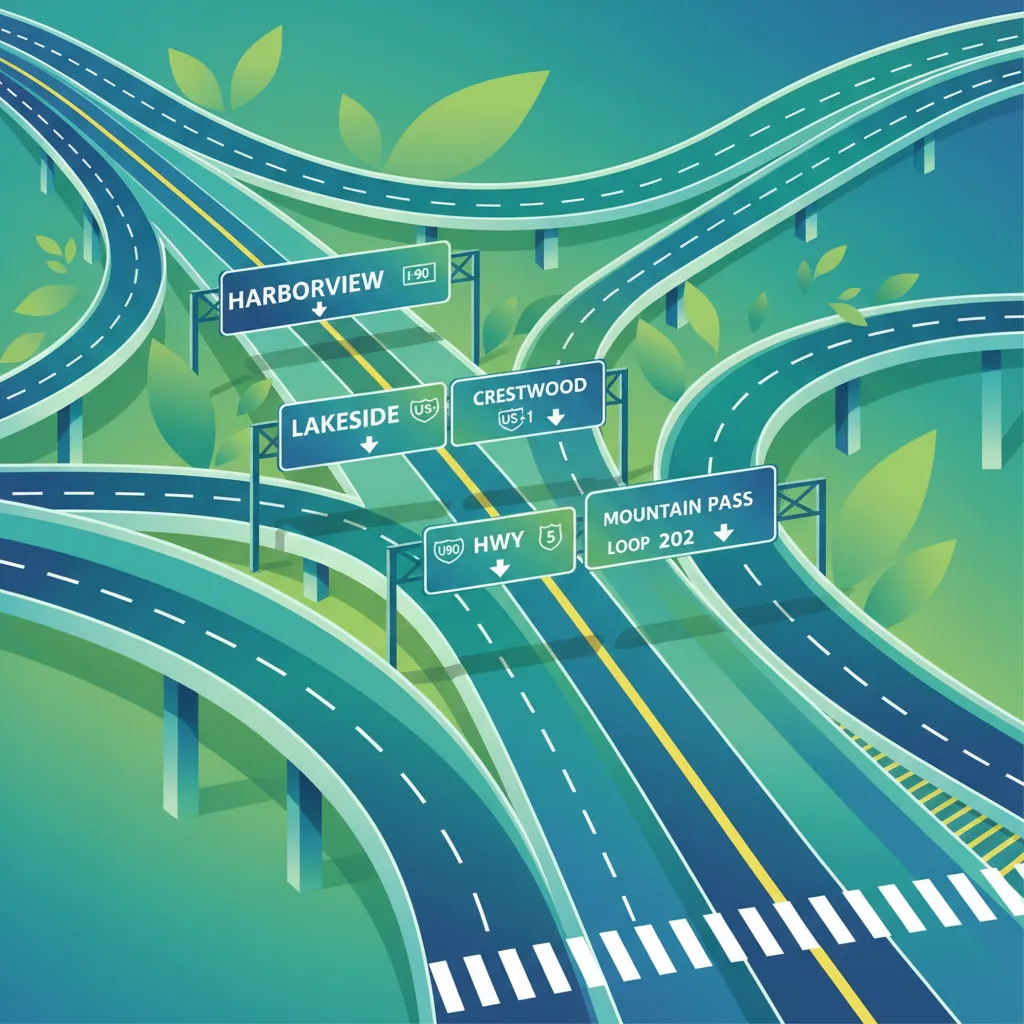
This lesson covers a wide range of signs and markings that provide information and guidance to drivers. It explains how to read destination signs, locate services, and interpret road markings like lane lines, stop lines, and pedestrian crossings. This knowledge is essential for navigation, lane discipline, and safe interaction with other road users.
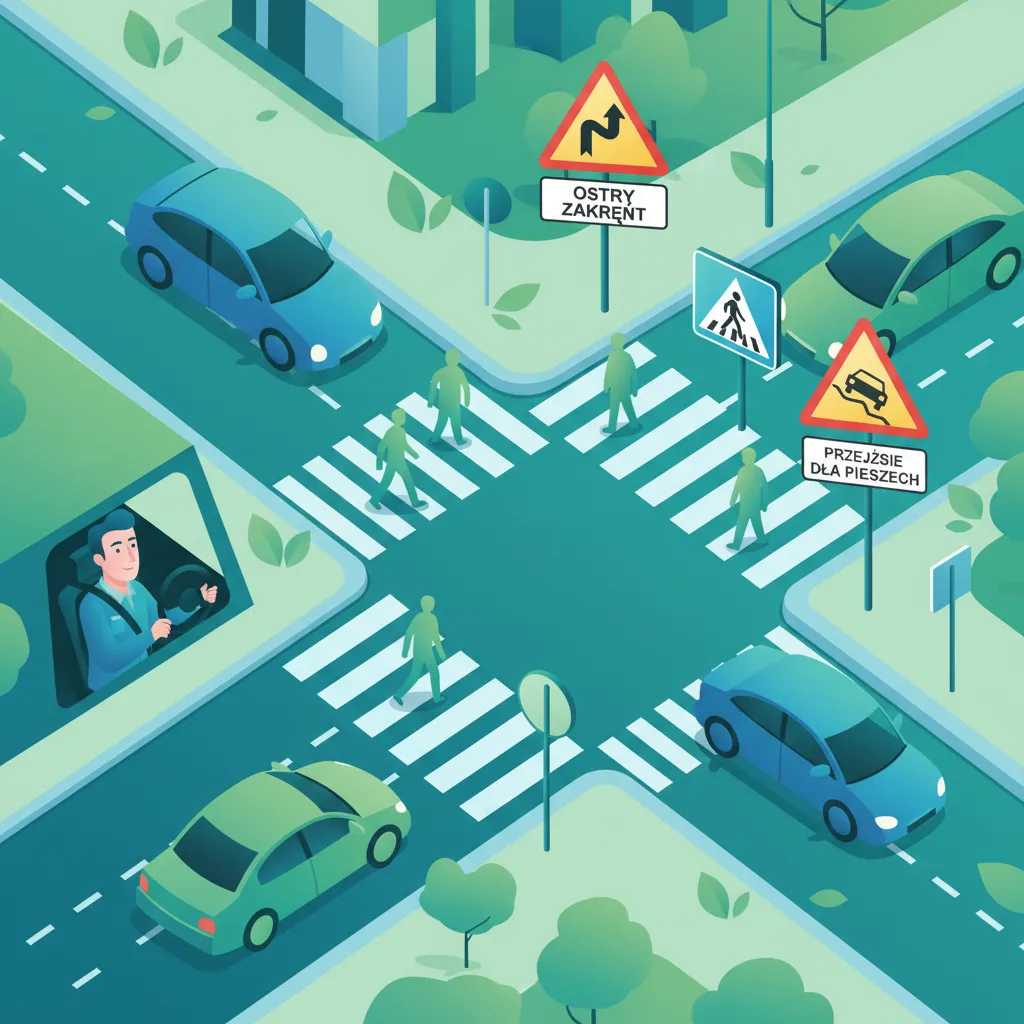
This lesson focuses on triangular warning signs, which are designed to alert drivers to upcoming hazards on the road. It covers the interpretation of various pictograms that indicate dangers like sharp turns, animal crossings, or road construction. Understanding these signs allows a driver to anticipate conditions and adjust their driving proactively.
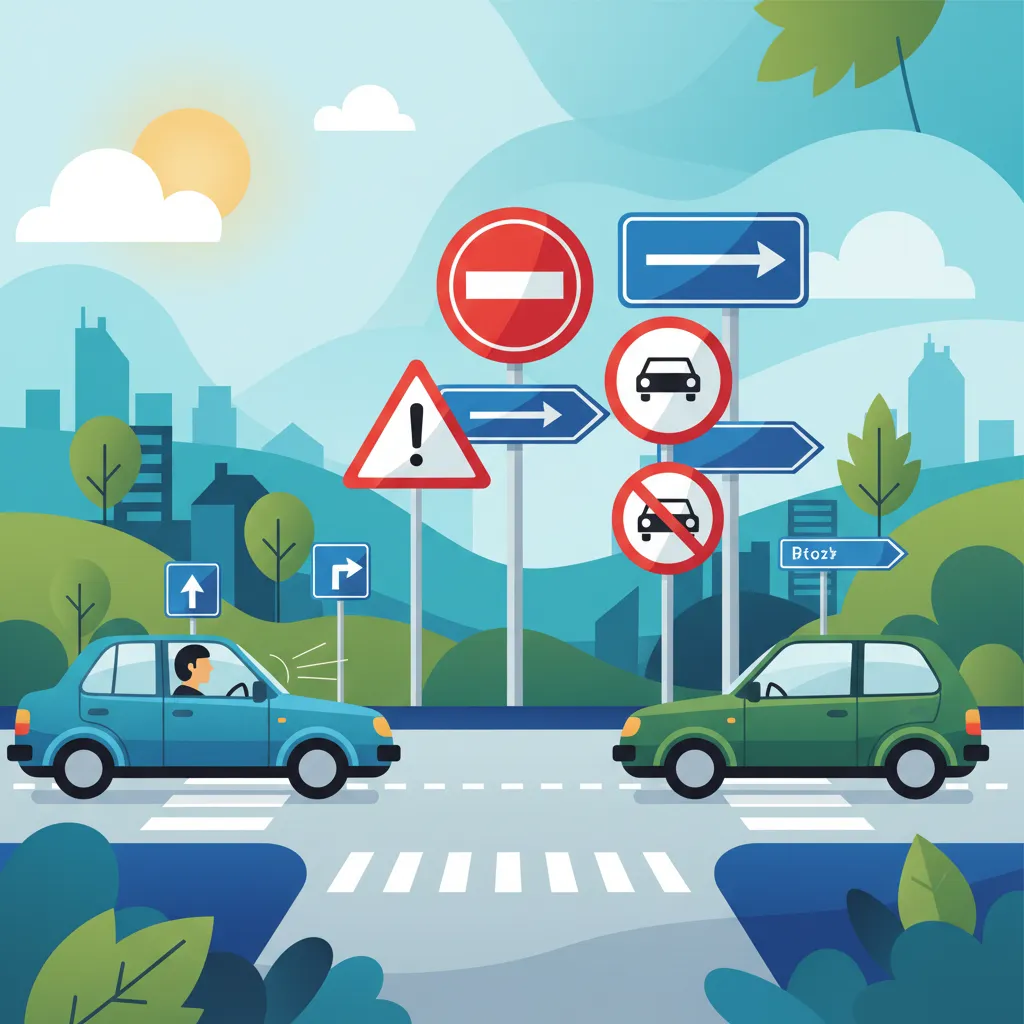
This lesson provides a foundational understanding of the Polish road sign system, categorizing signs into three main types: warning, prohibitory/mandatory, and informational. It explains the significance of different shapes and color codes, enabling drivers to quickly interpret their meaning and legal obligation. By mastering the visual language of road signs, learners will be equipped to make correct and safe decisions in any traffic situation they encounter.

This lesson focuses on traffic control signals, primarily traffic lights. It details the meaning of each color in the sequence—red, amber, and green—as well as flashing signals and arrows for specific turns. The content also covers lane control signals and pedestrian signals to ensure safe and compliant navigation through controlled intersections.

This lesson explores the unique characteristics of driving on rural roads. It highlights potential hazards such as sharp, unbanked curves, poor road surfaces, and limited visibility due to hills and vegetation. The content teaches drivers to anticipate these conditions and adjust their speed and position to navigate safely.

This lesson prepares drivers for the event of a vehicle breakdown on a motorway or expressway. It details the correct procedure: pulling over to the emergency lane, activating hazard lights, and placing the warning triangle at the legally required distance. The importance of wearing a reflective vest when outside the vehicle is also a key safety point.
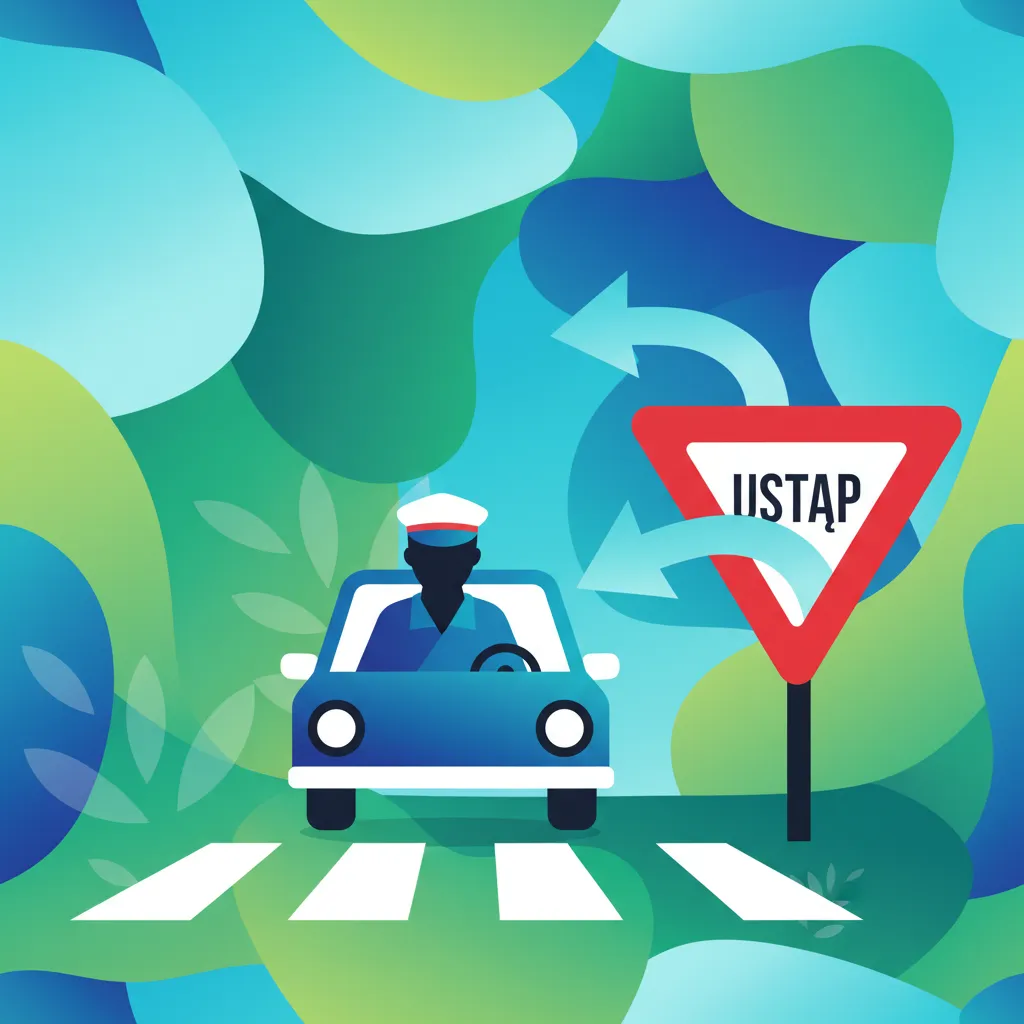
This lesson focuses on navigating intersections that are not controlled by traffic signals. It covers the interpretation of the 'Yield' sign (ustąp pierwszeństwa) and the application of the 'priority to the right' rule at junctions of equal roads. Safe decision-making and proper observation techniques are emphasized for these common scenarios.

This lesson examines the variety of pavement markings that define lane structures, traffic flow, and special zones on Polish roads. Learners will study solid and broken lines, lane division markings, and the distinct symbols for bicycle lanes, bus lanes, and tram tracks, all of which affect motorcyclist positioning. The lesson also addresses surface texture indicators that signal changing road conditions, enabling riders to maintain correct lane discipline.

This lesson teaches the crucial concept that drivers must always adapt their speed to the current conditions. It explains how factors like rain, fog, ice, heavy traffic, and poor visibility reduce safety margins and require a lower speed than the posted limit. This principle of defensive driving is essential for preventing accidents in challenging situations.
This lesson provides a detailed breakdown of traffic light operations in Poland. It explains the sequence of red, amber, and green lights, and the specific rules for turning when a green arrow signal is displayed. The meaning of a flashing amber light and the rules for pedestrian crossings at signalized intersections are also covered.
Learn about frequent errors learners make when reading informational road signs in Poland. Understand how to avoid misinterpretations for better navigation and safety during your theory test preparation.
This lesson covers a wide range of signs and markings that provide information and guidance to drivers. It explains how to read destination signs, locate services, and interpret road markings like lane lines, stop lines, and pedestrian crossings. This knowledge is essential for navigation, lane discipline, and safe interaction with other road users.
This lesson focuses on triangular warning signs, which are designed to alert drivers to upcoming hazards on the road. It covers the interpretation of various pictograms that indicate dangers like sharp turns, animal crossings, or road construction. Understanding these signs allows a driver to anticipate conditions and adjust their driving proactively.
This lesson provides a foundational understanding of the Polish road sign system, categorizing signs into three main types: warning, prohibitory/mandatory, and informational. It explains the significance of different shapes and color codes, enabling drivers to quickly interpret their meaning and legal obligation. By mastering the visual language of road signs, learners will be equipped to make correct and safe decisions in any traffic situation they encounter.
This lesson explains the function of circular prohibition signs, which impose legal restrictions on drivers. It details common prohibitions such as speed limits, 'no entry' signs, and restrictions on overtaking or parking. Compliance with these signs is mandatory, and this lesson ensures learners can correctly identify and obey them.
This lesson focuses on traffic control signals, primarily traffic lights. It details the meaning of each color in the sequence—red, amber, and green—as well as flashing signals and arrows for specific turns. The content also covers lane control signals and pedestrian signals to ensure safe and compliant navigation through controlled intersections.
This lesson examines the variety of pavement markings that define lane structures, traffic flow, and special zones on Polish roads. Learners will study solid and broken lines, lane division markings, and the distinct symbols for bicycle lanes, bus lanes, and tram tracks, all of which affect motorcyclist positioning. The lesson also addresses surface texture indicators that signal changing road conditions, enabling riders to maintain correct lane discipline.

This lesson focuses on blue, circular mandatory signs that direct drivers to perform a specific action. Examples include signs indicating a compulsory direction, a mandatory roundabout, or a minimum speed limit. Unlike advisory signs, these instructions are legally binding and crucial for maintaining orderly traffic flow.
This lesson prepares drivers for the event of a vehicle breakdown on a motorway or expressway. It details the correct procedure: pulling over to the emergency lane, activating hazard lights, and placing the warning triangle at the legally required distance. The importance of wearing a reflective vest when outside the vehicle is also a key safety point.
This lesson focuses on navigating intersections that are not controlled by traffic signals. It covers the interpretation of the 'Yield' sign (ustąp pierwszeństwa) and the application of the 'priority to the right' rule at junctions of equal roads. Safe decision-making and proper observation techniques are emphasized for these common scenarios.

This lesson focuses on the rules of lane usage for maintaining safe and efficient traffic flow. It covers the meaning of different lane markings, such as solid versus broken lines, and the general principle of keeping to the rightmost lane unless overtaking. Proper lane discipline is crucial for predictability and preventing conflicts on multi-lane roads.
Find clear answers to common questions learners have about Informational Signs and Route Planning. Learn how the lesson is structured, which driving theory objectives it supports, and how it fits into the overall learning path of units and curriculum progression in Poland. These explanations help you understand key concepts, lesson flow, and exam focused study goals.
Informational signs provide general information relevant to the road user, such as speed limits, distances to upcoming services, or road conditions. Directional signs, often including arrows, specifically guide you towards particular destinations, routes, or exits. Both are vital for navigation, but informational signs offer broader context while directional signs provide specific guidance.
Many informational signs indicate upcoming speed limit changes. For example, signs warning of a reduced speed limit as you approach a town or junction allow you to adjust your speed proactively. Recognizing these signs helps you comply with Polish traffic laws and maintain a safe speed for varying road conditions.
Yes, signs indicating upcoming road work, temporary speed limits, or changes in lane usage are crucial. For motorcyclists, signs warning of tram tracks or uneven road surfaces, often presented as warning signs but informing route choice, are also vital. Understanding upcoming service areas is also beneficial for planning stops.
Route numbers in Poland are typically displayed within specific shapes and colours, often blue for national roads and green for expressways or motorways. Informational signs will use these route numbers alongside arrows to indicate the direction towards specific destinations or along designated routes.
Absolutely. Informational signs on motorways are critical for route planning. They clearly indicate upcoming exits by number and destination, show distances to major towns, and inform you about service areas. Paying attention to these signs allows you to prepare for your exit well in advance and avoid missing it.
Build custom practice sessions tailored precisely to your needs. Focus on areas requiring improvement, review specific Polish road signs, or master complex traffic rules to ensure full preparation for your official driving license exam.