
This lesson focuses on understanding the crucial pavement markings and specific indicators you’ll encounter on Polish roads as a motorcyclist. Building on your knowledge of road signs, we'll detail how lines, symbols, and surface textures guide traffic and alert you to hazards, preparing you for Category A exam questions and safe urban and rural riding.

Lesson content overview
Pavement markings are essential visual cues painted directly onto the road surface that communicate vital information to all road users, including motorcyclists. In Poland, these markings are governed by the Prawo o ruchu drogowym (Polish Road Traffic Act) and are designed to define lane structures, regulate traffic flow, and delineate special zones. For motorcyclists, a precise understanding of these indicators is not just about compliance, but fundamentally about safety, proper lane positioning, and anticipating road conditions.
This lesson provides a comprehensive examination of the various pavement markings encountered on Polish roads, with a particular focus on how they impact motorcycle operation and safety. Mastering these visual commands is crucial for maintaining correct lane discipline, executing safe maneuvers, and ultimately, reducing the risk of accidents involving two-wheel vehicles.
Road markings serve as a continuous visual language that complements static road signs, offering immediate, on-the-road guidance. For motorcyclists, who rely heavily on visual information and swift decision-making, understanding these markings is paramount. They dictate where you can ride, where you can overtake, and where special caution is required. Correct interpretation ensures not only legal compliance but also helps in navigating complex traffic situations safely and efficiently. Ignoring pavement markings can lead to serious traffic violations, dangerous maneuvers, and increased collision risk.
Pavement markings operate on several core principles that help standardise their meaning and ensure clear communication. These principles apply across various road types and conditions, forming the foundation of safe and legal road usage for motorcyclists in Poland.
One of the most fundamental distinctions in pavement markings is between solid (continuous) and broken (interrupted) lines. This difference dictates whether crossing the line is permitted or prohibited. Solid lines act as a barrier, strictly forbidding vehicles from crossing them, ensuring clear separation of traffic or preventing dangerous maneuvers. Broken lines, conversely, signal that crossing is generally permissible, provided it can be done safely and without endangering other road users. For motorcyclists, this directly translates to when it is safe and legal to change lanes or overtake.
The color of pavement markings provides an immediate indication of their specific function and the type of zone they delineate.
Lane division markings are designed to structure and organise traffic flow, creating separate streams for different directions, turning movements, or specific vehicle types. These markings include lines that separate lanes of traffic moving in the same direction, lines dividing opposing traffic flows, and specialized markings for turning lanes. For motorcyclists, knowing which lane is designated for normal travel, turning, or dedicated two-wheel use is essential for planning routes, making timely lane changes, and preventing conflicts with other vehicles. They help reduce potential conflict points and streamline vehicle movements through busy areas.
Beyond painted lines, some pavement markings incorporate changes in surface texture to provide additional sensory cues. These can include raised or grooved patterns, often referred to as rumble strips. Their primary purpose is to warn drivers of changing road conditions, upcoming hazards such as crosswalks, or areas requiring reduced speed. For motorcyclists, who are more susceptible to variations in road surface, these tactile indicators are critical. They signal potential slippery surfaces or a need to adjust speed and lean angle to maintain control.
Special purpose markings utilise symbols, arrows, or specific patterns to convey movement restrictions or provide priority guidance. These include directional arrows indicating mandatory turns or straight-through travel, chevrons marking hazardous areas, and specific symbols for bus stops or restricted zones. These markings serve to convey immediate instructions about permissible movements, helping to organise complex intersections and ensure predictable driver behavior. Motorcyclists must strictly obey arrow markings, as failure to do so can lead to traffic violations and dangerous situations, especially at junctions.
A thorough understanding of each specific pavement marking type is indispensable for safe and legal motorcycling on Polish roads. Each marking has a defined legal meaning and practical implication for how a rider should position their motorcycle and execute maneuvers.
Solid white lines are among the most common and restrictive pavement markings. They represent an uninterrupted boundary that vehicles are generally prohibited from crossing.
A single solid white line separates lanes of traffic moving in the same direction (e.g., between a normal lane and a hard shoulder) or in opposite directions on roads without a physical divider. Its presence indicates that crossing this line is illegal, typically for overtaking, turning, or changing lanes, unless there is an obstruction that makes crossing unavoidable and safe. For motorcyclists, these lines define strict lane boundaries that must be respected at all times to maintain a predictable path and avoid collisions.
Crossing a single solid white line for an overtaking maneuver or lane change is a violation of the Polish Road Traffic Act and can lead to penalties. Only cross if an unforeseen obstruction makes it absolutely necessary and safe.
A double solid white line consists of two parallel continuous white stripes placed close together. This marking indicates an even stricter prohibition against crossing. It means that vehicles moving in either direction are forbidden from crossing these lines for any reason, including overtaking or turning. Double solid lines are typically found in areas where crossing would be exceptionally hazardous, such as before blind curves, near crests of hills, at complex intersections, or pedestrian crossings. Motorcyclists must remain strictly within their lane until these lines are replaced by broken lines or disappear.
Broken white lines offer more flexibility than solid lines, indicating areas where lane changes and overtaking are permissible under safe conditions.
A single broken white line, consisting of a series of short white dashes with equal gaps, indicates that crossing for overtaking or changing lanes is permitted. This allows for efficient traffic flow on roads where visibility and safety conditions generally allow such maneuvers. However, permission to cross does not equate to a right to cross. Motorcyclists must always ensure that any lane change or overtaking maneuver is executed safely, without endangering other road users, and only when the road ahead is clear for a sufficient distance. Visibility, speed, and the presence of other vehicles must be carefully assessed.
When considering an overtake over a broken white line, always check your mirrors, signal your intent, ensure adequate space, and complete the maneuver smoothly without cutting off the overtaken vehicle.
Double broken white lines are less common but exist. When both lines are broken, it generally signifies that crossing is permitted from either side, but often in areas where multiple lanes might temporarily merge or diverge. The same safety considerations for single broken lines apply: overtaking and lane changes are allowed only when safe conditions prevail, and the maneuver does not impede or endanger other traffic.
Yellow lines on Polish roads are predominantly used to indicate the presence of tram tracks or to mark temporary or special-use lanes. A single solid yellow line often demarcates the space occupied by tramways. This is a critical marking for motorcyclists, as tram tracks themselves pose a unique hazard due to their metallic surface and grooves, which can cause loss of traction or wheel snagging, especially when wet.
Vehicles are generally required to give way to trams, and stopping on tram tracks is prohibited. Motorcyclists should avoid riding directly on tram tracks unless the lane is specifically designated for shared use and the trajectory requires crossing. Crossing tram tracks should always be done at as close to a 90-degree angle as possible to minimise the risk of a wheel getting caught. Chequered yellow-white patterns may indicate tram stops or priority zones, demanding extra caution from all road users.
Green painted lane segments, often accompanied by a bicycle symbol, indicate dedicated bicycle lanes. In Poland, these lanes are primarily for the exclusive use of bicycles. However, under specific circumstances, motorcyclists may be permitted to use them.
Motorcyclists are only allowed to use a green bike lane if an accompanying road sign explicitly authorises it. This is typically indicated by a specific sign, such as "Bicycle lane – also for motorcycles" (similar to sign 208.1 or a supplementary panel). Without such a sign, the green lane remains exclusive to cyclists. Riding in a green lane without proper authorisation can lead to fines and, more importantly, endangers cyclists. Motorcyclists must be vigilant for these signs and understand the rules of shared space when permission is granted, yielding to cyclists as the more vulnerable road users.
Always look for the specific sign permitting motorcycles in a green bicycle lane. Without it, the lane is off-limits to motorcycles. Incorrect usage can lead to penalties and dangerous situations for cyclists.
Dedicated bus lanes are marked with white continuous lines and often feature a "BUS" inscription on the pavement, accompanied by specific road signs (e.g., sign 209.2 for a bus lane). These lanes are primarily intended to expedite public transport. However, like green bike lanes, some bus lanes in Poland may permit motorcycle use under specific conditions.
Motorcyclists are allowed to use a bus lane only when supplementary signage explicitly authorises it, such as a sign indicating "Bus lane – also for motorcycles" (similar to sign 209.1). These permissions might also be time-restricted, meaning motorcycles can only use the lane during off-peak hours. It is crucial for motorcyclists to carefully observe all accompanying signage. Using a bus lane without permission, or outside permitted hours, is a traffic violation that can disrupt public transport flow and result in penalties.
Surface texture indicators are markings that are not only visual but also provide tactile or auditory feedback.
For motorcyclists, these textured markings demand heightened awareness. Encountering rumble strips requires a reduction in speed and preparation for potential changes in traction. On grooved lines, especially in wet conditions, riders should be cautious about lean angles and maintain a stable trajectory to prevent loss of control. Treating these indicators as mere decoration is a significant oversight that can compromise safety.
Directional arrow markings are white arrows painted onto the pavement within traffic lanes, indicating the permissible direction of travel from that lane.
These arrows are legally binding instructions. A motorcyclist intending to go straight through an intersection must not enter a lane marked exclusively with a left-turn arrow. Failure to obey directional arrows can disrupt traffic flow, create hazardous situations, and lead to traffic violations, particularly at busy intersections where lane discipline is critical. Always select the correct lane well in advance based on your intended direction.
Adherence to pavement markings is a legal obligation under the Prawo o ruchu drogowym (Polish Road Traffic Act). Understanding these rules is not merely about avoiding fines but about contributing to overall road safety and predictability.
| Rule | Applicability | Legal Status | Rationale | Correct Example | Incorrect Example |
|---|---|---|---|---|---|
| Solid white line shall not be crossed | All road types, except at designated openings or unavoidable obstructions. | Mandatory | Prevents dangerous lane changes and ensures clear separation of traffic streams. | A motorcyclist stays within their own lane on a two-lane road with a solid white line separating the lanes. | A motorcyclist overtakes by crossing a solid white line on a curve. |
| Broken white line permits overtaking if safe | Roads with broken lines; visibility must be adequate (e.g., > 50m clear road ahead). | Mandatory (subject to safety conditions) | Allows efficient traffic flow while maintaining safety. | A motorcyclist overtakes a slower vehicle on a straight road where a broken line is present and the distance to oncoming traffic is adequate. | A motorcyclist overtakes on a broken line when visibility is limited by a crest or curve. |
| Double solid line prohibits crossing for both directions | Typically before blind curves, pedestrian crossings, or complex junctions. | Mandatory | Provides clear, unambiguous separation where crossing would be extremely hazardous. | A rider remains in their lane throughout a zone marked with a double solid line. | A rider attempts to pass a slow vehicle by crossing a double solid line. |
| Green bike lane use is conditional | Only where a specific sign (e.g., "Bicycle lane – also for motorcycles") is present. | Mandatory (where sign present); otherwise exclusive to bicycles. | Protects vulnerable cyclists and standardises lane allocation. | A motorcyclist uses a green lane on a city street because a sign explicitly permits both cyclists and motorcycles. | A motorcyclist rides in a green lane without checking for or finding a sign permitting motorcycle use. |
| Yellow tram track line mandates caution and yielding | Near tramways, especially within 3m of tram tracks. | Mandatory | Ensures trams have priority and prevents collisions or blockages with road vehicles. | A motorcyclist slows and avoids entering tram tracks when a tram is approaching or passing. | A rider drives over tram tracks without regard for an approaching tram or potential loss of grip. |
| Bus lane restrictions must be observed | Designated bus lanes marked with "BUS" and specific signs indicating use. | Mandatory | Optimises public transport flow and reduces congestion. | A rider uses a bus lane during hours where a supplementary sign allows motorcycle use. | A motorcyclist rides in a bus lane during peak hours when only buses are permitted. |
| Surface texture indicators require speed adjustment | Any road where rumble strips or grooved lines are present. | Recommended practice (no explicit penalty for not slowing, but unsafe driving can be prosecuted). | Alerts drivers to changing road conditions or upcoming hazards, aiding in speed adjustment. | A rider reduces speed slightly and prepares to stop when approaching textured markings before a pedestrian crossing. | A rider maintains full speed over rumble strips, potentially losing traction or surprising pedestrians. |
| Directional arrow markings must be obeyed | Lanes with painted arrows, especially at intersections. | Mandatory | Directs traffic flow, prevents lane misuse, and enhances intersection safety. | A rider follows a left-turn arrow lane to make a left turn at an intersection. | A rider proceeds straight through a lane clearly marked with a left-turn arrow only. |
Despite the clear visual cues, certain pavement markings are frequently misinterpreted or ignored, leading to common violations and dangerous situations. For motorcyclists, awareness of these pitfalls is key to safe riding.
The interpretation and safe application of pavement marking rules can vary significantly depending on the prevailing conditions and environment. Motorcyclists must develop the ability to adapt their riding style and decision-making based on these contextual factors.
Adverse weather conditions like rain, fog, or snow severely impact the visibility and effectiveness of pavement markings.
The density and type of pavement markings differ between urban and highway environments.
The load on a motorcycle significantly affects its handling characteristics.
Pavement markings often delineate spaces for vulnerable road users (VRUs) such as pedestrians and cyclists.
Certain areas, like school zones or construction sites, often feature additional or temporary pavement markings.
Understanding the direct cause-and-effect relationships stemming from adherence (or non-adherence) to pavement markings reinforces their critical role in road safety.
Applying the rules of pavement markings in real-world situations is crucial for developing safe riding habits. These scenarios illustrate correct and incorrect behaviors.
The design and placement of pavement markings are meticulously planned based on principles of human perception, vehicle dynamics, and risk mitigation to maximise safety and traffic efficiency.
Pavement markings on Polish roads are a critical element of the traffic system, providing constant visual instructions that complement static road signs. For motorcyclists, a comprehensive understanding of these markings is indispensable for safe, legal, and confident riding.
By diligently observing and correctly interpreting pavement markings, motorcyclists can navigate Polish roads with greater confidence, predictability, and safety for themselves and other road users.
This lesson covers the complete system of Polish pavement markings essential for Category A motorcycle riders. The core distinction lies between solid lines (prohibitions) and broken lines (permissions subject to safety conditions), with color coding providing additional context: white for general traffic, yellow for tram tracks requiring priority yielding, and green for bicycle lanes with conditional motorcycle access. Bus lanes operate similarly, permitting motorcycles only with explicit signage. Surface texture indicators like rumble strips serve as tactile warnings demanding immediate speed reduction. All markings carry legal force under the Prawo o ruchu drogowym, and violations range from traffic fines to serious safety risks, particularly given the unique vulnerabilities of two-wheeled riders on tracks and textured surfaces.
A short set of high-value points that capture the most important learning from this lesson.
Solid white lines strictly prohibit crossing; double solid lines create absolute no-crossing zones where overtaking is never permitted
Yellow tram track lines require giving way to trams at all times and crossing tracks at nearly 90 degrees to prevent wheel snagging
Green bicycle lanes are exclusively for cyclists unless a specific sign explicitly permits motorcycle use
Bus lanes permit motorcycles only when supplementary signage specifically authorizes it, often with time restrictions
Directional arrow markings are legally binding lane directives that must be followed to prevent dangerous intersection maneuvers
Explore all units and lessons included in this driving theory course.
Broken white lines permit overtaking and lane changes only when safe conditions exist, not as an automatic right
Surface texture indicators (rumble strips) provide tactile and auditory warnings requiring speed reduction and hazard preparation
Weather conditions significantly reduce marking visibility and traction, demanding increased caution and stopping distances
Green bike lane and bus lane permissions always depend on accompanying signage, not lane color alone
Tram tracks become extremely slippery when wet and can catch motorcycle wheels if crossed at shallow angles
Assuming green bike lanes can be used freely without checking for explicit motorcycle authorization signs
Overtaking on broken white lines when visibility is compromised by curves, crests, or weather conditions
Crossing tram tracks at shallow angles instead of the recommended near-90-degree approach
Entering bus lanes during restricted hours without checking time-specific supplementary signage
Treating rumble strips as minor annoyances rather than critical hazard warnings requiring speed adjustment
Lesson content overview
A short set of high-value points that capture the most important learning from this lesson.
Solid white lines strictly prohibit crossing; double solid lines create absolute no-crossing zones where overtaking is never permitted
Yellow tram track lines require giving way to trams at all times and crossing tracks at nearly 90 degrees to prevent wheel snagging
Green bicycle lanes are exclusively for cyclists unless a specific sign explicitly permits motorcycle use
Bus lanes permit motorcycles only when supplementary signage specifically authorizes it, often with time restrictions
Directional arrow markings are legally binding lane directives that must be followed to prevent dangerous intersection maneuvers
Explore all units and lessons included in this driving theory course.
Broken white lines permit overtaking and lane changes only when safe conditions exist, not as an automatic right
Surface texture indicators (rumble strips) provide tactile and auditory warnings requiring speed reduction and hazard preparation
Weather conditions significantly reduce marking visibility and traction, demanding increased caution and stopping distances
Green bike lane and bus lane permissions always depend on accompanying signage, not lane color alone
Tram tracks become extremely slippery when wet and can catch motorcycle wheels if crossed at shallow angles
Assuming green bike lanes can be used freely without checking for explicit motorcycle authorization signs
Overtaking on broken white lines when visibility is compromised by curves, crests, or weather conditions
Crossing tram tracks at shallow angles instead of the recommended near-90-degree approach
Entering bus lanes during restricted hours without checking time-specific supplementary signage
Treating rumble strips as minor annoyances rather than critical hazard warnings requiring speed adjustment
Explore search topics learners often look for when studying Pavement Markings and Two-Wheel Specific Indicators. These topics reflect common questions about road rules, driving situations, safety guidance, and lesson level theory preparation for learners in Poland.
Browse additional driving theory lessons that cover connected traffic rules, road signs, and common driving situations related to this topic. Improve your understanding of how different rules interact across everyday traffic scenarios.
Learn the specific rules for using bus lanes and green bicycle lanes in Poland. This lesson clarifies when motorcycles are permitted, essential for correct lane discipline and avoiding violations.

This lesson focuses on the rules of lane usage for maintaining safe and efficient traffic flow. It covers the meaning of different lane markings, such as solid versus broken lines, and the general principle of keeping to the rightmost lane unless overtaking. Proper lane discipline is crucial for predictability and preventing conflicts on multi-lane roads.
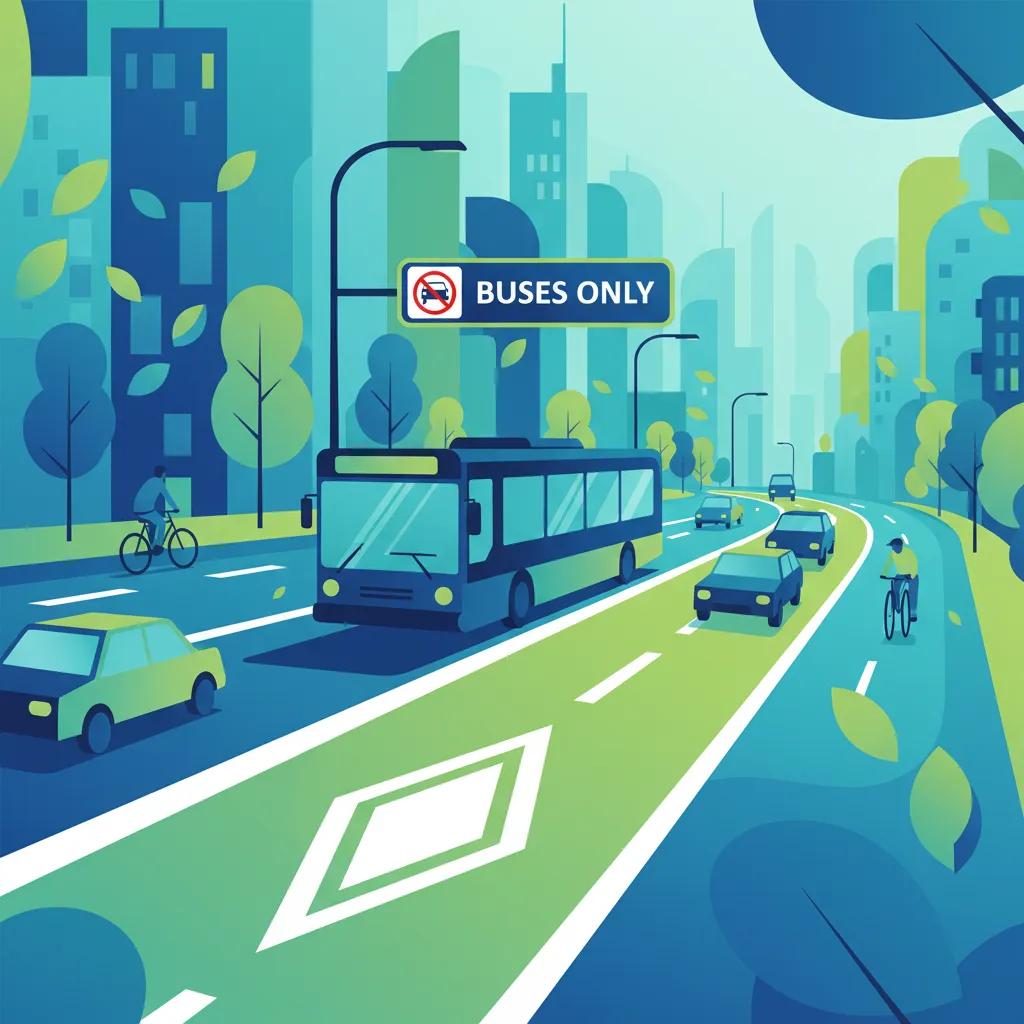
This lesson teaches learners to identify and understand road signs that govern bus movement, including dedicated bus lane (buspas) signs. It explains the visual characteristics, legal standing, and consequences of non-compliance. The content also covers how to adapt to temporary restrictions in construction zones while maintaining schedule and safety.
This lesson examines the family of regulatory signs that dictate mandatory actions and prohibitions on Polish roads, emphasizing how each sign influences motorcyclist behaviour. Learners will explore the stop, give way, speed limit, and no overtaking signs, understanding the legal obligations they impose. The lesson also highlights signs that specifically affect motorcycles, such as lane restrictions, ensuring riders recognize and obey regulations unique to two-wheel traffic.
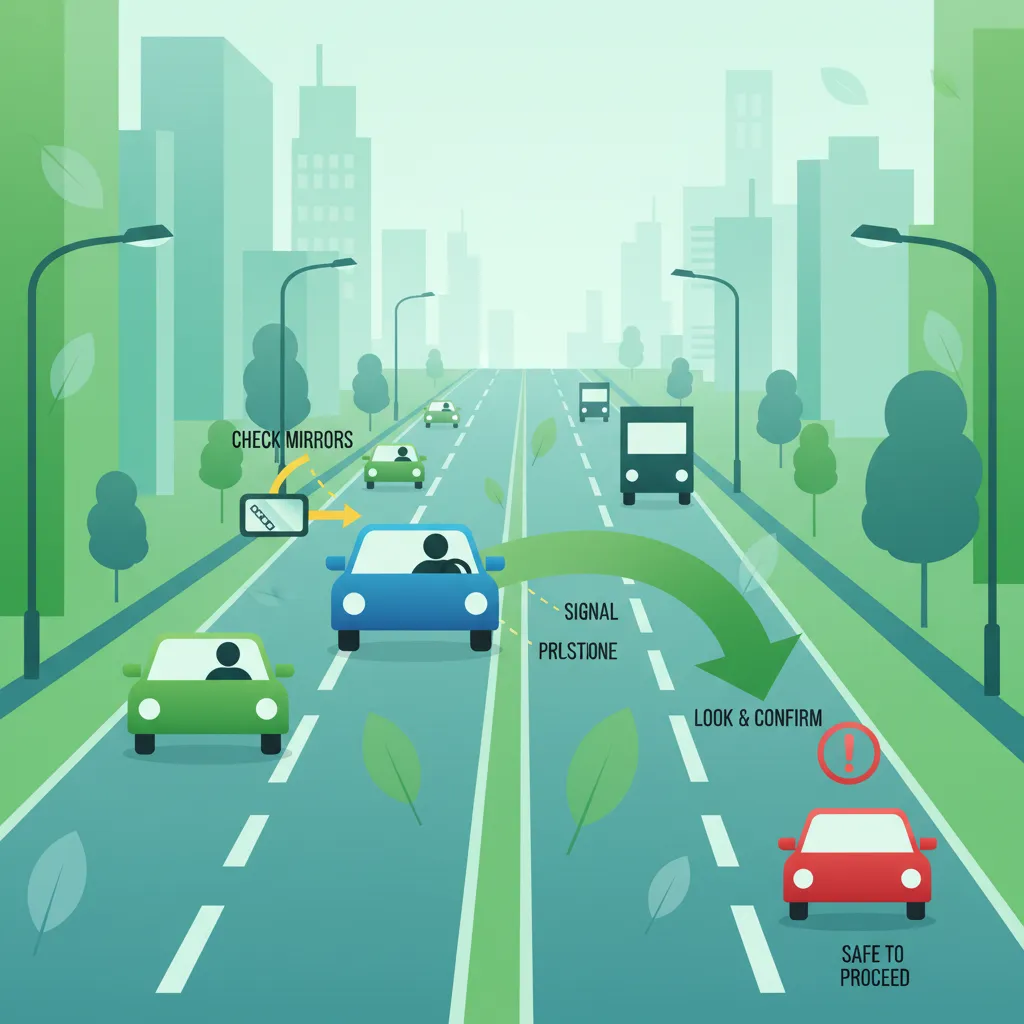
This lesson adapts lane-changing principles for the challenging environment of dense city traffic. It reinforces the critical 'mirror, signal, maneuver' sequence, with a strong focus on checking blind spots immediately before moving. The content advises on judging gaps in traffic and executing the lane change smoothly and decisively.
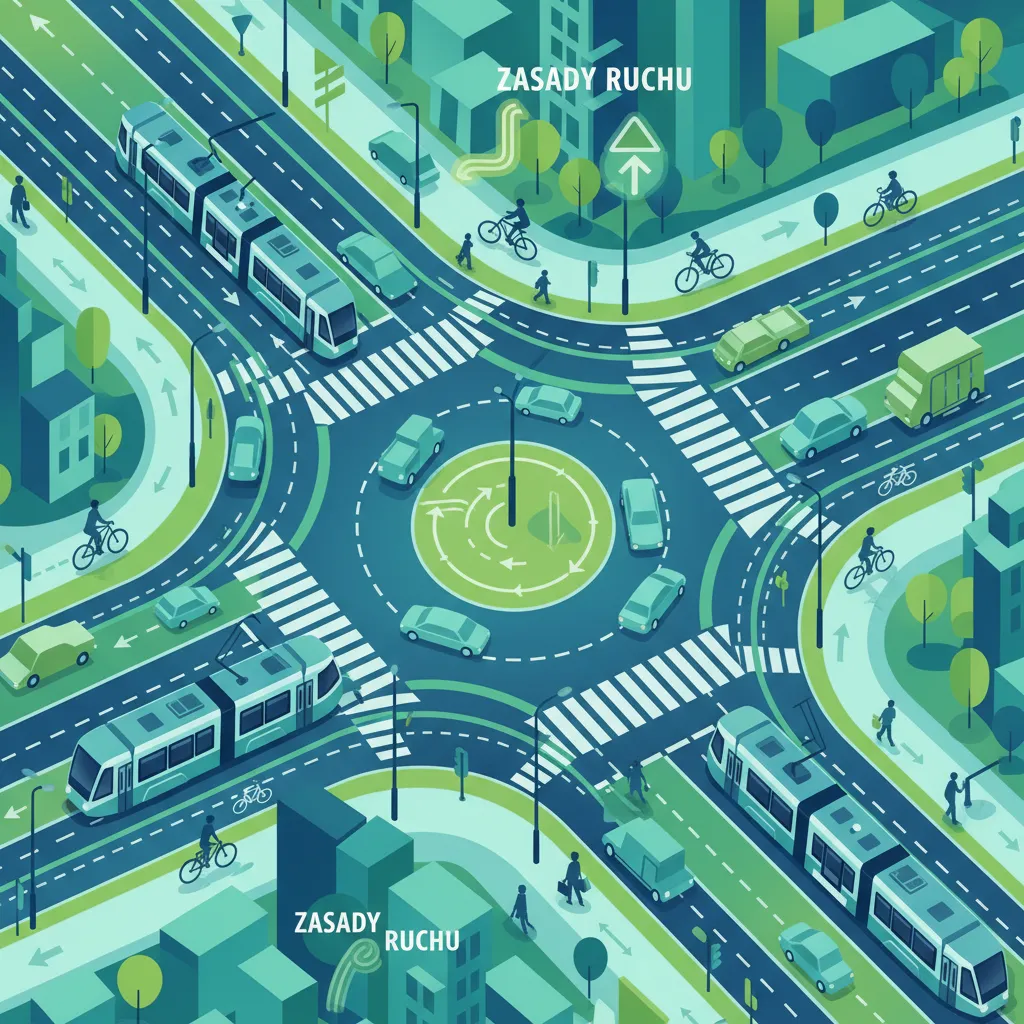
In this lesson, learners investigate complex junctions and intersections found across urban, rural, and highway environments, focusing on multi-lane configurations, traffic light coordination, and roundabout navigation. The content emphasizes priority rules, blind-spot assessment when merging, and safe lane selection for turning maneuvers. Learners will also consider interactions with cyclists and pedestrians, and the importance of adjusting approach speed for safe navigation.
In this lesson, learners explore the temporary signs that appear during road construction or maintenance activities, focusing on how they alter normal traffic patterns. The content covers signs indicating lane shifts, temporary speed limits, detour routes, and equipment zones where workers are present. The lesson emphasizes the importance of slowing down, staying alert, and obeying temporary regulations to navigate safely through work zones while ensuring compliance.
This lesson covers a wide range of signs and markings that provide information and guidance to drivers. It explains how to read destination signs, locate services, and interpret road markings like lane lines, stop lines, and pedestrian crossings. This knowledge is essential for navigation, lane discipline, and safe interaction with other road users.

This lesson focuses on informational signs that provide drivers with essential data for navigation and travel planning. Learners will explore signs indicating distances, highway exits, service areas, and speed zone changes, learning how these signs impact route selection and riding strategy. The lesson also addresses the interpretation of direction arrows and road number signs, enabling riders to integrate sign information into effective journey planning and maintain situational awareness.

This lesson focuses on the unique demands of urban riding within Polish cities, addressing traffic lights, pedestrian zones, one-way streets, and the presence of tram tracks. Learners will study safe lane positioning on narrow roads, blind-spot management, and how to share the road with buses and cyclists. The content also covers strategies for navigating stop-and-go traffic, anticipating signal changes, and maintaining visibility in dense urban environments.

This lesson introduces the fundamental principles of right-of-way on Polish roads, explaining how priority road signs determine the flow of traffic at intersections. Learners will explore the hierarchy of vehicle classes and the specific obligations that arise when approaching a yield line or a give-way sign. The content details the legal precedence of main road traffic over secondary road traffic, helping riders safely navigate intersections and avoid right-of-way infractions.
Explore pavement markings that signal hazards like tram tracks and rumble strips in Poland. Understand how to interpret these indicators to maintain motorcycle safety and control.
In this lesson, learners study warning signs that alert drivers to potential hazards, focusing on those that are particularly relevant to motorcyclists. The content includes signs indicating curves, slippery surfaces, animal crossings, tram tracks, and construction zones, each requiring specific riding adjustments. The lesson teaches riders how to interpret these signs to anticipate hazards, adjust speed appropriately, and maintain a safe distance from potential dangers.

In this lesson, learners explore riding on rural and countryside roads, where road markings may be sparse and surface conditions varied. The content covers safe overtaking in single-lane sections, interaction with agricultural vehicles and animals, and the handling of gravel or uneven surfaces. Learners will also study the importance of anticipating curves and adjusting speed to light conditions, equipping them with the skills needed for safe countryside travel.
This lesson examines the family of regulatory signs that dictate mandatory actions and prohibitions on Polish roads, emphasizing how each sign influences motorcyclist behaviour. Learners will explore the stop, give way, speed limit, and no overtaking signs, understanding the legal obligations they impose. The lesson also highlights signs that specifically affect motorcycles, such as lane restrictions, ensuring riders recognize and obey regulations unique to two-wheel traffic.
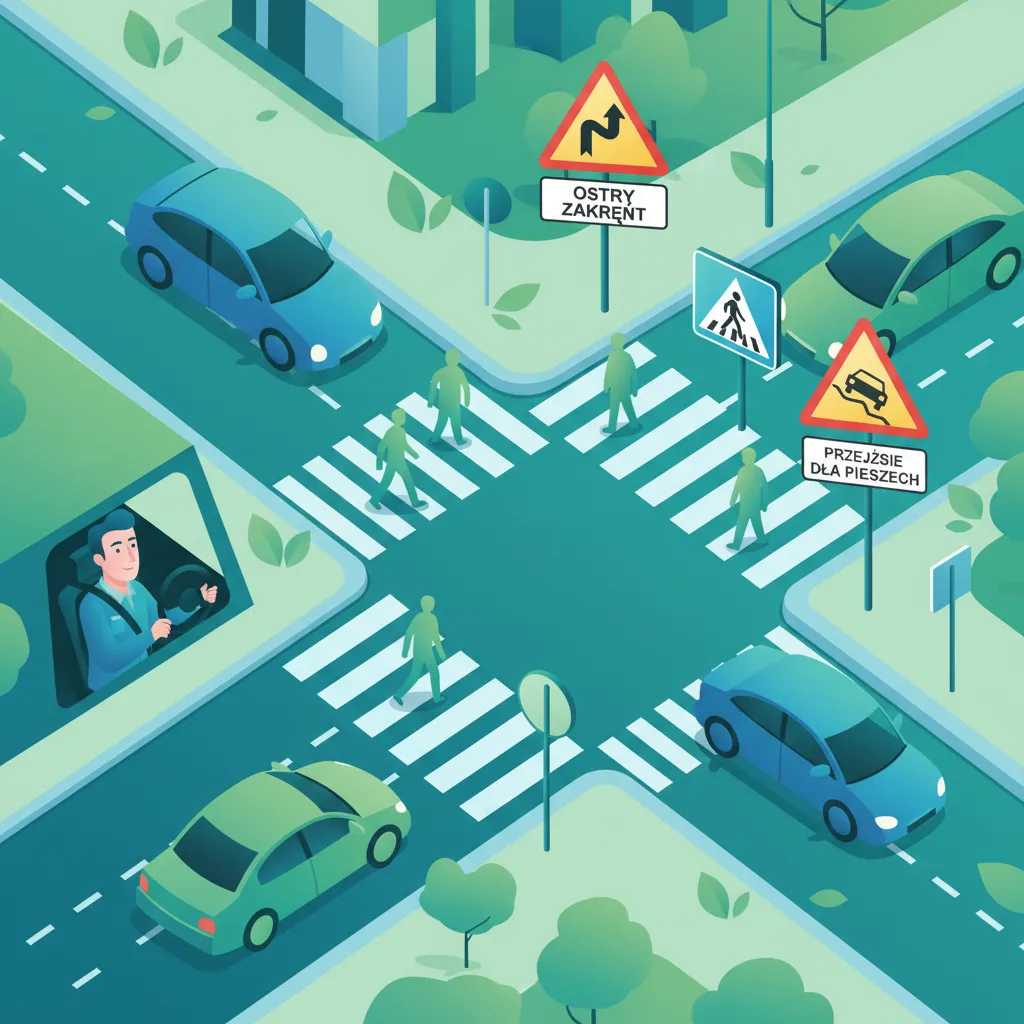
This lesson focuses on triangular warning signs, which are designed to alert drivers to upcoming hazards on the road. It covers the interpretation of various pictograms that indicate dangers like sharp turns, animal crossings, or road construction. Understanding these signs allows a driver to anticipate conditions and adjust their driving proactively.
This lesson focuses on the unique demands of urban riding within Polish cities, addressing traffic lights, pedestrian zones, one-way streets, and the presence of tram tracks. Learners will study safe lane positioning on narrow roads, blind-spot management, and how to share the road with buses and cyclists. The content also covers strategies for navigating stop-and-go traffic, anticipating signal changes, and maintaining visibility in dense urban environments.
This lesson focuses on informational signs that provide drivers with essential data for navigation and travel planning. Learners will explore signs indicating distances, highway exits, service areas, and speed zone changes, learning how these signs impact route selection and riding strategy. The lesson also addresses the interpretation of direction arrows and road number signs, enabling riders to integrate sign information into effective journey planning and maintain situational awareness.
In this lesson, learners explore the temporary signs that appear during road construction or maintenance activities, focusing on how they alter normal traffic patterns. The content covers signs indicating lane shifts, temporary speed limits, detour routes, and equipment zones where workers are present. The lesson emphasizes the importance of slowing down, staying alert, and obeying temporary regulations to navigate safely through work zones while ensuring compliance.
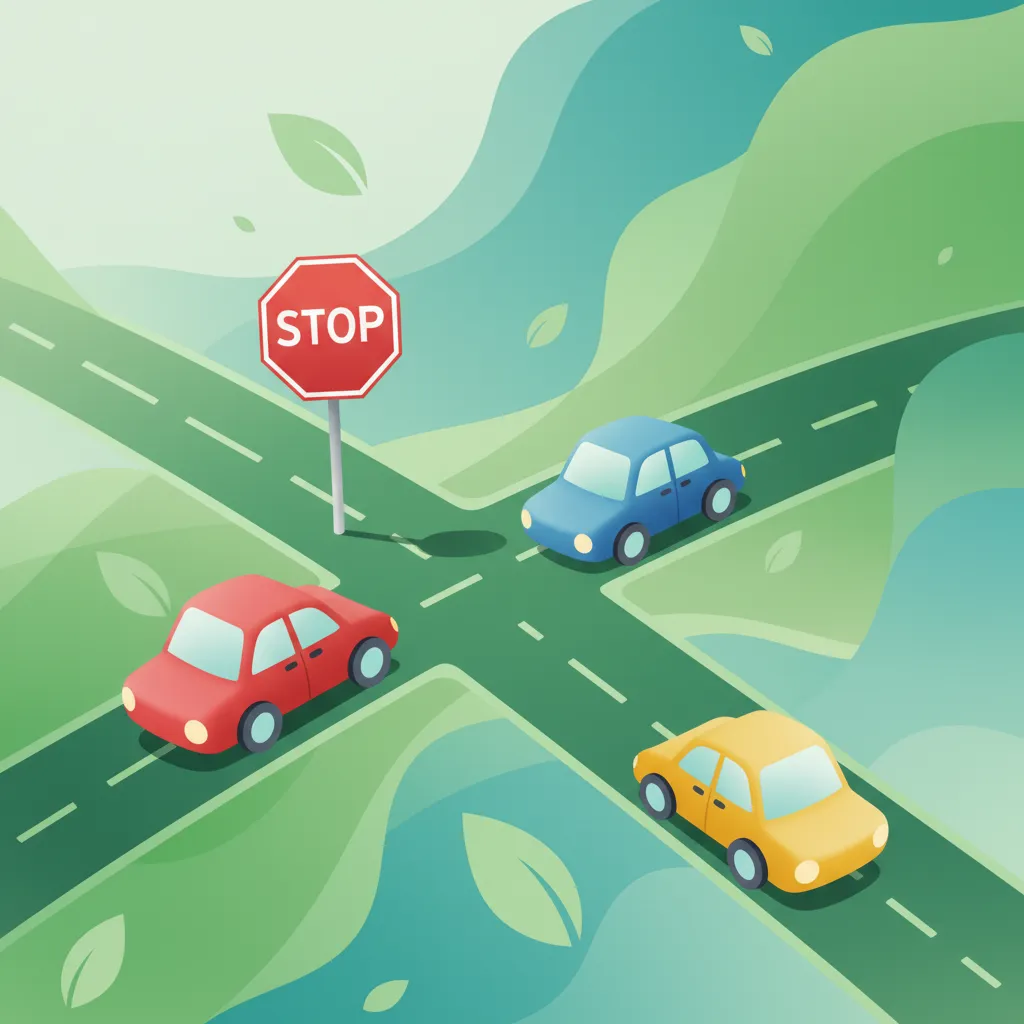
In this lesson, learners examine the specific actions required at stop signs and give-way intersections under Polish traffic regulations. The content explains the legal requirement for a full stop before the stop line, incorporating a visual scan of all directions before proceeding. It also covers the give-way protocol, where riders must yield to traffic already in the intersection or on the main road, emphasizing the need for correct positioning and observation.

This lesson outlines strategies for planning escape routes and adopting protective positioning to avoid potential collisions. Learners will study the concept of a defensive riding line that maximizes visibility and provides an optimal safety corridor. The content emphasizes maintaining adequate distance buffers, choosing lanes that reduce exposure to hazards, and preparing for emergency maneuvers such as swift swerves, allowing riders to react quickly in critical situations.
This lesson introduces the fundamental principles of right-of-way on Polish roads, explaining how priority road signs determine the flow of traffic at intersections. Learners will explore the hierarchy of vehicle classes and the specific obligations that arise when approaching a yield line or a give-way sign. The content details the legal precedence of main road traffic over secondary road traffic, helping riders safely navigate intersections and avoid right-of-way infractions.
Find clear answers to common questions learners have about Pavement Markings and Two-Wheel Specific Indicators. Learn how the lesson is structured, which driving theory objectives it supports, and how it fits into the overall learning path of units and curriculum progression in Poland. These explanations help you understand key concepts, lesson flow, and exam focused study goals.
Solid white lines generally prohibit crossing or overtaking, indicating you must stay within your lane. Broken white lines, conversely, permit lane changes or overtaking when safe. For motorcyclists, understanding these lines is crucial for safe lane discipline and avoiding illegal maneuvers.
Tram tracks can be hazardous for motorcycles due to their slippery surface and the potential for tyre entrapment. Always approach them at a slight angle rather than perpendicular, and be aware of the surrounding road markings that might indicate dedicated tram zones or warnings. Slow down and ensure you have good grip before crossing.
While there aren't exclusive markings solely for motorcycles, specific indicators like symbols for bicycle lanes, bus lanes, and advanced stop lines (often found near traffic lights for cyclists, but relevant for motorcyclists to be aware of) are important. You must also understand how general lane markings and texture indicators apply to your riding.
Surface texture indicators, such as grooved or rougher surfaces, often signal upcoming hazards like sharp bends, slippery conditions, or areas with reduced grip. They are a visual cue to prepare for a change in road conditions and adjust your speed and posture accordingly.
Theory test questions often assess your understanding of how pavement markings dictate lane usage, overtaking opportunities, and proximity to other traffic. Correctly identifying and interpreting these markings is key to demonstrating safe and legal riding knowledge required for passing the Category A exam.
Build custom practice sessions tailored precisely to your needs. Focus on areas requiring improvement, review specific Polish road signs, or master complex traffic rules to ensure full preparation for your official driving license exam.