
Swiss roads are shared spaces, meaning drivers must constantly interact with a variety of road users, each with unique characteristics and vulnerabilities. This guide explains how to adapt your driving behavior, maintain awareness, and show cooperation to ensure safety for everyone, especially pedestrians, cyclists, and motorcyclists. Understanding these principles is vital for both your theory exam and real-world driving.
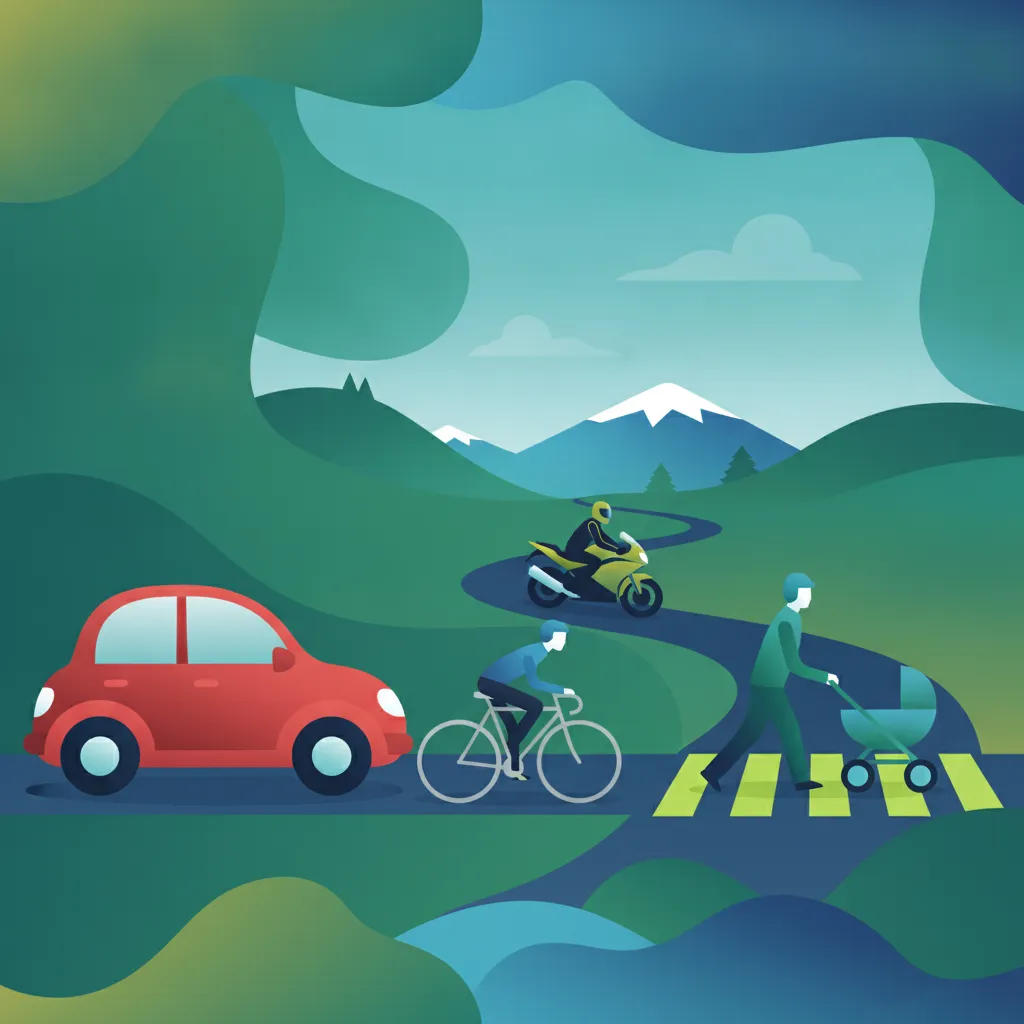
Theory topic content overview
Read the full theory topic guide for Sharing the Road with structured, easy-to-scan content built for learners in Switzerland. This detailed section explains the exact rule, meaning, traffic context, comparison points, and exam logic behind this Swiss driving theory topic so you can study faster, understand the concept more clearly, and avoid common interpretation mistakes on the theory test.
Sharing the road is a fundamental concept in Swiss driving theory and practice. It refers to the responsibility of drivers to adapt their behaviour, show consideration, and ensure safety for all other road users, regardless of their mode of transport. This cooperative approach is essential for preventing accidents and maintaining a smooth, predictable flow of traffic on Switzerland's diverse roads, from bustling urban centres to winding alpine passes.
The core idea is to recognise that roads are not exclusively for cars. Pedestrians, cyclists, motorcyclists, public transport, and larger vehicles all have a right to use the road network. As a driver, you operate the largest and potentially most dangerous vehicle, making it your primary duty to protect those who are more vulnerable.
Mastering the art of sharing the road is not just about courtesy; it's a legal obligation and a critical component of defensive driving.
Each type of road user presents unique characteristics and challenges for drivers. Understanding these differences is key to safe interaction.
Pedestrians are the most vulnerable group. They can be unpredictable and may not always be visible.
The number of cyclists and e-bikers is growing in Switzerland, making safe interaction vital. The Swiss Council for Accident Prevention (BFU) highlights that cyclists are often overlooked.
Motorcyclists are also vulnerable and their smaller size means they can be easily missed.
While not vulnerable themselves, large vehicles and public transport present unique challenges due to their size and operational characteristics.
To ensure safety for all on Swiss roads, adopt these critical principles:
Learners often make specific errors when interacting with other road users:
Your Swiss driving theory test and practical exam will heavily assess your ability to share the road safely. Remember:
By integrating these principles into your driving, you not only increase your chances of passing your Swiss driving test but, more importantly, contribute to a safer and more cooperative traffic environment for everyone.
Sharing the road in Switzerland requires drivers to recognise that roads are shared spaces where pedestrians, cyclists, motorcyclists, and larger vehicles all have equal rights. Safe interaction demands maintaining adequate distances (at least 1.5m when passing cyclists in urban areas), performing thorough blind spot checks including shoulder checks, and understanding Swiss-specific rules like Begegnungszonen where pedestrians have full priority at 20 km/h. The Swiss Council for Accident Prevention emphasises that drivers often perceive less than they believe, making active scanning and defensive driving essential. Vulnerable road users lack the protection of a vehicle, placing the primary responsibility for accident prevention on drivers.
A short set of high-value points that capture the most important ideas from this theory explanation.
Drivers must actively protect vulnerable road users as they operate the largest and most dangerous vehicles on Swiss roads
Safe passing clearance for cyclists should be at least 1.5 metres in urban areas and 2 metres outside built-up areas
Blind spot checks must include mirrors AND head checks before turning, changing lanes, or opening doors
Begegnungszonen (encounter zones) require 20 km/h maximum speed with pedestrians having full priority
Defensive driving means anticipating that other road users might make mistakes or fail to see you
Pedestrians have priority at zebra crossings once they have stepped on or clearly indicated intention to cross
Cyclists and mopeds may turn right on red where a yellow bicycle arrow sign is present, but must yield to pedestrians and cross-traffic
E-bikes can reach 45 km/h, faster than traditional bicycles and sometimes faster than drivers anticipate
Large vehicles have extensive blind spots; if you cannot see the driver's mirrors, assume they cannot see you
Vortrittsrecht (right of way) must often be given, not just taken—always confirm others have yielded
Relying solely on mirrors without performing a head check before turns or lane changes
Assuming priority without confirming other users have seen and yielded, particularly at pedestrian crossings
Passing cyclists without sufficient lateral clearance or when visibility is limited
Lurking in large vehicle blind spots or failing to allow adequate space for their wide turning circles
Underestimating e-bike speeds and assuming all cyclists travel slowly
Start with a short, direct summary of Sharing the Road before reading the full explanation below.
Sharing the road involves drivers adapting their behavior to safely interact with all other road users, including pedestrians, cyclists, motorcyclists, and larger vehicles. This means adjusting speed, maintaining safe distances, checking blind spots meticulously, and always anticipating the actions of those more vulnerable. In Switzerland, this cooperative approach is fundamental to traffic safety and required by law.
Review the most important terms, rule signals, and traffic concepts linked to Sharing the Road.
Explore related theory topic pages connected to Sharing the Road and continue with the next useful rule explanation.
See the common search queries learners use when trying to understand Sharing the Road in Switzerland.

Continue your preparation by exploring specific Swiss traffic rules, road signs, and essential driving concepts. Strengthen your knowledge of official legislation and practical application to ensure complete readiness for your driving licence theory examination.
Explore Swiss Driving Theory TopicsTheory topic content overview
A short set of high-value points that capture the most important ideas from this theory explanation.
Drivers must actively protect vulnerable road users as they operate the largest and most dangerous vehicles on Swiss roads
Safe passing clearance for cyclists should be at least 1.5 metres in urban areas and 2 metres outside built-up areas
Blind spot checks must include mirrors AND head checks before turning, changing lanes, or opening doors
Begegnungszonen (encounter zones) require 20 km/h maximum speed with pedestrians having full priority
Defensive driving means anticipating that other road users might make mistakes or fail to see you
Pedestrians have priority at zebra crossings once they have stepped on or clearly indicated intention to cross
Cyclists and mopeds may turn right on red where a yellow bicycle arrow sign is present, but must yield to pedestrians and cross-traffic
E-bikes can reach 45 km/h, faster than traditional bicycles and sometimes faster than drivers anticipate
Large vehicles have extensive blind spots; if you cannot see the driver's mirrors, assume they cannot see you
Vortrittsrecht (right of way) must often be given, not just taken—always confirm others have yielded
Relying solely on mirrors without performing a head check before turns or lane changes
Assuming priority without confirming other users have seen and yielded, particularly at pedestrian crossings
Passing cyclists without sufficient lateral clearance or when visibility is limited
Lurking in large vehicle blind spots or failing to allow adequate space for their wide turning circles
Underestimating e-bike speeds and assuming all cyclists travel slowly
Start with a short, direct summary of Sharing the Road before reading the full explanation below.
Sharing the road involves drivers adapting their behavior to safely interact with all other road users, including pedestrians, cyclists, motorcyclists, and larger vehicles. This means adjusting speed, maintaining safe distances, checking blind spots meticulously, and always anticipating the actions of those more vulnerable. In Switzerland, this cooperative approach is fundamental to traffic safety and required by law.
Review the most important terms, rule signals, and traffic concepts linked to Sharing the Road.
Explore related theory topic pages connected to Sharing the Road and continue with the next useful rule explanation.
See the common search queries learners use when trying to understand Sharing the Road in Switzerland.
Continue your preparation by exploring specific Swiss traffic rules, road signs, and essential driving concepts. Strengthen your knowledge of official legislation and practical application to ensure complete readiness for your driving licence theory examination.
Explore Swiss Driving Theory TopicsUse this exam-focused revision tip to understand how Sharing the Road is likely to appear in theory questions for learners in Switzerland. This section helps you identify the most testable part of the rule, avoid common traps, and remember the concept more effectively during Swiss driving theory exam preparation.
The Swiss theory exam often tests your ability to identify hazards involving vulnerable road users and to apply appropriate defensive driving strategies. Pay close attention to questions about blind spots, safe passing distances for cyclists, and priority rules involving pedestrians. Always assume others might make mistakes and be prepared to react safely.
Read direct answers to the most common learner questions about Sharing the Road in Switzerland. This FAQ focuses on rule confusion, practical meaning, comparison with similar concepts, and the exact uncertainties that appear most often in Swiss driving theory revision and exam preparation.
Vulnerable road users are those without the protection of a vehicle's body, such as pedestrians, cyclists (including e-bikes), and motorcyclists. Drivers must exercise extra caution around them due to their higher risk of injury in an accident.
Always provide ample lateral space when passing cyclists – at least 1.5 meters, more if possible. Anticipate their movements, especially when turning, and be aware that they may need to swerve to avoid potholes or debris. Cyclists on e-bikes can reach higher speeds, so adjust your perception accordingly.
Blind spots are areas around your vehicle that cannot be seen using mirrors. Motorcyclists are smaller and easily hidden in these zones, making them difficult to spot. Large vehicles like trucks and buses have extensive blind spots, especially along their sides and directly behind, requiring drivers to stay out of these areas.
Pedestrians generally have priority at marked crossings (Fussgängerstreifen) in Switzerland. Drivers must stop and allow pedestrians to cross. However, pedestrians must not step onto the crossing unexpectedly, giving drivers sufficient time to react.
Mutual awareness means being conscious of other users' presence and potential actions, while cooperation involves predictable driving and courtesy. This minimizes misunderstandings, reduces conflict, and creates a safer environment for everyone, particularly in busy Swiss urban areas or on narrow mountain roads.
Children and elderly pedestrians can be unpredictable. Children might dart into the road without looking, and older individuals may move more slowly or have impaired perception. Reduce your speed significantly, be ready to stop, and give them extra time and space, especially near schools, playgrounds, or residential areas.
Pinpoint specific Swiss traffic rules, road signs, or driving situations you need to master. Use the practice search to start a focused revision session now and build confidence for your official driving theory exam.