
Swiss direction signs are your essential guide to choosing the right path and preparing for upcoming junctions and lane changes. This section breaks down all the important directional information you'll see on local roads, main roads, and motorways. Understanding these signs is crucial not only for passing your theory test but also for making safe and timely decisions while driving.
An explanation of how Swiss Direction Signs road signs apply in real traffic situations in Switzerland. Learn where these signs are typically placed, what drivers are expected to do when they appear, and how correct reactions help you stay safe, avoid fines, and succeed in your Swiss driving theory exam.
You will encounter Swiss direction signs frequently on all types of roads, from busy urban areas to quieter rural routes and high-speed motorways. Signs like those indicating town entries and exits (4.27-4.30) help you understand your location, while others (4.31-4.33) guide you towards specific destinations using different road types. Junction announcement signs (4.36-4.42) appear well in advance of intersections, showing you the correct lanes to be in and what routes are available. You'll also see signs for specific needs, such as those for lorries (4.45), parking (4.46-4.46.1), or tourist attractions (4.47-4.49). Special signs for cyclists and other transport means (4.50.1-4.51.4) are also common in areas where different traffic modes share space. Understanding these signs allows you to anticipate upcoming road layouts, choose your route early, and react appropriately to junction layouts and lane guidance, thereby enhancing safety and reducing confusion.
An overview of the key learning outcomes when studying the Swiss Direction Signs road sign category. Understand the main concepts, sign meanings, and traffic situations covered here so you can recognise patterns, answer theory questions more confidently, and build a solid foundation for safe driving in Switzerland.
Understand the crucial role of Swiss direction signs in planning your journey. This group covers essential navigational aids, helping you master route choice, lane allocation, and upcoming exits for a smoother, safer drive and to prepare effectively for your theory test.
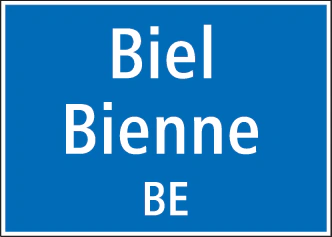
Prepare for Town Entry with the 4.27 Direction Sign
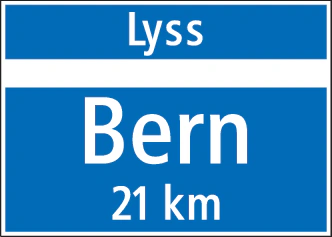
Prepare to exit town limits with the 'End of town/village on main road' sign (4.28).
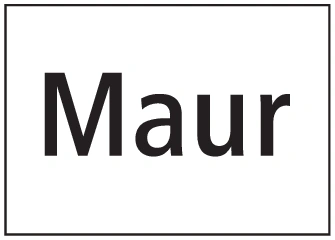
Entry of Town/Village on Minor Road Sign (4.29): Navigate Your Route Ahead
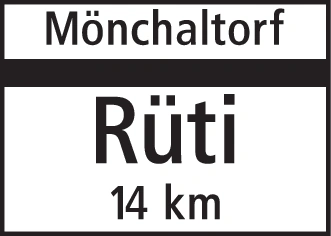
Sign 4.30: Navigating the End of a Town or Village on a Minor Road
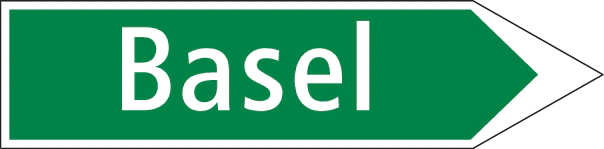
Navigating with the Expressway Route Signpost (4.31)
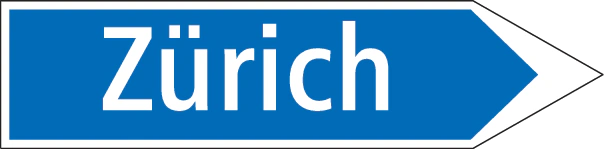
Prepare to choose your lane with the Signpost to Destination via Main Route (4.32).

Navigate your route with the Signpost to destination via minor route sign (4.33).

Follow This Sign: Detour to Your Destination Ahead

Understand the (Ongoing) Detour road sign (4.34.1) for safe route planning.
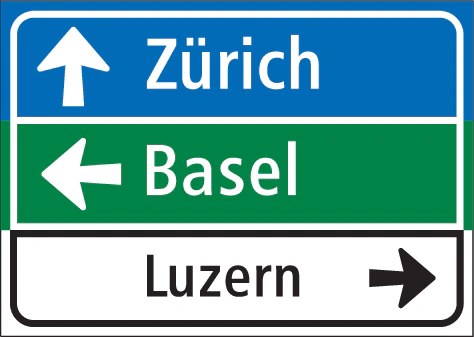
Understand the table format signpost for multi-destination route guidance.
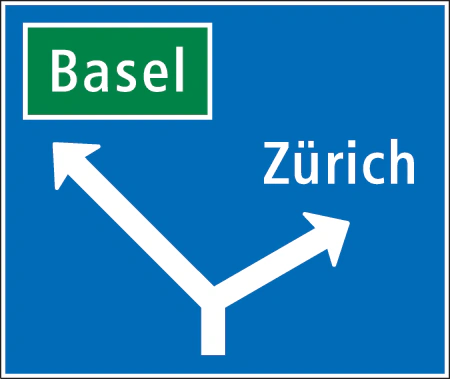
Know the Junction Ahead with the 4.36 Announcement Sign
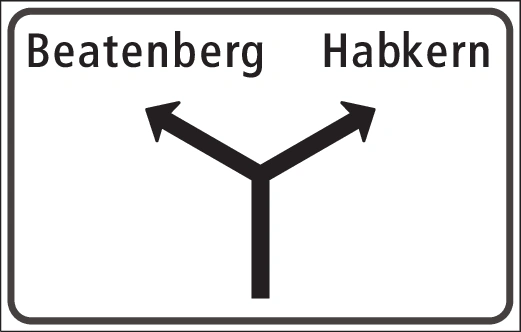
Prepare for Junctions with the Announcement of Junction on Minor Road Sign (4.37)
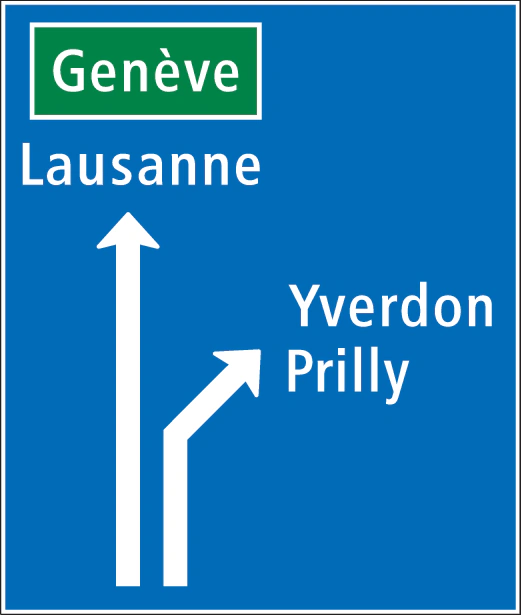
Announcing a Junction on the Main Road with Two Lanes Ahead
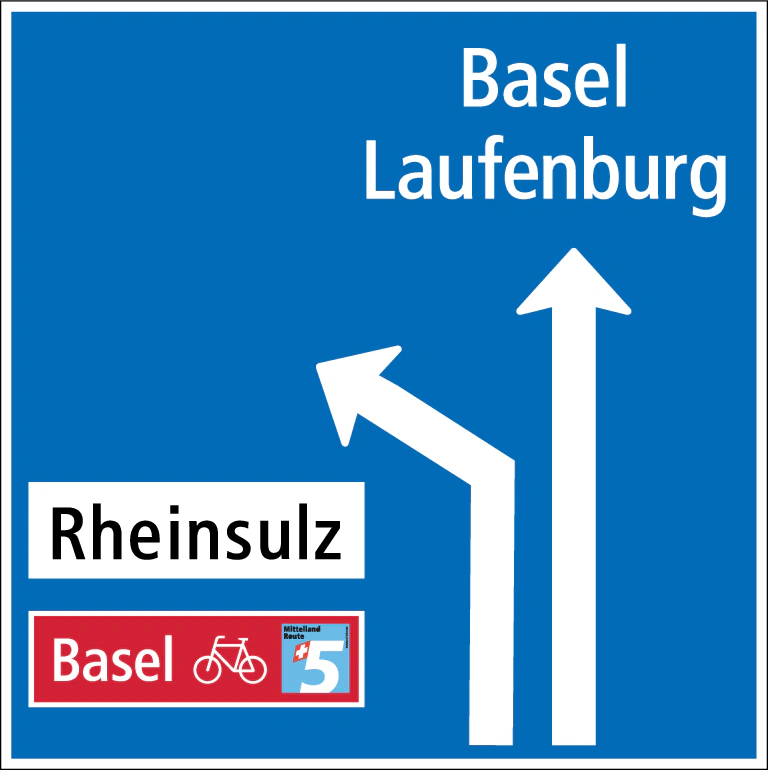
Prepare for junctions on main roads with two lanes using sign 4.38-1
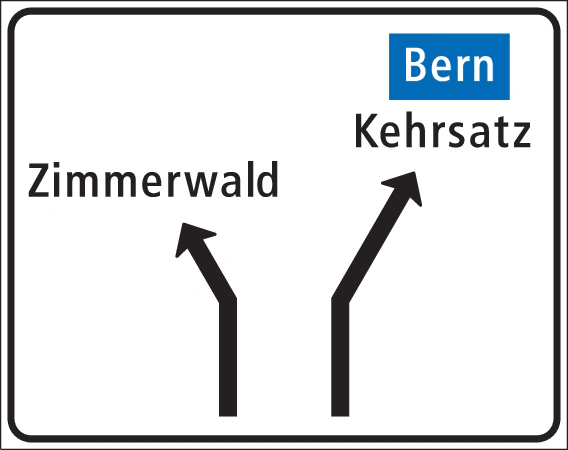
Prepare for a junction with two separated lanes on a minor road ahead.
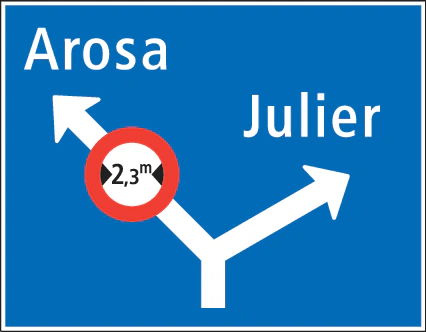
Know the meaning of the Junction Announcement with Left Route Restriction sign (4.40) in Switzerland.
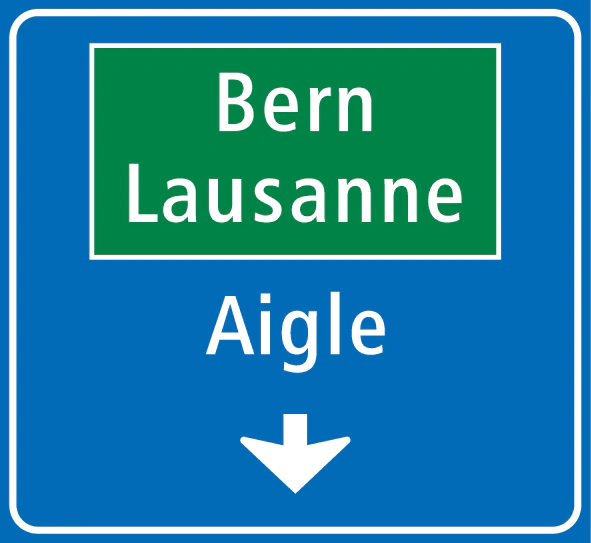
Sign 4.41: Lane Routing on Main Road guides your upcoming lane choice.
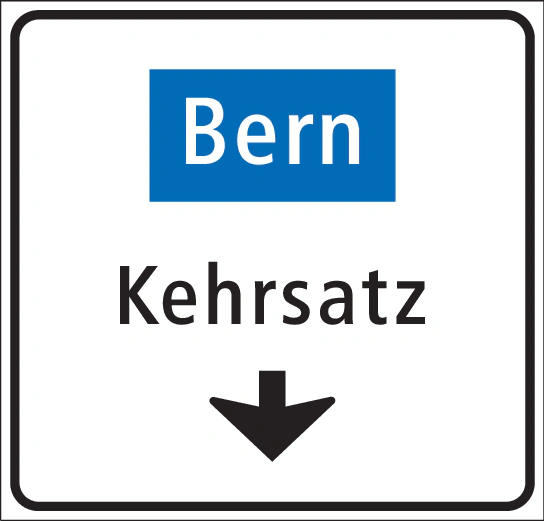
Follow the correct lane with the Lane Routing on Minor Road sign (4.42).

Understand the Signpost for Lorries (4.45) in Switzerland

Follow the Signpost to Parking: Navigate to Your Parking Destination

Follow the Signpost to Park and Ride for Navigation

Follow the Signpost to Campsite (4.47) for clear route guidance.

This signpost guides you to caravan sites and helps you plan your route ahead.

This sign guides you to companies, exhibitions, and specific destinations, often in industrial areas.

Navigate Switzerland's Roads with Direction Sign 4.49.1

Follow the 'Recommended Path for Bicycles' sign to plan your route ahead.
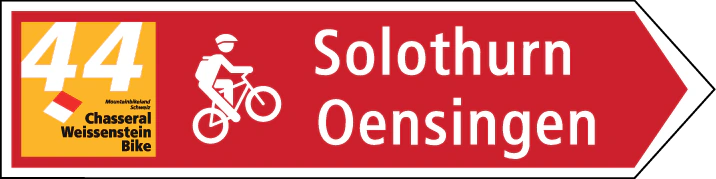
Follow the "Recommended Track for Mountain Bikes" Sign
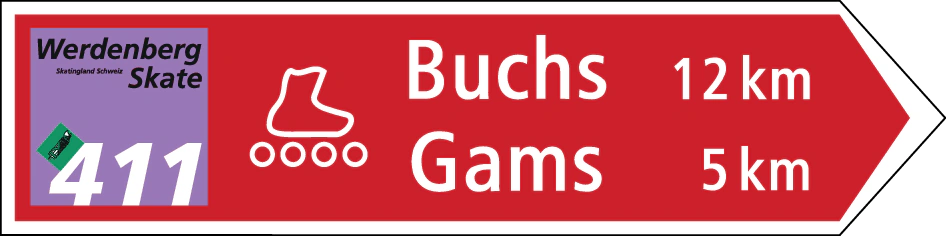
Follow the Recommended Path for Rollerblades, Scooters, and Similar Transport Means

This signpost guides you to bicycle routes ahead.
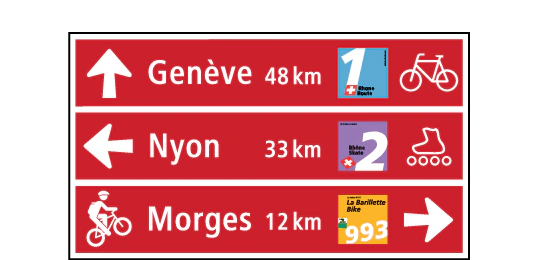
Navigate with the Swiss 4.50.6 Signpost for Directions
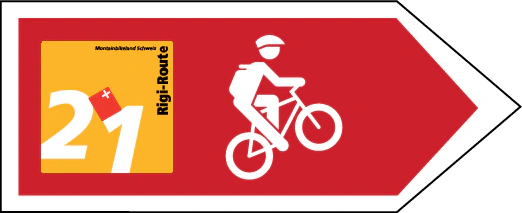
This signpost guides you to specific named or numbered routes ahead.
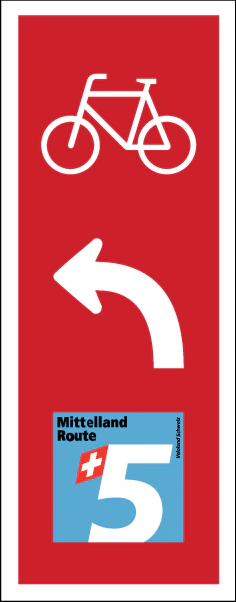
Prepare for Turns with the 4.51.2 Announcement Sign for Specific Vehicle Types
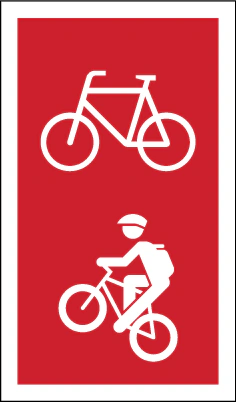
Navigate with Confidence Using Swiss Direction Sign 4.51.3
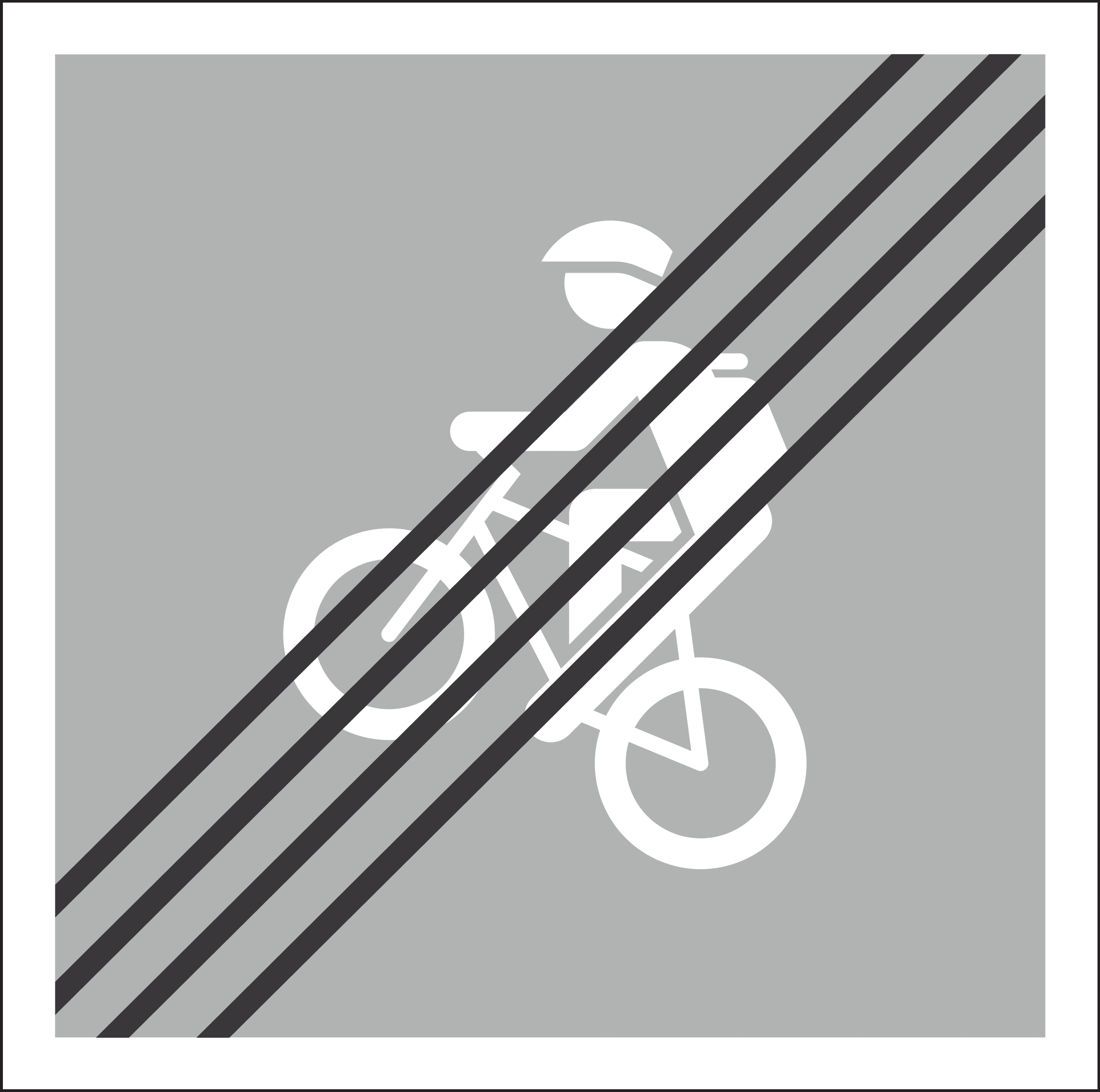
Sign 4.51.4: 'End of Specific Route' Direction Sign - Prepare for Your Journey
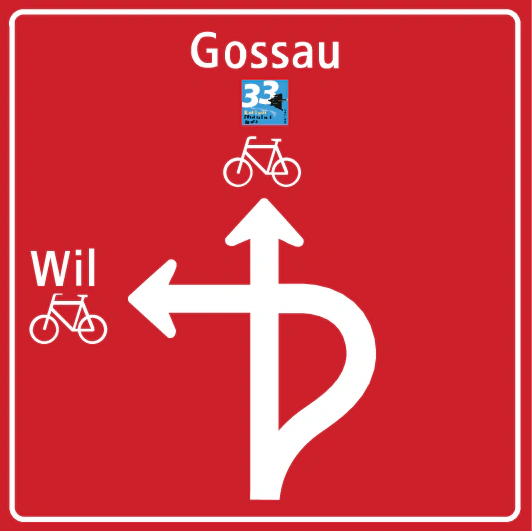
Navigate with Confidence: Understanding the 4.51.5 Direction Sign
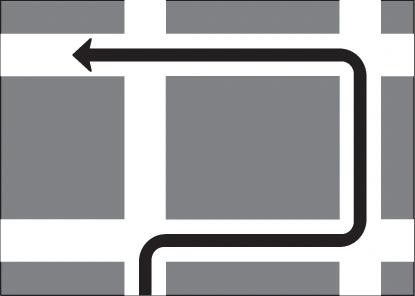
Sign 4.52: Use Routing Information to Plan Your Route Ahead

Swiss Direction Sign 4.52.1: Your Guide to Navigating Routes and Destinations
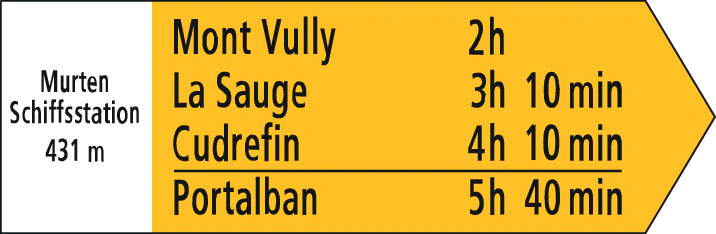
Understand and use Swiss Direction Sign 4.52.2 for clear route guidance.

Sign 4.52.3: Follow Direction Signs for Safe Route Guidance

Understand Swiss Direction Sign 4.52.4 for Clear Route Guidance

Navigate with Confidence: Understanding Swiss Direction Sign 4.52.5 Variant 1

Decode Direction Sign 4.52.5 (Variant 2) for Clear Route Guidance

Navigate with confidence using the 4.52.5-3 Direction Sign for Swiss Route Guidance.

Navigate with Confidence: Understanding the 4.52.5-4 Direction Sign

Understand Swiss Direction Sign 4.52.6 for Clear Route Guidance
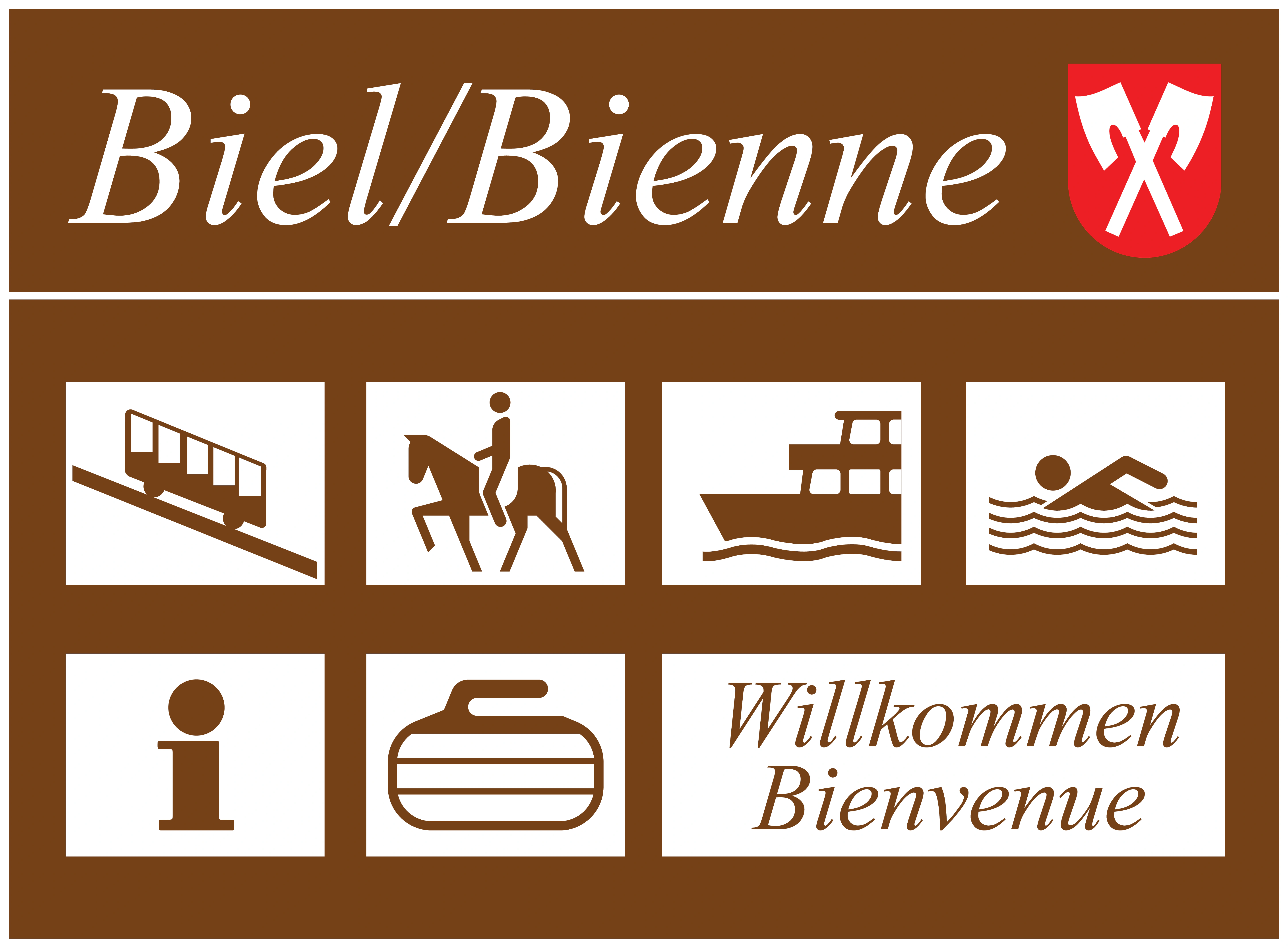
Follow the Route: Understanding Swiss Direction Sign 4.52.7
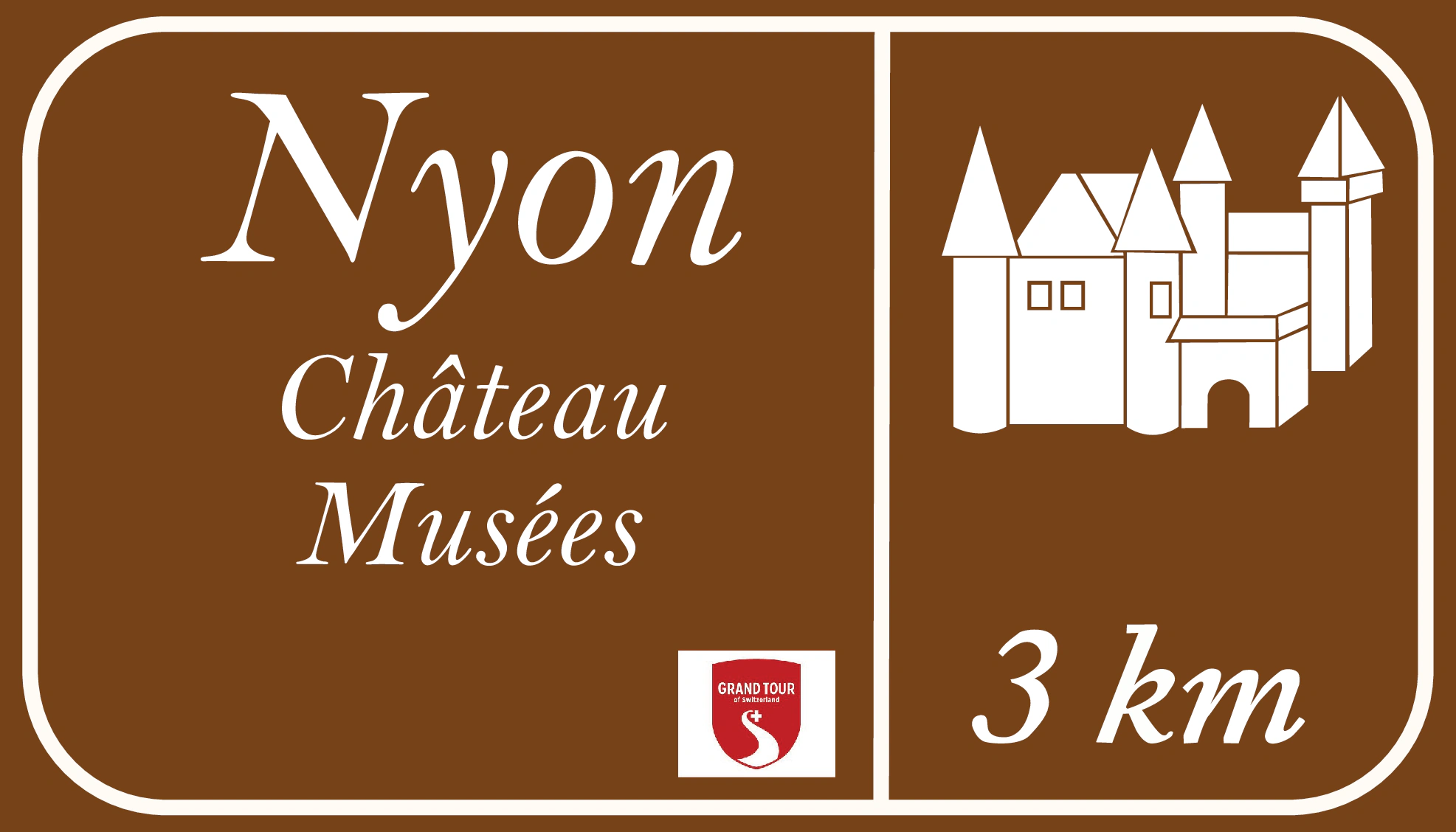
Master Swiss Direction Sign 4.52.8 for Clear Route and Lane Guidance
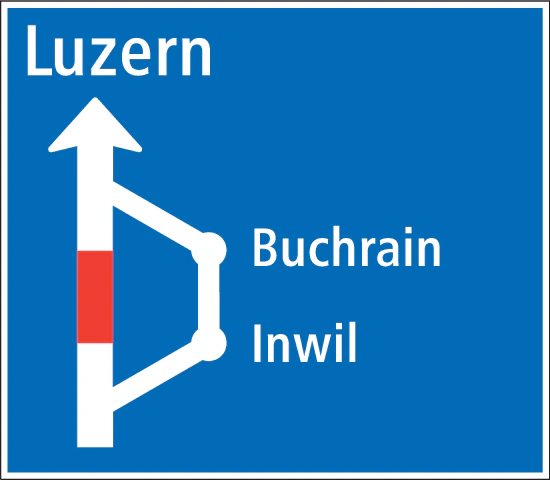
Sign 4.53: Announcing a Detour Ahead
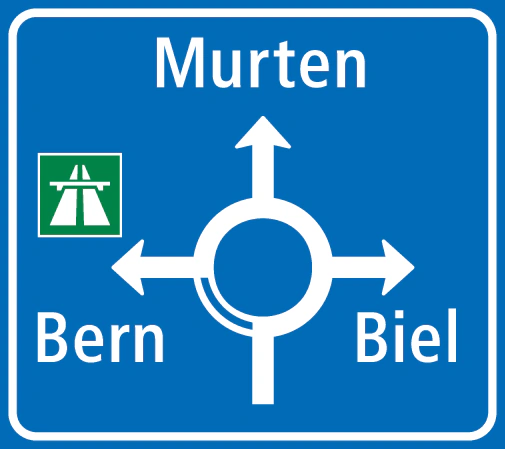
Prepare for a roundabout ahead on the main road with this announcement sign.
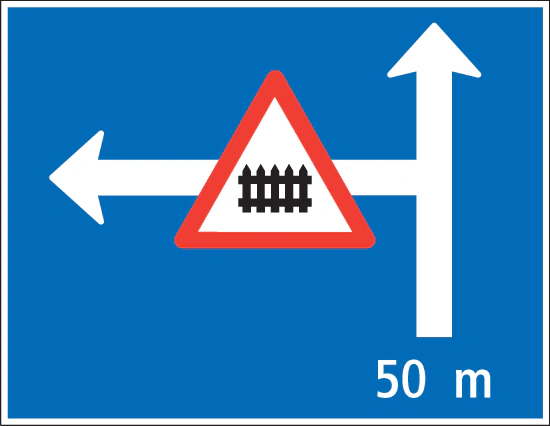
Prepare for a branching road ahead, including a gated level crossing after the turn.
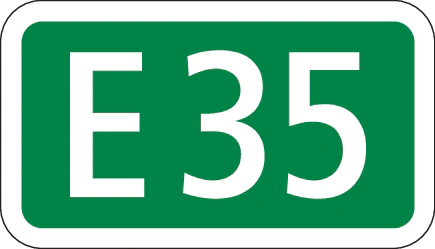
Navigate with Confidence: The European Route Number Sign (4.56)
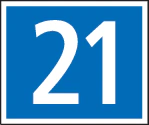
Master Route Guidance with the Main Road Number Sign (4.57)

Follow the Motor/Expressway Number sign for your correct route.
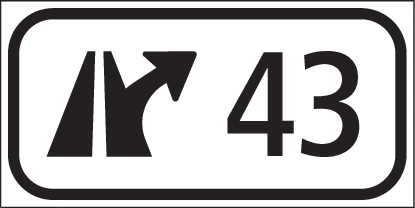
Sign 4.59: Number for Exits helps you choose the right lane and route ahead.
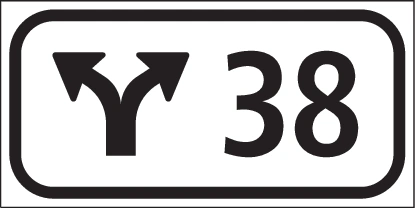
Navigate junctions confidently with the 'Number for Junctions' sign.
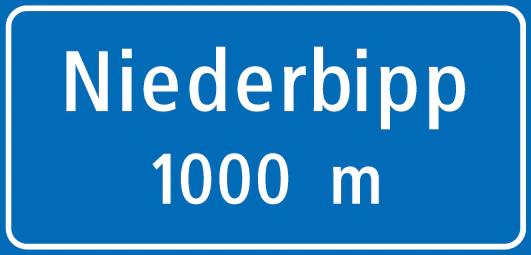
Prepare for the next exit with the First Announcement of Next Exit sign (4.60).
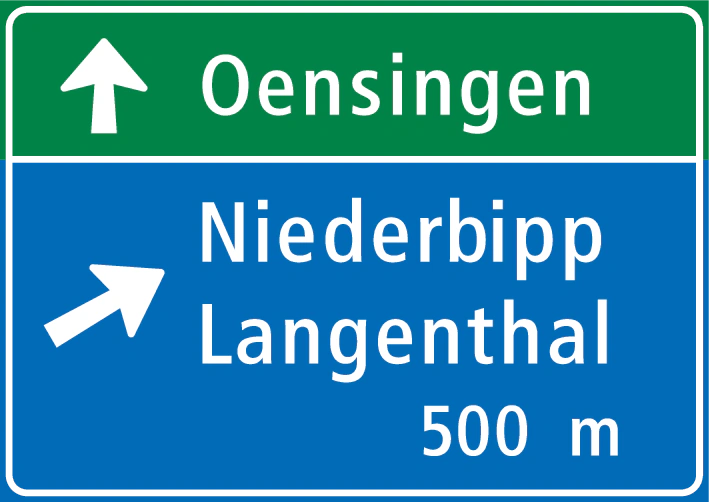
Second Announcement of Next Exit: Prepare for Your Upcoming Exit
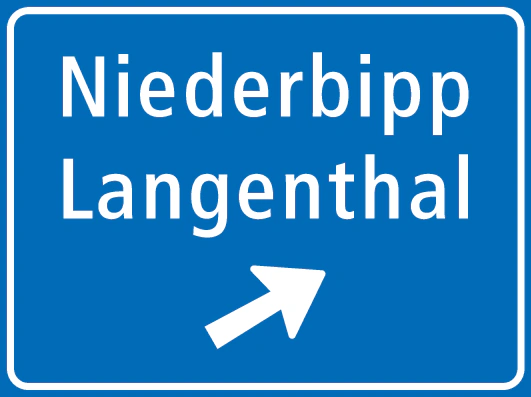
Prepare for your exit with the 'Start of Exit' road sign (4.62).
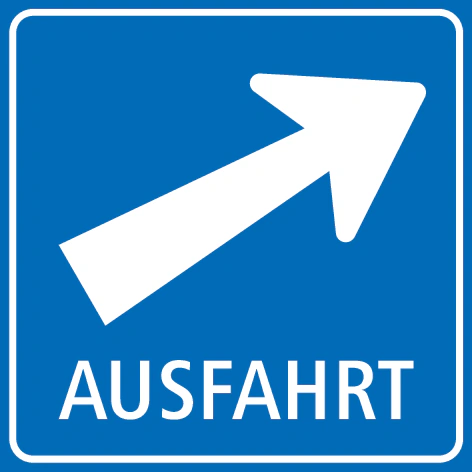
Navigate your route with the Swiss Exit Sign (German Variant) 4.63-D.
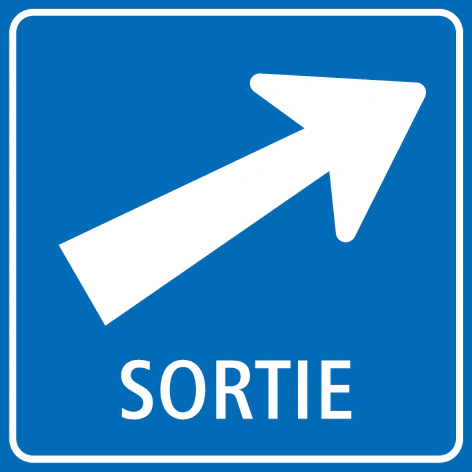
Navigate Your Route with the 4.63-F Exit Sign (French Variant)

Prepare for your exit with the Swiss Exit Sign (Italian variant) 4.63-I.
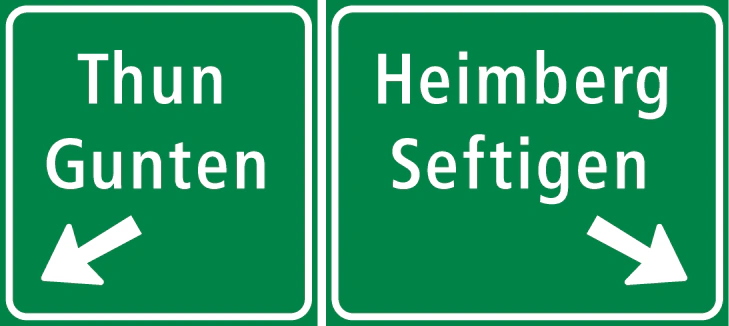
Navigate junctions confidently with the Swiss Junction Board (4.64) sign.
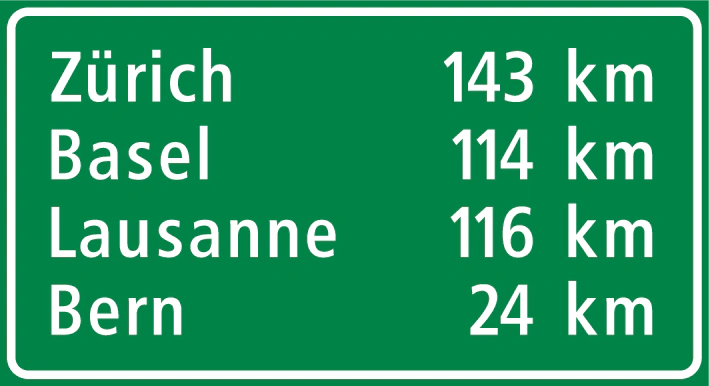
Use the Distance Board (4.65) sign to plan your route and choose the correct lane.
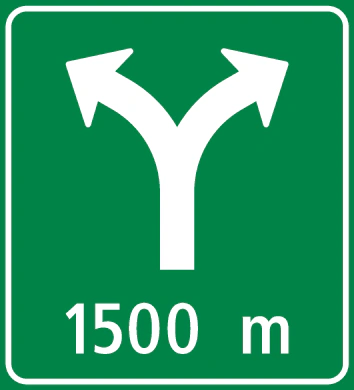
Prepare for junctions ahead with the Announcement of Junction sign (4.66).
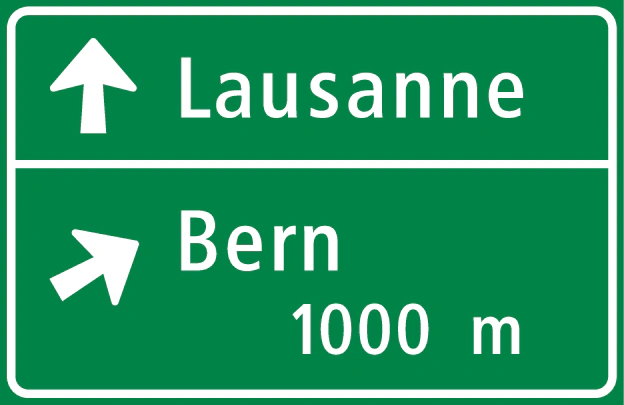
Prepare for upcoming junctions with the First Information About Junction Ahead sign (4.67).
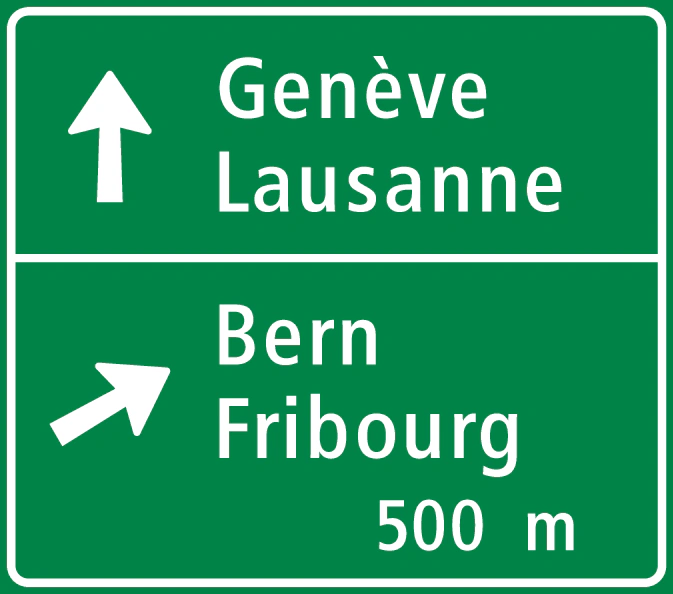
Prepare for Junctions with Second Information Ahead Sign (4.68)
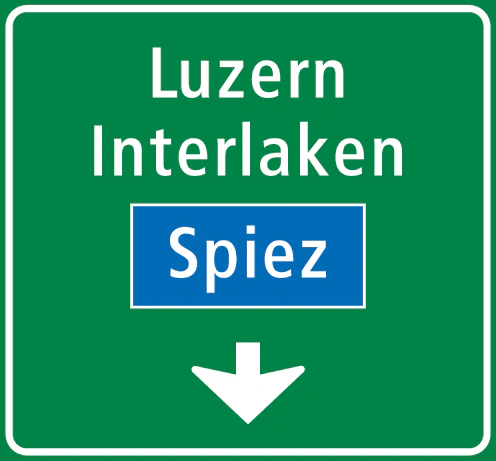
Master lane choices with the Swiss Routing Information Above Lane sign (4.69)
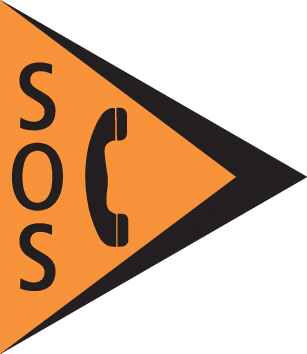
Follow the Sign for the Next Emergency Call Pillar
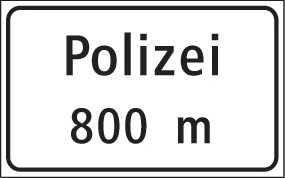
Understand the 'Distance to Police Station' Sign (German Variant)
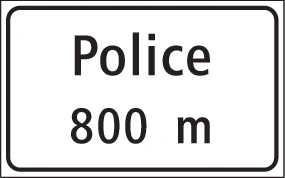
Know Your Distance to the Police Station with the 4.71-F French Variant Sign
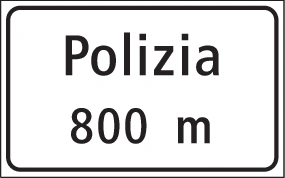
Know the 'Distance to Police Station' Sign (4.71-I) for Swedish Route Guidance

Master the Kilometer Sign (4.72) for Route Guidance in Switzerland

The Hectometer Sign (4.73) Guides Your Route Choices Ahead
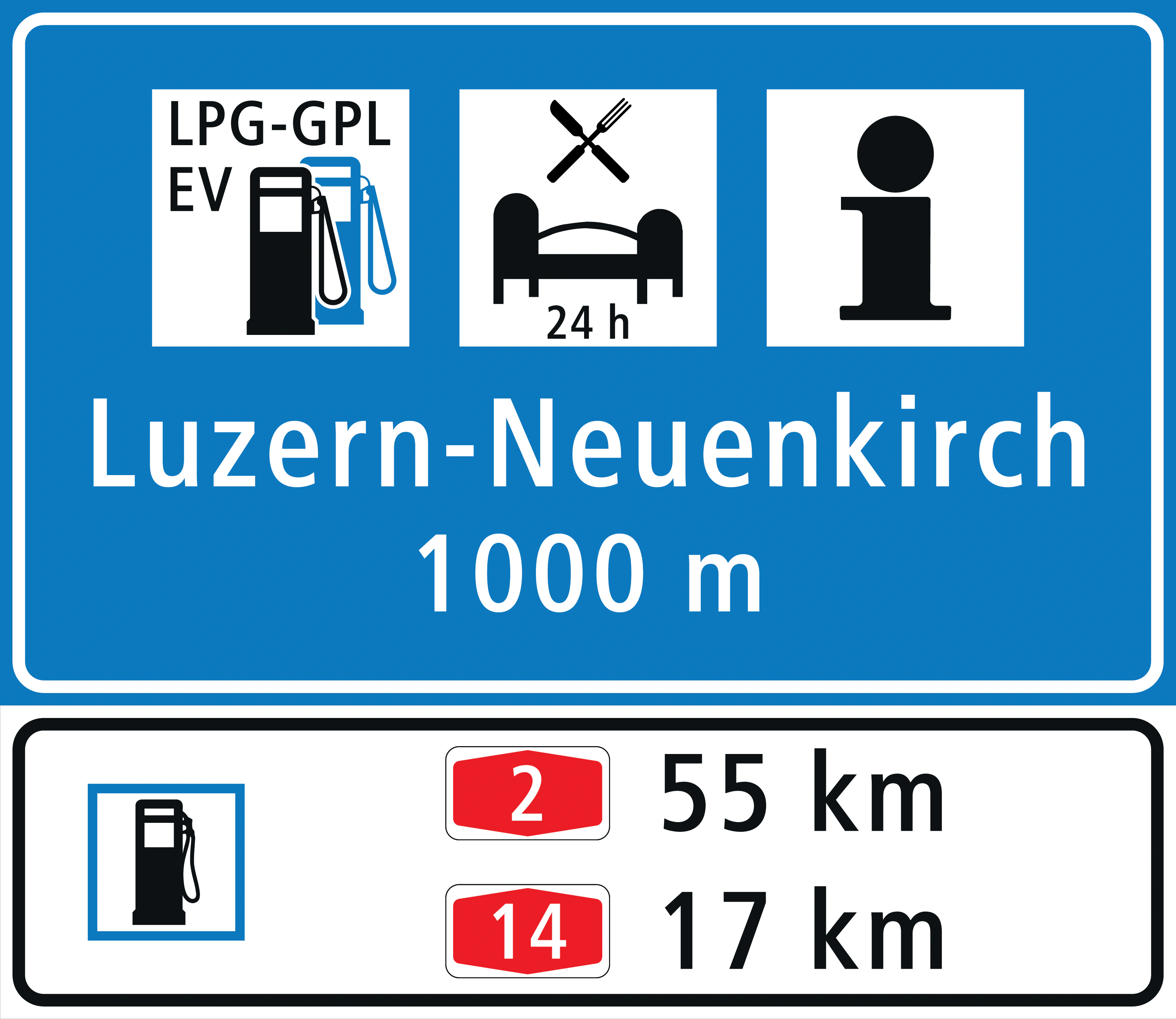
Master Swiss Direction Sign 4.74 for Clear Route and Lane Guidance
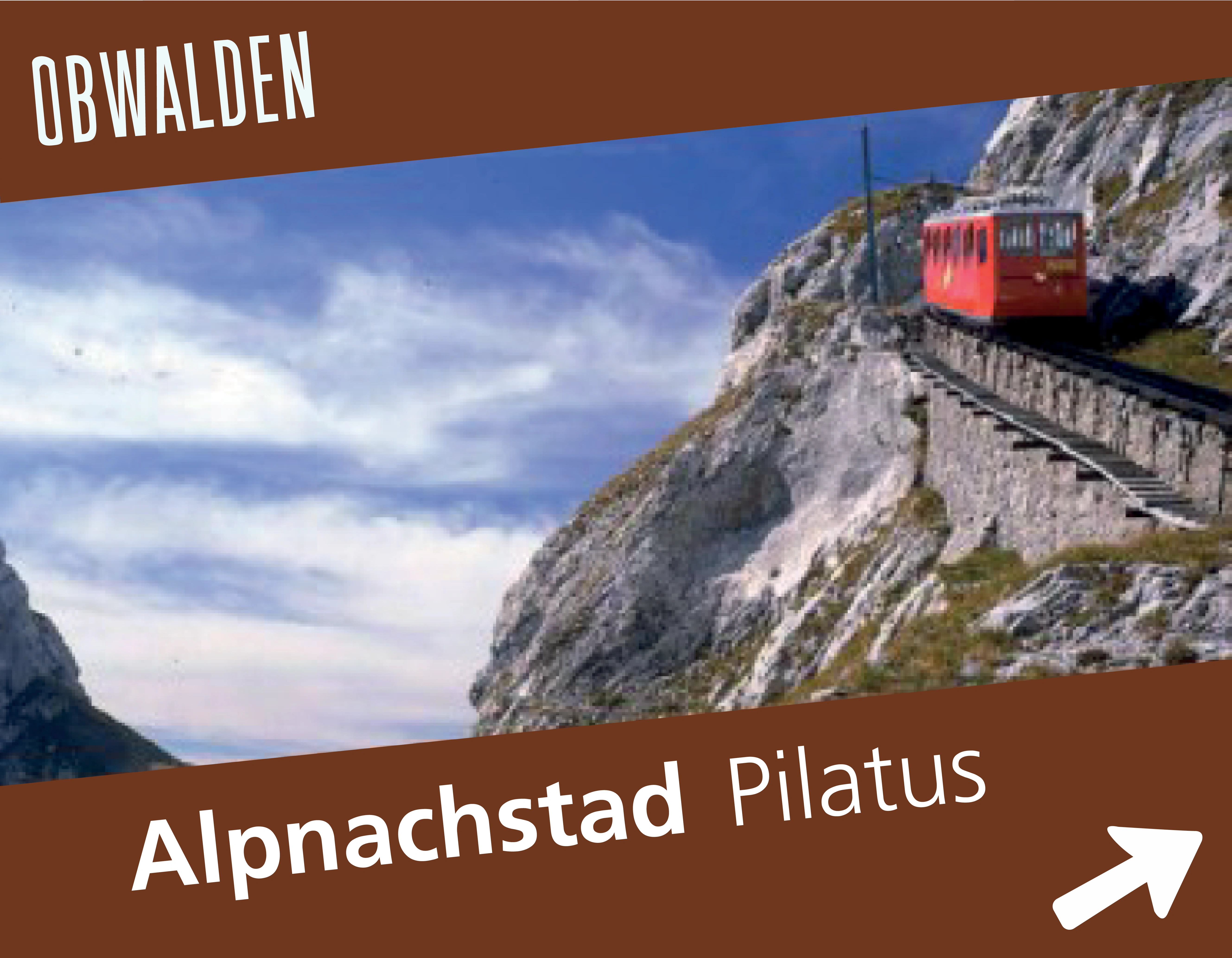
Understand Swiss Direction Sign 4.74.1 for Clear Route Guidance
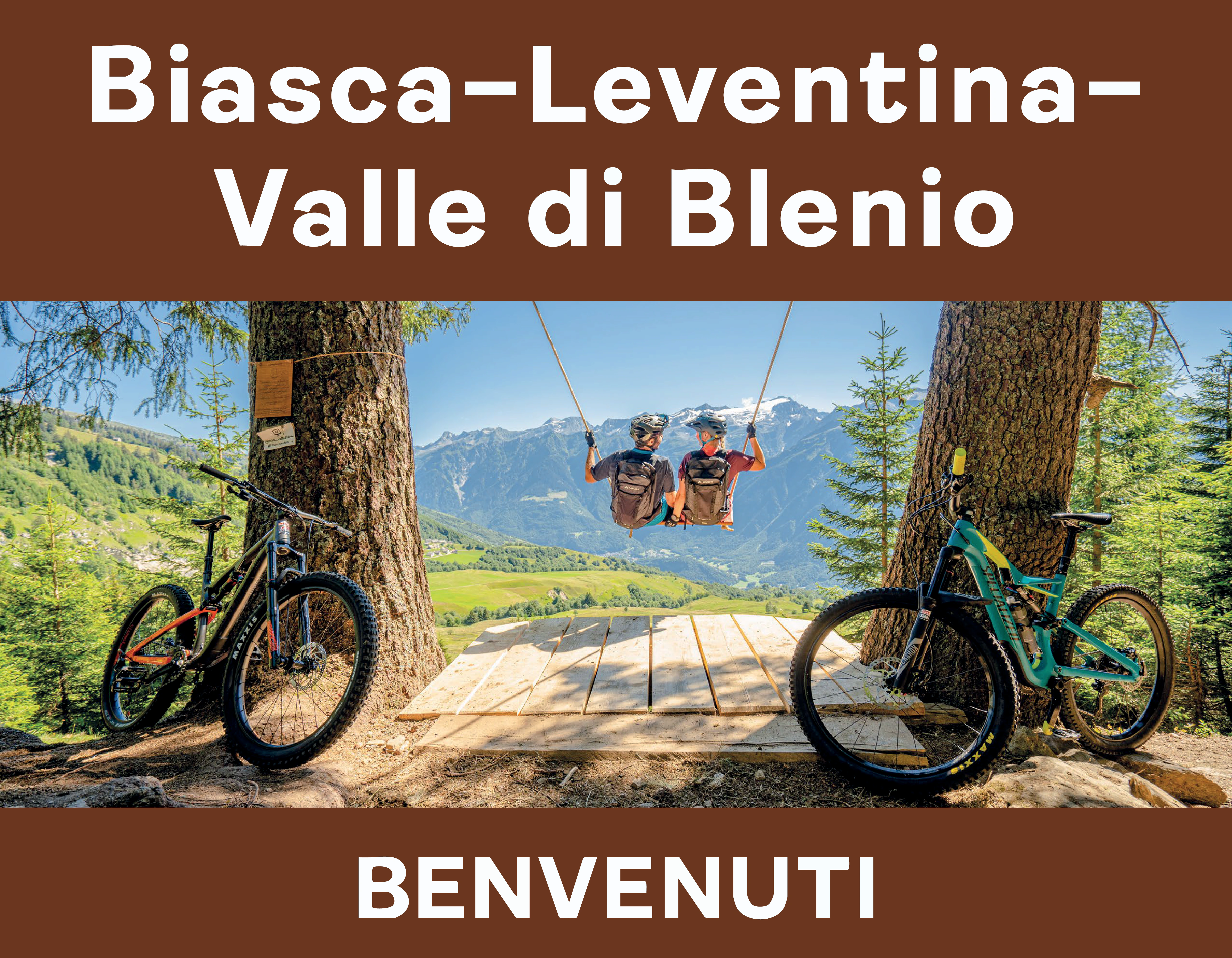
Navigate Swiss Roads with Direction Sign 4.74.2 for Clear Route Guidance
Clear answers to common questions about the Swiss Direction Signs road sign category. Use this FAQ to review tricky rules, understand how these signs appear in exam scenarios, and remove confusion that often leads to mistakes in the Swiss driving theory exam in Switzerland.
The colour and design of direction signs often indicate the type of road. Signs on main roads are typically white with black text and often feature a yellow stripe, indicating faster routes where directional decisions need to be made further in advance. Minor road signs are usually yellow with black text, guiding you on less significant routes. Understanding this distinction helps you gauge the expected speed and traffic volume.
Detour signs, like sign 4.34 ('Detour to destination to be followed') and 4.53 ('Announcement of a detour'), clearly indicate that your normal route is blocked or altered. They will show the direction to follow to rejoin your intended path or reach your destination via an alternative route. Pay close attention to these signs, as they are often used in areas with temporary road closures or construction.
Junction announcement signs (e.g., 4.36-4.42, 4.66-4.68) provide advance warning of upcoming intersections. They can indicate the type of junction, the number of lanes, and which lanes lead to specific destinations or route numbers. Some signs, like 4.40, may also warn of restrictions on certain routes within the junction, such as width or height limits. It’s vital to read these signs early to position your vehicle correctly before reaching the junction.
Yes, some direction signs are tailored for specific vehicle types. For example, sign 4.45 indicates directions specifically for lorries, and signs like 4.50.1, 4.50.3, and 4.50.4 highlight recommended paths for bicycles or other personal transport devices. Sign 4.50.5 and 4.50.6 show directions for different types of users. These signs help manage traffic flow and safety by guiding different vehicles along appropriate routes.
Route numbers, indicated by signs like 4.56 (European routes), 4.57 (main road numbers), and 4.58 (motorway/expressway numbers), help you navigate long distances and follow specific main arteries. When planning a journey, you can follow these numbers to stay on your intended path, even if you are unfamiliar with the specific towns or exits. Combining destination names with route numbers provides comprehensive guidance.
Dive into the organized structure of Swiss road sign categories to enhance your driving theory knowledge. Explore each group, understand common contexts, and test your understanding of official traffic signs, from mandatory commands to specific hazard warnings. Build a solid foundation for your upcoming theory exam with confidence.
Swiss Road Sign Categories