
Driving in school zones requires heightened vigilance and a significant reduction in speed. These areas are characterized by increased activity from children walking or cycling, who may not fully grasp traffic risks. As a driver in Switzerland, understanding your responsibility to protect these vulnerable road users is paramount for safety and essential for your driving theory knowledge.
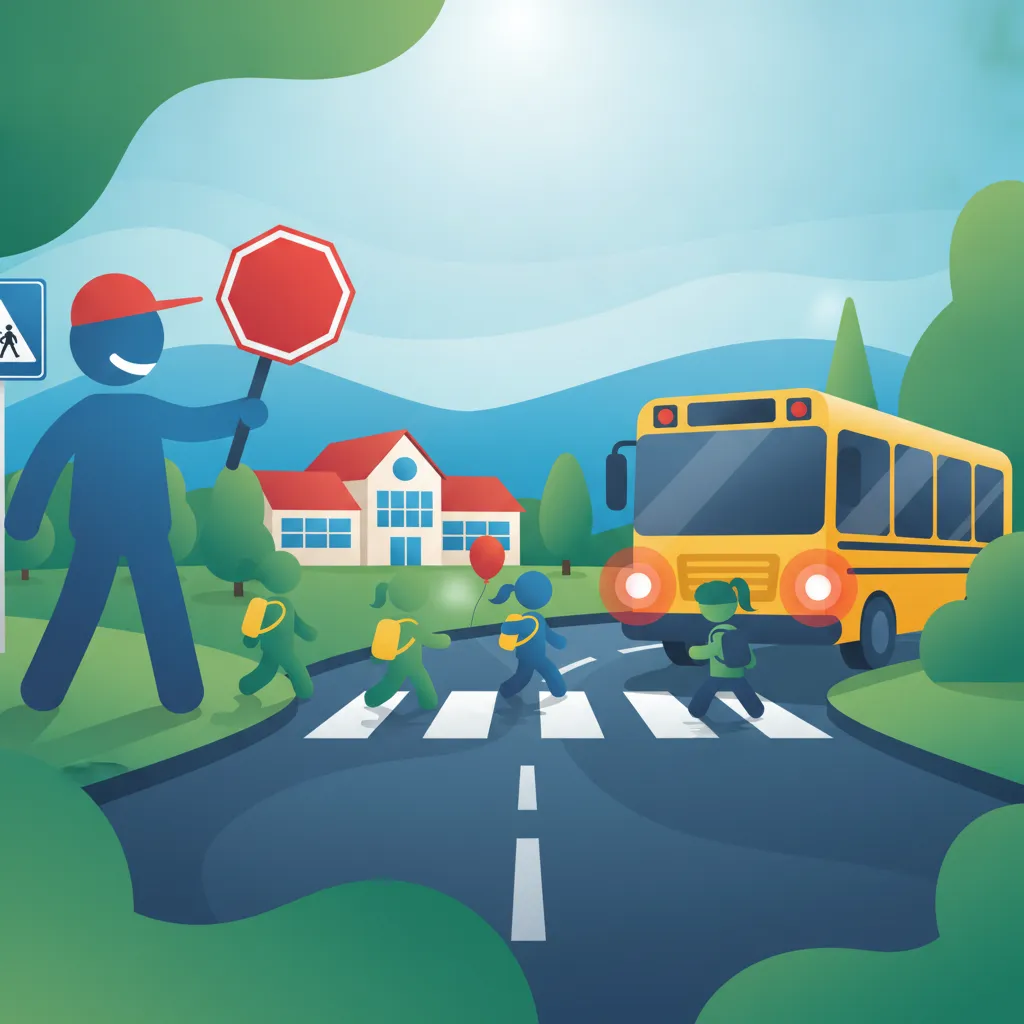
Theory topic content overview
Read the full theory topic guide for School Zones & Child Safety with structured, easy-to-scan content built for learners in Switzerland. This detailed section explains the exact rule, meaning, traffic context, comparison points, and exam logic behind this Swiss driving theory topic so you can study faster, understand the concept more clearly, and avoid common interpretation mistakes on the theory test.
A school zone in Switzerland refers to any area near an educational institution where children are frequently present, walking, cycling, or crossing roads. These zones are not always explicitly marked by a single, universal sign. Instead, they are typically identified by the presence of schools, playgrounds, residential areas popular with families, and often designated traffic calming measures.
The core concept is simple: where children are, extra caution is mandatory. In Swiss traffic, children are classified as particularly vulnerable road users due to their developing perception of danger, limited understanding of traffic rules, and often impulsive or unpredictable behaviour.
Driving safely in school zones is paramount for several reasons, deeply integrated into Swiss road safety philosophy and the driving theory test:
Driving through areas frequented by children requires a specific mindset and proactive approach.
This is the most critical rule. While a general speed limit might apply (e.g., 50 km/h in built-up areas), the safe speed in a school zone is almost always much lower.
Your attention must be fully on the road and surroundings.
Several factors can increase the risk in school zones:
A common misconception among learners, especially in Swiss driving theory, is equating the speed limit with a safe speed.
Always drive at a safe speed, which means adapting to conditions and potential hazards, not just the legal maximum. Failing to do so can lead to accidents and serious penalties, even if you were technically within the speed limit.
Consider these common situations:
Learners and even experienced drivers often make these critical errors:
In Switzerland, the emphasis on child safety in traffic is a cornerstone of road education and law. Concepts like "S'ARRÊTER – REGARDER – ÉCOUTER – TRAVERSER" (Stop – Look – Listen – Cross) are taught to children from kindergarten through police-led Verkehrsunterricht (traffic education). As a driver, you are expected to be aware of these initiatives and understand that children are learning, but ultimately, the responsibility to prevent accidents rests heavily on you.
This national focus on protecting vulnerable road users is why school zone scenarios are prominent in the Swiss driving license theory test. Demonstrating an understanding of these principles is not just about passing an exam; it's about adopting a responsible driving mindset for life in Switzerland.
To summarize your responsibilities in Swiss school zones, remember the "3 Ps":
Swiss school zones require drivers to exercise extreme caution due to children's vulnerability and unpredictable behaviour, with many areas designated as Tempo 30-Zonen or Begegnungszonen. The key principle is that children are classified as vulnerable road users who may not understand traffic risks, meaning drivers must predict unexpected actions, significantly reduce speed, and be prepared to stop instantly. Swiss law mandates stopping fully for pedestrians on Fussgängerstreifen and obeying Patrouilleurs Scolaires, and drivers must understand that safe speed may be considerably lower than the posted limit. This topic is a prominent focus in the Swiss driving theory test because it assesses both hazard perception and the defensive driving mindset essential for road safety in Switzerland.
A short set of high-value points that capture the most important ideas from this theory explanation.
Children in Switzerland are classified as vulnerable road users due to their developing perception of danger and unpredictable behaviour
Speed reduction is the most critical rule in school zones, often requiring speeds well below posted limits
Drivers must stop completely for pedestrians on a Fussgängerstreifen who are already crossing or clearly intending to cross
School arrival and dismissal times are peak danger periods requiring maximum vigilance
The concept of safe speed in Switzerland means adapting to conditions and hazards, not just following the legal maximum
Tempo 30-Zonen are 30 km/h zones common near Swiss schools; Begegnungszonen allow only 20 km/h with pedestrians having priority everywhere
Patrouilleurs Scolaires (school crossing guards) must be obeyed immediately when they signal you to stop
Children cannot be expected to behave like adults—they may run, change direction, or step into the road without looking
Always scan under and around parked vehicles, buses, and hedges for small children who may be hidden from view
Driving at or below the speed limit does not absolve you of responsibility if conditions require slower travel
Assuming that the posted 30 km/h limit is always a safe speed, regardless of actual child activity or visibility conditions
Only scanning straight ahead and missing children approaching from the sides or from behind parked cars
Rolling slowly through a Fussgängerstreifen instead of coming to a complete stop when pedestrians are waiting or crossing
Expecting children to follow traffic rules and behave rationally like adult pedestrians
Failing to respect Patrouilleurs Scolaires signals or not stopping fully before the crossing line when they indicate stop
Start with a short, direct summary of School Zones & Child Safety before reading the full explanation below.
School zones are areas around educational facilities where children frequently walk or cross roads. Drivers must anticipate unpredictable behaviour from children and reduce speed significantly. In Switzerland, specific attention is paid to protecting these vulnerable road users, requiring drivers to be extra alert for crossing guards, school buses, and children entering or leaving school grounds to ensure their safety.
Review the most important terms, rule signals, and traffic concepts linked to School Zones & Child Safety.
Explore related theory topic pages connected to School Zones & Child Safety and continue with the next useful rule explanation.
See the common search queries learners use when trying to understand School Zones & Child Safety in Switzerland.

Continue your preparation by exploring specific Swiss traffic rules, road signs, and essential driving concepts. Strengthen your knowledge of official legislation and practical application to ensure complete readiness for your driving licence theory examination.
Explore Swiss Driving Theory TopicsTheory topic content overview
A short set of high-value points that capture the most important ideas from this theory explanation.
Children in Switzerland are classified as vulnerable road users due to their developing perception of danger and unpredictable behaviour
Speed reduction is the most critical rule in school zones, often requiring speeds well below posted limits
Drivers must stop completely for pedestrians on a Fussgängerstreifen who are already crossing or clearly intending to cross
School arrival and dismissal times are peak danger periods requiring maximum vigilance
The concept of safe speed in Switzerland means adapting to conditions and hazards, not just following the legal maximum
Tempo 30-Zonen are 30 km/h zones common near Swiss schools; Begegnungszonen allow only 20 km/h with pedestrians having priority everywhere
Patrouilleurs Scolaires (school crossing guards) must be obeyed immediately when they signal you to stop
Children cannot be expected to behave like adults—they may run, change direction, or step into the road without looking
Always scan under and around parked vehicles, buses, and hedges for small children who may be hidden from view
Driving at or below the speed limit does not absolve you of responsibility if conditions require slower travel
Assuming that the posted 30 km/h limit is always a safe speed, regardless of actual child activity or visibility conditions
Only scanning straight ahead and missing children approaching from the sides or from behind parked cars
Rolling slowly through a Fussgängerstreifen instead of coming to a complete stop when pedestrians are waiting or crossing
Expecting children to follow traffic rules and behave rationally like adult pedestrians
Failing to respect Patrouilleurs Scolaires signals or not stopping fully before the crossing line when they indicate stop
Start with a short, direct summary of School Zones & Child Safety before reading the full explanation below.
School zones are areas around educational facilities where children frequently walk or cross roads. Drivers must anticipate unpredictable behaviour from children and reduce speed significantly. In Switzerland, specific attention is paid to protecting these vulnerable road users, requiring drivers to be extra alert for crossing guards, school buses, and children entering or leaving school grounds to ensure their safety.
Review the most important terms, rule signals, and traffic concepts linked to School Zones & Child Safety.
Explore related theory topic pages connected to School Zones & Child Safety and continue with the next useful rule explanation.
See the common search queries learners use when trying to understand School Zones & Child Safety in Switzerland.
Continue your preparation by exploring specific Swiss traffic rules, road signs, and essential driving concepts. Strengthen your knowledge of official legislation and practical application to ensure complete readiness for your driving licence theory examination.
Explore Swiss Driving Theory TopicsUse this exam-focused revision tip to understand how School Zones & Child Safety is likely to appear in theory questions for learners in Switzerland. This section helps you identify the most testable part of the rule, avoid common traps, and remember the concept more effectively during Swiss driving theory exam preparation.
The Swiss driving theory test often includes scenarios set in school zones to assess your hazard perception and understanding of vulnerable road users. Remember to prioritize safety over speed and be ready for immediate stops. Always assume children will behave unpredictably and keep ample braking distance.
Read direct answers to the most common learner questions about School Zones & Child Safety in Switzerland. This FAQ focuses on rule confusion, practical meaning, comparison with similar concepts, and the exact uncertainties that appear most often in Swiss driving theory revision and exam preparation.
A school zone typically refers to the area immediately surrounding an educational institution where children are frequently present, walking, cycling, or crossing roads. While not always marked by specific signage (like dedicated 'school zone' signs in some other countries), the presence of children demands special driver behaviour.
Children are vulnerable because they have limited perception of speed and distance, may act impulsively, and have less experience with traffic rules. They might also be less visible due to their height, making it crucial for drivers to take extra precautions.
While there isn't a universal 'school zone speed limit' sign across all of Switzerland, drivers are expected to reduce their speed significantly below the general limit (e.g., 50 km/h in built-up areas) to be prepared for sudden stops. Often, these areas may be designated as 30 km/h zones or Begegnungszonen (shared spaces).
You must always obey the signals of a school crossing guard (patrouilleur scolaire or Schulwegpolizist). If they signal you to stop, you must stop completely and wait until all children have safely crossed the road and the guard indicates it is safe to proceed.
If a school bus is stopped and children are boarding or alighting, you must exercise extreme caution. Be prepared to stop and wait until the bus moves off, as children may run across the road unexpectedly from behind or in front of the bus.
Common mistakes include not reducing speed enough, failing to anticipate children's unpredictable movements, being distracted (e.g., by mobile phones), and not observing the area thoroughly for hidden hazards like children emerging from between parked cars.
Pinpoint specific Swiss traffic rules, road signs, or driving situations you need to master. Use the practice search to start a focused revision session now and build confidence for your official driving theory exam.