
This unit is crucial for aspiring Category C and C1 drivers in Switzerland, covering the essential knowledge of heavy goods vehicle dimensions, masses, and operating limits. You'll learn key terminology, understand Swiss regulations on vehicle size and weight, and how to correctly interpret vehicle identification plates, all vital for safe operation and passing your theory exam.
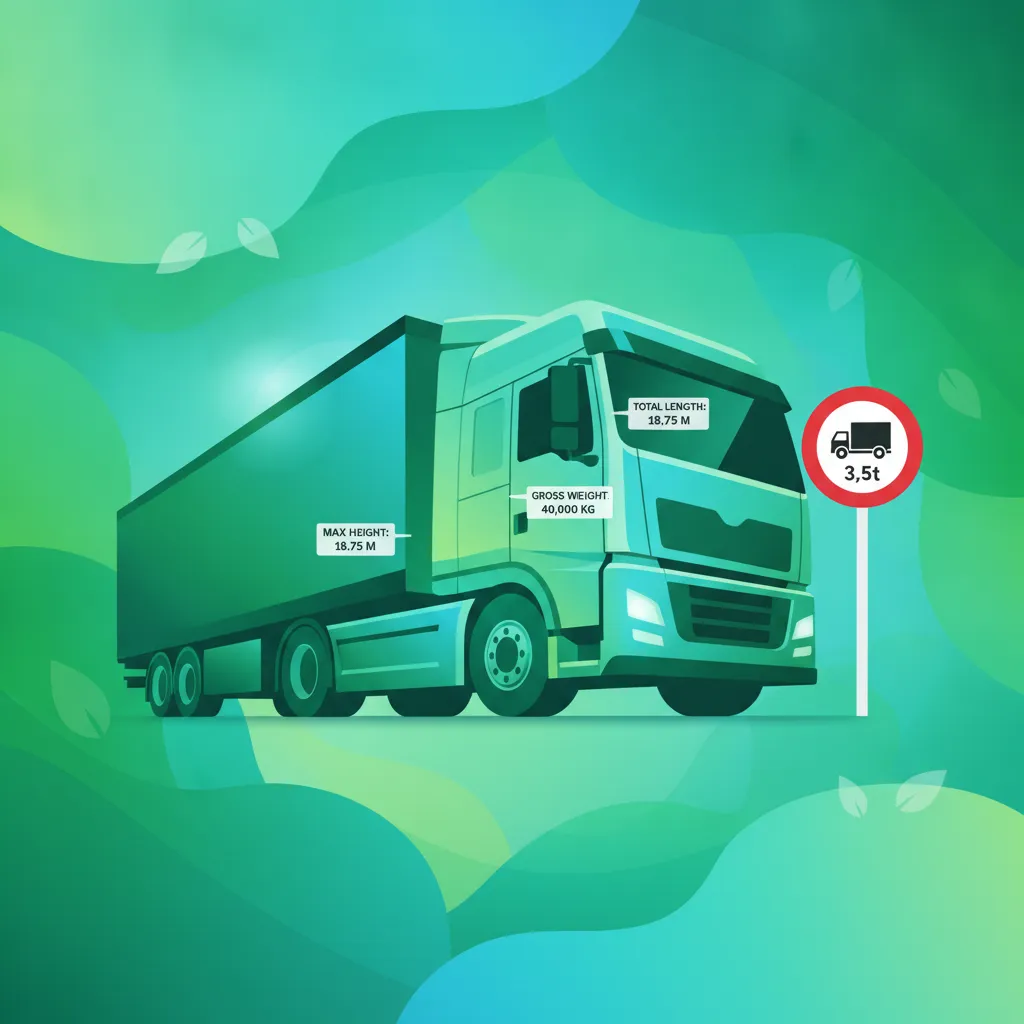
Browse all lessons that make up Heavy-Vehicle Dimensions, Masses, Axle Loads and Operating Limits. Each lesson focuses on specific topics, learning objectives, and core concepts, helping you build essential knowledge and follow a clear, structured progression toward your study goals in Switzerland.
This lesson clarifies the essential terminology related to vehicle weight. It defines tare weight (Leergewicht) as the vehicle's empty weight, payload (Nutzlast) as the maximum permissible load it can carry, and gross vehicle mass (Gesamtgewicht) as the total combined weight. Correctly understanding these terms is fundamental for calculating loads and avoiding illegal overloading.
Swiss law strictly regulates the maximum dimensions of commercial vehicles to ensure they can safely navigate the infrastructure. This lesson specifies the standard limits for vehicle height (4.0m), width (2.55m), and length for various lorry and trailer combinations. Adhering to these dimensions is crucial for avoiding collisions with bridges, tunnels, and other structures, and for navigating narrow roads.
The total weight of a vehicle is supported by its axles, and Swiss regulations set strict limits on the load each axle can bear. This lesson explains how to correctly distribute a load to comply with maximum axle load (Achslast) limits, which is vital for vehicle stability, steering control, and braking efficiency. Incorrect distribution can lead to dangerous handling characteristics and cause significant damage to road surfaces.
When a lorry tows a trailer, the total weight of the entire combination must not exceed the gross combination mass limit. This lesson explains how to find this value and why it is critical for ensuring the vehicle's engine, transmission, and brakes can safely handle the entire load. Exceeding the GCM compromises braking effectiveness, acceleration, and the ability to climb gradients, creating a significant safety risk.
Overloading is a serious offence with severe safety and legal ramifications. This lesson details how excess weight drastically increases braking distances, puts extreme stress on tyres leading to blowouts, and negatively affects steering and overall stability. Furthermore, it discusses the substantial fines, potential license withdrawal, and driver liability that result from violating Swiss weight regulations.
The manufacturer's identification plate is a critical source of information about a vehicle's technical limits. This lesson teaches drivers where to find this plate and how to interpret the data it contains, including maximum gross vehicle weight, gross combination weight, and maximum axle loads. This information is essential for ensuring that the vehicle is operated legally and within its designed safety parameters.
Transporting loads that are wider, longer, taller, or heavier than standard regulations allow requires special authorization. This lesson explains the concept of exceptional transport and the legal requirement to obtain a special permit from the relevant cantonal authorities. It highlights that such operations require careful route planning, often mandating specific times of travel and sometimes the use of escort vehicles.
Explore high-intent keywords and long-tail search topics learners use when researching Heavy-Vehicle Dimensions, Masses, Axle Loads and Operating Limits. These terms reflect how people search for reliable study materials, structured explanations, and unit-level theory preparation support in Switzerland.
Find clear answers to the most common questions learners ask about Heavy-Vehicle Dimensions, Masses, Axle Loads and Operating Limits. Understand how the unit is organized, what learning goals it supports, and how it contributes to your study progression with structured explanations and practical guidance tailored for learners in Switzerland.
Tare weight (Leergewicht) is the weight of the unladen vehicle. Payload (Nutzlast) is the maximum weight of goods the vehicle can carry. Gross Vehicle Mass (Gesamtgewicht, GVM) is the maximum total weight of the vehicle including its payload, driver, and fuel, as specified by the manufacturer and regulations.
Swiss axle load limits (Achslast) are set by law and vary depending on the type of axle and the vehicle's construction. These limits are crucial for protecting road infrastructure and ensuring vehicle stability. Exceeding them can lead to significant fines and safety hazards.
The vehicle identification plate (Typenschild) contains vital information, including the manufacturer, model, chassis number, and crucially, the permissible technical masses. This includes the maximum permissible mass for the vehicle itself (GVM), the maximum permissible mass for the towing vehicle (if applicable), and the maximum permissible mass for the trailer. It also often specifies the maximum permissible axle loads.
Exceeding weight limits in Switzerland can result in substantial fines, penalties, and potential confiscation of the vehicle or load. It also poses significant safety risks, including increased braking distances, compromised vehicle stability, and potential damage to roads and bridges. Operators and drivers can face legal consequences.
Yes, if your vehicle or its load exceeds the standard maximum dimensions (length, width, height) or weight limits set by Swiss law, you will typically require a special permit for abnormal loads (Sonderbewilligung). This permit outlines specific routes, times, and conditions under which the transport can be carried out safely.
Proper load distribution is critical for vehicle stability. Placing heavier items lower and distributing the weight evenly over the axles helps maintain a lower centre of gravity and prevents the vehicle from tipping, especially during cornering or braking. Incorrect distribution can lead to dangerous instability.
All included lessons
Lessons in Heavy-Vehicle Dimensions, Masses, Axle Loads and Operating Limits
See who benefits most from studying Heavy-Vehicle Dimensions, Masses, Axle Loads and Operating Limits. This overview explains how the unit supports different learning needs, what level of knowledge is helpful before starting, and how it fits into the overall study path in Switzerland.
This unit is specifically designed for individuals preparing for the Swiss Category C or C1 driving license theory exams. It is essential for anyone who needs to understand the specific rules and regulations governing the size, weight, and load capacity of heavy goods vehicles in Switzerland, ensuring compliance and safety.

Begin your structured preparation for the official Swiss driving licence theory test today. Browse our comprehensive curriculum, choose your ideal course, and start mastering essential traffic laws, road signs, and practical driving knowledge with confidence.
Browse Swiss Theory CoursesExplore all units and lessons included in this driving theory course.
Begin your structured preparation for the official Swiss driving licence theory test today. Browse our comprehensive curriculum, choose your ideal course, and start mastering essential traffic laws, road signs, and practical driving knowledge with confidence.
Browse Swiss Theory Courses