
This unit explores the fundamental behaviour rules and communication methods essential for safe interactions among all road users in Switzerland. You will delve into the hierarchy of priority, from pedestrians to vehicles, and learn the specific signals necessary for safe manoeuvres, preparing you for complex real-world scenarios and the theory exam.
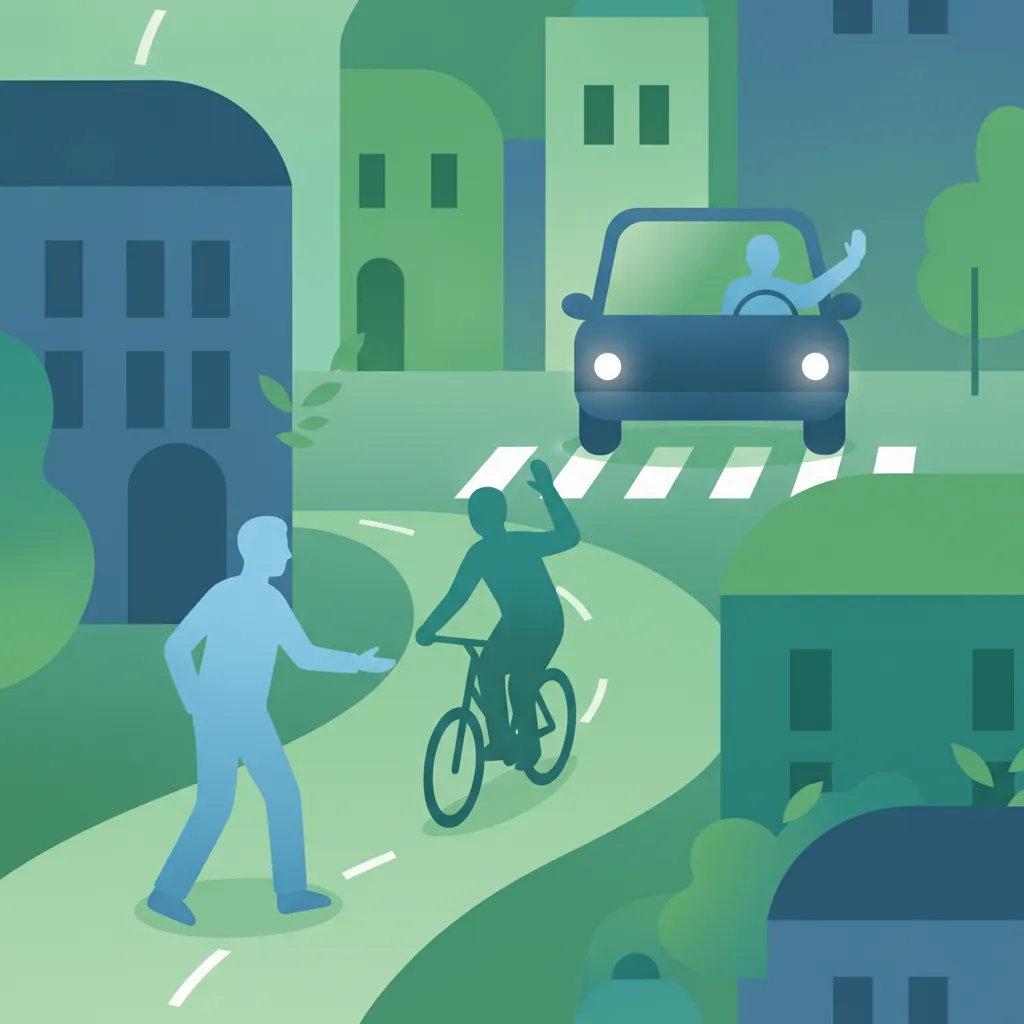
Browse all lessons that make up Road Users, Core Behaviour Rules and Safe Communication. Each lesson focuses on specific topics, learning objectives, and core concepts, helping you build essential knowledge and follow a clear, structured progression toward your study goals in Switzerland.
This lesson delineates the various categories of road users on Swiss roads, highlighting their specific rights and responsibilities. It explains the legal hierarchy that determines priority at intersections and in shared spaces. The content also discusses the unique considerations for vulnerable users, such as children, emphasizing the need for heightened caution.
This lesson introduces the core behaviour rules governing safe communication, focusing on the use of signals, mirrors, and eye contact. It emphasizes the importance of timely indicator usage and the correct procedure for checking mirrors and blind spots. The content also covers non-verbal communication cues that help convey intent and foster predictable traffic flow.
This lesson focuses on the rules governing interactions with public transport vehicles like buses and trams. It explains the priority given to these vehicles at stops and the use of dedicated lanes. Additionally, the content covers tram track crossing procedures and correct vehicle positioning near public transport stops to ensure safety.
This lesson explores the specific considerations for cyclists and pedestrians, who are among the most vulnerable road users. It covers the proper use of bicycle lanes, the minimum safe overtaking distance for cyclists, and the legal requirements for yielding at pedestrian crossings. The content reinforces the need for heightened vigilance around these users.
This lesson contrasts the interaction dynamics between road users in urban and rural environments, highlighting differing challenges. It discusses the higher density of pedestrians and cyclists in cities versus the presence of agricultural vehicles and wildlife in rural areas. You will learn how speed limits, visibility, and road layout impact safe interactions.
Explore high-intent keywords and long-tail search topics learners use when researching Road Users, Core Behaviour Rules and Safe Communication. These terms reflect how people search for reliable study materials, structured explanations, and unit-level theory preparation support in Switzerland.
Find clear answers to the most common questions learners ask about Road Users, Core Behaviour Rules and Safe Communication. Understand how the unit is organized, what learning goals it supports, and how it contributes to your study progression with structured explanations and practical guidance tailored for learners in Switzerland.
In Switzerland, there's a general hierarchy prioritizing pedestrians, followed by cyclists, then public transport, and finally motor vehicles. This unit details how this priority applies in various scenarios, ensuring you understand who yields to whom at different points on the road and how to navigate these interactions safely.
The theory test includes questions that present scenarios requiring you to interpret the actions and intentions of other road users, such as a cyclist signalling a turn or a pedestrian preparing to cross. You'll need to demonstrate knowledge of the appropriate response according to Swiss traffic law and safe driving practices.
Public transport, especially trams, often has priority. This unit explains the specific rules regarding yielding to trams, especially when they are entering or leaving stops, or at intersections. Understanding these rules is critical for both safety and exam success in Switzerland.
Urban environments often have more complex interactions involving a higher density of pedestrians, cyclists, and public transport. Rural roads might involve slower-moving agricultural vehicles or different visibility challenges. This unit highlights these distinctions so you can adapt your behaviour and communication appropriately in each setting.
Yes, while formal signals might be limited, understanding gestures, eye contact, and predictable behaviour is key. This unit covers how to anticipate actions based on common cyclist signals (like hand gestures) and pedestrian intentions (like looking for traffic), crucial for preventing accidents.
Failing to adhere to these rules can lead to accidents, injuries, and legal penalties, including fines and demerit points. During your probationary period, serious violations can even lead to the extension of this phase or licence revocation. Proper understanding is vital for safety and compliance.
All included lessons
Lessons in Road Users, Core Behaviour Rules and Safe Communication
See who benefits most from studying Road Users, Core Behaviour Rules and Safe Communication. This overview explains how the unit supports different learning needs, what level of knowledge is helpful before starting, and how it fits into the overall study path in Switzerland.
This unit is crucial for all learner drivers preparing for the Swiss Category B theory exam. It is particularly beneficial for those who need to solidify their understanding of how different road users interact and the specific rules governing these encounters. It's also helpful for anyone wanting to improve their awareness and predictive skills on the road.

Begin your structured preparation for the official Swiss driving licence theory test today. Browse our comprehensive curriculum, choose your ideal course, and start mastering essential traffic laws, road signs, and practical driving knowledge with confidence.
Browse Swiss Theory CoursesExplore all units and lessons included in this driving theory course.
Begin your structured preparation for the official Swiss driving licence theory test today. Browse our comprehensive curriculum, choose your ideal course, and start mastering essential traffic laws, road signs, and practical driving knowledge with confidence.
Browse Swiss Theory Courses