
This group of signs in Switzerland dictates essential rules, informing drivers about mandatory restrictions on their access, vehicle type, speed, and more. Understanding these prohibitory signs is crucial for both passing your theory test and ensuring your safety and the safety of others on the road. This section will guide you through their meanings and typical traffic scenarios.
An explanation of how Swiss Prohibitory Signs road signs apply in real traffic situations in Switzerland. Learn where these signs are typically placed, what drivers are expected to do when they appear, and how correct reactions help you stay safe, avoid fines, and succeed in your Swiss driving theory exam.
Prohibitory signs are designed to impose binding rules and limitations on traffic. You will encounter these signs frequently in various situations across Switzerland. Signs like 'No Entry' (2.02) or 'No entry for vehicular traffic' (2.02) are often placed at the start of one-way streets going the wrong way or at road closures. Others, such as those prohibiting specific vehicle types like 'Prohibition of large goods vehicles' (2.07) or 'Prohibition of buses' (2.08), are used to manage traffic flow on narrow roads, in residential areas, or on bridges with weight limits. Signs indicating maximum dimensions like 'Maximum width' (2.18) or 'Maximum height' (2.19) are critical for ensuring vehicles can safely pass under bridges, through tunnels, or on specific routes. Speed restrictions (often combined with other prohibitory signs or appearing separately), weight limits ('Maximum weight' 2.16, 'Axle weight' 2.17), and parking/stopping prohibitions are common in urban areas, near schools, and on busy roads to maintain safety and traffic order. Drivers must actively look for these signs and comply with the restrictions from the point they are displayed or within the defined zone.
An overview of the key learning outcomes when studying the Swiss Prohibitory Signs road sign category. Understand the main concepts, sign meanings, and traffic situations covered here so you can recognise patterns, answer theory questions more confidently, and build a solid foundation for safe driving in Switzerland.
Focus on Swiss prohibitory road signs to understand binding restrictions on access, vehicle types, speed, and manoeuvres. Studying these signs together aids recognition and ensures compliance with Swiss traffic laws, crucial for your theory test revision and safe driving. Learn to identify what applies to you and obey from the sign's context.
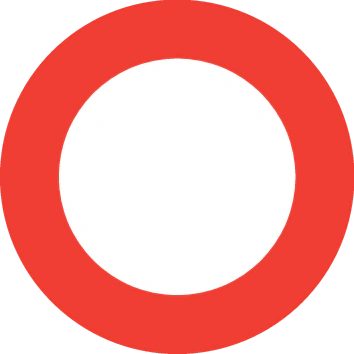
Sign 2.01 clearly prohibits all vehicle traffic in both directions.
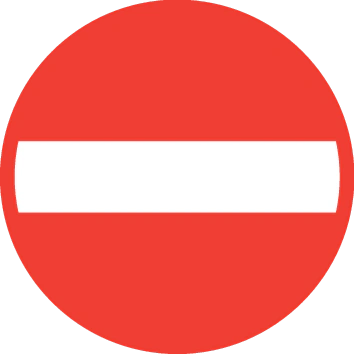
Understand the 'No Entry for Vehicular Traffic' Road Sign (2.02)
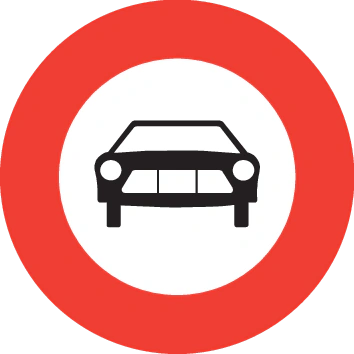
Swiss Road Sign 2.03: Motor Vehicle Prohibition Ahead
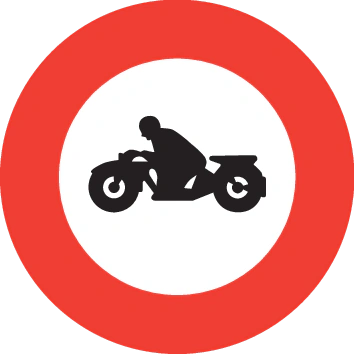
What does the 'Prohibition of Motorcycles' (2.04) sign mean for drivers?
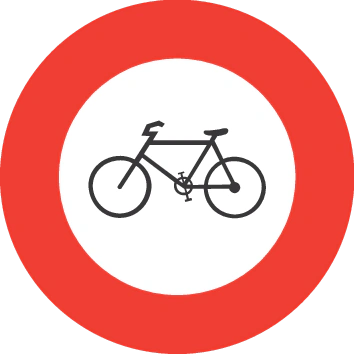
Prohibition of Bicycles and Mopeds Ahead Sign (2.05)
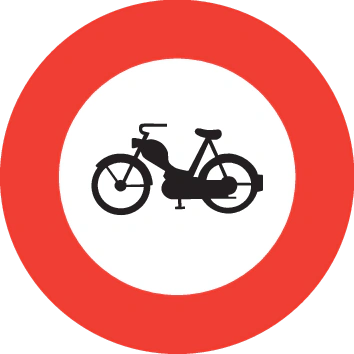
2.06 Prohibition of Mopeds: Mopeds Not Allowed Here
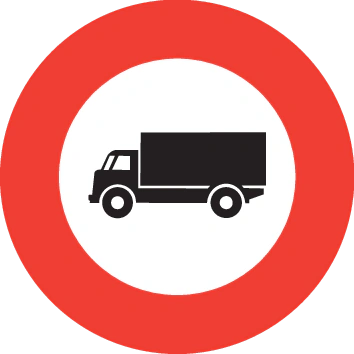
Swiss Road Sign 2.07: No Large Goods Vehicles Over 3.5 Tonnes Allowed Ahead
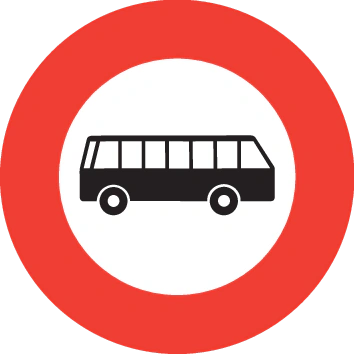
Understand the 'Prohibition of Buses' (2.08) Traffic Sign in Switzerland
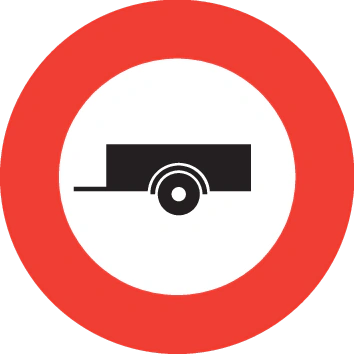
Beware of the 'Prohibition of Trailers' sign (2.09) – understand what vehicles are banned.
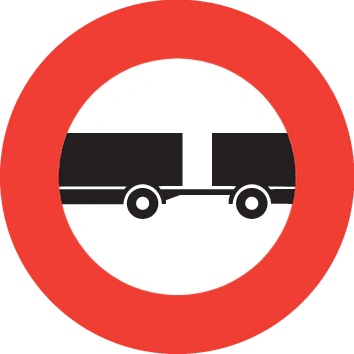
Understand the 'Prohibition of trailers' sign (2.09.1) with specific exceptions
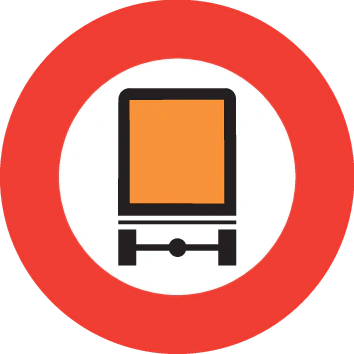
Understand the Prohibition for Vehicles Carrying Dangerous Goods
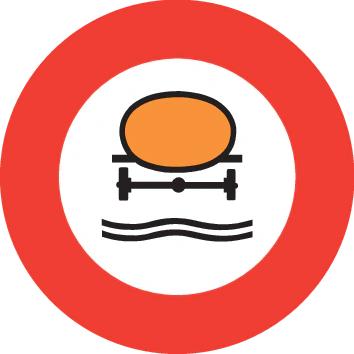
Understand the 'Prohibition of Vehicles Carrying Water Pollutants' Sign (2.11)
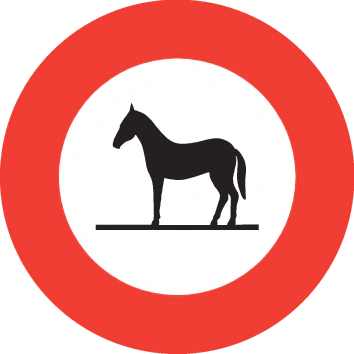
Understand the "Prohibition of Animals" (2.12) Road Sign in Switzerland
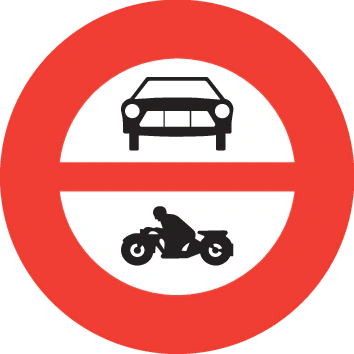
What does the 'Prohibition of Motor Vehicles and Motorcycles' sign mean for drivers in Switzerland?
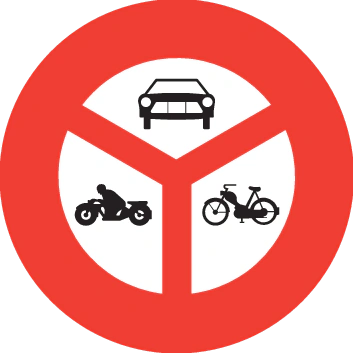
Understand the 'Prohibition of Motor Vehicles, Motorcycles, and Mopeds' Sign (2.14)
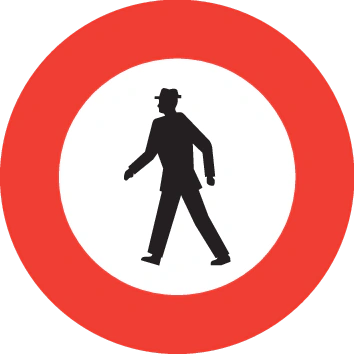
Road Sign 2.15: Pedestrians Are Prohibited on This Road Section
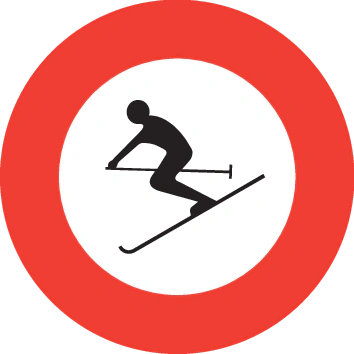
Understand the 'Prohibition of Skiing' Road Sign (2.15.1)
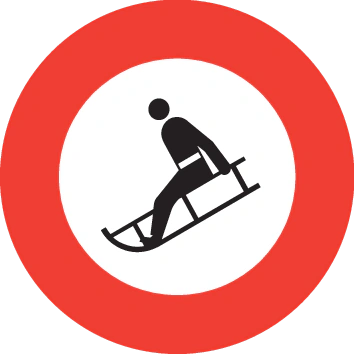
Understand the 'Prohibition of Sledging' Sign (2.15.2) in Switzerland
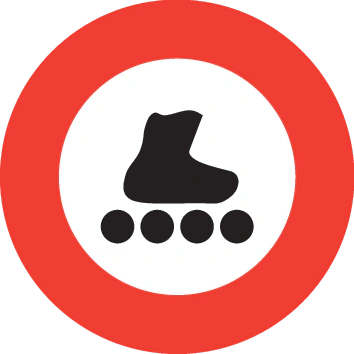
This sign prohibits personal transport devices like scooters and skateboards.
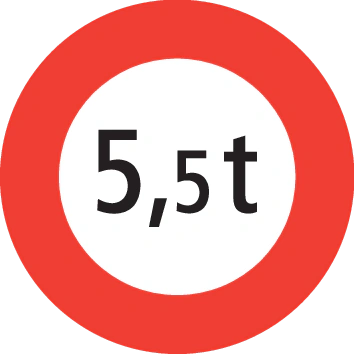
Understand the 'Maximum Weight' prohibitory sign (2.16) in Switzerland
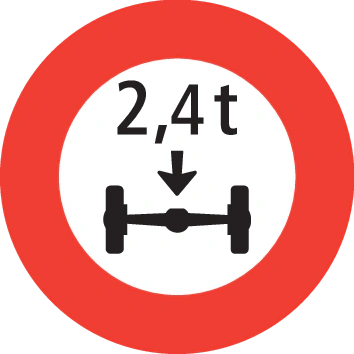
Understand the "Axle Weight (Upper Limit)" Road Sign (2.17) in Switzerland
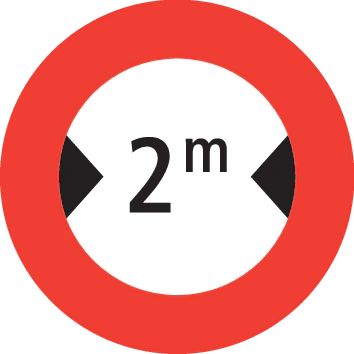
Understand the 2.18 Maximum Width prohibitory road sign
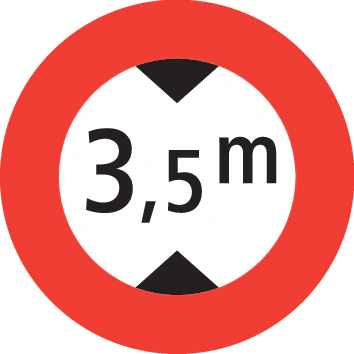
Understand the "Maximum Height" Prohibitory Road Sign (2.19) in Switzerland
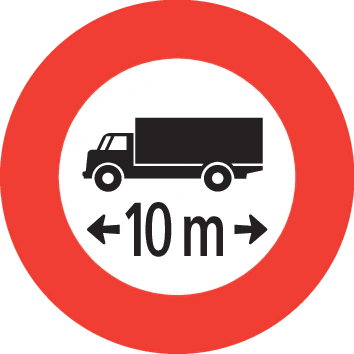
Understand the 'Maximum length (total length, including trailers)' prohibitory road sign (2.20).
Clear answers to common questions about the Swiss Prohibitory Signs road sign category. Use this FAQ to review tricky rules, understand how these signs appear in exam scenarios, and remove confusion that often leads to mistakes in the Swiss driving theory exam in Switzerland.
Warning signs alert you to potential hazards ahead, like a sharp curve or a pedestrian crossing, advising you to be cautious. Prohibition signs, on the other hand, impose a mandatory restriction or rule that you must follow, such as 'No entry', a speed limit, or a weight restriction. Ignoring prohibition signs can lead to fines and penalties.
Generally, weight restrictions often refer to the total gross weight of the vehicle and any trailer combined. However, specific signs like 'Prohibition of trailers' (2.09) or 'Prohibition of large goods vehicles' (2.07) have precise meanings. For a '3.5 tonnes' limit, you need to check the specific regulations but often, if your car plus trailer exceeds this, you would be prohibited. It's best to be aware of the exact definition of 'vehicle weight' as it applies to the specific sign.
When multiple prohibition signs are displayed together, all of them apply simultaneously. For example, you might see a sign for 'Maximum height' and another for 'Maximum width'. You must adhere to both restrictions to proceed safely and legally. Always assess all applicable signs before continuing.
Prohibitory signs can be either permanent or temporary. Permanent signs (often without a supplementary plate indicating a duration) are usually mounted on poles and indicate long-term restrictions. Temporary signs, often orange or yellow, are used for specific situations like road works or events and indicate restrictions that are only in effect for a limited period. You must obey both types.
'No entry for vehicular traffic' (2.02) typically means that vehicles are forbidden to enter a particular road or area from the direction the sign is facing. It's often seen at the start of one-way streets where entry is forbidden. 'Prohibition of all vehicular traffic in both directions' (2.01) indicates that no vehicles are allowed to proceed in either direction on that road, effectively closing it to all traffic from both ends.
Dive into the organized structure of Swiss road sign categories to enhance your driving theory knowledge. Explore each group, understand common contexts, and test your understanding of official traffic signs, from mandatory commands to specific hazard warnings. Build a solid foundation for your upcoming theory exam with confidence.
Swiss Road Sign Categories