
Slippery roads present a significant hazard, reducing your vehicle's ability to accelerate, steer, and brake effectively. This section details the common causes of reduced traction, such as ice, snow, rain, and loose debris. Mastering safe driving techniques for these conditions is essential for passing your Swiss driving theory exam and ensuring safety on Swiss roads.
Theory topic content overview
Read the full theory topic guide for Slippery Roads & Traction with structured, easy-to-scan content built for learners in Switzerland. This detailed section explains the exact rule, meaning, traffic context, comparison points, and exam logic behind this Swiss driving theory topic so you can study faster, understand the concept more clearly, and avoid common interpretation mistakes on the theory test.
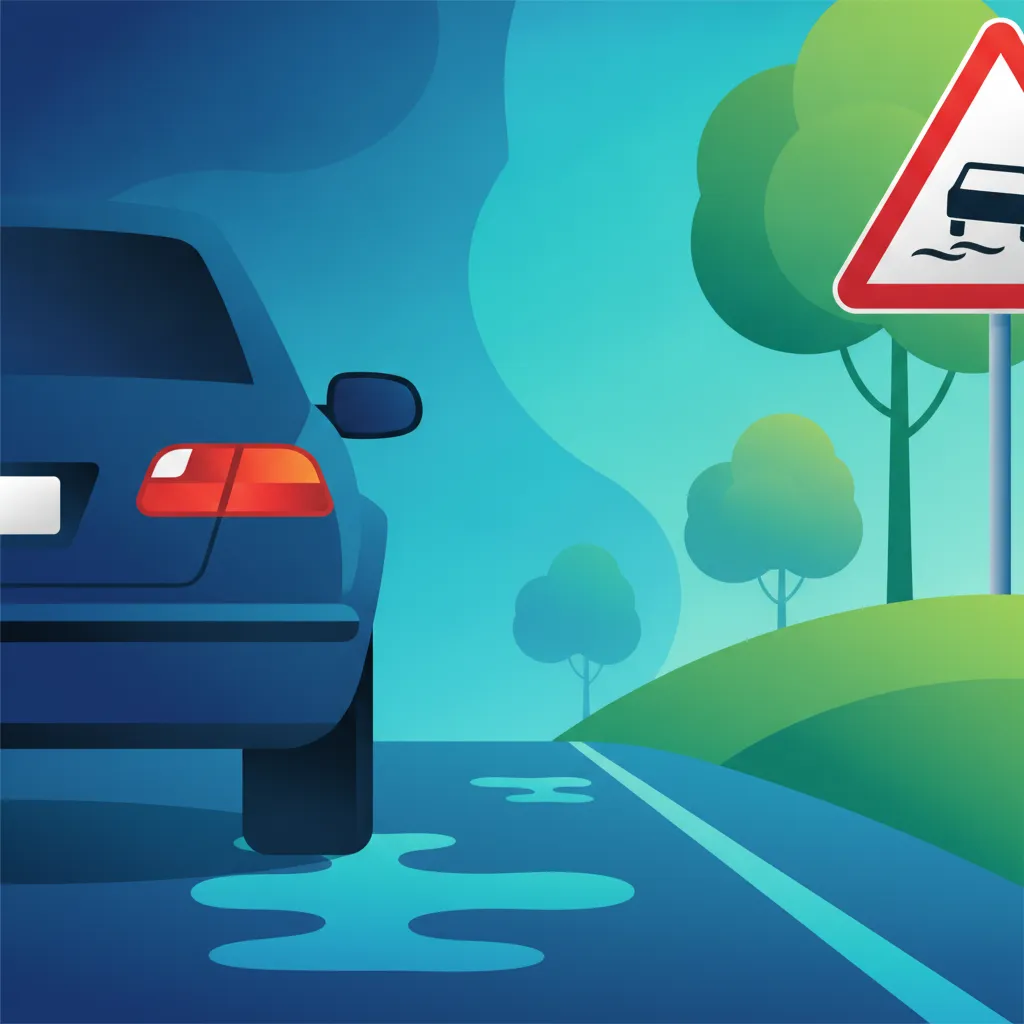
Slippery roads occur when the crucial friction, or traction, between your vehicle's tyres and the road surface is significantly reduced. This loss of grip means your tyres can't effectively "bite" into the road, making it harder to control the vehicle's movement. Essentially, less traction equals less control over steering, braking, and acceleration.
Imagine a direct relationship: the more traction your tyres have, the more effectively you can command your vehicle. When conditions reduce this traction, your driving inputs – even gentle ones – can lead to unintended consequences like skidding or extended braking distances.
In Switzerland, understanding and adapting to slippery road conditions is not just a safety recommendation; it's a fundamental aspect of safe driving and a critical part of the Swiss driving theory exam. The country's diverse topography, featuring everything from flat lowlands to steep alpine passes, means drivers frequently encounter varied and rapidly changing weather conditions.
Misjudging reduced grip roads is a leading cause of accidents. The sudden onset of rain, snow, or ice, often combined with varying road surfaces and steep gradients, demands heightened awareness and precise vehicle control. For theory learners, the exam frequently probes your understanding of how to react safely to slippery conditions and prevent loss of control.
Many factors can turn a safe road into a hazardous, low-grip surface:
When tyres lose grip, the fundamental forces that allow you to drive safely are compromised:
The core principle for safe driving on slippery roads is smoothness and anticipation. Here’s how to adapt your driving:
A "skid" is essentially an uncontrolled slide caused by a loss of traction. Understanding different types of skids helps in prevention and recovery:
Learners and experienced drivers alike can make crucial errors when faced with low-grip conditions:
Driving in Switzerland means being prepared for a unique set of challenges related to slippery roads:
Remember this simple rule for all slippery road conditions: Drive Smooth and Drive Slow. Consistently monitor the road surface for changes, anticipate hazards, and ensure every input you make to your vehicle is gentle and deliberate. Your vigilance and adaptability are your best defences against the hazards of reduced traction and will keep you safe on Swiss roads.
Slippery roads occur when tyre traction is reduced by ice, snow, rain, oil, or loose materials, making vehicle control significantly harder. The core principle for safe driving on low-grip surfaces is to drive smoothly and slowly—reducing speed substantially, increasing following distance, and making only gentle inputs to steering, braking, and acceleration. In Switzerland, the diverse alpine terrain means conditions can change rapidly, requiring constant hazard awareness and appropriate preparation including winter tyres and snow chains where mandated. Understanding skid types and recovery techniques, along with recognising that electronic safety systems assist but cannot overcome physics, is essential for both safe driving and passing the Swiss theory exam.
A short set of high-value points that capture the most important ideas from this theory explanation.
Slippery roads reduce the friction between tyres and the road surface, compromising steering, braking, and acceleration control
Speed reduction is the single most important adjustment when encountering low-grip conditions
Black ice (Glatteis) forms a nearly invisible thin layer commonly on bridges, shaded areas, and tunnel entrances/exits
All vehicle inputs—steering, braking, and acceleration—must be smooth and gentle on slippery surfaces
Swiss alpine roads can change from dry to icy within kilometres, requiring constant vigilance and adaptability
Light rain can be more dangerous than heavy rain because it mixes with oil, dust, and rubber residue creating a slick film
ABS and ESP assist drivers but cannot create traction where none exists—physics still applies
Winter tyres marked M+S or 3PMSF are recommended in Switzerland from October to Easter, and blue signs indicate mandatory snow chain routes
Engine braking helps control speed on descents without relying solely on friction brakes that can lock wheels
Following distance should be doubled or tripled on slippery surfaces to accommodate increased braking distances
Overconfidence in vehicle safety systems like ABS and ESP, believing they eliminate the need for careful driving
Underestimating black ice danger by assuming roads look safe when they may have invisible ice
Failing to increase following distance adequately, reducing ability to react to hazards
Making abrupt or sudden inputs with steering, brakes, or accelerator that break traction even at moderate speeds
Reducing speed insufficiently for the actual level of grip available, not matching speed to conditions
Start with a short, direct summary of Slippery Roads & Traction before reading the full explanation below.
Slippery roads occur when friction between tires and the road surface is significantly reduced by factors like ice, snow, water, oil, or loose gravel. This loss of traction makes vehicle control challenging, increasing the risk of skidding and longer braking distances. Drivers must reduce speed, increase following distance, and apply smooth inputs to steering, braking, and acceleration to maintain control and safety, especially on varied Swiss terrain.
Review the most important terms, rule signals, and traffic concepts linked to Slippery Roads & Traction.
Explore related theory topic pages connected to Slippery Roads & Traction and continue with the next useful rule explanation.
See the common search queries learners use when trying to understand Slippery Roads & Traction in Switzerland.

Continue your preparation by exploring specific Swiss traffic rules, road signs, and essential driving concepts. Strengthen your knowledge of official legislation and practical application to ensure complete readiness for your driving licence theory examination.
Explore Swiss Driving Theory TopicsTheory topic content overview
A short set of high-value points that capture the most important ideas from this theory explanation.
Slippery roads reduce the friction between tyres and the road surface, compromising steering, braking, and acceleration control
Speed reduction is the single most important adjustment when encountering low-grip conditions
Black ice (Glatteis) forms a nearly invisible thin layer commonly on bridges, shaded areas, and tunnel entrances/exits
All vehicle inputs—steering, braking, and acceleration—must be smooth and gentle on slippery surfaces
Swiss alpine roads can change from dry to icy within kilometres, requiring constant vigilance and adaptability
Light rain can be more dangerous than heavy rain because it mixes with oil, dust, and rubber residue creating a slick film
ABS and ESP assist drivers but cannot create traction where none exists—physics still applies
Winter tyres marked M+S or 3PMSF are recommended in Switzerland from October to Easter, and blue signs indicate mandatory snow chain routes
Engine braking helps control speed on descents without relying solely on friction brakes that can lock wheels
Following distance should be doubled or tripled on slippery surfaces to accommodate increased braking distances
Overconfidence in vehicle safety systems like ABS and ESP, believing they eliminate the need for careful driving
Underestimating black ice danger by assuming roads look safe when they may have invisible ice
Failing to increase following distance adequately, reducing ability to react to hazards
Making abrupt or sudden inputs with steering, brakes, or accelerator that break traction even at moderate speeds
Reducing speed insufficiently for the actual level of grip available, not matching speed to conditions
Start with a short, direct summary of Slippery Roads & Traction before reading the full explanation below.
Slippery roads occur when friction between tires and the road surface is significantly reduced by factors like ice, snow, water, oil, or loose gravel. This loss of traction makes vehicle control challenging, increasing the risk of skidding and longer braking distances. Drivers must reduce speed, increase following distance, and apply smooth inputs to steering, braking, and acceleration to maintain control and safety, especially on varied Swiss terrain.
Review the most important terms, rule signals, and traffic concepts linked to Slippery Roads & Traction.
Explore related theory topic pages connected to Slippery Roads & Traction and continue with the next useful rule explanation.
See the common search queries learners use when trying to understand Slippery Roads & Traction in Switzerland.
Continue your preparation by exploring specific Swiss traffic rules, road signs, and essential driving concepts. Strengthen your knowledge of official legislation and practical application to ensure complete readiness for your driving licence theory examination.
Explore Swiss Driving Theory TopicsUse this exam-focused revision tip to understand how Slippery Roads & Traction is likely to appear in theory questions for learners in Switzerland. This section helps you identify the most testable part of the rule, avoid common traps, and remember the concept more effectively during Swiss driving theory exam preparation.
In the Swiss theory exam, questions on slippery roads often focus on safe driving adjustments: always reduce speed, increase following distance, and use gentle controls. Watch out for specific hazards like black ice or sudden changes in road surface, especially in mountainous areas or tunnels where conditions can change rapidly.
Read direct answers to the most common learner questions about Slippery Roads & Traction in Switzerland. This FAQ focuses on rule confusion, practical meaning, comparison with similar concepts, and the exact uncertainties that appear most often in Swiss driving theory revision and exam preparation.
A road becomes slippery when there's a significant reduction in friction between your vehicle's tires and the road surface. Common causes include water, ice, snow, oil, loose gravel, or even wet leaves.
Reduced traction dramatically increases your braking distance, meaning it takes longer and further to stop. It also increases the risk of your wheels locking up and the vehicle skidding.
If your car skids, remain calm. Steer gently in the direction you want the front of the car to go, take your foot off the accelerator, and avoid sudden braking. Counter-steer smoothly as the car regains grip.
Yes, Swiss roads, especially in mountainous or alpine regions, can quickly become icy or snow-covered in winter. Rain mixed with city grime can also create very slick surfaces. Tunnels can also have specific drainage issues.
The most important rule is to reduce your speed significantly and apply all controls (steering, braking, acceleration) very smoothly and gradually. Maintain a much larger following distance than usual.
Yes, fallen leaves, especially when wet, can create a surprisingly slippery layer on the road surface, similar to oil or ice. They reduce tire grip and can conceal other hazards.
Specialized tires like winter tires (M+S marked) have unique tread patterns and rubber compounds designed to provide better grip on snow and ice. All tires should have adequate tread depth for safe driving on wet or slippery surfaces.
Not always. Black ice, for example, is nearly invisible and extremely dangerous. Always be vigilant for temperature drops, shaded areas, bridges, and signs of moisture or debris, which can indicate slippery conditions.
Pinpoint specific Swiss traffic rules, road signs, or driving situations you need to master. Use the practice search to start a focused revision session now and build confidence for your official driving theory exam.