
Delve into the core principles of Swiss driving theory, covering all essential traffic legislation, road signs, and practical concepts required for the official Swiss driving licence test. Gain a solid understanding of priority rules, speed limits, specific motorway regulations, and safe driving practices across Switzerland's diverse road conditions. This hub clarifies complex topics, preparing you thoroughly for success.
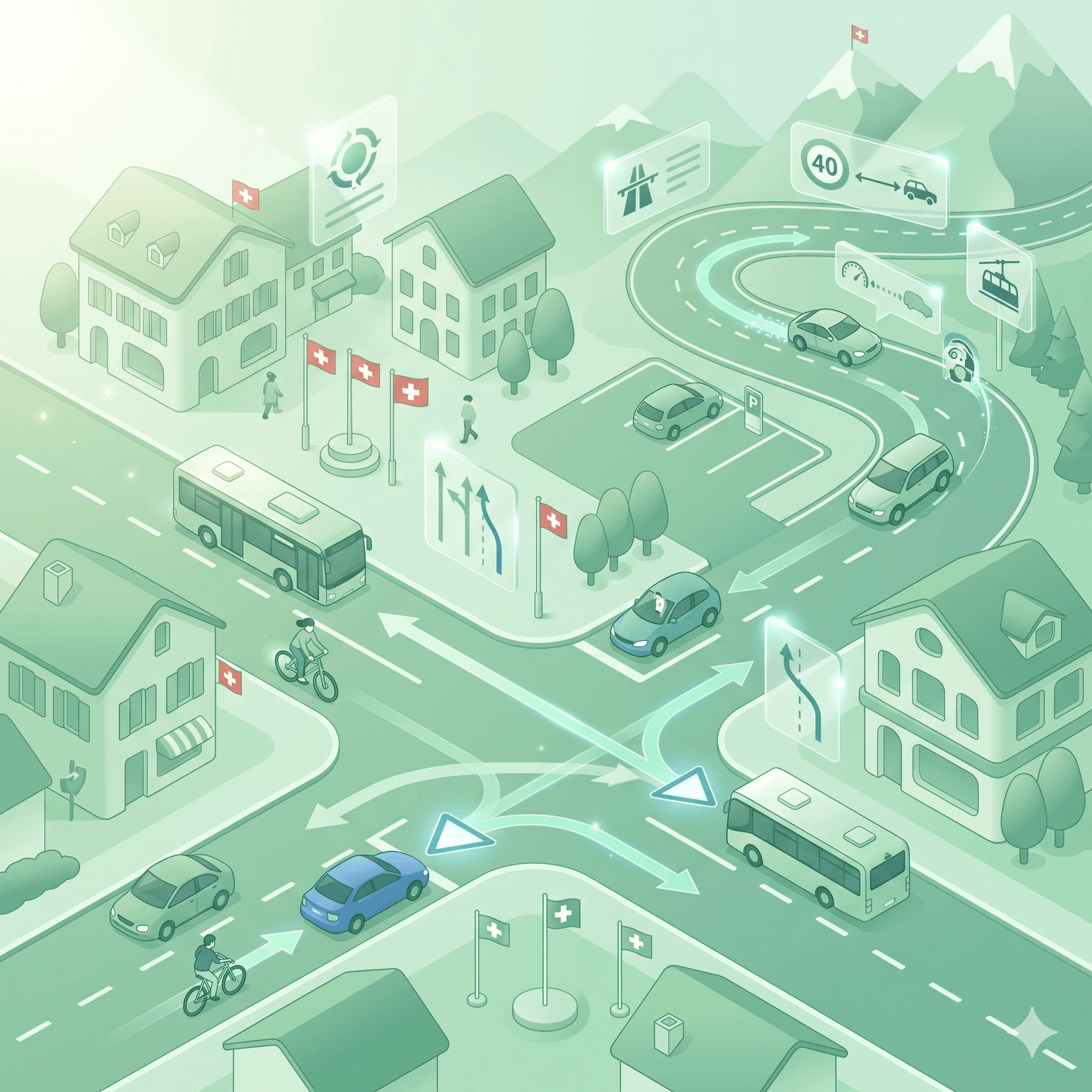
Our structured subject directory allows you to focus on critical areas like official traffic rules, hazard perception, and complex priority situations. Navigate through specific topics to build a robust understanding of Swiss road signs and safety standards.
12 topics
7 topics
7 topics
5 topics
3 topics
3 topics
2 topics
1 topic
1 topic
1 topic
1 topic
1 topic
Easily find and study essential Swiss driving theory topics, from road signs to traffic rules, to prepare effectively for your exam. Browse subjects or use search to clarify specific concepts and boost your exam study.
Filter by category
7 theory topics found

Operating a vehicle in Switzerland demands full concentration. Any use of a mobile phone while driving, whether talking, texting, or navigating, diverts essential attention from the road and significantly impairs your driving ability. This page details the various forms of distraction caused by mobile phones and their severe consequences, emphasizing why Swiss traffic law strictly prohibits handheld phone use.

Driving at night significantly alters the conditions you face on the road. Reduced light makes it harder to spot pedestrians, animals, cyclists, or obstacles, directly impacting your reaction time. In Switzerland, this is particularly important on winding alpine roads or poorly lit rural routes where conditions can change rapidly. Understanding how to manage these risks is essential for both your theory exam and real-world safety.

Hazard perception is the ability to continuously scan your surroundings and identify potential dangers before they develop into emergencies. This proactive skill is fundamental for safe driving in Switzerland, enabling you to anticipate the actions of other road users, react in time, and avoid risky situations. It involves more than just seeing; it's about understanding what you see and predicting future events.

Safe following distance is the essential space you maintain between your vehicle and the one ahead to react to sudden events and brake without collision. In Switzerland, understanding this concept is vital for both everyday safety and the driving theory exam, as it directly impacts your ability to avoid accidents and respond to changing road conditions. Always adapt your distance to speed, traffic flow, and environmental factors like weather and visibility.
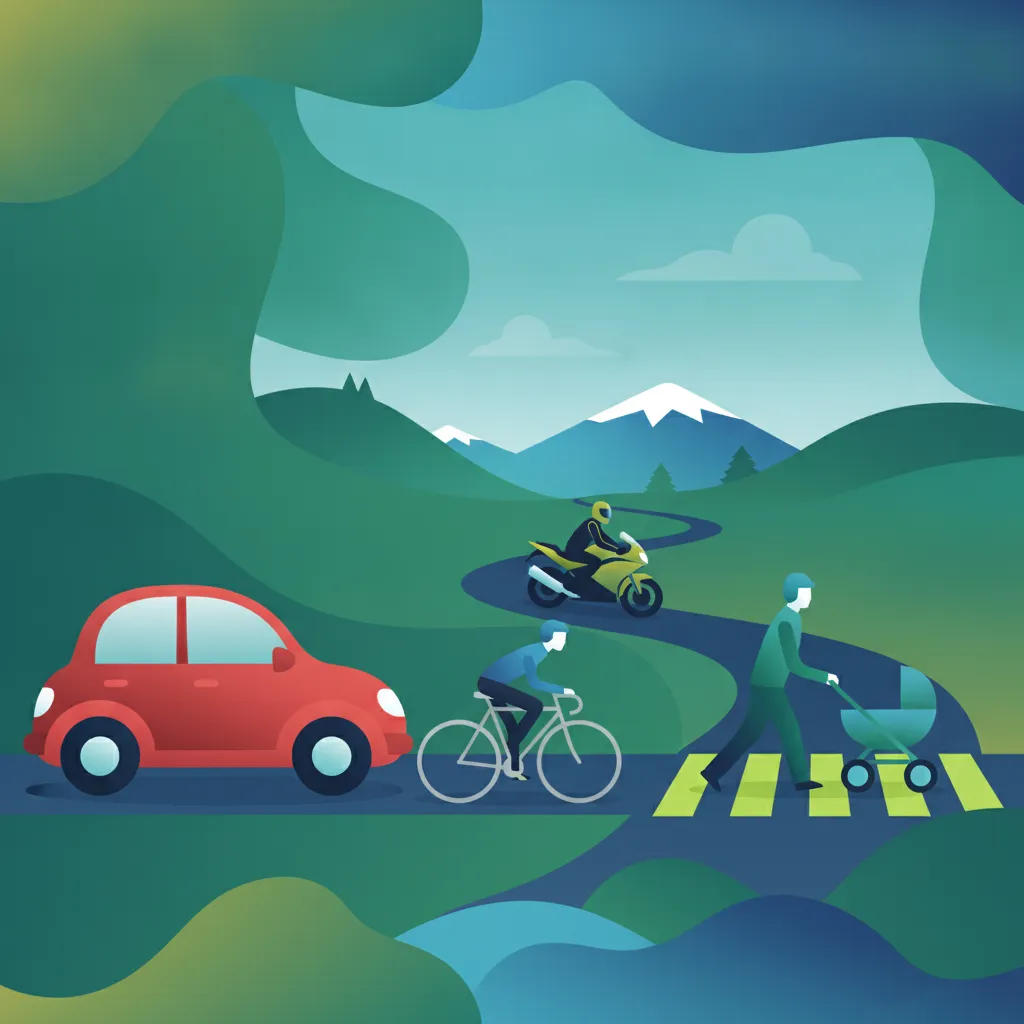
Swiss roads are shared spaces, meaning drivers must constantly interact with a variety of road users, each with unique characteristics and vulnerabilities. This guide explains how to adapt your driving behavior, maintain awareness, and show cooperation to ensure safety for everyone, especially pedestrians, cyclists, and motorcyclists. Understanding these principles is vital for both your theory exam and real-world driving.
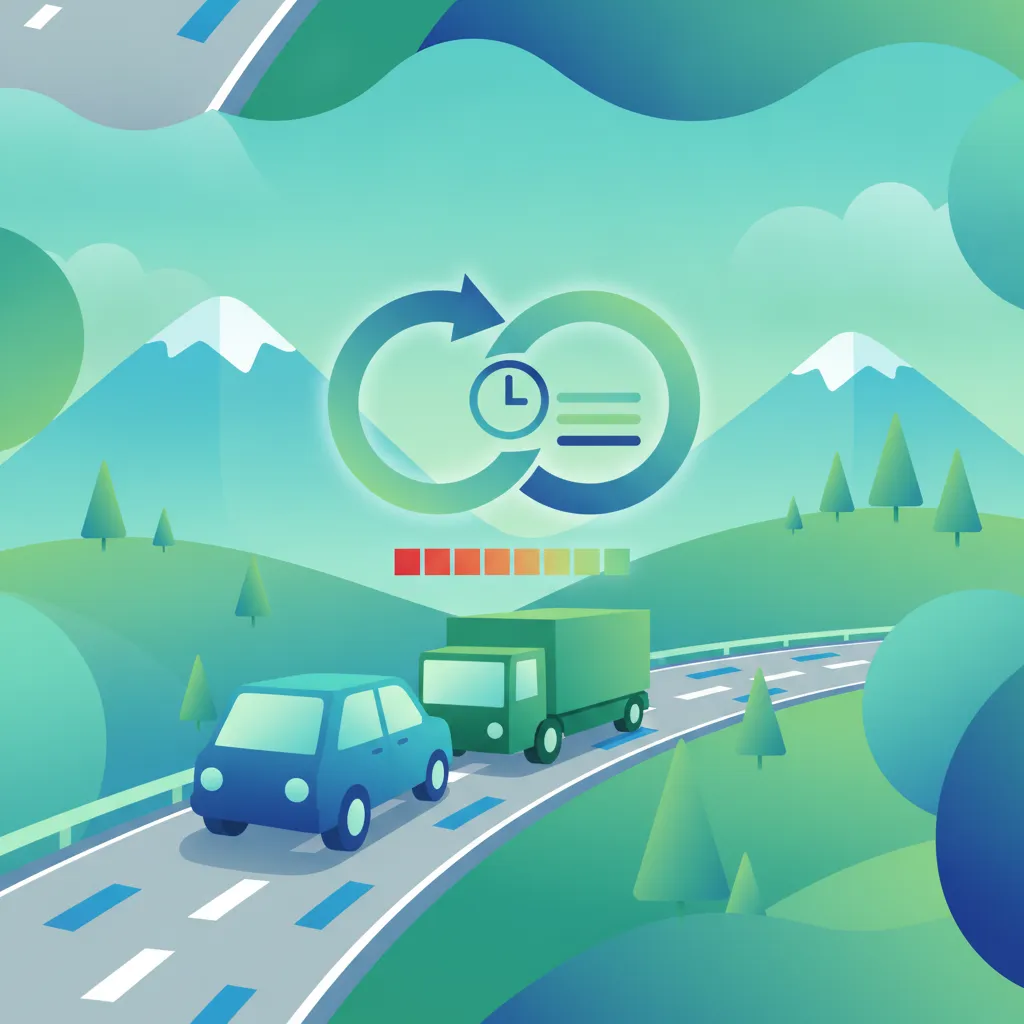
Tailgating, or following too closely, is a significant cause of accidents on Swiss roads. This page explains why keeping a safe distance is essential, detailing how reaction time and braking distance impact the space you need. Mastering safe following practices is fundamental for every driver in Switzerland.
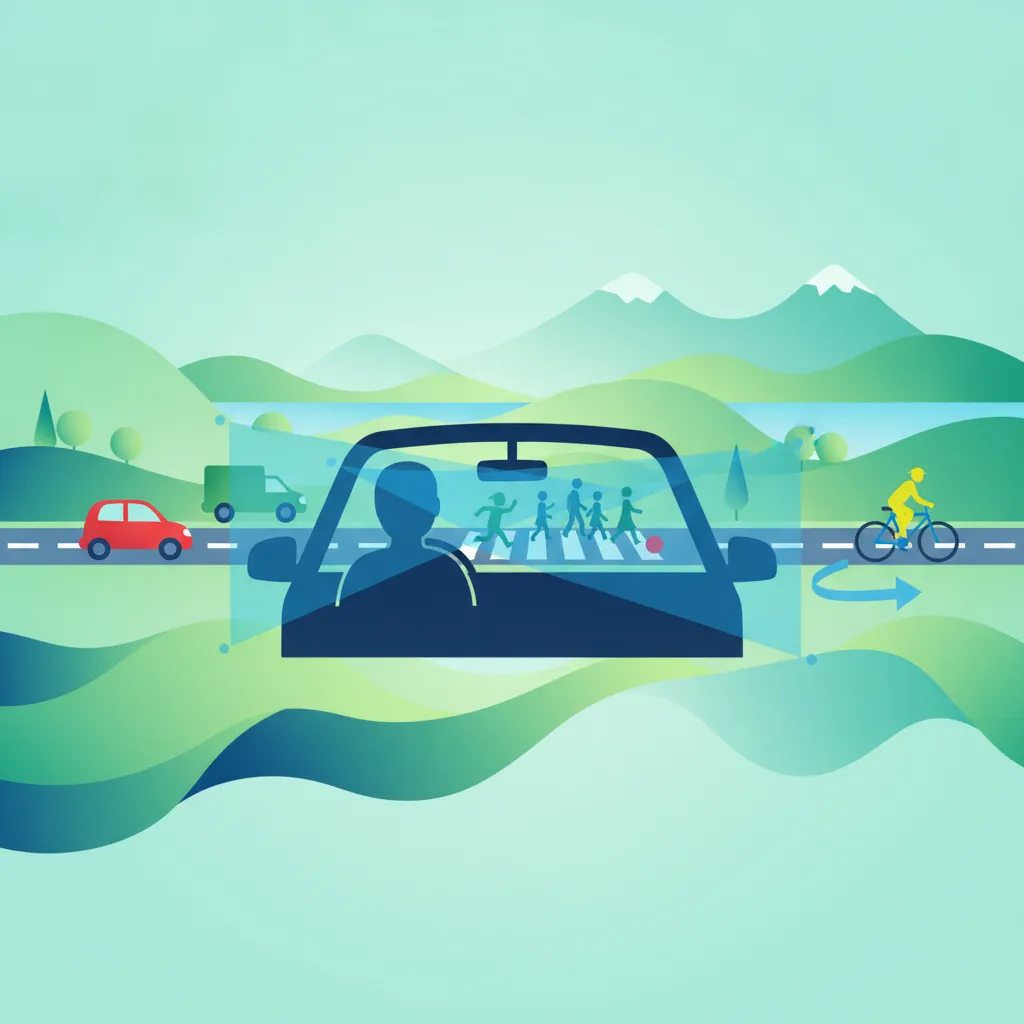
Defensive driving is a crucial approach that shifts focus from merely reacting to hazards to actively anticipating them. This concept emphasizes constant awareness, predicting potential risks, and adapting your driving to create a safety buffer. For drivers in Switzerland, understanding these principles is fundamental for navigating diverse road conditions and ensuring safety for all road users.
Continue your learning journey by exploring more detailed articles on specific Swiss traffic regulations, hazard perception, or vehicle mechanics. Broaden your understanding with our expert guides to confidently pass your driving theory exam and become a proficient driver.
Explore Swiss Driving Theory Articles