Understanding how to manage the aftermath of a road accident is a crucial component of Turkish driving theory and the MTSK e-exam. This guide clarifies your legal responsibilities, from placing mandatory warning triangles to the correct timing for reporting incidents, helping you maintain safety while avoiding common exam errors.
Article content overview
Navigating the aftermath of a road traffic accident in Türkiye requires a calm, methodical approach that prioritizes human safety above all else. Under the 2918 Sayılı Karayolları Trafik Kanunu, drivers involved in or witnessing an incident have clear legal and ethical responsibilities. Understanding these rules is not only vital for road safety but is also a frequent subject of the MTSK e-sınav (e-exam), where correct procedural knowledge can mean the difference between passing and failing.
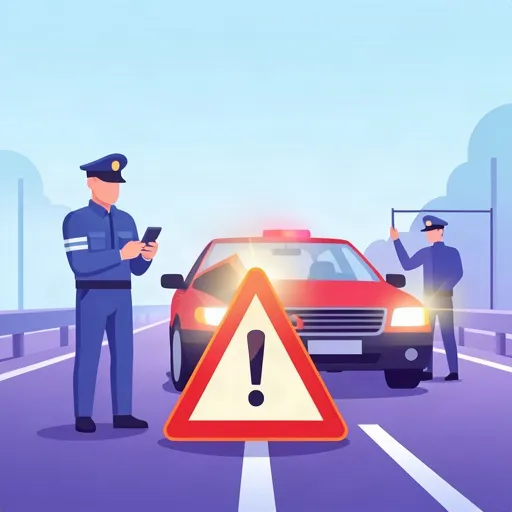
The most common error in MTSK theory exam scenario questions is the impulse to rush toward victims or attempt to move them immediately. In reality, your very first duty is to prevent secondary collisions and ensure the safety of everyone present. Before assessing any injuries, you must secure the area to create a protective buffer zone.
Never attempt to move an injured person unless there is an immediate, life-threatening danger such as an imminent risk of vehicle fire or explosion. Improper movement can result in permanent spinal injuries or aggravate existing trauma.
Once you have stopped your vehicle in a safe location, immediately activate your hazard warning lights. If the accident has occurred on a highway or a busy road, you must place reflective warning triangles at a distance that provides adequate warning to approaching traffic. In Türkiye, these triangles should be placed at least 150 meters behind the vehicle on high-speed roads to ensure oncoming drivers have sufficient time to react and slow down.
After the scene is secured and the immediate danger to traffic is minimized, you must determine whether the situation requires professional emergency intervention. In Turkey, the centralized emergency number 112 is the single point of contact for health, fire, and police services.
When speaking with 112, clarity is essential. Provide the exact location, the number of vehicles involved, and whether there are visible injuries. Following these steps ensures that emergency responders can deploy the correct resources to the scene as quickly as possible.
The MTSK exam frequently tests your understanding of safety priorities through "what-if" scenarios. A common distracter in these questions is the option to move an injured person or to remain in the vehicle without securing the scene. Always remember that the exam prioritizes the prevention of further accidents; if a choice includes "securing the scene and taking warning measures," it is almost always the correct answer.
A secondary accident occurs when a new collision happens at the site of a previous incident because the scene was not properly secured, warned, or cleared of hazards.
Maintaining proper traffic etiquette during an incident involves transparency and adherence to legal mandates. If the accident involves only minor material damage, drivers may fill out an agreed-upon accident report (Maddi Hasarlı Trafik Kazası Tespit Tutanağı). However, if there are injuries, fatalities, or if the drivers cannot reach a mutual agreement, you are legally obligated to wait for traffic police or the Jandarma to arrive and file an official report.
This article covers the critical legal and safety procedures drivers must follow after a traffic accident in Turkey according to the 2918 Sayılı Karayolları Trafik Kanunu. The primary lesson is that securing the accident scene to prevent secondary collisions always takes precedence over assisting victims. Drivers must activate hazard lights, place reflective triangles at least 150 meters behind the vehicle on highways, and call 112 if injuries are present. The article emphasizes that improper movement of injured persons can cause permanent spinal damage, and that the MTSK exam frequently tests whether candidates prioritize scene safety over immediate victim assistance. For material-damage-only accidents with mutual agreement, drivers can use the standard accident report form, but injury or fatality cases require official police documentation.
A short set of high-value points that capture the most important ideas from this article.
Scene safety always comes first: secure the area with hazard lights and reflective triangles before attempting to help anyone.
Reflective warning triangles must be placed at least 150 meters behind the vehicle on high-speed roads in Turkey.
Call 112 immediately when injuries are involved and provide your exact location, number of vehicles, and injury details.
Never move an injured person unless there is an immediate life-threatening danger like fire or explosion.
If only material damage occurred and drivers agree, complete the Maddi Hasarlı Trafik Kazası Tespit Tutanağı; otherwise wait for traffic police.
The single emergency number in Turkey is 112, which covers health, fire, and police services.
Under 2918 Sayılı Karayolları Trafik Kanunu, drivers have legal obligations not to leave accident scenes involving injury or death.
Secondary accidents occur when a scene is not properly secured, making scene safety the first priority over victim assistance.
Hazard warning lights must be activated immediately upon stopping at any accident location.
Police or Jandarma must be called if injuries, fatalities, or driver disagreement are involved.
Rushing to move or assist injured victims before securing the scene, which risks causing secondary collisions.
Placing warning triangles too close to the vehicle instead of the required 150-meter distance on high-speed roads.
Forgetting to activate hazard warning lights immediately after stopping.
Leaving the scene of an accident involving injuries before fulfilling legal reporting obligations.
Confusing material damage procedures with injury procedures and skipping the required notification steps.
Article content overview
A short set of high-value points that capture the most important ideas from this article.
Scene safety always comes first: secure the area with hazard lights and reflective triangles before attempting to help anyone.
Reflective warning triangles must be placed at least 150 meters behind the vehicle on high-speed roads in Turkey.
Call 112 immediately when injuries are involved and provide your exact location, number of vehicles, and injury details.
Never move an injured person unless there is an immediate life-threatening danger like fire or explosion.
If only material damage occurred and drivers agree, complete the Maddi Hasarlı Trafik Kazası Tespit Tutanağı; otherwise wait for traffic police.
The single emergency number in Turkey is 112, which covers health, fire, and police services.
Under 2918 Sayılı Karayolları Trafik Kanunu, drivers have legal obligations not to leave accident scenes involving injury or death.
Secondary accidents occur when a scene is not properly secured, making scene safety the first priority over victim assistance.
Hazard warning lights must be activated immediately upon stopping at any accident location.
Police or Jandarma must be called if injuries, fatalities, or driver disagreement are involved.
Rushing to move or assist injured victims before securing the scene, which risks causing secondary collisions.
Placing warning triangles too close to the vehicle instead of the required 150-meter distance on high-speed roads.
Forgetting to activate hazard warning lights immediately after stopping.
Leaving the scene of an accident involving injuries before fulfilling legal reporting obligations.
Confusing material damage procedures with injury procedures and skipping the required notification steps.
Explore related topics, search based questions, and concepts that learners often look up when studying Turkey Accident Reporting and Safety. These themes reflect real search intent and help you understand how this topic connects to wider driving theory knowledge in Turkey.
Find clear and practical answers to common questions learners often have about Turkey Accident Reporting and Safety. This section helps explain difficult points, remove confusion, and reinforce the key driving theory concepts that matter for learners in Turkey.
The first step is always to ensure scene safety by preventing secondary accidents. This includes using hazard lights and placing reflective warning triangles at the correct distance as mandated by law.
You must call 112 immediately if there are injuries, fatalities, or if the accident involves public property or other circumstances requiring police intervention, such as disputes between drivers.
No, you should not move an injured person unless there is an immediate, life-threatening danger such as an exploding vehicle or fire. Moving them incorrectly can significantly worsen their injuries.
Warning triangles are used to alert approaching traffic to the hazard ahead, thereby preventing secondary collisions and ensuring the safety of all individuals at the scene.
After finding the specific Turkish driving theory articles you need, dive deeper into related topics or challenge your knowledge with practice questions. Enhance your understanding of trafik işaretleri, road rules, and vehicle safety to ensure you are fully prepared for the official ehliyet sınavı.