
Understanding how to safely approach and exit toll-collecting infrastructure is a critical component of driving theory in Turkey. This guide explains the road rules and driver obligations required when interacting with motorway toll zones, ensuring you are prepared for both the e-sınav and your future on the road.
Article content overview
Driving on Turkey’s modern network of motorways, or "otoyol," requires more than just vehicle control skills; it requires a deep understanding of infrastructure regulations and payment protocols. For learner drivers preparing for the MTSK e-sınav, understanding how to interact with toll facilities is a critical part of the "traffic and environment" curriculum. These systems are designed to ensure the efficient flow of high-speed traffic, and failing to comply with lane discipline or signage at these points can result in significant traffic violations.
The HGS (Fast Pass System) is the primary electronic toll collection method used across Turkish motorways, bridges, and tunnels. From a regulatory perspective, every driver is legally responsible for ensuring their vehicle has a valid HGS account or tag with sufficient balance before entering a toll-restricted area. The theory exam often tests your knowledge of the driver's duty to maintain this compliance, emphasizing that toll roads are not merely optional routes but are governed by specific highway traffic laws that mandate payment.
A radio-frequency identification system that allows vehicles to pay tolls automatically while moving through designated lanes, requiring a pre-registered account associated with the vehicle's license plate.
Attempting to pass through toll gates without a valid, funded HGS tag is a violation of the Highway Traffic Law. In the context of the MTSK e-sınav, remember that the driver—not the vehicle—is responsible for ensuring all financial and regulatory requirements are met before starting a journey that involves motorways.
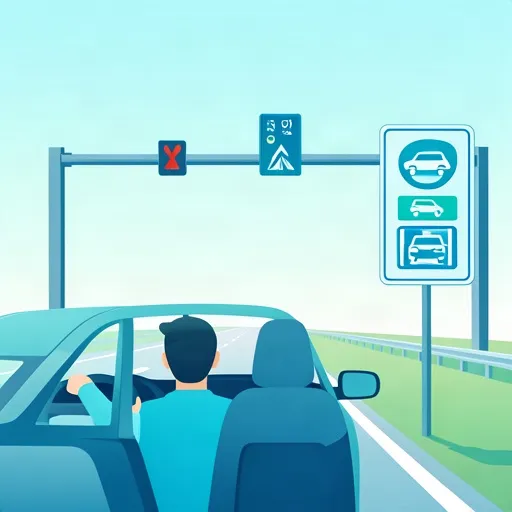
Approaching a toll plaza or an automated gate requires immediate adjustment of your driving behavior. You must observe the overhead signage carefully to choose the correct lane based on your vehicle class and payment status. Lane discipline is paramount; changing lanes abruptly within or near a toll zone is a common cause of accidents and is strictly prohibited by traffic regulations.
When you see signs directing you toward specific toll lanes, you should reduce your speed well in advance, maintain a safe following distance, and align your vehicle with the center of the lane. Many learner drivers make the mistake of waiting until the last second to switch lanes, which can confuse other motorists and violate the "lane usage" section of the Turkish driving theory curriculum.
Traffic signs on motorways are designed to give you ample warning about upcoming toll sections. Recognizing these early is a core competency for passing the e-sınav. You will often encounter informative signs that signify the start of a toll motorway section, which also serves as a reminder to check your HGS balance.
| Sign Type | Meaning | Action Required |
|---|---|---|
| Regulatory | Toll Road Start | Verify payment method availability |
| Informative | Distance to Toll Plaza | Begin lane selection process |
| Warning | Variable Speed Limit | Adjust speed to match electronic indicators |
On motorways and near toll gates, speed management is essential for safety. While motorways allow for higher speeds than urban roads, toll plazas are high-friction areas where sudden stops or slow-moving traffic are common. The MTSK theory exam frequently includes questions about "safe speed" versus "legal speed." Even if the road allows for a higher limit, you are legally required to reduce your speed to the marked limit when approaching toll collection infrastructure to account for potential congestion.
This guide covers the essential regulatory framework for Turkish toll roads, emphasizing that the HGS electronic system is the primary method for toll collection on motorways and the driver is legally accountable for payment compliance. Lane discipline at toll plazas is critical—drivers must select the correct lane well in advance and avoid abrupt maneuvers. Speed management near toll infrastructure requires adherence to variable limits displayed on overhead signs, not just the general motorway speed. Understanding these concepts prepares learners for the motorway-related sections of the MTSK e-sınav and ensures safe, lawful driving on Turkish toll roads.
A short set of high-value points that capture the most important ideas from this article.
The HGS (Hızlı Geçiş Sistemi) is the mandatory electronic toll collection system on Turkish motorways, bridges, and tunnels.
Drivers bear personal legal responsibility for ensuring their HGS account is valid and funded before entering any toll road.
Abrupt lane changes within or near toll zones are strictly prohibited and represent a common accident cause.
Toll plazas require early lane selection at least 500 meters before the toll gate, based on vehicle class and payment method.
Speed must be reduced to variable limits displayed on electronic overhead boards when approaching toll infrastructure.
The driver, not the vehicle, is legally responsible for toll payment compliance under Highway Traffic Law.
HGS lanes are specifically designated for vehicles with electronic tags; manual payment lanes exist for other vehicle types.
Warning signs appear at least 1 kilometer before toll plazas, giving drivers time to check balance and select lanes.
Toll Road Start signs serve as a reminder to verify payment method availability before proceeding.
Maintain center-lane position consistently until fully past the toll collection point to avoid violations.
Waiting until the last second to switch lanes when approaching a toll plaza, which violates lane usage rules.
Assuming that having a vehicle with an HGS tag automatically ensures compliance without checking the account balance.
Failing to reduce speed to the variable limit shown on overhead electronic boards near toll gates.
Not recognizing toll road signage early enough to prepare the correct payment method or lane choice.
Attempting to pass through HGS gates without a valid or funded tag, which constitutes a Highway Traffic Law violation.
Article content overview
A short set of high-value points that capture the most important ideas from this article.
The HGS (Hızlı Geçiş Sistemi) is the mandatory electronic toll collection system on Turkish motorways, bridges, and tunnels.
Drivers bear personal legal responsibility for ensuring their HGS account is valid and funded before entering any toll road.
Abrupt lane changes within or near toll zones are strictly prohibited and represent a common accident cause.
Toll plazas require early lane selection at least 500 meters before the toll gate, based on vehicle class and payment method.
Speed must be reduced to variable limits displayed on electronic overhead boards when approaching toll infrastructure.
The driver, not the vehicle, is legally responsible for toll payment compliance under Highway Traffic Law.
HGS lanes are specifically designated for vehicles with electronic tags; manual payment lanes exist for other vehicle types.
Warning signs appear at least 1 kilometer before toll plazas, giving drivers time to check balance and select lanes.
Toll Road Start signs serve as a reminder to verify payment method availability before proceeding.
Maintain center-lane position consistently until fully past the toll collection point to avoid violations.
Waiting until the last second to switch lanes when approaching a toll plaza, which violates lane usage rules.
Assuming that having a vehicle with an HGS tag automatically ensures compliance without checking the account balance.
Failing to reduce speed to the variable limit shown on overhead electronic boards near toll gates.
Not recognizing toll road signage early enough to prepare the correct payment method or lane choice.
Attempting to pass through HGS gates without a valid or funded tag, which constitutes a Highway Traffic Law violation.
Explore related topics, search based questions, and concepts that learners often look up when studying Toll Road Rules and Systems. These themes reflect real search intent and help you understand how this topic connects to wider driving theory knowledge in Turkey.
Find clear and practical answers to common questions learners often have about Toll Road Rules and Systems. This section helps explain difficult points, remove confusion, and reinforce the key driving theory concepts that matter for learners in Turkey.
Yes, understanding motorway regulations, including identification of toll signs and the obligation to use payment systems correctly, is included in the 'Traffic and Environment' section of the MTSK curriculum.
Drivers must look for specific lane indicators and signage that designate which lanes are active. Maintaining appropriate speed and following lane markings is essential for safety and compliance.
Yes, under the Turkish Highway Traffic Law, using toll roads requires the driver to possess a valid and sufficient balance in their electronic payment system, such as HGS, as part of legal traffic compliance.
While the payment system, such as HGS, remains consistent across the network, drivers must always pay close attention to specific speed limits and exit-signage requirements tailored to the motorway class they are traveling on.
After finding the specific Turkish driving theory articles you need, dive deeper into related topics or challenge your knowledge with practice questions. Enhance your understanding of trafik işaretleri, road rules, and vehicle safety to ensure you are fully prepared for the official ehliyet sınavı.