Understanding the specific responsibilities of bus and minibus drivers at passenger stops is a core requirement for any Category D license holder. This article explains the mandatory safety checks and legal procedures required before moving a vehicle away from a stop, helping you avoid common exam traps in the MTSK e-sınav. You will learn how to balance regulatory requirements with proactive safety measures to ensure passenger protection and compliance with Turkish traffic laws.
Article content overview
Operating a large passenger vehicle such as a bus or minibus requires a high level of responsibility, as the safety of both passengers and other road users rests squarely on the driver. In the context of the Turkish driving theory exam (MTSK e-sınav), understanding the precise legal requirements for operating at passenger stops is not just a professional necessity—it is a critical requirement for passing the Category D license examination. Drivers must move beyond basic vehicle operation and master the systematic checks that prevent accidents during boarding and alighting.
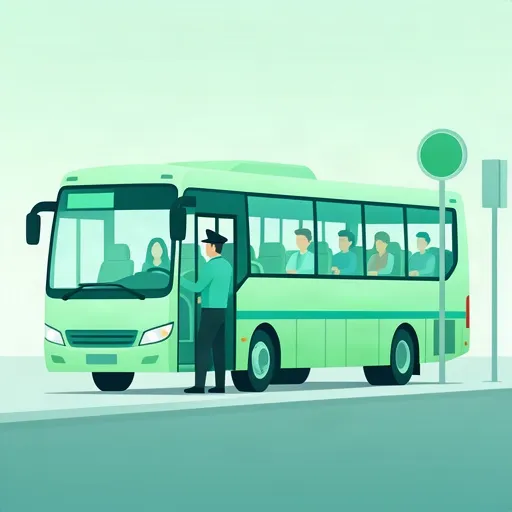
One of the most frequent traps in the MTSK theory test involves questions about the exact steps a driver must take before moving away from a passenger stop. The law is clear: a driver must never initiate vehicle movement until they have verified that all doors are fully closed and all passengers are in a safe position. This is not merely a courtesy; it is a legal requirement to prevent "dragging" accidents where a passenger may still be in the process of boarding or exiting.
When operating a school bus or driving through areas with high pedestrian density, such as near schools or hospital zones, the level of caution must be significantly higher. Turkish traffic legislation emphasizes that children are unpredictable road users. Drivers must anticipate sudden movements, such as a child running toward or away from the bus. Professional drivers are expected to demonstrate "Hazard Awareness," which means maintaining a lower speed and being prepared to stop instantly if an unforeseen movement occurs in the vicinity of the vehicle.
Common Exam Trap: Never assume that children will follow traffic rules. In the MTSK theory exam, if a question asks about school bus surroundings, the correct answer usually prioritizes caution, slow speeds, and active observation over maintaining a schedule or assuming the right of way.
Public transport efficiency in Turkey relies on strict adherence to designated stopping points. Drivers must understand the markings and signs that define these zones to avoid obstructing traffic or creating dangerous situations for passengers. Relying on mirrors is your most critical tool; however, the physical layout of the stop also matters. If the stop is not designated by a clear marking, you must ensure the location chosen for boarding is safe, level, and does not force passengers to step directly into a hazardous road area.
Familiarity with official traffic signs is mandatory for any Category D driver. Signs like those indicating bus stops or prohibiting stopping in specific zones are frequently tested to ensure drivers understand where they can legally conduct passenger operations. Ignoring these signs can lead to traffic congestion and potential legal penalties, both of which are common topics in the theory exam.
The Turkish MTSK e-sınav is designed to test your ability to think like a professional. When you encounter questions about bus or minibus operations, always prioritize the safety-first mindset mandated by Turkish traffic regulations. By focusing on the checks—doors, mirrors, and environment—you ensure both compliance with the law and the safety of your passengers. Consistent practice and a deep understanding of these protocols will prepare you to navigate both the theory exam and the real-world complexities of Turkish roads.
Operating buses and minibuses at passenger stops requires strict adherence to a defined pre-departure protocol: verifying all doors are sealed, checking both internal and external mirrors, confirming passengers are safely positioned, and scanning for vulnerable road users before signaling and moving. Special caution is mandatory in school zones where children may act unpredictably, and drivers should never assume right of way in these areas. Turkish traffic legislation treats door verification and mirror discipline as legal requirements, not optional precautions, making them consistent MTSK exam topics. A safety-first mindset—prioritizing observation over schedule—distinguishes professional Category D drivers and ensures both exam success and real-world passenger protection.
A short set of high-value points that capture the most important ideas from this article.
Drivers must never move a bus or minibus until all doors are fully closed and all passengers are in a safe position
Systematic mirror checks (internal and external) are mandatory before pulling away from any passenger stop
In school zones and high pedestrian areas, drivers must anticipate unpredictable movements and maintain lower speeds
Traffic signs marking bus stops and no-stopping zones are legally binding and frequently tested on the MTSK exam
Hazard awareness means actively predicting potential dangers, not just reacting to them
Pre-departure sequence: verify passengers seated or holding handrails, check all mirrors, confirm door closure with dashboard indicator, scan for cyclists and pedestrians in blind spots, then signal before moving
Dashboard warning lights indicate door seal status—never rely solely on visual confirmation
School bus surroundings require maximum caution regardless of schedule pressure
Bus stop signs (like T-12) define legal stopping zones; other vehicles must not obstruct these areas
Passenger boarding locations must be safe, level, and free from hazardous road exposure if no designated stop exists
Assuming passengers have fully boarded or exited before closing doors and moving away
Relying only on side mirrors without checking internal mirrors for passengers near the doors
Accelerating too quickly after closing doors, not allowing time to observe the traffic environment
Failing to anticipate child behavior near school buses and assuming they will follow traffic rules
Confusing designated bus stop markings with informal stopping points when determining where boarding is safe
Article content overview
A short set of high-value points that capture the most important ideas from this article.
Drivers must never move a bus or minibus until all doors are fully closed and all passengers are in a safe position
Systematic mirror checks (internal and external) are mandatory before pulling away from any passenger stop
In school zones and high pedestrian areas, drivers must anticipate unpredictable movements and maintain lower speeds
Traffic signs marking bus stops and no-stopping zones are legally binding and frequently tested on the MTSK exam
Hazard awareness means actively predicting potential dangers, not just reacting to them
Pre-departure sequence: verify passengers seated or holding handrails, check all mirrors, confirm door closure with dashboard indicator, scan for cyclists and pedestrians in blind spots, then signal before moving
Dashboard warning lights indicate door seal status—never rely solely on visual confirmation
School bus surroundings require maximum caution regardless of schedule pressure
Bus stop signs (like T-12) define legal stopping zones; other vehicles must not obstruct these areas
Passenger boarding locations must be safe, level, and free from hazardous road exposure if no designated stop exists
Assuming passengers have fully boarded or exited before closing doors and moving away
Relying only on side mirrors without checking internal mirrors for passengers near the doors
Accelerating too quickly after closing doors, not allowing time to observe the traffic environment
Failing to anticipate child behavior near school buses and assuming they will follow traffic rules
Confusing designated bus stop markings with informal stopping points when determining where boarding is safe
Explore related topics, search based questions, and concepts that learners often look up when studying Bus and Minibus Stop Safety. These themes reflect real search intent and help you understand how this topic connects to wider driving theory knowledge in Turkey.
Find clear and practical answers to common questions learners often have about Bus and Minibus Stop Safety. This section helps explain difficult points, remove confusion, and reinforce the key driving theory concepts that matter for learners in Turkey.
Before moving the vehicle, a driver must confirm that all passenger doors are fully closed, verify that mirrors are clear, and ensure no passengers are in a hazardous position near the bus.
The MTSK exam focuses on these procedures because improper departure from stops is a leading cause of boarding and alighting accidents in urban traffic, making it a critical safety competency.
Yes, school bus drivers must be extra vigilant for the unpredictable movements of children near the vehicle, ensuring full compliance with loading and unloading safety zones.
After finding the specific Turkish driving theory articles you need, dive deeper into related topics or challenge your knowledge with practice questions. Enhance your understanding of trafik işaretleri, road rules, and vehicle safety to ensure you are fully prepared for the official ehliyet sınavı.