
This lesson explores the physical relationship between your moped tires and the road surface, a critical component of safe riding. Building on previous units about vehicle control, you will learn to identify hazards like loose gravel and painted lines to prevent loss of traction during your daily rides.
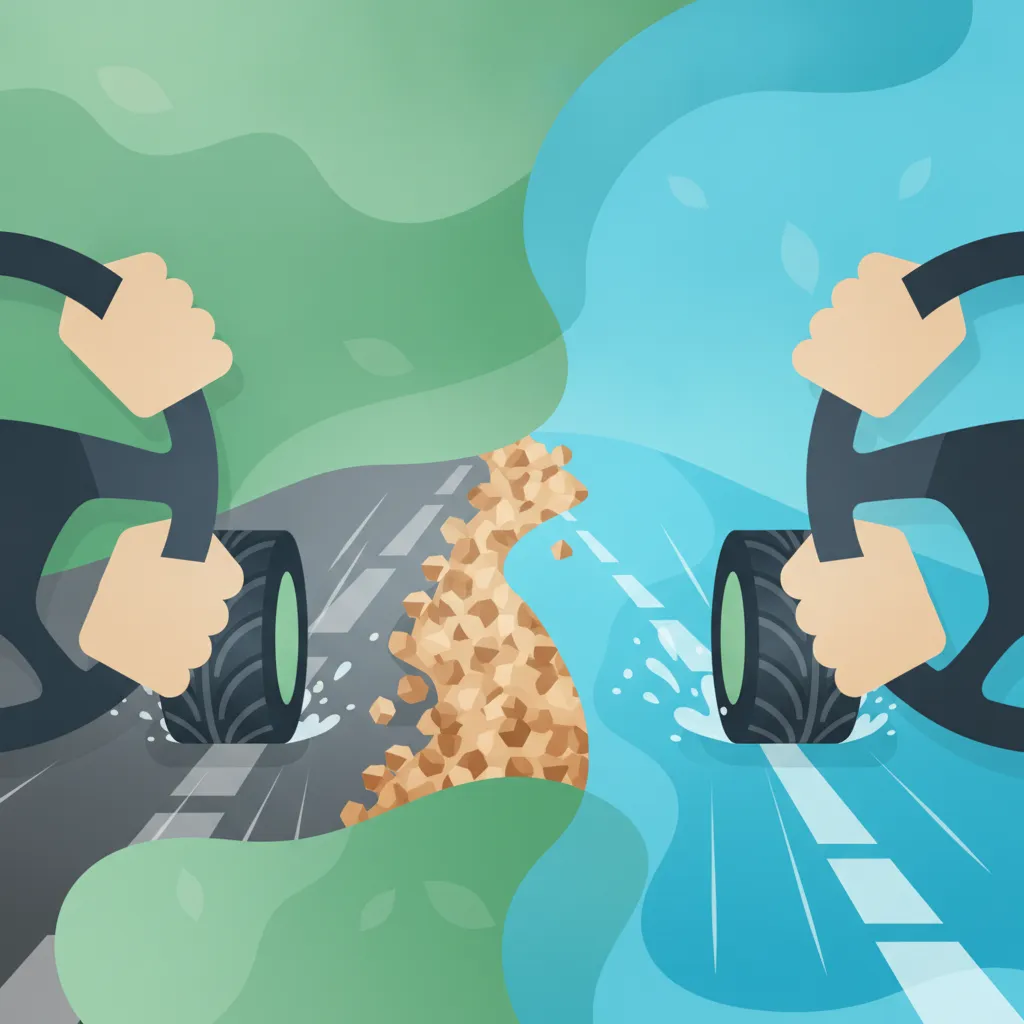
Lesson content overview
Operating a moped or a light motorized bicycle under the Turkish Category AM license (M sınıfı sürücü belgesi) requires a deep understanding of vehicle dynamics and road surface interactions. Unlike passenger cars with four wide contact patches, a moped relies on just two tiny points of contact with the road. Each of these patches is roughly the size of a credit card. Consequently, any change in road surface texture, moisture, or debris can instantly compromise your traction, leading to stability loss or a "low-side" fall (yerden kayma).
This lesson prepares candidates for the official Turkish MTSK e-sınav (Motorlu Taşıt Sürücü Kursu elektronik sınavı) by detailing how to identify road hazards, manage tire grip, and adjust riding behavior to maintain control under varying environmental conditions.
To ride safely, you must understand the fundamental relationship between your tires and the road. Traction, or grip, is the frictional force that prevents your tires from sliding. It is what allows you to accelerate, decelerate, and steer.
The coefficient of friction () represents the "slipperiness" between the tire rubber and the road surface. Dry asphalt has a high coefficient of friction, providing excellent grip. When the road surface becomes wet, icy, or covered in loose material, the coefficient of friction drops dramatically.
For a Category AM moped, traction is governed by three primary factors:
If the forces exerted on a tire during braking, cornering, or accelerating exceed the available friction, the tire will slip. On a two-wheeled vehicle, a front-wheel slip almost always results in an immediate crash because steering control is lost instantly. A rear-wheel slip can lead to a low-side slide or, if the tire suddenly regains grip, a violent "high-side" flip.
To ride defensively, you must train your eyes to scan the road ahead and identify low-friction surfaces before your tires reach them. In Turkey's varied urban and rural landscapes, several specific hazards demand immediate caution.
Often found near construction sites, rural road connections, or at the edges of corners due to wind and runoff, loose gravel acts like microscopic ball bearings beneath your tires.
When a moped rolls over loose gravel, the tires ride on top of the moving stones rather than the solid asphalt. Any lateral force, such as steering or leaning, will cause the stones to slide outward, carrying your tires with them.
In autumn or after heavy storms, leaves accumulate in gutters and along the sides of the road. When wet, leaves decay rapidly, releasing organic compounds that create a slick, slimy barrier between your tires and the pavement. This surface can be as slippery as wet ice.
Bridges, overpasses, and urban streets are filled with metal elements. Metal expansion joints (köprü genleşme derzleri) allow bridges to expand and contract with temperature changes. Manhole covers, drain grates, and utility access plates are also highly prevalent in Turkish city centers.
Metal is completely non-porous. When dry, it provides moderate traction, but when wet, the water cannot drain away, creating a thin, highly lubricated barrier. Crossing wet metal while leaning or braking is one of the most common causes of single-vehicle moped accidents.
The thermoplastic paint used for pedestrian crossings (yaya geçitleri), lane markings, and directional arrows is smooth and non-porous.
When rain falls, water sits on top of this paint. Crossing these lines while accelerating, turning, or braking can instantly break your tire's traction.
Maintaining control when encountering low-friction surfaces requires proactive, deliberate, and smooth physical inputs.
Scan and Anticipate: Look 10 to 15 seconds ahead to identify surface changes (such as wet leaves, gravel, or metal joints) before you reach them.
Reduce Speed Early: Roll off the throttle and apply gentle, balanced braking to reduce your speed before entering the hazard. Never brake while on top of the slick surface.
Straighten the Moped: Keep the moped completely vertical when crossing the low-friction zone. A vertical tire maximizes the contact patch and eliminates lateral slip forces.
Maintain Steady, Neutral Throttle: Do not accelerate or decelerate abruptly while crossing. Keep a steady, neutral throttle to maintain balance.
Keep Inputs Exceptionally Smooth: Avoid sudden steering corrections or sharp braking inputs. Relax your arms and guide the moped in a straight line.
Your speed dictates the kinetic energy of the moped. The faster you travel, the more friction is required to steer, decelerate, or maintain stability over bumps. By reducing your speed beforehand, you drastically reduce the physical demands on your tires.
For example, if you approach a wet pedestrian crossing at 40 km/h, your tires may not be able to handle even a minor steering correction. Reducing your speed to 15 or 20 km/h before the crossing ensures that the kinetic energy remains low enough for the tires to glide across the painted lines without slipping.
On a moped, the rider's body weight represents a massive portion of the total combined weight of the vehicle and operator. Therefore, your posture directly influences the load on the tires.
Avoid Leaning Forward: When riders sense a hazard, they often lean forward and tense their upper body. This shifts the center of gravity forward, overloading the front tire while unloading the rear tire. This imbalance makes the rear tire highly susceptible to spinning or sliding, and makes the front tire vulnerable to washing out.
Keep your torso upright and your weight centered over the seat. Squeeze the moped gently with your knees (if riding a step-through frame, keep your feet firmly planted on the floorboard close to the center tunnel). This lowers the center of gravity and allows the moped's suspension to absorb surface irregularities without transferring destabilizing forces to your body.
Sudden inputs create rapid weight transfer, which breaks traction. If you apply the brakes sharply, the weight of the moped rushes forward, compressing the front suspension and demanding instantaneous grip from the front tire. On a slippery surface, the tire cannot provide this grip, resulting in an immediate wheel lock-up.
When braking on compromised surfaces:
Under the Turkish Highway Traffic Law (Karayolları Trafik Kanunu), riders have a legal obligation to adapt their driving style to the prevailing road, weather, and traffic conditions.
According to Article 52 of the Karayolları Trafik Kanunu, drivers must adjust their speed to:
Failing to reduce speed when approaching a hazardous road surface, even if you are traveling within the posted speed limit, is a traffic violation. If an accident occurs because a rider lost control on wet leaves or gravel due to inappropriate speed, the rider is typically assigned the primary fault (asli kusur) for failing to adapt their speed to the conditions.
When you see the T-11 (Kaygan Yol) sign on Turkish roads, the law requires you to immediately decelerate, increase your following distance (takip mesafesi) to at least double the standard gap, and avoid overtaking other vehicles.
To prepare for real-world riding and your theoretical exam, consider these common mistakes made by inexperienced moped riders:
Let's look at how to handle real-world scenarios on Turkish roads using defensive riding principles.
You are riding your Category AM moped in an urban area where active utility construction is taking place. As you round a curve, you see a patch of loose sand spilled across your lane.
You are riding in a city center with active tram lines. It is raining, and you need to turn right, which requires crossing the metal tram tracks that run parallel to your lane.
Understanding how to maintain grip builds directly upon several previous and future lessons in this course:
This lesson explains why mopeds are particularly vulnerable to surface conditions due to their tiny tire contact patches, and details four major low-friction hazards found on Turkish roads: loose gravel, wet leaves and organic debris, metal expansion joints and manhole covers, and thermoplastic road markings. The core defensive technique involves scanning 10-15 seconds ahead, reducing speed before the hazard, keeping the moped completely vertical, and maintaining smooth, neutral throttle while avoiding any sudden inputs. Turkish traffic law under Article 52 requires speed adaptation to conditions, making riders legally at fault for accidents caused by inappropriate speed on hazardous surfaces. The lesson also highlights the counterintuitive danger of the first autumn rain, when accumulated road oils create a slicker surface than during heavy downpours.
A short set of high-value points that capture the most important learning from this lesson.
A moped's two contact patches (roughly credit-card sized) make traction extremely sensitive to any surface change, unlike four-wheel vehicles
Low-friction hazards include loose gravel, wet leaves, metal expansion joints, and thermoplastic road markings - all prevalent in Turkish urban and rural roads
Reducing speed BEFORE entering a hazard and keeping the moped perfectly vertical are the two most critical safety actions
Smooth, progressive inputs (braking, steering, throttle) prevent dangerous weight transfer that breaks traction
Article 52 of Karayolları Trafik Kanunu legally requires riders to adapt speed to road conditions, holding the rider primarily at fault for failures to do so
Explore all units and lessons included in this driving theory course.
The T-11 (Kaygan Yol) sign mandates immediate deceleration and at least double your normal following distance
Wet metal surfaces (bridges, manhole covers, tram tracks) are non-porous and create a highly lubricated barrier when wet
The first autumn rain is more dangerous than heavy downpours - accumulated oil and dust form a soapy, slippery emulsion on dry roads
Front-wheel slip causes immediate loss of steering and almost always results in a crash; rear-wheel slip is generally recoverable
Keep torso upright and weight centered; leaning forward under stress overloads the front tire and unloads the rear tire, destabilizing the moped
Assuming low speed alone is sufficient - abrupt braking or sharp steering inputs on slick surfaces still cause falls regardless of speed
Panic braking when sensing slippage; grabbing brake levers tightly on wet leaves or metal locks the wheels and escalates a minor slip into a slide
Ignoring the first rain of the season, which creates the most treacherous road conditions before accumulated oils are washed away
Crossing wet metal tram tracks at acute angles instead of approaching as close to 90 degrees as possible, allowing tracks to guide and slide the wheels
Riding with incorrect tire inflation - over-inflated tires reduce the contact patch, while under-inflated tires destabilize the moped during turns
Lesson content overview
A short set of high-value points that capture the most important learning from this lesson.
A moped's two contact patches (roughly credit-card sized) make traction extremely sensitive to any surface change, unlike four-wheel vehicles
Low-friction hazards include loose gravel, wet leaves, metal expansion joints, and thermoplastic road markings - all prevalent in Turkish urban and rural roads
Reducing speed BEFORE entering a hazard and keeping the moped perfectly vertical are the two most critical safety actions
Smooth, progressive inputs (braking, steering, throttle) prevent dangerous weight transfer that breaks traction
Article 52 of Karayolları Trafik Kanunu legally requires riders to adapt speed to road conditions, holding the rider primarily at fault for failures to do so
Explore all units and lessons included in this driving theory course.
The T-11 (Kaygan Yol) sign mandates immediate deceleration and at least double your normal following distance
Wet metal surfaces (bridges, manhole covers, tram tracks) are non-porous and create a highly lubricated barrier when wet
The first autumn rain is more dangerous than heavy downpours - accumulated oil and dust form a soapy, slippery emulsion on dry roads
Front-wheel slip causes immediate loss of steering and almost always results in a crash; rear-wheel slip is generally recoverable
Keep torso upright and weight centered; leaning forward under stress overloads the front tire and unloads the rear tire, destabilizing the moped
Assuming low speed alone is sufficient - abrupt braking or sharp steering inputs on slick surfaces still cause falls regardless of speed
Panic braking when sensing slippage; grabbing brake levers tightly on wet leaves or metal locks the wheels and escalates a minor slip into a slide
Ignoring the first rain of the season, which creates the most treacherous road conditions before accumulated oils are washed away
Crossing wet metal tram tracks at acute angles instead of approaching as close to 90 degrees as possible, allowing tracks to guide and slide the wheels
Riding with incorrect tire inflation - over-inflated tires reduce the contact patch, while under-inflated tires destabilize the moped during turns
Explore search topics learners often look for when studying Maintaining Grip on Various Road Surfaces. These topics reflect common questions about road rules, driving situations, safety guidance, and lesson level theory preparation for learners in Turkey.
Browse additional driving theory lessons that cover connected traffic rules, road signs, and common driving situations related to this topic. Improve your understanding of how different rules interact across everyday traffic scenarios.
Learn the legal requirements for adjusting your riding speed based on road, weather, and traffic conditions as mandated by the Karayolları Trafik Kanunu. Understand why controlling speed is essential for maintaining vehicle stability and fulfilling your legal obligations as a Category AM license holder on Turkish roads.
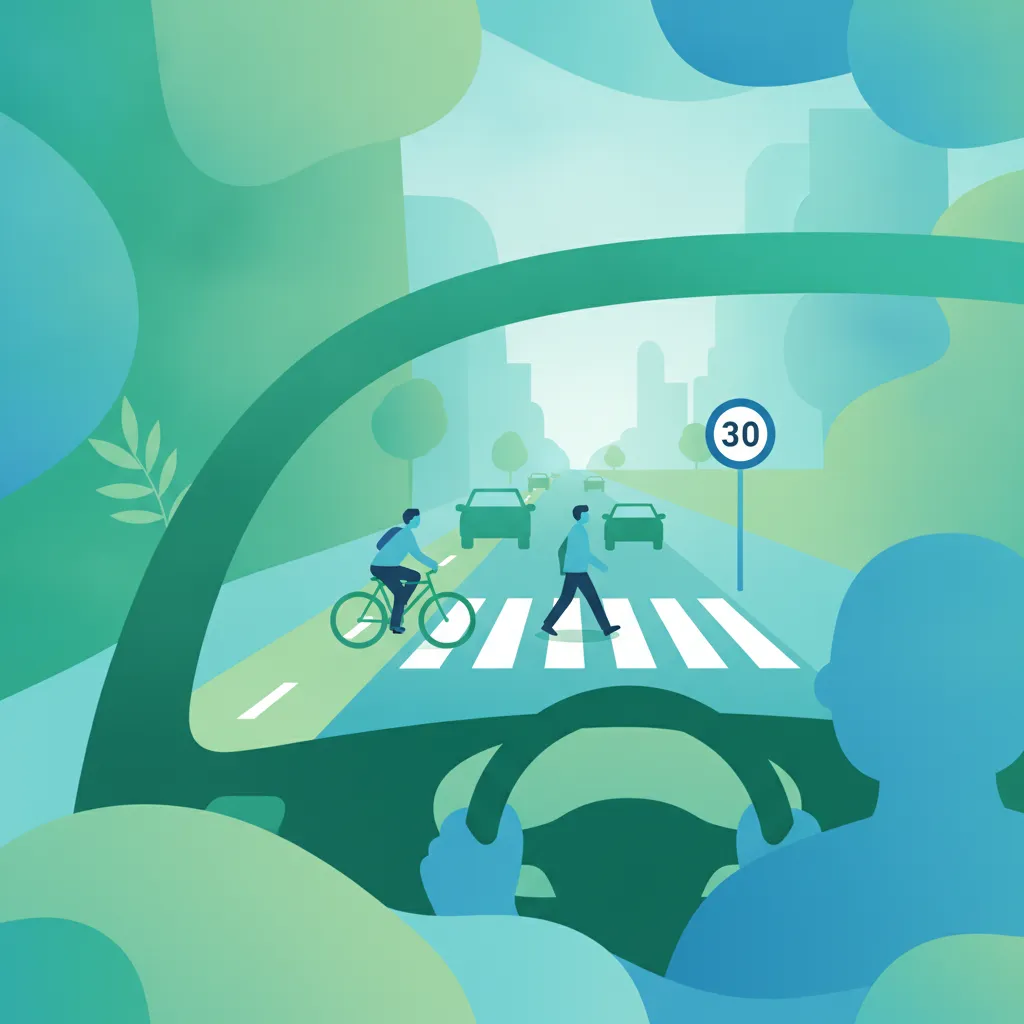
Managing your speed effectively is not just about obeying posted legal limits; it is about adjusting your pace to the immediate traffic context. This lesson teaches you how to evaluate traffic density, pedestrian presence, and blind corners to select an appropriate speed that guarantees safe stopping distances. You will learn to anticipate flow fluctuations, allowing you to avoid sudden, unstable speed changes that can compromise your balance and traction in mixed traffic.
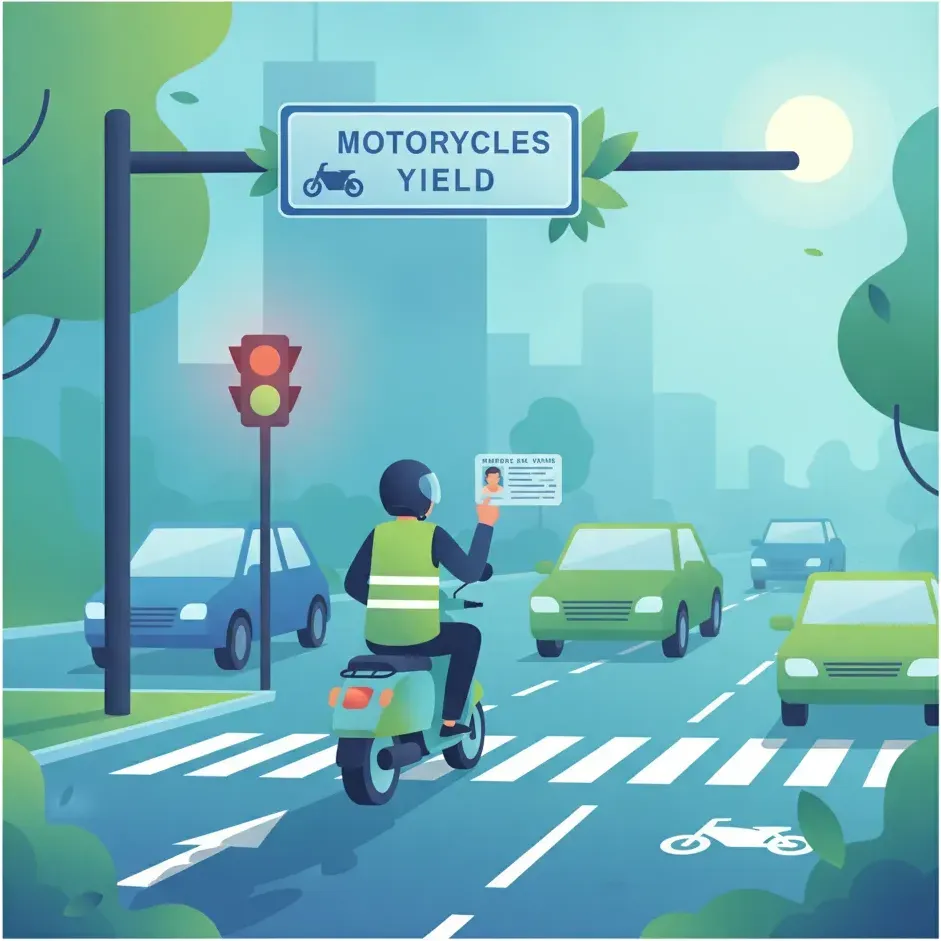
This lesson covers the primary legal requirements that every moped rider must follow when navigating public traffic systems within Turkey. It focuses on the mandatory application of traffic signals, correct lane selection, appropriate overtaking procedures, and the specific speed limitations set for light motorized vehicles. By understanding these regulatory bounds, you will avoid high traffic fines and licence point deductions while ensuring that your riding practices strictly align with national highway laws.
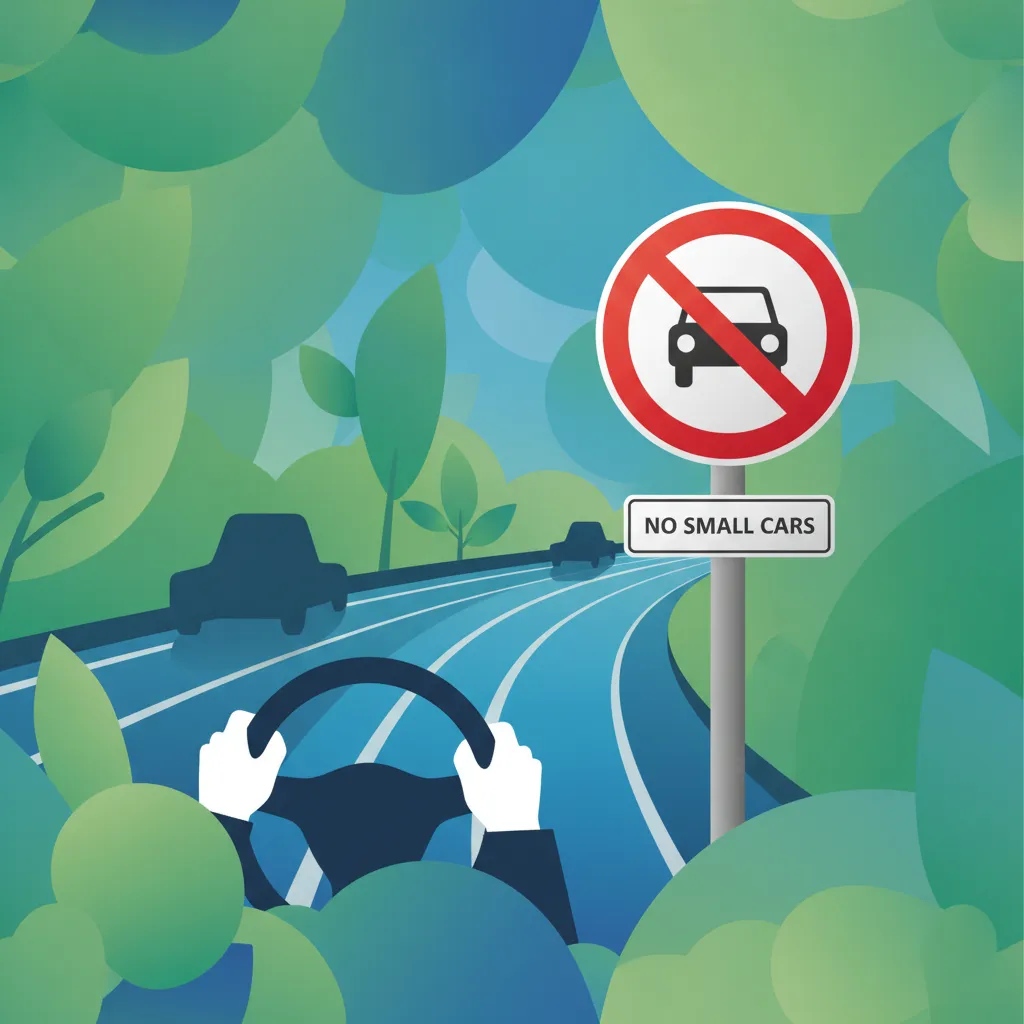
Regulatory traffic signs convey absolute legal commands that riders must obey to avoid heavy fines and ensure safe, orderly movement. This lesson walks through prohibitory indicators, mandatory speed limits, turn restrictions, and specific moped bans on motorways or designated high-speed corridors. You will learn to recognize the distinctive shapes and colors of these signs, enabling rapid, accurate decision-making while operating your lightweight vehicle under Turkish highway laws.
Human error and deliberate risk-taking represent the leading causes of traffic collisions among novice moped riders. This lesson analyzes the high dangers of using mobile phones while riding, weaving unsafely between lanes, and tailgating other motorists. It also covers the severe legal limits on alcohol and drug consumption under Turkish law, explaining how even minor impairments can drastically slower your hazard response times and lead to catastrophic accidents.
Low-speed riding maneuvers require precise coordination of throttle control, body balance, and subtle steering inputs to maintain vehicle stability. This lesson guides you through techniques for performing tight U-turns, navigating dense traffic queues, and parking your moped safely in designated urban areas. Additionally, you will learn to scan for immediate hazards, allowing you to execute steering corrections smoothly without risking tip-overs or collisions with low obstacles.
Focusing on pedestrian safety, this lesson addresses the unique considerations motorcyclists must take when approaching zebra crossings, traffic signal-controlled pedestrian crossings, and designated school zones. Learners will understand the legal obligations to yield to pedestrians, especially children, and the importance of reducing speed in these high-risk areas. The lesson also provides practical tips for ensuring visibility.
Riding an exposed lightweight vehicle in busy Turkish cities requires exceptional personal conduct, patience, and absolute control over your emotional reactions. This lesson discusses the psychological aspects of riding, teaching you how to avoid aggressive behaviors and stay calm under stressful traffic situations. It covers proper non-verbal communication, polite road sharing practices, and maintaining safe buffers from other motorists to establish a safe, predictable presence on any public street.
Protecting vulnerable road users is a core legal and ethical responsibility for all motorized vehicle operators in Turkey. This lesson covers the absolute requirement to yield to pedestrians at marked crosswalks, zebra crossings, and designated school zones. You will learn how to identify these zones early, reduce your speed proactively, and maintain heightened situational awareness for children or distracted pedestrians who may step onto the road unexpectedly.
Violating Turkish traffic regulations results in serious legal and financial consequences designed to hold drivers accountable and ensure public safety. This lesson outlines the specific penalty points assigned to common infractions, the fine structure for speeding and illegal parking, and the conditions under which your moped or driving licence can be seized. Understanding these administrative penalties reinforces the importance of maintaining strict, daily compliance with national traffic laws.
This lesson focuses on managing vehicle speed according to different road environments—urban, rural, and highways—while complying with legal speed limits and traffic flow. Learners will understand how to adjust speed for varying road conditions, traffic density, and safety considerations, ensuring a balance between efficiency and risk mitigation.
Explore the impact of rain, cold, and seasonal road debris on moped handling and safety. This guide explains how to identify traction-reducing environmental hazards and adjust your riding posture and braking inputs to prevent accidents during difficult riding conditions on urban and rural Turkish roads.

Riding in adverse weather presents significant challenges for open-vehicle operators, including reduced tire grip, obscured vision, and physical fatigue from wind or cold. This lesson covers safety techniques for navigating rainy conditions, avoiding the danger of hydroplaning, and managing strong crosswinds that can destabilize a lightweight moped. You will learn to adjust your speed, increase your following distance, and use high-visibility gear to ensure a safe journey under bad weather.
In this lesson, learners will explore the challenges presented by various weather conditions, such as rain, wind, fog, and temperature extremes, and how they affect motorcycle handling and safety. Topics covered include adjusting riding techniques for reduced traction, maintaining visibility in low-light or foggy conditions, and managing physical wind effects. The lesson emphasizes adjusting speed and braking.

Defensive riding is the practice of anticipating potential road conflicts and acting early to prevent accidents before they occur. This lesson teaches you how to systematically scan the road ahead for changing conditions, keep an adequate safety cushion around your moped, and pre-plan exit routes in tight spots. You will learn to assume you are invisible to other drivers and adapt your speed and road position proactively to protect yourself against sudden maneuvers.
Find clear answers to common questions learners have about Maintaining Grip on Various Road Surfaces. Learn how the lesson is structured, which driving theory objectives it supports, and how it fits into the overall learning path of units and curriculum progression in Turkey. These explanations help you understand key concepts, lesson flow, and exam focused study goals.
Painted road markings are often made of materials that become extremely slippery when wet. When your tires hit these lines, they lose grip instantly, which can lead to a loss of control if you are steering or braking simultaneously.
Approach metal joints at a steady speed without accelerating or braking. Keep your moped in an upright, vertical position to maximize the contact patch of your tires and prevent the wheels from slipping sideways.
Yes. Speed increases the difficulty of managing a bike on loose surfaces. You must reduce your speed well in advance and maintain a consistent, slow pace to allow your tires to maintain the best possible contact with the ground.
A low-side fall happens when the tires lose traction and slide out from under the bike during a turn. You can avoid this by avoiding sudden, sharp movements and ensuring you perform your braking before entering a curve.
Use our comprehensive practice search to find exactly the Turkish driving theory questions you need to master. Whether reviewing specific road signs, traffic rules, or first aid scenarios, select your perfect practice set and boost your confidence for the official ehliyet sınavı.