
This lesson details the specific legal obligations you must follow as a moped rider in Turkey. You will learn the regulatory standards for lane positioning, speed limits, and traffic signal compliance required for the Category AM license. Mastering these rules is essential for safe navigation and exam success.
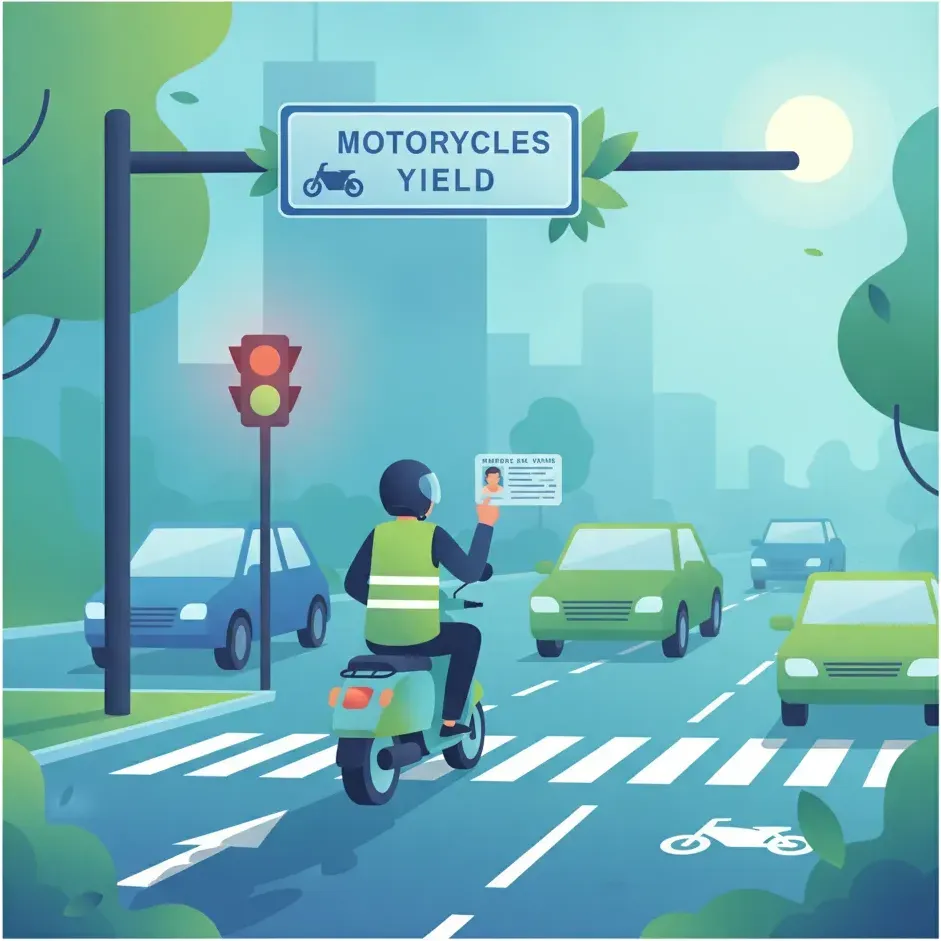
Lesson content overview
Navigating public traffic in Turkey on a Category AM small motorized vehicle (moped or motorlu bisiklet) comes with strict legal responsibilities. Under the Turkish Highway Traffic Law (Karayolları Trafik Kanunu No. 2918), riders of light motorized vehicles are integrated into the broader traffic system. This integration ensures safety, predictability, and order on the roads.
Aspiring riders preparing for the official National Education Ministry (Milli Eğitim Bakanlığı - MEB) MTSK theoretical e-sınav must master these legal obligations. This knowledge is not only a prerequisite for passing your theory exam, but it also forms the defensive riding mindset necessary to protect yourself as a vulnerable road user, avoid heavy traffic fines, and prevent license point deductions (ceza puanı).
The legal framework governing Turkish road traffic relies on four foundational principles. Every regulation discussed in this lesson is designed to enforce one or more of these principles:
Vehicle lighting is your primary tool for communication and survival on public roads. Turkish law requires specific lighting configurations to maximize conspicuity and prevent collisions.
In Turkey, all motorized two-wheelers must have their headlights illuminated while in motion, both day and night. This is a critical legal measure designed to combat "looked-but-failed-to-see" accidents, where car drivers pull out in front of oncoming mopeds because they failed to perceive them.
The low-intensity headlight setting designed to illuminate the road ahead for up to 25 meters without blinding oncoming drivers.
The high-intensity headlight setting designed to illuminate the road for up to 100 meters, to be used only on unlit rural roads when no other vehicles are ahead or approaching.
Turn signals must be activated prior to any lateral movement of your vehicle. This includes turning at intersections, merging, changing lanes, pulling away from the curb, or overtaking.
Under Turkish traffic rules, you must signal your intent:
Failing to signal not only creates immediate danger for drivers behind you but is also heavily penalized with traffic fines and license penalty points.
Hazard lights flash all turn indicators simultaneously.
Crucial Lawful Practice: Hazard warning lights must only be used when your vehicle is stationary due to an emergency, breakdown, or sudden hazard on the road. Using hazard lights while your vehicle is in normal motion—such as during heavy rain or when double-parking temporarily—is highly illegal and misleads other road users.
Selecting the correct lane is not a matter of personal preference; it is strictly regulated by vehicle class and speed profile. In Turkey, traffic flows on the right side of the road, and specific lane-use rules apply to small motorized vehicles.
As a Category AM moped rider, your vehicle's maximum design speed is legally restricted. Consequently, Turkish traffic law mandates that mopeds must travel in the rightmost lane of multi-lane roads during normal operation.
This rule ensures that faster-moving passenger cars, commercial vehicles, and public transport can pass safely on your left, maintaining a smooth traffic flow.
Continuous riding in the left lane (sol şerit) or the middle lane of a three-lane highway is strictly illegal for mopeds. The leftmost lane is legally reserved exclusively for overtaking (geçiş şeridi).
Once you complete an overtaking maneuver, you must return to the rightmost lane as soon as it is safe to do so. Continuous occupation of the left lane blocks traffic, invites dangerous tailgating, and carries severe administrative fines.
The hard shoulder (banket) or emergency lane (emniyet şeridi) is reserved strictly for broken-down vehicles, emergency services, and authorized personnel. Moped riders are strictly prohibited from driving on the emergency lane to bypass congested traffic. Doing so creates extreme risks of colliding with stationary vehicles or emergency responders.
Overtaking is one of the most hazardous maneuvers for a small vehicle. You must only overtake when it is safe, legal, and absolutely necessary.
In Turkey, all overtaking maneuvers must be performed on the left side of the vehicle you are passing. Overtaking on the right is highly illegal and dangerous because drivers do not anticipate being passed on their passenger side, which features larger blind spots.
Assess the Road Ahead: Ensure there are no upcoming intersections, pedestrian crossings, railway crossings, or road signs prohibiting overtaking. Verify that you have a clear view of oncoming traffic.
Check Your Mirrors and Blind Spot: Perform a rear mirror check, followed by a quick shoulder check (the "life-saver glance") to cover your blind spot.
Signal Your Intent: Activate your left turn signal to inform vehicles behind you of your lateral shift.
Move and Pass: Smoothly accelerate and change lanes to the left, leaving at least 1.5 meters of lateral clearance between your moped and the vehicle being passed. Do not exceed the speed limit while passing.
Return to the Right Lane: Once you can see the passed vehicle completely in your rearview mirror, signal right, perform a blind-spot check to the right, and return to the rightmost lane. Turn off your signal.
The only circumstances under which you may pass a vehicle on its right side are:
Mopeds are designed as light urban transport. Because of their lightweight construction and smaller tires, they are highly sensitive to road imperfections, wind gusts, and braking forces. Therefore, they are subject to strict legal speed limits under Turkish traffic regulations.
| Road Type / Area | Maximum Speed Limit | Details and Special Warnings |
|---|---|---|
| Urban Areas (Yerleşim Yeri İçi) | 50 km/h | Standard urban speed limit, unless lower limits are posted near schools or pedestrian zones. |
| Rural Roads (Yerleşim Yeri Dışı) | 70 km/h | Applies to two-way, single-carriageway intercity roads unless local signage indicates otherwise. |
| Motorways (Otoyollar) | Prohibited (Giriş Yasaktır) | Under Highway Traffic Law No. 2918, mopeds are strictly barred from entering motorways due to minimum speed rules. |
While the speed limits represent the absolute legal maximums under ideal conditions, you are legally required to reduce your speed under the following conditions:
Traffic light control systems dictate the safe flow of vehicles across intersections. As a Category AM rider, you must treat traffic signals with absolute compliance.
Failing to comply with the legal obligations outlined in this lesson results in immediate safety hazards, administrative fines, and the addition of penalty points to your driver's profile. In Turkey, accumulating 100 penalty points within a single calendar year results in the temporary confiscation of your driving licence.
To successfully pass your MTSK Category AM theory exam and ride safely on Turkish roads, keep these core principles in mind:
This lesson covers the mandatory legal obligations for Category AM moped riders under Turkish Highway Traffic Law No. 2918, emphasizing four core principles: visibility, predictability, control, and compliance. Learners must master proper headlight usage, with dipped beams required at all times, and understand that signal activation distances differ between urban (30m) and rural (150m) roads. Lane discipline is strictly enforced—mopeds must use the rightmost lane, overtake only on the left, and never use emergency lanes. Speed limits cap at 50 km/h in cities and 70 km/h on rural roads, with motorway access completely prohibited. Violations carry escalating penalties including fine points (20 for red lights, 15 for lane misuse) that accumulate toward licence suspension at 100 points annually.
A short set of high-value points that capture the most important learning from this lesson.
Mopeds must always use dipped beams during daytime and nighttime riding to combat looked-but-failed-to-see accidents.
Category AM vehicles are legally restricted to the rightmost lane on multi-lane roads and may only use the left lane for overtaking.
Overtaking must always be performed on the left side of vehicles; right-side passing is only legal when the vehicle ahead is turning left.
Speed limits for mopeds are capped at 50 km/h in urban areas, 70 km/h on rural roads, and mopeds are prohibited from motorways entirely.
Accumulating 100 penalty points within one calendar year results in temporary driving licence confiscation in Turkey.
Explore all units and lessons included in this driving theory course.
Turn signals must be activated at least 30 metres before turning in urban areas and 150 metres on rural highways.
Hazard warning lights are strictly for stationary emergencies only—using them while riding is illegal.
The yellow light requires you to stop if you can do so safely, but if you are already in the intersection, clear it safely.
After overtaking, you must return to the rightmost lane as soon as it is safe to do so.
You must reduce speed below posted limits when approaching intersections, school zones, or in adverse weather conditions.
Assuming right-side passing is acceptable in normal traffic flow—it is only permitted when the vehicle ahead is turning left.
Using high beams in urban areas or when following another vehicle, which blinds other road users.
Confusing hazard warning lights with a legal signal for lane splitting or slow driving—they are reserved for stationary emergencies only.
Failing to stop fully behind the stop line at red lights, which can result in blocking pedestrian crossings.
Continuing to ride in the left overtaking lane instead of returning to the rightmost lane after passing.
Lesson content overview
A short set of high-value points that capture the most important learning from this lesson.
Mopeds must always use dipped beams during daytime and nighttime riding to combat looked-but-failed-to-see accidents.
Category AM vehicles are legally restricted to the rightmost lane on multi-lane roads and may only use the left lane for overtaking.
Overtaking must always be performed on the left side of vehicles; right-side passing is only legal when the vehicle ahead is turning left.
Speed limits for mopeds are capped at 50 km/h in urban areas, 70 km/h on rural roads, and mopeds are prohibited from motorways entirely.
Accumulating 100 penalty points within one calendar year results in temporary driving licence confiscation in Turkey.
Explore all units and lessons included in this driving theory course.
Turn signals must be activated at least 30 metres before turning in urban areas and 150 metres on rural highways.
Hazard warning lights are strictly for stationary emergencies only—using them while riding is illegal.
The yellow light requires you to stop if you can do so safely, but if you are already in the intersection, clear it safely.
After overtaking, you must return to the rightmost lane as soon as it is safe to do so.
You must reduce speed below posted limits when approaching intersections, school zones, or in adverse weather conditions.
Assuming right-side passing is acceptable in normal traffic flow—it is only permitted when the vehicle ahead is turning left.
Using high beams in urban areas or when following another vehicle, which blinds other road users.
Confusing hazard warning lights with a legal signal for lane splitting or slow driving—they are reserved for stationary emergencies only.
Failing to stop fully behind the stop line at red lights, which can result in blocking pedestrian crossings.
Continuing to ride in the left overtaking lane instead of returning to the rightmost lane after passing.
Explore search topics learners often look for when studying Legal Obligations for Small Vehicle Riders. These topics reflect common questions about road rules, driving situations, safety guidance, and lesson level theory preparation for learners in Turkey.
Browse additional driving theory lessons that cover connected traffic rules, road signs, and common driving situations related to this topic. Improve your understanding of how different rules interact across everyday traffic scenarios.
Learn the legal requirements for navigating complex intersections and roundabouts as a moped rider. This guide explains how to identify priority situations, yield correctly to other vehicles, and maintain safe positioning when moving through urban junctions according to Turkish highway traffic laws.
This lesson focuses on the safe interaction with other traffic participants at bus stops and traffic intersections. Learners will explore right-of-way rules, signal compliance, and techniques for maintaining safe distances while stopping and departing. Understanding these interactions is vital for preventing accidents in complex traffic environments.
This lesson focuses on priority rules at controlled intersections equipped with traffic signals, stop signs, or yield signs. Learners will understand how to interpret traffic light phases, comply with stop and yield indications, and assess right-of-way at these intersections. The lesson also covers pedestrian and cyclist considerations, as well as emergency vehicle priority.
In this lesson, learners will master the skills required to safely navigate various types of intersections encountered in Turkish urban settings. The content covers interpreting traffic signals, understanding right-of-way rules, and executing proper lane positioning. Practical strategies for managing blind spots and ensuring visibility to other road users are emphasized. By the end of this session, participants will be equipped with safe crossing techniques.
This lesson provides an overview of the general priority principles that dictate right-of-way on Turkish roads. Topics include the hierarchy of road users, such as pedestrians, cyclists, and emergency vehicles, and how these hierarchies apply at various intersections. Learners will understand the fundamental concepts of yielding, stopping, and proceeding, as well as the importance of clear decision-making.
In this lesson, learners explore priority rules specific to uncontrolled intersections, where traffic signals or signs are absent. Topics include determining right-of-way based on vehicle classification, approach angle, and arrival sequence. The lesson emphasizes the importance of stopping, yielding, and assessing potential hazards before proceeding.
Intersections represent the highest-risk zones for moped riders due to crossing traffic paths and poor visibility. This lesson teaches you the structured approach method: slowing down, selecting the correct lane early, scanning in all directions, and yielding according to priority laws. You will learn safe techniques for executing left and right turns, maintaining stability, and continuously looking out for oncoming vehicles that might fail to yield or turn unexpectedly across your path.
This lesson focuses on pedestrian rights and safety measures to ensure their protection on Turkish roads. Topics include proper use of crosswalks, pedestrian signals, and yielding to pedestrians at intersections. The lesson also addresses specific considerations for vulnerable pedestrians such as children, the elderly, and the visually impaired. Real-world scenarios illustrate safe crossing practices.
This lesson outlines the precise legal and safety procedures for overtaking slower vehicles on two-lane and multi-lane roads. It details when overtaking is strictly prohibited by signs or solid road lines, and how to calculate passing distances. Drivers will learn how to communicate their intentions using indicators and pass other vehicles safely.
In this lesson, learners explore the specific priority rules and navigation techniques for roundabouts. Topics include yielding to traffic already in the roundabout, proper lane selection upon entry, and safe exit strategies. The lesson also addresses interactions with pedestrians and cyclists near roundabouts and the importance of maintaining appropriate speed.
Correctly interpreting traffic signal sequences and priority rules is crucial for preventing devastating right-angle collisions at intersections. This lesson breaks down the phase progression of standard lights, the meanings of flashing amber or red indicators, and the hierarchy of traffic control when a police officer is directing vehicles. You will also master the basic legal default rules of right-of-way, such as yielding to vehicles coming from the right at uncontrolled junctions.
Understand the essential safety measures for small motorized vehicles on public roads. This lesson explores the legal importance of vehicle lighting, effective positioning in traffic, and defensive riding habits that help moped riders mitigate risks and remain visible to other motorists in various Turkish traffic conditions.
Defensive riding is the practice of anticipating potential road conflicts and acting early to prevent accidents before they occur. This lesson teaches you how to systematically scan the road ahead for changing conditions, keep an adequate safety cushion around your moped, and pre-plan exit routes in tight spots. You will learn to assume you are invisible to other drivers and adapt your speed and road position proactively to protect yourself against sudden maneuvers.
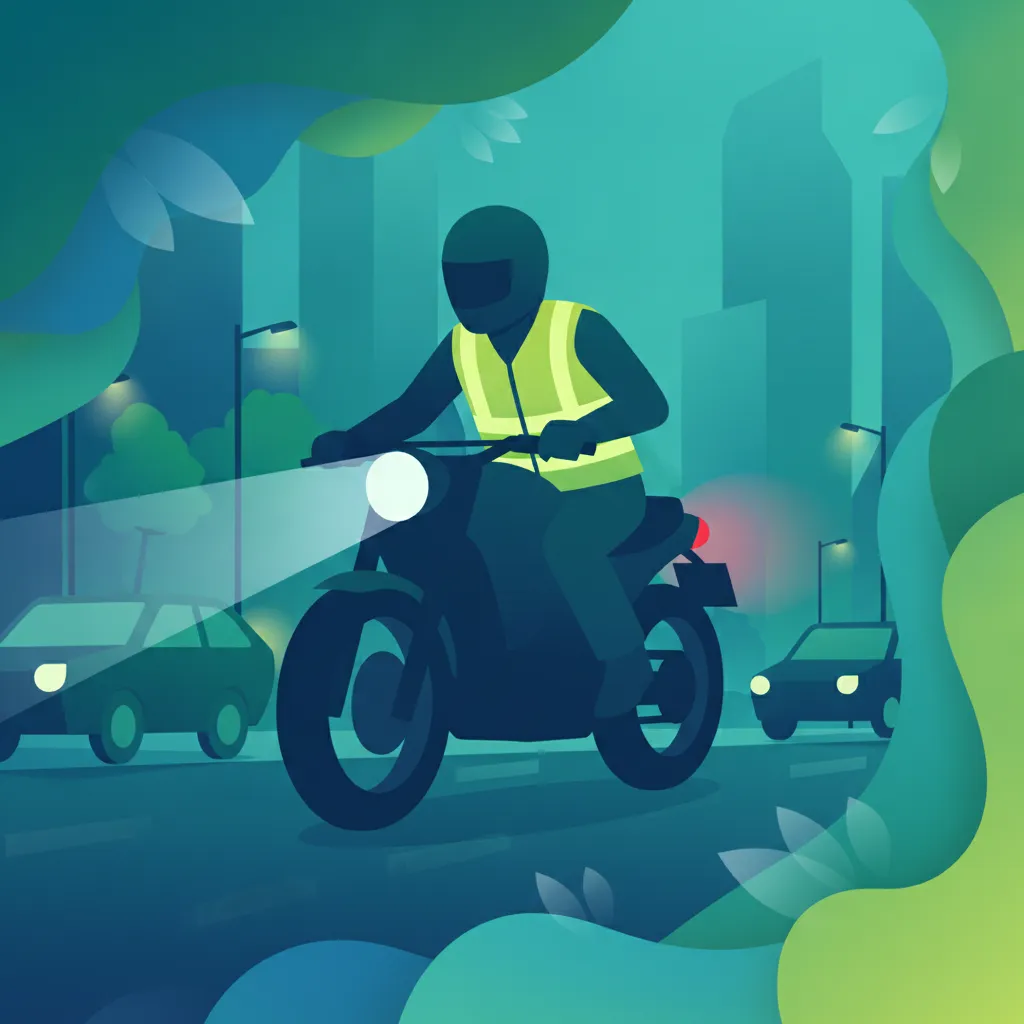
Many moped collisions occur simply because drivers of larger vehicles fail to notice lightweight riders in their path or blind spots. This lesson outlines passive and active techniques to boost your road presence, including the use of retroreflective vests and neon-colored apparel. It also explains the legal requirements for daytime running lights, proper alignment of headlights, and effective lane positioning to ensure you remain clearly visible in heavy traffic and during night rides.

Riding in adverse weather presents significant challenges for open-vehicle operators, including reduced tire grip, obscured vision, and physical fatigue from wind or cold. This lesson covers safety techniques for navigating rainy conditions, avoiding the danger of hydroplaning, and managing strong crosswinds that can destabilize a lightweight moped. You will learn to adjust your speed, increase your following distance, and use high-visibility gear to ensure a safe journey under bad weather.
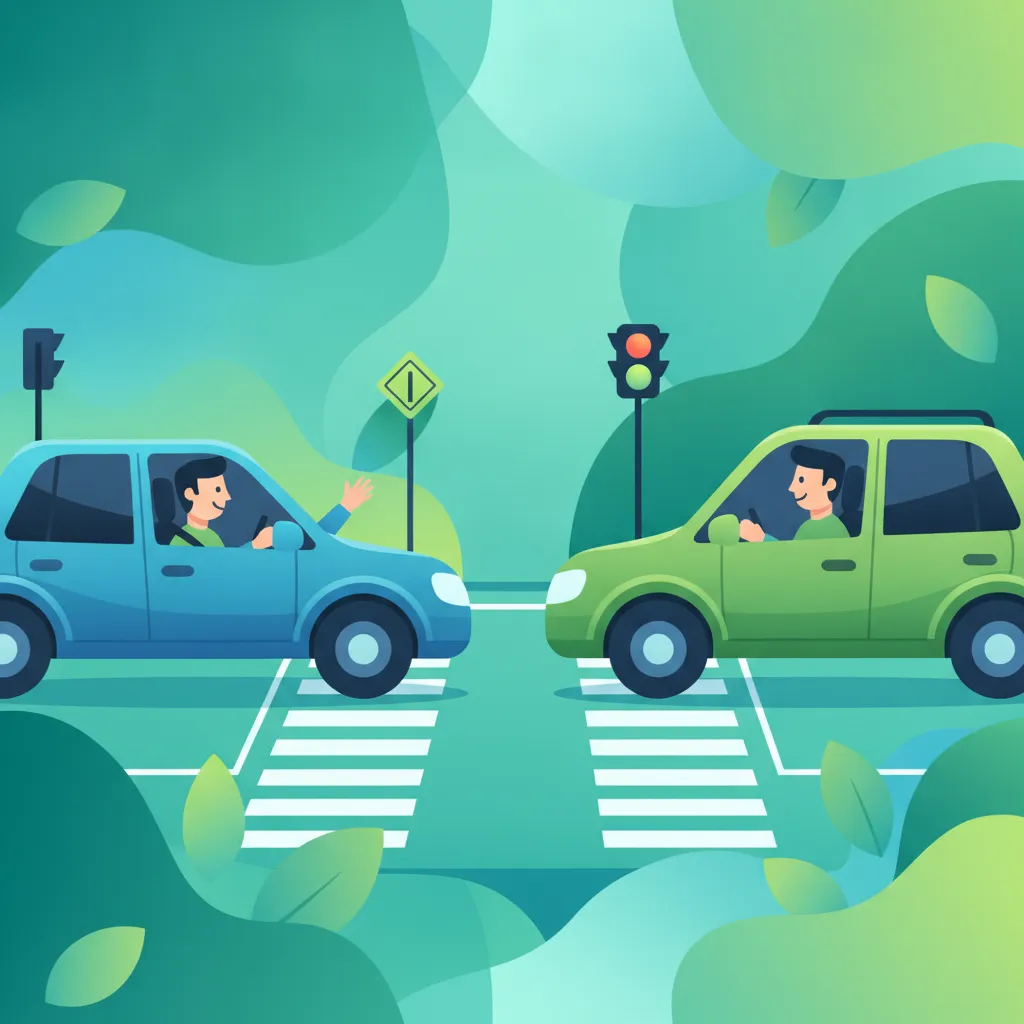
Riding an exposed lightweight vehicle in busy Turkish cities requires exceptional personal conduct, patience, and absolute control over your emotional reactions. This lesson discusses the psychological aspects of riding, teaching you how to avoid aggressive behaviors and stay calm under stressful traffic situations. It covers proper non-verbal communication, polite road sharing practices, and maintaining safe buffers from other motorists to establish a safe, predictable presence on any public street.
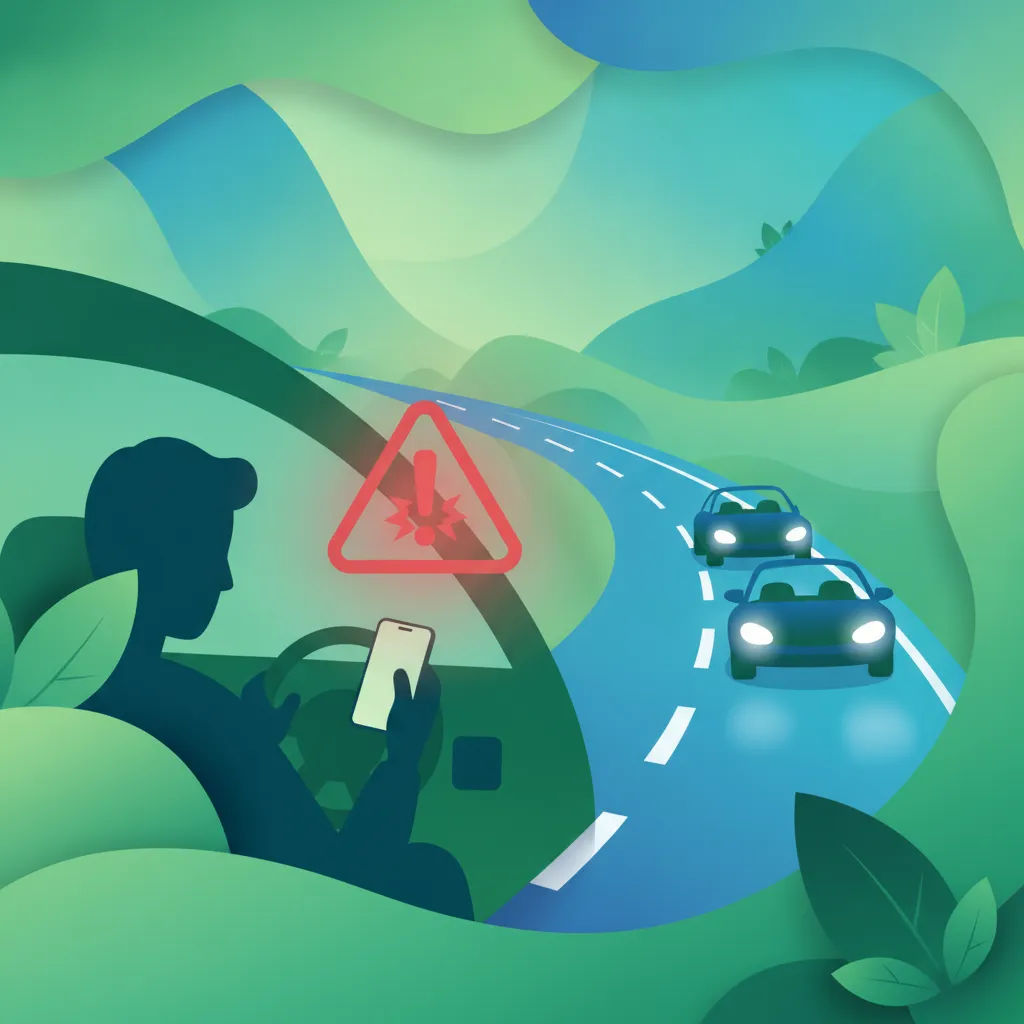
Human error and deliberate risk-taking represent the leading causes of traffic collisions among novice moped riders. This lesson analyzes the high dangers of using mobile phones while riding, weaving unsafely between lanes, and tailgating other motorists. It also covers the severe legal limits on alcohol and drug consumption under Turkish law, explaining how even minor impairments can drastically slower your hazard response times and lead to catastrophic accidents.
Proper road positioning is your primary shield against being squeezed, sideswiped, or overlooked by larger motor vehicles in daily traffic. This lesson explains how to ride in the center or slightly off-center of your lane to prevent unsafe overtaking within the same lane. You will study how to identify the massive blind spots of buses and trucks, maintain appropriate following distances, and execute overtaking maneuvers with maximum safety margin and clear signal warning.
Operating a moped in highly populated Turkish urban areas requires a strong awareness of your environmental footprint and social impact. This lesson explains methods for reducing noise and exhaust emissions through timely vehicle maintenance and fuel-efficient riding techniques. You will also learn about the importance of protecting vulnerable road users like pedestrians, children, and cyclists, contributing to a cooperative, clean, and safe urban traffic ecosystem for everyone.
This lesson emphasizes the importance of rider visibility, illustrating how high-visibility clothing and reflective accessories can significantly reduce the risk of collisions. Learners will discover effective strategies for being noticed by other road users, such as using bright colors, reflective strips, and appropriate lighting, especially during adverse weather or nighttime riding. The content also outlines best practices for maintenance.
Because moped riders lack an enclosed vehicle cabin, wearing proper protective apparel is essential for preventing severe abrasions and joint injuries. This lesson evaluates the protective features of specialized jackets, durable gloves, and reinforced boots that provide grip and ankle support. You will also learn how to select weather-appropriate, thermal, or ventilated clothing to maintain mental alertness and physical comfort under Turkey's varying seasonal conditions.
This lesson addresses the specific challenges of riding a motorcycle after dark, focusing on the importance of proper headlamp usage, reflective clothing, and heightened situational awareness. It provides guidance on how to remain visible to other road users, how to read road markings and signs under low-light conditions, and techniques for managing glare and fatigue during extended night rides.
Find clear answers to common questions learners have about Legal Obligations for Small Vehicle Riders. Learn how the lesson is structured, which driving theory objectives it supports, and how it fits into the overall learning path of units and curriculum progression in Turkey. These explanations help you understand key concepts, lesson flow, and exam focused study goals.
Category AM vehicles are subject to specific urban speed limits defined by local traffic regulations. Always observe posted speed signs as they take priority over general moped speed assumptions.
Generally, Category AM riders should stay in the rightmost lane. Exceptions may occur near intersections or when preparing for a left turn, provided it is done in compliance with official traffic signs and markings.
Yes. A stop sign is a legal requirement to bring your vehicle to a complete standstill, regardless of traffic density. Failing to do so is a common cause of point deductions in the theory test and real-world accidents.
In Turkey, traffic signals apply to all vehicles unless a specific sign or signal clearly indicates a restriction for mopeds. Always scan for regulatory signs that might exclude certain vehicle classes.
Use our comprehensive practice search to find exactly the Turkish driving theory questions you need to master. Whether reviewing specific road signs, traffic rules, or first aid scenarios, select your perfect practice set and boost your confidence for the official ehliyet sınavı.