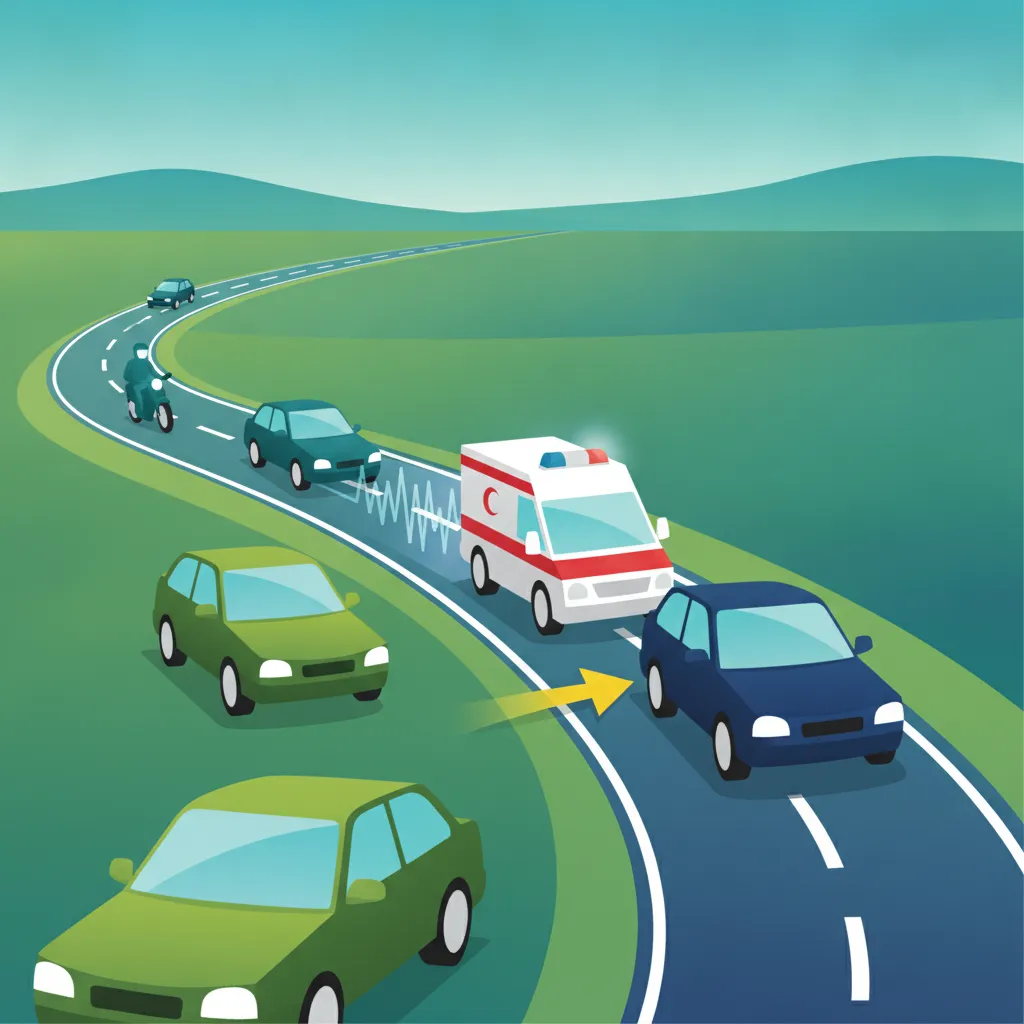
Emergency vehicles like ambulances, police, and fire trucks require immediate passage when responding to incidents. Recognizing their signals – blue flashing lights and sirens – is essential for all drivers. This guide explains how to safely and promptly create a clear path for these vehicles, ensuring they reach their destinations without obstruction in Turkish traffic conditions.
Theory topic content overview
Read the full theory topic guide for Priority for Emergency Vehicles with structured, easy-to-scan content built for learners in Turkey. This detailed section explains the exact rule, meaning, traffic context, comparison points, and exam logic behind this Turkish driving theory topic so you can study faster, understand the concept more clearly, and avoid common interpretation mistakes on the theory test.
Emergency vehicle priority is a fundamental concept in Turkish traffic law and a critical aspect of road safety. It dictates that drivers must immediately and safely yield the right-of-way to specific vehicles that are responding to an emergency situation. These vehicles, primarily ambulances (ambulans), police cars (polis araçları), and fire trucks (itfaiye araçları), use distinct signals to indicate their urgent status and need for unimpeded passage.
This rule is not merely a courtesy but a legal obligation designed to ensure that emergency services can reach incidents without delay, potentially saving lives or mitigating damage. Mastering your responsibilities in these situations is essential for passing your ehliyet sınavı (driving license exam) and for safe driving on Turkish roads.
The importance of yielding to emergency vehicles cannot be overstated, especially given the dynamic and often dense traffic conditions in many Turkish cities.
ehliyet sınavı (Turkish driving theory exam). The exam tests your understanding of the correct, safe, and legal responses.When you see or hear an emergency vehicle using its signals – blue flashing lights and/or sirens – your immediate and primary responsibility is to facilitate its passage. Your actions must be predictable, safe, and decisive.
Identify the Signals:
Assess the Situation Safely:
Create a Clear Path:
Wait Safely: Remain stopped or on the side of the road until the emergency vehicle has passed completely and it is safe to re-enter the flow of traffic. Be aware that sometimes multiple emergency vehicles might follow each other.
Your decision-making when an emergency vehicle approaches in Türkiye depends on several factors:
otoyol): Drivers often move to the hard shoulder or the far left lane to create a clear passage.trafik (traffic), creating a path can be challenging. You may need to cooperate with other drivers to open a path.kavşak (intersections). Never block the emergency vehicle’s path through an intersection, even if you have a green light.The most critical distinction for emergency vehicle priority in Türkiye is that it overrides virtually all other traffic rules and signals.
This overriding nature is a key point often tested in the Turkish driving theory exam, aiming to assess your understanding of immediate, critical safety responses.
Let's look at common situations you might encounter in Türkiye:
Scenario 1: Busy City Intersection (e.g., Istanbul)
You are waiting at a red traffic light. An ambulans with blue lights and siren approaches from behind, needing to turn left.
Scenario 2: Multi-Lane Highway (Otoyol)
You are driving in the middle lane of a three-lane otoyol near Ankara. A polis aracı approaches rapidly from behind in the fast lane with blue lights activated.
Scenario 3: Narrow Urban Street
You are on a narrow street in Izmir with parked cars on both sides. A itfaiye aracı (fire truck) is attempting to come through from the opposite direction.
Turkish driving theory learners and even experienced drivers sometimes make crucial mistakes when encountering emergency vehicles:
ehliyet sınavı.In Türkiye, the concept of giving way to emergency vehicles is deeply ingrained in the traffic culture and reinforced by law. The Trafik Kanunu (Traffic Law) and related regulations make it unequivocally clear that drivers have a legal and moral obligation to assist emergency responders. The blue flashing light (mavi tepe lambası) and siren (siren sesi) are universally recognized signals requiring immediate attention and action from all road users. Understanding this collective responsibility is key to driving safely and considerately in Türkiye.
When you encounter an emergency vehicle with active signals in Türkiye, remember this mental model: "Clear the Path Safely and Swiftly." Your primary duty is to create an unobstructed route for them, regardless of your current right-of-way, traffic lights, or road signs. Remain calm, make predictable movements, and ensure your actions contribute to, rather than hinder, their vital mission. This simple principle will guide you to the correct decision in any scenario, both on the road and in your ehliyet theory exam.
Emergency vehicle priority is a fundamental Turkish traffic rule requiring drivers to yield immediately to ambulances, police cars, and fire trucks using blue flashing lights and/or sirens. These signals override all other traffic rules including traffic lights, stop signs, speed limits, and right-of-way conventions. Drivers should safely move to the nearest road edge, stop if necessary, and never block intersections. Key exam points include the universal override of traffic signals, proper multi-lane procedures (creating a central corridor), and avoiding common mistakes like sudden braking or following too closely behind emergency vehicles.
A short set of high-value points that capture the most important ideas from this theory explanation.
Emergency vehicles with active signals always have priority over all other traffic rules, regardless of your current right-of-way
Blue flashing lights and sirens are the universal signals requiring drivers to immediately yield
Move your vehicle to the nearest road edge and stop if necessary to create an unobstructed path
Emergency signals override traffic lights, stop signs, speed limits, and all standard right-of-way rules
Make predictable, calm movements when yielding - sudden braking or erratic swerving creates additional hazards
Ambulances (ambulans), police cars (polis araçları), and fire trucks (itfaiye araçları) require immediate passage when using signals
Never block an intersection (kavşak) when yielding - clear it first if safe, then move to the side
On multi-lane roads, create a central corridor by moving to the nearest edge
Multiple emergency vehicles may follow - remain stopped until all have passed
The Trafik Kanunu (Traffic Law) makes yielding a legal obligation, not merely a courtesy
Slamming on brakes suddenly, which can cause rear-end collisions with vehicles behind
Stopping inside an intersection while trying to yield, thereby blocking the emergency vehicle's path
Believing a green traffic light gives priority over an approaching emergency vehicle with active signals
Following too closely behind an emergency vehicle after it passes to benefit from the cleared path
Making unpredictable swerving movements without checking mirrors first
Start with a short, direct summary of Priority for Emergency Vehicles before reading the full explanation below.
When an emergency vehicle with flashing blue lights and/or sirens approaches, you must immediately and safely yield the right of way. Slow down, check your surroundings, and move your vehicle to the nearest side of the road or stop if necessary to create an unobstructed path. Never suddenly brake or make unpredictable movements, and ensure you do not block intersections.
Review the most important terms, rule signals, and traffic concepts linked to Priority for Emergency Vehicles.
Explore related theory topic pages connected to Priority for Emergency Vehicles and continue with the next useful rule explanation.
See the common search queries learners use when trying to understand Priority for Emergency Vehicles in Turkey.

Dive deeper into specific Turkish driving theory topics like traffic signs, first aid, or vehicle mechanics. Each section offers clear explanations to enhance your understanding of official traffic legislation and prepare you effectively for every aspect of your upcoming ehliyet exam in Türkiye.
Explore Turkish Driving Theory TopicsTheory topic content overview
A short set of high-value points that capture the most important ideas from this theory explanation.
Emergency vehicles with active signals always have priority over all other traffic rules, regardless of your current right-of-way
Blue flashing lights and sirens are the universal signals requiring drivers to immediately yield
Move your vehicle to the nearest road edge and stop if necessary to create an unobstructed path
Emergency signals override traffic lights, stop signs, speed limits, and all standard right-of-way rules
Make predictable, calm movements when yielding - sudden braking or erratic swerving creates additional hazards
Ambulances (ambulans), police cars (polis araçları), and fire trucks (itfaiye araçları) require immediate passage when using signals
Never block an intersection (kavşak) when yielding - clear it first if safe, then move to the side
On multi-lane roads, create a central corridor by moving to the nearest edge
Multiple emergency vehicles may follow - remain stopped until all have passed
The Trafik Kanunu (Traffic Law) makes yielding a legal obligation, not merely a courtesy
Slamming on brakes suddenly, which can cause rear-end collisions with vehicles behind
Stopping inside an intersection while trying to yield, thereby blocking the emergency vehicle's path
Believing a green traffic light gives priority over an approaching emergency vehicle with active signals
Following too closely behind an emergency vehicle after it passes to benefit from the cleared path
Making unpredictable swerving movements without checking mirrors first
Start with a short, direct summary of Priority for Emergency Vehicles before reading the full explanation below.
When an emergency vehicle with flashing blue lights and/or sirens approaches, you must immediately and safely yield the right of way. Slow down, check your surroundings, and move your vehicle to the nearest side of the road or stop if necessary to create an unobstructed path. Never suddenly brake or make unpredictable movements, and ensure you do not block intersections.
Review the most important terms, rule signals, and traffic concepts linked to Priority for Emergency Vehicles.
Explore related theory topic pages connected to Priority for Emergency Vehicles and continue with the next useful rule explanation.
See the common search queries learners use when trying to understand Priority for Emergency Vehicles in Turkey.
Dive deeper into specific Turkish driving theory topics like traffic signs, first aid, or vehicle mechanics. Each section offers clear explanations to enhance your understanding of official traffic legislation and prepare you effectively for every aspect of your upcoming ehliyet exam in Türkiye.
Explore Turkish Driving Theory TopicsUse this exam-focused revision tip to understand how Priority for Emergency Vehicles is likely to appear in theory questions for learners in Turkey. This section helps you identify the most testable part of the rule, avoid common traps, and remember the concept more effectively during Turkish driving theory exam preparation.
Remember that emergency vehicles always have priority when using their signals, regardless of traffic lights, road signs, or your current right-of-way. The most common mistake in exams is prioritizing a green light or main road over an approaching emergency vehicle. Your primary duty is to facilitate their swift and safe passage.
Read direct answers to the most common learner questions about Priority for Emergency Vehicles in Turkey. This FAQ focuses on rule confusion, practical meaning, comparison with similar concepts, and the exact uncertainties that appear most often in Turkish driving theory revision and exam preparation.
In Turkey, officially recognized emergency vehicles include ambulances, police vehicles, and fire trucks, identifiable by their blue flashing lights and audible sirens when on urgent duty.
Emergency vehicles typically use both flashing blue lights and audible sirens. Even if you only see the lights or only hear the siren, you must prepare to yield.
Safely move to the right side of your lane or shoulder, slow down, and stop if necessary to allow the emergency vehicle to pass. Always check your mirrors before changing position.
Yes, even if you have a green light, you must ensure the emergency vehicle can pass safely through the intersection. Yielding priority overrides traffic light signals in such cases.
If you cannot safely move to the side, slow down significantly and signal your intention, allowing the emergency vehicle to find its own path. Never endanger yourself or others by making sudden, unsafe maneuvers.
No, it is illegal and extremely dangerous to follow closely behind an emergency vehicle. Maintain a safe distance and wait for traffic to clear on its own.
On a divided highway with a physical barrier, you generally do not need to take action. However, if there's no barrier or the situation is unclear, it is always safest to slow down and be prepared to yield.
Use our comprehensive practice search to find exactly the Turkish driving theory questions you need to master. Whether reviewing specific road signs, traffic rules, or first aid scenarios, select your perfect practice set and boost your confidence for the official ehliyet sınavı.