
A priority road is designated to give traffic flowing along it precedence over vehicles entering from side roads or intersections. In Türkiye, recognizing and correctly applying priority road rules ensures smoother traffic flow and prevents accidents. This page will help you understand the signs, rules, and your responsibilities when driving on or approaching a priority road.
Theory topic content overview
Read the full theory topic guide for Priority Roads with structured, easy-to-scan content built for learners in Turkey. This detailed section explains the exact rule, meaning, traffic context, comparison points, and exam logic behind this Turkish driving theory topic so you can study faster, understand the concept more clearly, and avoid common interpretation mistakes on the theory test.
Understanding Priority Roads in Turkish Traffic
A priority road is a designated main road where traffic flowing along it has precedence (the right of way) over vehicles approaching from intersecting side roads. In Türkiye, recognizing and correctly applying priority road rules is fundamental for maintaining smooth traffic flow, preventing accidents, and successfully passing your Ehliyet sınavı (driving theory exam).
When you are on a priority road, drivers entering or crossing from connecting roads (often called "tali yol" or side roads) are legally required to give way to you. This system clarifies who proceeds first at conflict points, especially intersections, making driving safer and more predictable.
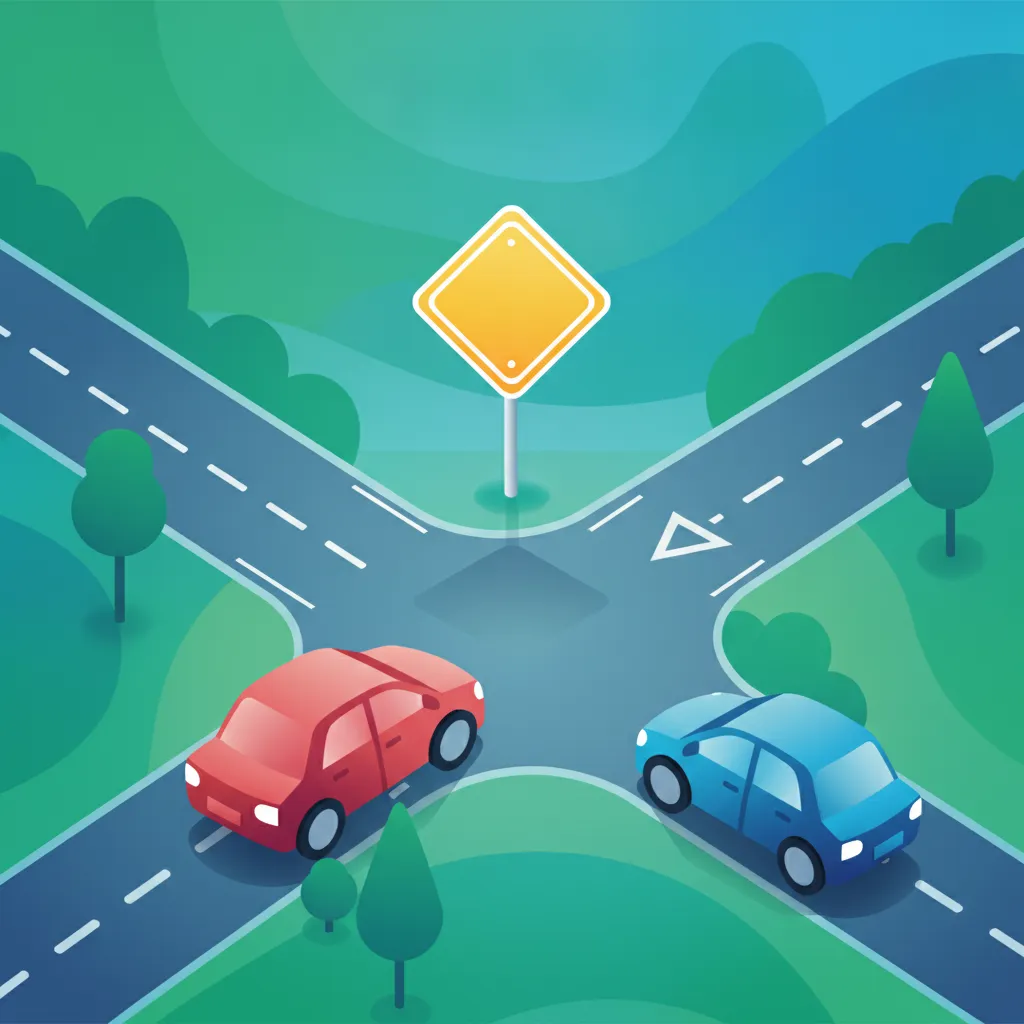
The most critical and primary indicator of a priority road in Türkiye is the yellow diamond-shaped sign with a white border. This sign (officially known as Ana Yol Tali Yol İşareti, meaning "Main Road Side Road Sign" or simply "Priority Road Sign") informs drivers that they are currently traveling on a road that has the right of way.
Key points about this sign:
Other signs you might encounter in relation to priority roads include:
While having priority grants you the right of way, it does not mean you can drive carelessly or assume others will always yield. Your responsibilities include:
Conversely, if you are approaching a priority road from a side road in Türkiye, your responsibilities are clear:
It's crucial for Turkish driving theory learners to distinguish priority roads from other traffic situations:
Learners preparing for their Ehliyet sınavı in Türkiye often make these mistakes regarding priority roads:
In your Ehliyet sınavı, questions about priority roads are common and often test your ability to interpret signs and apply the rules in various intersection scenarios. You will be expected to:
Mastering these rules is not just about passing the exam; it's about ensuring safe and efficient driving on Turkish roads.
Always look for the yellow diamond sign to confirm you are on a priority road. If you see it, you generally have the right of way, but never take it for granted. If you don't see it and are approaching a main road, assume you are on a side road and prepare to give way. Drive defensively, anticipate the actions of others, and prioritize safety above all else.
A priority road in Türkiye gives traffic flowing along it the legal right of way over vehicles entering from side roads, and is primarily identified by the yellow diamond-shaped sign (Ana Yol Tali Yol İşareti). Drivers on side roads must yield or stop at the intersection, while priority road drivers must still drive defensively and obey any traffic lights or police signals that override the priority designation. The priority status continues until the 'End of Priority Road' sign appears or is superseded by traffic controls, and always overrides the general right-hand priority rule used at uncontrolled intersections.
A short set of high-value points that capture the most important ideas from this theory explanation.
The yellow diamond-shaped sign (Ana Yol Tali Yol İşareti) indicates you are on a priority road where your traffic has precedence over vehicles from intersecting roads
Drivers entering from side roads (tali yol) must give way to priority road traffic, even if they arrive first at the intersection
Your right of way on a priority road ends when you see the 'End of Priority Road' sign (yellow diamond with black diagonal line)
Traffic lights and traffic police signals always override priority road signs regardless of which road you are on
Priority road rules override the general 'right-hand priority' rule that applies at uncontrolled intersections
Yellow diamond = priority road, red inverted triangle = Give Way (for side road), red octagon = Stop (for side road)
Priority continues after major intersections unless a sign indicates otherwise or the road changes designation
A 'Stop' sign requires a complete halt even if no traffic is visible, unlike a 'Give Way' sign which only requires yielding
Even with legal priority, you must drive defensively and be prepared to react if another driver fails to yield
If traffic lights are installed at an intersection on a priority road, you must obey the lights, not the priority road rule
Assuming that being on a priority road means never having to slow down or check for other traffic
Failing to recognize 'Give Way' or 'Stop' signs on side roads, or not identifying which road has priority at an intersection
Continuing to act as if they have priority after passing the 'End of Priority Road' sign
Not understanding that traffic lights or police signals always take precedence over priority road signs and markings
Failing to anticipate that other drivers might make mistakes and not give way, creating hazardous situations
Start with a short, direct summary of Priority Roads before reading the full explanation below.
A priority road is a main road where traffic has the right of way over vehicles approaching from intersecting roads. Drivers on a priority road generally do not need to yield, while drivers entering or crossing from side roads must give way. These roads are typically identified by specific traffic signs, most commonly the yellow diamond-shaped sign, which signals you are on a priority road in Türkiye.
Review the most important terms, rule signals, and traffic concepts linked to Priority Roads.
Explore related theory topic pages connected to Priority Roads and continue with the next useful rule explanation.
See the common search queries learners use when trying to understand Priority Roads in Turkey.

Dive deeper into specific Turkish driving theory topics like traffic signs, first aid, or vehicle mechanics. Each section offers clear explanations to enhance your understanding of official traffic legislation and prepare you effectively for every aspect of your upcoming ehliyet exam in Türkiye.
Explore Turkish Driving Theory TopicsTheory topic content overview
A short set of high-value points that capture the most important ideas from this theory explanation.
The yellow diamond-shaped sign (Ana Yol Tali Yol İşareti) indicates you are on a priority road where your traffic has precedence over vehicles from intersecting roads
Drivers entering from side roads (tali yol) must give way to priority road traffic, even if they arrive first at the intersection
Your right of way on a priority road ends when you see the 'End of Priority Road' sign (yellow diamond with black diagonal line)
Traffic lights and traffic police signals always override priority road signs regardless of which road you are on
Priority road rules override the general 'right-hand priority' rule that applies at uncontrolled intersections
Yellow diamond = priority road, red inverted triangle = Give Way (for side road), red octagon = Stop (for side road)
Priority continues after major intersections unless a sign indicates otherwise or the road changes designation
A 'Stop' sign requires a complete halt even if no traffic is visible, unlike a 'Give Way' sign which only requires yielding
Even with legal priority, you must drive defensively and be prepared to react if another driver fails to yield
If traffic lights are installed at an intersection on a priority road, you must obey the lights, not the priority road rule
Assuming that being on a priority road means never having to slow down or check for other traffic
Failing to recognize 'Give Way' or 'Stop' signs on side roads, or not identifying which road has priority at an intersection
Continuing to act as if they have priority after passing the 'End of Priority Road' sign
Not understanding that traffic lights or police signals always take precedence over priority road signs and markings
Failing to anticipate that other drivers might make mistakes and not give way, creating hazardous situations
Start with a short, direct summary of Priority Roads before reading the full explanation below.
A priority road is a main road where traffic has the right of way over vehicles approaching from intersecting roads. Drivers on a priority road generally do not need to yield, while drivers entering or crossing from side roads must give way. These roads are typically identified by specific traffic signs, most commonly the yellow diamond-shaped sign, which signals you are on a priority road in Türkiye.
Review the most important terms, rule signals, and traffic concepts linked to Priority Roads.
Explore related theory topic pages connected to Priority Roads and continue with the next useful rule explanation.
See the common search queries learners use when trying to understand Priority Roads in Turkey.
Dive deeper into specific Turkish driving theory topics like traffic signs, first aid, or vehicle mechanics. Each section offers clear explanations to enhance your understanding of official traffic legislation and prepare you effectively for every aspect of your upcoming ehliyet exam in Türkiye.
Explore Turkish Driving Theory TopicsUse this exam-focused revision tip to understand how Priority Roads is likely to appear in theory questions for learners in Turkey. This section helps you identify the most testable part of the rule, avoid common traps, and remember the concept more effectively during Turkish driving theory exam preparation.
Pay close attention to priority road signs in your Ehliyet sınavı. Questions often involve scenarios where a vehicle is entering a priority road. Remember that even on a priority road, you must drive defensively and be prepared for unexpected situations. Never assume absolute priority without confirming the signs or situation.
Read direct answers to the most common learner questions about Priority Roads in Turkey. This FAQ focuses on rule confusion, practical meaning, comparison with similar concepts, and the exact uncertainties that appear most often in Turkish driving theory revision and exam preparation.
A priority road is a road where traffic traveling on it has the right of way over vehicles entering from intersecting roads, ensuring primary traffic flow continues uninterrupted.
In Türkiye, priority roads are primarily identified by the yellow diamond-shaped sign (Trafik İşaretleri No. 101), indicating you are on a road with priority. Other signs may mark the start, continuation, or end of priority.
While you generally have priority, it's not absolute. You must still be attentive, react safely to hazards, and yield if overridden by traffic lights, police signals, or specific 'stop' or 'give way' signs at particular intersections.
When approaching a priority road from a side road, you must slow down, prepare to stop, and give way to all traffic already on or closely approaching the priority road before proceeding.
On a priority road, traffic has automatic precedence. On 'normal' (non-priority) roads, right of way at intersections is determined by the general right-before-left rule (if unmarked), traffic lights, or specific yield/stop signs.
No, the yellow diamond sign specifically indicates priority on a straight section or at intersections with minor roads. Roundabouts in Türkiye have their own specific priority rules, often indicated by a 'yield' sign upon entry.
Not necessarily. Traffic lights override general priority rules. While a priority road might have traffic lights, the lights dictate the right of way at that specific intersection, regardless of the road's priority status.
Use our comprehensive practice search to find exactly the Turkish driving theory questions you need to master. Whether reviewing specific road signs, traffic rules, or first aid scenarios, select your perfect practice set and boost your confidence for the official ehliyet sınavı.