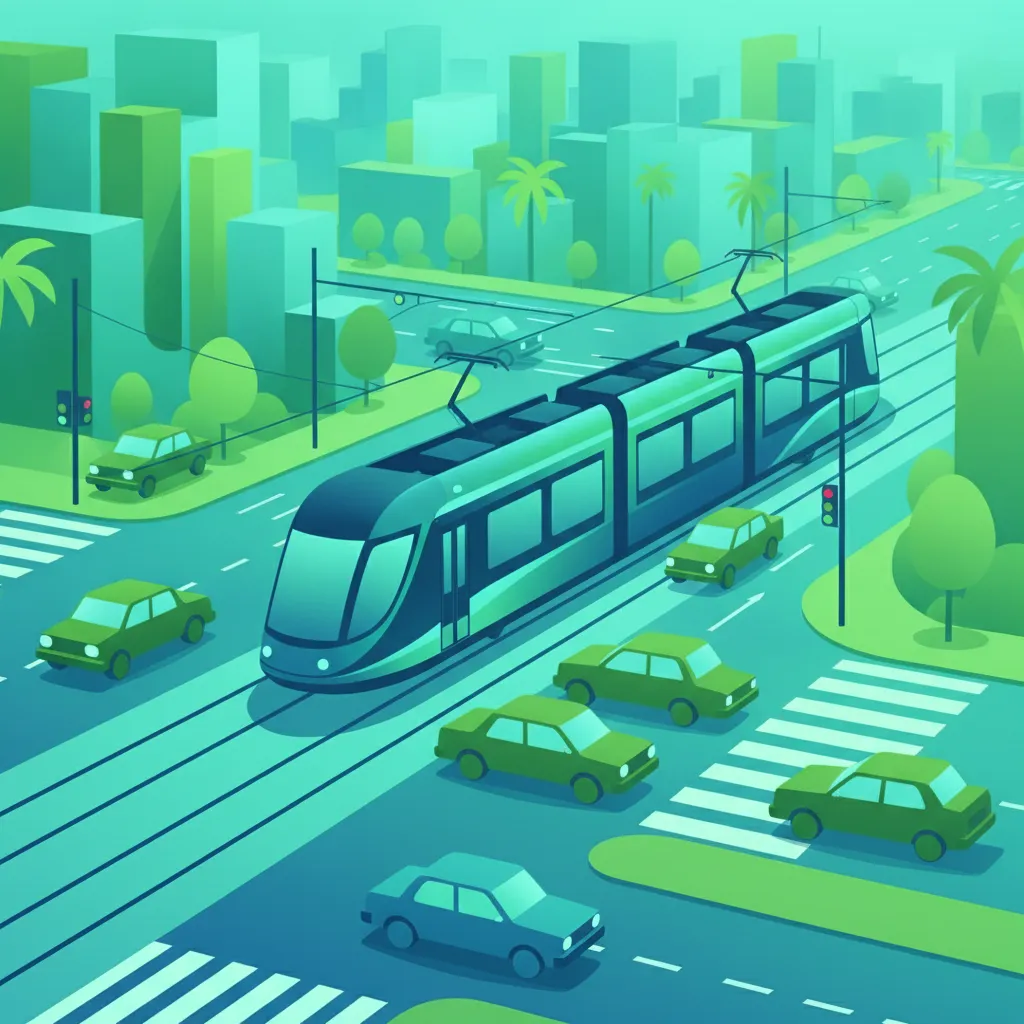
Trams and specific public transport vehicles often have special priority on Turkish roads due to their fixed routes and limited maneuverability. As a driver, you must understand these rules to ensure safety, avoid dangerous situations, and maintain smooth traffic flow in urban environments. Pay close attention to intersections, tram stops, and situations where tracks cross your path.
Theory topic content overview
Read the full theory topic guide for Tram Priority Rules with structured, easy-to-scan content built for learners in Turkey. This detailed section explains the exact rule, meaning, traffic context, comparison points, and exam logic behind this Turkish driving theory topic so you can study faster, understand the concept more clearly, and avoid common interpretation mistakes on the theory test.
Tram and public transport priority refers to specific traffic rules that grant right-of-way to trams and certain designated public transport vehicles (like buses in dedicated lanes) over other road users. This priority is primarily given due to their operational constraints: trams operate on fixed tracks and cannot deviate, while large public buses have specific routes and often carry many passengers, making their efficient movement critical for urban flow.
In Turkish traffic law, this principle ensures the safety of these heavy, less maneuverable vehicles and the many passengers they carry. Understanding tram priority and public transport priority is fundamental for safe driving in Türkiye's urban areas and is a common subject in the ehliyet sınavı (Turkish driving theory exam).
Misunderstanding tram and public transport priority in Türkiye can lead to dangerous collisions, significant traffic congestion, and incorrect answers in your driving theory test.
ehliyet sınavı frequently tests scenarios involving trams and buses, specifically challenging your understanding of their right-of-way at intersections and crossings. Many learners mistakenly apply general priority rules (like the right-hand rule) without considering the special status of trams.The core principle behind tram priority is their immovability on fixed tracks. Unlike cars, trams cannot steer to avoid an obstacle or change lanes to accommodate another vehicle. This physical limitation dictates that other road users must yield to them.
Trams almost always have priority in Türkiye, regardless of other standard right-of-way rules, unless a traffic light or a traffic officer explicitly directs otherwise.
While trams have the strongest and most consistent priority, certain public transport buses also receive special consideration in Turkish traffic:
bus lanes (often marked with a bus symbol) have priority within those lanes. Other vehicles are generally prohibited from using these lanes, except for specific maneuvers or emergencies.Several factors underscore the importance of giving way to trams and public transport:
A common source of confusion for learners in Türkiye is differentiating tram priority from other rules:
right-hand rule (giving way to traffic from your right at unmarked intersections) is generally overridden by tram priority. A tram from your left or right still has priority.Learners taking the ehliyet sınavı or driving in Turkish cities often make these mistakes:
In Türkiye, urban centers like İstanbul, İzmir, Ankara, Bursa, Gaziantep, and Eskişehir have significant tram and light rail networks. The presence of these systems makes tram priority rules an essential part of daily driving and the Turkish driving theory curriculum.
The ehliyet sınavı questions on this topic often involve visual scenarios where you must identify the correct action when encountering a tram at an intersection or crossing. The key insight tested is usually that the tram's fixed route overrides most other priority considerations. Remember, while you yield to a tram, you must still be aware of traffic lights or traffic officers, who have the ultimate authority.
The most important takeaway for tram and public transport priority in Turkish traffic is to anticipate the presence of these vehicles and be prepared to yield. When you see tram tracks or are driving in areas known for public transport, shift your mindset:
By consistently applying these principles, you contribute to safer roads, efficient public transport, and demonstrate the knowledge required to pass your ehliyet sınavı.
Tram and public transport priority is a fundamental concept in Turkish traffic law that grants trams and certain buses right-of-way due to their fixed routes, size, and limited maneuverability. Trams always have priority unless traffic lights or a traffic officer explicitly directs otherwise, overriding standard rules like the right-hand rule and main road priority. Drivers must yield to trams at all intersections and crossings, never block tram tracks, and wait for trams to pass before turning across tracks. Buses receive priority mainly in dedicated lanes and when pulling out from stops, but their priority is situational rather than absolute. Understanding this topic is essential for both safe driving in Turkish cities and passing the ehliyet sınavı.
A short set of high-value points that capture the most important ideas from this theory explanation.
Trams always have priority on their fixed tracks in Türkiye unless traffic lights or a traffic officer explicitly directs otherwise
The right-hand rule and main road priority are overridden by tram priority at intersections
When turning across tram tracks, you must wait for any approaching tram to pass completely before initiating your turn
Never block tram tracks at intersections, red lights, or near tram stops, as trams cannot deviate from their fixed path
Traffic lights and directions from a traffic officer always take precedence over tram priority rules
Trams operate on fixed, immovable tracks, making their priority absolute under normal traffic conditions
At unmarked intersections, a tram approaching from any direction has priority over standard right-of-way rules
Trams require long distances to stop due to their size and weight, so always assume they cannot brake quickly
Bus priority applies mainly in dedicated lanes and when buses are pulling out from stops, but is not as absolute as tram priority
Always actively scan for trams before turning or crossing intersections with tram tracks
Applying standard right-of-way rules like the right-hand rule when a tram is present at an intersection
Underestimating a tram's speed or assuming it can stop quickly to let a car through
Stopping or waiting on tram tracks, whether at a red light, in traffic, or near a tram stop
Failing to look for trams when turning or crossing intersections, especially in cities with extensive tram networks like İstanbul and İzmir
Confusing general traffic priority rules with the special status granted to public transport vehicles
Start with a short, direct summary of Tram Priority Rules before reading the full explanation below.
In Türkiye, trams and certain designated public transport vehicles typically have priority because they operate on fixed tracks or routes and cannot easily deviate. Drivers must yield to them, especially at intersections and tram stops, even if other priority rules might suggest otherwise. This ensures the safety of large passenger vehicles and the efficient flow of public transportation.
Review the most important terms, rule signals, and traffic concepts linked to Tram Priority Rules.
Explore related theory topic pages connected to Tram Priority Rules and continue with the next useful rule explanation.
See the common search queries learners use when trying to understand Tram Priority Rules in Turkey.

Dive deeper into specific Turkish driving theory topics like traffic signs, first aid, or vehicle mechanics. Each section offers clear explanations to enhance your understanding of official traffic legislation and prepare you effectively for every aspect of your upcoming ehliyet exam in Türkiye.
Explore Turkish Driving Theory TopicsTheory topic content overview
A short set of high-value points that capture the most important ideas from this theory explanation.
Trams always have priority on their fixed tracks in Türkiye unless traffic lights or a traffic officer explicitly directs otherwise
The right-hand rule and main road priority are overridden by tram priority at intersections
When turning across tram tracks, you must wait for any approaching tram to pass completely before initiating your turn
Never block tram tracks at intersections, red lights, or near tram stops, as trams cannot deviate from their fixed path
Traffic lights and directions from a traffic officer always take precedence over tram priority rules
Trams operate on fixed, immovable tracks, making their priority absolute under normal traffic conditions
At unmarked intersections, a tram approaching from any direction has priority over standard right-of-way rules
Trams require long distances to stop due to their size and weight, so always assume they cannot brake quickly
Bus priority applies mainly in dedicated lanes and when buses are pulling out from stops, but is not as absolute as tram priority
Always actively scan for trams before turning or crossing intersections with tram tracks
Applying standard right-of-way rules like the right-hand rule when a tram is present at an intersection
Underestimating a tram's speed or assuming it can stop quickly to let a car through
Stopping or waiting on tram tracks, whether at a red light, in traffic, or near a tram stop
Failing to look for trams when turning or crossing intersections, especially in cities with extensive tram networks like İstanbul and İzmir
Confusing general traffic priority rules with the special status granted to public transport vehicles
Start with a short, direct summary of Tram Priority Rules before reading the full explanation below.
In Türkiye, trams and certain designated public transport vehicles typically have priority because they operate on fixed tracks or routes and cannot easily deviate. Drivers must yield to them, especially at intersections and tram stops, even if other priority rules might suggest otherwise. This ensures the safety of large passenger vehicles and the efficient flow of public transportation.
Review the most important terms, rule signals, and traffic concepts linked to Tram Priority Rules.
Explore related theory topic pages connected to Tram Priority Rules and continue with the next useful rule explanation.
See the common search queries learners use when trying to understand Tram Priority Rules in Turkey.
Dive deeper into specific Turkish driving theory topics like traffic signs, first aid, or vehicle mechanics. Each section offers clear explanations to enhance your understanding of official traffic legislation and prepare you effectively for every aspect of your upcoming ehliyet exam in Türkiye.
Explore Turkish Driving Theory TopicsUse this exam-focused revision tip to understand how Tram Priority Rules is likely to appear in theory questions for learners in Turkey. This section helps you identify the most testable part of the rule, avoid common traps, and remember the concept more effectively during Turkish driving theory exam preparation.
In the ehliyet sınavı, remember that a tram's immobility on tracks is its defining characteristic. If a tram is present, especially at an intersection, assume it has priority unless a traffic light or a traffic officer explicitly directs otherwise. Many learners mistakenly apply standard right-of-way rules when a tram is involved, leading to incorrect answers.
Read direct answers to the most common learner questions about Tram Priority Rules in Turkey. This FAQ focuses on rule confusion, practical meaning, comparison with similar concepts, and the exact uncertainties that appear most often in Turkish driving theory revision and exam preparation.
Generally, yes, trams have priority due to their fixed routes and limited maneuverability, especially at intersections. However, always be aware of specific signage or traffic signals that might override general priority.
Designated public transport vehicles, particularly those using special lanes or stops, are often given priority to maintain efficient schedules, carry many passengers safely, and minimize disruptions to urban transit systems.
Be extra cautious, check your mirrors, and avoid blocking the tracks. Always yield to an approaching tram and be aware of pedestrians near stops, who might cross unexpectedly.
While there aren't specific signs for *giving* priority to trams to other road users, general priority signs (like 'Give Way' or 'Stop') can apply to your vehicle. Trams themselves are governed by their own signals.
If a tram is approaching an intersection where you intend to turn, you must yield to the tram, regardless of other turning priority rules. The tram's movement on its fixed tracks takes precedence.
Certain public buses, especially those in dedicated bus lanes or at marked priority stops, can also have priority over other traffic in Türkiye, similar to trams, to ensure public transport efficiency and passenger flow.
The ehliyet sınavı (Turkish driving exam) often includes scenario questions involving trams at intersections or crossings, testing your understanding of when and how to safely give way to these vehicles.
Use our comprehensive practice search to find exactly the Turkish driving theory questions you need to master. Whether reviewing specific road signs, traffic rules, or first aid scenarios, select your perfect practice set and boost your confidence for the official ehliyet sınavı.