Giving way means allowing other road users to proceed first to prevent conflict and maintain a smooth traffic flow. In Türkiye, these rules are clearly defined by traffic legislation and frequently tested in the driving theory exam. This page will help you identify when and where you must yield, from signed intersections to pedestrian zones, ensuring you drive confidently and safely.
Theory topic content overview
Read the full theory topic guide for Give Way Rules with structured, easy-to-scan content built for learners in Turkey. This detailed section explains the exact rule, meaning, traffic context, comparison points, and exam logic behind this Turkish driving theory topic so you can study faster, understand the concept more clearly, and avoid common interpretation mistakes on the theory test.
Yol Vermek) Means in Turkish TrafficGiving way, or yol vermek in Turkish, is a fundamental principle of traffic safety that requires a driver to allow another road user to proceed first. This action prevents potential conflicts and collisions, ensuring a smooth and safe flow of traffic. When you give way, you must slow down, and if necessary, stop your vehicle completely to ensure that the other road user can continue their journey without obstruction or danger.
The core idea is to establish a clear order of movement at points where paths might cross, such as intersections, pedestrian crossings, or when lanes merge. Understanding and correctly applying öncelik kuralları (priority rules) is not just a courtesy; it's a legal obligation in Türkiye and a critical component of safe driving.
Misunderstanding or failing to give way is one of the most common causes of collisions, particularly at intersections and pedestrian zones across Türkiye. For learners, mastering these rules is paramount for several reasons:
Ehliyet sınavı or MTSK e-sınav). Questions often involve interpreting signs, road markings, and complex scenarios requiring you to identify the correct priority.Trafik Mevzuatı) strictly defines when and how drivers must give way. Non-compliance can lead to fines and penalties.The requirement to give way is determined by a combination of traffic signs, road markings, traffic signals, and general rules of priority. Here’s how it works in various situations on Turkish roads:
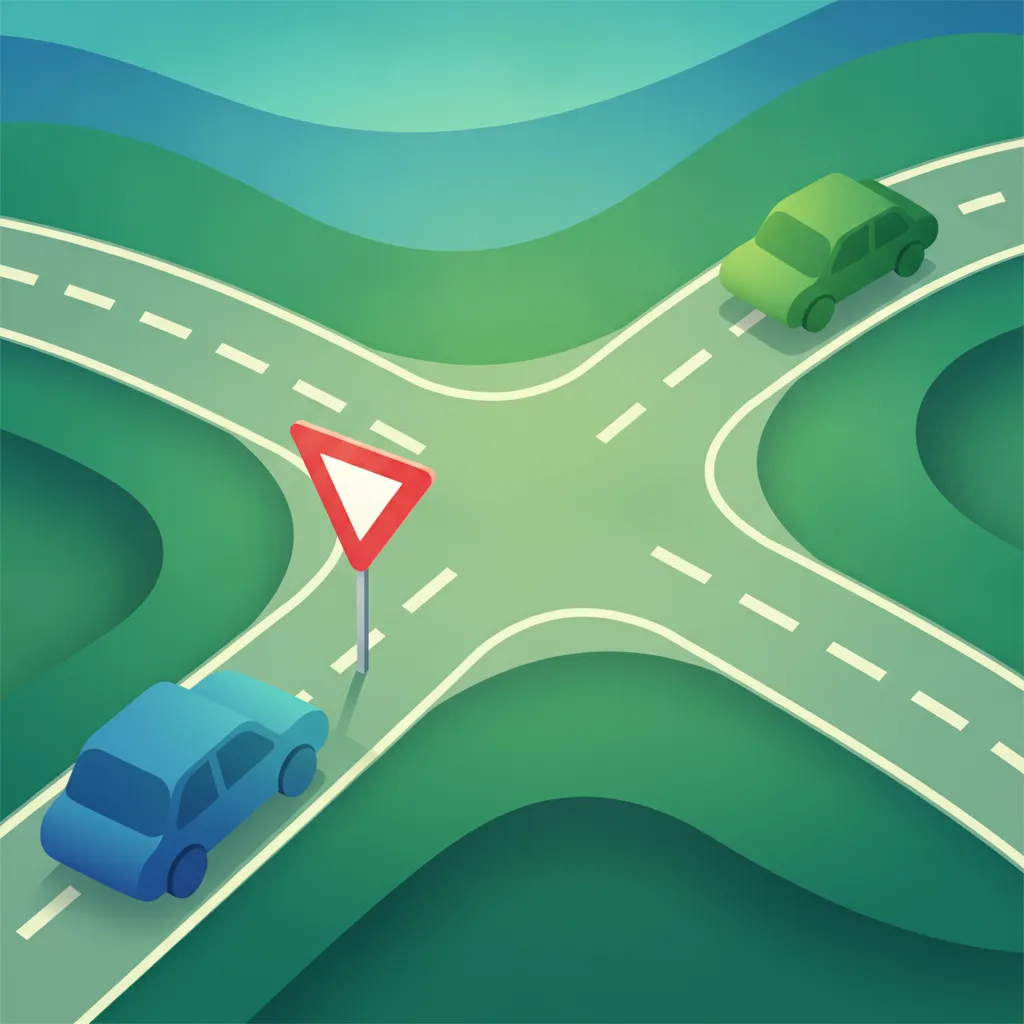
Yol Ver İşareti)The most direct instruction to give way comes from the triangular Yol Ver sign (inverted white triangle with a red border). When approaching this sign, you must:
ana yol).Dur İşareti)While related to yielding, a Dur sign (red octagon with "DUR" in white) has a stricter requirement. It demands a full and complete stop before the stop line, even if the intersection appears clear. After stopping, you must check for traffic and only proceed when it is safe.
At intersections without traffic signs or signals, the fundamental Turkish rule is right-before-left (sağdan gelen önceliklidir). This means:
Göbekler / Dönel Kavşaklar)In Türkiye, vehicles already circulating within a roundabout generally have priority over vehicles wishing to enter it, unless specific signs or signals dictate otherwise. Always check for signs upon approach, as some larger roundabouts may have specific priority arrangements.
Yaya Geçitleri)At designated pedestrian crossings that are not controlled by traffic lights, pedestrians always have priority in Türkiye once they have stepped onto the crossing or clearly intend to do so. Drivers must slow down, be prepared to stop, and ensure pedestrians can cross safely.
When joining a main road from a side road (tali yol), or merging into a main traffic lane (e.g., from an acceleration lane on an otoyol), you must give way to traffic already on the main road or in the lane you wish to enter.
Always give way to emergency vehicles (ambulans, itfaiye, polis) when they are using their flashing lights and sirens. Additionally, in some urban areas, public transport vehicles (like otobüs) re-entering traffic from a bus stop might have priority, especially in specific traffic lanes.
Your decision-making process when giving way should consider several factors:
Yol Ver sign is present.Yol Ver vs. Dur SignsOne of the most frequent areas of confusion for learners in the Ehliyet sınavı and on Turkish roads is the difference between the Yol Ver (Give Way) and Dur (Stop) signs.
Yol Ver (Give Way): This triangular sign indicates you must yield to traffic on the main road. If the way is absolutely clear and safe, you may slow down and proceed without coming to a complete stop. The emphasis is on yielding priority.Dur (Stop): This octagonal sign requires a full and complete stop before the stop line or the intersection edge, regardless of whether traffic is visible. Only after coming to a full stop and checking for clear passage should you proceed. The emphasis is on stopping before proceeding.Treating a Dur sign like a Yol Ver sign (by rolling through without stopping) is a serious traffic violation and dangerous. Conversely, always stopping unnecessarily at a Yol Ver sign can sometimes impede traffic flow, though it's safer than not yielding when required.
Let's look at how give way rules apply in typical Turkish driving situations:
Yol Ver sign in a busy Istanbul district. You are on a smaller street approaching an intersection with a main road. There's a Yol Ver sign. You slow down, observe the continuous flow of traffic on the main road, and realize there's no safe gap. You bring your vehicle to a complete stop, wait for a large enough gap, and then merge smoothly without disrupting the main road traffic.Yaya Geçidi in Izmir. You're driving in a city center and see a yaya geçidi ahead. A pedestrian is waiting to cross and makes eye contact, or has already started to step onto the crossing. You must slow down and stop before the crossing, allowing them to cross safely before you proceed.Learners and even experienced drivers often make mistakes regarding priority rules:
sağdan gelen önceliklidir rule at unmarked intersections.Yol Ver and Dur: Failing to stop completely at a Dur sign or stopping unnecessarily at a Yol Ver sign when the way is clear.yaya geçitleri.Ehliyet Sınavı Focus and Practical TakeawayThe Ehliyet sınavı places significant emphasis on öncelik kuralları. You will be tested on your ability to:
trafik işaretleri), road markings (yol çizgileri), and the absence of either.Yol Ver and Dur scenarios.In practice, mastering give way rules is about proactive decision-making. Always anticipate potential conflict points, scan for signs and other road users, and be ready to slow down or stop. When in doubt, always assume you must give way. This defensive approach ensures your safety and the safety of others on Turkish roads. By internalizing these rules, you're not just passing an exam; you're adopting a mindset that reduces risks and contributes to safer driving throughout Türkiye.
Give way rules (öncelik kuralları) are fundamental to safe driving in Türkiye and are heavily tested in the Ehliyet sınavı. The key distinction is between Yol Ver signs, which require slowing and yielding but allow proceeding if clear, and Dur signs, which demand a complete stop. At unmarked intersections, vehicles from the right have priority (right-before-left rule). Pedestrians must always be given absolute priority at designated crossings, and vehicles already in roundabouts have priority over those entering. Understanding these rules and correctly identifying who has priority is essential for both passing the theory exam and safe practical driving.
A short set of high-value points that capture the most important ideas from this theory explanation.
Giving way (yol vermek) means slowing or stopping to let another road user proceed first, and it is a legal obligation in Türkiye under traffic legislation (Trafik Mevzuatı)
At unmarked intersections, the right-before-left rule (sağdan gelen önceliklidir) applies: vehicles approaching from your right have priority
The Yol Ver (Give Way) sign requires yielding but allows you to proceed without a full stop if the way is completely clear
Pedestrians always have absolute priority at designated crossings (yaya geçitleri) once they step onto or clearly intend to enter the crossing
Vehicles already circulating within a roundabout have priority over vehicles wishing to enter, unless specific signs indicate otherwise
Yol Ver = yield and slow down, may roll through if clear; Dur = complete full stop before the stop line, no exceptions
Right-before-left (sağdan gelen önceliklidir) is the default rule at unmarked intersections when no signs or signals are present
Emergency vehicles with flashing lights and sirens always have absolute priority regardless of other signs or rules
At roundabouts, circulating traffic has priority over entering traffic unless specific signs modify this arrangement
Pedestrians have priority at yaya geçitleri even when not using a controlled crossing
Misjudging gaps in traffic and pulling out dangerously because speed and distance of priority vehicles were not accurately assessed
Treating a Dur (Stop) sign like a Yol Ver sign by rolling through without coming to a complete stop, which is a serious traffic violation
Failing to yield to pedestrians at yaya geçitleri by not slowing down or stopping when they step onto the crossing
Forgetting the right-before-left rule at unmarked intersections and proceeding without giving way to traffic from the right
Only checking one direction at an intersection before proceeding after yielding, neglecting blind spots and other road users
Start with a short, direct summary of Give Way Rules before reading the full explanation below.
Giving way involves yielding your right of passage to another road user, either by slowing down or stopping, to avoid a collision and allow them to proceed safely. In Türkiye, drivers must give way when indicated by specific traffic signs (like the triangular 'Yol Ver' sign), at unsigned intersections to vehicles approaching from the right, to pedestrians at designated crossings, and when merging into main traffic.
Review the most important terms, rule signals, and traffic concepts linked to Give Way Rules.
Explore related theory topic pages connected to Give Way Rules and continue with the next useful rule explanation.
See the common search queries learners use when trying to understand Give Way Rules in Turkey.

Dive deeper into specific Turkish driving theory topics like traffic signs, first aid, or vehicle mechanics. Each section offers clear explanations to enhance your understanding of official traffic legislation and prepare you effectively for every aspect of your upcoming ehliyet exam in Türkiye.
Explore Turkish Driving Theory TopicsTheory topic content overview
A short set of high-value points that capture the most important ideas from this theory explanation.
Giving way (yol vermek) means slowing or stopping to let another road user proceed first, and it is a legal obligation in Türkiye under traffic legislation (Trafik Mevzuatı)
At unmarked intersections, the right-before-left rule (sağdan gelen önceliklidir) applies: vehicles approaching from your right have priority
The Yol Ver (Give Way) sign requires yielding but allows you to proceed without a full stop if the way is completely clear
Pedestrians always have absolute priority at designated crossings (yaya geçitleri) once they step onto or clearly intend to enter the crossing
Vehicles already circulating within a roundabout have priority over vehicles wishing to enter, unless specific signs indicate otherwise
Yol Ver = yield and slow down, may roll through if clear; Dur = complete full stop before the stop line, no exceptions
Right-before-left (sağdan gelen önceliklidir) is the default rule at unmarked intersections when no signs or signals are present
Emergency vehicles with flashing lights and sirens always have absolute priority regardless of other signs or rules
At roundabouts, circulating traffic has priority over entering traffic unless specific signs modify this arrangement
Pedestrians have priority at yaya geçitleri even when not using a controlled crossing
Misjudging gaps in traffic and pulling out dangerously because speed and distance of priority vehicles were not accurately assessed
Treating a Dur (Stop) sign like a Yol Ver sign by rolling through without coming to a complete stop, which is a serious traffic violation
Failing to yield to pedestrians at yaya geçitleri by not slowing down or stopping when they step onto the crossing
Forgetting the right-before-left rule at unmarked intersections and proceeding without giving way to traffic from the right
Only checking one direction at an intersection before proceeding after yielding, neglecting blind spots and other road users
Start with a short, direct summary of Give Way Rules before reading the full explanation below.
Giving way involves yielding your right of passage to another road user, either by slowing down or stopping, to avoid a collision and allow them to proceed safely. In Türkiye, drivers must give way when indicated by specific traffic signs (like the triangular 'Yol Ver' sign), at unsigned intersections to vehicles approaching from the right, to pedestrians at designated crossings, and when merging into main traffic.
Review the most important terms, rule signals, and traffic concepts linked to Give Way Rules.
Explore related theory topic pages connected to Give Way Rules and continue with the next useful rule explanation.
See the common search queries learners use when trying to understand Give Way Rules in Turkey.
Dive deeper into specific Turkish driving theory topics like traffic signs, first aid, or vehicle mechanics. Each section offers clear explanations to enhance your understanding of official traffic legislation and prepare you effectively for every aspect of your upcoming ehliyet exam in Türkiye.
Explore Turkish Driving Theory TopicsUse this exam-focused revision tip to understand how Give Way Rules is likely to appear in theory questions for learners in Turkey. This section helps you identify the most testable part of the rule, avoid common traps, and remember the concept more effectively during Turkish driving theory exam preparation.
A common trap in the Ehliyet sınavı is distinguishing between 'Yol Ver' (Give Way) and 'Dur' (Stop) signs. Remember, 'Yol Ver' often allows for rolling if clear, while 'Dur' demands a full stop. Also, pay close attention to unmarked intersections; the right-before-left rule is frequently tested as a default priority.
Read direct answers to the most common learner questions about Give Way Rules in Turkey. This FAQ focuses on rule confusion, practical meaning, comparison with similar concepts, and the exact uncertainties that appear most often in Turkish driving theory revision and exam preparation.
Giving way (öncelik vermek) means that you must allow other road users to proceed before you, slowing down or stopping if necessary, to prevent a collision or disruption of traffic flow.
The 'Give Way' sign in Türkiye is a white inverted triangular sign with a red border, commonly known as 'Yol Ver'. It indicates that drivers must yield to traffic on the intersecting road.
At unmarked intersections in Türkiye, you must generally give way to vehicles approaching from your right. This is known as the 'rule of right before left' (sağdan gelen önceliklidir).
Yes, drivers must give way to pedestrians who are crossing or intending to cross at designated pedestrian crossings, or if they are already on the road at other points and you can safely stop.
A 'Stop' sign (Dur) requires you to come to a complete halt before the stop line, even if there is no traffic. A 'Give Way' sign (Yol Ver) requires you to yield to priority traffic, meaning you may proceed without stopping if the way is clear.
Generally, in Türkiye, vehicles already circulating within a roundabout have priority over vehicles entering it, unless specific signs or signals indicate otherwise.
When merging onto a main road from an acceleration lane, side road, or private exit in Türkiye, you must give way to traffic already on the main road and adjust your speed to merge safely.
Use our comprehensive practice search to find exactly the Turkish driving theory questions you need to master. Whether reviewing specific road signs, traffic rules, or first aid scenarios, select your perfect practice set and boost your confidence for the official ehliyet sınavı.