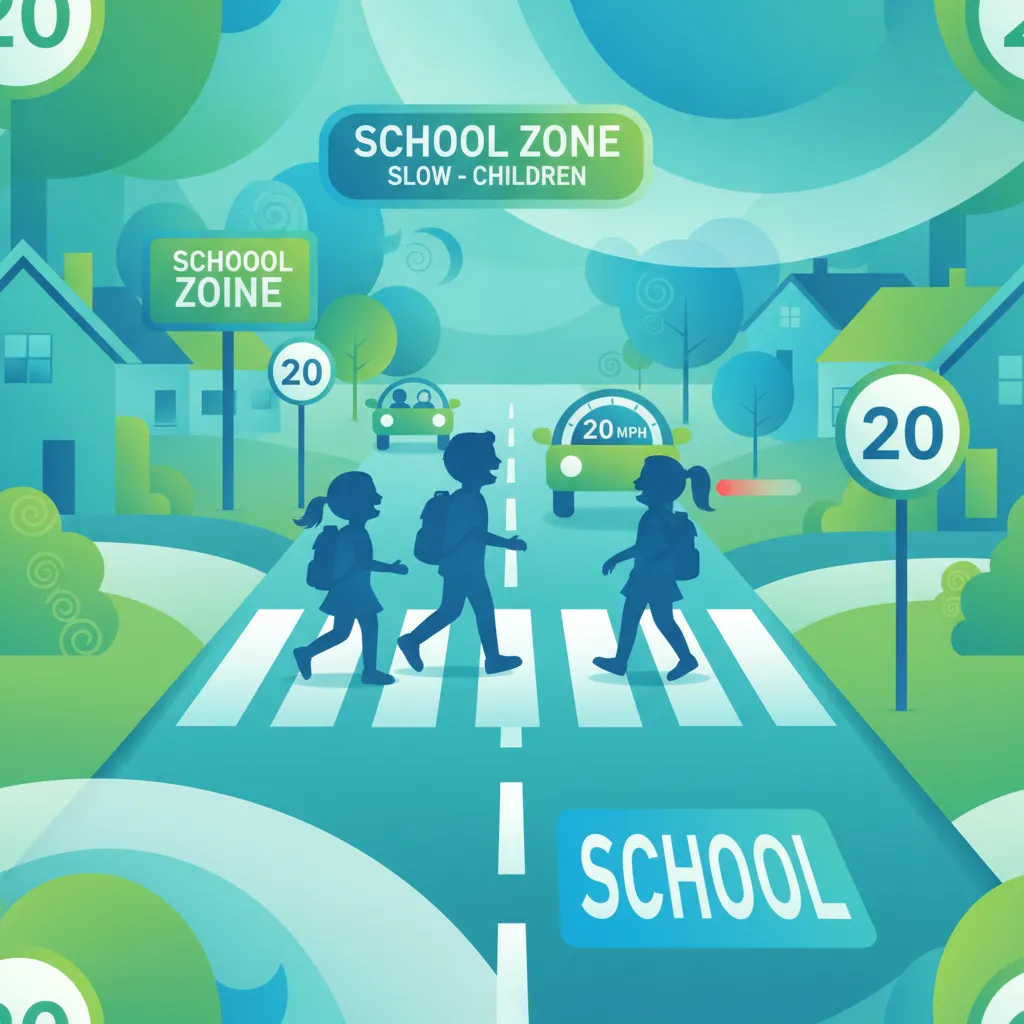
This lesson explores the specific speed limits and priority rules governing school zones, residential streets, and shared spaces in France. By mastering these configurations, you will ensure safety for vulnerable road users and gain the knowledge required to handle complex urban driving questions on your Category B theory exam.
Lesson content overview
French municipalities place a high priority on the coexistence of diverse road users within urban centers. Under the French Code de la route, specific low-speed zones are established to transition the urban landscape from vehicle-dominated streets to safe, shared spaces. Driving in these environments requires not only a reduction in speed but also a fundamental shift in how you perceive priority, pedestrian rights, and the physical limits of your vehicle.
As you prepare for the French Category B driving theory exam (Épreuve Théorique Générale or ETG), understanding these special zones is crucial. This lesson explores the strict regulations, signposts, road markings, and physical principles governing three key urban configurations: Zone 30, Zone Piétonne (Pedestrian-Only Districts), and the Zone de Rencontre (Shared Zones).
Traditional road design separates motorized traffic from pedestrians to prevent accidents. However, in historic town centers, school areas, and dense residential sectors, complete physical segregation is often impossible or counterproductive. French traffic planners use "traffic calming" (modération de la circulation) to integrate different types of road users.
This philosophy relies on a simple rule: the more vulnerable the road user, the greater their legal priority. By lowering vehicle speeds, drivers gain more time to observe, react, and safely negotiate space with pedestrians, cyclists, and operators of personal mobility devices (EDPM - Engins de Déplacement Personnel Motorisés).
A Zone 30 is an urban area where the maximum speed limit is set at 30 km/h for all vehicles. Unlike a standard speed limit sign that applies only to a single street or until the next intersection, a "Zone" sign establishes a regulatory boundary that remains active across multiple streets and blocks until you pass a specific exit sign.
When driving within a Zone 30, you must adhere to several key regulatory requirements:
The special speed restriction and cycling rules only end when you pass the specific exit sign. This sign features the same design but in grey/black with a diagonal black stripe across it.
Common ETG Mistake: Many learners assume that passing an intersection cancels the 30 km/h limit. Within a "Zone," the limit is strictly maintained across all subsequent streets and intersections until you pass the official Zone Exit sign (B51).
A Zone Piétonne is an area of a municipality designed exclusively for pedestrians. Motorized vehicles are prohibited from entering or circulating in these zones, creating a safe, vehicle-free haven for shoppers, tourists, and residents.
While these zones are reserved for those on foot, complete exclusion of vehicles is not always practical. French municipalities establish specific local exemptions:
The end of this restricted area is designated by the exit sign, signaling a transition back to standard urban road rules.
Introduced into the French Code de la route to bridge the gap between Zone 30s and pedestrian zones, the Zone de Rencontre (literally "Meeting Zone") is a highly integrated shared space.
In a Zone de Rencontre, the traditional separation between sidewalks and lanes is removed. The entire street layout is designed to encourage direct communication and mutual respect between drivers, cyclists, and pedestrians.
A shared urban space designed to foster equal coexistence between all road users, characterized by a 20 km/h speed limit and legal priority for pedestrians over motorized traffic across the entire street surface.
Municipalities rely on specific horizontal road markings to reinforce signs and visually alert drivers that they are entering a highly regulated urban zone.
To encourage natural deceleration, painters place large, white or yellow triangular markings, known as chevrons, on the road surface. These chevrons create an optical illusion of road narrowing, prompting drivers to lift their foot off the accelerator and prepare for a low-speed environment.
Many special zones utilize distinct road textures, such as cobblestones, colored asphalt, or AGG (Asphalte à Granulats Glycérofrittés). These materials are chosen for their visual contrast and the tactile feedback they provide. Passing over these surfaces generates distinct sound and vibration inside the vehicle, alerting the driver to maintain a low speed and watch out for pedestrians.
The speed limits of 30 km/h and 20 km/h are not arbitrary. They are grounded in the laws of physics and human reaction times, designed to prevent collisions and save lives.
The kinetic energy () of a moving vehicle is directly proportional to its mass () and the square of its velocity ():
Because speed is squared in this equation, even a modest reduction in speed results in a massive drop in kinetic energy:
When a driver spots a hazard (e.g., a child stepping off the curb), the vehicle continues to travel forward during the driver's reaction time (averaging 1 second) before the brakes are applied. This is known as the Reaction Distance.
At 50 km/h: The vehicle travels approximately 14 meters during the 1-second reaction time. Braking distance adds another 11 meters, resulting in a total stopping distance of 25 meters.
At 30 km/h: The vehicle travels approximately 8 meters during the reaction time. Braking distance is reduced to 5 meters, resulting in a total stopping distance of only 13 meters.
At 20 km/h: The vehicle covers just 5.5 meters during reaction, with a braking distance of around 2 meters, stopping in a total of 7.5 meters.
Reducing your speed from 50 km/h to 30 km/h nearly cuts your total stopping distance in half. This difference is often the dividing line between a safe stop and a fatal accident.
To help you apply these rules on the road and prepare for your theory exam, let us analyze some practical driving scenarios.
The table below summarizes the key differences between standard urban streets and the three special low-speed configurations:
| Zone Type | Maximum Speed Limit | Pedestrian Priority Rule | Bicycle Two-Way Rule | Parking Restrictions |
|---|---|---|---|---|
| Standard Urban Road | 50 km/h | Must cross at pedestrian crossings if within 50 meters | Only allowed if signposted | Allowed in marked bays or where not prohibited |
| Zone 30 | 30 km/h | Must use crossings if nearby; drivers must yield when they cross | Automatic two-way cycling unless signed otherwise | Allowed in marked bays |
| Zone de Rencontre | 20 km/h | Absolute priority across the entire roadway | Automatic two-way cycling unless signed otherwise | Restricted strictly to marked bays |
| Zone Piétonne | Walking pace (approx. 4–6 km/h) | Absolute priority across the entire zone | Generally allowed at walking pace | Strictly prohibited (except deliveries in time slots) |
Under the French Code de la route, failing to comply with special zone regulations carries heavy legal penalties, reflecting the risk these infractions pose to vulnerable road users.
Explore all units and lessons included in this driving theory course.
Lesson content overview
Explore all units and lessons included in this driving theory course.
Explore search topics learners often look for when studying Special Zones: School Areas, Residential Streets. These topics reflect common questions about road rules, driving situations, safety guidance, and lesson level theory preparation for learners in France.
Browse additional driving theory lessons that cover connected traffic rules, road signs, and common driving situations related to this topic. Improve your understanding of how different rules interact across everyday traffic scenarios.
Understand the fundamental rules governing right of way in France, including the standard priorite a droite at intersections and how these principles apply across various urban road configurations. This explanation provides a foundation for navigating complex city environments safely while complying with the Code de la route.
In France, the default rule at any intersection without clear priority signage is priority-to-the-right (priorite a droite). This lesson explains how to identify unsignaled junctions in urban and rural environments and when you must yield to incoming vehicles. You will learn to spot the standard yellow diamond priority signs and triangular warning signs that indicate whether you hold the priority.

Learners will study the fundamental priority rules that dictate right-of-way at intersections, focusing on the 'priorité à droite' principle prevalent in French road design. The lesson explains how to identify priority roads, interpret yield signs, and apply these rules safely when operating an AM vehicle. Understanding priority ensures orderly movement and reduces conflict points in mixed traffic scenarios.
This lesson provides a comprehensive breakdown of priority rules under French law, with special focus on the default rule of priorité à droite. You will learn to recognize when this rule applies, even in the absence of explicit signage, and how to verify that entering vehicles see you. It also explains how to read priority road indicators, stop signs, and yield signs, helping you manage right-of-way safely and confidently.

Negotiating crossroads that lack active traffic light signals requires a clear reading of signs and painted stop or yield lines. This lesson details the obligations of stopping completely at stop signs and slowing down to yield at 'cedez le passage' markings. You will learn to assess cross-traffic speeds, determine priorities when multiple vehicles arrive, and execute turns safely.

Controlled intersections use traffic lights and accompanying signs to manage busy crossings systematically. This lesson covers how to safely proceed on a green light, negotiate left turns when yielding to oncoming traffic, and obey flashing amber lights. You will also learn the hierarchy of traffic control, where police officer gestures overrule both traffic lights and priority signs.

Learners will explore the rules related to pedestrian crossings, focusing on the obligation to yield to pedestrians at zebra crossings and flashing pedestrian signals. The lesson highlights the importance of stopping before the stop line, reducing speed, and maintaining vigilance for pedestrian movement. Mastery of these practices ensures the safety of both pedestrians and AM riders at crossing points.

In France, pedestrians have clear legal priority when stepping onto or indicating an intent to use a crossing (passage pieton). This lesson details standard zebra crossings, refuge islands, and pedestrian crossings managed by synchronized traffic light systems. You will learn to scan crossings ahead, anticipate pedestrian movements, and safely come to a stop whenever a pedestrian attempts to cross.

Public transit vehicles like city buses and streetcars (trams) have clear legal priorities and dedicated infrastructure in urban areas. This lesson teaches you to recognize reserved transit lanes and your legal obligation to yield to buses exiting their designated stops. You will also learn safe driving strategies near tram tracks, ensuring you never block public transit lines or risk passenger boarding areas.

This lesson examines French Code de la route laws regarding pedestrian right-of-way, emphasizing the driver's legal duty to yield to any pedestrian engaged in crossing. It outlines proper approach speeds when approaching zebra crossings with obstructed views. Candidates will learn to maintain a safe physical buffer zone and verify that crosswalks are entirely clear of pedestrians before accelerating.
Some crossroads feature complex layouts or specific signs that modify standard priority rules, such as schematic diagrams (panonceaux schematiques). This lesson teaches you how to read these auxiliary signs, which depict the thick line of the priority road and thin lines of secondary roads. You will learn how to maintain priority when the main road curves and how to navigate non-standard intersection layouts.
Learn the legal responsibilities of drivers when interacting with pedestrians, cyclists, and vulnerable road users within French municipality environments. This guide clarifies the rights and safety requirements for sharing road space in residential streets, school zones, and areas with heavy pedestrian traffic as mandated by the Code de la route.
This lesson focuses on the legal requirement to yield to pedestrians on or about to step onto zebra crossings, a major focus of French road safety. You will learn how to approach school zones and pedestrian islands with heightened vigilance and reduced speed. Additionally, the lesson explores shared urban spaces, explaining how to maintain safe lateral distances when overtaking cyclists or personal electric scooters.
This lesson examines the specific challenges and responsibilities goods vehicle drivers face when interacting with pedestrians and cyclists in urban environments. Learners will understand right-of-way rules, the importance of yielding at pedestrian crossings, and safe turning practices that protect cyclists. The content emphasizes heightened driver vigilance, especially when navigating bike lanes and crowded sidewalks.
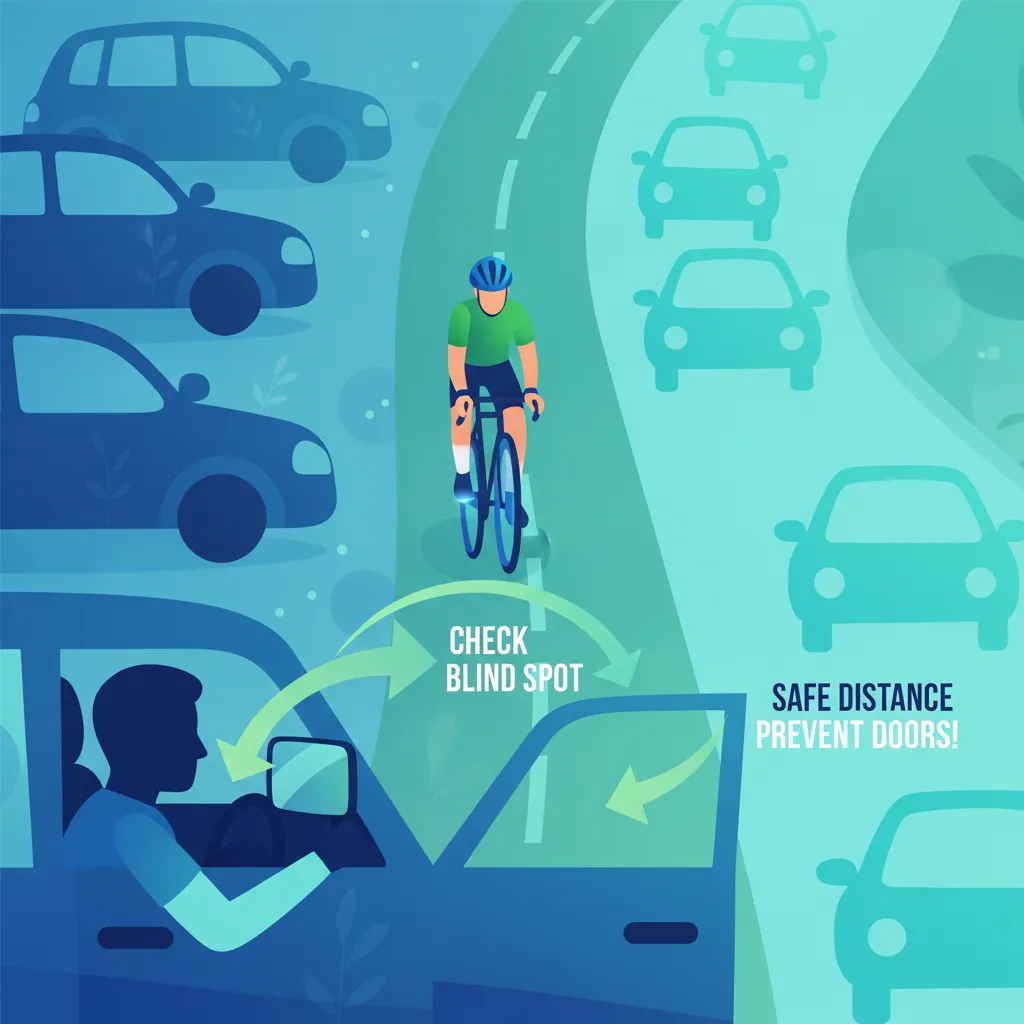
This lesson explains how to share the road safely with cyclists in both urban and rural environments. Drivers will study the legal minimum passing distances when overtaking cyclists, which is one meter in cities and one and a half meters outside urban areas. It also covers recognizing specialized cycling infrastructure, bike boxes at intersections, and preventing blind-spot collisions during right turns.
Learners will focus on the best practices for interacting safely with cyclists and pedestrians in mixed traffic environments. The lesson covers proper lane usage, overtaking protocols, maintaining adequate safety gaps, and non-verbal communication techniques in the French urban landscape. By applying these principles, AM riders can coexist harmoniously with vulnerable road users, reducing the likelihood of accidents.
In France, pedestrians have clear legal priority when stepping onto or indicating an intent to use a crossing (passage pieton). This lesson details standard zebra crossings, refuge islands, and pedestrian crossings managed by synchronized traffic light systems. You will learn to scan crossings ahead, anticipate pedestrian movements, and safely come to a stop whenever a pedestrian attempts to cross.
Learners will explore the rules related to pedestrian crossings, focusing on the obligation to yield to pedestrians at zebra crossings and flashing pedestrian signals. The lesson highlights the importance of stopping before the stop line, reducing speed, and maintaining vigilance for pedestrian movement. Mastery of these practices ensures the safety of both pedestrians and AM riders at crossing points.
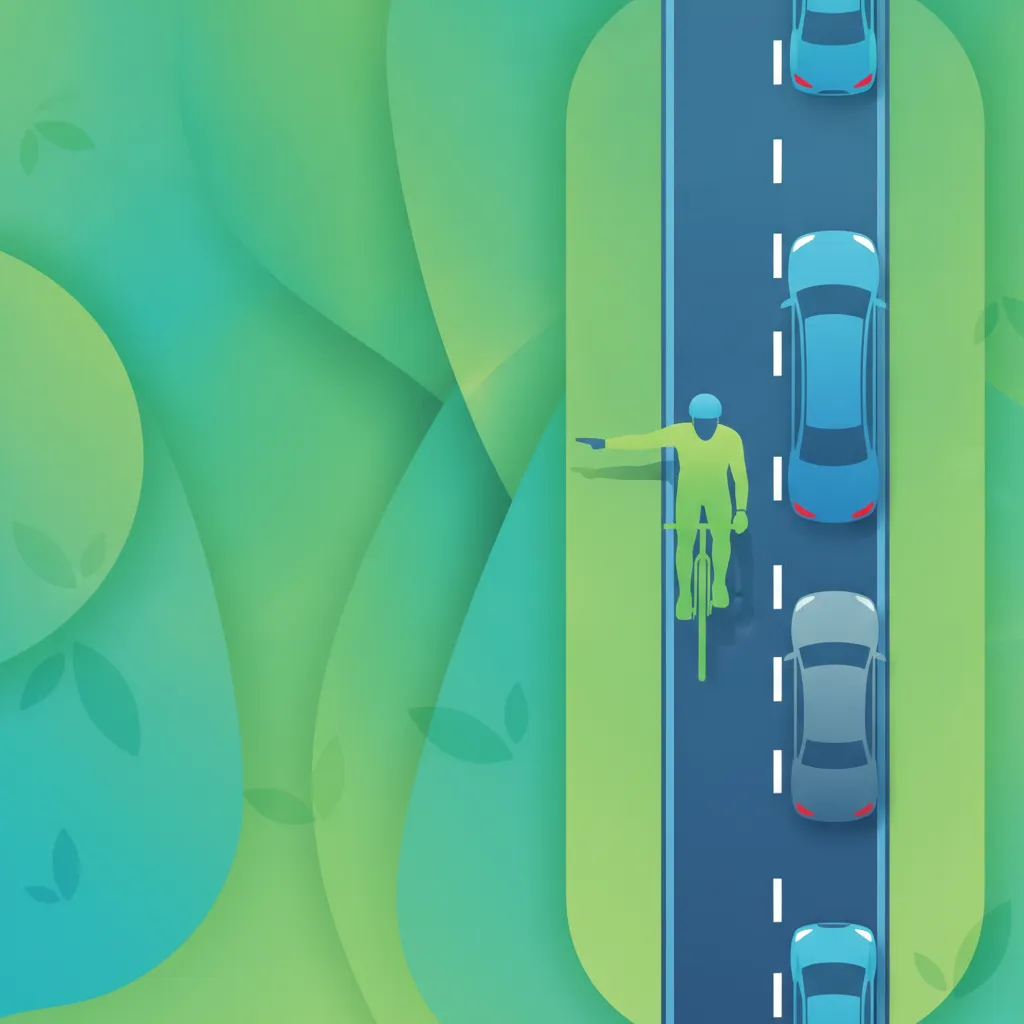
Bicycles represent an eco-friendly transport method with specific rights on French public roadways. This lesson teaches you how to identify dedicated cycle paths, respect bike lanes, and understand cyclist turning privileges at intersections. You will learn the legal minimum safety distance required when overtaking a cyclist: 1 meter in urban areas and 1.5 meters outside city limits.

This lesson details how to manage high-risk interactions with pedestrians who may step off curbs or cross the road near bus stops. Learners will study French Code de la route laws regarding pedestrian priority at crosswalks and near stopping transit vehicles. Developing heightened spatial awareness around blind zones near the front of the bus is emphasized to prevent tragic pedestrian collisions.

This lesson covers the operational logic of traffic light signals in France, emphasizing the legal implications of the red, amber, and green cycles. You will study how to safely manage the amber phase to avoid rear-end collisions from vehicles behind while maintaining control. Additionally, you will discover the unique challenge of electromagnetic induction loops, which sometimes fail to detect lightweight motorcycles at quiet intersections.

Certain groups of road users require heightened defensive attention from drivers due to physical limitations or unpredictable behaviors. This lesson covers how to recognize signs of visual impairment (white canes), mobility challenges, and the unpredictability of young children. You will learn to reduce your speed, extend yielding patience, and proactively secure extra space to protect these vulnerable users.
Find clear answers to common questions learners have about Special Zones: School Areas, Residential Streets. Learn how the lesson is structured, which driving theory objectives it supports, and how it fits into the overall learning path of units and curriculum progression in France. These explanations help you understand key concepts, lesson flow, and exam focused study goals.
As the name suggests, the speed limit in a zone 30 is restricted to a maximum of 30 km/h for all vehicles to ensure the safety of residents and pedestrians.
Yes, in a zone de rencontre, pedestrians are legally allowed to walk on the entire width of the roadway and have priority over vehicles, which must limit their speed to 20 km/h.
Look for the regulatory sign featuring a white silhouette of an adult and child on a blue circular background; vehicles are generally prohibited from entering these streets.
School zones are often indicated by a warning sign showing a triangle with a pedestrian symbol, though specific school-area regulations may be supplemented by flashing lights or school-time speed limit signs.
Ready to focus your study? Use the practice search to find exactly the French driving theory questions you need for the Code de la route and permis de conduire ETG. Refine your knowledge on specific topics or challenging rules to boost your confidence and exam readiness.