
This lesson focuses on the critical techniques for managing steep gradients while operating heavy goods vehicles. You will learn how to maintain safe control through proper gear selection and engine braking to ensure vehicle stability and prevent brake failure on long descents.

Lesson content overview
Navigating steep inclines and declines is one of the most demanding tasks for professional drivers operating heavy goods vehicles (HGVs) and articulated combinations. Under the French Code de la route, drivers of Category C and CE vehicles must possess a deep understanding of the physical forces at play when traversing gradients. Managing a vehicle that can weigh up to 44 tonnes requires precise control, technical foresight, and a proactive driving strategy to ensure safety, prevent mechanical failure, and maintain vehicle stability.
This lesson details the physics of gradient driving, the mechanical systems designed to assist with downhill speed control, and the practical techniques required to handle climbs and descents safely and efficiently.
When a heavy goods vehicle transitions from flat terrain to a downhill gradient, the physical forces acting upon it change dramatically. Understanding these forces is the first step in maintaining control.
On a flat road, a vehicle’s mass requires engine power to overcome rolling resistance and aerodynamic drag. On a downhill slope, gravity acts as an accelerating force. The steeper the gradient and the heavier the vehicle, the greater the gravitational pull acting along the slope.
This gravitational force increases the vehicle's momentum, constantly attempting to accelerate the truck down the hill. To maintain a constant, safe speed, the driver must introduce an equal and opposite braking force. If this force is applied solely via the service brakes (frein de service), the kinetic energy of the moving vehicle is converted entirely into thermal energy (heat) within the brake drums or discs.
The formula for kinetic energy is:
Where is the vehicle mass and is the velocity. Because velocity is squared, doubling your speed quadruples the kinetic energy that the vehicle's braking systems must dissipate. For a fully loaded 44-tonne articulated vehicle, the amount of energy converted to heat during a long descent is immense.
If the service brakes are used continuously, they will quickly reach temperatures exceeding 400°C. At these extreme temperatures, the friction materials lose their effectiveness, leading to a critical safety hazard known as brake fade.
To prevent the service brakes from overheating, heavy vehicle drivers must rely primarily on auxiliary braking systems. In France and across Europe, these systems are essential for downhill speed management.
Engine braking is the deceleration achieved by releasing the accelerator pedal and utilizing the internal friction and compression cycles of the engine to resist the vehicle's forward motion. When the fuel injection is cut off, the engine acts as an air compressor, absorbing energy from the wheels through the drivetrain.
For vehicles operating under Category C and CE, standard engine braking is often supplemented by highly effective auxiliary retarders. These systems slow the vehicle without wearing down the service brakes.
Electromagnetic Retarders (e.g., Telma): These systems are typically installed on the driveline. They use electromagnetic induction (eddy currents) created between stators and rotors to generate a powerful retarding force.
Hydrodynamic Retarders (e.g., Voith, Intarder): Integrated directly into the gearbox, these retarders use oil friction to slow the vehicle. As oil is pumped into the retarder chamber, rotor blades accelerate the oil against stator blades, creating resistance that slows the transmission output shaft.
Retarder Hazard on Slippery Roads: Never use high levels of auxiliary retardation (especially electromagnetic or hydrodynamic retarders) on wet, icy, or snow-covered roads. Because retarders only brake the driven wheels (usually the drive axle of the tractor unit), excessive retarding force can cause these wheels to lock up or lose traction, leading to a jackknife (mise en portefeuille) in articulated vehicles or a skid in rigid trucks.
Correct gear selection is the cornerstone of safe downhill driving. The golden rule of heavy vehicle operation on gradients is:
"Descend a hill using the same gear (or one gear lower) than you would use to climb it."
With modern heavy vehicles equipped with automated manual transmissions (AMTs), this rule remains highly relevant. Drivers must understand how to override automatic systems to maintain control.
You must select the correct gear before beginning the descent. Attempting to downshift once the vehicle has already gained excessive speed on a steep slope is highly dangerous.
Assess the road ahead: Look for warning signs indicating the gradient percentage and the length of the slope.
Reduce speed early: Use the service brakes firmly but briefly to bring the vehicle's speed below the target descent speed before reaching the crest of the hill.
Select the target gear: Shift down to a gear that aligns the engine RPM with the peak efficiency of the engine brake/retarder system.
Engage auxiliary brakes: Activate the exhaust brake or retarder to stabilize the speed.
Monitor engine RPM: Ensure the engine speed remains within safe operating limits to prevent over-revving (surrégime), which can cause catastrophic engine damage.
Brake fade is a dangerous phenomenon where the stopping power of the service brakes decreases dramatically due to heat build-up.
Heavy vehicle service brakes rely on friction between the brake pads/linings and the brake discs/drums. This friction converts kinetic energy into heat.
To prevent brake fade on long descents, drivers must practice "snubbing" or interval braking rather than continuous light pressure.
A vehicle's stability on a gradient is heavily influenced by how its cargo is loaded and how that weight shifts due to gravity.
The Center of Gravity is the theoretical point where the entire weight of the vehicle and its cargo is concentrated. On a steep incline or decline, the effective position of the CG relative to the axles shifts.
Drivers must adhere strictly to axle weight limits (charges à l'essieu) under French law. If a vehicle is loaded too far to the rear, a steep downhill descent can cause the rear of the vehicle to become light and unstable during braking, significantly increasing the risk of trailer swing or a jackknife.
Moving a heavy goods vehicle forward from a complete stop on a steep upgrade requires precision. Rollback must be prevented to protect vehicles behind you, and drivetrain abuse must be minimized.
For vehicles equipped with manual transmissions and standard mechanical parking brakes:
Modern HGVs are equipped with Electronic Braking Systems (EBS) that include Hill Start Assistance (HSA) or hill holder functions.
The French Code de la route uses specific signage to warn drivers of gradients and to mandate safety behaviors.
In addition to warning signs, drivers may encounter regulatory signs that mandate specific actions for heavy vehicles.
Safe gradient management requires adjusting your driving style to account for weather, vehicle weight, and road design.
The risk of traction loss is magnified on gradients when the road surface is compromised.
Articulated vehicles present unique challenges on gradients:
Failing to manage gradients correctly can lead to dangerous situations and legal penalties. Here are the most common errors committed by heavy vehicle drivers:
Managing gradients in a Category C or CE vehicle requires proactive planning, a strong understanding of physics, and mastery of your vehicle's mechanical auxiliary systems. By pre-selecting the correct gear, utilizing engine brakes and retarders effectively, maintaining proper load distribution, and adjusting to weather conditions, you ensure that your vehicle remains stable, under control, and safe for all road users.
Explore all units and lessons included in this driving theory course.
Lesson content overview
Explore all units and lessons included in this driving theory course.
Explore search topics learners often look for when studying Managing Gradients and Downhill Control. These topics reflect common questions about road rules, driving situations, safety guidance, and lesson level theory preparation for learners in France.
Browse additional driving theory lessons that cover connected traffic rules, road signs, and common driving situations related to this topic. Improve your understanding of how different rules interact across everyday traffic scenarios.
Understand the mechanical operation of service brakes, engine brakes, and auxiliary retarders in heavy goods vehicles. This guide details how these systems function within the French driving theory framework to ensure vehicle stability and prevent mechanical failure during prolonged descents and demanding traffic conditions.

This lesson teaches advanced braking strategies, highlighting the correct application of progressive friction braking and auxiliary retardation systems like electric or hydraulic retarders. Drivers will learn to avoid abrupt braking inputs that could compromise passenger balance, particularly for standing passengers. It also covers emergency stop procedures, showing how to balance maximum deceleration with vehicle stability.

This lesson focuses on the various braking systems used in goods vehicles, including air brakes, hydraulic brakes, and advanced safety systems such as ABS and ESP. Learners will understand how these systems function, their impact on braking performance, and the importance of regular brake inspection and maintenance. The content also addresses brake wear, brake fade, and how these factors affect stopping distances, especially under heavy load conditions.

Learners will be introduced to effective braking techniques tailored for AM vehicles, emphasizing progressive pressure application and the importance of maintaining grip. The lesson covers how to estimate stopping distances, execute emergency stops safely, and understand the limitations of light vehicle braking systems in France. Mastery of these techniques ensures riders can stop promptly and maintain control in various traffic scenarios.

In this lesson, learners will explore the functions and benefits of ABS and ESP systems in goods vehicles, including how they enhance braking stability and prevent skids. The content explains the technology behind these systems, their activation conditions, and their role in emergency braking scenarios. Learners will also be introduced to the maintenance requirements and limitations of ABS and ESP in heavy vehicle operation.

This lesson explains how to coordinate your front and rear brake controls to achieve maximum stopping power without compromising your lateral stability. You will study how to progressively squeeze the front brake lever to prevent sudden wheel lockup, while using the rear brake for stabilization. The lesson also highlights the function of Anti-Lock Braking Systems (ABS) and how they help you maintain steering control during emergency stops.
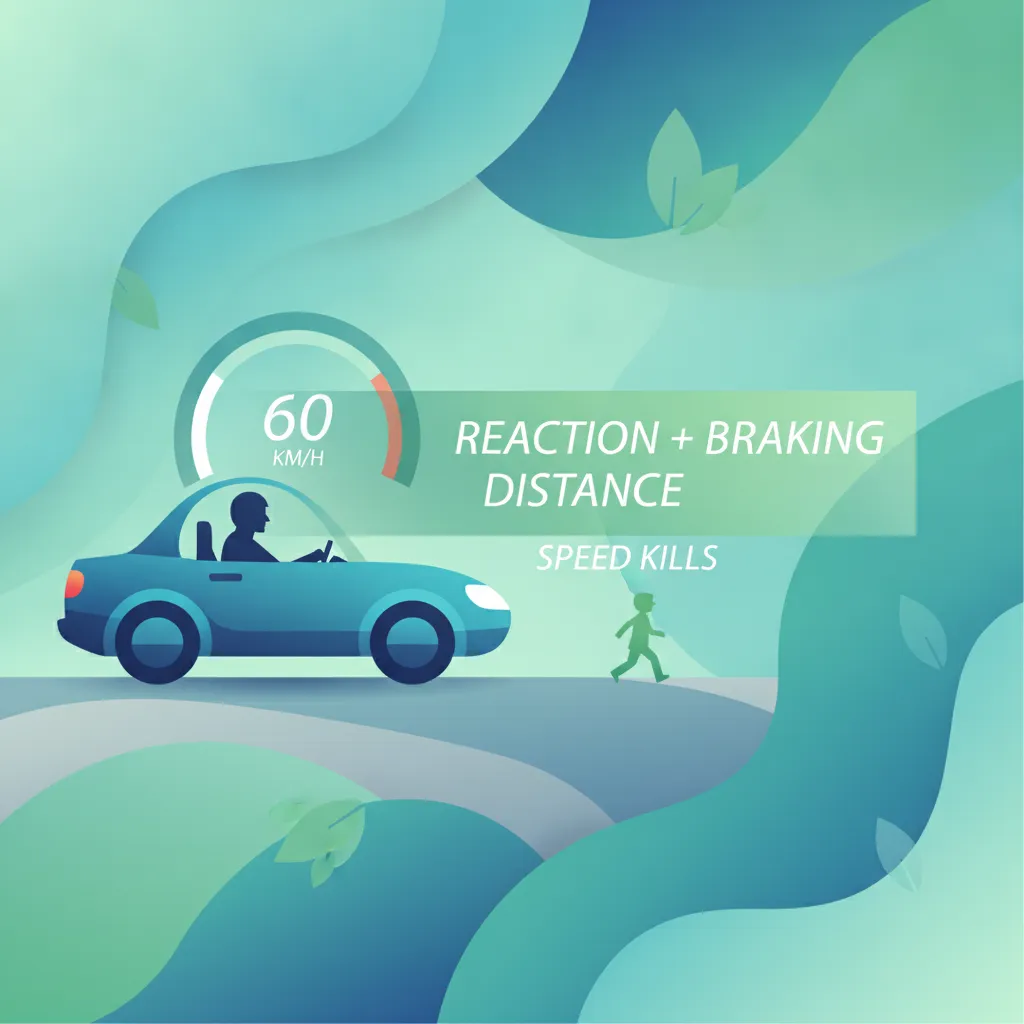
Total stopping distance is calculated as the sum of your reaction distance and the physical braking distance of the car. This lesson explains how reaction time is affected by driver focus and how speed exponentially increases the braking distance. You will learn how tire condition and slippery road surfaces degrade braking adhesion, requiring drivers to recognize and counteract these physical limits.

In this lesson, drivers will learn how to adjust their driving techniques in response to adverse weather conditions such as rain, fog, snow, ice, and strong winds. The content covers strategies for maintaining visibility, managing reduced traction on wet or icy surfaces, and adjusting speed and braking distances accordingly. Learners will also be introduced to the use of anti-skid and stability control systems under challenging weather.

Carrying heavy loads or pulling trailers significantly alters a passenger vehicle's braking distances and stability characteristics. This lesson covers how to read weight limits (like gross vehicle weight ratings), distribute cargo weight evenly, and secure items inside the boot or on roof racks. You will learn to use specialized cargo straps and understand the risks of overloading your suspension and tyres.

In this lesson, drivers will learn how to calculate safe following distances based on vehicle speed, load, road conditions, and traffic density. The content explains the components of total stopping distance, including reaction time and braking distance, and how these are affected by factors such as wet road surfaces and heavy loads. Learners will also be introduced to French road safety guidelines for maintaining appropriate gaps to ensure sufficient time to react.
This lesson focuses on the specific considerations for operating goods vehicles on French motorways, including lane selection, speed management, and proper merging techniques. Learners will understand the importance of maintaining lane discipline, using appropriate overtaking practices, and respecting motorway-specific speed limits for heavy vehicles. The content also covers the use of emergency lanes and the handling of traffic flow.
Learn the professional techniques for navigating steep mountain passes and long gradients in a heavy goods vehicle. This lesson covers legal requirements for French road sign compliance, load distribution dynamics, and safe driving strategies to avoid hazardous situations like brake fade or loss of traction on descent.
This lesson focuses on the specific considerations for operating goods vehicles on French motorways, including lane selection, speed management, and proper merging techniques. Learners will understand the importance of maintaining lane discipline, using appropriate overtaking practices, and respecting motorway-specific speed limits for heavy vehicles. The content also covers the use of emergency lanes and the handling of traffic flow.
In this lesson, drivers will learn how to adjust their driving techniques in response to adverse weather conditions such as rain, fog, snow, ice, and strong winds. The content covers strategies for maintaining visibility, managing reduced traction on wet or icy surfaces, and adjusting speed and braking distances accordingly. Learners will also be introduced to the use of anti-skid and stability control systems under challenging weather.
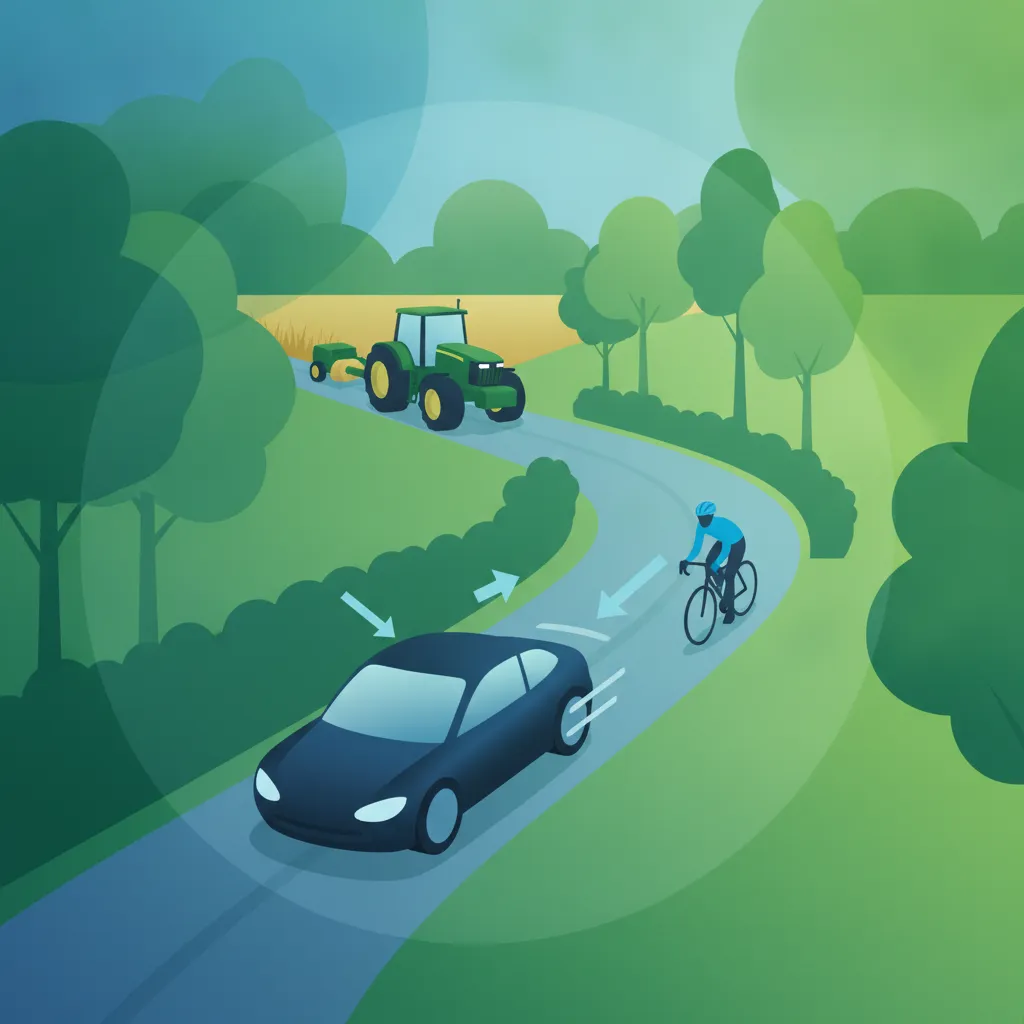
This lesson analyzes the complex driving conditions found on French secondary and rural road networks (routes départementales). Drivers will learn steering and braking techniques to descend steep gradients safely using engine retarding systems without overheating the service brakes. Anticipating agricultural machinery, domestic livestock, unlit intersections, and narrow bridges is also taught in depth.
This lesson examines the effects that heavy goods vehicles have on road infrastructure, including pavement wear, bridge stress, and tunnel clearance issues. Learners will understand how increased weight and dimensions contribute to accelerated road degradation, leading to higher maintenance costs and potential restrictions on vehicle access. The material also highlights the importance of infrastructure capacity assessments and the role of weight restrictions in protecting road assets.
This lesson focuses on the weight and dimension restrictions that goods vehicles must adhere to while traveling on French roads. Learners will understand bridge caps, tunnel clearances, and other physical limitations imposed by infrastructure, and how these restrictions impact route planning and vehicle loading. The content also highlights legal load limits and the importance of compliance checks to avoid fines and roadblocks.

This lesson covers the rules of driving passenger vehicles on high-speed French motorways (autoroutes). Learners will study entry-ramp merging protocols, lane restrictions for vehicles over 3.5 tonnes, and motorway-specific speed limits. The lesson also highlights the correct use of toll booths (péages), emergency hard-shoulder safety procedures, and accessing dedicated coach rest areas.
Find clear answers to common questions learners have about Managing Gradients and Downhill Control. Learn how the lesson is structured, which driving theory objectives it supports, and how it fits into the overall learning path of units and curriculum progression in France. These explanations help you understand key concepts, lesson flow, and exam focused study goals.
Engine braking allows the engine to absorb the kinetic energy of the vehicle, significantly reducing the load on the service brakes. Constant use of service brakes on long descents can cause brake fade or overheating, leading to a critical loss of stopping power.
You should generally select a gear that is low enough to provide sufficient engine braking to hold the vehicle at a safe speed without the need for constant braking. Always choose this gear before entering the descent, as changing gears on a steep slope can be dangerous.
Increased weight dramatically increases the momentum of your vehicle, making it more difficult to slow down or stop. Heavily loaded vehicles require even greater distance and more deliberate speed management on gradients to maintain control.
Yes, professional drivers must adhere to traffic signs indicating specific weight or descent warnings. You are expected to anticipate these conditions early and adapt your driving style to ensure the safety of your heavy vehicle and those around you.
Ready to focus your study? Use the practice search to find exactly the French driving theory questions you need for the Code de la route and permis de conduire ETG. Refine your knowledge on specific topics or challenging rules to boost your confidence and exam readiness.