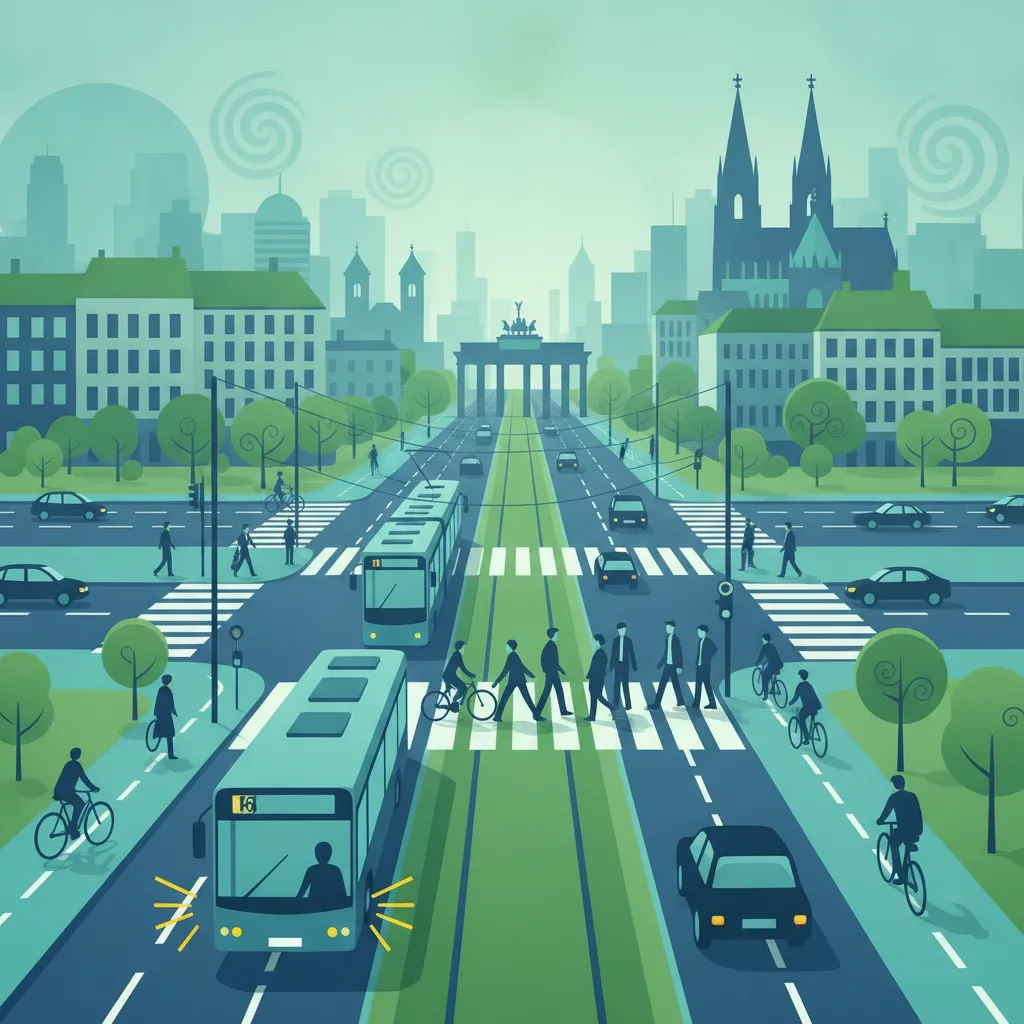
Navigate the complexities of dense urban environments with confidence. This unit covers essential rules for bus lanes, special traffic signals, and effective interaction with public transport like trams, cyclists, and pedestrians. Master these critical skills for your professional passenger vehicle driving theory exam in Germany.
Browse all lessons that make up Urban Traffic, Bus Rules, Special Signals, Routes and Public Transport Interaction. Each lesson focuses on specific topics, learning objectives, and core concepts, helping you build essential knowledge and follow a clear, structured progression toward your study goals in Germany.
This lesson explores the complex and fast-paced nature of urban traffic environments. It covers topics such as high traffic density, frequent pedestrian crossings, and complex intersections that require heightened awareness. Learners will develop strategies for adapting their speed and lane positioning to navigate these challenges safely, especially during peak rush hour periods and in areas with traffic calming measures.
This lesson provides a detailed explanation of the rules governing dedicated bus lanes, including how to interpret markings and adhere to time-based restrictions. It clarifies the priority rules that grant buses precedence in certain traffic situations, such as when pulling out from a stop. Understanding these regulations allows drivers to use bus infrastructure efficiently and legally to maintain schedules and improve traffic flow.
This lesson focuses on the unique challenges and safety protocols required when operating alongside trams and light rail systems. It clarifies the strict right-of-way rules that typically favor trams and explains how to safely navigate shared roadways and cross tracks. Learners will be taught to recognize specific signals and markings related to tramways to prevent conflicts and ensure the safety of all road users.
This lesson familiarizes drivers with the various special traffic signals and signs that apply exclusively to buses and other public transport vehicles. It covers the interpretation of bus-only signals (often showing bars or letters), flashing priority indicators, and lane-use control signs. Correctly understanding these signals is crucial for legal compliance and for taking advantage of public transport priority measures in urban areas.
This lesson covers the principles of effective route planning and the practical skills for navigating different types of junctions. It provides guidance on using navigation aids and understanding the specific challenges large vehicles face at roundabouts and complex intersections. Emphasis is placed on correct lane selection and positioning well in advance of a turn to execute the maneuver safely and without impeding other traffic.
Explore high-intent keywords and long-tail search topics learners use when researching Urban Traffic, Bus Rules, Special Signals, Routes and Public Transport Interaction. These terms reflect how people search for reliable study materials, structured explanations, and unit-level theory preparation support in Germany.
Find clear answers to the most common questions learners ask about Urban Traffic, Bus Rules, Special Signals, Routes and Public Transport Interaction. Understand how the unit is organized, what learning goals it supports, and how it contributes to your study progression with structured explanations and practical guidance tailored for learners in Germany.
In Germany, bus lanes (Linienbusspuren) are typically reserved for public transport buses, indicated by specific signs and road markings. While general traffic is usually prohibited, exceptions may apply, often denoted by supplementary signs indicating permitted times or specific vehicle types. Drivers must always observe these signs carefully to avoid violations and ensure smooth public transport operations.
When driving near trams or light rail, remember they often have priority and may follow specific tracks or routes. Always maintain a safe distance, be aware of their movement, and anticipate sudden stops or turns. In many cases, trams operate independently of standard traffic signals, so vigilance is key to avoid conflict.
Special signals for public transport, such as flashing lights or specific signal phases, are designed to grant priority to buses or trams at intersections or specific points. These signals ensure that public transport can maintain its schedule and operate efficiently. As a driver, you must understand these signals and yield when required to facilitate their movement.
Driving large vehicles in city centers presents challenges such as narrower streets, tighter turns, increased pedestrian and cyclist activity, and the need to navigate around parked vehicles and public transport. Maintaining adequate following distances, managing blind spots, and being highly aware of all surrounding road users are crucial for safety.
When a bus lane has a time-restricted opening for other vehicles, always check the specific times indicated on the traffic signs. Outside of these permitted hours, entry is forbidden. Adhering to these time restrictions is vital for compliance and for not impeding regular bus services.
Effective route planning is crucial for professional drivers in urban areas to ensure timely arrivals, avoid unnecessary congestion, and operate efficiently. Understanding the designated routes for public transport, identifying potential traffic bottlenecks, and knowing where to find specific bus stops or terminals are all part of professional route management.
All included lessons
Lessons in Urban Traffic, Bus Rules, Special Signals, Routes and Public Transport Interaction
See who benefits most from studying Urban Traffic, Bus Rules, Special Signals, Routes and Public Transport Interaction. This overview explains how the unit supports different learning needs, what level of knowledge is helpful before starting, and how it fits into the overall study path in Germany.
This unit is essential for all aspiring professional passenger vehicle drivers (D1, D1E, D, DE license categories) preparing for the German theory test. It is particularly beneficial for those who need to refresh their knowledge of urban driving specifics or are new to handling large passenger vehicles in bustling city centers.

Ready to prepare for your German driving licence theory exam? Dive into our carefully structured courses to build your knowledge effectively. Select a course that matches your licence category and begin your systematic study path today for confident exam success.
Browse Driving Theory CoursesExplore all units and lessons included in this driving theory course.
Ready to prepare for your German driving licence theory exam? Dive into our carefully structured courses to build your knowledge effectively. Select a course that matches your licence category and begin your systematic study path today for confident exam success.
Browse Driving Theory Courses