
This lesson explores the demanding nature of urban traffic environments specifically for professional passenger vehicle drivers. You will learn how to adapt your driving style to high-density areas, complex intersections, and public transport zones to ensure safety and passenger comfort. This knowledge is essential for the German theory exam and provides a critical foundation for professional bus and coach operation.
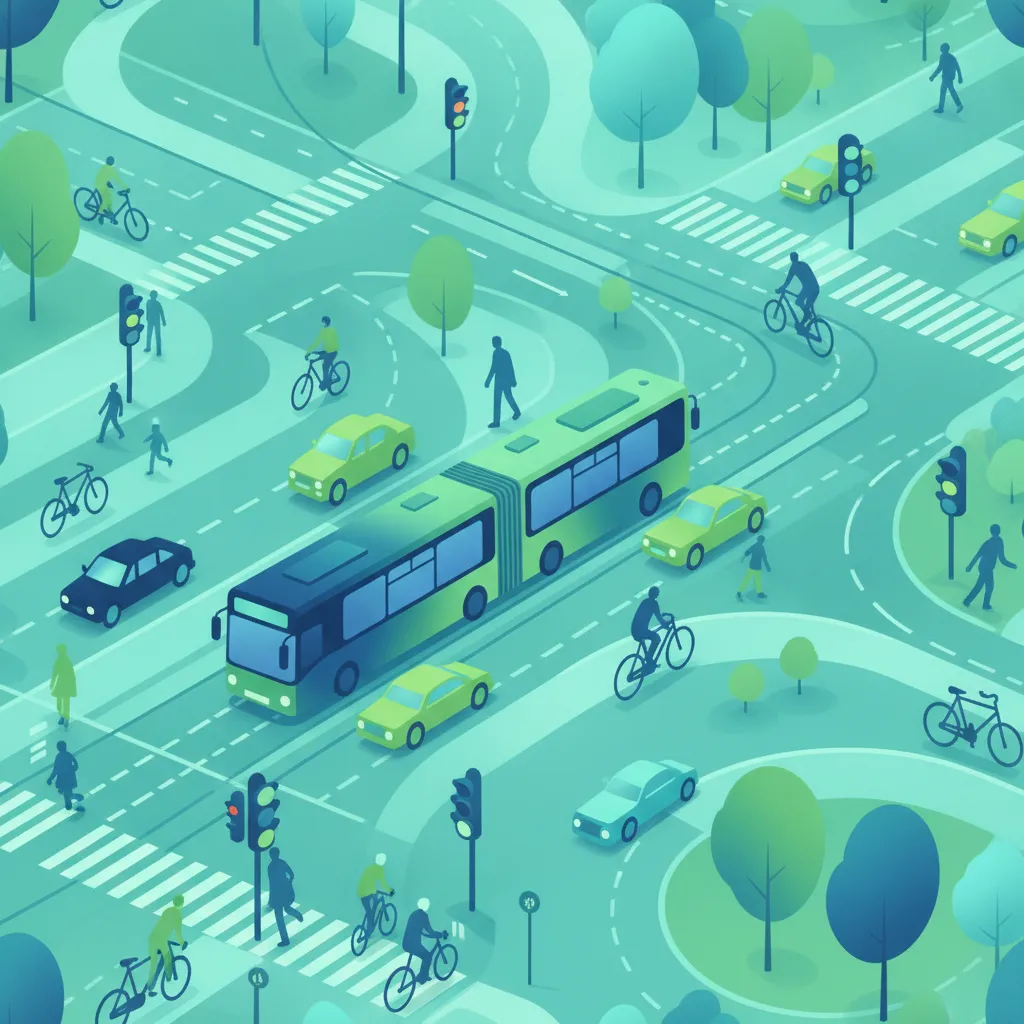
Lesson content overview
This lesson, part of your Professional German Passenger-Vehicle Theory – Licence Categories D1, D1E, D, DE course, focuses on the intricate and often demanding nature of urban driving environments. Understanding urban traffic dynamics is paramount for all professional drivers, especially those transporting passengers, as it directly impacts safety, efficiency, and passenger comfort. We will explore the unique challenges presented by city driving, from dense traffic flows to complex junctions and frequent pedestrian interactions, providing you with strategies for safe and responsible navigation.
Urban driving presents a distinct set of challenges compared to rural roads or motorways. The confluence of high traffic density, frequent interactions with vulnerable road users, and complex road infrastructure demands heightened awareness and rapid decision-making. Professional drivers must develop sophisticated strategies to adapt their speed, anticipate potential hazards, and position their vehicles optimally to ensure the safety and well-being of their passengers and all other road users.
Urban traffic dynamics are shaped by a combination of legal regulations, physical constraints, and the sheer volume of activity. Mastering these dynamics involves understanding:
These elements collectively create an environment where proactive driving and adherence to specific rules are crucial for preventing accidents and ensuring smooth operations.
High traffic density refers to a situation where a large number of vehicles occupy a relatively small road space, leading to slower, often stop-and-go, traffic flow. This is a common occurrence in German cities, particularly on major arterial roads and during peak commuting hours.
In dense urban traffic, maintaining smooth acceleration and braking is vital. Abrupt changes in speed can exacerbate congestion, increase the risk of rear-end collisions, and cause discomfort for passengers. Professional drivers should:
halbe Tacho), in urban stop-and-go traffic, this distance needs to be flexible. Ensure you can always see the tires of the vehicle in front of you touching the road surface. This "tire rule" provides a basic buffer against sudden stops.For professional passenger vehicle drivers, smooth driving in dense traffic significantly enhances passenger comfort and reduces motion sickness. Practice gentle acceleration and deceleration.
Pedestrian crossings are designated points where pedestrians have priority to cross the street. In urban areas, these are exceptionally frequent, and drivers of passenger vehicles must exercise extreme caution. Germany has strict rules designed to protect pedestrians, who are considered vulnerable road users.
Zebrastreifen)Drivers must always be prepared to stop for pedestrians at marked crossings, known as Zebrastreifen (zebra crossings), even if there are no traffic lights.
Road users who are at a higher risk of severe injury in a collision due to their lack of physical protection, such as pedestrians, cyclists, children, and individuals with disabilities.
At signal-controlled crossings, drivers must obey the traffic lights. However, even on a green light, drivers must still be vigilant for pedestrians who may disregard the signal or are still completing their crossing. If a pedestrian is already in the crossing when the light changes, you must allow them to complete their crossing safely before proceeding.
Urban areas are replete with complex intersections that often involve multiple turning lanes, varied priority rules, and interactions with public transport. Navigating these safely requires clear signaling, correct lane usage, and a thorough understanding of German priority regulations.
Vorfahrt achten (give way) signs.Kreisverkehr): Vehicles already in the roundabout typically have priority, and indicating when entering is usually not required (but is mandatory when exiting).Vorfahrtsregeln)Vorfahrt gewähren (Yield), Halt! Vorfahrt gewähren! (Stop! Yield!), and Vorfahrtstraße (Priority Road) explicitly dictate priority at junctions.Rechts vor Links): At uncontrolled intersections (those without signs or lights), traffic coming from the right generally has priority, unless otherwise indicated by road markings or the presence of a tram. This rule is particularly important in residential areas and for newly qualified drivers.Bus Lanes and Priority Rules).Never assume right-of-way based solely on your lane position. Always verify with traffic lights, signs, and the presence of other road users, especially pedestrians and cyclists. Prioritizing safety over perceived right-of-way is paramount.
Blinker) to signal your intentions clearly and early to other road users. This is essential for safety, especially in busy, complex environments where other drivers rely on your signals to anticipate your movements.Zebrastreifen or designated cycle paths.Hauptverkehrszeit)Rush hour peaks are predictable periods, typically during morning and evening commutes, when traffic volumes increase dramatically. In German cities, these periods (often 07:00-09:00 and 16:00-18:00 on weekdays) lead to higher traffic density, increased chances of conflict, and significantly longer travel times.
Specific times of day (typically morning and evening commutes) when traffic volume significantly increases, leading to congestion and slower travel speeds. Known as Hauptverkehrszeit in German.
Verkehrsberuhigung)Traffic calming measures are physical or regulatory interventions designed to reduce vehicle speeds and enhance safety, particularly for vulnerable road users, in residential areas, near schools, and in city centers.
Bodenschwellen or Verkehrshügel): Raised sections of the road designed to force drivers to slow down. Approach them slowly to prevent damage to your vehicle, discomfort for passengers, or loss of control.Schikanen): Artificial curves or turns in a straight road that require drivers to steer around them, thus reducing speed. They disrupt straight-line driving.Erhöhte Fußgängerüberwege): Pedestrian crossings that are raised to the level of the sidewalk, making them function as both a crossing and a speed bump.Verkehrsberuhigter Bereich): Areas designated with a specific sign where only walking pace (Schrittgeschwindigkeit, typically 5-10 km/h) is permitted, and pedestrians have full priority over vehicles. Children are allowed to play on the street.Verkehrszeichen) associated with traffic calming measures. These signs provide specific instructions for safe navigation.Adhering to specific German traffic regulations is not just about avoiding fines; it's fundamental to safe and professional urban driving.
Innerorts Höchstgeschwindigkeit)innerorts) in Germany is 50 km/h, unless otherwise indicated by specific signs.Tempo 30 Zonen or Verkehrsberuhigte Bereiche) are often implemented in residential areas, near schools, and hospitals to enhance safety.Zebrastreifen), or traffic signal.Sicherheitsabstand)Understanding common mistakes can help professional drivers avoid them and cultivate safer driving habits.
Drängeln), especially when traffic is moving slowly or intermittently. This leads to very little reaction time and a high risk of rear-end collisions.Rechts vor Links (right before left) rule at intersections without signs or traffic lights, causing potential T-bone collisions.Kreuzung blockieren)Zebrastreifen.Tempo 30 Zonen. This can damage the vehicle, cause passenger discomfort, and pose a danger to all road users.Urban driving conditions are rarely static. Professional drivers must adapt their approach based on various factors to maintain safety and efficiency.
Abblendlicht or fog lights).Abblendlicht) and potentially fog lights (Nebelscheinwerfer) if visibility is severely impaired, ensuring you do not dazzle other drivers.Successful navigation of urban traffic environments as a professional passenger vehicle driver hinges on a proactive, aware, and responsible approach. By consistently applying the principles learned in this lesson, you can ensure safe, efficient, and comfortable journeys for your passengers.
Zebrastreifen) and be vigilant for vulnerable road users.Vorfahrtsregeln), use lanes correctly, and signal clearly.Hauptverkehrszeit.Bodenschwellen, chicanes, and Tempo 30 Zonen.By internalizing these dynamics, you will be well-prepared for the demanding but rewarding task of professional passenger transport in German cities.
This lesson covers the essential skills and rules for navigating urban traffic in Germany as a professional passenger vehicle driver. Key topics include managing high traffic density with smooth driving techniques, yielding properly at pedestrian crossings and complex intersections using German priority rules, and adapting driving behaviour during rush hour peaks and around traffic calming measures. The lesson emphasises the default 50 km/h urban speed limit, the 10-metre stopping restriction near junctions, and the critical importance of maintaining safe following distances. Understanding these dynamics prepares drivers for both safe real-world driving and the theoretical exam requirements for D1, D, and DE licence categories.
A short set of high-value points that capture the most important learning from this lesson.
The default urban speed limit in Germany is 50 km/h unless otherwise signed, with lower limits common in Tempo 30 zones and residential areas.
Pedestrians on marked crossings (Zebrastreifen) have priority even without traffic lights, and overtaking vehicles stopped for pedestrians is strictly prohibited.
At uncontrolled intersections, apply the Rechts vor Links rule—yield to traffic approaching from your right unless otherwise indicated.
Maintain a flexible following distance in dense urban traffic, using the 'tire rule' (seeing the vehicle ahead's tires on the road) as a minimum.
Traffic calming measures like speed bumps (Bodenschwellen) and chicanes require significant speed reduction to protect passengers and prevent vehicle damage.
Explore all units and lessons included in this driving theory course.
Vehicles must not stop or park within 10 metres of an intersection, pedestrian crossing, or traffic signal in built-up areas.
In dense stop-and-go traffic, anticipate traffic flow by looking far ahead for brake lights and signal changes to enable smooth acceleration and braking.
When turning left, yield to oncoming traffic going straight or turning right, and also to pedestrians and cyclists crossing your intended path.
Roundabouts (Kreisverkehr) require yielding to vehicles already inside; indicating on entry is typically not required but is mandatory when exiting.
Traffic calming zones (Verkehrsberuhigte Bereiche) require walking pace (Schrittgeschwindigkeit, typically 5-10 km/h) where pedestrians have full priority.
Following too closely in stop-and-go traffic (tailgating), leaving insufficient reaction time for sudden braking and increasing rear-end collision risk.
Disregarding the Rechts vor Links rule at uncontrolled intersections, potentially causing T-bone collisions with traffic from the right.
Blocking the intersection by entering without a clear exit path, obstructing cross-traffic and creating gridlock, especially during rush hour.
Misjudging pedestrian intent at Zebrastreifen by assuming they will wait rather than preparing to stop for anyone showing crossing intent.
Driving too fast over traffic calming devices like speed bumps or through Tempo 30 zones, causing vehicle damage and passenger discomfort.
Lesson content overview
A short set of high-value points that capture the most important learning from this lesson.
The default urban speed limit in Germany is 50 km/h unless otherwise signed, with lower limits common in Tempo 30 zones and residential areas.
Pedestrians on marked crossings (Zebrastreifen) have priority even without traffic lights, and overtaking vehicles stopped for pedestrians is strictly prohibited.
At uncontrolled intersections, apply the Rechts vor Links rule—yield to traffic approaching from your right unless otherwise indicated.
Maintain a flexible following distance in dense urban traffic, using the 'tire rule' (seeing the vehicle ahead's tires on the road) as a minimum.
Traffic calming measures like speed bumps (Bodenschwellen) and chicanes require significant speed reduction to protect passengers and prevent vehicle damage.
Explore all units and lessons included in this driving theory course.
Vehicles must not stop or park within 10 metres of an intersection, pedestrian crossing, or traffic signal in built-up areas.
In dense stop-and-go traffic, anticipate traffic flow by looking far ahead for brake lights and signal changes to enable smooth acceleration and braking.
When turning left, yield to oncoming traffic going straight or turning right, and also to pedestrians and cyclists crossing your intended path.
Roundabouts (Kreisverkehr) require yielding to vehicles already inside; indicating on entry is typically not required but is mandatory when exiting.
Traffic calming zones (Verkehrsberuhigte Bereiche) require walking pace (Schrittgeschwindigkeit, typically 5-10 km/h) where pedestrians have full priority.
Following too closely in stop-and-go traffic (tailgating), leaving insufficient reaction time for sudden braking and increasing rear-end collision risk.
Disregarding the Rechts vor Links rule at uncontrolled intersections, potentially causing T-bone collisions with traffic from the right.
Blocking the intersection by entering without a clear exit path, obstructing cross-traffic and creating gridlock, especially during rush hour.
Misjudging pedestrian intent at Zebrastreifen by assuming they will wait rather than preparing to stop for anyone showing crossing intent.
Driving too fast over traffic calming devices like speed bumps or through Tempo 30 zones, causing vehicle damage and passenger discomfort.
Explore search topics learners often look for when studying Urban Traffic Dynamics. These topics reflect common questions about road rules, driving situations, safety guidance, and lesson level theory preparation for learners in Germany.
Browse additional driving theory lessons that cover connected traffic rules, road signs, and common driving situations related to this topic. Improve your understanding of how different rules interact across everyday traffic scenarios.
Learn how to safely navigate complex urban traffic, focusing on interactions with pedestrians, cyclists, and other vehicles. Essential knowledge for the German driving theory test for D category licenses.
This lesson teaches riders how to interact safely and predictably with pedestrians, cyclists, and public transport vehicles. It highlights the importance of yielding at designated crossings, maintaining a safe passing distance, and anticipating the movements of buses and trams. The content emphasizes using eye contact and clear signaling to foster safe and respectful interactions with all road users.
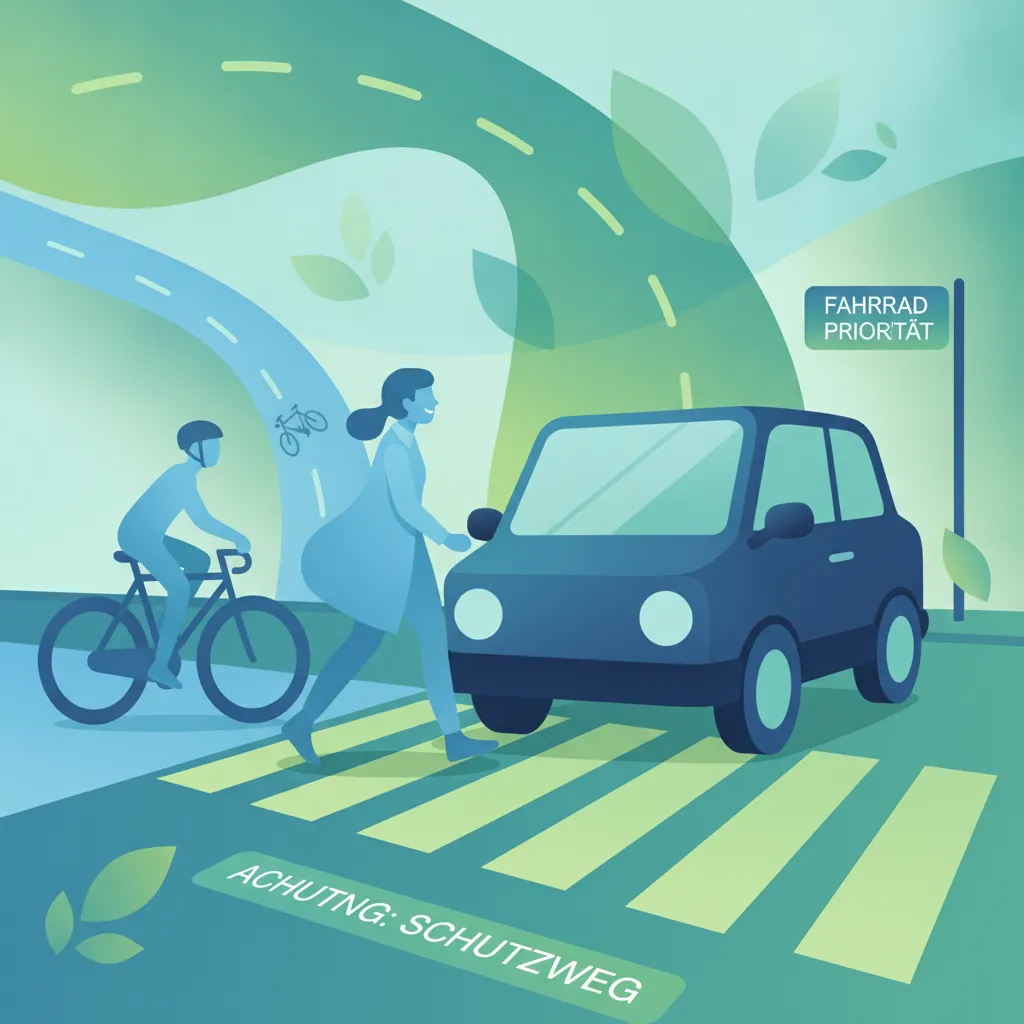
This lesson provides specific guidance on how to safely share the road with pedestrians and cyclists, who are among the most vulnerable road users. It covers the rules of conduct at zebra crossings, traffic lights for pedestrians, and designated cycle lanes. The content emphasizes the importance of vigilance, yielding right-of-way, and maintaining a safe distance to prevent accidents in urban and rural environments.
This lesson focuses on complex traffic environments where different types of road users share the same space. It provides guidance on situations like driving on streets with integrated tram tracks or where bus and bicycle lanes are part of the roadway. The content emphasizes understanding the specific priority rules and being extra vigilant to anticipate potential conflicts in these busy, shared zones.
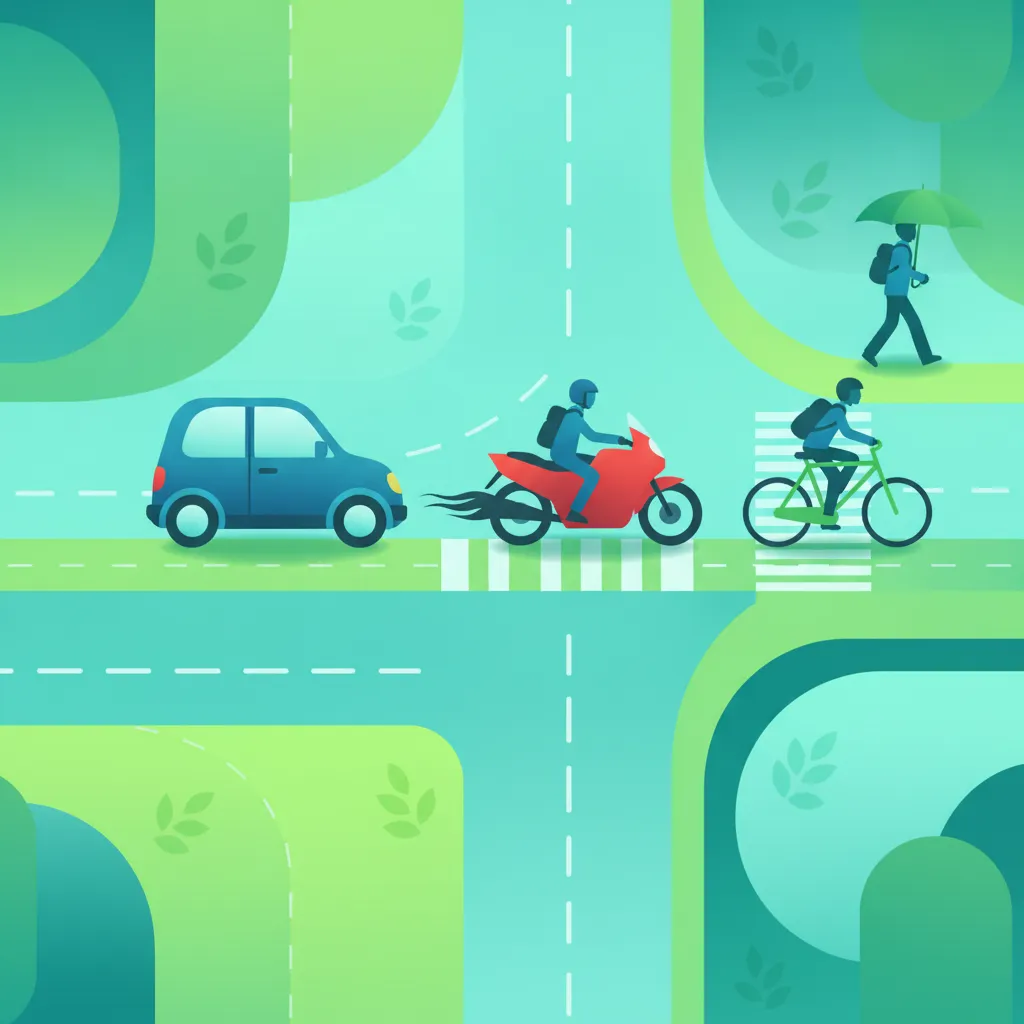
This lesson provides a detailed breakdown of the various categories of participants in road traffic, from pedestrians and cyclists to cars, trucks, and public transport. It explains the concept of vulnerable road users and outlines the specific rules and expectations for interacting with each group. The objective is to foster mutual respect and understanding to ensure safe coexistence on the road for everyone.
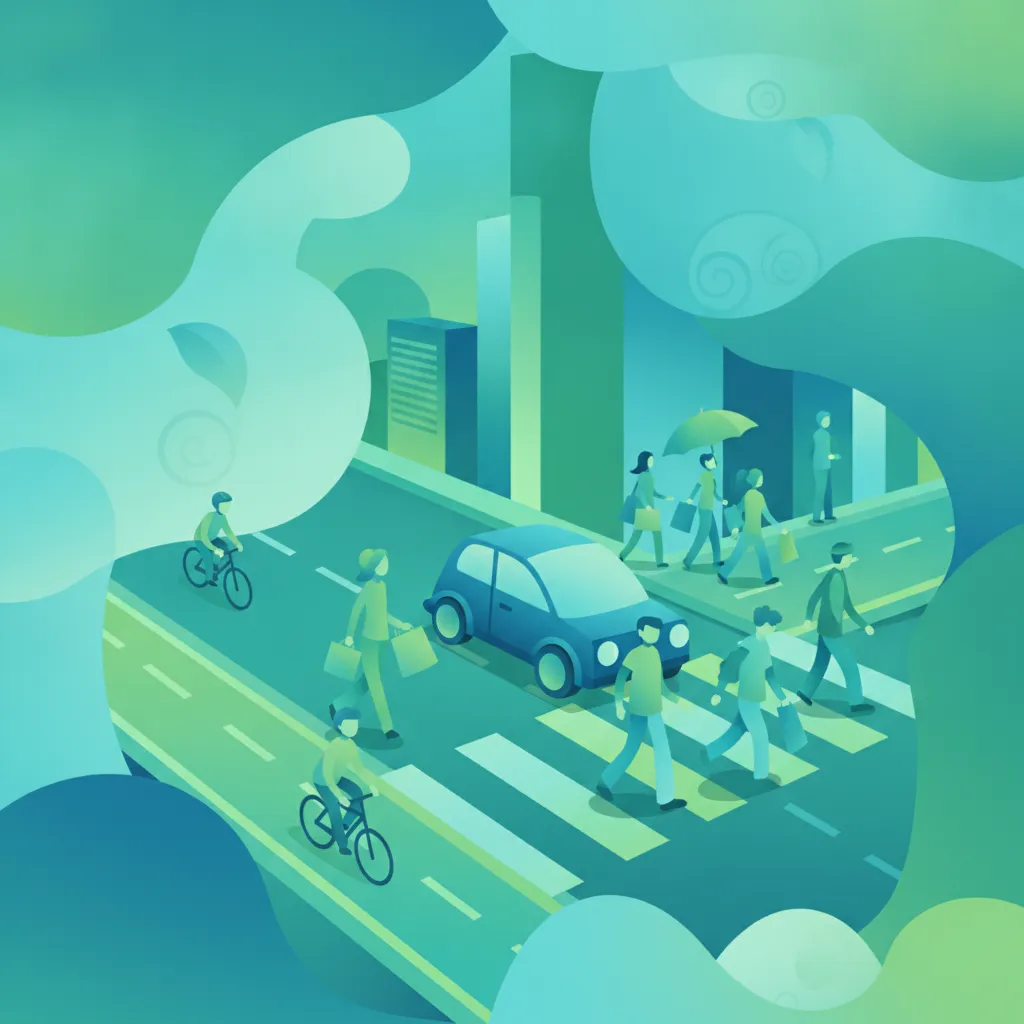
This lesson addresses the critical skill of safely interacting with other road users, particularly vulnerable ones like pedestrians and cyclists. It covers rules for yielding at crosswalks, maintaining a safe passing distance, and being aware of the limited visibility of a moped to car drivers. The focus is on fostering a defensive and cooperative mindset in mixed traffic.
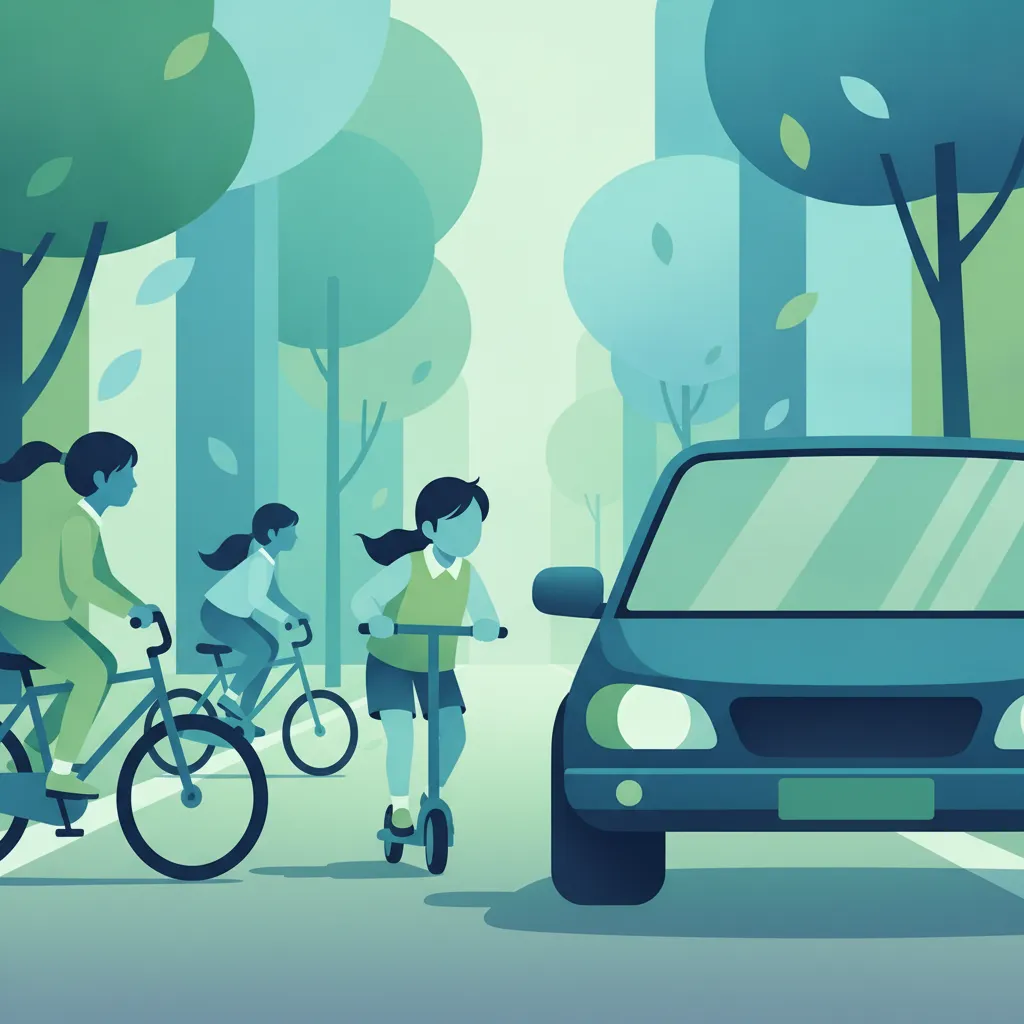
This lesson focuses on identifying road users who require special attention and caution, such as children, the elderly, and individuals with disabilities. It details the appropriate behavior when encountering school buses and public transport, which often involve unpredictable pedestrian movement. A critical topic covered is the legal requirement to form an emergency corridor ('Rettungsgasse') for responding emergency vehicles.
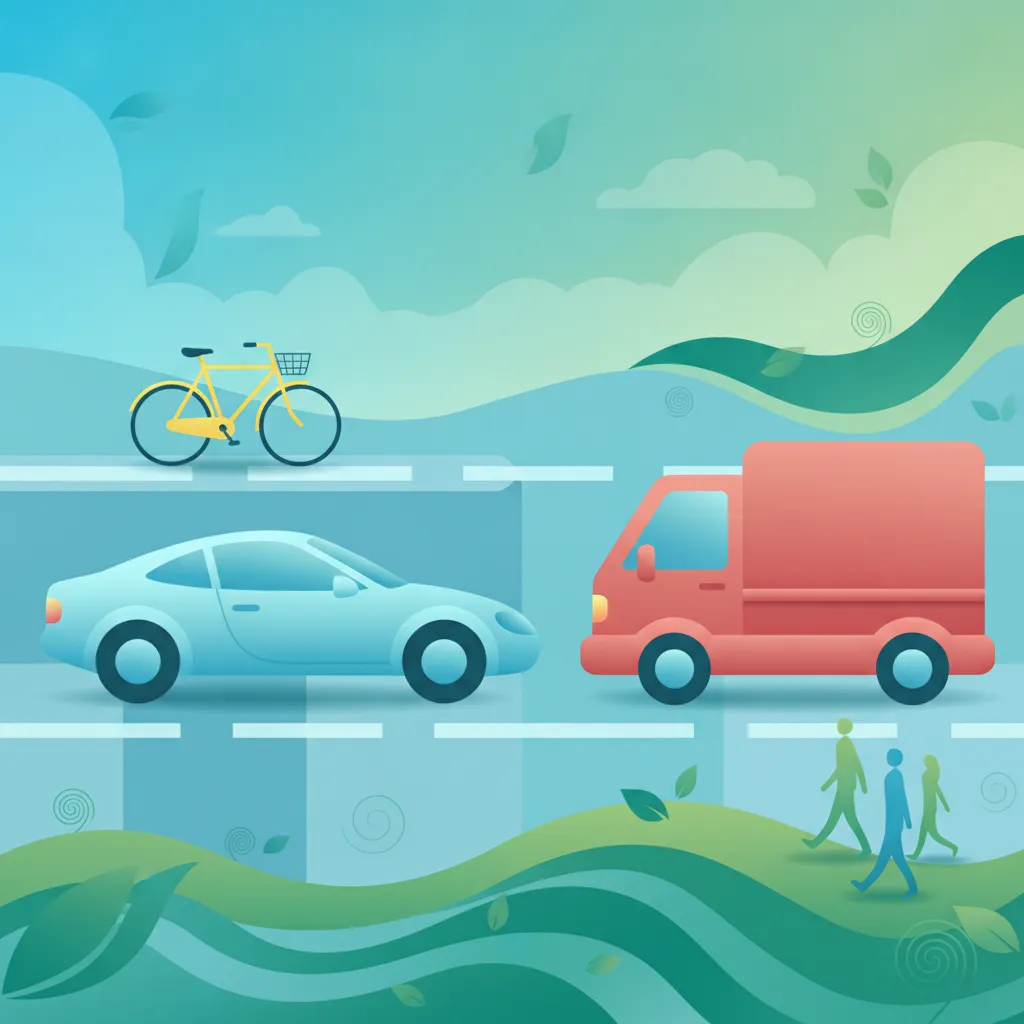
This lesson covers the regulations and safe techniques for overtaking other vehicles in urban environments. It emphasizes the importance of thorough observation, including mirror and blind spot checks, before committing to the maneuver. Learners will understand how to choose a safe gap, manage their speed differential, and maintain strict lane discipline throughout the overtaking process.
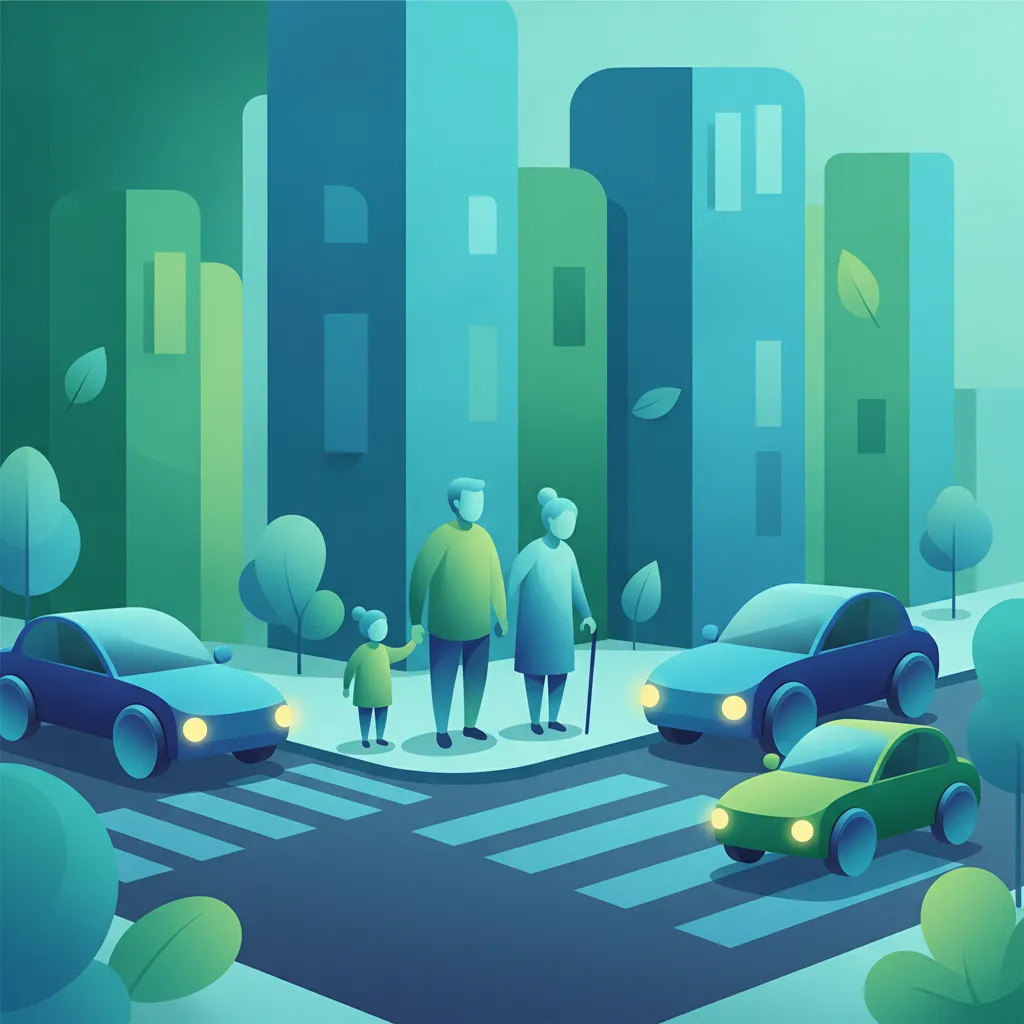
This lesson focuses on the particular care required when driving near pedestrians, with a special emphasis on children and the elderly, whose behavior can be unpredictable. It covers the rules for yielding at zebra crossings and the importance of reducing speed near schools, playgrounds, and residential areas. The goal is to instill a habit of constant vigilance and readiness to stop.
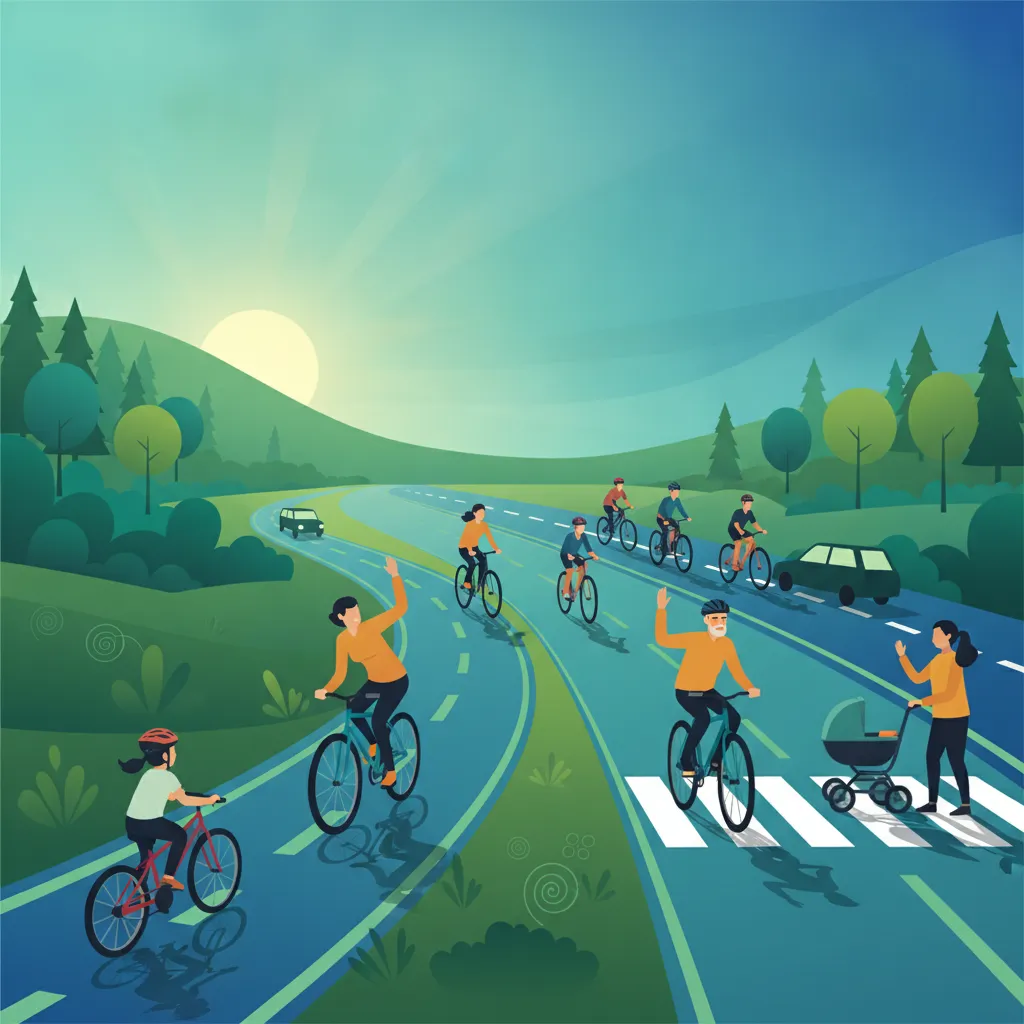
This lesson covers the correct and safe way to interact with cyclists. It explains the different types of bicycle infrastructure, such as dedicated cycle paths and advisory bike lanes on the road. Key topics include maintaining the legally required minimum passing distance, checking for cyclists before turning right, and being aware of the risk of 'dooring' when parked.
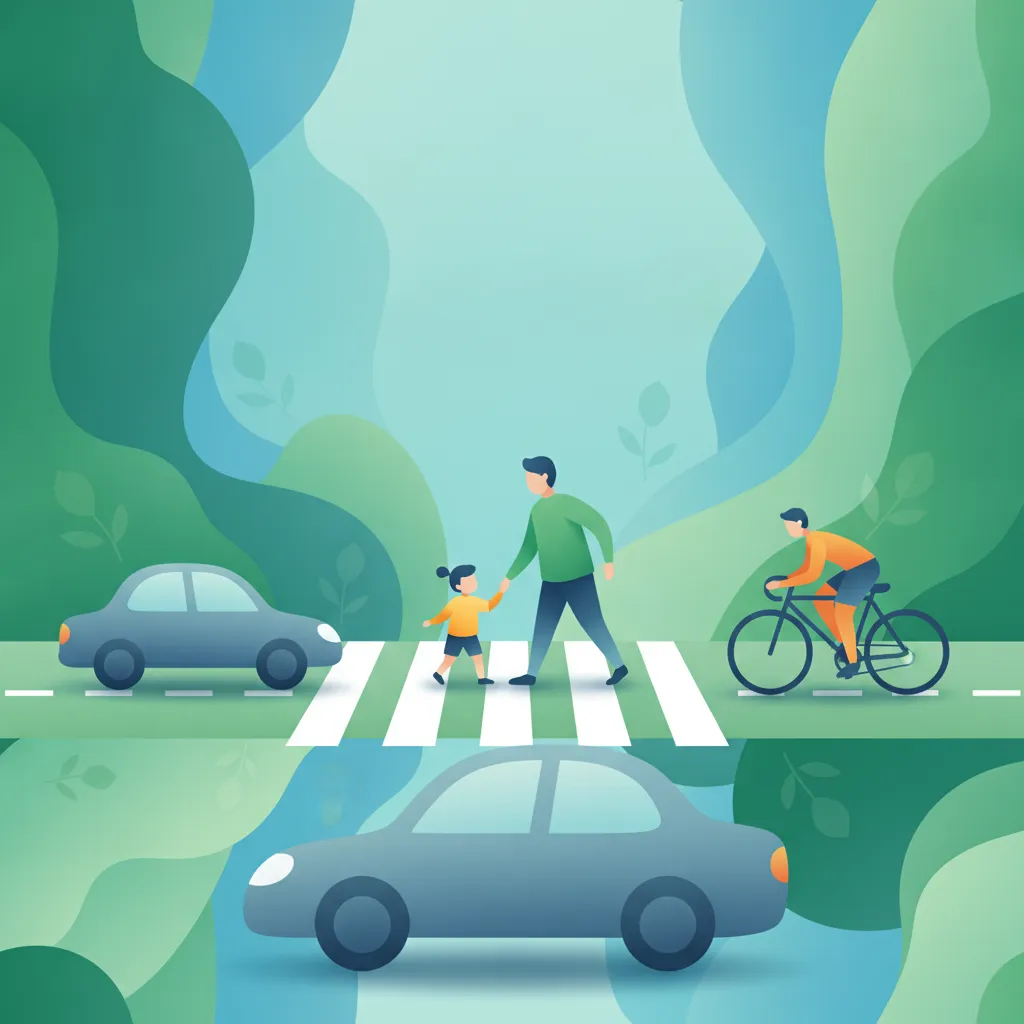
This lesson focuses on the interaction between heavy vehicles and vulnerable road users at crossings, particularly when turning right. It covers the need for heightened vigilance, the importance of properly using mirrors, and correct signaling to alert others. The content highlights legal responsibilities and safe distance requirements to prevent accidents.
Understand strategies for adapting speed, lane positioning, and awareness in high-density urban traffic. This lesson supports safe navigation through German cities, crucial for professional drivers.
This lesson teaches the driving techniques required for smooth operation, which is essential for passenger comfort and vehicle stability. It covers progressive application of the accelerator and brakes to avoid jolts and abrupt movements. The principles of anticipatory driving are also explored, showing how looking ahead and planning maneuvers contributes to a smoother ride, better fuel efficiency, and increased safety.
This lesson provides strategies for proactively managing passenger behavior to maintain a safe environment for everyone. It covers techniques for supervising passengers, enforcing rules on seat belt use, smoking, and alcohol, and managing luggage placement. The lesson also addresses how to handle disruptive behavior and the driver's role in assisting passengers during an emergency evacuation to ensure an orderly process.
This lesson covers the crucial skills of managing speed and maintaining a safe buffer from other vehicles. It teaches methods for calculating an appropriate following distance, such as the time-gap method, which adapts to different speeds and conditions. Learners will understand how to adjust their speed based on traffic flow, road surface, and weather to ensure they always have enough time and space to stop safely.
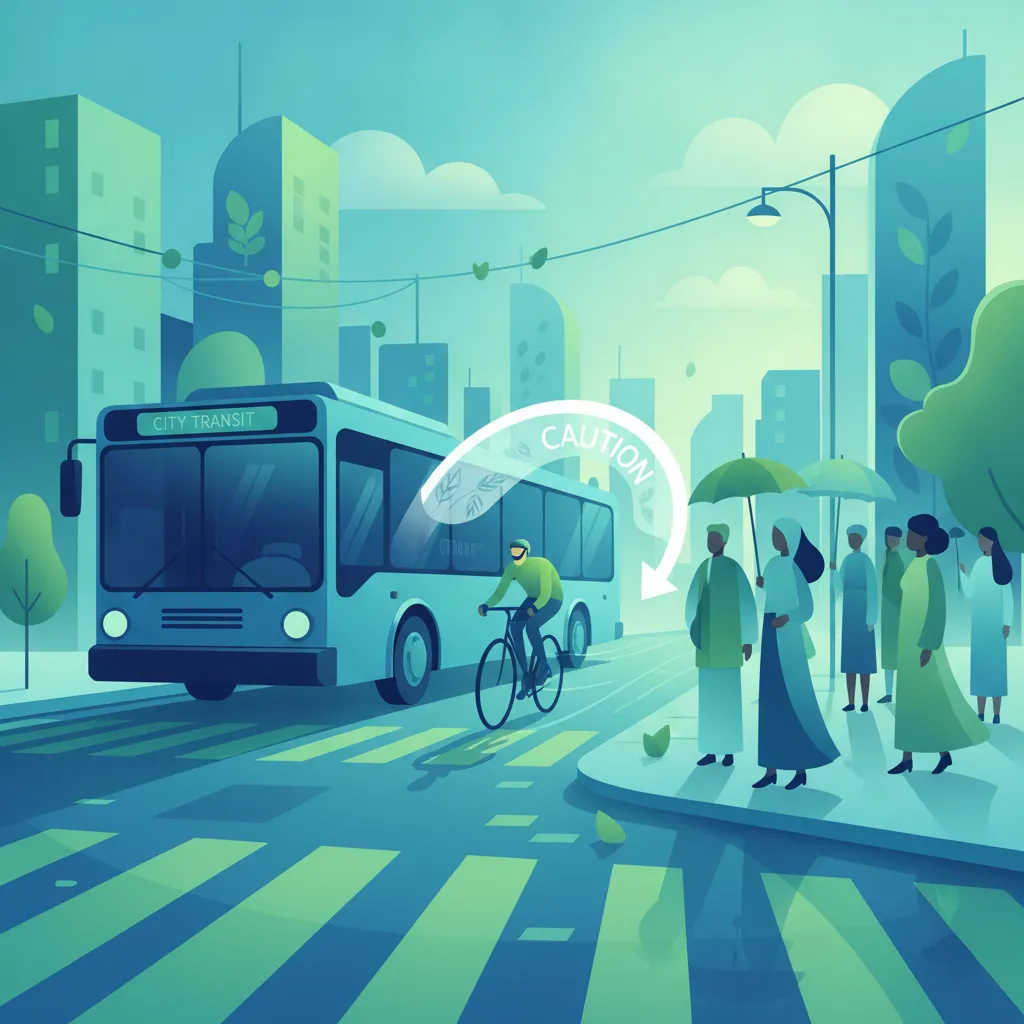
This lesson focuses on the critical moments of interaction with pedestrians and cyclists near bus stops, a common location for accidents. It reinforces the importance of reducing speed, yielding right-of-way, and constantly monitoring blind spots during the stopping process. Learners will practice techniques like making eye contact and using signals to communicate intentions, creating a safer environment for everyone around the vehicle.
Find clear answers to common questions learners have about Urban Traffic Dynamics. Learn how the lesson is structured, which driving theory objectives it supports, and how it fits into the overall learning path of units and curriculum progression in Germany. These explanations help you understand key concepts, lesson flow, and exam focused study goals.
Large vehicles have significant blind spots, wider turning radii, and longer braking distances. In urban environments with high concentrations of cyclists and pedestrians, these physical factors increase risk, requiring constant vigilance and defensive driving techniques.
You must adapt your speed not just to speed limits, but to traffic density and road conditions. Frequent stops and heavy passenger loads mean you must maintain a lower, more consistent speed to ensure safety and comfort, avoiding sudden braking whenever possible.
Always prioritize clear observation and signaling. Ensure you occupy the correct lane well in advance and remain aware of vulnerable road users like cyclists, who often attempt to filter alongside large vehicles at traffic lights.
Yes, traffic calming measures like speed bumps or narrowings require a slow and controlled approach. You must ensure that passengers remain seated or stable when traversing these features to avoid potential falls or injuries.
Begin your targeted revision now. Use our practice search to quickly find specific German driving theory questions. Filter by StVO rules, road signs, or hazard perception to create your focused study plan. Master challenging areas and prepare confidently for your theoretical driving test.