
This lesson guides you through the complex interactions between large passenger vehicles and tram systems in urban traffic. By understanding specific tramway markings and priority rules, you will gain the knowledge needed to navigate city routes safely as a professional driver for categories D1, D1E, D, and DE.
Lesson content overview
Operating a professional passenger vehicle in Germany, especially within urban environments, frequently involves navigating alongside trams (Straßenbahnen) and light rail systems. These rail-based public transport vehicles, due to their fixed routes and unique operational characteristics, demand specific attention and adherence to a distinct set of traffic rules. For drivers holding D1, D1E, D, and DE licenses, a comprehensive understanding of how to safely interact with trams is not merely about compliance but is fundamental to passenger safety, smooth traffic flow, and preventing potentially severe accidents.
This lesson provides professional drivers with the essential knowledge and protocols for safely sharing roadways and crossing tracks with trams, emphasizing right-of-way rules, specialized signaling, and crucial safety awareness.
Trams, often referred to as light rail in broader contexts, are a vital part of Germany's public transport infrastructure, seamlessly integrated into many cityscapes. Unlike buses or other motor vehicles, trams operate on fixed tracks, which fundamentally dictates their movement and limitations. This fixed path is the primary reason why trams are granted specific precedence in traffic.
Trams are typically larger and heavier than most road vehicles, leading to significantly longer braking distances, especially in adverse weather conditions. Their inability to swerve or quickly deviate from their rails means that other road users bear the primary responsibility for avoiding conflicts. Professional drivers must always anticipate a tram's trajectory and understand that a tram cannot take evasive action to avoid a collision.
A core principle of German road traffic law (Straßenverkehrsordnung - StVO) regarding trams is their inherent right-of-way, or Vorrang. Generally, trams have precedence over other road users, including motor vehicles and cyclists, unless specific traffic signals or signage explicitly indicate otherwise. This rule is paramount and often misunderstood, leading to dangerous situations.
The rationale behind this rule is simple: a tram's fixed path makes it inflexible. Therefore, all other, more maneuverable road users must adapt their behavior to accommodate the tram's movement.
At intersections where tram tracks cross the roadway, trams typically have priority. This means that even if a motor vehicle approaches from the right (which would usually grant priority under the 'right before left' rule), or if it's a T-junction, the tram retains its right-of-way. It is imperative for drivers of passenger vehicles to yield to an approaching tram in such scenarios.
There are exceptions, primarily when specific traffic lights are installed that control both tram and vehicle movements, or when specific RoadSigns clearly regulate the right-of-way differently. However, in the absence of such explicit regulation, the default assumption is that the tram has priority.
As a professional driver, your responsibility is to identify tram tracks and potential tram routes, and to be prepared to yield.
Anticipate Tram Movement: Look ahead for tracks, tram stops, and intersection points. Be aware of the tram schedule if possible on your route.
Observe Tram Signals: Pay close attention to any tram-specific signals, which override general traffic lights for trams.
Assess Speed and Distance: Trams can appear quickly and have long braking distances. Do not attempt to "beat" a tram across tracks.
Stop Safely: If a tram has priority, stop your vehicle at a safe distance from the tracks, ensuring you do not obstruct its path.
To ensure smooth and safe interaction, specific signals and road signs are designed solely for tram operations, and professional drivers must be able to recognize and correctly interpret them. These specialized signals often supersede standard traffic lights for other vehicles.
Tram signals in Germany typically use white light symbols, rather than the red, yellow, and green of standard traffic lights. These often appear as:
It is a common misunderstanding to ignore these distinct tram signals, especially when a driver's own traffic light is green. If a tram signal is green, indicating the tram is clear to proceed, drivers must yield to the tram even if their own traffic light for general vehicle traffic is also green, and a potential conflict exists. The tram's signal priority is due to its fixed path.
Beyond specific traffic lights, various RoadSigns and road markings alert drivers to the presence of tram tracks and crossings:
In addition to signs, road markings like painted lines, "STOP" markings before tracks, or specific tram stop lines (Bahnschranke or Haltelinie für Straßenbahnen) indicate where vehicles must stop.
Crossing tram tracks, whether at an intersection or a dedicated level crossing, requires heightened caution. Due to the tram's fixed path and limited maneuverability, the onus is entirely on the motor vehicle driver to ensure a safe crossing.
Tram stops are critical interfaces between road traffic and public transport passengers. As a professional driver transporting passengers, ensuring safety at these points is paramount.
Designated tram stops often have a marked Haltelinie (stop line). If a tram is approaching or standing at a stop, drivers must stop before this line to allow passengers to safely board or alight. This rule applies even if there are no passengers currently visible. The intent is to create a safe zone for pedestrians.
Do not proceed until the tram has departed and the boarding area is clear of pedestrians, or if a signal explicitly permits you to do so. Blocking a tram stop not only disrupts public transport but also creates a significant safety hazard for pedestrians and can result in legal penalties.
At many tram stops, passengers must cross a traffic lane to reach the tram. In these situations, drivers are legally obliged to stop and wait until all passengers have safely boarded or alighted and are clear of the roadway. This applies especially when there is no physical barrier or island separating the tram stop from the main traffic flow.
Like any large vehicle, trams have significant Toter Winkel (blind spots) – areas around the vehicle that are not visible to the driver through mirrors. These blind spots are particularly dangerous when other vehicles attempt to overtake a tram.
It is strictly prohibited to overtake a tram within its blind spot. Trams, with their long body and multiple articulated sections, can have extensive blind areas, especially along their sides and at the front and rear. An overtaking vehicle within these zones is invisible to the tram driver, creating a high risk of side-swipe collisions, especially during turns or lane changes by the tram (if applicable, though trams are track-bound, their movements can still affect adjacent lanes).
When a tram is in motion or stopped at a signal, it is safest to maintain a generous distance and only overtake when you have clear visibility of the entire tram and its surroundings, and when there is ample space and no risk of entering a blind spot.
If overtaking a tram is permitted and necessary:
The specific rules governing the interaction with trams are enshrined in the German Road Traffic Act (StVO). Adherence is mandatory for all road users, especially professional drivers responsible for passenger safety.
Rule 1: Trams have absolute right-of-way at intersections unless a traffic light explicitly indicates otherwise.
Rule 2: Vehicles must not overtake a tram within its blind spot.
Rule 3: Vehicles must stop at a marked tram stop line when a tram is present and passengers are boarding or alighting.
Haltelinie für Straßenbahnen.Rule 4: If a tram signal (white light symbols) is green, drivers must yield even if their standard traffic light is green.
Despite clear regulations, incidents involving trams occur, often stemming from preventable errors. Professional drivers must be acutely aware of these common pitfalls:
Safe interaction with trams is further influenced by prevailing environmental and traffic conditions. Professional drivers must adapt their approach accordingly.
Interacting with trams and light rail systems demands constant vigilance and a clear understanding of specific traffic regulations. For professional passenger vehicle drivers operating in Germany, mastering these interactions is crucial for maintaining safety, upholding professional responsibility, and ensuring the smooth flow of public transport.
Toter Winkel. Maintain a safe distance and only pass when conditions are clear and safe.By consistently applying these principles, professional drivers can navigate urban environments with trams safely and efficiently, contributing to the overall safety of German road traffic.
This lesson covers the essential rules for safely interacting with trams and light rail in German urban traffic. Trams receive priority (Vorrang) because they operate on fixed tracks and cannot take evasive action, making it critical for all other vehicles to yield. Specialized white light signals control tram movement and override standard traffic lights when conflicts arise. Professional drivers must recognize blind spots around trams, stop properly at tram stop lines to allow passenger safety, and never overtake within a tram's Toter Winkel. Adapting to weather conditions is also vital, as wet or icy tracks significantly increase braking distances for both trams and motor vehicles.
A short set of high-value points that capture the most important learning from this lesson.
Trams have inherent right-of-way (Vorrang) at intersections due to their fixed path constraint, meaning they cannot swerve to avoid collisions
Tram-specific white light signals take precedence over standard red/yellow/green traffic lights when a conflict exists
Never stop or park on tram tracks or within marked tram stop lines (Haltelinie), even briefly
Never overtake a tram within its blind spot (Toter Winkel) as the tram driver cannot see vehicles in these zones
Trams have significantly longer braking distances than cars, especially in wet or icy conditions
Explore all units and lessons included in this driving theory course.
Trams are afforded priority because their fixed rail path makes them completely inflexible compared to other road users
White horizontal bar = tram must stop; vertical white bar = tram may proceed
At tram stops with passengers boarding or alighting, you must stop at the Haltelinie and wait until the area is clear
If a tram signal is green, yield to the tram even if your own vehicle traffic light is also green
When crossing tracks, do so at as close to a right angle as possible and never stop on the tracks themselves
Failing to yield to an approaching tram at intersections, misjudging its speed or assuming vehicle traffic has priority
Blocking a tram stop by stopping on or past the Haltelinie, obstructing passenger boarding and alighting
Attempting to overtake a tram in its blind spot, especially during lane changes or turns
Misinterpreting tram-specific white light signals as general traffic indicators or ignoring them
Crossing tram tracks without checking both directions, assuming no tram is approaching, particularly at quieter times
Lesson content overview
A short set of high-value points that capture the most important learning from this lesson.
Trams have inherent right-of-way (Vorrang) at intersections due to their fixed path constraint, meaning they cannot swerve to avoid collisions
Tram-specific white light signals take precedence over standard red/yellow/green traffic lights when a conflict exists
Never stop or park on tram tracks or within marked tram stop lines (Haltelinie), even briefly
Never overtake a tram within its blind spot (Toter Winkel) as the tram driver cannot see vehicles in these zones
Trams have significantly longer braking distances than cars, especially in wet or icy conditions
Explore all units and lessons included in this driving theory course.
Trams are afforded priority because their fixed rail path makes them completely inflexible compared to other road users
White horizontal bar = tram must stop; vertical white bar = tram may proceed
At tram stops with passengers boarding or alighting, you must stop at the Haltelinie and wait until the area is clear
If a tram signal is green, yield to the tram even if your own vehicle traffic light is also green
When crossing tracks, do so at as close to a right angle as possible and never stop on the tracks themselves
Failing to yield to an approaching tram at intersections, misjudging its speed or assuming vehicle traffic has priority
Blocking a tram stop by stopping on or past the Haltelinie, obstructing passenger boarding and alighting
Attempting to overtake a tram in its blind spot, especially during lane changes or turns
Misinterpreting tram-specific white light signals as general traffic indicators or ignoring them
Crossing tram tracks without checking both directions, assuming no tram is approaching, particularly at quieter times
Explore search topics learners often look for when studying Interaction with Trams and Light Rail. These topics reflect common questions about road rules, driving situations, safety guidance, and lesson level theory preparation for learners in Germany.
Browse additional driving theory lessons that cover connected traffic rules, road signs, and common driving situations related to this topic. Improve your understanding of how different rules interact across everyday traffic scenarios.
Explore complex scenarios and advanced priority rules when interacting with trams and light rail in German urban traffic. This lesson builds upon basic understanding to cover nuanced situations encountered by professional drivers, focusing on strict adherence to regulations for safety.
This lesson focuses on complex traffic environments where different types of road users share the same space. It provides guidance on situations like driving on streets with integrated tram tracks or where bus and bicycle lanes are part of the roadway. The content emphasizes understanding the specific priority rules and being extra vigilant to anticipate potential conflicts in these busy, shared zones.
This lesson explains the specific regulations when encountering public transport. It covers the legal requirement to yield to public buses signaling to leave a bus stop and the strict rules for passing school buses with flashing hazard lights. You will also learn about the absolute priority of trams ('Straßenbahn') and how to safely drive on or across their tracks.
This lesson details the critical right-of-way regulations according to the German StVO. It covers the default 'right before left' rule, the meaning of priority road signs, and specific rules for roundabouts and yielding to pedestrians. A thorough understanding of these priority rules is fundamental for preventing accidents at junctions.
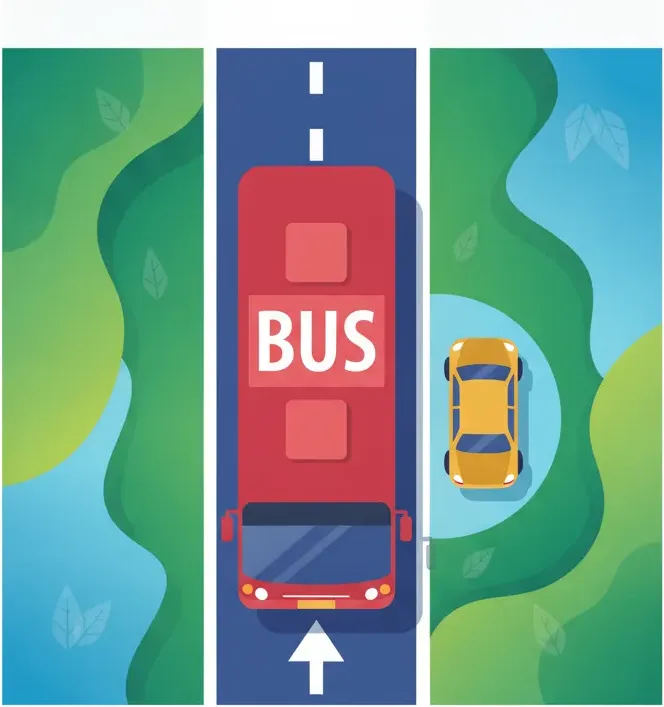
This lesson provides a detailed explanation of the rules governing dedicated bus lanes, including how to interpret markings and adhere to time-based restrictions. It clarifies the priority rules that grant buses precedence in certain traffic situations, such as when pulling out from a stop. Understanding these regulations allows drivers to use bus infrastructure efficiently and legally to maintain schedules and improve traffic flow.
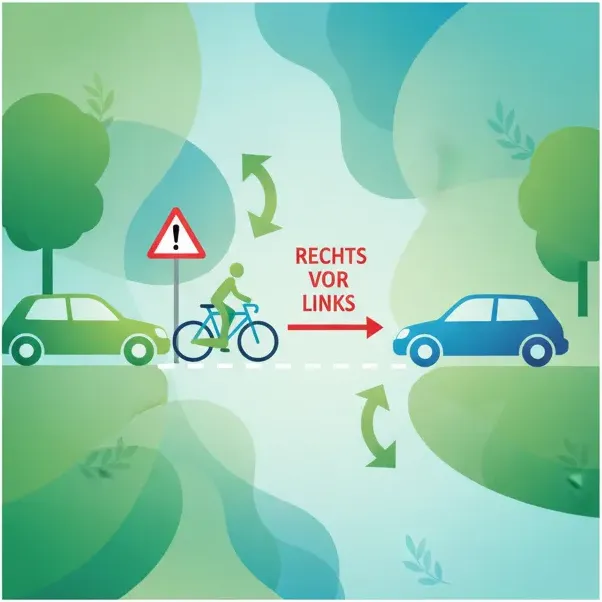
This lesson provides a detailed guide to navigating various types of intersections safely and correctly. It explains how priority is determined by traffic signs (such as the priority road, yield, and stop signs) and traffic lights. The lesson also covers complex scenarios, including the rules for turning left across oncoming traffic, to ensure you can handle any junction with confidence.
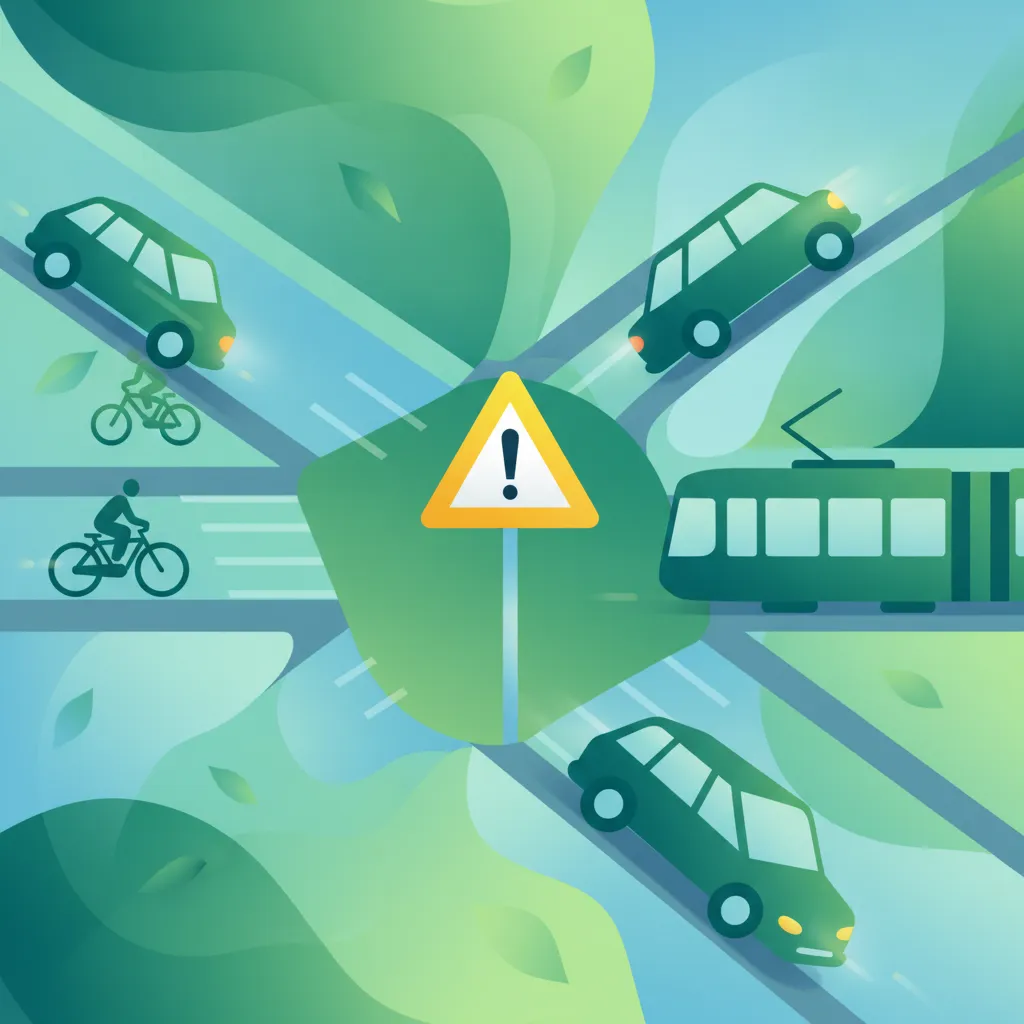
This lesson explains the concept of a priority road ('Vorfahrtstraße'), where you have right-of-way over traffic from intersecting roads. You will learn to recognize the signs that mark the beginning and end of a priority road. The lesson also covers how priority is managed through signals, including standard traffic lights, the special 'Grünpfeil' (green arrow) sign, and the overriding authority of a police officer directing traffic.
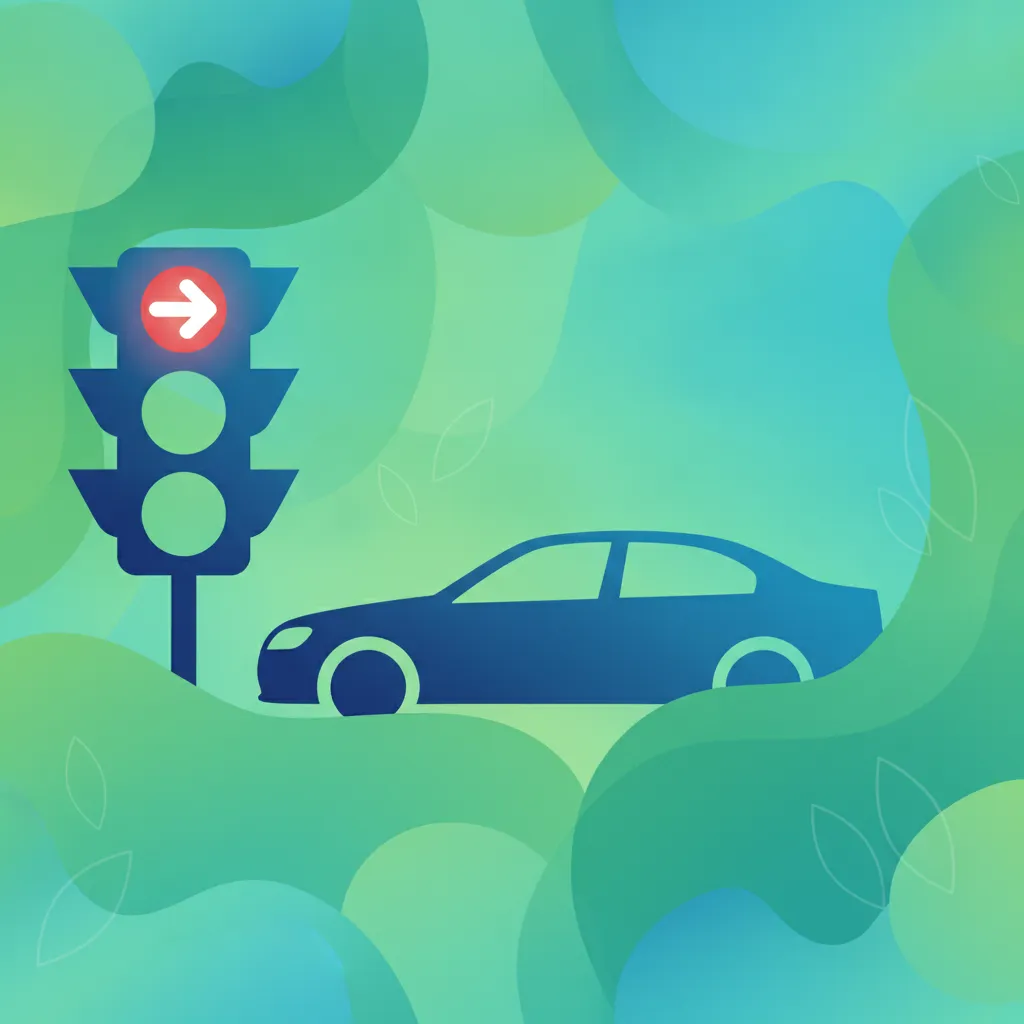
This lesson familiarizes drivers with the various special traffic signals and signs that apply exclusively to buses and other public transport vehicles. It covers the interpretation of bus-only signals (often showing bars or letters), flashing priority indicators, and lane-use control signs. Correctly understanding these signals is crucial for legal compliance and for taking advantage of public transport priority measures in urban areas.
This lesson introduces the foundational concept of right-of-way ('Vorfahrt') in German traffic law. It explains the default priority rule, 'Rechts vor Links' (right before left), which applies at intersections without any regulating signs or signals. You will learn to identify situations where this rule applies and understand the basic principles of yielding to ensure safe passage at junctions.
This lesson focuses on the right-of-way rules that heavy vehicles must follow when interacting with cyclists and pedestrians, particularly at intersections and crossings. It emphasizes the need for trucks to yield appropriately and maintain safe distances. The content also covers the interpretation of traffic signs governing priority in urban areas.
This lesson focuses on the critical safety rules for approaching and traversing railway crossings ('Bahnübergang'). It explains the meaning of the St. Andrew's Cross sign ('Andreaskreuz'), flashing lights, and acoustic signals that indicate an approaching train. You will learn the correct behavior for crossings with and without barriers and understand the absolute priority of rail traffic.
Learn to identify and react correctly to special traffic signals and markings specifically designed for areas with trams and light rail. This lesson focuses on navigating complex urban environments and understanding how these signals integrate with general traffic flow and priority rules.
This lesson provides a thorough explanation of traffic light systems ('Lichtzeichenanlagen') used in Germany. It details the meaning of red, amber, and green lights and the correct response to each phase of the signal sequence. The lesson also covers special signals, such as the green arrow for turning right on red, pedestrian and cyclist signals, and the authority of signals given by a police officer, which override all other signs.
This lesson explores the complex and fast-paced nature of urban traffic environments. It covers topics such as high traffic density, frequent pedestrian crossings, and complex intersections that require heightened awareness. Learners will develop strategies for adapting their speed and lane positioning to navigate these challenges safely, especially during peak rush hour periods and in areas with traffic calming measures.
This lesson familiarizes drivers with the various special traffic signals and signs that apply exclusively to buses and other public transport vehicles. It covers the interpretation of bus-only signals (often showing bars or letters), flashing priority indicators, and lane-use control signs. Correctly understanding these signals is crucial for legal compliance and for taking advantage of public transport priority measures in urban areas.
This lesson explains the function and meaning of traffic light signals, including standard cycles, flashing lights, and arrows. It also details how to interpret and obey hand signals given by police officers, which override all other signs and signals. Understanding these instructions is crucial for navigating controlled junctions and emergency situations.
Effective communication is critical for road safety, and this lesson details the correct use of a vehicle's signaling devices. It explains when and how to use turn signals (indicators), hazard warning lights, the horn, and headlight flashes to clearly communicate your intentions to other road users. Proper signaling helps prevent misunderstandings and is a key component of defensive and cooperative driving.
This lesson focuses on complex traffic environments where different types of road users share the same space. It provides guidance on situations like driving on streets with integrated tram tracks or where bus and bicycle lanes are part of the roadway. The content emphasizes understanding the specific priority rules and being extra vigilant to anticipate potential conflicts in these busy, shared zones.
This lesson explains the concept of a priority road ('Vorfahrtstraße'), where you have right-of-way over traffic from intersecting roads. You will learn to recognize the signs that mark the beginning and end of a priority road. The lesson also covers how priority is managed through signals, including standard traffic lights, the special 'Grünpfeil' (green arrow) sign, and the overriding authority of a police officer directing traffic.

This lesson explains the various types of road markings and their significance for guiding traffic and ensuring safety. It covers the difference between solid and broken lines for lane separation and overtaking rules, the function of stop lines at intersections, and the markings for pedestrian crosswalks. You will also learn to interpret directional arrows, bicycle lane markings, and other symbols painted on the road.
This lesson focuses on the particular care required when driving near pedestrians, with a special emphasis on children and the elderly, whose behavior can be unpredictable. It covers the rules for yielding at zebra crossings and the importance of reducing speed near schools, playgrounds, and residential areas. The goal is to instill a habit of constant vigilance and readiness to stop.
This lesson provides comprehensive guidance on using vehicle signals to communicate with other road users. It covers the correct timing and use of turn indicators, the application of hand signals when necessary, and the proper use of hazard lights. Effective signaling is presented as a cornerstone of predictable and safe driving.
Find clear answers to common questions learners have about Interaction with Trams and Light Rail. Learn how the lesson is structured, which driving theory objectives it supports, and how it fits into the overall learning path of units and curriculum progression in Germany. These explanations help you understand key concepts, lesson flow, and exam focused study goals.
In most cases, yes. Under the StVO, trams have strict right-of-way priority unless indicated otherwise by specific traffic signs or signals. As a professional driver, you must always anticipate their movement and ensure you do not obstruct their path.
You must ensure that your vehicle does not block the tram's path. Always check your mirrors for oncoming trams and wait until you have clear space to clear the tracks entirely before making your turn. Never stop in a position where any part of your bus hangs over the rail line.
Tram signals usually consist of a white light pattern (often a horizontal or vertical bar) rather than standard circular traffic lights. You must learn to recognize these, as they indicate the tram's intent and priority status at junctions.
If the tracks are embedded in the road, you may drive on them only if you do not impede the tram. However, you must move out of the way immediately when you see or hear a tram approaching. Always prioritize the tram's passage to ensure safety.
Begin your targeted revision now. Use our practice search to quickly find specific German driving theory questions. Filter by StVO rules, road signs, or hazard perception to create your focused study plan. Master challenging areas and prepare confidently for your theoretical driving test.