
This lesson explores the essential special traffic signals and indicators designed exclusively for bus and public transport operators in Germany. Understanding these signals is a critical requirement for your professional licence theory, ensuring you can navigate urban transit routes safely while utilizing priority measures to maintain your service schedule.
Lesson content overview
Professional drivers operating passenger vehicles, particularly in licence categories D1, D1E, D, and DE, frequently navigate urban environments where public transport systems are prioritized. To ensure safety, maintain schedules, and comply with German road traffic law, a comprehensive understanding of special traffic signals and signs specifically designed for buses, trams, and other authorized passenger transport vehicles is crucial. This lesson will detail these unique signals, their interpretation, and the responsibilities they impose on all road users.
In many German towns and cities, public transport receives special treatment to enhance its efficiency and reliability. This prioritization aims to reduce congestion, improve journey times for passengers, and encourage the use of sustainable transport methods. Special traffic signals and road signs are the primary tools used to achieve this, allowing buses and trams to bypass general traffic, gain priority at intersections, and utilize dedicated infrastructure. For professional passenger vehicle drivers, correctly interpreting these signals is not just a matter of legal compliance but also a core aspect of professional responsibility and efficient operation. Mastery ensures smooth operations, prevents delays, and contributes to overall road safety.
Dedicated bus lanes are specific sections of the road reserved exclusively for buses and other authorized public transport vehicles. These lanes allow buses to move independently of general traffic, significantly improving travel times and schedule adherence. Understanding the signage and rules governing these lanes is fundamental for professional passenger vehicle drivers.
Dedicated bus lanes are clearly marked by distinct signage. The most common sign indicating a bus lane is a circular blue sign featuring a white bus symbol. This sign, often accompanied by specific road markings (e.g., "BUS" painted on the lane), designates the lane for exclusive use.
Dedicated bus lanes can be either permanent or time-restricted:
Always check for supplementary plates below bus lane signs. These plates provide crucial information regarding time restrictions, which can vary significantly.
The primary rule for dedicated bus lanes is simple: only authorized vehicles may use them during their operational hours. For professional drivers of passenger vehicles, this means if you are operating a bus or another designated public transport vehicle, you must use these lanes when available to maintain efficiency. If you are driving a private vehicle, or a passenger vehicle not authorized for the bus lane, you must not use it during restricted times.
Violating bus lane rules can lead to significant fines and disrupt public transport operations. It's a common misunderstanding that one can use a bus lane when traffic is light or when no bus is immediately visible. This is incorrect; the lane is reserved regardless of current traffic conditions or bus presence during its designated operational times.
Beyond standard red, yellow, and green traffic lights, professional drivers will encounter unique signals specifically for public transport vehicles, particularly buses and trams. These signals grant them priority at intersections and are distinct from those for general traffic.
Special traffic lights for buses and trams often feature white bar signals instead of colored lights. These signals are typically positioned higher or separately from the general traffic lights. A vertical white bar indicates that the bus or tram may proceed straight ahead.
When you, as a professional passenger vehicle driver, see a vertical white bar illuminated for your vehicle (meaning it's specifically for your lane and vehicle type), you have priority to go straight through the intersection. Crucially, if you are driving any other type of vehicle in an adjacent lane, and a vertical white bar is illuminated for a bus or tram, you must stop if the bus/tram's movement conflicts with yours, even if your general traffic light shows green for your turn or straight movement. The white bar signal takes precedence for the public transport vehicle.
Similar to the straight-ahead bar signal, special traffic lights can also display L-shape white bars. These signals indicate that the bus or tram has priority to make a specific turn.
An L-shape bar pointing left means the bus or tram is permitted to turn left, and conflicting traffic must yield. An L-shape bar pointing right would similarly indicate a permitted right turn. These signals are vital for maintaining public transport flow, especially at complex intersections where general traffic might have different phasing. As with the straight bar, if an L-shape bar is illuminated for a public transport vehicle, other road users must yield to prevent collision and allow the bus or tram to proceed without hindrance.
These bar signals are not merely advisory; they are legally binding instructions. Their purpose is to reduce stop-and-go traffic for public transport, allowing buses and trams to maintain their schedules and provide reliable service. Misinterpreting or ignoring these signals can lead to severe consequences, including collisions with large passenger vehicles and legal penalties. Professional drivers must be acutely aware of these signals and their implications for both their own vehicle's movement and the movements of public transport around them.
In addition to static bar signals, drivers may encounter dynamic, flashing priority indicators. These signals provide real-time information about a public transport vehicle's impending movement and often signal a need for other traffic to yield immediately.
Flashing priority indicators typically appear as flashing white or green bars or LEDs. They are often placed in dedicated bus lanes, near tram stops, or at complex junctions where buses might merge with or cross general traffic lanes. These signals are dynamic, meaning they only illuminate when a bus or tram is approaching and requires priority.
The presence of a flashing indicator means that a public transport vehicle is about to take priority. This could be a bus pulling out from a stop, crossing a general traffic lane, or requiring a rapid green light at an intersection. The key is their dynamic nature – they warn of an immediate need to yield.
When a flashing priority indicator is activated, professional drivers in adjacent lanes or approaching the signaled area must exercise heightened caution. The rule is to slow down and be prepared to stop and yield to the approaching or moving public transport vehicle.
Do not assume a flashing indicator only applies to a bus that is already in motion. It can signal priority for a bus that is about to move or is currently stationary but about to cross your path. Always be ready to yield.
These indicators are particularly important in areas where public transport routes interact closely with general traffic, such as shared road segments or at locations where buses transition between dedicated lanes and general traffic flow. Their purpose is to prevent conflicts and ensure the safe and uninterrupted movement of passenger transport.
Beyond dedicated bus lanes, other lane-use control signs dictate how specific lanes are to be utilized by various vehicle types, including passenger vehicles. These signs can be permanent or temporary and are essential for optimizing traffic flow and maintaining order.
Lane-use control signs typically employ symbols or text to inform drivers which vehicles are permitted in a particular lane. Examples include:
These signs are typically placed overhead or at the side of the road before a junction or the start of a specific lane segment. They are mandatory instructions, not mere recommendations.
Similar to time-restricted bus lanes, some lane-use control signs may include supplementary plates specifying hours of operation. For instance, a lane might be designated "Bus Lane Only" during peak morning and evening hours but open to general traffic outside those times.
Professional passenger vehicle drivers must develop the habit of carefully observing all lane-use signs, especially when entering urban areas or approaching complex intersections. Ignoring these signs can lead to occupying a lane unlawfully, impeding traffic flow, causing delays for public transport, and incurring penalties. Proper adherence to lane-use control signs is critical for navigating busy urban environments safely and efficiently.
Compliance with special traffic signals and lane-use signs for passenger vehicles is not optional; it is legally mandatory under German road traffic law. These regulations are in place to ensure the safe, efficient, and reliable operation of public transport, which is a vital component of urban infrastructure.
The rationale behind these rules is multifaceted:
Failure to comply with these mandatory signals and signs can result in significant legal consequences.
Professional drivers, entrusted with the safety of their passengers, have a heightened responsibility to understand and strictly adhere to all relevant traffic regulations, including those pertaining to special passenger vehicle signals.
Even experienced drivers can sometimes make errors when it comes to special traffic signals. Recognizing these common pitfalls can help professional passenger vehicle drivers avoid them:
Each of these violations not only risks fines and penalties but also directly compromises the efficiency and safety of the public transport system, affecting numerous passengers.
Adhering to special traffic signals requires more than just knowing the rules; it demands constant situational awareness and adaptability, especially for professional drivers. Various factors can influence how these signals are perceived and how drivers should respond.
Poor weather conditions significantly impact the visibility of all traffic signals, including special ones.
In reduced visibility, the principle of anticipating potential public transport movements becomes even more critical.
Special attention is required when interacting with vulnerable road users, such as pedestrians and cyclists, especially near bus stops or tram lines where special signals are common.
For professional drivers, the duty of care extends to all road users. Properly managing interactions around special signals ensures the safety of passengers, other drivers, and the most vulnerable road users.
Understanding and correctly interpreting special traffic signals and signs for passenger vehicles is an indispensable skill for professional drivers in licence categories D1, D1E, D, and DE. These signals, including dedicated bus lane signage, white bar and L-shape priority signals at intersections, and dynamic flashing indicators, are designed to streamline public transport operations and contribute to a more efficient and safer urban traffic flow.
Compliance is not merely a suggestion but a legal obligation backed by specific regulations and potential penalties. By diligently observing these signals, anticipating the movements of public transport, and exercising contextual awareness, professional drivers can ensure legal adherence, prevent accidents, and contribute to the overall smooth functioning of urban traffic. This expertise is a hallmark of professional competence, directly impacting passenger safety and operational reliability.
This lesson covers the special traffic signals used for public transport priority in Germany, essential for professional drivers holding D1, D1E, D, or DE licences. Key signals include the blue circular bus lane sign (permanent or time-restricted), white bar signals for straight-ahead movement, L-shape bar signals for turns, and dynamic flashing priority indicators that demand immediate yielding. Dedicated bus lanes are legally reserved for authorized vehicles during their operating hours, and violations can result in fines and licence points. Professional drivers must recognize that these signals are binding legal instructions designed to maintain public transport efficiency and safety, and they take precedence over standard traffic light configurations when conflicting movements occur.
A short set of high-value points that capture the most important learning from this lesson.
Dedicated bus lanes are marked by a blue circular sign with a white bus symbol and may be permanent (24/7) or time-restricted with specific hours shown on supplementary plates.
White bar signals (vertical bar for straight ahead, L-shape for turns) grant buses and trams priority at intersections and legally override standard traffic lights for other vehicles.
Flashing priority indicators signal an immediate need to yield to approaching or about-to-move buses or trams, regardless of whether the bus is currently stationary.
Unauthorized vehicles must not enter bus lanes during their operating hours, even if no bus is visible and traffic appears light.
Professional passenger vehicle drivers have heightened legal obligations to recognize and comply with these signals to maintain schedule efficiency and road safety.
Explore all units and lessons included in this driving theory course.
Always check for supplementary time plates below bus lane signs—hours of operation can vary and are legally binding.
White bar signals for buses and trams are legally binding priority instructions that take precedence over general traffic lights for conflicting movements.
A flashing priority indicator means yield immediately, regardless of whether the bus is in motion or about to pull out from a stop.
Lane-use control signs dictate which vehicles may use specific lanes, and violating these restrictions carries fines and potential license points.
When approaching complex intersections, scan for overhead bus-specific signals in addition to standard traffic lights.
Assuming bus lanes can be used when traffic is light or when no bus is immediately visible—lanes are restricted by time, not by bus presence.
Failing to stop at an intersection when a white bar signal grants a bus or tram priority, because the general traffic light shows green.
Believing flashing priority indicators only apply to buses already in motion; they can signal priority for a stationary bus about to pull out.
Realizing too late that a lane is restricted, leading to abrupt and potentially unsafe lane changes near junctions.
Overlooking the dynamic nature of flashing indicators and not maintaining heightened awareness in areas where buses interact with general traffic.
Lesson content overview
A short set of high-value points that capture the most important learning from this lesson.
Dedicated bus lanes are marked by a blue circular sign with a white bus symbol and may be permanent (24/7) or time-restricted with specific hours shown on supplementary plates.
White bar signals (vertical bar for straight ahead, L-shape for turns) grant buses and trams priority at intersections and legally override standard traffic lights for other vehicles.
Flashing priority indicators signal an immediate need to yield to approaching or about-to-move buses or trams, regardless of whether the bus is currently stationary.
Unauthorized vehicles must not enter bus lanes during their operating hours, even if no bus is visible and traffic appears light.
Professional passenger vehicle drivers have heightened legal obligations to recognize and comply with these signals to maintain schedule efficiency and road safety.
Explore all units and lessons included in this driving theory course.
Always check for supplementary time plates below bus lane signs—hours of operation can vary and are legally binding.
White bar signals for buses and trams are legally binding priority instructions that take precedence over general traffic lights for conflicting movements.
A flashing priority indicator means yield immediately, regardless of whether the bus is in motion or about to pull out from a stop.
Lane-use control signs dictate which vehicles may use specific lanes, and violating these restrictions carries fines and potential license points.
When approaching complex intersections, scan for overhead bus-specific signals in addition to standard traffic lights.
Assuming bus lanes can be used when traffic is light or when no bus is immediately visible—lanes are restricted by time, not by bus presence.
Failing to stop at an intersection when a white bar signal grants a bus or tram priority, because the general traffic light shows green.
Believing flashing priority indicators only apply to buses already in motion; they can signal priority for a stationary bus about to pull out.
Realizing too late that a lane is restricted, leading to abrupt and potentially unsafe lane changes near junctions.
Overlooking the dynamic nature of flashing indicators and not maintaining heightened awareness in areas where buses interact with general traffic.
Explore search topics learners often look for when studying Special Traffic Signals for Passenger Vehicles. These topics reflect common questions about road rules, driving situations, safety guidance, and lesson level theory preparation for learners in Germany.
Browse additional driving theory lessons that cover connected traffic rules, road signs, and common driving situations related to this topic. Improve your understanding of how different rules interact across everyday traffic scenarios.
Understand the specific traffic signals and signs designated for buses and public transport in Germany. This lesson covers bus-only indicators, priority signals, and lane control signs crucial for legal compliance and efficient urban driving.

This lesson provides a thorough explanation of traffic light systems ('Lichtzeichenanlagen') used in Germany. It details the meaning of red, amber, and green lights and the correct response to each phase of the signal sequence. The lesson also covers special signals, such as the green arrow for turning right on red, pedestrian and cyclist signals, and the authority of signals given by a police officer, which override all other signs.
This lesson explains the concept of a priority road ('Vorfahrtstraße'), where you have right-of-way over traffic from intersecting roads. You will learn to recognize the signs that mark the beginning and end of a priority road. The lesson also covers how priority is managed through signals, including standard traffic lights, the special 'Grünpfeil' (green arrow) sign, and the overriding authority of a police officer directing traffic.
This lesson focuses on the unique challenges and safety protocols required when operating alongside trams and light rail systems. It clarifies the strict right-of-way rules that typically favor trams and explains how to safely navigate shared roadways and cross tracks. Learners will be taught to recognize specific signals and markings related to tramways to prevent conflicts and ensure the safety of all road users.
This lesson explains the function and meaning of traffic light signals, including standard cycles, flashing lights, and arrows. It also details how to interpret and obey hand signals given by police officers, which override all other signs and signals. Understanding these instructions is crucial for navigating controlled junctions and emergency situations.
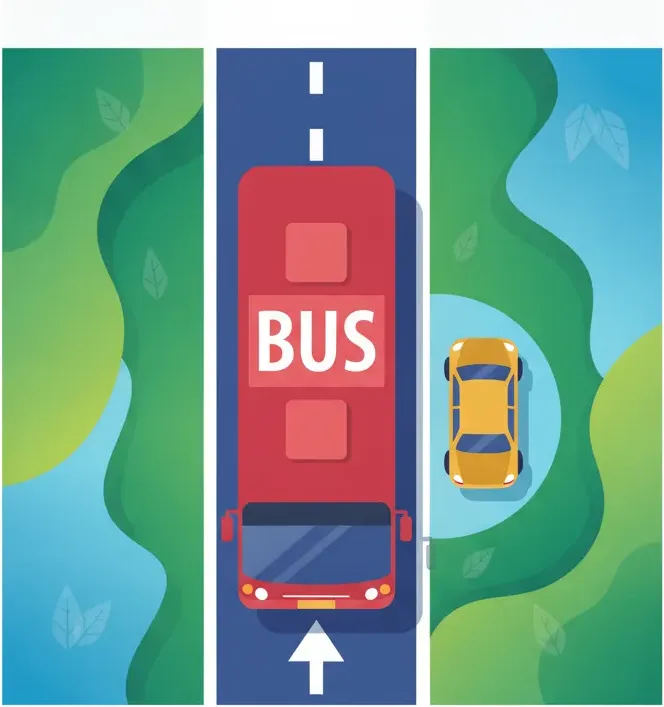
This lesson provides a detailed explanation of the rules governing dedicated bus lanes, including how to interpret markings and adhere to time-based restrictions. It clarifies the priority rules that grant buses precedence in certain traffic situations, such as when pulling out from a stop. Understanding these regulations allows drivers to use bus infrastructure efficiently and legally to maintain schedules and improve traffic flow.
This lesson details the critical right-of-way regulations according to the German StVO. It covers the default 'right before left' rule, the meaning of priority road signs, and specific rules for roundabouts and yielding to pedestrians. A thorough understanding of these priority rules is fundamental for preventing accidents at junctions.
This lesson provides comprehensive guidance on using vehicle signals to communicate with other road users. It covers the correct timing and use of turn indicators, the application of hand signals when necessary, and the proper use of hazard lights. Effective signaling is presented as a cornerstone of predictable and safe driving.
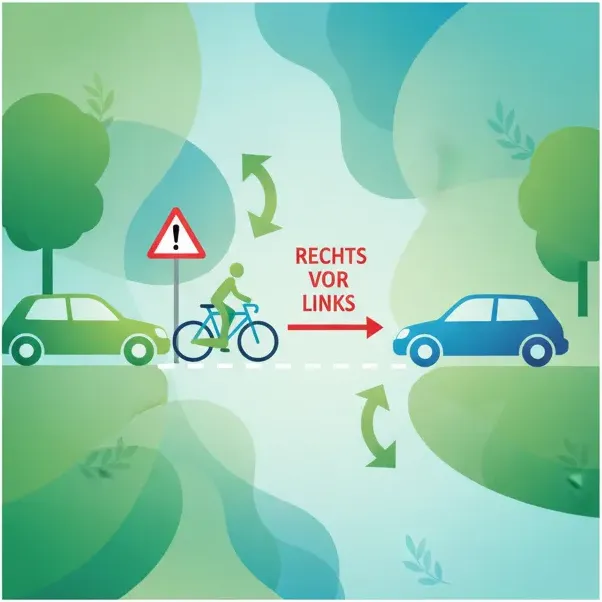
This lesson provides a detailed guide to navigating various types of intersections safely and correctly. It explains how priority is determined by traffic signs (such as the priority road, yield, and stop signs) and traffic lights. The lesson also covers complex scenarios, including the rules for turning left across oncoming traffic, to ensure you can handle any junction with confidence.
This lesson focuses on complex traffic environments where different types of road users share the same space. It provides guidance on situations like driving on streets with integrated tram tracks or where bus and bicycle lanes are part of the roadway. The content emphasizes understanding the specific priority rules and being extra vigilant to anticipate potential conflicts in these busy, shared zones.
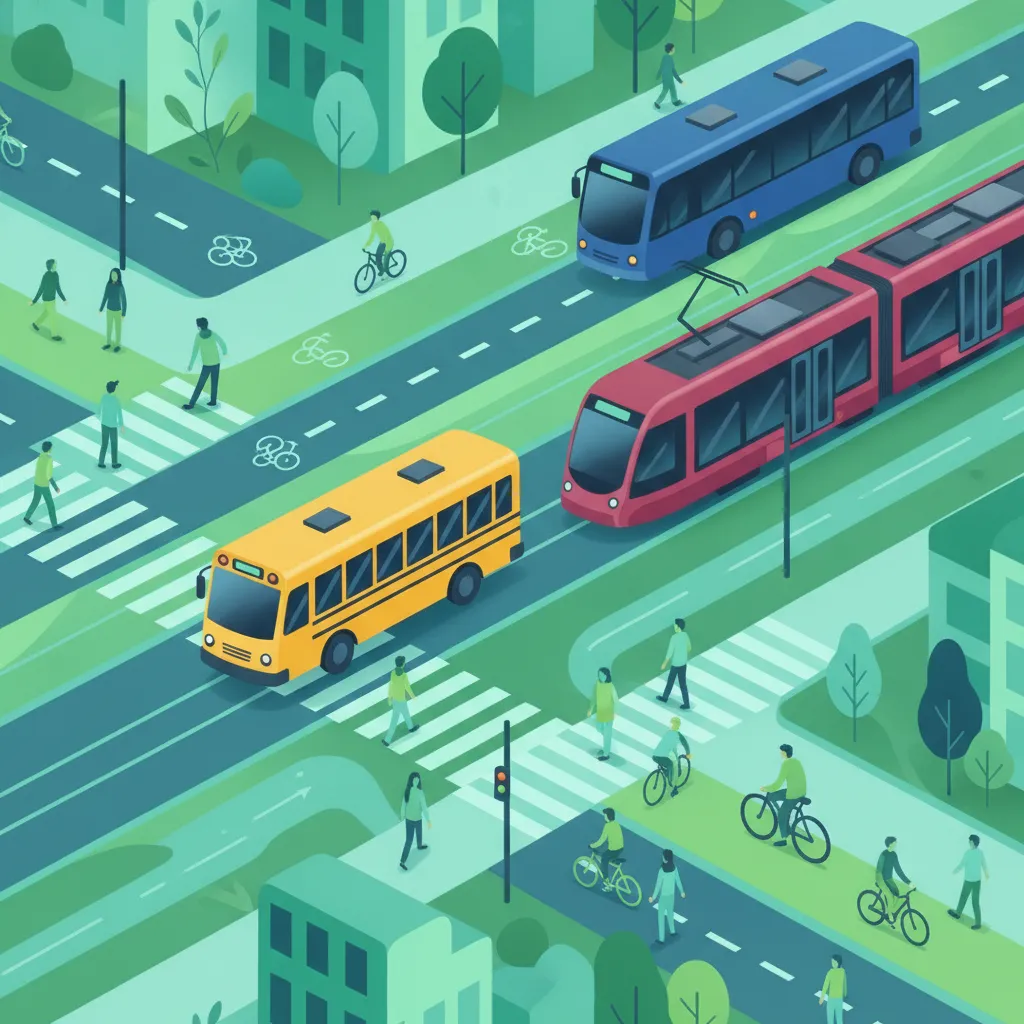
This lesson explains the specific regulations when encountering public transport. It covers the legal requirement to yield to public buses signaling to leave a bus stop and the strict rules for passing school buses with flashing hazard lights. You will also learn about the absolute priority of trams ('Straßenbahn') and how to safely drive on or across their tracks.
Navigate complex urban traffic scenarios by mastering various traffic signals and road markings relevant to German driving theory. This covers general urban signals and how they integrate with specific public transport indicators for safe and legal driving.
This lesson provides a thorough explanation of traffic light systems ('Lichtzeichenanlagen') used in Germany. It details the meaning of red, amber, and green lights and the correct response to each phase of the signal sequence. The lesson also covers special signals, such as the green arrow for turning right on red, pedestrian and cyclist signals, and the authority of signals given by a police officer, which override all other signs.

This lesson explains the various types of road markings and their significance for guiding traffic and ensuring safety. It covers the difference between solid and broken lines for lane separation and overtaking rules, the function of stop lines at intersections, and the markings for pedestrian crosswalks. You will also learn to interpret directional arrows, bicycle lane markings, and other symbols painted on the road.
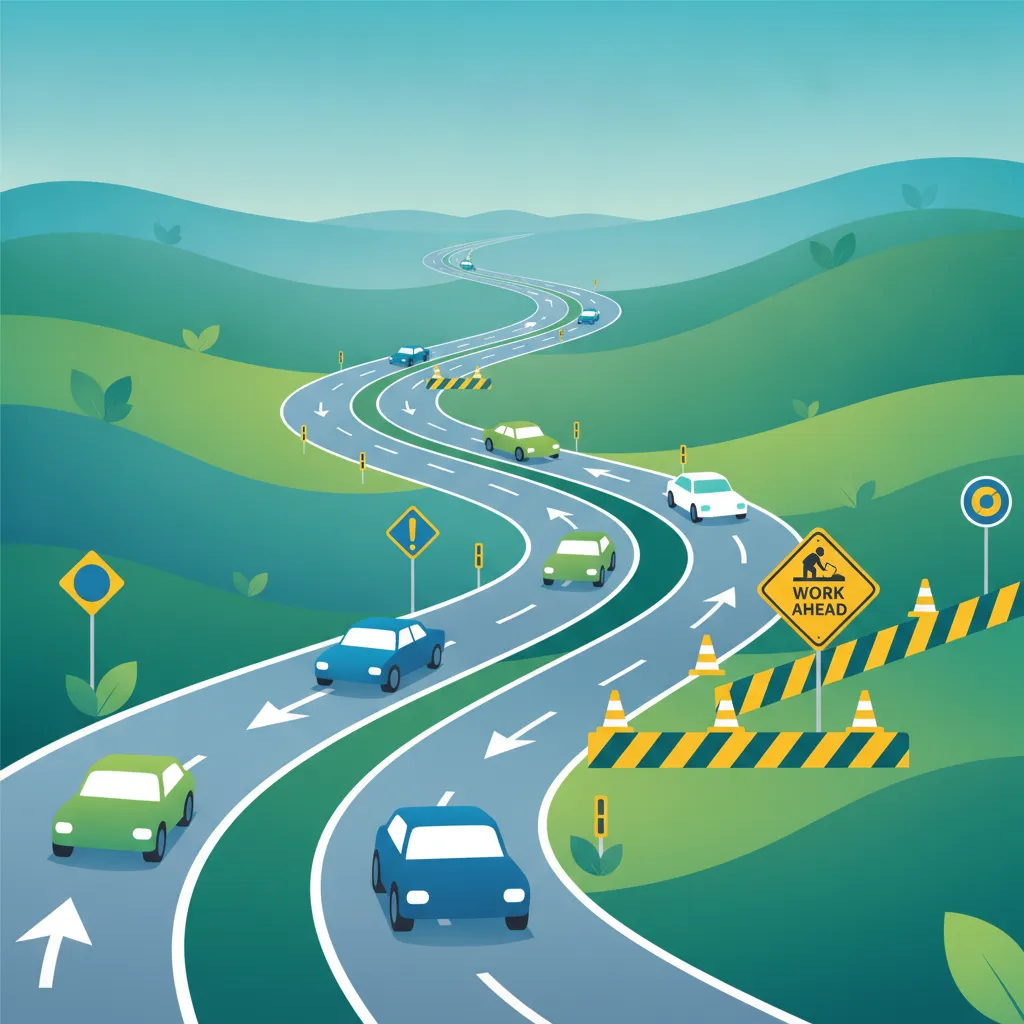
This lesson focuses on interpreting various road markings, from lane lines and directional arrows to stop lines and pedestrian crossings. It explains the rules associated with solid versus broken lines and how to navigate temporary markings found in construction zones. Correctly reading these markings is vital for proper lane discipline and safety.
Effective communication is critical for road safety, and this lesson details the correct use of a vehicle's signaling devices. It explains when and how to use turn signals (indicators), hazard warning lights, the horn, and headlight flashes to clearly communicate your intentions to other road users. Proper signaling helps prevent misunderstandings and is a key component of defensive and cooperative driving.
This lesson explains the function and meaning of traffic light signals, including standard cycles, flashing lights, and arrows. It also details how to interpret and obey hand signals given by police officers, which override all other signs and signals. Understanding these instructions is crucial for navigating controlled junctions and emergency situations.
This lesson explores the complex and fast-paced nature of urban traffic environments. It covers topics such as high traffic density, frequent pedestrian crossings, and complex intersections that require heightened awareness. Learners will develop strategies for adapting their speed and lane positioning to navigate these challenges safely, especially during peak rush hour periods and in areas with traffic calming measures.
This lesson focuses on complex traffic environments where different types of road users share the same space. It provides guidance on situations like driving on streets with integrated tram tracks or where bus and bicycle lanes are part of the roadway. The content emphasizes understanding the specific priority rules and being extra vigilant to anticipate potential conflicts in these busy, shared zones.
This lesson covers regulatory signs, which are legally enforceable and command specific actions from drivers. You will learn the meaning of critical signs such as the stop sign, yield sign, no-entry signs, and various parking and stopping prohibitions. The content also explains signs that establish speed limits, one-way streets, and restricted areas like environmental or pedestrian zones.
This lesson provides comprehensive guidance on using vehicle signals to communicate with other road users. It covers the correct timing and use of turn indicators, the application of hand signals when necessary, and the proper use of hazard lights. Effective signaling is presented as a cornerstone of predictable and safe driving.

This lesson provides a comprehensive guide to a vehicle's lighting systems, explaining the purpose and correct usage of each type of light. It covers dipped and main beam headlights, fog lights, and the legally required use of lights during the day or in poor visibility. You will also review the function of brake lights, indicators, and hazard warning lights for communication and safety.
Find clear answers to common questions learners have about Special Traffic Signals for Passenger Vehicles. Learn how the lesson is structured, which driving theory objectives it supports, and how it fits into the overall learning path of units and curriculum progression in Germany. These explanations help you understand key concepts, lesson flow, and exam focused study goals.
These are specialized signals for public transport. A vertical bar generally indicates 'go' (equivalent to green), while a horizontal bar indicates 'stop' (equivalent to red). Other configurations can indicate turning directions.
No. Bus-only signals are strictly reserved for authorized public transport vehicles. Using these signals in a non-permitted vehicle is a traffic violation and can lead to penalties or accidents.
The exam often presents a video or image of a complex urban intersection. You must be able to identify which specific signal applies to your vehicle category and determine the correct course of action, such as waiting for a priority signal before crossing.
Always follow the signal specifically designed for your vehicle type if a specialized bus signal is present. If you are in a lane dedicated to buses, the bus-specific signal is your primary source of instruction.
Begin your targeted revision now. Use our practice search to quickly find specific German driving theory questions. Filter by StVO rules, road signs, or hazard perception to create your focused study plan. Master challenging areas and prepare confidently for your theoretical driving test.