This lesson provides a comprehensive guide to understanding traffic light sequences and their legal implications for Category B drivers in Ireland. Mastering these signals is essential for navigating urban junctions safely and performing correctly in your theory test. This module builds upon our previous work on general road signs and prepares you for upcoming lessons on lane positioning.

Lesson content overview
Traffic light installations are the backbone of urban traffic management. Designed to resolve complex priority conflicts at busy junctions, they ensure the safe, orderly, and efficient movement of passenger cars, heavy goods vehicles, cyclists, and pedestrians. For anyone preparing for the Official Irish Driver Theory Test (Category B), mastering the legal definitions, sequence cycles, and safety implications of traffic signals is non-negotiable.
At a signalised junction, the default rules of right-of-way are superseded by explicit, time-controlled directions. Understanding these signals prevents catastrophic collisions, minimizes urban gridlock, and ensures you protect vulnerable road users. This lesson delivers a comprehensive breakdown of every traffic light phase, the exact legal obligations they impose, and the defensive driving habits required to navigate them safely under Irish law.
Traffic lights in Ireland operate in a highly predictable, standardized cycle. Failing to understand the transition between these phases is one of the leading causes of junction collisions and theory test failures.
A steady red signal is a mandatory instruction to stop. There are no exceptions or informal modifications to this rule.
Entering a junction after the light has turned red is highly dangerous and carries severe legal penalties, including automated red-light camera fines and mandatory penalty points on your driving licence.
The steady amber light serves as a critical buffer phase between green and red. It is designed to clear the junction safely and warn drivers that a red light is imminent.
A steady green light indicates permission to proceed through the junction, but it is not an absolute, unrestricted right-of-way.
To optimize traffic flow at complex multi-lane junctions, road planners use directional green filter arrows. These arrows provide distinct instructions that differ from the main circular signals.
A green arrow displayed alongside, below, or within a standard traffic light structure indicates that you have an exclusive right-of-way to proceed in the direction indicated by the arrow.
A directional traffic light signal (shaped like an arrow) that grants exclusive passage to vehicles turning in that specific direction, overriding general priority rules.
Pedestrian signals manage the interactions between motorized vehicles and vulnerable road users at crossings, such as Pelican and Zebra crossings. Understanding these unique phases is a vital part of the Irish Category B driving curriculum.
Pedestrians are guided by illuminated symbols:
At many pedestrian-controlled crossings (such as Pelican crossings), the driver's signal will transition from a solid red to a flashing amber light before returning to green.
As you see the solid red light transition to flashing amber, reduce your speed and scan both sides of the crossing.
Identify any pedestrians, including those carrying large loads, elderly individuals, or children, who may be moving slowly across the lanes.
If there is anyone still on the roadway, keep your vehicle at a complete stop behind the stop line.
Once the crossing is completely clear of all pedestrians, check your mirrors, look out for cyclists, and proceed forward with caution.
Operating a vehicle in compliance with traffic signals is a fundamental legal duty. Under the Irish Road Traffic Acts, violations of these signals are classified as serious offences.
There is a strict legal requirement to stop at a red light. This applies to all controlled junctions, temporary roadworks signals, and railway level crossings. Passing a red light is a primary hazard that results in catastrophic side-impact collisions.
A common point of confusion for drivers familiar with international road systems is the concept of turning on a red light.
Even if your traffic light is green, you must not enter a junction if your exit is blocked by stationary traffic. Doing so blocks the intersection for cross-traffic when their light changes to green, causing gridlock.
A professional driver adapts their response to traffic lights based on weather, vehicle state, and the presence of vulnerable road users.
In heavy rain, ice, snow, or fog, your stopping distance increases significantly.
Junctions are the most dangerous environments for cyclists and pedestrians.
| Signal Color / Phase | Legal Meaning | Driver Action |
|---|---|---|
| Steady Red | Absolute Stop | Bring the vehicle to a complete stop behind the stop line. Do not cross. |
| Steady Amber | Stop unless unsafe to do so | Stop before the line unless you have already entered the junction or are too close to stop safely. |
| Steady Green | Proceed if safe | Go forward or turn, yielding to pedestrians and traffic already in the junction. |
| Green Filter Arrow | Exclusive Right-of-Way | Proceed only in the direction of the arrow, scanning for pedestrians. |
| Flashing Amber | Conditional Yield (Pedestrians) | Yield to any pedestrians on the crossing; proceed with caution if completely clear. |
To fully understand how traffic lights operate alongside other roadway systems, explore these related concepts:
To test your understanding of traffic signals, pedestrian crossings, and right-of-way rules at junctions, access the targeted preparation material:
Explore all units and lessons included in this driving theory course.
Lesson content overview
Explore all units and lessons included in this driving theory course.
Explore search topics learners often look for when studying Traffic Lights and Signal Phases. These topics reflect common questions about road rules, driving situations, safety guidance, and lesson level theory preparation for learners in Ireland.
Browse additional driving theory lessons that cover connected traffic rules, road signs, and common driving situations related to this topic. Improve your understanding of how different rules interact across everyday traffic scenarios.
Learn the official hierarchy of right-of-way at uncontrolled intersections and how to safely manage priority conflicts. This explanation covers road markings, stop and yield signs, and how to navigate junctions correctly according to the Irish Rules of the Road.
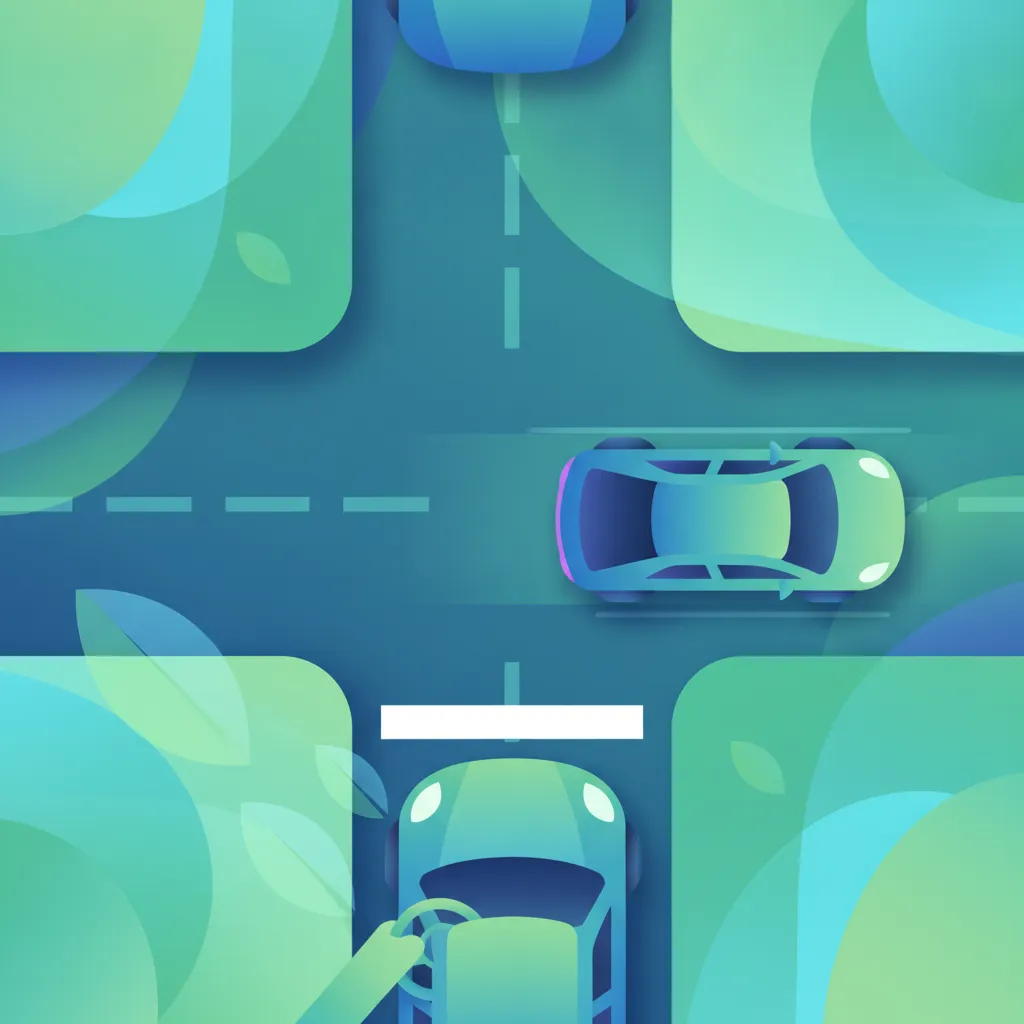
Right-of-way rules establish a clear order of precedence when the paths of two or more vehicles cross. This lesson explains how traffic on a major road has priority over traffic emerging from a minor road, and the general rule of yielding to oncoming vehicles when turning right. You will develop a solid understanding of how to approach intersections defensively, assessing speed and distance to make safe decisions.

Uncontrolled junctions represent a high-risk scenario because they lack physical signs, lines, or lights to dictate priority. This lesson covers the crucial 'priority to the right' principle, where you must yield to any traffic approaching from your right-hand side. You will learn the importance of reducing your speed, preparing to stop, and verifying the intentions of other drivers at these equal-status crossings.
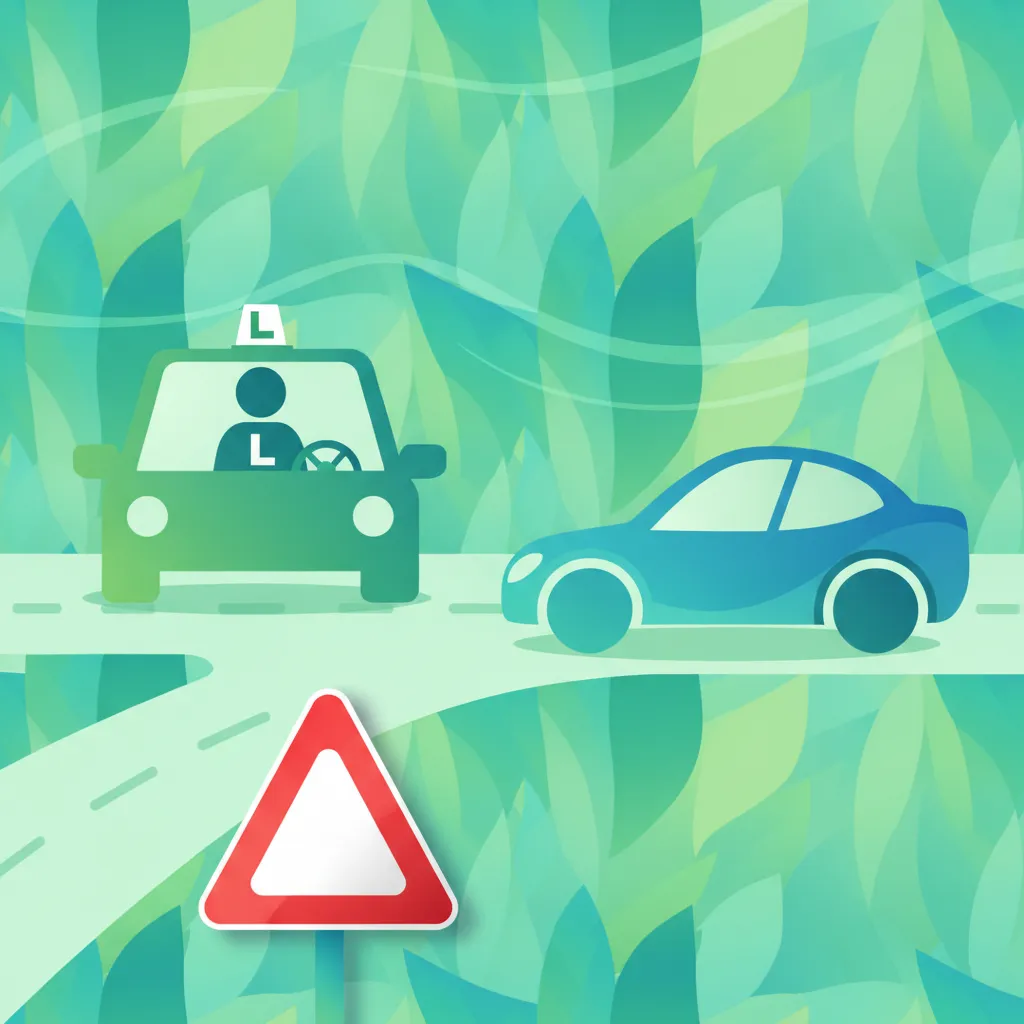
This lesson teaches the fundamental principles of priority and right-of-way at controlled and uncontrolled intersections across Ireland. It explains the legal obligations at yield signs, stop lines, and when meeting oncoming traffic turning across your lane. Motorcyclists will learn to carefully verify other drivers' intentions rather than assuming they will yield the correct right-of-way.
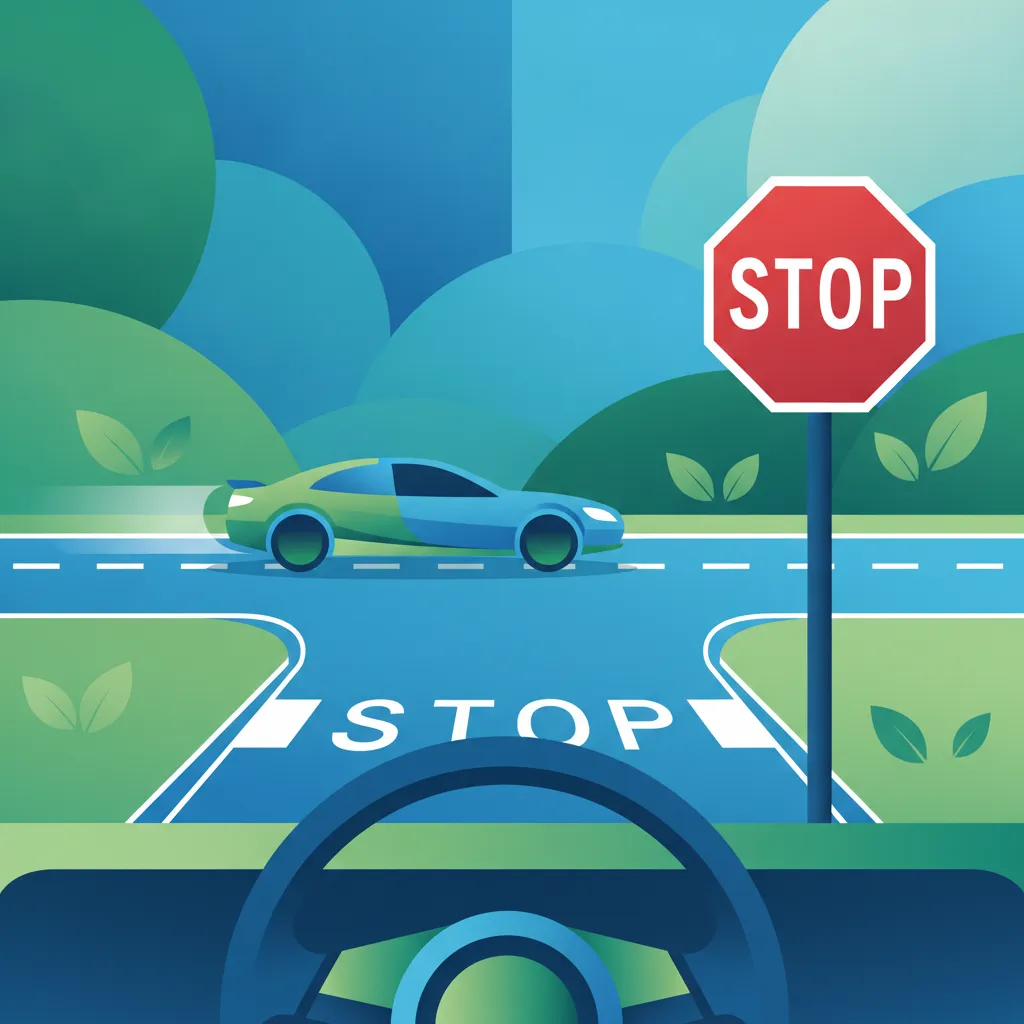
Stop and yield signs require drivers to surrender right-of-way to crossing traffic, but they command different physical actions. This lesson explains that a stop sign mandates a complete, absolute halt behind the line, whereas a yield sign requires you to slow down and stop only if other traffic is approaching. You will learn how to manage restricted visibility at junctions and how to creep forward safely when clear.
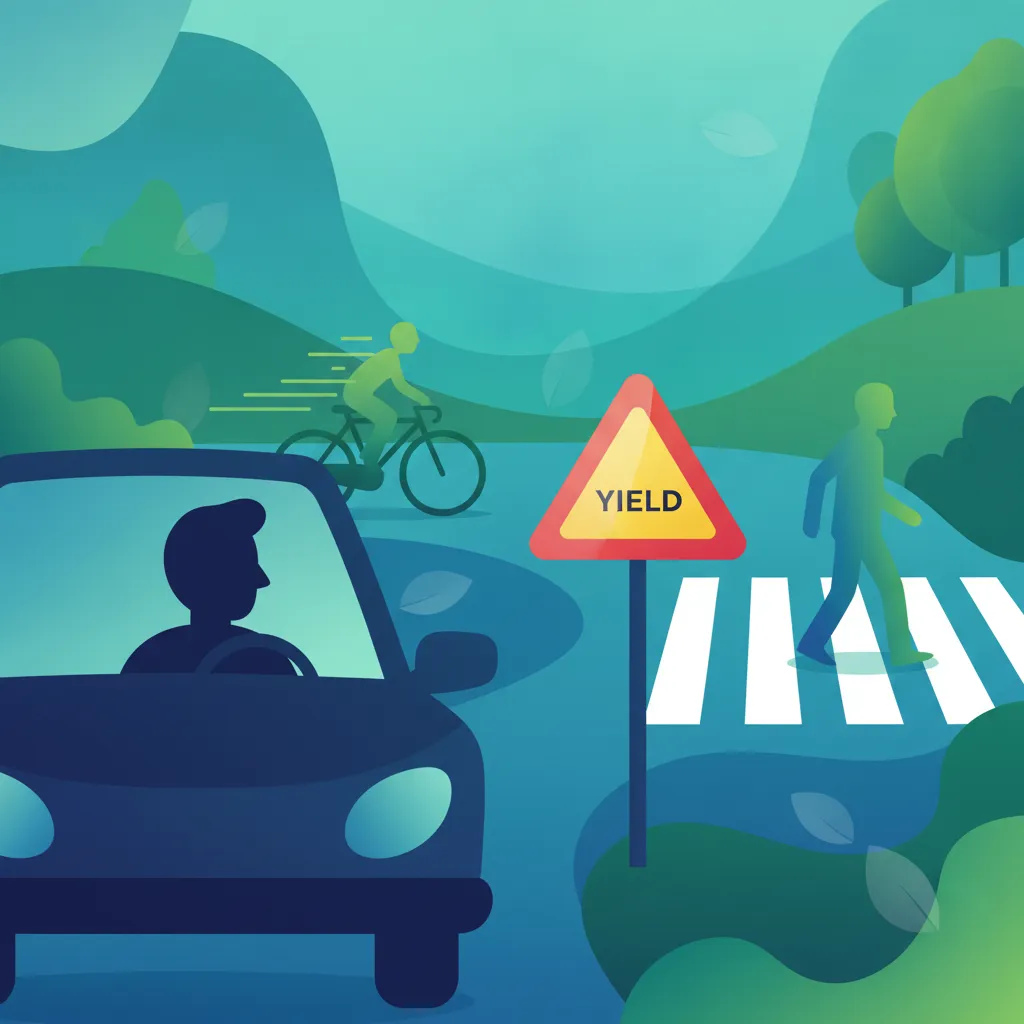
This lesson covers the absolute rules of priority that regulate junctions, roundabouts, and pedestrian crossings in Ireland. It teaches riders when they must yield, who has right-of-way, and how to read Stop and Yield signs correctly. Understanding these priority hierarchies prevents collisions and maintains orderly, predictable movement at busy junctions.
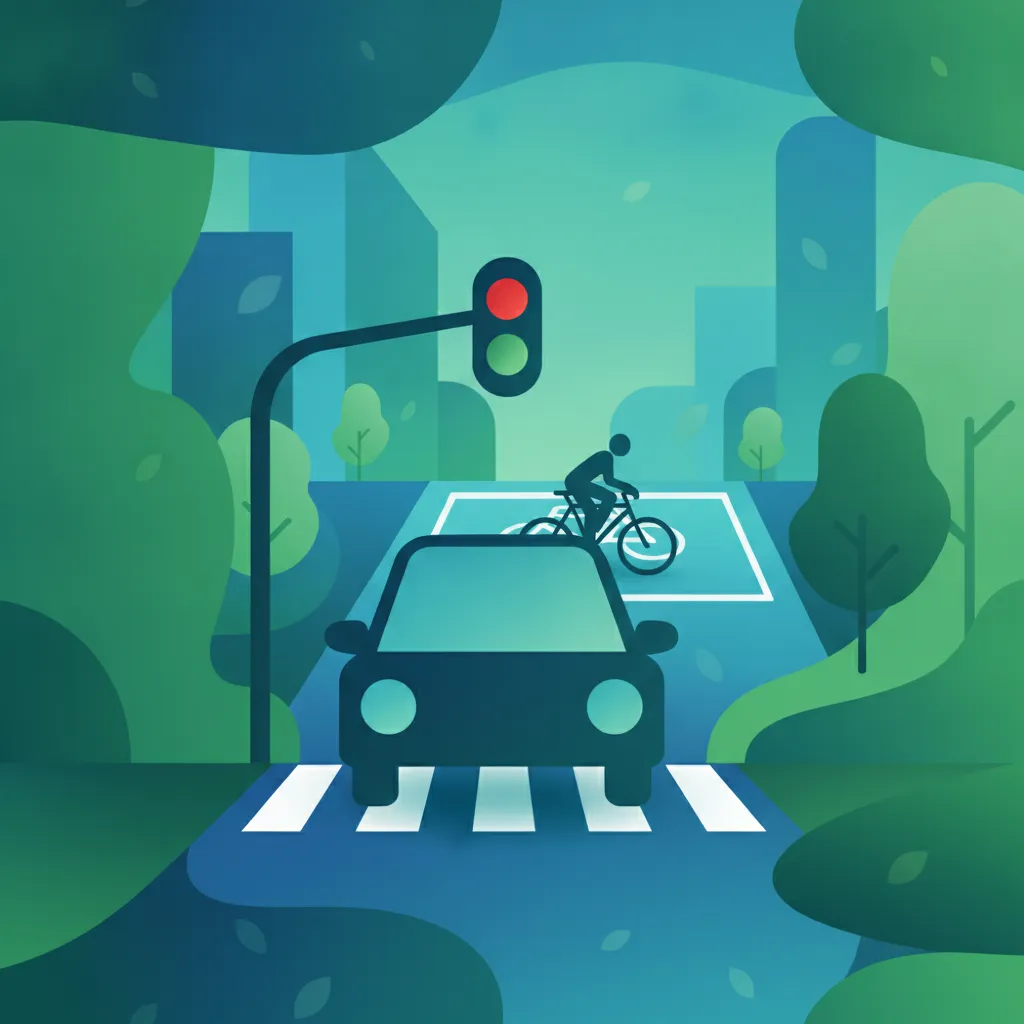
This lesson outlines the standard traffic light sequence in Ireland, detailing the exact legal requirements for red, amber, and green signals. It covers green arrow filters, flashing amber lights, and the specific cycle-friendly traffic signals encountered in urban areas. Recognizing these signals helps riders anticipate traffic patterns and execute safe maneuvers.

This lesson details the sequential steps required to approach and exit junctions safely under the Irish driving rules. It teaches riders how to select the correct lane, utilize mirrors, apply early signals, and reduce speed appropriately. Effective observation strategies are highlighted to help riders identify crossing pedestrians or approaching side traffic.
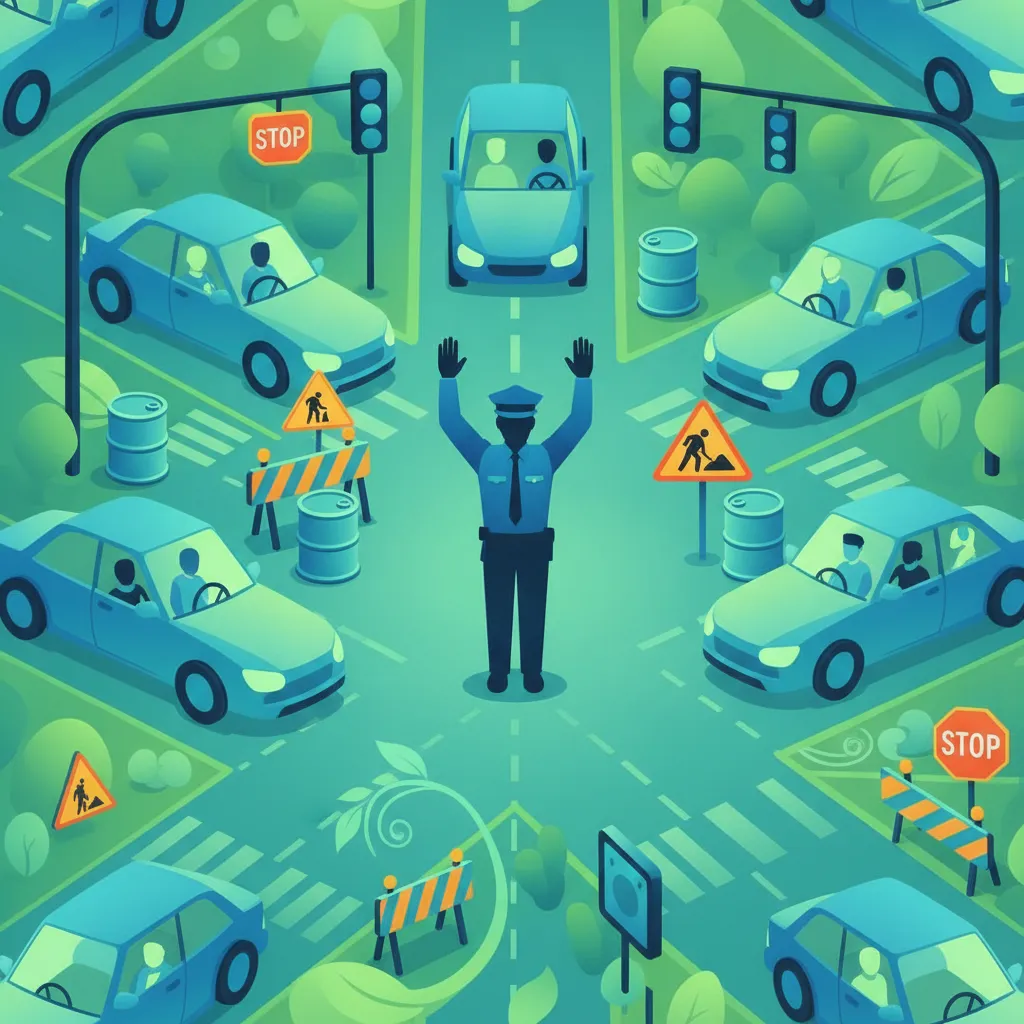
When traffic control is actively performed by a Garda, a school warden, or authorized marshals, their hand signals override all standard traffic lights and road signs. This lesson illustrates the common hand gestures used by officers to stop, release, or slow down traffic. You will learn your strict legal obligation to obey these manual commands, ensuring public safety during emergencies, events, or school crossings.

This lesson focuses on the safe approach and execution of turns at T-junctions, staggered intersections, and blind crossroads. It explains the critical mirror-signal-manoeuvre routine and how to select the best position for maximum visibility to cross-traffic. Motorcyclists will learn to identify potential hazards like vehicles pulling out suddenly or turning across their direct path.
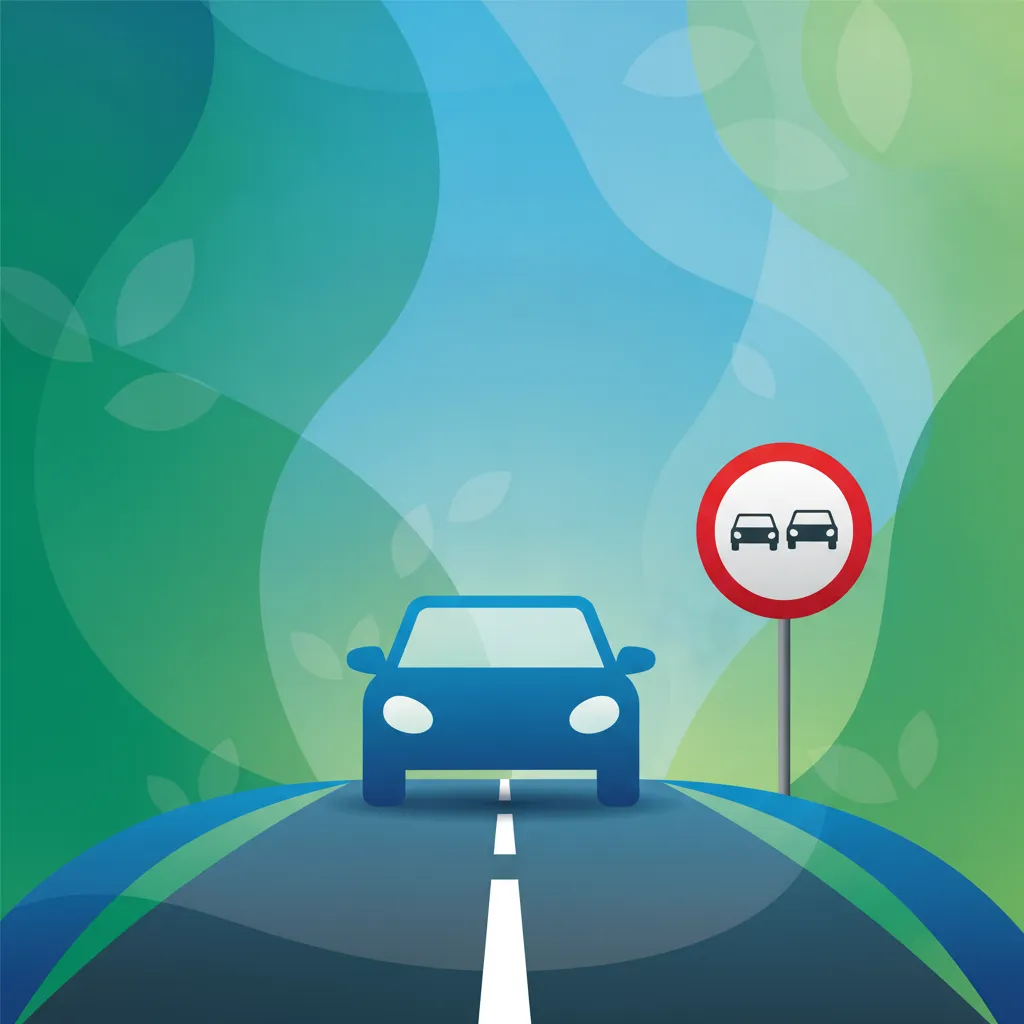
No-overtaking zones are marked in areas with restricted visibility, such as approaching bends, humps, or narrow bridges. This lesson details how continuous solid white lines legally prohibit passing, along with the very narrow exceptions allowed under Irish law. You will learn to identify these high-risk areas from visual markings, ensuring you never initiate a passing manoeuvre that puts oncoming traffic in immediate danger.
Understand the legal responsibilities of drivers when interacting with pedestrians and cyclists in urban environments. This lesson details how to safely navigate pedestrian crossings and shared road spaces, focusing on hazard perception and the duty of care required for vulnerable road users.
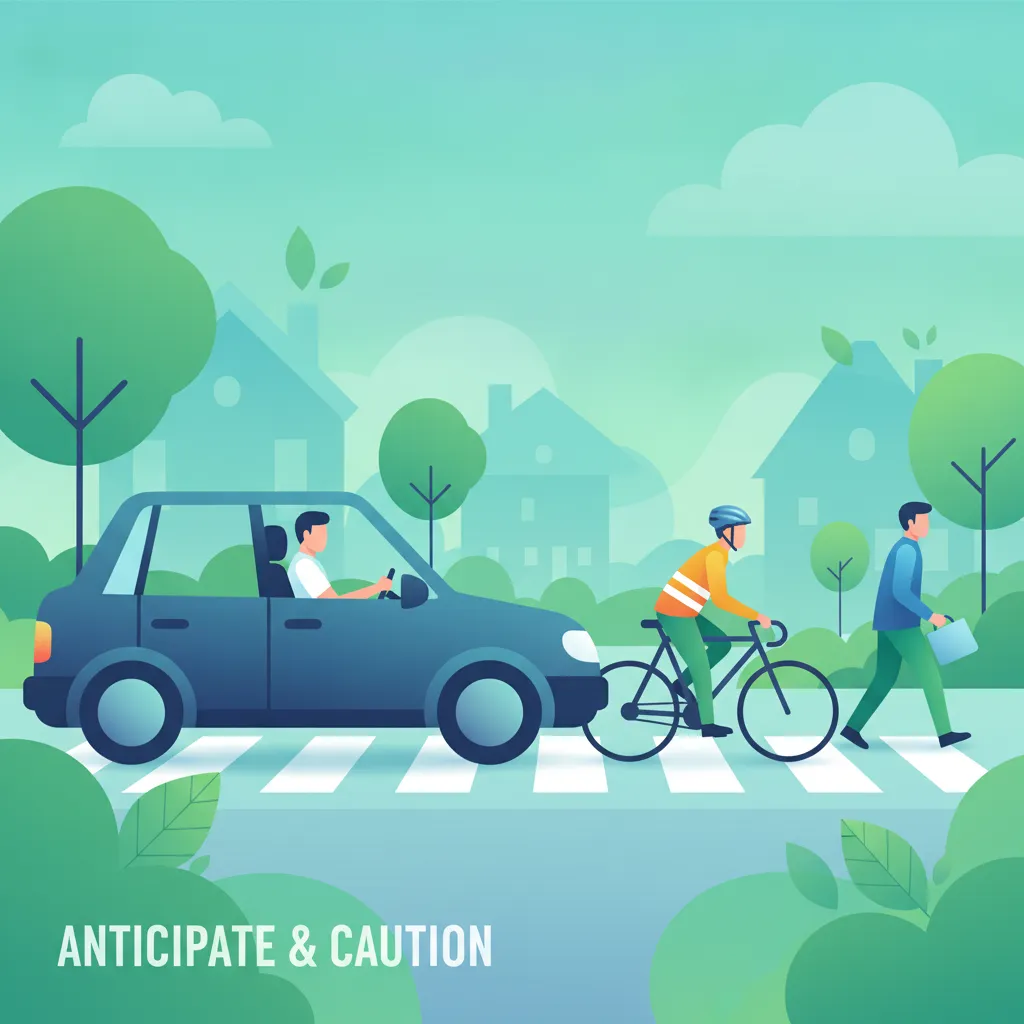
Safeguarding vulnerable road users requires more than simple obedience to traffic signs; it demands a defensive driving mindset. This lesson summarizes safe practices, including scanning far ahead in urban areas, keeping massive safety margins in wet weather, and executing thorough blind spot checks before reversing. By anticipating the unpredictable movements of others, you can prevent accidents and support a safe road culture.
Heavy vehicles require continuous visual scanning to identify small or slow-moving road users who may enter the path of travel. This lesson explores the typical behaviors of young children, elderly pedestrians, and visually impaired road users. Drivers will build strong hazard perception skills to anticipate sudden movements, ensuring they can brake safely and avoid serious accidents.

Bus stops often intersect with designated bicycle lanes and busy walking pathways, creating high-risk conflict areas for drivers. This lesson trains drivers to check blind spots for oncoming cyclists before pulling into or exiting public stop bays. It emphasizes yielding right-of-way to passengers crossing the road, preventing collision risks in active urban transport hubs.
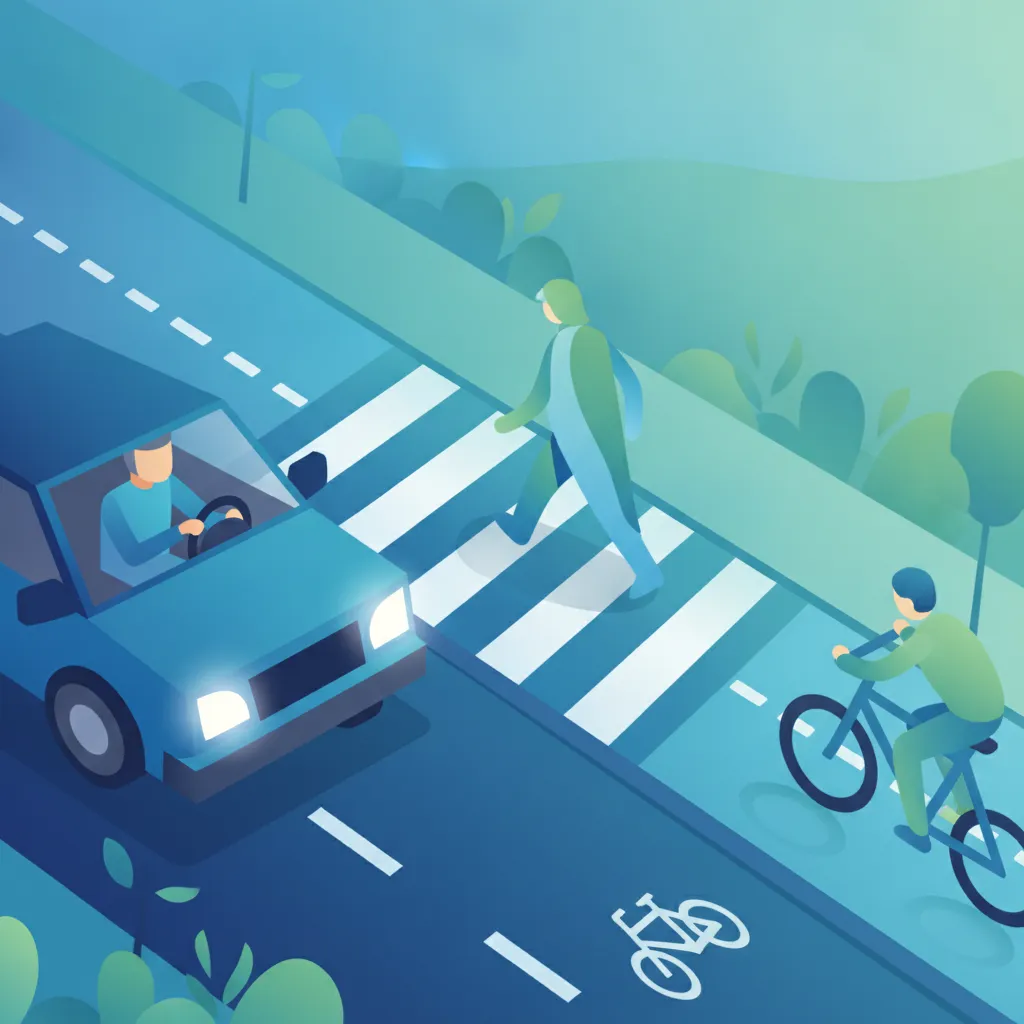
This lesson details how to approach zebra, pelican, and other pedestrian crossings safely, ensuring complete priority is given to walkers. It also covers the safe guidelines for overtaking cyclists and sharing lanes in busy urban centers without causing danger. Respecting these interactions is critical for maintaining overall safety and compliance with Irish road law.
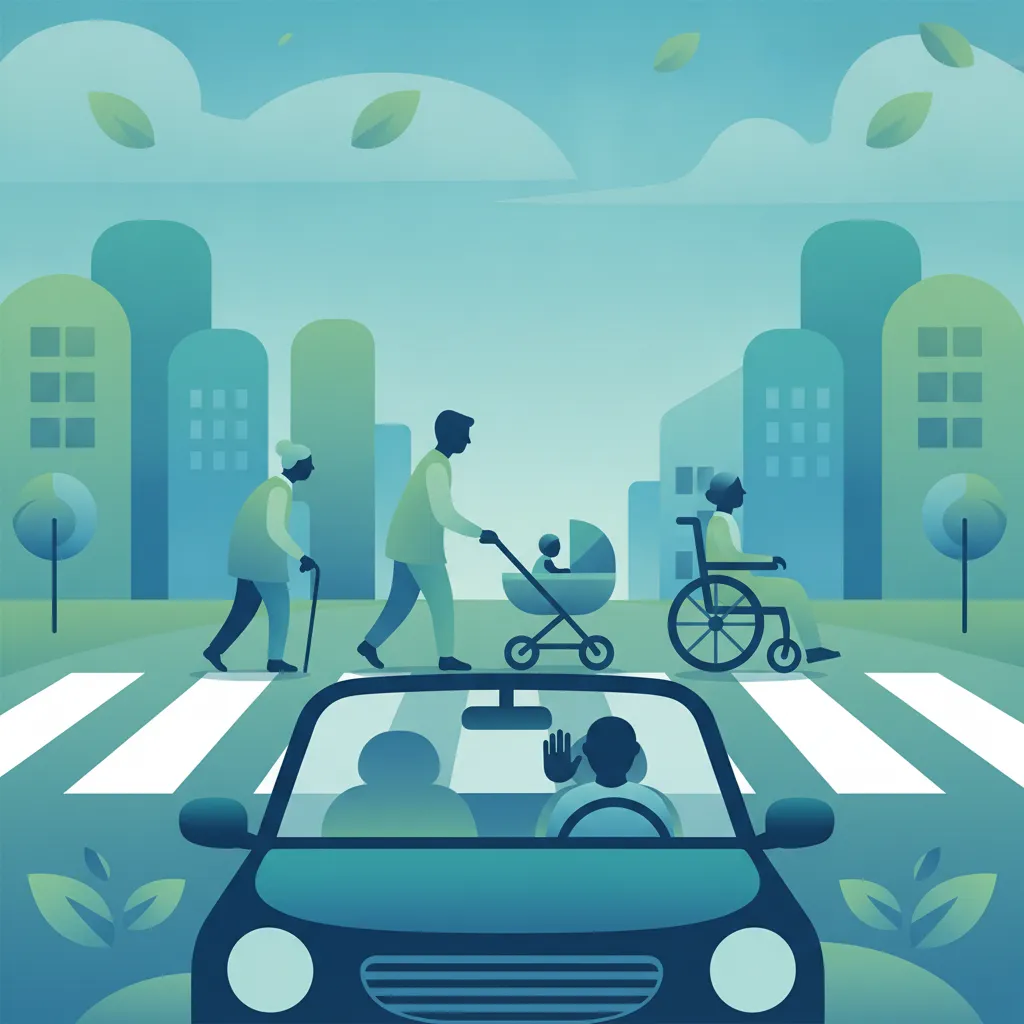
Children, the elderly, and disabled individuals often require extra time and understanding when navigating road networks. This lesson outlines special safety hazards, such as children unexpectedly running into school zones, or senior citizens needing longer times to cross wide junctions. You will learn how to recognise visually impaired pedestrians by their white canes or guide dogs, and the absolute requirement to drive slowly and patiently.

This lesson covers the rules governing zebra, pelican, and toucan pedestrian crossings, focusing on driver obligations and rider safety. It details how to interact safely with cyclists, personal mobility devices, and pedestrians in busy urban sectors. Motorcyclists will learn to scan pavement edges, yield right-of-way, and maintain safe overtaking distances when passing slower road users.
Cyclists share public roads under unique safety constraints, requiring drivers to keep wide clearances and anticipate sudden steering changes. This lesson covers the minimum safe passing distance of 1 to 1.5 metres, rules for driving near cycle tracks, and the danger of the 'dooring' hazard when parking. You will also learn to check your left-side blind spot before turning, preventing dangerous side-swipe collisions.

This lesson focuses on managing the interactions between commercial goods vehicles and non-motorized or lightweight commuters. It outlines defensive driving techniques to utilize when overtaking cyclists, navigating pedestrian crossings, or negotiating shared junctions in Irish cities. Drivers will examine common cyclist behaviors at roundabouts and understand how to maintain massive safety margins to protect lives.

Children often struggle to judge heavy vehicle speeds accurately, while elderly pedestrians may possess limited mobility or hearing impairments. This lesson addresses these unique risks, explaining how to adjust driving patterns in residential neighborhoods and near shopping districts. Drivers will learn to maintain a high safety margin, ensuring they can yield quickly to vulnerable road users.

Pedestrians are the most common vulnerable road users, and drivers must maintain constant vigilance to protect them. This lesson covers pedestrian priority, especially when you are turning into side roads or navigating busy urban centres. You will learn why you must yield to pedestrians already crossing, how to scan blind spots for hidden walkers, and the safety dangers of blocking footpaths or pedestrian zones with your car.
Find clear answers to common questions learners have about Traffic Lights and Signal Phases. Learn how the lesson is structured, which driving theory objectives it supports, and how it fits into the overall learning path of units and curriculum progression in Ireland. These explanations help you understand key concepts, lesson flow, and exam focused study goals.
You must stop at an amber light unless it is unsafe to do so, such as when you are already too close to the stop line to halt safely without causing a collision or abrupt braking.
A green filter arrow grants you exclusive right-of-way to proceed in the direction indicated by the arrow, regardless of other traffic signals, provided it is safe to do so.
In some Irish locations, a flashing amber light indicates that you must give way to pedestrians who are crossing or waiting to cross at a signalled pedestrian crossing.
Yes, at a signalised junction, you must strictly follow the light signals and lane markings, whereas roundabouts require you to yield to traffic already on the roundabout according to specific priority rules.
Use the practice question search tool to pinpoint specific topics, road signs, or rules you need to master for your official Driver Theory Test. Refine your study strategy and ensure comprehensive preparation for all aspects of the Irish driving exam. Start your focused revision now and build confidence for your learner permit test.