
This lesson focuses on the critical skill of adjusting your speed based on shifting urban environments and mixed traffic flows. As you prepare for the Turkish MTSK e-sınav for your AM category licence, understanding how to maintain control and traction while interacting with larger vehicles is essential for both your exam success and daily safety.

Lesson content overview
Successfully navigating urban environments on a Category AM moped or light motorized bicycle requires much more than simply twisting the throttle to its maximum limit. In mixed traffic, where you share the road with heavy trucks, passenger cars, buses, erratic taxis, and vulnerable pedestrians, managing your speed is your primary line of defense.
For candidates preparing for the official Turkish MTSK (Motorlu Taşıt Sürücü Kursiyerleri) e-sınav, understanding the interplay between legal speed limits, physical stopping distances, and environmental context is critical to passing the exam and staying safe on the road.
In Turkey, speed limits are established under the Karayolları Trafik Kanunu (Turkish Traffic Code) to regulate the flow of traffic and minimize collision severity. While passenger cars may have higher limits, smaller and lighter vehicles like mopeds (Category AM) are subject to specific legal restrictions due to their engine capacity (under 50cc) and structural design.
Unless otherwise posted by traffic signs, the default legal speed limit for mopeds within urban areas and residential zones in Turkey is 50 km/h. However, local municipalities often reduce these limits in crowded municipal districts, historic centers, or narrow residential streets.
Exceeding the legal speed limit of your vehicle or the road segment is a major traffic violation in Turkey. Under Article 51 of the Turkish Traffic Code, speeding fines are calculated progressively based on the percentage by which you exceed the limit (e.g., 10% to 30%, 30% to 50%, and more than 50%).
A common misconception among new riders preparing for their MTSK theory exam is that driving at the posted legal speed limit is always safe. In reality, the posted limit is a maximum threshold reserved for ideal conditions (dry pavement, clear visibility, and low traffic volume).
A safe speed is a dynamic, continuously adjusted velocity that allows you to maintain absolute control over your vehicle, react to sudden hazards, and bring your moped to a complete stop within the clear distance you can see ahead.
The process of choosing an operational speed, up to the legal limit, that accounts for current traffic density, weather, road surface conditions, and your own physical limits.
In heavy Istanbul traffic or narrow, bustling streets in Izmir, the safe speed might be 20 km/h, even if the road sign permits 50 km/h. Adhering strictly to the legal limit when a hazard is present constitutes negligent driving.
Urban traffic in Turkey is highly mixed and dynamic. You will frequently interact with buses, commercial delivery vans, dolmuş (shared minibuses) that make sudden stops, and pedestrians. To manage your speed safely in these high-density zones, you must systematically evaluate the environment.
In dense traffic, vehicles frequently accelerate and decelerate. If you ride too fast, you will be forced to brake hard repeatedly. This erratic pattern ruins your fuel efficiency, destabilizes your moped, and increases the risk of being rear-ended.
Pedestrians are the most vulnerable road users. In Turkish cities, pedestrians may step onto the road unexpectedly, especially in crowded bazaar areas, transit hubs, or near schools.
Scan ahead: Look for pedestrian crossing signs (Yaya Geçidi) and school crossing signs (Okul Geçidi).
Reduce speed preemptively: Drop your speed by at least 10–15 km/h below the limit when approaching marked or unmarked crosswalks.
Cover your brakes: Lightly place two fingers over your brake levers to eliminate reaction delay.
Yield completely: Turkish law mandates yielding priority to pedestrians who have stepped onto, or are about to step onto, a crossing.
Intersections are the most common sites for multi-vehicle collisions involving mopeds. Blind corners—where your line of sight is blocked by buildings, parked vehicles, trees, or construction—prevent you from seeing oncoming traffic or hazards around the bend.
If you enter a blind corner or intersection too quickly, your stopping distance will carry you directly into the path of potential hazards before you can even react.
Understanding how your vehicle stops is rooted in basic physics. Every time you need to halt your moped, your total stopping distance is comprised of two distinct phases:
Reaction time is the interval between the moment your eyes perceive a hazard (e.g., a car door opening) and the moment your fingers begin to pull the brake levers.
Braking distance is the physical distance your moped travels after the brakes are applied until it comes to a complete rest. This is highly dependent on speed, road surface grip, brake condition, and tire tread.
The Quadratic Law of Speed: Braking distance does not increase linearly with speed; it increases quadratically (proportionate to the square of your speed). If you double your speed from 25 km/h to 50 km/h, your braking distance does not double—it increases by four times.
| Speed (km/h) | Reaction Distance (1.5s) | Average Braking Distance (Dry Road) | Total Stopping Distance |
|---|---|---|---|
| 20 km/h | ~8.3 m | ~2.5 m | ~10.8 m |
| 30 km/h | ~12.5 m | ~5.6 m | ~18.1 m |
| 50 km/h | ~20.8 m | ~15.6 m | ~36.4 m |
Note: These values are representative of dry, clean asphalt. On wet or debris-laden roads, the braking distance can easily double or triple.
For moped riders, maintaining a stable, predictable speed is crucial for both vehicle control and traffic integration.
Abrupt accelerations and hard decelerations disrupt your moped's balance. Rapid throttle adjustments alter the weight distribution of your vehicle, reducing grip on either the front or rear tire. Furthermore, smooth speed transitions make you predictable to the drivers behind you. If a dolmuş or taxi is tailgating you, sudden, erratic braking could result in a severe rear-end collision.
In Turkish traffic, tailgating is a frequent hazard. You must maintain a safe following distance to give yourself a visual cushion and adequate stopping space.
Your environment is constantly changing. Safe speed management requires you to dynamically lower your speed threshold based on external variables.
Rain, fog, and early morning dew drastically alter road conditions.
Urban roads in Turkey feature a variety of surfaces, including asphalt, cobblestones (common in historic municipal areas), tram tracks, and manhole covers.
If you are carrying a passenger (permitted only if your moped's registration/license allows it) or heavy delivery cargo, the increased mass alters your vehicle's dynamics.
Familiarizing yourself with common violations can help you avoid dangerous traffic situations and penalty points during your probationary license period.
To excel in your Turkish Category AM theory exam and ride safely on public roads:
Explore all units and lessons included in this driving theory course.
Lesson content overview
Explore all units and lessons included in this driving theory course.
Explore search topics learners often look for when studying Speed Management in Urban and Mixed Traffic. These topics reflect common questions about road rules, driving situations, safety guidance, and lesson level theory preparation for learners in Turkey.
Browse additional driving theory lessons that cover connected traffic rules, road signs, and common driving situations related to this topic. Improve your understanding of how different rules interact across everyday traffic scenarios.
Learn how to maintain a safe road position and execute low-speed maneuvers effectively. This guide explains how to stay visible to other drivers, navigate narrow urban lanes, and ensure vehicle stability while interacting with heavy traffic in Turkey according to official driving theory requirements.

Proper road positioning is your primary shield against being squeezed, sideswiped, or overlooked by larger motor vehicles in daily traffic. This lesson explains how to ride in the center or slightly off-center of your lane to prevent unsafe overtaking within the same lane. You will study how to identify the massive blind spots of buses and trucks, maintain appropriate following distances, and execute overtaking maneuvers with maximum safety margin and clear signal warning.

Low-speed riding maneuvers require precise coordination of throttle control, body balance, and subtle steering inputs to maintain vehicle stability. This lesson guides you through techniques for performing tight U-turns, navigating dense traffic queues, and parking your moped safely in designated urban areas. Additionally, you will learn to scan for immediate hazards, allowing you to execute steering corrections smoothly without risking tip-overs or collisions with low obstacles.

Defensive riding is the practice of anticipating potential road conflicts and acting early to prevent accidents before they occur. This lesson teaches you how to systematically scan the road ahead for changing conditions, keep an adequate safety cushion around your moped, and pre-plan exit routes in tight spots. You will learn to assume you are invisible to other drivers and adapt your speed and road position proactively to protect yourself against sudden maneuvers.
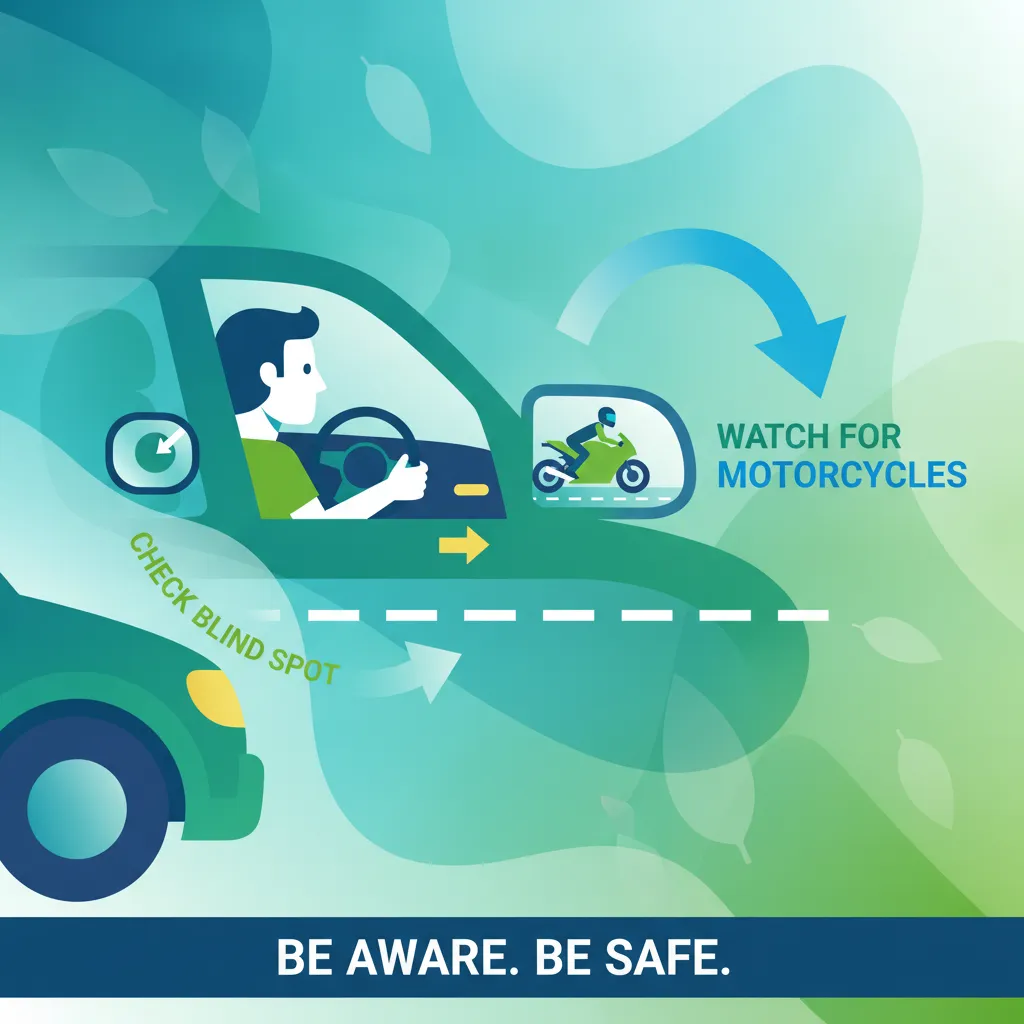
Learners will gain insight into the unique challenges posed by motorcycles and scooters sharing the road with passenger vehicles. The lesson highlights the importance of checking blind spots, maintaining safe following distances, and being aware of the faster acceleration and maneuverability of two-wheeled vehicles. Strategies for anticipating their movements and preventing collisions are discussed.
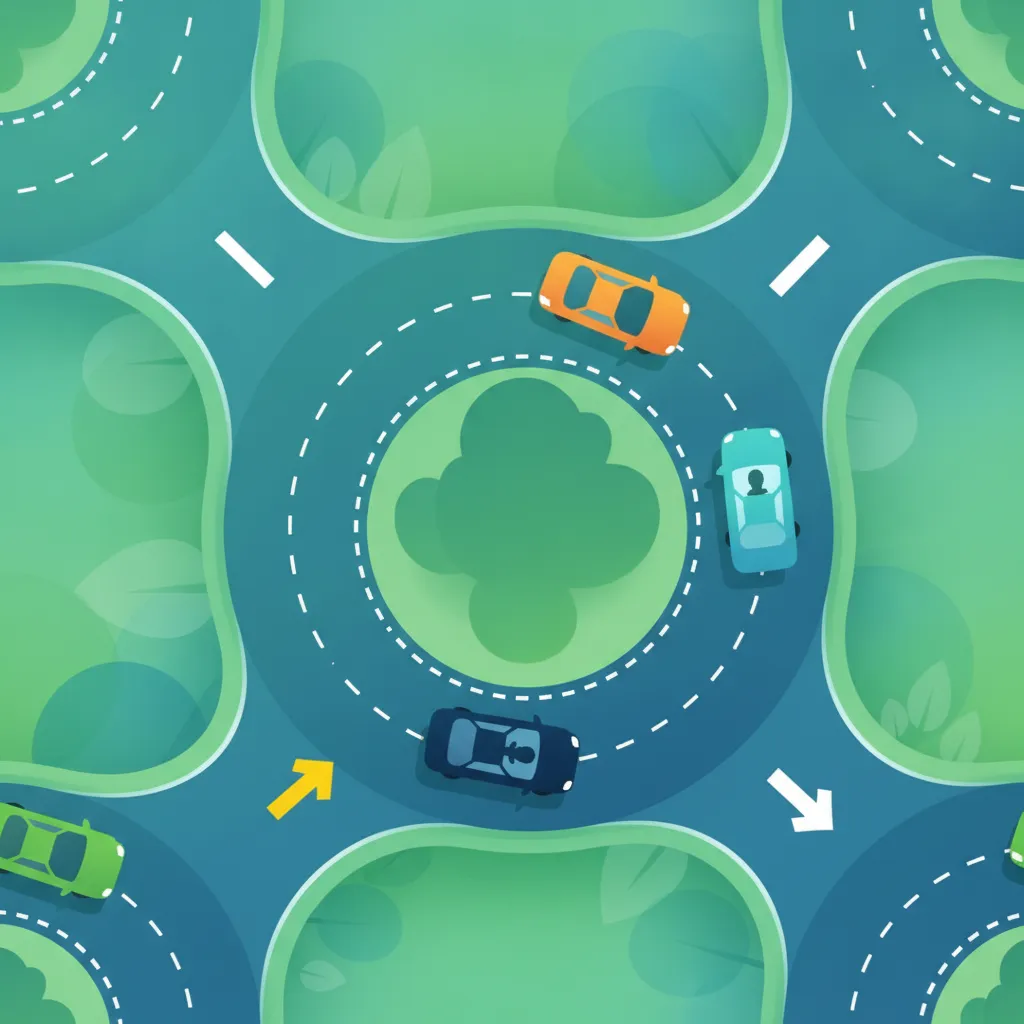
This lesson delves into the specific challenges and procedures associated with navigating roundabouts on a motorcycle. It outlines the importance of approaching at a safe speed, selecting the correct lane, and yielding to vehicles already within the roundabout. The content also covers the proper use of signals when exiting and emphasizes the need for heightened awareness of blind spots, especially when larger vehicles are present.

In this lesson, learners will discover the principles of optimal lane positioning that enhance both rider visibility and predictability to other road users. The content focuses on selecting the correct lane within various traffic scenarios, such as approaching intersections, navigating curves, and during overtaking. By maintaining appropriate lane placement, riders can minimize blind spots and improve reaction times.
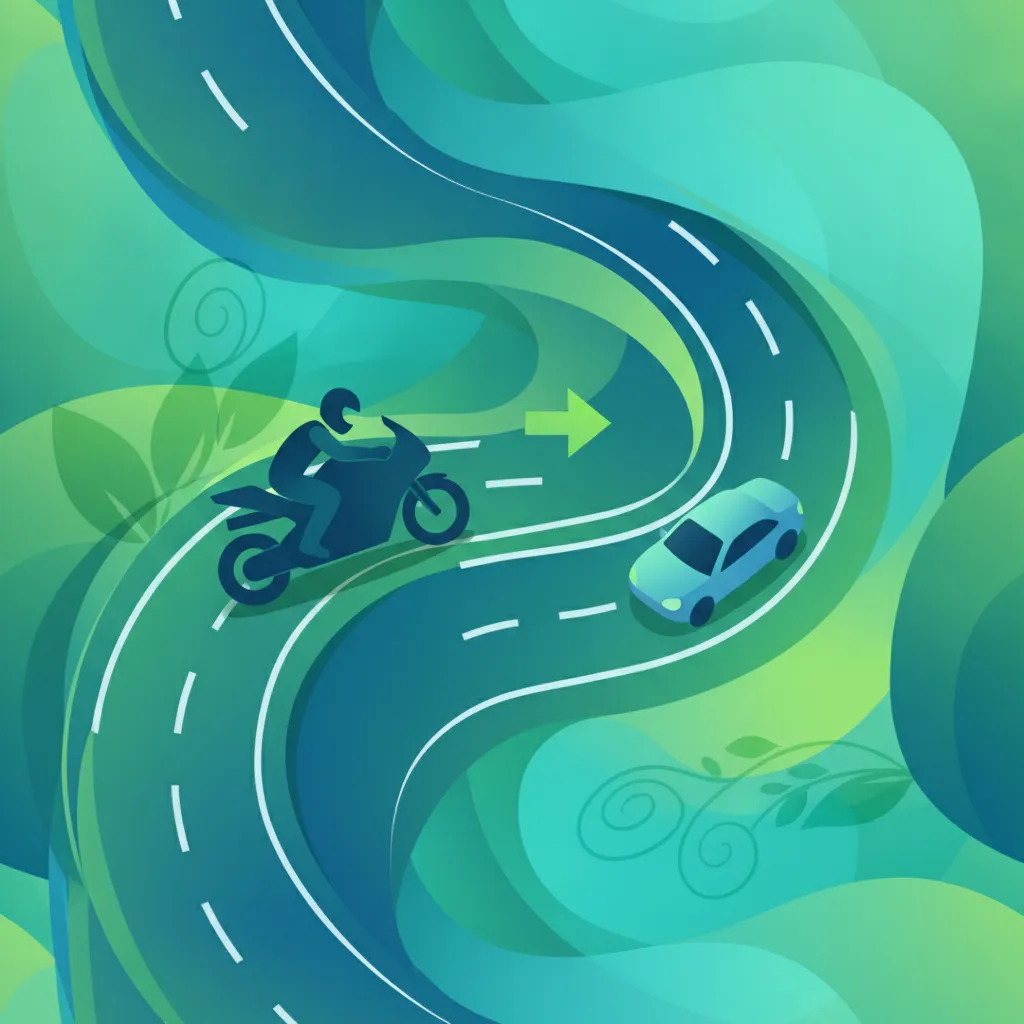
Roundabouts require a clear understanding of yield regulations and precise signaling to avoid conflicts with larger vehicles. This lesson details the legal requirements under Turkish road rules, which demand that entering vehicles yield to traffic already circulating inside the roundabout. You will learn how to select the appropriate lane upon entry, maintain a steady speed, signal your exit intentions clearly with your indicators, and remain alert to drivers who cut across lanes.
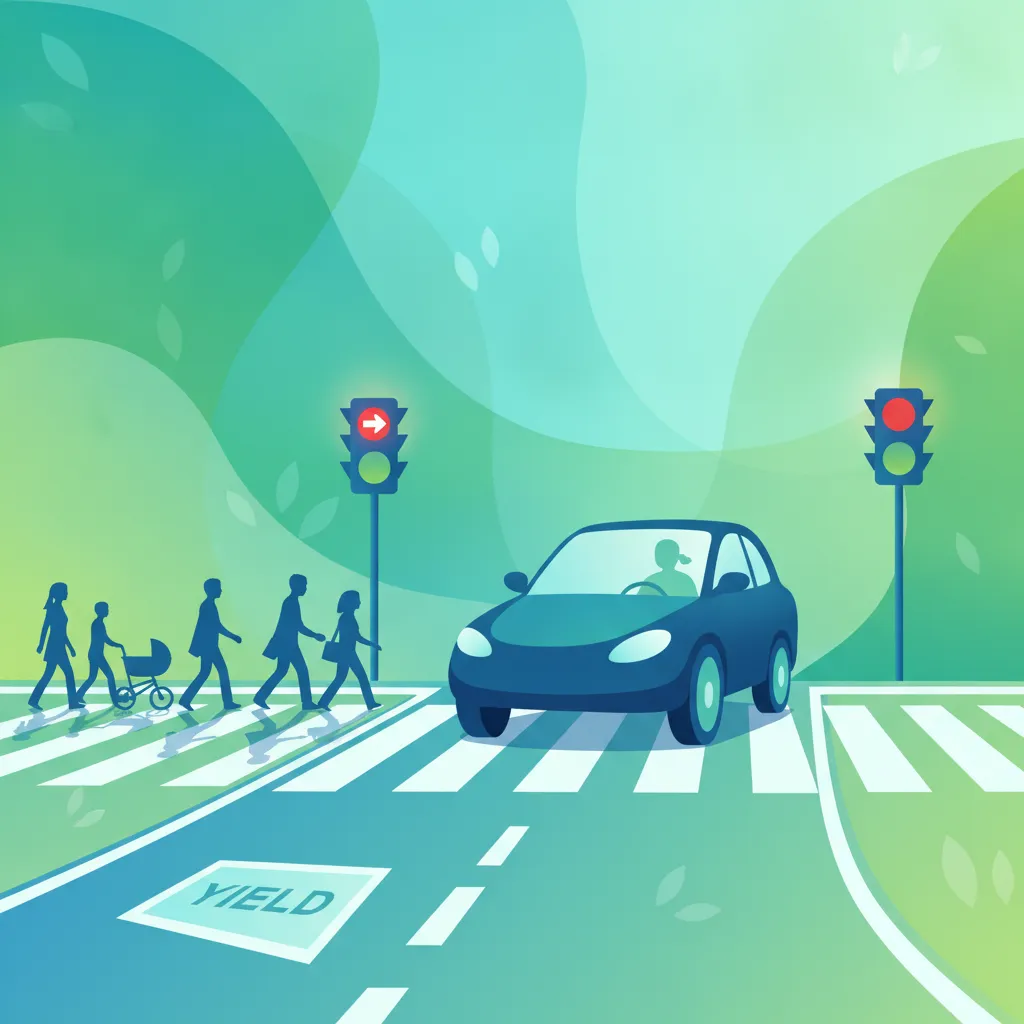
In this lesson, learners will master the skills required to safely navigate various types of intersections encountered in Turkish urban settings. The content covers interpreting traffic signals, understanding right-of-way rules, and executing proper lane positioning. Practical strategies for managing blind spots and ensuring visibility to other road users are emphasized. By the end of this session, participants will be equipped with safe crossing techniques.
Understand how to adjust your riding style when faced with rain, poor road surfaces, or limited light conditions. This lesson covers key defensive riding adjustments, traction management, and visibility strategies necessary to maintain control and safety in challenging Turkish urban traffic environments.

In this lesson, learners will explore the challenges presented by various weather conditions, such as rain, wind, fog, and temperature extremes, and how they affect motorcycle handling and safety. Topics covered include adjusting riding techniques for reduced traction, maintaining visibility in low-light or foggy conditions, and managing physical wind effects. The lesson emphasizes adjusting speed and braking.
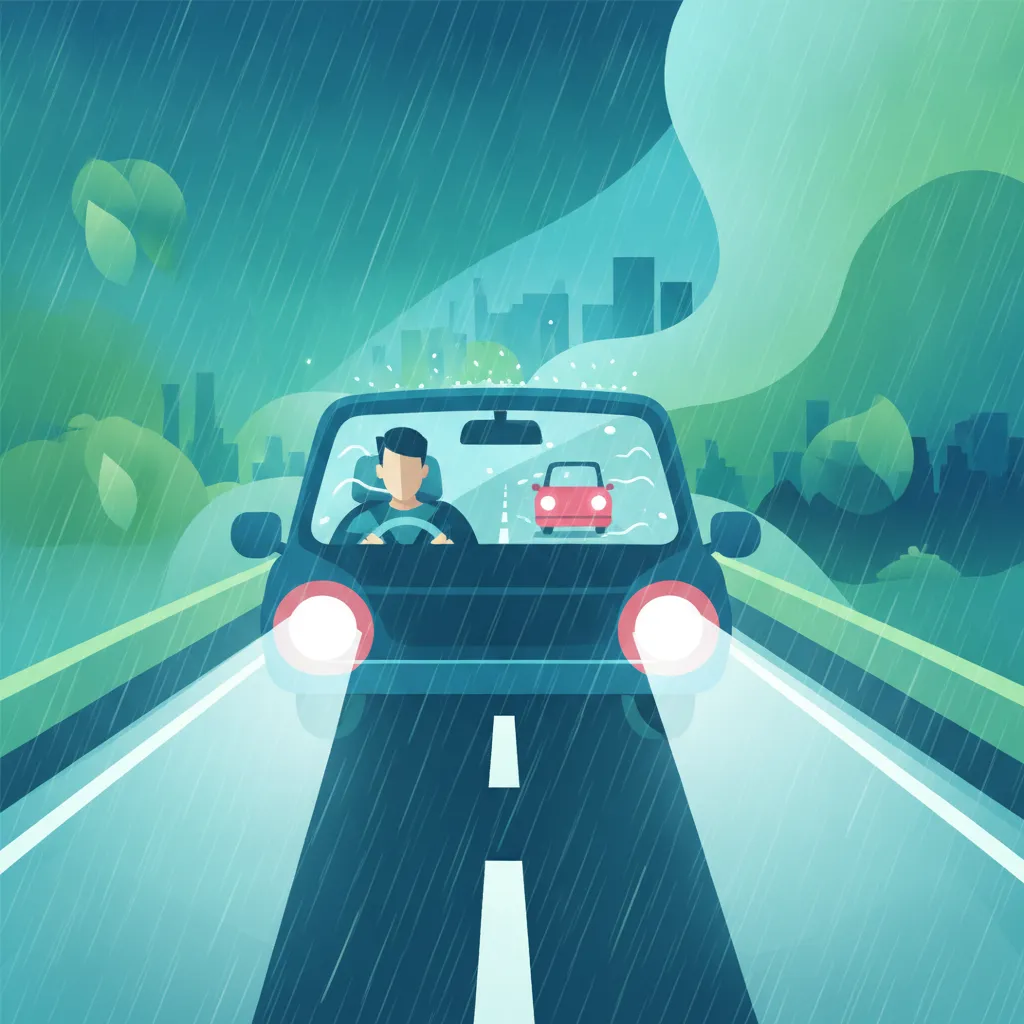
Learners will explore the specific challenges presented by adverse weather conditions, such as rain, fog, and nighttime driving. The lesson emphasizes the importance of adjusting speed, increasing following distances, and using appropriate lighting to maintain safety. Strategies for handling reduced road surface grip and visibility issues are discussed, ensuring drivers can adapt to changing weather while protecting passengers and other road users.

This lesson details defensive driving techniques for adverse weather conditions such as rain, snow, black ice, dense fog, and strong winds. It explains the physics of aquaplaning and how to regain vehicle control when losing traction on slippery surfaces. Drivers will learn how to adjust speed and increase safety gaps to prevent weather crashes.

Riding in adverse weather presents significant challenges for open-vehicle operators, including reduced tire grip, obscured vision, and physical fatigue from wind or cold. This lesson covers safety techniques for navigating rainy conditions, avoiding the danger of hydroplaning, and managing strong crosswinds that can destabilize a lightweight moped. You will learn to adjust your speed, increase your following distance, and use high-visibility gear to ensure a safe journey under bad weather.
Defensive riding is the practice of anticipating potential road conflicts and acting early to prevent accidents before they occur. This lesson teaches you how to systematically scan the road ahead for changing conditions, keep an adequate safety cushion around your moped, and pre-plan exit routes in tight spots. You will learn to assume you are invisible to other drivers and adapt your speed and road position proactively to protect yourself against sudden maneuvers.
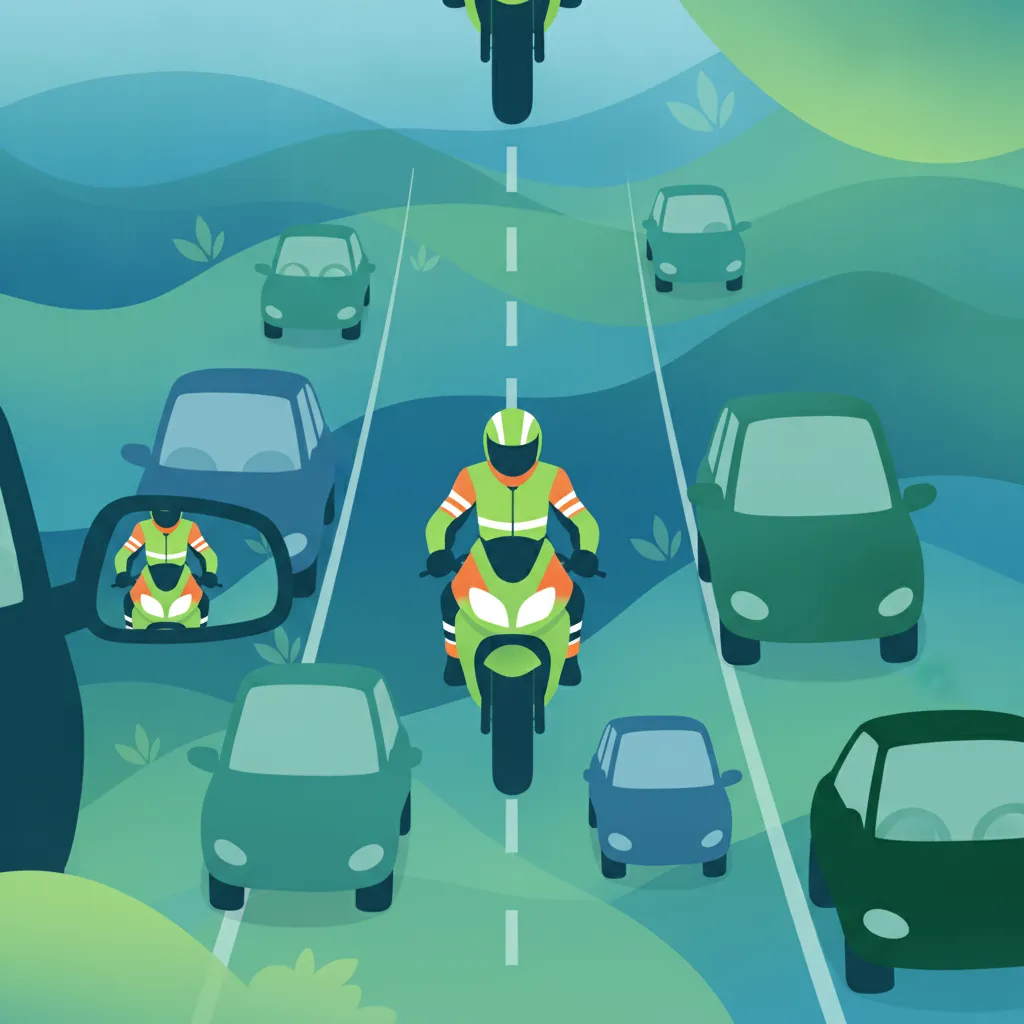
This lesson emphasizes the importance of rider visibility, illustrating how high-visibility clothing and reflective accessories can significantly reduce the risk of collisions. Learners will discover effective strategies for being noticed by other road users, such as using bright colors, reflective strips, and appropriate lighting, especially during adverse weather or nighttime riding. The content also outlines best practices for maintenance.

In this lesson, learners will discover the principles of defensive riding, focusing on hazard anticipation, maintaining safe distances, and practicing proactive avoidance techniques. It emphasizes developing a vigilant riding posture, constantly scanning the environment, and preparing to react to potential dangers from other road users, road conditions, or unexpected traffic events.

This lesson addresses the specific challenges of riding a motorcycle after dark, focusing on the importance of proper headlamp usage, reflective clothing, and heightened situational awareness. It provides guidance on how to remain visible to other road users, how to read road markings and signs under low-light conditions, and techniques for managing glare and fatigue during extended night rides.
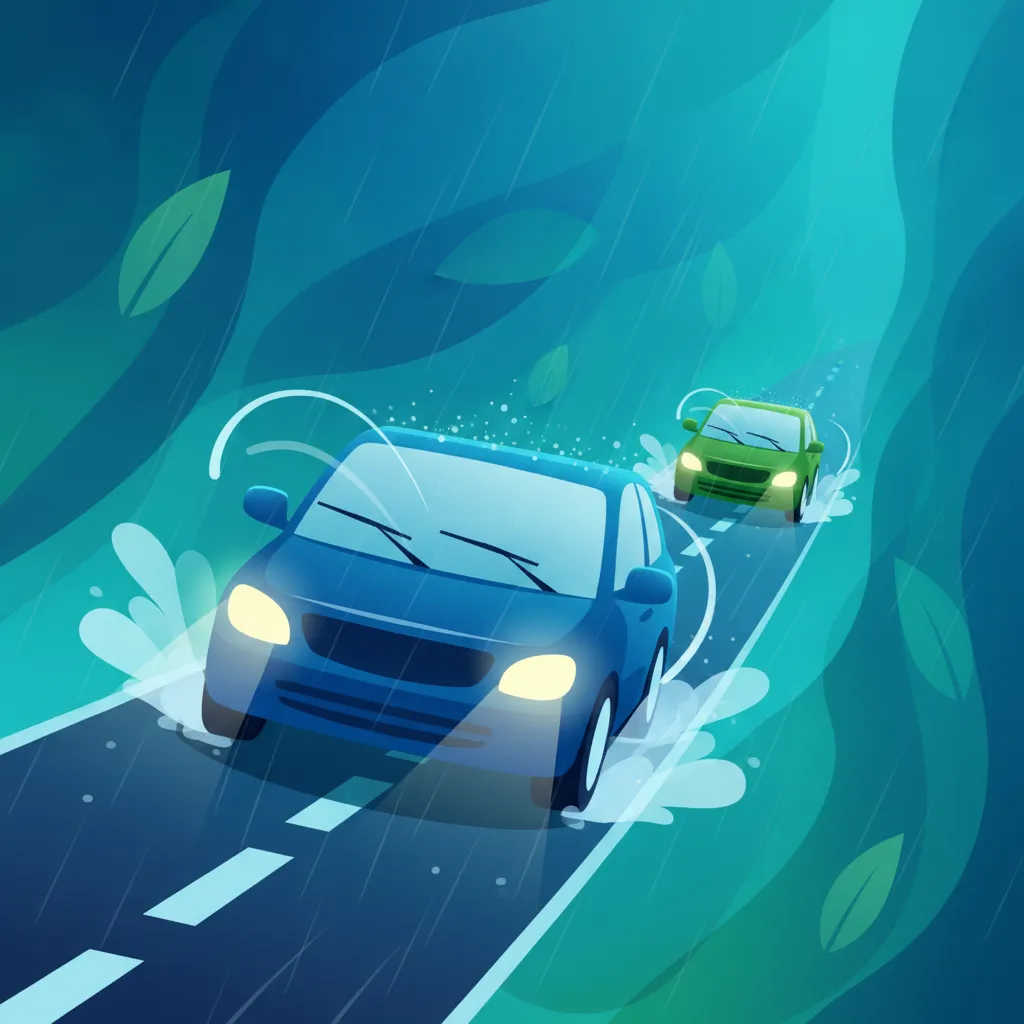
This lesson focuses on the challenges of driving goods vehicles in adverse weather conditions, such as rain, fog, snow, and strong wind. Learners will explore safe speed management, increased following distances, proper use of headlights and windshield wipers, and techniques to maintain traction. The lesson emphasizes the importance of adapting driving behavior to the specific weather conditions.
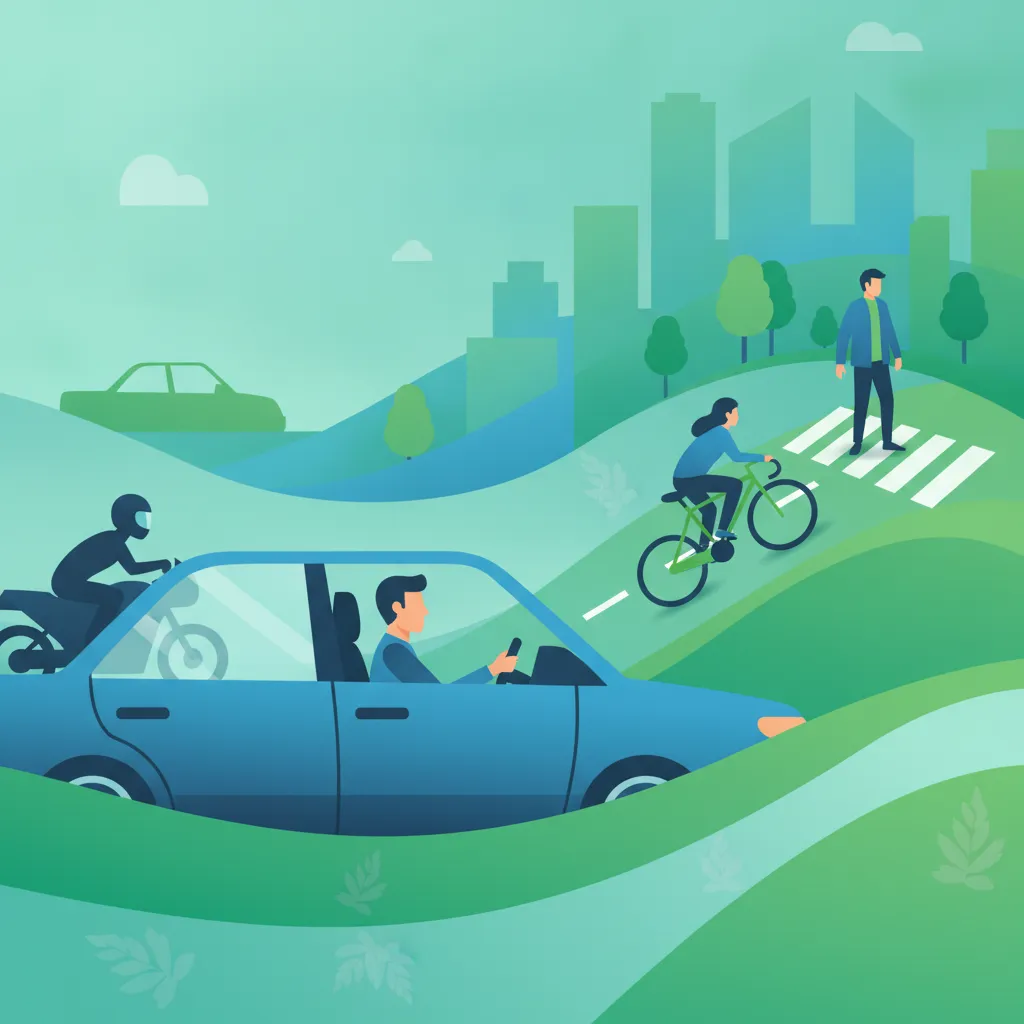
Learners will examine the complexities of operating in environments where various road users, including pedestrians, cyclists, and motorcyclists, coexist. The lesson emphasizes the need for heightened situational awareness, defensive driving techniques, and proactive hazard anticipation. Strategies for navigating mixed traffic safely, especially in congested urban areas, are highlighted.
Find clear answers to common questions learners have about Speed Management in Urban and Mixed Traffic. Learn how the lesson is structured, which driving theory objectives it supports, and how it fits into the overall learning path of units and curriculum progression in Turkey. These explanations help you understand key concepts, lesson flow, and exam focused study goals.
Because mopeds and light motorized bicycles are physically smaller and less stable, even minor speed fluctuations can significantly affect your traction and balance. Proper speed management ensures you maintain control, especially when encountering road hazards or heavy traffic.
High traffic density limits your maneuverability and sightlines. You must reduce your speed to allow more time to react to sudden lane changes or stop-start movements from larger vehicles, as required by safe defensive riding practices in Turkey.
Yes, the theory exam frequently includes visual scenarios where you must determine the safest speed based on visible signs, markings, and the surrounding traffic flow, including specific restrictions like school zones.
You must prioritize your safety and stability over the impatience of others. Always maintain a speed that allows you to control your vehicle, even if that means moving to a safer lane position or identifying an area where you can be passed safely.
Use our comprehensive practice search to find exactly the Turkish driving theory questions you need to master. Whether reviewing specific road signs, traffic rules, or first aid scenarios, select your perfect practice set and boost your confidence for the official ehliyet sınavı.