
This lesson explores critical strategies to ensure you remain visible to other road users, a cornerstone of safe riding in Turkey. You will learn how proper equipment, reflective gear, and strategic lighting choices significantly reduce collision risks during your daily rides. Mastering these techniques is essential for both your theory exam performance and your long-term safety on the road.
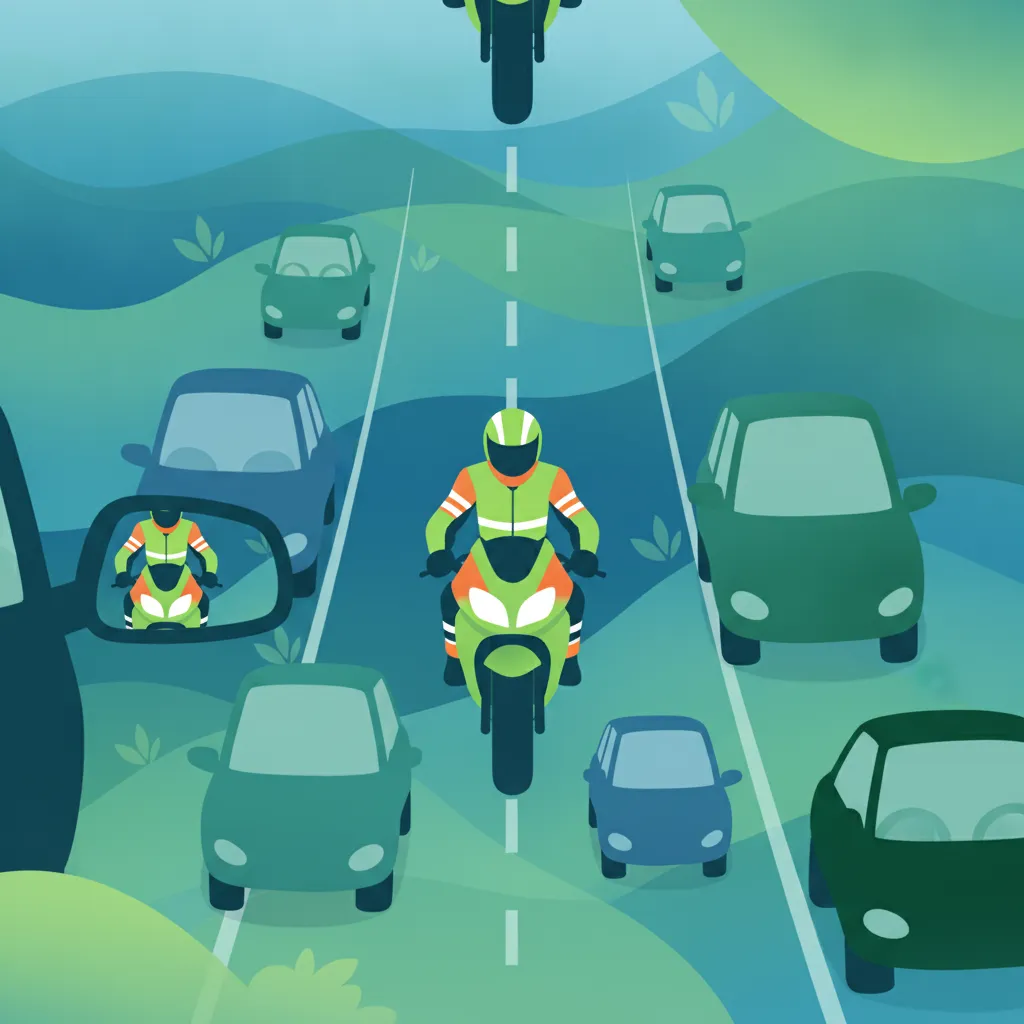
Lesson content overview
One of the most common statements recorded in police reports after a multi-vehicle collision involving a motorcycle is: "I simply didn't see the rider." Due to their narrow physical profile, motorcycles are easily lost in the complex visual background of modern traffic.
For riders preparing for their Turkish A1, A2, or A category driving licence examination (sürücü belgesi sınavı), mastering the principles of rider conspicuity is not just a theoretical requirement—it is a critical defensive riding strategy that directly reduces the risk of collisions.
This lesson covers how to make yourself visible to other road users using high-visibility clothing, retroreflective accessories, advanced motorcycle lighting systems, and strategic environmental adaptation, all in accordance with the Turkish Highway Traffic Law (2918 Sayılı Karayolları Trafik Kanunu).
The "Visibility Principle" states that a rider must actively maximize their conspicuity—the ease with which they can be detected and recognized by other road users—to compensate for a motorcycle's naturally small visual signature.
When a driver looks down a road, their brain filters out information that does not match the expected visual profile of a large vehicle, such as a car or truck. This psychological phenomenon, known as motion-induced blindness or inattentional blindness, means that even if a driver looks directly at a motorcycle, they may not consciously perceive it.
The physical properties of an object (such as contrast, brightness, and movement) that make it stand out from its surroundings, allowing observers to detect and identify it quickly and accurately.
By proactively using high-visibility and reflective gear, you increase the "detection window" for other motorists. A driver who detects a motorcycle several seconds earlier has significantly more time to react, brake, or yield, preventing a potential collision.
Contrast Theory dictates that an object's detectability depends on how dramatically its color, brightness, and texture differ from its background.
Selecting the right riding apparel is your first line of defense in daytime riding environments. Many riders mistakenly believe that standard black leather or dark textile jackets are sufficient because they look traditional. However, dark colors absorb light and blend into the shadows cast by buildings, trees, and larger vehicles.
High-visibility (high-vis) clothing is manufactured using specialized fluorescent dyes. Unlike ordinary colors, fluorescent materials absorb invisible ultraviolet (UV) light from the sun and re-emit it as visible light. This makes the material appear to "glow" in daylight, particularly during overcast days, dawn, and dusk when ambient light is low.
Wearing a fluorescent vest or jacket during daytime riding makes you up to three times more visible to oncoming and cross-traffic than wearing dark clothing. Studies indicate that riders wearing high-visibility gear have a 30% to 40% lower risk of being involved in a multi-vehicle collision.
When purchasing high-visibility garments, look for gear that covers the upper torso. The chest, shoulders, and back are the most visible parts of a rider to other drivers.
Rain and adverse weather dramatically reduce ambient light and degrade the visibility of other drivers due to water droplets on windscreens. Standard high-visibility jackets should be supplemented with waterproof outer layers (rain suits) that also feature fluorescent bases and integrated reflective paneling.
While fluorescent colors are highly effective during the day, they lose their specialized "glowing" effect in complete darkness because there is no ambient ultraviolet light to activate them. At night, riders must rely on retroreflection.
A physical process where electromagnetic light rays (such as those from car headlights) are returned directly back toward their original light source with minimal scattering, making the reflective material appear extremely bright to the driver behind the light source.
One of the most effective ways to use reflective materials is to exploit the concept of biomotion. The human brain is highly sensitive to recognizing the specific patterns of human movement.
If you place reflective strips only on your torso, a driver at a distance might perceive you as a stationary road sign or construction marker. However, if you place reflective elements on your moving limbs—such as your wrists, elbows, knees, and ankles—the motion of your hands and legs while riding, shifting, or putting a foot down immediately signals "human being" to an oncoming driver.
Helmet Placement: Apply high-quality retroreflective stickers to the back and sides of your helmet. Because the helmet is the highest point of the rider, it is often the first thing visible over crests, hills, and the roofs of preceding vehicles.
Limbs and Joints: Wear reflective bands around your wrists and ankles. The continuous movement of these joints during operation catches the eye of other drivers instantly.
Torso Framework: Ensure your riding jacket has reflective piping or panels across the shoulder blades (rear visibility) and chest (front visibility), as well as along the outer seams of the sleeves (lateral/side visibility).
Your motorcycle's built-in lighting systems are active visibility measures. They do not rely on external light sources (like car headlights) to function. Under Turkish Traffic Law No. 2918, proper maintenance and correct usage of these systems are strictly enforced.
A motorcycle’s primary headlight is critical for both illuminating the road ahead and ensuring that oncoming vehicles can spot you.
Using high beams when oncoming traffic is present, or when following closely behind another vehicle, is a serious violation under Turkish Traffic Law. It dazzles other drivers, temporarily blinding them and increasing the risk of a head-on or rear-end collision. Flashing your high beams rapidly at night is also prohibited, except when signaling a hazard or warning of an overtaking maneuver.
Many modern motorcycles are equipped with Daytime Running Lights (DRL). These are high-efficiency LED lights designed specifically to make the motorcycle highly visible during daylight hours.
Communication prevents collisions. Your brake lights and turn signals are your primary means of telling drivers behind you what you are about to do.
A defensive rider adapts their visibility configuration based on the environmental conditions, traffic density, and road infrastructure.
| Condition | Primary Visibility Strategy | Critical Gear / Lighting Requirement |
|---|---|---|
| Daytime Riding | Contrast against natural and urban backgrounds. | Fluorescent jackets/vests, Daytime Running Lights (DRL), clean headlight lenses. |
| Night Riding | Active light emission and retroreflection back to drivers. | Clean low beams, retroreflective bands on limbs, helmet stickers, functional rear position light. |
Adverse weather limits a driver's line of sight and creates severe visual distractions.
In Turkey, the rules governing motorcycle equipment and rider visibility are codified within the Karayolları Trafik Kanunu (Highway Traffic Law) and its accompanying regulations (Karayolları Trafik Yönetmeliği). Ignorance of these laws can result in fines, penalty points on your driver's licence, or the impounding of your motorcycle.
Under Turkish law, every motorcycle operating on public roads must be equipped with:
Operating a motorcycle with defective, modified, or missing lights is a direct violation of traffic safety codes. It will result in an administrative fine under Article 30 of the Turkish Traffic Law, and your vehicle may be banned from traffic until the defects are corrected.
In recent years, Turkey has introduced strict safety amendments specifically targeting commercial motorcycle riders, such as food and cargo couriers (moto-kurye).
Important Legal Requirement: According to amendments in the Turkish Highway Traffic Regulation, motorcycle couriers and commercial operators are legally mandated to wear protective, high-visibility reflective vests (reflektif yelek) during night-time operation. This law is actively enforced by traffic police during routine checks in urban areas.
Even if you are a private rider, adopting the same standards as professional couriers by wearing a reflective vest at night is highly recommended and aligns with the best practices of defensive riding.
High-visibility gear and lighting systems are only effective if they are properly maintained. Dirt, road grime, salt, and sun damage can quickly degrade your visibility equipment.
Clean all Lenses: Wipe down your headlight, turn signals, position lights, and brake lights before every ride. Road grime can block up to 50% of your light output without you realizing it.
Test the Brake Lights: Sit on the bike and apply the front brake while checking the reflection behind you (or using your hand to feel the glow). Repeat the test using only the rear brake pedal. Both must trigger the light instantly.
Inspect Turn Signals: Turn on your hazard lights (if equipped) or cycle through the left and right signals, confirming that both front and rear lights flash at an even, correct pace.
Examine Reflective Gear: Check your jacket, helmet stickers, and pants for wear. Retroreflective materials degrade over time when exposed to UV rays, washing cycles, and dirt. Replace vests or jackets when the reflective panels begin to crack, fade, or peel.
Check Battery and Alternator Health: A failing motorcycle battery or a faulty stator/alternator can cause your headlights to dim significantly when idling at intersections, making you nearly invisible when stopped.
By taking these steps, you ensure that your active and passive visibility systems are always operating at peak efficiency, protecting you every time you step over your motorcycle.
Rider visibility is a critical defensive strategy because motorcycles are naturally hard for other drivers to detect. During daylight, fluorescent clothing creates high contrast against any background, while at night retroreflective gear returning headlight beams becomes essential. The biomotion principle shows that reflective strips on moving limbs (wrists, ankles, knees) are far more noticeable than static torso markers. Turkish law mandates continuous low-beam use and requires commercial riders to wear reflective vests at night. Regular maintenance of all lighting equipment and reflective gear is necessary, as degraded materials and dirty lenses can cut visibility effectiveness in half.
A short set of high-value points that capture the most important learning from this lesson.
Motorcycles are easily missed by other drivers due to their small visual profile and psychological filtering effects like inattentional blindness.
Fluorescent colors (yellow-green, orange) provide the highest daytime conspicuity by glowing against both urban and rural backgrounds.
At night, retroreflective materials return headlight beams back to drivers, making you visible without needing ambient light.
Biomotion—placing reflectors on moving limbs—creates a distinctive human movement signature that drivers instantly recognize.
Under Turkish Traffic Law No. 2918, motorcycles must use low beams at all times, and commercial couriers must wear reflective vests at night.
Explore all units and lessons included in this driving theory course.
Low beams (Kısa Farlar) must be on continuously day and night; high beams must be dimmed for oncoming traffic and when following other vehicles.
In fog, only use low beams—high beams reflect off water droplets and blind you rather than help you see.
Retroreflective strips on wrists, ankles, and knees exploit biomotion and are far more effective than reflective material on the torso alone.
Dirt and grime can reduce headlight output by up to 50%, making pre-ride lens cleaning essential.
Unauthorized flashing lights or blue/red emergency-style modifications will cause vehicle inspection failure and administrative fines in Turkey.
Wearing dark leather or black textile gear during daytime, believing it provides adequate visibility in urban traffic.
Placing retroreflective tape only on the back of the jacket without considering limb placement or helmet visibility.
Using high beams in fog, not realizing the light reflects directly back and worsens visibility for both the rider and oncoming drivers.
Failing to activate turn signals well in advance of maneuvers, leaving insufficient reaction time for surrounding traffic.
Assuming daytime running lights or DRLs eliminate the need for high-visibility clothing—active and passive measures work together.
Lesson content overview
A short set of high-value points that capture the most important learning from this lesson.
Motorcycles are easily missed by other drivers due to their small visual profile and psychological filtering effects like inattentional blindness.
Fluorescent colors (yellow-green, orange) provide the highest daytime conspicuity by glowing against both urban and rural backgrounds.
At night, retroreflective materials return headlight beams back to drivers, making you visible without needing ambient light.
Biomotion—placing reflectors on moving limbs—creates a distinctive human movement signature that drivers instantly recognize.
Under Turkish Traffic Law No. 2918, motorcycles must use low beams at all times, and commercial couriers must wear reflective vests at night.
Explore all units and lessons included in this driving theory course.
Low beams (Kısa Farlar) must be on continuously day and night; high beams must be dimmed for oncoming traffic and when following other vehicles.
In fog, only use low beams—high beams reflect off water droplets and blind you rather than help you see.
Retroreflective strips on wrists, ankles, and knees exploit biomotion and are far more effective than reflective material on the torso alone.
Dirt and grime can reduce headlight output by up to 50%, making pre-ride lens cleaning essential.
Unauthorized flashing lights or blue/red emergency-style modifications will cause vehicle inspection failure and administrative fines in Turkey.
Wearing dark leather or black textile gear during daytime, believing it provides adequate visibility in urban traffic.
Placing retroreflective tape only on the back of the jacket without considering limb placement or helmet visibility.
Using high beams in fog, not realizing the light reflects directly back and worsens visibility for both the rider and oncoming drivers.
Failing to activate turn signals well in advance of maneuvers, leaving insufficient reaction time for surrounding traffic.
Assuming daytime running lights or DRLs eliminate the need for high-visibility clothing—active and passive measures work together.
Explore search topics learners often look for when studying Enhancing Rider Visibility. These topics reflect common questions about road rules, driving situations, safety guidance, and lesson level theory preparation for learners in Turkey.
Browse additional driving theory lessons that cover connected traffic rules, road signs, and common driving situations related to this topic. Improve your understanding of how different rules interact across everyday traffic scenarios.
Learn the core principles of defensive riding to minimize risk in diverse traffic environments. This lesson covers hazard perception, space management, and how to anticipate the actions of other road users to enhance safety according to Turkish driving theory standards.
In this lesson, learners will discover the principles of defensive riding, focusing on hazard anticipation, maintaining safe distances, and practicing proactive avoidance techniques. It emphasizes developing a vigilant riding posture, constantly scanning the environment, and preparing to react to potential dangers from other road users, road conditions, or unexpected traffic events.

Defensive riding is the practice of anticipating potential road conflicts and acting early to prevent accidents before they occur. This lesson teaches you how to systematically scan the road ahead for changing conditions, keep an adequate safety cushion around your moped, and pre-plan exit routes in tight spots. You will learn to assume you are invisible to other drivers and adapt your speed and road position proactively to protect yourself against sudden maneuvers.
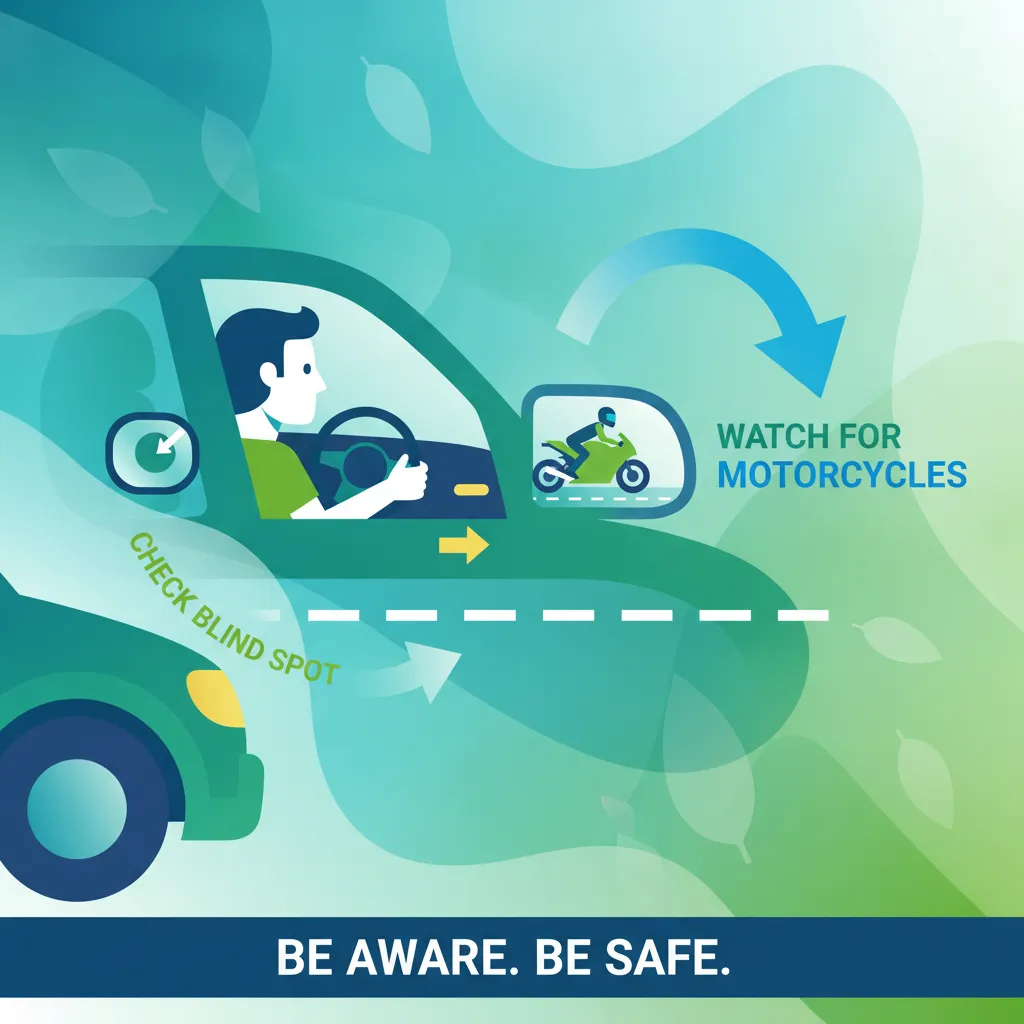
Learners will gain insight into the unique challenges posed by motorcycles and scooters sharing the road with passenger vehicles. The lesson highlights the importance of checking blind spots, maintaining safe following distances, and being aware of the faster acceleration and maneuverability of two-wheeled vehicles. Strategies for anticipating their movements and preventing collisions are discussed.
Proper road positioning is your primary shield against being squeezed, sideswiped, or overlooked by larger motor vehicles in daily traffic. This lesson explains how to ride in the center or slightly off-center of your lane to prevent unsafe overtaking within the same lane. You will study how to identify the massive blind spots of buses and trucks, maintain appropriate following distances, and execute overtaking maneuvers with maximum safety margin and clear signal warning.

In this lesson, learners will explore the core obligations of a motorcyclist, emphasizing the necessity of adhering to traffic laws and maintaining respectful conduct toward all road participants. The discussion will focus on the principles of defensive riding, where anticipation of hazards and courteous behavior are paramount. Ethical decision-making will be highlighted as a key factor in preventing accidents and fostering a positive traffic environment.
In this lesson, learners explore the unique challenges and safety considerations related to motorcyclists and scooter riders. Topics include the importance of visibility, the use of protective gear, and the need for drivers to be aware of blind spots. The lesson also covers lane discipline for two-wheeled vehicles and safe overtaking practices.

In this lesson, learners will gain comprehensive knowledge of safe overtaking maneuvers during riding, emphasizing the importance of assessing traffic flow, checking blind spots, and signaling intentions. The content covers overtaking strategies on both straight roads and curves, considering visibility and speed differentials. By mastering these techniques, motorcyclists can execute overtaking safely.
This lesson highlights the critical nature of blind spots for motorcyclists, teaching strategies to recognize and mitigate these hidden areas. Learners will practice techniques for checking blind spots before lane changes and overtaking, ensuring they are fully aware of surrounding traffic. The lesson emphasizes how proper mirroring and head checks can significantly reduce the risk of collisions.
In this lesson, learners will explore the various forms of risk behaviour that can lead to accidents, such as aggressive riding, speeding, riding under the influence of alcohol or drugs, driving while fatigued, and being distracted. The lesson emphasizes the importance of self-awareness, recognizing personal limits, and adopting a safety-first mindset to mitigate these risks and make safe decisions.
Understand the specific legal requirements and safety techniques for riding a motorcycle after dark. Explore proper use of motorcycle lighting systems, retroreflective gear standards, and strategies for navigating reduced visibility on both urban streets and rural highways in accordance with Turkish traffic law.
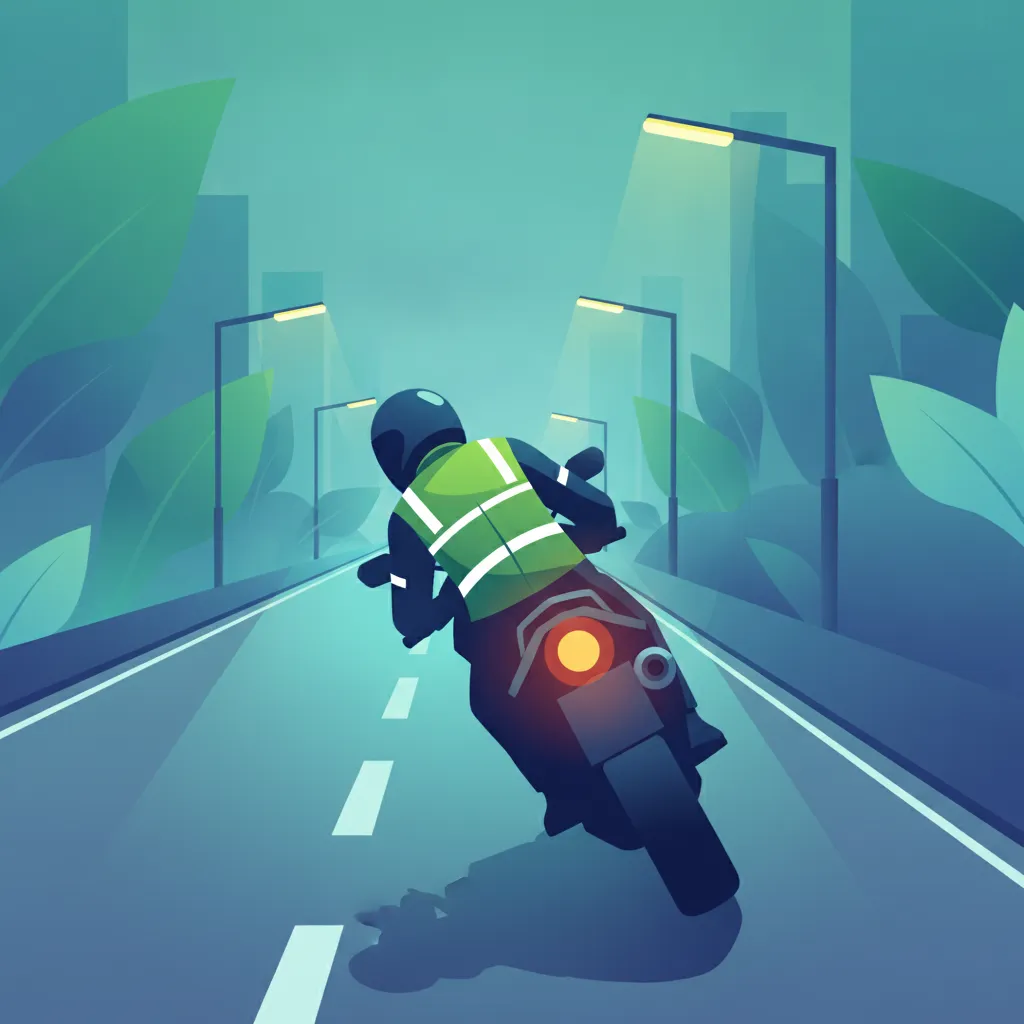
This lesson addresses the specific challenges of riding a motorcycle after dark, focusing on the importance of proper headlamp usage, reflective clothing, and heightened situational awareness. It provides guidance on how to remain visible to other road users, how to read road markings and signs under low-light conditions, and techniques for managing glare and fatigue during extended night rides.
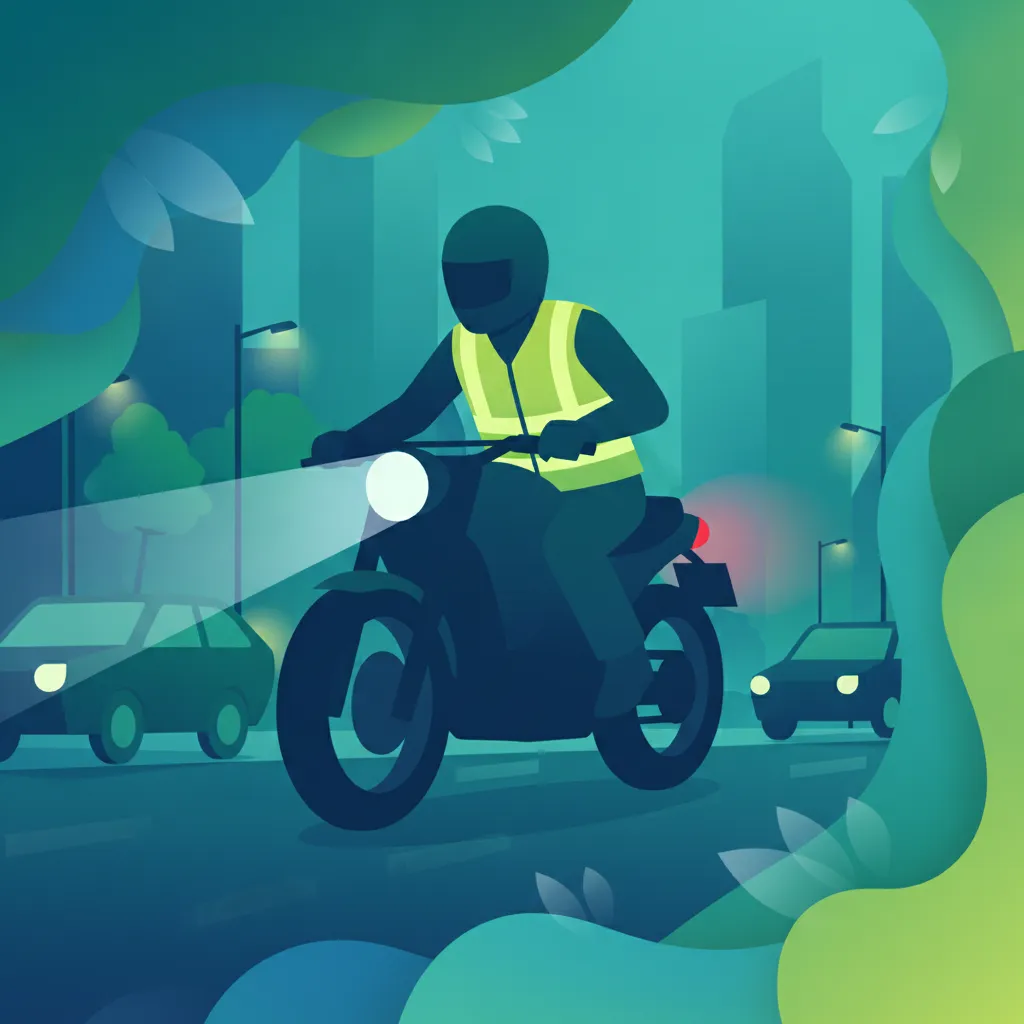
Many moped collisions occur simply because drivers of larger vehicles fail to notice lightweight riders in their path or blind spots. This lesson outlines passive and active techniques to boost your road presence, including the use of retroreflective vests and neon-colored apparel. It also explains the legal requirements for daytime running lights, proper alignment of headlights, and effective lane positioning to ensure you remain clearly visible in heavy traffic and during night rides.
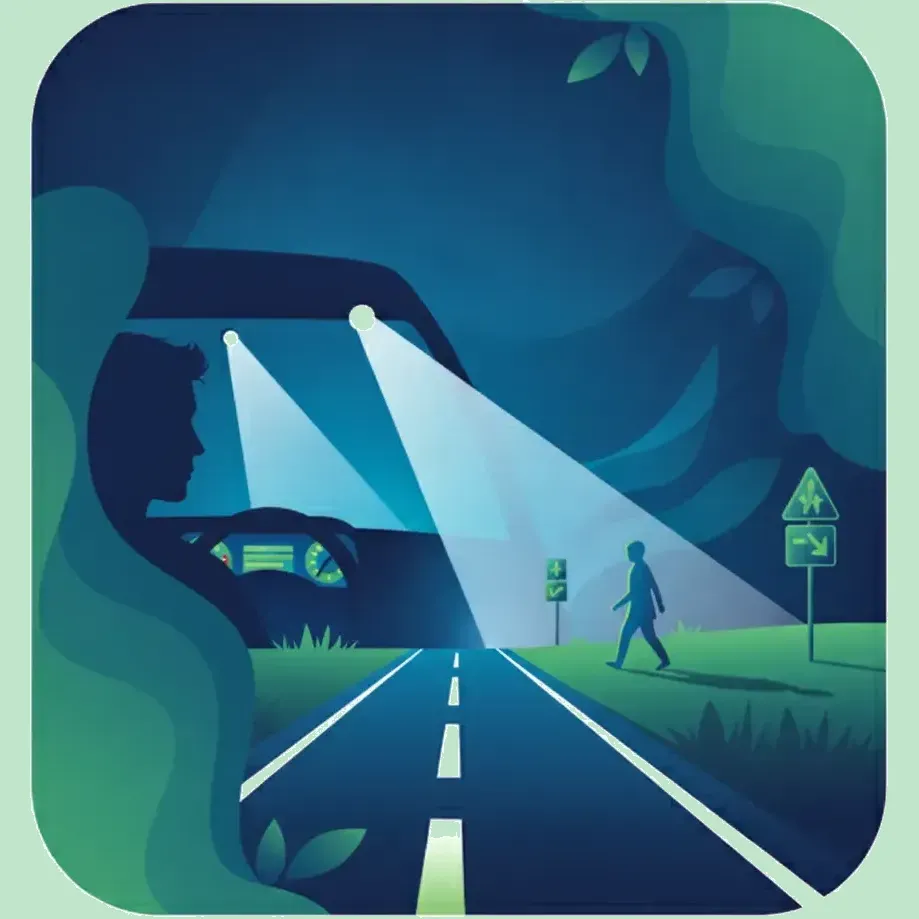
This lesson covers the unique challenges of nighttime driving, focusing on reduced visual perception, headlight glare, and driver fatigue. It explains how to adjust speed to remain within the headlight beam range and react to poorly illuminated road hazards. Motorists will learn techniques to maintain maximum focus and safety after sunset.
In this lesson, learners will explore the functioning of traffic lights and their impact on motorcycle riding. It delves into the meanings of red, amber, and green lights, as well as dedicated turn arrows and pedestrian signals. The lesson highlights specific considerations for motorcyclists at intersections, such as the appropriate response to amber lights, the use of turn arrows for safe lane changes, and legal crossing obligations.
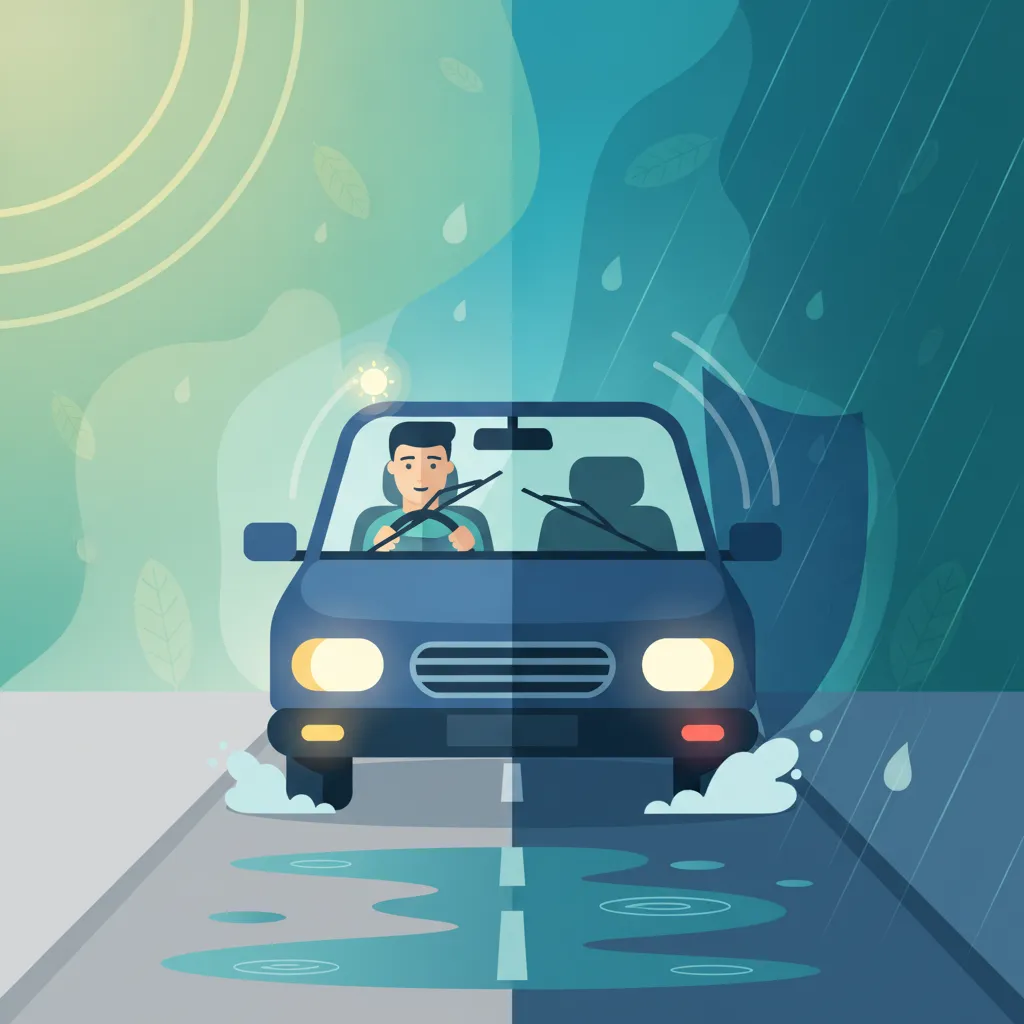
In this lesson, learners will explore the challenges presented by various weather conditions, such as rain, wind, fog, and temperature extremes, and how they affect motorcycle handling and safety. Topics covered include adjusting riding techniques for reduced traction, maintaining visibility in low-light or foggy conditions, and managing physical wind effects. The lesson emphasizes adjusting speed and braking.
This lesson covers the proper usage, maintenance, and alignment of the vehicle's lighting systems, including high beams, low beams, and fog lights. It explains the legal requirements for activating lights during daytime, twilight, tunnel crossings, and heavy rain. Drivers will learn how to avoid blinding oncoming motorists while maintaining visibility.
In this lesson, learners will focus on the specific considerations and safety practices required when riding motorcycles on high-speed roads and motorways. Topics covered include maintaining appropriate lane discipline, safe overtaking at high speeds, dealing with increased wind resistance, and the importance of accurate speed control and appropriate following distances on faster roadways.
Riding an exposed lightweight vehicle in busy Turkish cities requires exceptional personal conduct, patience, and absolute control over your emotional reactions. This lesson discusses the psychological aspects of riding, teaching you how to avoid aggressive behaviors and stay calm under stressful traffic situations. It covers proper non-verbal communication, polite road sharing practices, and maintaining safe buffers from other motorists to establish a safe, predictable presence on any public street.
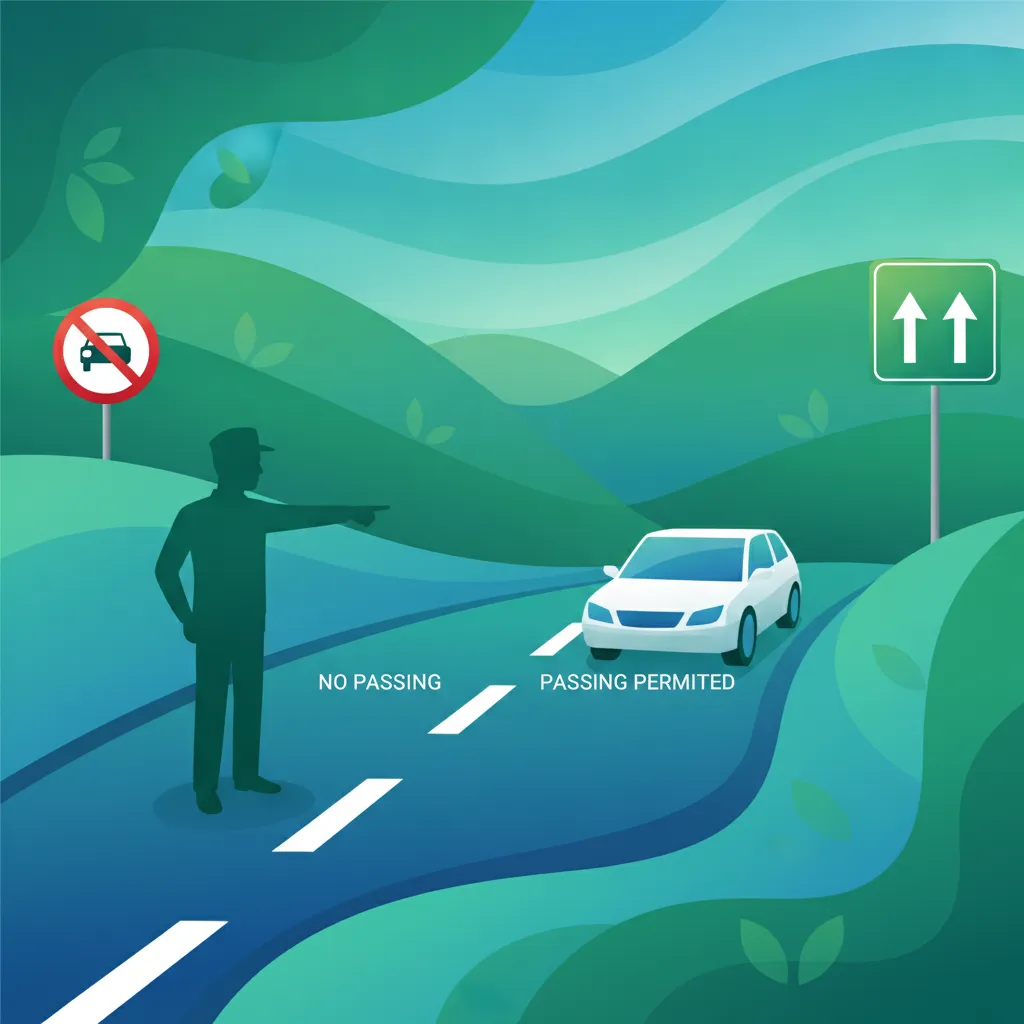
This lesson covers the various road surface markings that motorcyclists must be aware of, such as lane lines, turn arrows, and dedicated bike lanes. It explains how to interpret solid and broken lines, the meaning of specific arrows for turning or lane changes, and the significance of pedestrian crossing markings. Understanding these visual cues is essential for maintaining lane discipline and performing safe road maneuvers.
Find clear answers to common questions learners have about Enhancing Rider Visibility. Learn how the lesson is structured, which driving theory objectives it supports, and how it fits into the overall learning path of units and curriculum progression in Turkey. These explanations help you understand key concepts, lesson flow, and exam focused study goals.
High-visibility gear is emphasized because motorcycles have a smaller profile than cars, making them harder for other drivers to spot. Reflective and neon-colored gear drastically reduces the risk of intersection collisions, which are common topics in the theory exam.
Under current Turkish traffic rules, motorcycles must keep their dipped headlights on at all times while riding, day or night. This ensures maximum visibility to other motorists and is a frequent focus point in theory test questions.
Adverse weather conditions like rain, fog, or heavy snow significantly reduce visibility for all drivers. You must know how to use your lighting and high-visibility accessories effectively to compensate for these conditions, as these scenarios often appear in exam situational questions.
Look for gear that meets recognized safety standards. Reflective strips should be placed on areas that are clearly visible to drivers from the front, sides, and back, as these are the most critical zones for preventing side-impact and rear-end accidents.
Use our comprehensive practice search to find exactly the Turkish driving theory questions you need to master. Whether reviewing specific road signs, traffic rules, or first aid scenarios, select your perfect practice set and boost your confidence for the official ehliyet sınavı.