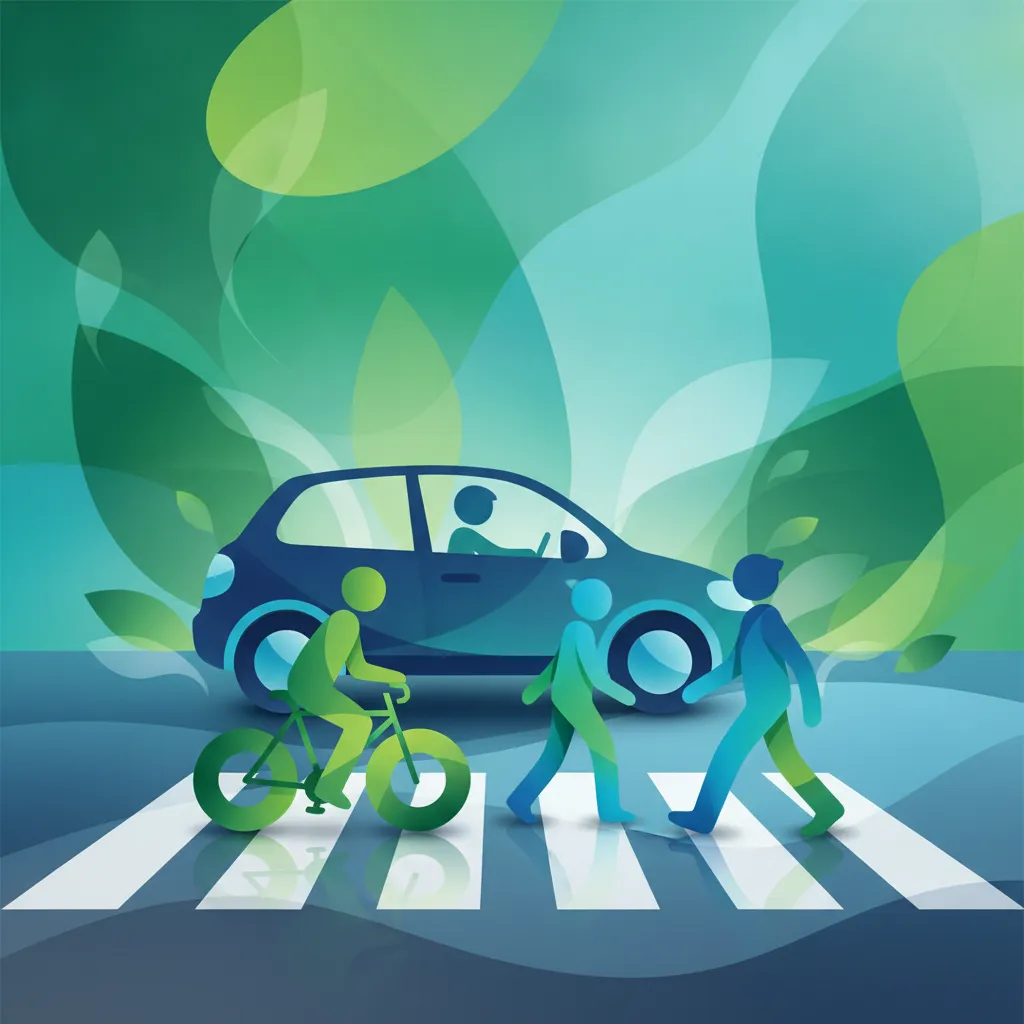
This lesson details your legal obligation to protect vulnerable road users, including pedestrians and cyclists, in various traffic scenarios across Turkey. It builds on your knowledge of traffic signs and priority rules, ensuring you can identify safe passing gaps and mandatory stopping points. Mastering these interactions is essential for both your MTSK e-sınav success and for cultivating defensive driving habits in your Category B practice.
Lesson content overview
In the Turkish traffic system, road safety is built upon a strict hierarchy of vulnerability. Pedestrians and cyclists possess no protective metal shells, airbags, or crumple zones. Consequently, both Turkish Highway Traffic Law (Karayolları Trafik Kanunu) and the official Category B driving curriculum place the highest priority on protecting these vulnerable road users.
For candidates preparing for the official Ministry of National Education (MEB) e-sınav (electronic theory exam), mastering the yielding rules is not merely about passing a test. It is a fundamental component of defensive driving that prevents severe accidents and saves lives on Turkey's diverse urban and rural roads.
Traffic interactions are governed by two primary concepts: Yielding Obligation and Right-of-Way (Geçiş Hakkı).
To yield is to slow down, pause, or come to a complete stop to allow another road user to proceed safely without forcing them to change their speed or direction.
The legal priority granted to a specific road user to proceed before others in a given traffic scenario or spatial configuration.
As a driver, you must recognize that right-of-way is not something you "take"; it is something you "give" or "yield" based on clear legal mandates. When approaching areas with high pedestrian or cyclist activity, you must proactively manage your Safe Stopping Distance. This is the total distance your vehicle travels from the moment you perceive a hazard to the moment your vehicle comes to a complete standstill.
Because a pedestrian’s movement can be sudden or unpredictable—especially children, the elderly, or those with mobility impairments—your speed must always allow you to stop safely within your clear field of vision.
In Turkey, a marked pedestrian crosswalk—commonly referred to as a zebra crossing (Yaya Geçidi)—is a legal sanctuary for pedestrians. Under Article 74 of the Turkish Highway Traffic Law, drivers must yield to pedestrians who are on, or even approaching, a marked crossing.
School zones require an even higher level of vigilance. Children have a limited perception of speed and distance, and they may dart into the road unpredictably. When passing school crossings, reduce your speed significantly below the posted limit, keep your foot hovering over the brake pedal (active cover-braking), and always obey school crossing guards or traffic wardens.
Cyclists are increasingly integrated into modern Turkish urban transport networks. Dedicated bike lanes (Bisiklet Yolu) and shared-use paths represent designated corridors where cyclists hold legal priority.
When driving a Category B motor vehicle, you must never drive, park, or idle inside a dedicated bicycle lane. When your path intersects a bicycle lane—such as when turning right at an intersection or entering a driveway—you must treat the bicycle lane as an active traffic lane.
Intersections are the most common conflict points between motor vehicles, pedestrians, and cyclists. Understanding who has priority under different intersection controls is crucial.
At intersections without traffic lights, police officers, or priority signs:
Even when an intersection is regulated by traffic lights, complex yielding scenarios occur:
A universal rule in Turkish traffic law is that turning vehicles must yield to straight-going traffic and crossing pedestrians.
Signal Early: Activate your turn signal at least 30 meters in advance in urban areas (150 meters in rural areas) to warn cyclists and pedestrians behind or around you.
Scan Blind Spots: Look specifically for cyclists who might be riding straight along the shoulder or bike lane.
Yield to Pedestrians: Stop completely if pedestrians are crossing the street you are entering.
Complete the Maneuver: Proceed smoothly only when the path is entirely clear.
The following table outlines the key legal provisions derived from the Turkish Highway Traffic Law (Karayolları Trafik Kanunu - KTK). These rules are highly testable on the MTSK e-sınav.
| Regulation / KTK Reference | Legal Mandate | Driving Application | Rationale |
|---|---|---|---|
| Yielding at Crosswalks (Article 74 / Article 81/5) | Drivers must stop and give right-of-way to pedestrians crossing or about to cross at marked crossings. | Reduce speed on approach; stop fully before the stop line if a pedestrian is present. | Protects highly vulnerable users at designated crossing points. |
| Yielding to Cyclists (Article 70/2) | Drivers must yield to cyclists in designated lanes, particularly when crossing their path. | Check blind spots before turning; yield to cyclists proceeding straight. | Prevents high-speed side-impact collisions in turning zones. |
| Uncontrolled Intersections (Article 79/2) | Drivers must exercise caution and yield to crossing pedestrians/cyclists. | Approach with foot over brake; yield to any vulnerable user crossing your path. | Compensates for lack of active signal control or signage. |
| Turning Priorities (Article 70) | Turning vehicles must yield to pedestrians and cyclists crossing the target road. | Even on green lights, yield to pedestrians crossing the side street you are entering. | Keeps turning movements orderly and protects crossing flows. |
| Reduced Visibility Speeds (Article 15) | Drivers must adjust their speed to ensure safe stopping distances in poor visibility. | Slow down during rain, fog, snow, or night-time driving. | Compensates for delayed hazard perception and extended wet braking distances. |
| Emergency Vehicle Priority (Article 89) | Drivers must clear a path for emergency vehicles, balancing this with pedestrian safety. | Safely pull to the side, ensuring you do not run over pedestrian crossings or endanger cyclists. | Prioritizes life-saving emergency responses without causing secondary crashes. |
Failing to yield is one of the leading causes of traffic fines and severe collisions in Turkey. Avoid these common mental traps:
The 'Double-Lane' Hazard: If you stop at a multi-lane pedestrian crossing to let someone cross, the driver in the lane next to you might not see the pedestrian and may try to pass your stopped vehicle. Always stop early to give other lanes a clear view of the crossing pedestrian, and be ready to warn others with a brief horn tap if a dangerous passing maneuver is occurring.
Your ability to yield safely is heavily influenced by external variables. Good defensive driving requires adapting your habits to these changing conditions.
In Turkey, sudden rainfall after a dry spell can make asphalt highly slick due to mixed oil and dust.
Pedestrians wearing dark clothing are incredibly difficult to see at dusk, dawn, or night.
If your Category B vehicle is heavily loaded with passengers, luggage, or is towing a light trailer:
Understanding the psychology of road interactions makes you a safer driver:
To ensure success in your Turkish Driving License Category B theory exam, commit these key rules to memory:
Explore all units and lessons included in this driving theory course.
Lesson content overview
Explore all units and lessons included in this driving theory course.
Explore search topics learners often look for when studying Yielding to Pedestrians and Cyclists. These topics reflect common questions about road rules, driving situations, safety guidance, and lesson level theory preparation for learners in Turkey.
Browse additional driving theory lessons that cover connected traffic rules, road signs, and common driving situations related to this topic. Improve your understanding of how different rules interact across everyday traffic scenarios.
Understand the legal hierarchy and yielding obligations at controlled and uncontrolled intersections. This guide explains how to identify traffic priority, when to stop, and how to safely navigate junctions according to the Turkish Highway Traffic Law.
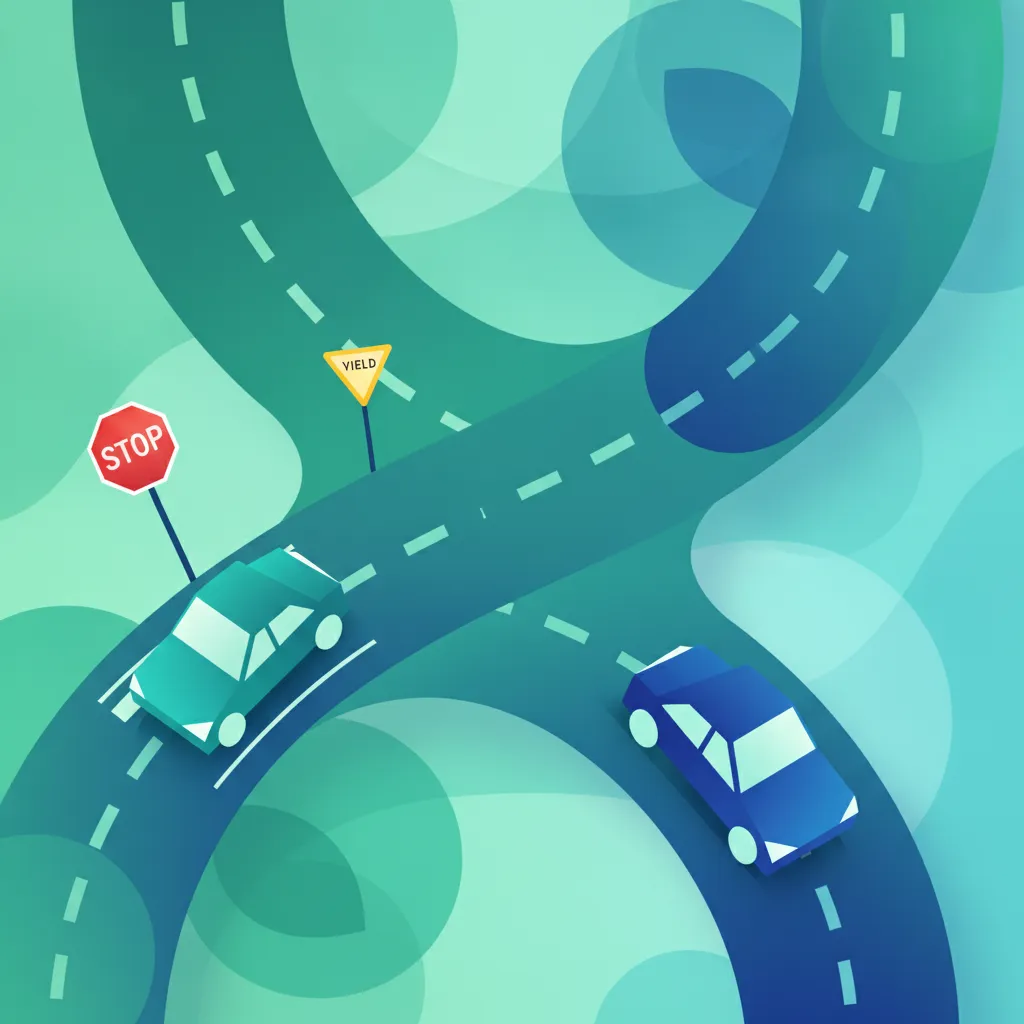
This lesson focuses on priority rules at controlled intersections equipped with traffic signals, stop signs, or yield signs. Learners will understand how to interpret traffic light phases, comply with stop and yield indications, and assess right-of-way at these intersections. The lesson also covers pedestrian and cyclist considerations, as well as emergency vehicle priority.
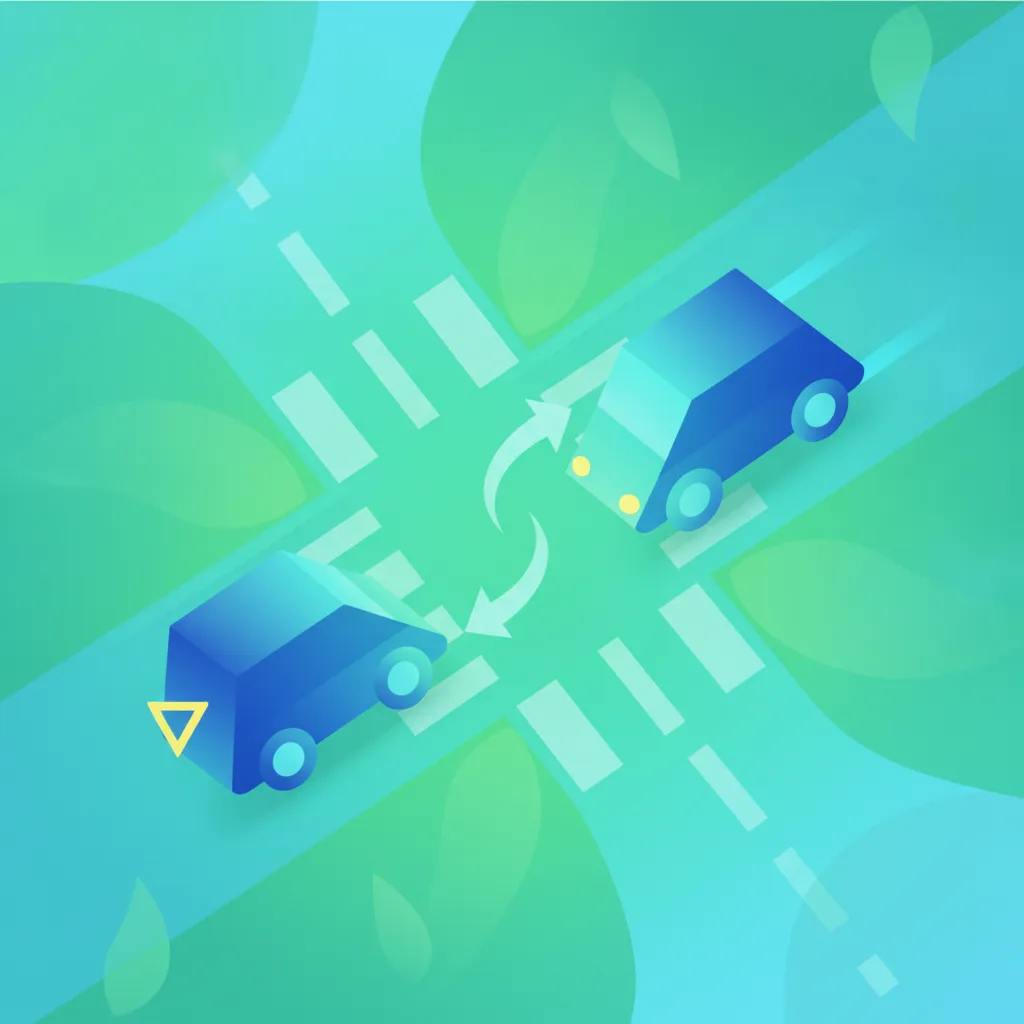
In this lesson, learners explore priority rules specific to uncontrolled intersections, where traffic signals or signs are absent. Topics include determining right-of-way based on vehicle classification, approach angle, and arrival sequence. The lesson emphasizes the importance of stopping, yielding, and assessing potential hazards before proceeding.
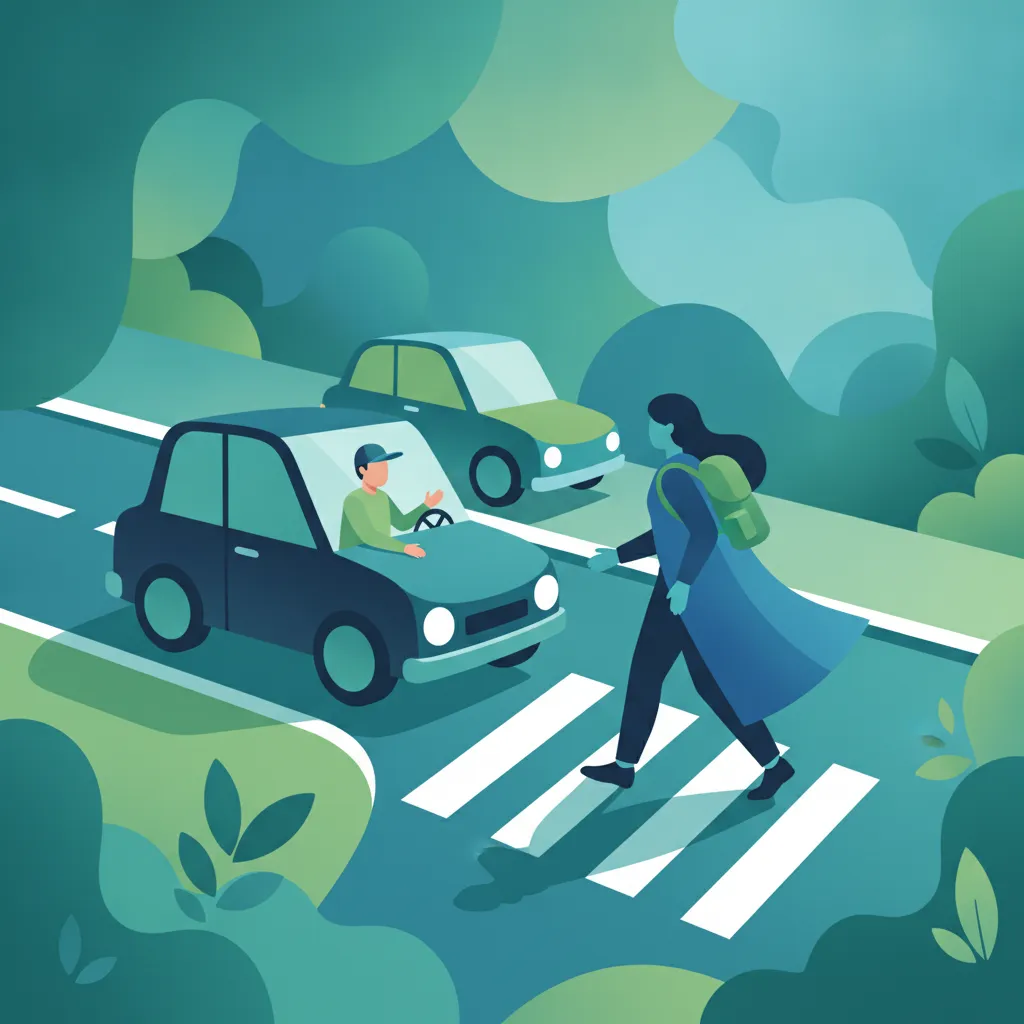
This lesson provides an overview of the general priority principles that dictate right-of-way on Turkish roads. Topics include the hierarchy of road users, such as pedestrians, cyclists, and emergency vehicles, and how these hierarchies apply at various intersections. Learners will understand the fundamental concepts of yielding, stopping, and proceeding, as well as the importance of clear decision-making.
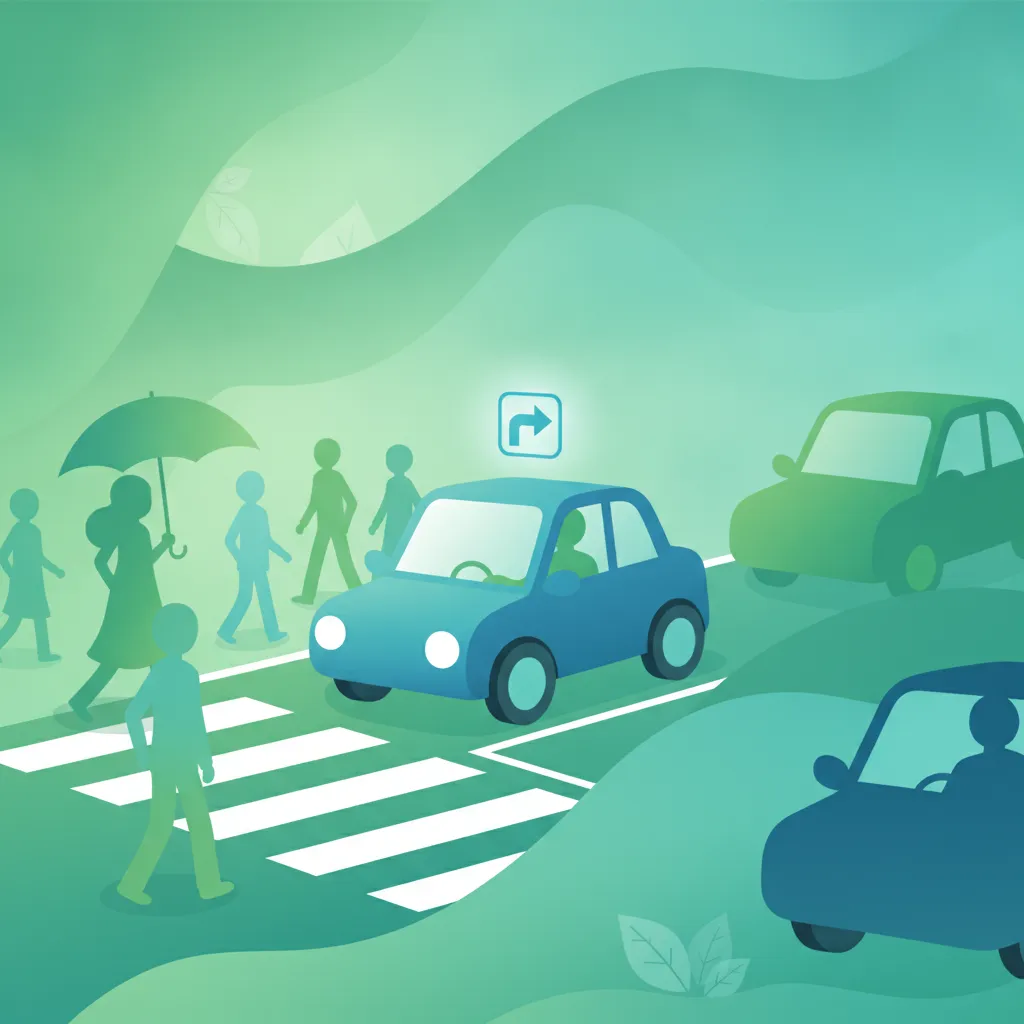
This lesson focuses on the safe interaction with other traffic participants at bus stops and traffic intersections. Learners will explore right-of-way rules, signal compliance, and techniques for maintaining safe distances while stopping and departing. Understanding these interactions is vital for preventing accidents in complex traffic environments.
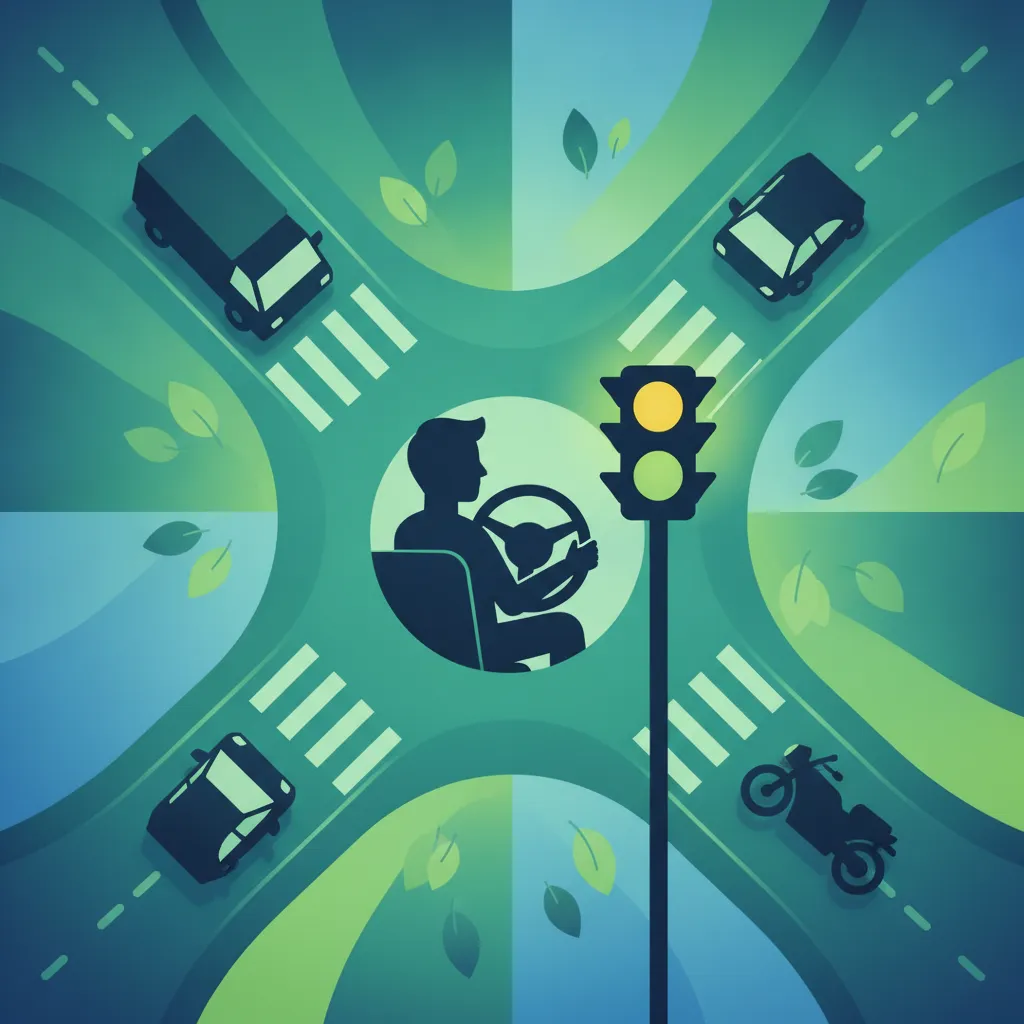
Correctly interpreting traffic signal sequences and priority rules is crucial for preventing devastating right-angle collisions at intersections. This lesson breaks down the phase progression of standard lights, the meanings of flashing amber or red indicators, and the hierarchy of traffic control when a police officer is directing vehicles. You will also master the basic legal default rules of right-of-way, such as yielding to vehicles coming from the right at uncontrolled junctions.
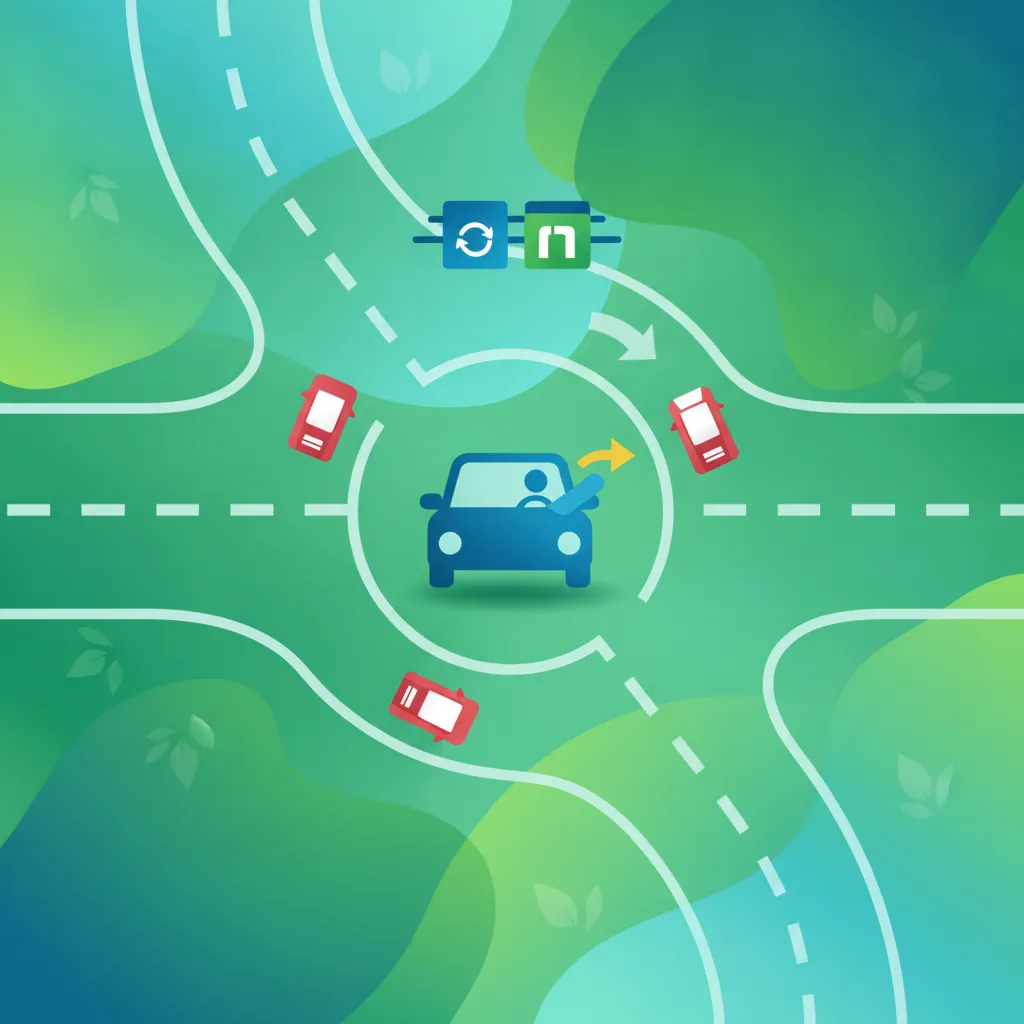
In this lesson, learners explore the specific priority rules and navigation techniques for roundabouts. Topics include yielding to traffic already in the roundabout, proper lane selection upon entry, and safe exit strategies. The lesson also addresses interactions with pedestrians and cyclists near roundabouts and the importance of maintaining appropriate speed.
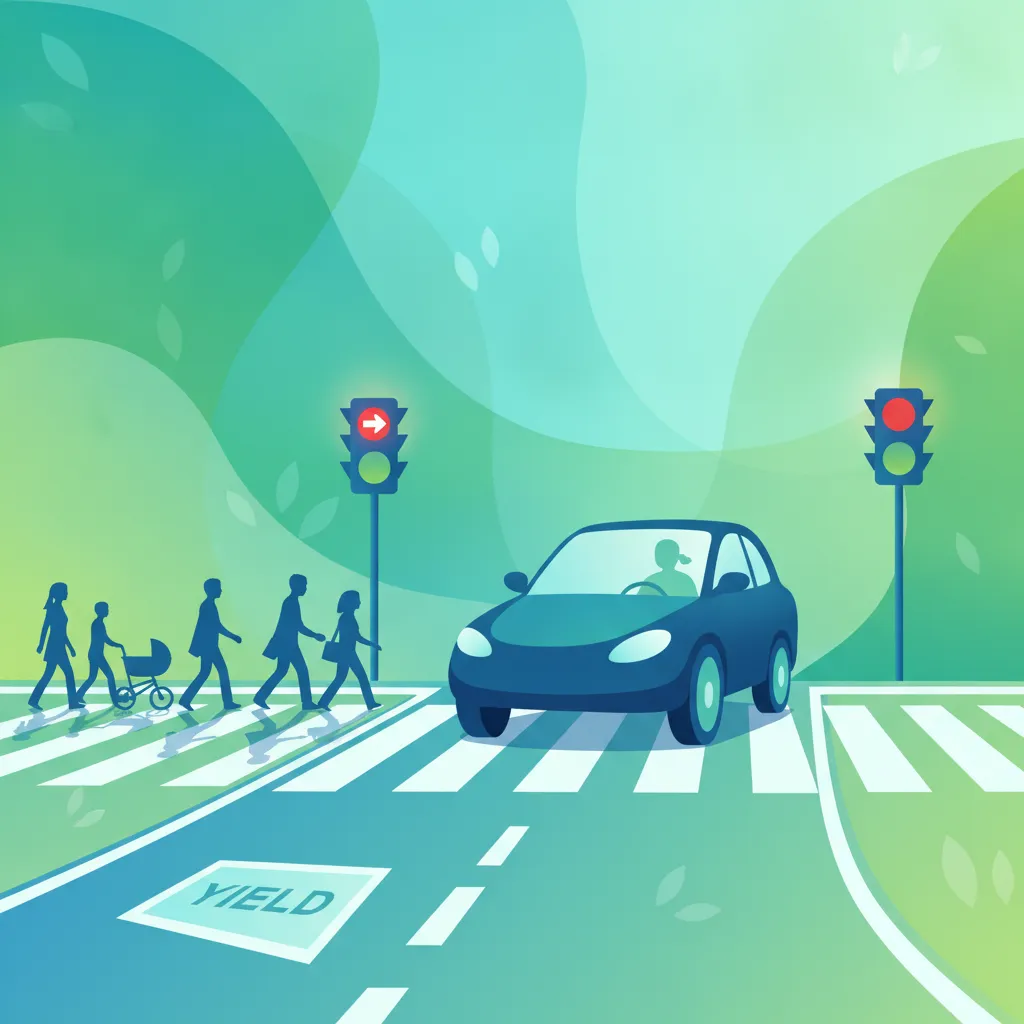
In this lesson, learners will master the skills required to safely navigate various types of intersections encountered in Turkish urban settings. The content covers interpreting traffic signals, understanding right-of-way rules, and executing proper lane positioning. Practical strategies for managing blind spots and ensuring visibility to other road users are emphasized. By the end of this session, participants will be equipped with safe crossing techniques.
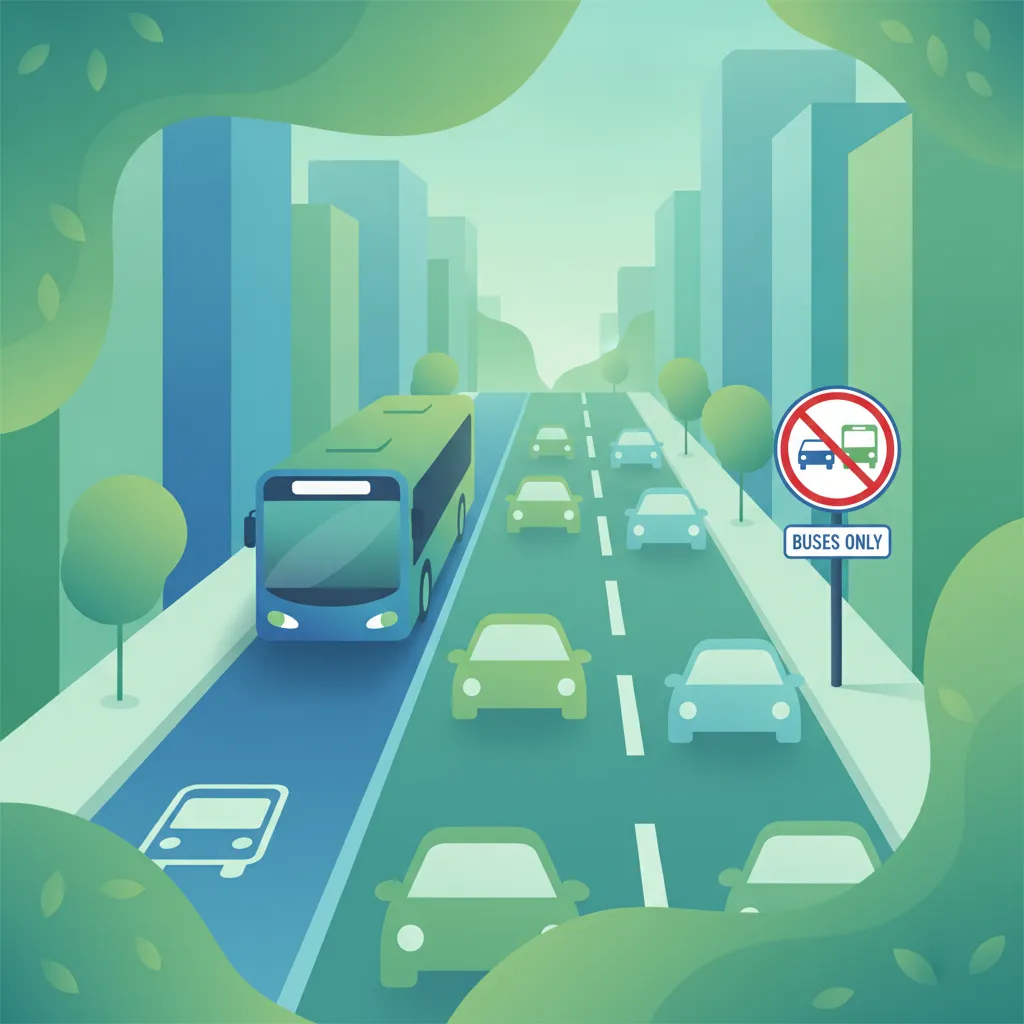
Learners will explore the specific regulations governing bus lanes, priority routes, and other legal restrictions applicable to passenger vehicles. The lesson covers the conditions under which buses may use dedicated lanes, how to navigate priority roadways, and the penalties associated with misuse. Understanding these rules is essential for efficient operation and avoiding violations in high-traffic areas.
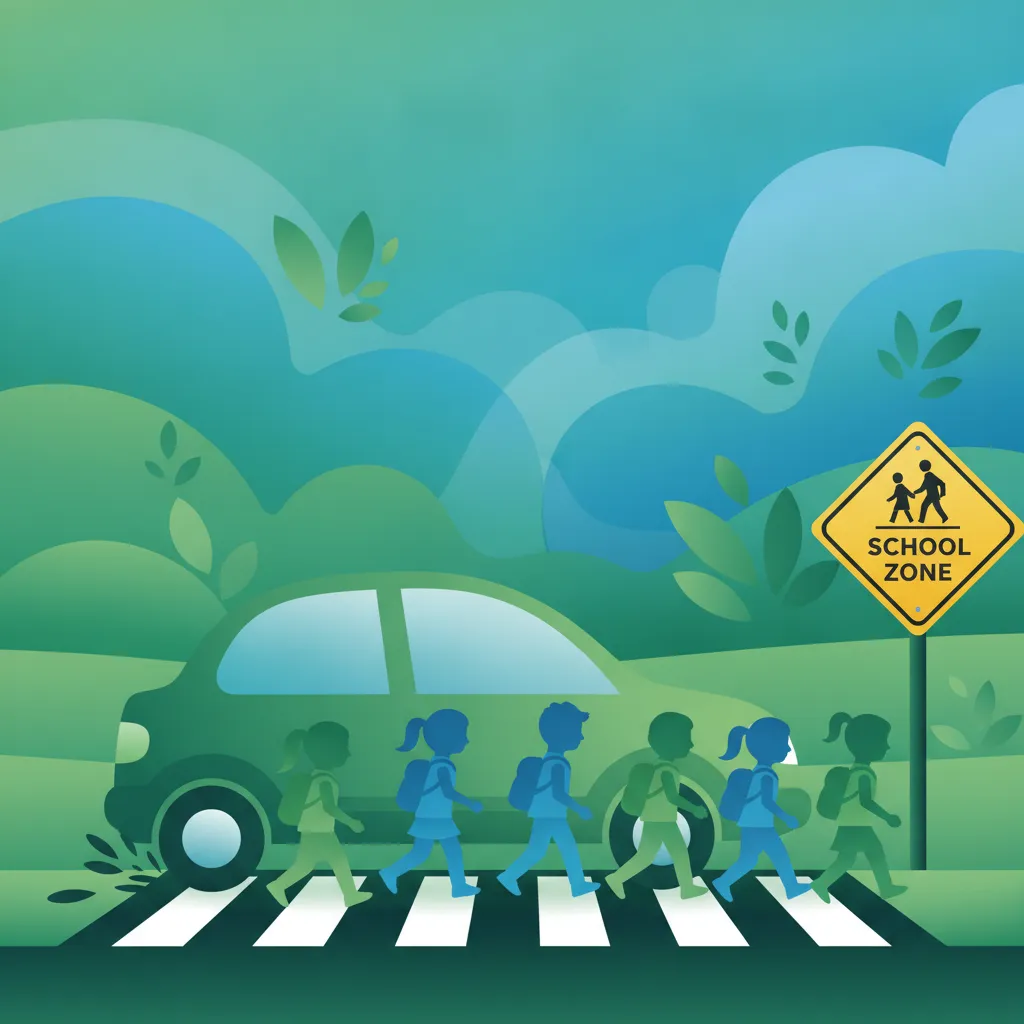
Protecting vulnerable road users is a core legal and ethical responsibility for all motorized vehicle operators in Turkey. This lesson covers the absolute requirement to yield to pedestrians at marked crosswalks, zebra crossings, and designated school zones. You will learn how to identify these zones early, reduce your speed proactively, and maintain heightened situational awareness for children or distracted pedestrians who may step onto the road unexpectedly.
This lesson outlines the precise legal and safety procedures for overtaking slower vehicles on two-lane and multi-lane roads. It details when overtaking is strictly prohibited by signs or solid road lines, and how to calculate passing distances. Drivers will learn how to communicate their intentions using indicators and pass other vehicles safely.
Learn how to proactively identify hazards involving pedestrians, cyclists, and other vulnerable road users in real-world traffic. This lesson focuses on observation skills, safe following distances, and psychological factors that influence road safety and hazard awareness in Turkey.
This lesson explores the critical skill of hazard identification and anticipation while driving. Topics include recognizing potential risks in traffic, road conditions, and environmental factors. Learners will develop skills in anticipatory driving to proactively address hazards before they become dangerous. Real-world examples illustrate how to maintain vigilance.
This lesson focuses on protecting vulnerable road users, such as pedestrians, cyclists, and motorcyclists, in mixed traffic environments. Learners will examine specific strategies for increased vigilance, anticipatory driving, and properly yielding to these users. The lesson also covers high-risk zones, such as school areas and public transport stops, emphasizing the need for heightened safety.

Learners will identify the different categories of vulnerable road users and understand the heightened risks they face. The lesson emphasizes the importance of recognizing these users, anticipating their actions, and taking proactive measures to ensure their safety while operating passenger vehicles. Strategies for mitigating danger and fostering a protective driving environment are explored.

Defensive riding is the practice of anticipating potential road conflicts and acting early to prevent accidents before they occur. This lesson teaches you how to systematically scan the road ahead for changing conditions, keep an adequate safety cushion around your moped, and pre-plan exit routes in tight spots. You will learn to assume you are invisible to other drivers and adapt your speed and road position proactively to protect yourself against sudden maneuvers.

In this lesson, learners will discover the principles of defensive riding, focusing on hazard anticipation, maintaining safe distances, and practicing proactive avoidance techniques. It emphasizes developing a vigilant riding posture, constantly scanning the environment, and preparing to react to potential dangers from other road users, road conditions, or unexpected traffic events.
Learners will examine the complexities of operating in environments where various road users, including pedestrians, cyclists, and motorcyclists, coexist. The lesson emphasizes the need for heightened situational awareness, defensive driving techniques, and proactive hazard anticipation. Strategies for navigating mixed traffic safely, especially in congested urban areas, are highlighted.
This lesson examines the critical interactions between goods vehicles and vulnerable road users such as pedestrians, cyclists, and motorcyclists, particularly in urban environments. Learners will explore right-of-way rules, maintaining safe distances, and strategies for anticipating the actions of these road users. The lesson emphasizes the importance of clear communication and protective driving.
Proper road positioning is your primary shield against being squeezed, sideswiped, or overlooked by larger motor vehicles in daily traffic. This lesson explains how to ride in the center or slightly off-center of your lane to prevent unsafe overtaking within the same lane. You will study how to identify the massive blind spots of buses and trucks, maintain appropriate following distances, and execute overtaking maneuvers with maximum safety margin and clear signal warning.
Low-speed riding maneuvers require precise coordination of throttle control, body balance, and subtle steering inputs to maintain vehicle stability. This lesson guides you through techniques for performing tight U-turns, navigating dense traffic queues, and parking your moped safely in designated urban areas. Additionally, you will learn to scan for immediate hazards, allowing you to execute steering corrections smoothly without risking tip-overs or collisions with low obstacles.

This lesson details defensive driving techniques for adverse weather conditions such as rain, snow, black ice, dense fog, and strong winds. It explains the physics of aquaplaning and how to regain vehicle control when losing traction on slippery surfaces. Drivers will learn how to adjust speed and increase safety gaps to prevent weather crashes.
Find clear answers to common questions learners have about Yielding to Pedestrians and Cyclists. Learn how the lesson is structured, which driving theory objectives it supports, and how it fits into the overall learning path of units and curriculum progression in Turkey. These explanations help you understand key concepts, lesson flow, and exam focused study goals.
Yes, in Turkey, if a pedestrian has already entered or is clearly about to enter a marked pedestrian crossing, you must slow down or stop to allow them to cross safely. Failure to do so is a common source of penalty points in the driving exam.
Cyclists must follow the same traffic signals and signs as motorized vehicles. However, when turning, you must be particularly vigilant for cyclists moving straight ahead in bike lanes or at the edge of the road, as they are vulnerable road users.
School zones demand extra caution. You should always be prepared to stop, reduce your speed significantly, and strictly obey any warning signs or flashing signals that indicate high pedestrian activity.
Absolutely not. While marked crossings have specific legal status, a driver must always act with due care and attention to avoid hitting any pedestrian, regardless of whether they are at a designated crossing or simply walking along the roadside.
Use our comprehensive practice search to find exactly the Turkish driving theory questions you need to master. Whether reviewing specific road signs, traffic rules, or first aid scenarios, select your perfect practice set and boost your confidence for the official ehliyet sınavı.