This lesson details the critical safety protocols and legal requirements regarding pedestrians on Turkish roads. You will learn how to navigate interactions with pedestrians and vulnerable road users, ensuring your preparation for the MTSK e-sınav is comprehensive and legally accurate.
Lesson content overview
As a candidate for the Turkish Category B driving license, understanding the rights and safety protocols concerning pedestrians is a core requirement of defensive driving. Pedestrians are the most vulnerable participants in the traffic ecosystem. Unlike occupants of passenger vehicles, they lack protective steel frames, crumple zones, or airbags to shield them during an impact. Because of this extreme vulnerability, both Turkish law and ethical driving practices place a heavy responsibility on the driver to protect pedestrians in all situations.
This lesson explores the legal frameworks governing pedestrian rights in Turkey, the practical application of yielding rules, and the specialized defensive driving habits required near schools, residential areas, and intersections. This knowledge is essential not only to pass the official Motorized Vehicle Driver Candidate Exam (MTSK e-sınav) but also to prevent tragic accidents on the road.
In recent years, Turkey has significantly updated its Highway Traffic Law (Karayolları Trafik Kanunu - Law No. 2918) to prioritize pedestrian safety. A major legislative amendment under Article 74 established a strict "Pedestrian First" (Yaya Önceliği) rule. This amendment mandates that drivers must give the right of way to pedestrians in designated areas, transforming the driving culture across Turkish provinces.
The legal priority granted to pedestrians, requiring drivers to yield, slow down, or come to a complete stop to allow individuals to cross the roadway safely at marked crossings, school zones, or intersections.
Under Turkish traffic law, the obligation to yield is not a polite suggestion; it is a strict legal duty. Drivers approaching marked pedestrian crossings (yaya geçidi) or school crossings (okul geçidi) must perform the following actions:
Passing a Stopped Vehicle: If a vehicle ahead of you or in an adjacent lane slows down or stops at a pedestrian crossing, you must not overtake or pass that vehicle. The stopped vehicle is likely yielding to a pedestrian who is currently hidden from your line of sight. Passing in this scenario is one of the leading causes of fatal pedestrian accidents at crossings.
To navigate Turkish roads safely, drivers must recognize the different types of pedestrian crossings and know how to behave at each. These crossings are designed to organize the flow of traffic and provide safe passage across busy streets.
An uncontrolled crossing is marked by painted white or yellow stripes on the asphalt (commonly called zebra crossings) but does not have traffic lights or a traffic officer regulating the flow.
At these crossings, pedestrians have absolute priority. The presence of the road markings alone serves as a continuous stop sign for drivers whenever a pedestrian is present. You must approach these areas with extreme caution, especially in poor weather or low visibility.
To alert drivers to these crossings, the following signs are used:
Signalized crossings are controlled by traffic lights equipped with pedestrian signals (red and green light symbols representing a standing and walking pedestrian, respectively).
However, as a defensive driver, if a pedestrian is still in the middle of the crossing when your traffic light turns green, you must wait for them to safely clear the lane before proceeding. Never use your vehicle to bully or rush a slow-moving pedestrian.
In areas with dense foot traffic, such as school zones, residential neighborhoods, and hospital surroundings, specialized crossing zones are established. These zones are characterized by:
While all pedestrians require vigilance, certain groups demand extraordinary caution due to physical, cognitive, or sensory limitations. As a Category B license holder, you must adjust your driving behavior dynamically when encountering these vulnerable road users.
Children are highly unpredictable. They lack a fully developed sense of speed and distance, meaning they may believe they can cross before your vehicle reaches them.
Furthermore, their small stature makes them difficult to see behind parked cars or roadside obstacles. In school zones or residential areas, always drive with the assumption that a child might suddenly run into the street after a ball, a pet, or a friend.
Elderly pedestrians may suffer from reduced mobility, slower reaction times, and diminished vision or hearing. They require significantly more time to cross the road.
When yielding to an elderly pedestrian, do not show signs of impatience, such as revving your engine or rolling your vehicle forward. This can panic them, increasing their risk of falling or hesitating in the middle of the street.
Visually impaired pedestrians often navigate using a white cane or a guide dog.
The White Cane Rule: Under international and Turkish traffic protocols, if a pedestrian extends a white cane (beyaz baston) at any point on the roadway, this is an immediate, universal signal that they intend to cross. Drivers in all lanes must come to a complete stop and allow the individual to cross, regardless of whether there is a marked crossing.
Hearing-impaired pedestrians may not hear your approaching vehicle, your engine, or even a horn. Always maintain an increased buffer zone around them and rely on visual cues (like slowing down early and visibly) to communicate your intentions.
Defensive driving means anticipating hazards before they occur. To guarantee pedestrian safety, you should integrate these systematic behaviors into your daily driving routine.
Scan the Road Ahead: Look at least 100 to 150 metres ahead for pedestrian signs, school zones, or people standing near the curb.
Check Your Mirrors: Before braking, check your rear-view mirror to understand the positioning and speed of the vehicles behind you.
Ease Off the Accelerator: Let your vehicle naturally decelerate as you approach a crossing, placing your foot lightly over the brake pedal (covering the brake) to cut down your reaction time.
Make Eye Contact: If possible, look at the pedestrians waiting to cross. Confirming eye contact ensures both parties understand who is yielding.
Brake Smoothly and Stop Early: Apply the brakes gradually. Stop at least 3 to 5 metres before the white stop line or zebra crossing. Stopping too close can startle pedestrians and block their visibility of other lanes.
Signal Your Intention: Once stopped, keep your foot firmly on the brake so your brake lights remain illuminated, signaling to drivers behind you that you are stationary.
Understanding what not to do is just as critical as knowing the rules. The MTSK theory exam frequently tests candidates on common mistakes and dangerous driving habits.
Using your horn near pedestrians is highly restricted. Honking to rush a pedestrian, startle someone who is distracted, or express frustration is a traffic infraction.
An abrupt horn blast can cause a child or an elderly person to panic, trip, or run directly into the path of another vehicle. Only use the horn in rare, emergency situations where a collision is imminent and no other warning is possible.
Many drivers mistakenly believe that if there are no painted zebra lines on the asphalt, pedestrians have no rights. This is incorrect.
At any intersection, if a pedestrian is crossing the road you are turning into, they have the right of way. Whether you are turning right or left, you must yield to pedestrians crossing the intersecting street.
Understanding the physics and psychology of driver-pedestrian interactions helps reinforce safe driving habits:
| Driver Action | Direct Effect on Road Safety | Rationale |
|---|---|---|
| Slowing to 30 km/h in school zones | Dramatic reduction in stopping distance and collision impact. | Survival rates for pedestrians hit at 30 km/h are significantly higher than at 50 km/h. |
| Braking smoothly and early | Prevents rear-end collisions from vehicles behind you. | Gives following drivers time to react to your stop. |
| Keeping crosswalks clear | Keeps pedestrians within safe, designated zones. | Forcing pedestrians out of the crossing exposes them to unshielded lanes. |
| Remaining patient at green lights | Protects slow-moving or disabled pedestrians. | Ensures vulnerable users can clear the road safely without panic. |
To fully master the safe interaction with all users of the road and score highly on your MTSK theory exam, explore these highly related subjects.
To test your understanding of how pedestrian rights interact with priority rules, traffic signs, and speed regulations, practice with these tailored exam preparation sets.
Explore all units and lessons included in this driving theory course.
Lesson content overview
Explore all units and lessons included in this driving theory course.
Explore search topics learners often look for when studying Pedestrian Rights and Safety. These topics reflect common questions about road rules, driving situations, safety guidance, and lesson level theory preparation for learners in Turkey.
Browse additional driving theory lessons that cover connected traffic rules, road signs, and common driving situations related to this topic. Improve your understanding of how different rules interact across everyday traffic scenarios.
Learn the legal frameworks for right of way at controlled and uncontrolled intersections. This guide explains how to identify priority signs, manage vehicle flow, and safely navigate complex crossroads according to official Turkish highway traffic legislation and driver responsibility standards.
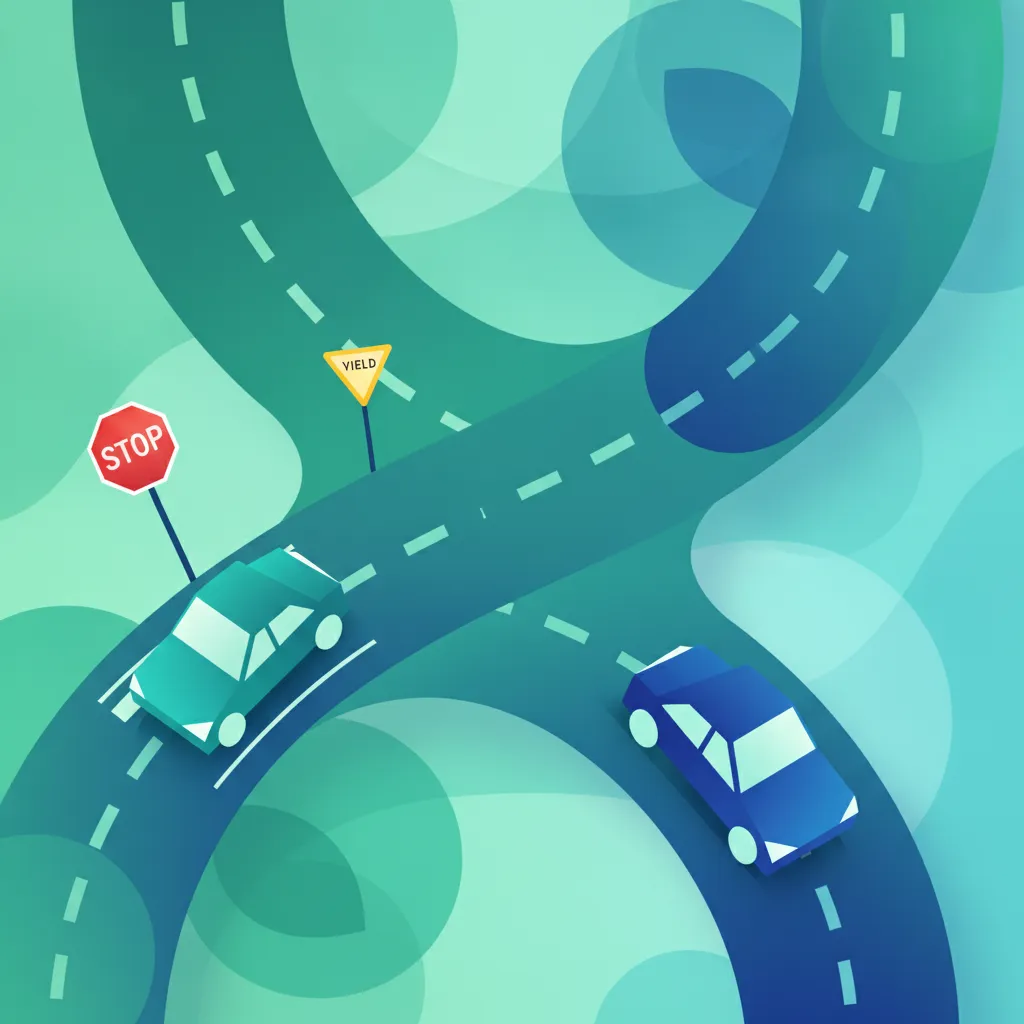
This lesson focuses on priority rules at controlled intersections equipped with traffic signals, stop signs, or yield signs. Learners will understand how to interpret traffic light phases, comply with stop and yield indications, and assess right-of-way at these intersections. The lesson also covers pedestrian and cyclist considerations, as well as emergency vehicle priority.
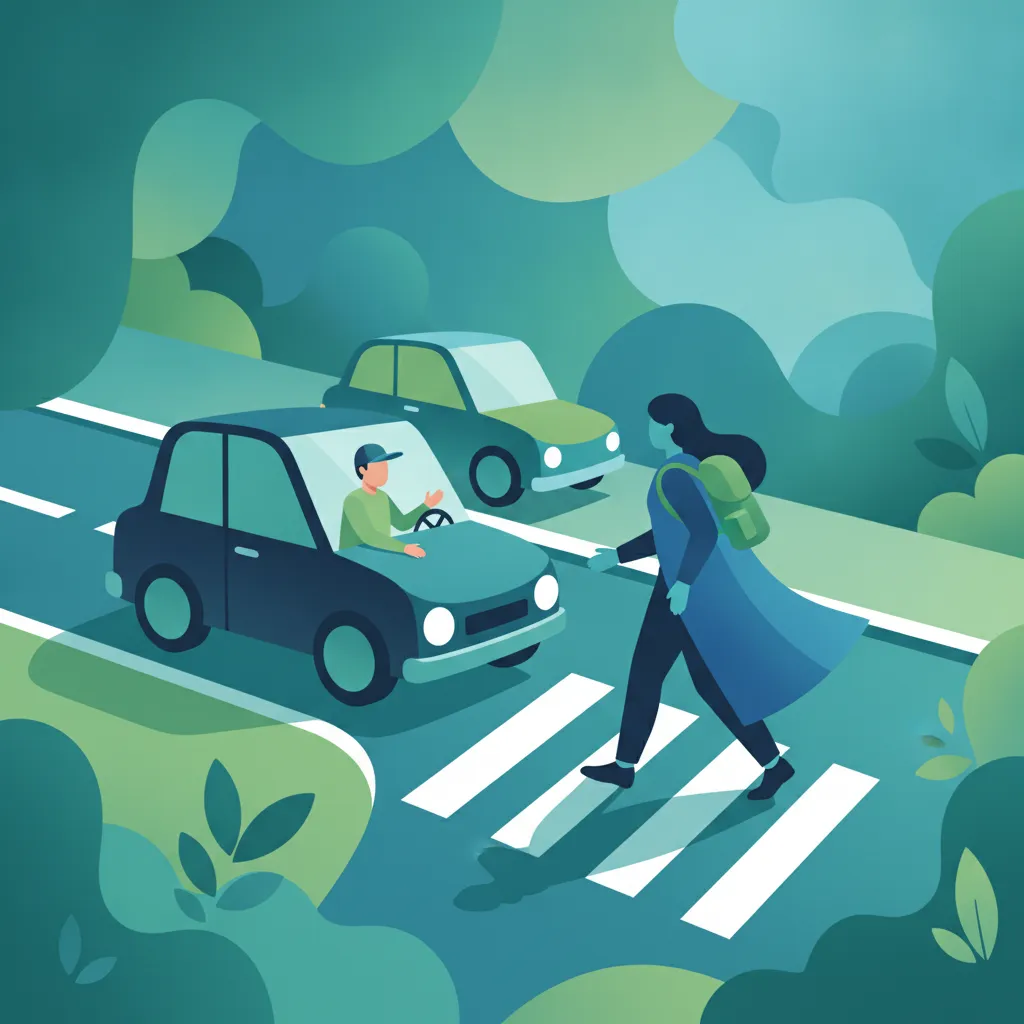
This lesson provides an overview of the general priority principles that dictate right-of-way on Turkish roads. Topics include the hierarchy of road users, such as pedestrians, cyclists, and emergency vehicles, and how these hierarchies apply at various intersections. Learners will understand the fundamental concepts of yielding, stopping, and proceeding, as well as the importance of clear decision-making.
In this lesson, learners explore priority rules specific to uncontrolled intersections, where traffic signals or signs are absent. Topics include determining right-of-way based on vehicle classification, approach angle, and arrival sequence. The lesson emphasizes the importance of stopping, yielding, and assessing potential hazards before proceeding.
This lesson emphasizes the importance of yielding to pedestrians and cyclists at intersections, crosswalks, and designated lanes. Learners will understand the legal obligations to provide safe passage to vulnerable road users and the correct procedures for stopping and allowing them to cross. Real-world examples illustrate scenarios where failing to yield can lead to accidents.
Correctly interpreting traffic signal sequences and priority rules is crucial for preventing devastating right-angle collisions at intersections. This lesson breaks down the phase progression of standard lights, the meanings of flashing amber or red indicators, and the hierarchy of traffic control when a police officer is directing vehicles. You will also master the basic legal default rules of right-of-way, such as yielding to vehicles coming from the right at uncontrolled junctions.
This lesson focuses on the safe interaction with other traffic participants at bus stops and traffic intersections. Learners will explore right-of-way rules, signal compliance, and techniques for maintaining safe distances while stopping and departing. Understanding these interactions is vital for preventing accidents in complex traffic environments.
In this lesson, learners explore the specific priority rules and navigation techniques for roundabouts. Topics include yielding to traffic already in the roundabout, proper lane selection upon entry, and safe exit strategies. The lesson also addresses interactions with pedestrians and cyclists near roundabouts and the importance of maintaining appropriate speed.
Protecting vulnerable road users is a core legal and ethical responsibility for all motorized vehicle operators in Turkey. This lesson covers the absolute requirement to yield to pedestrians at marked crosswalks, zebra crossings, and designated school zones. You will learn how to identify these zones early, reduce your speed proactively, and maintain heightened situational awareness for children or distracted pedestrians who may step onto the road unexpectedly.
In this lesson, learners will master the skills required to safely navigate various types of intersections encountered in Turkish urban settings. The content covers interpreting traffic signals, understanding right-of-way rules, and executing proper lane positioning. Practical strategies for managing blind spots and ensuring visibility to other road users are emphasized. By the end of this session, participants will be equipped with safe crossing techniques.
Focusing on pedestrian safety, this lesson addresses the unique considerations motorcyclists must take when approaching zebra crossings, traffic signal-controlled pedestrian crossings, and designated school zones. Learners will understand the legal obligations to yield to pedestrians, especially children, and the importance of reducing speed in these high-risk areas. The lesson also provides practical tips for ensuring visibility.
Understand the responsibilities of drivers when interacting with cyclists, motorcyclists, and vulnerable pedestrians. This lesson provides an overview of essential safety habits, hazard perception, and defensive maneuvers required to reduce collision risks in busy urban environments and residential traffic zones.
This lesson examines the interaction between drivers and cyclists, focusing on the safe sharing of road space. Topics include the proper use of bicycle lanes, yielding to cyclists at intersections, and safe passing distances. The lesson also addresses cyclist vulnerabilities and ways to minimize risks. Real-world examples illustrate common hazards when sharing the road.
This lesson examines the critical interactions between goods vehicles and vulnerable road users such as pedestrians, cyclists, and motorcyclists, particularly in urban environments. Learners will explore right-of-way rules, maintaining safe distances, and strategies for anticipating the actions of these road users. The lesson emphasizes the importance of clear communication and protective driving.
This lesson focuses on protecting vulnerable road users, such as pedestrians, cyclists, and motorcyclists, in mixed traffic environments. Learners will examine specific strategies for increased vigilance, anticipatory driving, and properly yielding to these users. The lesson also covers high-risk zones, such as school areas and public transport stops, emphasizing the need for heightened safety.

Learners will identify the different categories of vulnerable road users and understand the heightened risks they face. The lesson emphasizes the importance of recognizing these users, anticipating their actions, and taking proactive measures to ensure their safety while operating passenger vehicles. Strategies for mitigating danger and fostering a protective driving environment are explored.

Defensive riding is the practice of anticipating potential road conflicts and acting early to prevent accidents before they occur. This lesson teaches you how to systematically scan the road ahead for changing conditions, keep an adequate safety cushion around your moped, and pre-plan exit routes in tight spots. You will learn to assume you are invisible to other drivers and adapt your speed and road position proactively to protect yourself against sudden maneuvers.
This lesson emphasizes the importance of yielding to pedestrians and cyclists at intersections, crosswalks, and designated lanes. Learners will understand the legal obligations to provide safe passage to vulnerable road users and the correct procedures for stopping and allowing them to cross. Real-world examples illustrate scenarios where failing to yield can lead to accidents.

In this lesson, learners will discover the principles of defensive riding, focusing on hazard anticipation, maintaining safe distances, and practicing proactive avoidance techniques. It emphasizes developing a vigilant riding posture, constantly scanning the environment, and preparing to react to potential dangers from other road users, road conditions, or unexpected traffic events.
Proper road positioning is your primary shield against being squeezed, sideswiped, or overlooked by larger motor vehicles in daily traffic. This lesson explains how to ride in the center or slightly off-center of your lane to prevent unsafe overtaking within the same lane. You will study how to identify the massive blind spots of buses and trucks, maintain appropriate following distances, and execute overtaking maneuvers with maximum safety margin and clear signal warning.
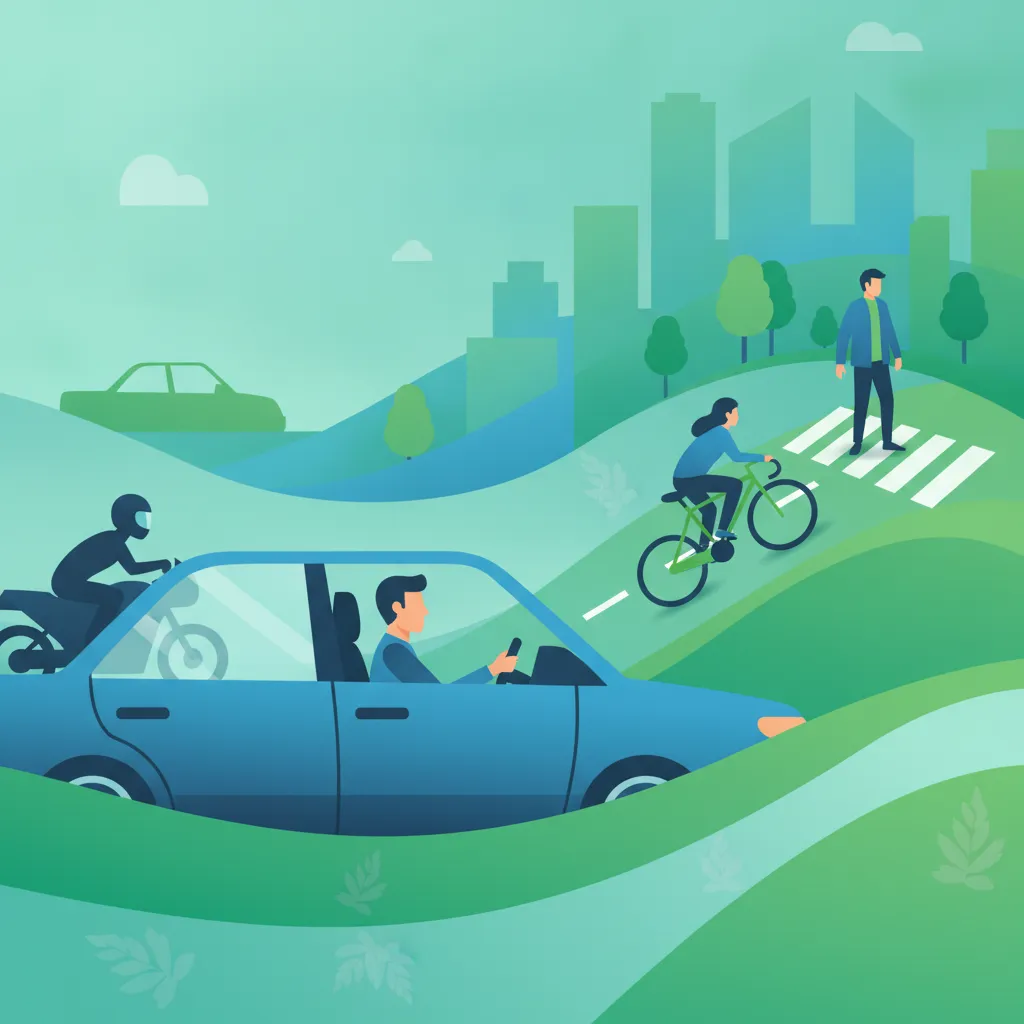
Learners will examine the complexities of operating in environments where various road users, including pedestrians, cyclists, and motorcyclists, coexist. The lesson emphasizes the need for heightened situational awareness, defensive driving techniques, and proactive hazard anticipation. Strategies for navigating mixed traffic safely, especially in congested urban areas, are highlighted.
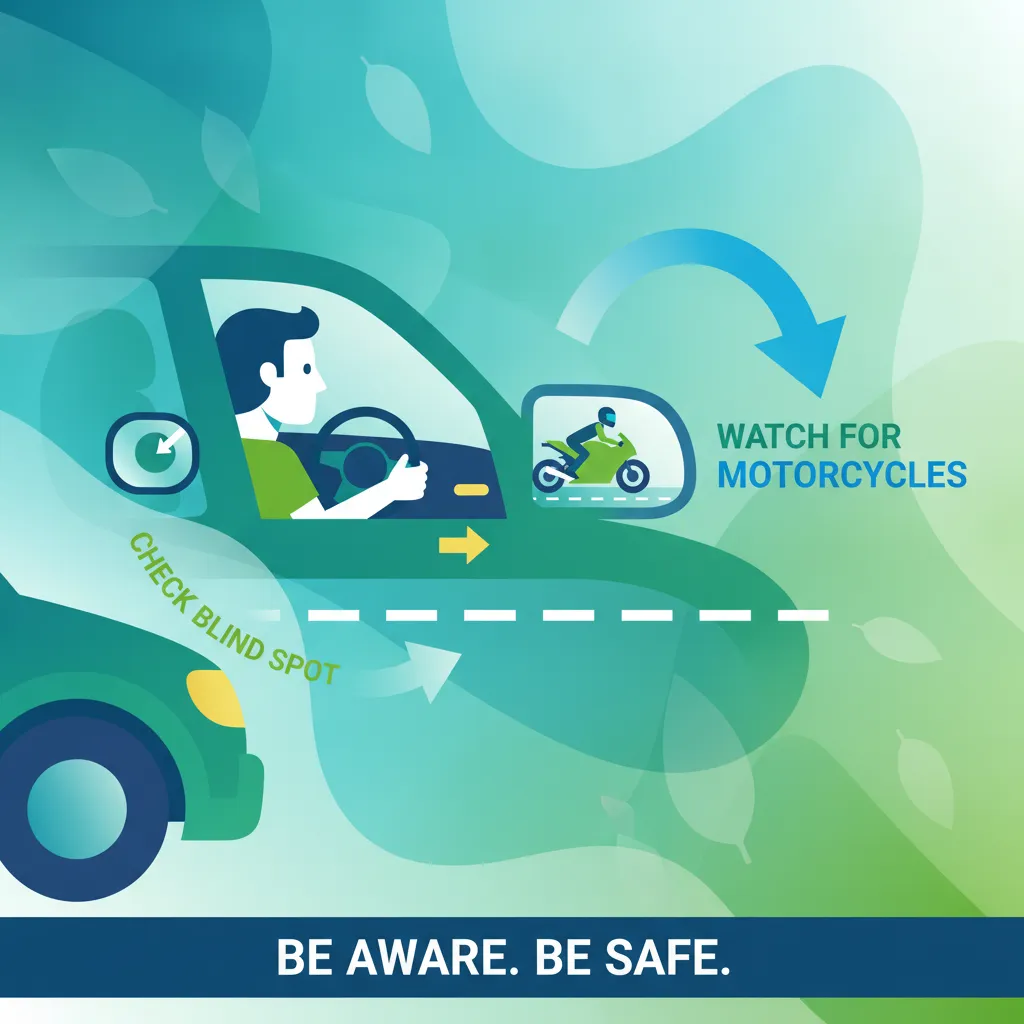
Learners will gain insight into the unique challenges posed by motorcycles and scooters sharing the road with passenger vehicles. The lesson highlights the importance of checking blind spots, maintaining safe following distances, and being aware of the faster acceleration and maneuverability of two-wheeled vehicles. Strategies for anticipating their movements and preventing collisions are discussed.
Find clear answers to common questions learners have about Pedestrian Rights and Safety. Learn how the lesson is structured, which driving theory objectives it supports, and how it fits into the overall learning path of units and curriculum progression in Turkey. These explanations help you understand key concepts, lesson flow, and exam focused study goals.
Yes, in Turkey, if a pedestrian has started to cross or is clearly indicating an intent to cross at a designated pedestrian crossing, you are legally required to stop and yield the right-of-way.
You must reduce your speed and proceed with extreme caution. Children are unpredictable, and you should always be prepared for them to step into the road suddenly.
The exam often uses diagrams of intersections or road segments where you must identify if a driver is acting correctly by giving way to a pedestrian or failing to do so.
Yes, drivers must exercise extra care and patience. When you see a visually impaired person using a white cane or a guide dog, you should stop even if they are not at a marked crossing.
Use our comprehensive practice search to find exactly the Turkish driving theory questions you need to master. Whether reviewing specific road signs, traffic rules, or first aid scenarios, select your perfect practice set and boost your confidence for the official ehliyet sınavı.