
This lesson explores the critical aspects of tyre maintenance, including inspection, proper inflation, and understanding tread depth requirements. As part of our Category B theory course, you will learn how these factors impact vehicle safety, fuel efficiency, and your performance on the MTSK e-sınav. Mastering these technical basics is essential for both your exam success and your future as a safe, responsible driver in Turkey.
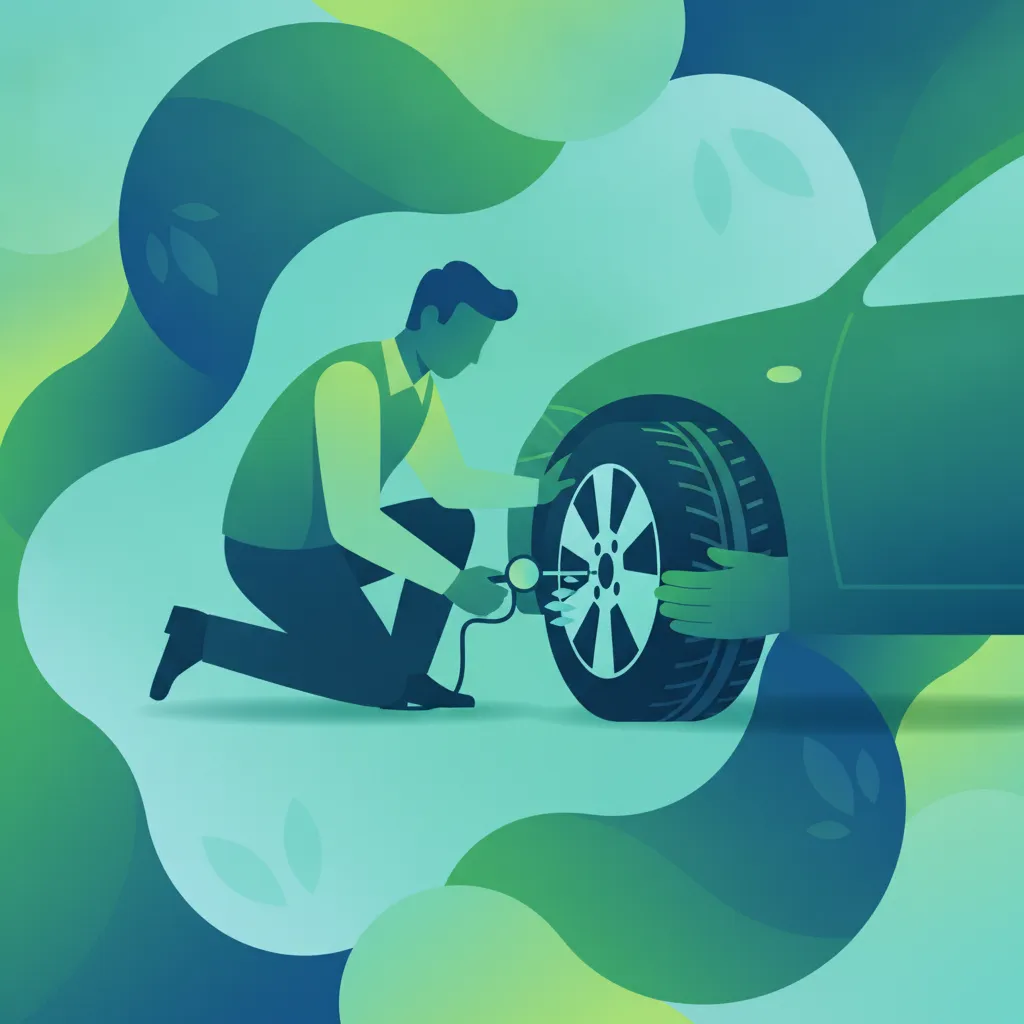
Lesson content overview
Tyres are the most critical safety component of your vehicle. They represent the sole point of contact between your car and the road surface. No matter how advanced your vehicle’s braking system, electronic stability programs (ESP), or suspension setup may be, their performance is ultimately limited by the traction provided by your tyres.
For drivers preparing for the Turkish Driving License Category B Theory Course (MTSK e-sınav), mastering tyre safety is not just a requirement for passing the official exam; it is a fundamental skill for safe, everyday driving on Turkey’s diverse road networks.
Traction (tutunma) is the frictional force between your vehicle’s tyres and the road surface. This force enables acceleration, deceleration, steering, and cornering. The physical area where the rubber actually meets the asphalt is known as the contact patch. For a standard passenger vehicle, the contact patch of each tyre is roughly the size of a human palm.
Several factors determine the quality of this contact:
When traction is lost, the driver loses control of the vehicle. This loss of grip can manifest as understeer (the front tyres slide, causing the car to turn less than intended) or oversteer (the rear tyres slide, causing the vehicle to spin out).
Tyre tread depth is the vertical measurement from the top of the tyre’s rubber to the bottom of its deepest grooves. The primary function of these grooves is to channel water away from beneath the tyre on wet roads, ensuring the rubber remains in direct contact with the pavement.
The measurement of the depth of the grooves in a tyre's tread, which determines its ability to grip the road, displace water, and prevent skidding.
In Turkey, the legal minimum tread depth for passenger cars (Category B) is 1.6 mm. Driving on tyres with a tread depth below this limit is illegal, will result in failing the mandatory vehicle inspection (TÜVTÜRK), and carries traffic fines and penalty points.
However, safety organizations and automotive experts strongly recommend replacing tyres long before they reach this legal limit:
When a road is wet, your tyres must displace water to maintain contact with the road. If the water depth exceeds the tyre's ability to channel it away—either because the vehicle is moving too fast or the tread depth is too shallow—a wedge of water will build up in front of the tyre.
This causes the tyre to lift off the road and ride on a cushion of water. This dangerous phenomenon is known as aquaplaning or hydroplaning (kızaklama).
During aquaplaning:
Speed (km/h) & Tread Depth Influence on Aquaplaning Risk:
[ 90 km/h + 8.0 mm tread ] ---> Water safely displaced (Low Risk)
[ 90 km/h + 1.6 mm tread ] ---> Water trapped under tyre (High Aquaplaning Risk)
How to recover from aquaplaning: Do not slam on the brakes or make sudden steering adjustments. Ease off the accelerator pedal to slow down naturally, keep the steering wheel pointed in your desired direction, and wait for the tyres to regain traction as speed decreases.
Tyre inflation pressure (lastik basıncı) is the measure of compressed air inside the tyre, typically measured in bar or PSI (Pounds per Square Inch). Proper inflation is critical for ensuring even tyre wear, optimal vehicle handling, and fuel efficiency.
You should always inflate your tyres to the manufacturer’s specifications, which can be found in several locations:
Driving on under-inflated tyres is highly dangerous and represents one of the most common maintenance errors.
Over-inflating tyres is equally problematic and is often done under the false impression that it improves fuel economy.
Tyre pressure is highly sensitive to ambient temperatures. As a rule of thumb, tyre pressure drops by approximately 0.1 bar (1.5 PSI) for every 10°C drop in temperature.
Therefore, a tyre correctly inflated in summer may become dangerously under-inflated when winter arrives.
Always check tyre pressure when tyres are cold. Cold means the vehicle has been stationary for at least three hours or has been driven less than 3 kilometres. Driving heats up the air inside the tyres, causing pressure to rise. Checking "hot" tyres will lead to an artificially high reading and subsequent under-inflation.
In Turkey, the meteorological and geographic diversity means drivers frequently encounter heavy snow, ice, and cold rain. To combat winter accidents, the Turkish Ministry of Transport enforces strict rules regarding winter tyres (kış lastiği).
By law, winter tyres are mandatory for commercial passenger and cargo-carrying vehicles between 1st December and 31st March of every year.
For private passenger vehicles (such as those driven with a Category B license), the mandate is determined by the local governorship (Valilik) of each province based on regional winter conditions. However, using winter tyres in cold regions is highly recommended and is a frequent topic on the MTSK e-sınav.
The primary difference between summer and winter tyres lies in their rubber compound and tread pattern:
Stopping Distance on Ice at 50 km/h:
[ Summer Tyres ] -----------------------------------------> 60+ meters
[ Winter Tyres ] ---------------> 30-35 meters
Every tyre has a set of standardised markings on its sidewall that provide critical information about its dimensions, construction, and physical limits. Reading these markings is vital to ensuring you purchase and mount the correct tyres for your vehicle.
Let us decode a common passenger car tyre marking: 205/55 R16 91V
Never exceed the load capacity of your tyres. Overloading your vehicle past its tyre load rating causes excessive heat buildup in the rubber and sidewall structures, raising the risk of a high-speed blowout.
A tyre blowout is a sudden and complete rupture of the tyre, resulting in immediate loss of air pressure. This is a highly stressful emergency situation that requires calm, precise driver reactions to prevent a rollover or crash.
If you experience a tyre blowout at high speed, your natural panic reflex will be to slam on the brakes. This is the most dangerous action you can take, as it will cause the vehicle to instantly pull to the side of the blown tyre and spin out of control.
Grip the Steering Wheel Firmly: Maintain a two-handed grip on the steering wheel. The vehicle will pull violently toward the side of the blown tyre; you must counter-steer to keep the vehicle in its lane.
Ease Off the Accelerator: Slowly release the accelerator pedal to allow engine braking to reduce your speed naturally.
Do NOT Slam on the Brakes: Avoid sudden braking. Only apply gentle, progressive brake pressure once the vehicle has slowed down and is under stable steering control.
Signal and Move to Safety: Once the vehicle is moving at a safe, controlled speed, signal and guide it onto the shoulder, breakdown lane, or a safe emergency area off the road.
If you experience a flat tyre, you must know how to safely change it using the vehicle’s onboard tools (jack, wheel brace, and spare tyre).
Here is the safe, legal procedure for changing a tyre in Turkey:
Find a Safe Location: Pull completely off the road onto a level, solid surface. Avoid stopping on curves, blind spots, or soft dirt.
Secure the Vehicle: Engage the parking brake fully and shift into first gear (manual transmission) or Park (automatic transmission). Turn off the engine.
Set Up Warning Equipment: Turn on your hazard warning lights (dörtlüler). Place your reflective warning triangle (reflektör) behind your vehicle to warn oncoming traffic: 30 metres behind in urban areas, and 150 metres behind on highways and rural roads.
Prepare Your Tools: Retrieve the spare tyre (stepne), jack (kriko), and wheel brace (bijon anahtarı) from the boot.
Loosen the Wheel Bolts (Bijonlar): Before lifting the car with the jack, use the wheel brace to loosen the wheel bolts by turning them counterclockwise. Only loosen them by about half a turn—do not remove them yet.
Position the Jack and Lift: Place the jack under the vehicle's designated jacking point near the flat tyre (refer to the owner's manual). Raise the vehicle until the flat tyre is a few centimetres off the ground.
Swap the Tyres: Fully unscrew and remove the wheel bolts. Remove the flat tyre and mount the spare tyre onto the wheel hub. Hand-tighten the wheel bolts in a star pattern.
Lower the Car and Final Tighten: Lower the jack slowly until the tyre touches the ground but does not bear the vehicle's full weight. Use the wheel brace to fully tighten the wheel bolts in a cross/star pattern to ensure even seating. Lower the car completely and remove the jack.
Pack Up Safety Equipment: Place the flat tyre and all tools back into the boot. Do not forget to retrieve your reflective warning triangle.
Space-Saver Spare Tyres: If your vehicle is equipped with a temporary "space-saver" spare tyre (often called a "donut"), be aware that these tyres are only designed to get you to the nearest repair shop. They generally have a strict speed limit of 80 km/h and should not be used for long-distance travel.
Failing to maintain your tyres can lead to various legal penalties, mechanical failures, and safety hazards.
Explore all units and lessons included in this driving theory course.
Lesson content overview
Explore all units and lessons included in this driving theory course.
Explore search topics learners often look for when studying Tyre Condition and Pressure. These topics reflect common questions about road rules, driving situations, safety guidance, and lesson level theory preparation for learners in Turkey.
Browse additional driving theory lessons that cover connected traffic rules, road signs, and common driving situations related to this topic. Improve your understanding of how different rules interact across everyday traffic scenarios.
Learn the essential theory behind vehicle maintenance, including daily safety checks, legal requirements for vehicle inspection, and understanding the role of lights, fluid levels, and seat belts in maintaining road safety in Turkey.
This lesson focuses on routine vehicle inspections, fluid level checks, and basic preventive maintenance tasks every driver should perform. It details the indicators on the dashboard instrument panel and how to react to critical engine warning lights. Motorists will learn to recognize mechanical faults before they lead to dangerous road breakdowns.
This lesson focuses on the critical safety checks for tyres, brakes, lights, and mirrors on goods vehicles. Learners will learn how to assess tyre pressure, tread depth, and overall condition, ensuring optimal road grip and handling. The lesson also covers brake inspection techniques to identify wear or malfunction, ensuring effective stopping power and proper functionality of signalling systems.

Learners will explore techniques for adjusting driving styles based on different road surface conditions, such as gravel, potholes, and wet pavement. The lesson emphasizes the importance of adapting speed, braking, and steering inputs to maintain vehicle control and passenger comfort. Strategies for detecting and responding to road hazards are discussed to ensure safety across diverse driving environments.
This lesson outlines the essential components of a comprehensive pre-trip vehicle inspection for goods vehicles. It covers the visual and functional checks required for tyres, brakes, lights, mirrors, coupling mechanisms, fluid levels, and vital documentation. The lesson emphasizes the importance of conducting thorough inspections before each trip to identify safety hazards and prevent accidents.

This lesson introduces the proper utilization of mirrors, rearview cameras, and additional sensor systems to enhance situational awareness for goods vehicle drivers. Learners will understand the importance of correctly adjusting mirrors for optimal coverage, interpreting camera feeds, and relying on sensor alerts. The lesson emphasizes integrating modern safety technology into daily driving practices.

Learners will examine common vehicle emergencies that may occur while transporting passengers, such as fires, tire blowouts, or brake failures. The lesson emphasizes quick recognition of warning signs and outlines step-by-step emergency protocols to ensure the safety of passengers and other road users. Strategies for effective incident response and communication are also covered.
Learners will explore the specific challenges presented by adverse weather conditions, such as rain, fog, and nighttime driving. The lesson emphasizes the importance of adjusting speed, increasing following distances, and using appropriate lighting to maintain safety. Strategies for handling reduced road surface grip and visibility issues are discussed, ensuring drivers can adapt to changing weather while protecting passengers and other road users.

This lesson covers the proper usage, maintenance, and alignment of the vehicle's lighting systems, including high beams, low beams, and fog lights. It explains the legal requirements for activating lights during daytime, twilight, tunnel crossings, and heavy rain. Drivers will learn how to avoid blinding oncoming motorists while maintaining visibility.

The lesson examines how the physical dimensions of passenger vehicles influence their handling, maneuverability, and blind spot areas. Learners will understand the effects of length, width, height, and wheelbase on turning radius, lane changes, and overall vehicle stability. Grasping these concepts is essential for safe operation in varied traffic environments and tight spaces.

Learners will explore the proper adjustment and utilization of mirrors, rear-view cameras, and blind spot sensors to maximize visibility while operating a passenger vehicle. The lesson covers the optimal positioning of mirrors for comprehensive coverage, interpreting camera and sensor alerts, and integrating these tools into safe driving practices. Proper use of these technologies reduces blind spots and enhances overall situational awareness.
Understand the impact of heavy rain, snow, and ice on vehicle control. Explore how to adjust your speed, maintain safe following distances, and manage hazard awareness when driving on Turkish roads in challenging weather environments.

This lesson details defensive driving techniques for adverse weather conditions such as rain, snow, black ice, dense fog, and strong winds. It explains the physics of aquaplaning and how to regain vehicle control when losing traction on slippery surfaces. Drivers will learn how to adjust speed and increase safety gaps to prevent weather crashes.
Learners will explore the specific challenges presented by adverse weather conditions, such as rain, fog, and nighttime driving. The lesson emphasizes the importance of adjusting speed, increasing following distances, and using appropriate lighting to maintain safety. Strategies for handling reduced road surface grip and visibility issues are discussed, ensuring drivers can adapt to changing weather while protecting passengers and other road users.
This lesson focuses on the challenges of driving goods vehicles in adverse weather conditions, such as rain, fog, snow, and strong wind. Learners will explore safe speed management, increased following distances, proper use of headlights and windshield wipers, and techniques to maintain traction. The lesson emphasizes the importance of adapting driving behavior to the specific weather conditions.

In this lesson, learners will explore the challenges presented by various weather conditions, such as rain, wind, fog, and temperature extremes, and how they affect motorcycle handling and safety. Topics covered include adjusting riding techniques for reduced traction, maintaining visibility in low-light or foggy conditions, and managing physical wind effects. The lesson emphasizes adjusting speed and braking.
Learners will explore techniques for adjusting driving styles based on different road surface conditions, such as gravel, potholes, and wet pavement. The lesson emphasizes the importance of adapting speed, braking, and steering inputs to maintain vehicle control and passenger comfort. Strategies for detecting and responding to road hazards are discussed to ensure safety across diverse driving environments.

Riding in adverse weather presents significant challenges for open-vehicle operators, including reduced tire grip, obscured vision, and physical fatigue from wind or cold. This lesson covers safety techniques for navigating rainy conditions, avoiding the danger of hydroplaning, and managing strong crosswinds that can destabilize a lightweight moped. You will learn to adjust your speed, increase your following distance, and use high-visibility gear to ensure a safe journey under bad weather.
This lesson explores the critical skill of hazard identification and anticipation while driving. Topics include recognizing potential risks in traffic, road conditions, and environmental factors. Learners will develop skills in anticipatory driving to proactively address hazards before they become dangerous. Real-world examples illustrate how to maintain vigilance.
In this lesson, learners explore the factors influencing the determination of a safe driving speed. Topics include adjusting speed for road conditions, weather, traffic density, visibility, and vehicle performance. The lesson emphasizes the importance of dynamic speed management and how to assess appropriate speeds for varying situations.
Learners will examine the complexities of operating in environments where various road users, including pedestrians, cyclists, and motorcyclists, coexist. The lesson emphasizes the need for heightened situational awareness, defensive driving techniques, and proactive hazard anticipation. Strategies for navigating mixed traffic safely, especially in congested urban areas, are highlighted.
Find clear answers to common questions learners have about Tyre Condition and Pressure. Learn how the lesson is structured, which driving theory objectives it supports, and how it fits into the overall learning path of units and curriculum progression in Turkey. These explanations help you understand key concepts, lesson flow, and exam focused study goals.
According to Turkish traffic regulations, the minimum legal tread depth for vehicle tyres is 1.6 mm. Maintaining this depth is vital for safety, particularly in wet conditions to prevent aquaplaning.
You should check your tyre pressure at least once a month and before any long journey. Always refer to your vehicle's manual or the label on the door frame for the manufacturer's recommended PSI or Bar levels.
Under-inflated tyres increase rolling resistance, which leads to higher fuel consumption and uneven tyre wear. It also compromises the vehicle's handling and stability, significantly increasing the risk of a blowout.
While winter tyres are often mandatory for certain commercial vehicles, they are highly recommended for all passenger vehicles during winter months in Turkey to ensure grip on snow and ice. Always check current local regulations.
Use our comprehensive practice search to find exactly the Turkish driving theory questions you need to master. Whether reviewing specific road signs, traffic rules, or first aid scenarios, select your perfect practice set and boost your confidence for the official ehliyet sınavı.