
This lesson focuses on the critical techniques needed to manage heavy goods vehicles on steep terrain, ensuring safety through proper gear selection and braking systems. By understanding how vehicle weight and load influence descent and incline performance, you will gain the knowledge required to navigate challenging road grades effectively in Turkey.

Lesson content overview
Navigating steep inclines and declines is one of the most demanding tasks a professional driver of heavy goods vehicles (HGVs) will face. For drivers operating under C1, C, C1E, or CE licenses in Turkey, mastering vehicle control on grades is not just a matter of operational efficiency; it is a critical safety requirement.
The physical forces acting on a vehicle weighing up to 40 tonnes or more change dramatically when the road tilts. Failure to manage these forces can result in runaway vehicles, catastrophic brake failure, and severe road accidents. This lesson details the physics, mechanics, driving techniques, and Turkish traffic regulations required to safely manage heavy vehicles on steep slopes and gradients.
When a heavy goods vehicle transitions from a flat road to a gradient, the physical forces acting upon it change instantly. To control a vehicle under these conditions, you must understand three primary physical phenomena: gravity, momentum, and traction.
On a level surface, gravity pulls the vehicle's mass straight down, pressing the tires into the pavement and creating traction. On a slope, gravity is resolved into two distinct force components:
The kinetic energy () of a moving vehicle is calculated using the formula:
Where is the vehicle mass and is the velocity. Because kinetic energy increases with the square of the speed, doubling your speed quadruples the kinetic energy that your braking systems must dissipate. When descending a slope, gravity continuously adds kinetic energy to the vehicle. If this energy is not managed proactively, the vehicle will quickly reach a runaway state.
Traditional service brakes rely on mechanical friction between brake pads/linings and discs/drums to convert kinetic energy into heat.
Brake fade is the partial or complete loss of braking power that occurs when friction components overheat from prolonged or excessive use. Under high temperatures, brake linings can outgas, creating a microscopic cushion of hot gas between the pad and the disc/drum, which severely reduces friction.
If you rely solely on your service brakes to control your speed down a long, steep grade, the brake components will quickly exceed their safe operating temperature (typically around 250°C to 300°C for heavy commercial brakes). This leads to thermal expansion, lining glazing, brake fluid boiling (in hydraulic systems), or air system efficiency loss, resulting in complete brake failure.
To prevent brake fade, professional drivers must use the engine to assist in slowing the vehicle. This is known as engine braking (motor freni).
A compression release engine brake alters the operation of the engine's exhaust valves. In normal operation, air is compressed inside the cylinder and then forces the piston back down (releasing energy back to the crankshaft).
When the compression brake is activated, the exhaust valve is opened near the top of the compression stroke, releasing the highly compressed air into the exhaust system before it can push the piston back down. This turns the power-producing internal combustion engine into a power-absorbing air compressor, which exerts a massive drag on the driveline and slows the vehicle.
An exhaust brake is simpler than a compression release brake. It uses a butterfly valve installed in the exhaust pipe downstream of the turbocharger. When activated, the valve closes, restricting the flow of exhaust gases. This creates high backpressure in the exhaust manifold, which forces the pistons to work harder against the trapped gas during their exhaust strokes. This resistance is transmitted back through the transmission to the drive wheels, slowing the vehicle.
Traction Hazard on Slippery Surfaces: Engine brakes and exhaust brakes apply braking force only to the drive axles. If you engage a powerful engine brake on wet, icy, or snowy roads, the drive wheels may lock up or lose traction, causing a jackknife (makaslama) in articulated vehicles (CE license) or a spin in rigid trucks (C license). Always disable or reduce the setting of auxiliary brakes in low-traction conditions.
Auxiliary retarders (geciktiriciler or retarder) are non-friction devices integrated into the vehicle's drivetrain. They are designed to absorb kinetic energy and slow the vehicle over extended periods without wearing out or overheating the service brakes.
There are two primary types of auxiliary retarders used in modern heavy goods vehicles:
Hydrodynamic retarders are typically mounted on the output shaft of the transmission. They consist of two main components housed in an oil-filled chamber:
When the driver activates the retarder, oil is pumped into the chamber. The spinning rotor accelerates the oil, throwing it against the stationary stator vanes, which forces the oil to slow down. This resistance is transferred back to the rotor, creating a powerful braking torque on the driveshaft. The kinetic energy is converted into heat within the oil, which is then dissipated through the vehicle's engine cooling system (coolant heat exchanger).
Electromagnetic retarders use electromagnetic induction to slow the vehicle. A rotor is attached to the driveshaft, and a set of stationary electromagnets (stators) are attached to the vehicle chassis.
When electric current is applied to the stator coils, it creates a magnetic field. As the metal rotor spins through this magnetic field, eddy currents (girdap akımları) are generated inside the rotor. These eddy currents oppose the rotation of the rotor, creating braking torque without any physical contact. The heat generated in this process is dissipated directly into the atmosphere through cooling vanes on the rotor.
| Retarder Type | Mechanism | Key Advantage | Major Limitation |
|---|---|---|---|
| Exhaust Brake | Exhaust gas backpressure | Simple, lightweight, inexpensive | Lower braking torque at low engine RPM |
| Compression Brake | Cylindrical air compression release | Very high braking torque | Noisy; restricted in some urban areas |
| Hydrodynamic Retarder | Fluid shear in oil chamber | Extremely powerful at high speeds | Effectiveness drops significantly at very low speeds |
| Electromagnetic Retarder | Eddy currents in magnetic field | Silent, independent of engine cooling system | Adds significant weight; draws high electrical current |
In Turkey, steep inclines and declines are marked using standardized European warning signs. Drivers must recognize these signs early to prepare their vehicle before reaching the gradient.
Proper gear selection is the foundation of vehicle control on gradients. Modern heavy vehicles feature automated manual transmissions (AMTs) or fully manual gearboxes with splitters and ranges. Regardless of the transmission type, the driver must maintain ultimate control over gear selection.
The historical golden rule of heavy vehicle driving remains highly relevant: "Use the same gear to descend a hill that you would use to climb it."
While modern auxiliary retarders have provided drivers with more flexibility, this principle ensures that the engine's mechanical compression is maximized to control the speed, providing a vital safety margin if auxiliary systems fail.
Assess the Grade: Observe the warning signs (e.g., T-1a) to determine the length and severity of the descent.
Reduce Speed Before the Crest: Do not cross the crest of the hill at high speed. Slow down before the downhill slope begins.
Select the Proper Gear: Downshift to a gear that keeps the engine RPM within the "blue" or "yellow" braking operating range (typically higher RPM, near the upper limit of the operating band, without overspeeding the engine).
Engage Auxiliary Systems: Switch on the engine brake or retarder to the appropriate level to match the desired descent speed.
Monitor Tachometer: Ensure the engine RPM remains high enough to provide maximum auxiliary braking power, but strictly avoid the redline, which can cause catastrophic mechanical engine failure.
Coasting involves putting the transmission into neutral (boşa almak) or depressing the clutch pedal while descending a hill to save fuel.
Coasting is strictly illegal under the Turkish Highway Traffic Regulation (Karayolları Trafik Yönetmeliği). Coasting disconnects the engine from the driven wheels, removing all engine braking capability. The vehicle will accelerate rapidly due to gravity, forcing the driver to rely solely on the service brakes, which will quickly overheat and fail. Furthermore, in many modern air brake systems, coasting at low engine RPM can reduce the air compressor's output, leading to a dangerous depletion of system air pressure.
Descending a steep grade requires a systematic approach to speed control known as Snub Braking (or interval braking). This technique is used when the auxiliary retarder alone cannot maintain the target speed.
Do not apply light, continuous pressure on the service brake pedal down a long hill. This practice causes rapid heat build-up and brake fade. Instead, use the snub braking technique:
Stopping and restarting on a steep incline (yokuş kalkışı) presents a severe risk of rolling backward, which can result in collisions with trailing vehicles or jackknifing.
Secure the Vehicle: Apply the parking brake (el freni) fully. Keep your foot on the service brake pedal as a secondary measure.
Depress the Clutch and Select Gear: Fully depress the clutch pedal and select the lowest available crawler or start gear (usually 1st or a dedicated "C" crawler gear, depending on load).
Position Your Feet: Move your right foot from the service brake to the accelerator pedal. Slowly increase engine RPM to build adequate starting torque.
Find the Friction Point: Slowly release the clutch pedal until you feel the engine speed drop slightly and the vehicle chassis lift or tense, indicating the clutch is beginning to transfer engine torque to the drive wheels.
Release the Parking Brake: Smoothly release the parking brake while simultaneously increasing throttle and continuing to release the clutch pedal.
Coordinate Acceleration: If the vehicle begins to roll back, immediately re-apply the parking brake or service brake. Do not attempt to control rollback by slipping the clutch, as this will quickly burn out the clutch plate.
Many modern HGVs are equipped with electronic Hill-Start Assist (HSA). When the vehicle stops on an incline, the brake system automatically maintains service brake pressure for a few seconds after the driver releases the brake pedal, giving the driver time to move their foot to the accelerator and engage the clutch or torque converter without rolling backward.
The weight and distribution of your cargo significantly affect vehicle handling, steering, and braking on slopes.
When climbing a steep slope, the vehicle’s center of gravity shifts rearward. This weight transfer has the following implications:
When descending a steep slope, the center of gravity shifts forward:
An unsecured or poorly distributed load can shift on steep slopes. Cargo that slides backward during an uphill climb or forward during a downhill descent changes the vehicle's dynamics instantly, potentially overloading axles beyond their legal and physical capacities.
Under the Turkish Highway Traffic Law No. 2918 (2918 Sayılı Karayolları Trafik Kanunu) and the associated Highway Traffic Regulation (Karayolları Trafik Yönetmeliği), professional drivers must adhere to strict rules on grades:
Reduced tire-to-road friction dramatically increases the risks of both climbing and descending.
If your brakes fail on a long descent despite your best efforts, you must look for a Runaway Truck Ramp (Acil Kaçış Rampası).
Runaway truck ramps are safety installations built alongside steep highway descents. They typically consist of a steep upward slope covered in a thick bed of loose gravel or sand (arrester bed). The loose material absorbs the vehicle's kinetic energy, sinking the wheels and bringing the heavy vehicle to a safe, controlled stop without a high-speed collision.
Explore all units and lessons included in this driving theory course.
Lesson content overview
Explore all units and lessons included in this driving theory course.
Explore search topics learners often look for when studying Controlling Vehicles on Grades and Slopes. These topics reflect common questions about road rules, driving situations, safety guidance, and lesson level theory preparation for learners in Turkey.
Browse additional driving theory lessons that cover connected traffic rules, road signs, and common driving situations related to this topic. Improve your understanding of how different rules interact across everyday traffic scenarios.
Understand the unique hazards associated with operating large vehicles in dense urban environments. This guide explains how to manage blind spots, navigate narrow streets, and interact safely with vulnerable road users during delivery operations while complying with Turkish traffic regulations for heavy goods vehicles.

This lesson explores the unique challenges faced during urban deliveries, such as navigating restricted loading zones, traffic congestion, and narrow streets. Learners will learn strategies for safe maneuvering, efficient loading and unloading, and maintaining situational awareness in high-pedestrian traffic areas. Emphasis is placed on complying with local regulations and optimizing time management.

This lesson delves into specific manoeuvring strategies required when navigating both tight urban environments and open rural roads with large passenger vehicles. Learners will explore techniques for handling narrow streets, tight turns, and intersections, while maintaining safety and efficiency. The content emphasizes planning and execution of manoeuvres based on road conditions and vehicle dimensions.
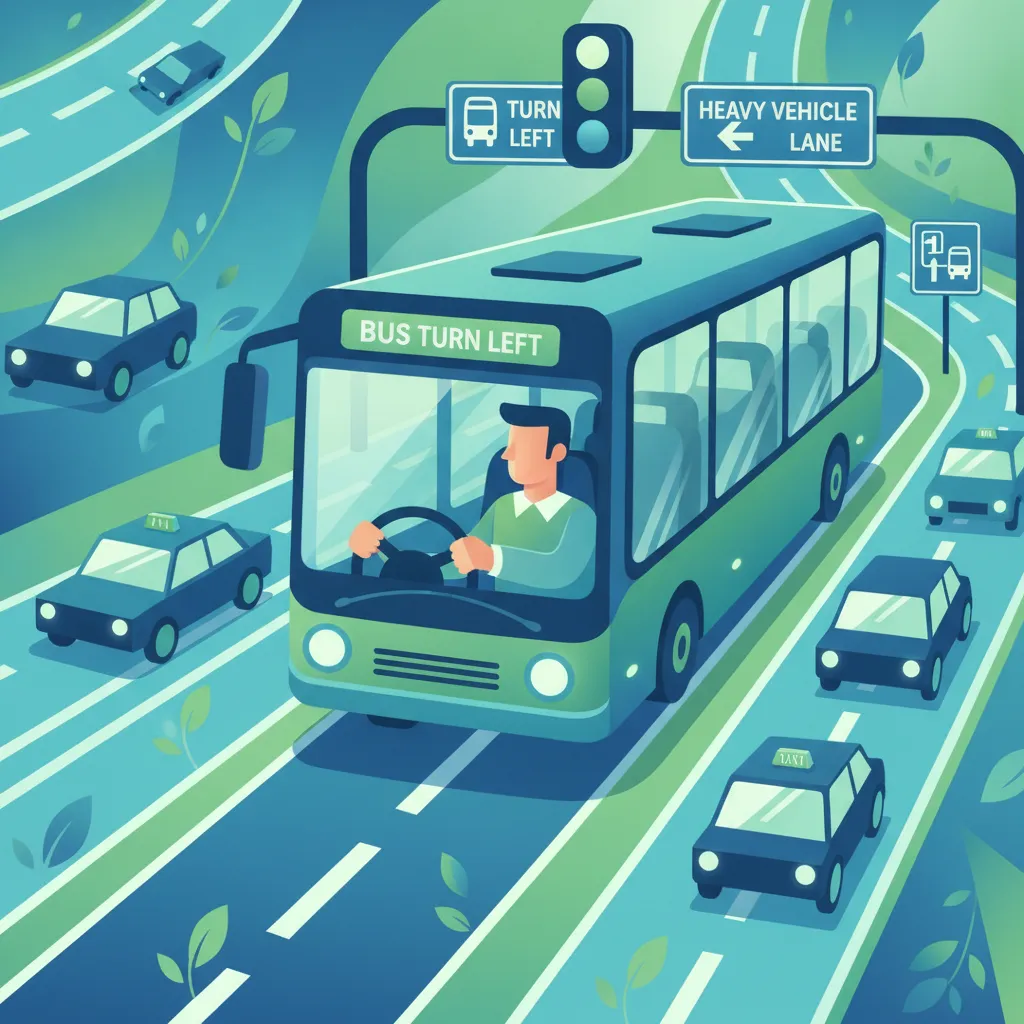
Learners will explore strategies for navigating congested urban traffic environments while operating large passenger vehicles. The lesson covers lane selection, adherence to traffic signals, and the use of bus lanes where applicable. Understanding how to maintain smooth traffic flow while ensuring passenger safety is crucial for efficient urban transportation.
This lesson focuses on the challenges and techniques required when maneuvering goods vehicles in confined spaces such as loading docks, narrow streets, and urban environments. It addresses the importance of spatial awareness, precision driving, and understanding vehicle dimensions to avoid collisions. Learners will explore strategies for effective parking, reversing, and handling blind spots safely.

This lesson focuses on the critical importance of lane discipline and proper lane usage for large goods vehicles. Learners will understand the challenges posed by wider vehicle dimensions, the necessity of maintaining adequate lane occupancy, and the need for precise lane keeping. Emphasis is placed on selecting appropriate lanes, adhering to traffic flow, and ensuring general highway safety.

This lesson examines the critical interactions between goods vehicles and vulnerable road users such as pedestrians, cyclists, and motorcyclists, particularly in urban environments. Learners will explore right-of-way rules, maintaining safe distances, and strategies for anticipating the actions of these road users. The lesson emphasizes the importance of clear communication and protective driving.

This lesson focuses on protecting vulnerable road users, such as pedestrians, cyclists, and motorcyclists, in mixed traffic environments. Learners will examine specific strategies for increased vigilance, anticipatory driving, and properly yielding to these users. The lesson also covers high-risk zones, such as school areas and public transport stops, emphasizing the need for heightened safety.

Learners will examine the complexities of operating in environments where various road users, including pedestrians, cyclists, and motorcyclists, coexist. The lesson emphasizes the need for heightened situational awareness, defensive driving techniques, and proactive hazard anticipation. Strategies for navigating mixed traffic safely, especially in congested urban areas, are highlighted.

Learners will explore the fundamentals of maintaining correct lane discipline, focusing on appropriate lane positioning, understanding lane markings, and executing lane changes safely. Emphasis is placed on the unique considerations for large passenger vehicles within the lane, such as width and maneuverability. The lesson also addresses the impact of proper lane discipline on overall traffic flow and safety.
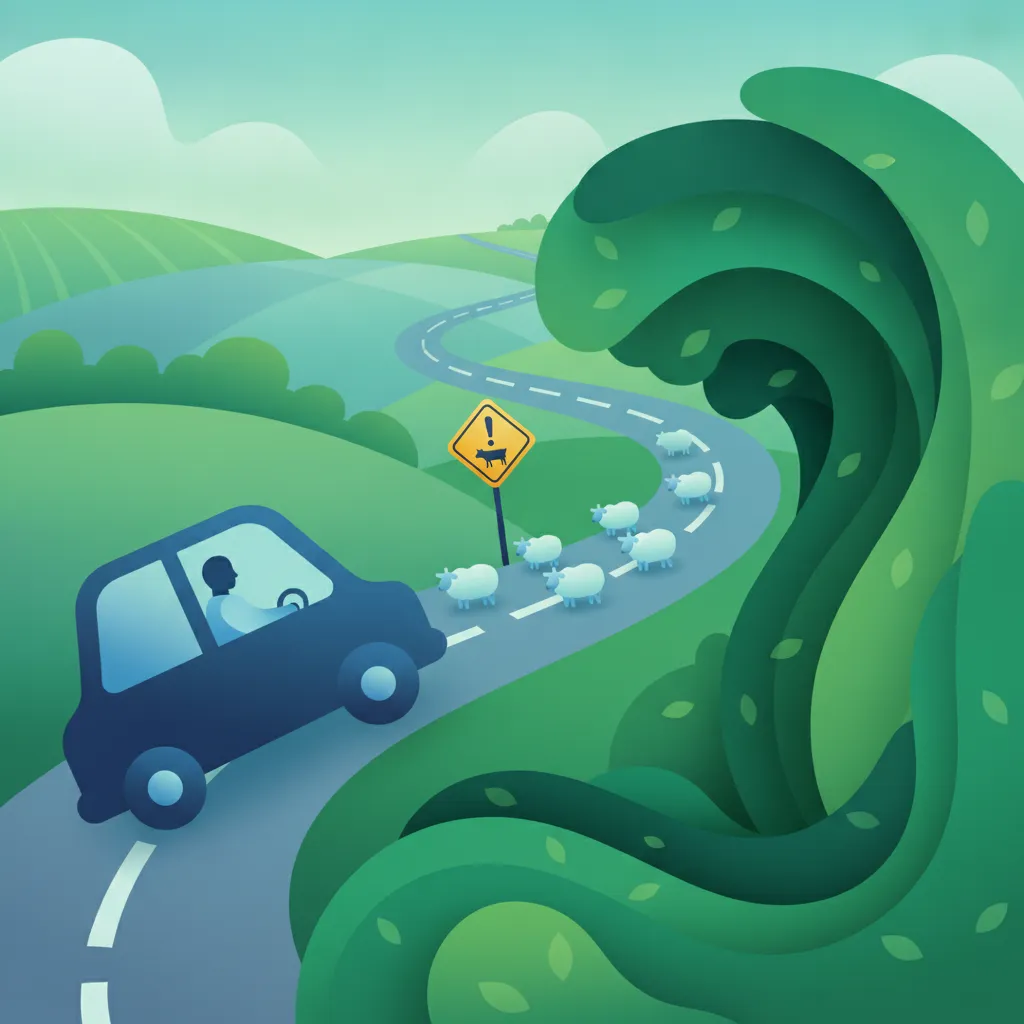
This lesson explores the unique challenges encountered when driving goods vehicles on rural roads, including narrow widths, sharp curves, animal crossings, and varying road surface conditions. Learners will understand the importance of adjusting speed, maintaining vigilance, and respecting road markings. Emphasis is placed on safe navigation practices to mitigate risks associated with rural areas.
Explore how cargo placement affects the center of gravity and braking performance of heavy vehicles on various road profiles. This lesson covers the mechanics of weight transfer, the importance of secure cargo, and how to maintain vehicle control under different load conditions during standard professional driving operations.
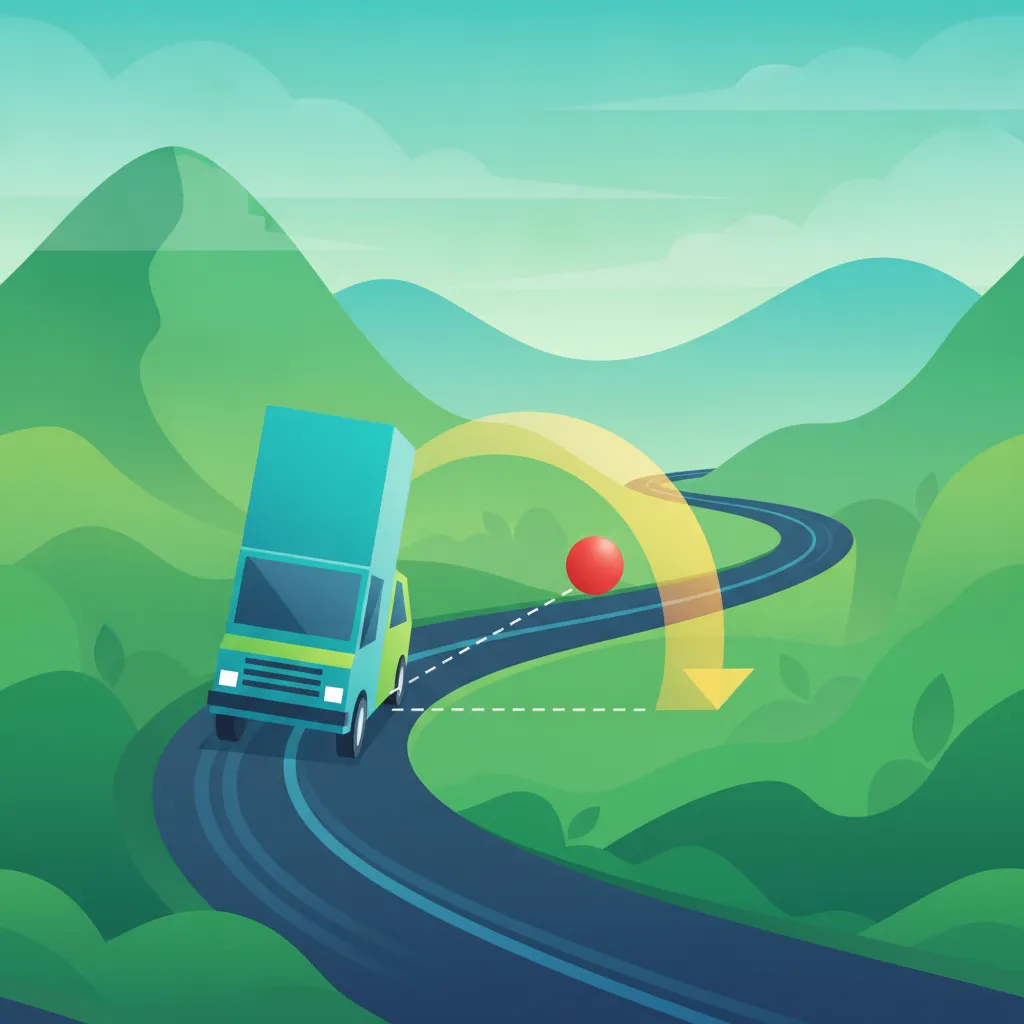
This lesson delves into the concept of centre of gravity and its critical impact on the stability of goods vehicles. Learners will explore how load height and distribution affect side and dynamic stability, particularly during braking, cornering, and evasive maneuvers. The lesson explains the increased rollover risk associated with a high centre of gravity and provides strategies for managing weight.

This lesson focuses on the essential principles of load planning and weight distribution for goods vehicles. Learners will understand how to assess cargo weight, determine optimal placement, and maintain a low centre of gravity to ensure vehicle stability. The lesson emphasizes legal load limits, the dangers of overloading, and the impact of uneven load distribution on handling and braking.
This lesson delves into the principles of weight distribution and load limits for goods vehicles, emphasizing the impact on vehicle stability and safety. It examines the concept of Gross Vehicle Weight (GVW) and the legal limits imposed on individual axles to prevent overloading. Learners will explore how improper weight distribution affects the centre of gravity, braking performance, and handling characteristics.

This lesson examines the effects of load dynamics on vehicle stability during acceleration and deceleration. Learners will learn how cargo can shift and affect handling, particularly during sudden speed changes or emergency braking situations. The lesson emphasizes proper load securing, gradual acceleration, and controlled braking to maintain stability and prevent serious accidents.
Find clear answers to common questions learners have about Controlling Vehicles on Grades and Slopes. Learn how the lesson is structured, which driving theory objectives it supports, and how it fits into the overall learning path of units and curriculum progression in Turkey. These explanations help you understand key concepts, lesson flow, and exam focused study goals.
Using engine braking and auxiliary retarders helps control your speed without relying solely on the service brakes. This prevents 'brake fade' due to overheating, which can lead to a complete loss of braking power for a heavy goods vehicle.
On an incline, you should use the parking brake to hold the vehicle stationary while you find the biting point or prepare to accelerate. Coordinate the release of the parking brake smoothly with the throttle to ensure a seamless forward movement without rollback.
You should generally choose the same gear you would use to climb the same hill. This uses the engine's compression to assist in speed management and keeps the vehicle within a safe, controlled speed range throughout the descent.
Heavier loads significantly increase the momentum and the force of gravity acting on the vehicle. This means your stopping distances are longer, and your need for effective engine braking and gear management is much more critical than when the vehicle is empty.
Use our comprehensive practice search to find exactly the Turkish driving theory questions you need to master. Whether reviewing specific road signs, traffic rules, or first aid scenarios, select your perfect practice set and boost your confidence for the official ehliyet sınavı.