
This lesson focuses on the critical manoeuvering skills required for operating large goods vehicles on Turkish roads. By mastering turn radius management and off-tracking, you will ensure safety when navigating tight intersections and corners as part of your professional driving qualifications.

Lesson content overview
Operating heavy goods vehicles (HGVs) under C1, C, C1E, or CE professional licenses in Turkey requires an advanced understanding of vehicle dynamics, spatial awareness, and legal regulations. Unlike passenger cars, large commercial vehicles cannot simply follow the contour of a curve. Due to their extended wheelbases, high centers of gravity, and massive payloads, turning an HGV demands calculated path adjustments, precise speed control, and proactive communication with other road users.
This lesson covers the principles of turning radius management, off-tracking, the impact of load distribution, and the legal frameworks established under the Turkish Highway Traffic Regulation (Karayolları Trafik Yönetmeliği).
Every turn executed by a heavy vehicle involves a complex interplay of physical forces, structural dimensions, and spatial demands. To navigate intersections, roundabouts, and sharp bends safely, professional drivers must understand how their specific vehicle configuration behaves when the steering axle changes direction.
The turning radius (dönüş çapı) is defined as the minimum circular turn a vehicle can execute, measured from the center of the turning circle to the outermost tire footprint. For commercial transport planning and safe operation, we must distinguish between two main types of turning radii:
Understanding the overall vehicle turn radius is critical because front and rear overhangs sweep through additional space during a turn. If a driver only monitors their wheels, the front corner of the cab or the rear of the trailer could collide with traffic lights, utility poles, or pedestrians on the sidewalk. While a passenger car typically requires a turning radius of only 5 meters, a fully loaded rigid or articulated truck may require a radius of 12 meters or more to clear an obstacle.
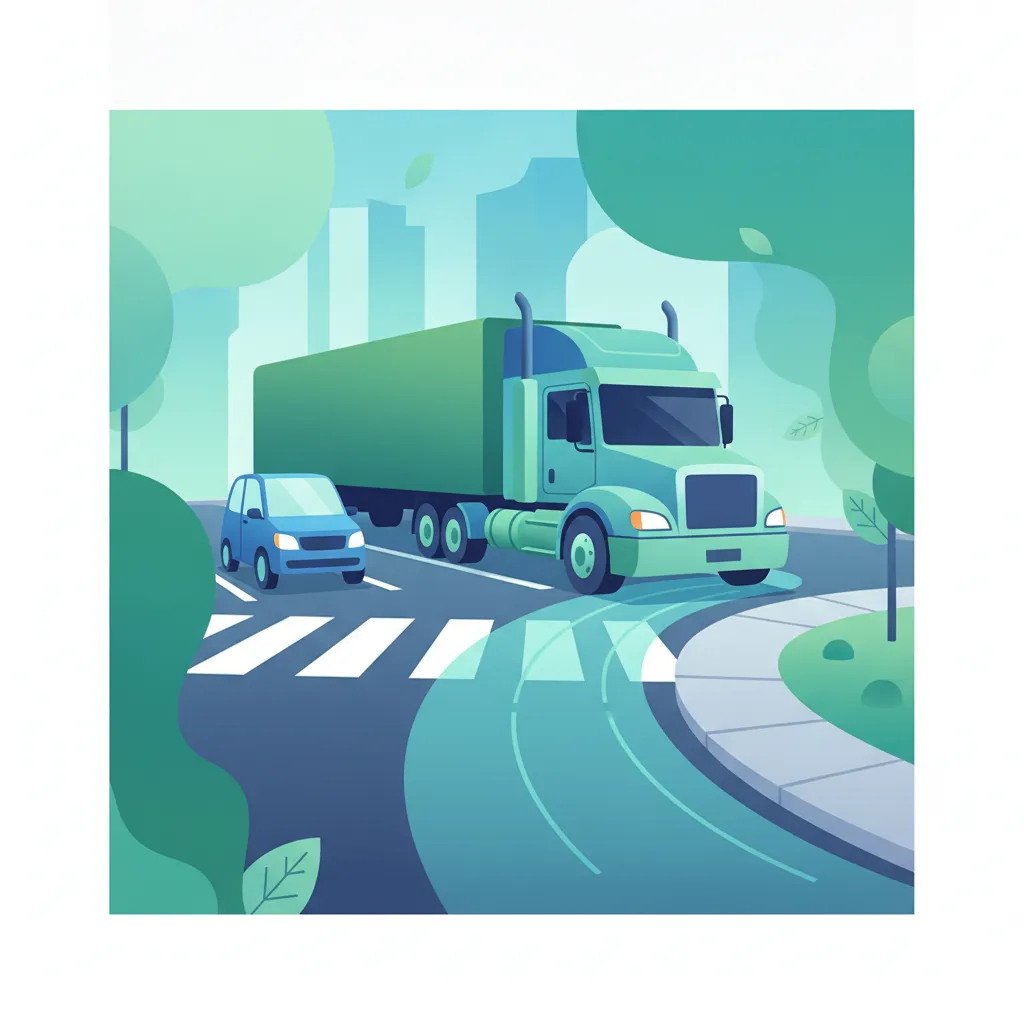
One of the most significant challenges in heavy vehicle handling is off-tracking (dingil sapması or iz genişlemesi). This is the physical phenomenon where the rear wheels of a vehicle do not follow the exact same path as the front wheels during a turn.
The structural phenomenon where the rear wheels of a vehicle follow a different, often wider or tighter swept path than the front wheels during a turn, requiring the driver to compensate by steering wide.
Off-Tracking manifests differently depending on the vehicle's speed and configuration:
For drivers of C1E and CE category articulated vehicles (trucks pulling semi-trailers or full drawbar trailers), off-tracking is significantly amplified. The articulation joint (fifth wheel or drawbar coupling) creates multiple pivot points.
During a tight 90-degree turn, the rear trailer axles can deviate inward by up to 1 to 1.5 meters from the tractor's path. Failing to compensate for this deviation is a primary cause of collisions with curbs, traffic signs, and stationary vehicles at intersections.
A vehicle's turning capability is not determined solely by its steering geometry; it is heavily influenced by how its cargo is loaded and secured.
As a vehicle enters a turn, centrifugal force acts upon its mass, pushing the vehicle outward away from the center of the turn. The intensity of this force is directly proportional to the vehicle's speed and weight, and inversely proportional to the radius of the turn.
If cargo is loaded too high, the vehicle’s center of gravity (ağırlık merkezi) rises. A high center of gravity drastically reduces lateral stability, making the vehicle highly susceptible to body roll and rollover (devrilme), even at low speeds.
Uneven lateral load distribution (having more weight on one side of the vehicle than the other) creates unbalanced friction and tire grip.
Load Shifts: Liquid cargos in partially filled tankers (sloshing effect) and suspended live animal cargos pose the highest risk of dynamic weight shifting during turns. Drivers must execute turns with extreme gentleness and reduced speeds when transporting these loads.
Proper speed management is the most effective tool a professional driver has to counter the forces of off-tracking and rollover. Speed must always be adjusted before entering the turn, not while the vehicle is in the middle of it.
Drivers should employ the following sequence when approaching a turn:
Assess the Corner: Evaluate the sharpness of the turn, the road surface condition, and visible hazards (such as pedestrians or parked vehicles).
Brake in a Straight Line: Apply the service brakes or auxiliary retarder while the wheels are still straight. This maintains maximum vehicle stability.
Select the Correct Gear: Downshift to a gear that provides sufficient engine torque to pull the vehicle smoothly through the turn without requiring mid-corner gear changes.
Release the Brake and Steer: Enter the turn at a steady, low speed, maintaining a small, consistent throttle input to stabilize the chassis.
In urban environments in Turkey, the recommended maximum speed for executing tight, 90-degree turns is 15 km/h. This low speed provides the driver with sufficient time to monitor blind spots and react to vulnerable road users.
The Turkish Highway Traffic Regulation (Karayolları Trafik Yönetmeliği) mandates strict protocols for heavy vehicles when changing direction or navigating intersections.
Communication is vital when operating a vehicle that requires extra road space. Heavy vehicle drivers must activate their turn signals at least 5 seconds before initiating any turning maneuver or lane change.
This early warning is mandatory because:
According to Turkish traffic laws, a turning vehicle must not encroach on adjacent lanes or mount sidewalks. For a large truck, this requires a delicate balance:
Failing to apply correct turning strategies results in serious traffic violations, vehicle damage, and high-risk accidents.
| Common Violation | Physical & Safety Consequence | Legal Status / Penalty (Turkey) |
|---|---|---|
| Late Signaling | Other road users cannot anticipate the turn, leading to rear-end collisions. | Subject to traffic fines for improper signaling. |
| Exceeding Turn Speed | Causes high-speed off-tracking, lane drift, skidding, or complete vehicle rollover. | Subject to reckless driving charges and liability. |
| Ignoring Off-Tracking | Rear wheels climb the curb, striking pedestrians, signs, or damaging tires. | Direct violation of lane discipline and property damage. |
| Improper Lane Positioning | Starting a turn from the wrong lane, trapping smaller vehicles in blind spots. | Subject to fines for lane violation (Şerit İhlali). |
| Uneven Axle Loading | Causes the vehicle to slip or drift outward from its intended turning arc. | Subject to axle weight overload penalties at inspection stations (Ulaştırma Bakanlığı Denetimi). |
When traction is compromised by rain, snow, or black ice (gizli buzlanma), the risk of lateral skidding increases exponentially.
Urban deliveries require extreme vigilance due to narrow streets, tight corner radiuses, and high pedestrian density. Rural roads often feature wider intersections but may present softer road shoulders. HGV drivers must avoid placing their heavy rear axles on unpaved shoulders during a turn, as the weight can cause the ground to collapse, leading to vehicle tip-overs.
Explore all units and lessons included in this driving theory course.
Lesson content overview
Explore all units and lessons included in this driving theory course.
Explore search topics learners often look for when studying Turning Strategies and Turn Radius Management. These topics reflect common questions about road rules, driving situations, safety guidance, and lesson level theory preparation for learners in Turkey.
Browse additional driving theory lessons that cover connected traffic rules, road signs, and common driving situations related to this topic. Improve your understanding of how different rules interact across everyday traffic scenarios.
Learn the legal requirements and safety protocols for lane usage with heavy goods vehicles. This guide explains how to maintain proper road position in urban and highway environments while navigating multi-lane roads according to the Turkish Highway Traffic Regulation.

This lesson focuses on the critical importance of lane discipline and proper lane usage for large goods vehicles. Learners will understand the challenges posed by wider vehicle dimensions, the necessity of maintaining adequate lane occupancy, and the need for precise lane keeping. Emphasis is placed on selecting appropriate lanes, adhering to traffic flow, and ensuring general highway safety.

Learners will explore the fundamentals of maintaining correct lane discipline, focusing on appropriate lane positioning, understanding lane markings, and executing lane changes safely. Emphasis is placed on the unique considerations for large passenger vehicles within the lane, such as width and maneuverability. The lesson also addresses the impact of proper lane discipline on overall traffic flow and safety.

This lesson focuses on the importance of maintaining safe following distances for goods vehicles, taking into account longer braking distances and increased load. Learners will learn how to calculate appropriate gaps based on speed, road conditions, and vehicle dynamics. The lesson emphasizes safe following practices to prevent rear-end collisions and improve overall traffic safety in Turkey.
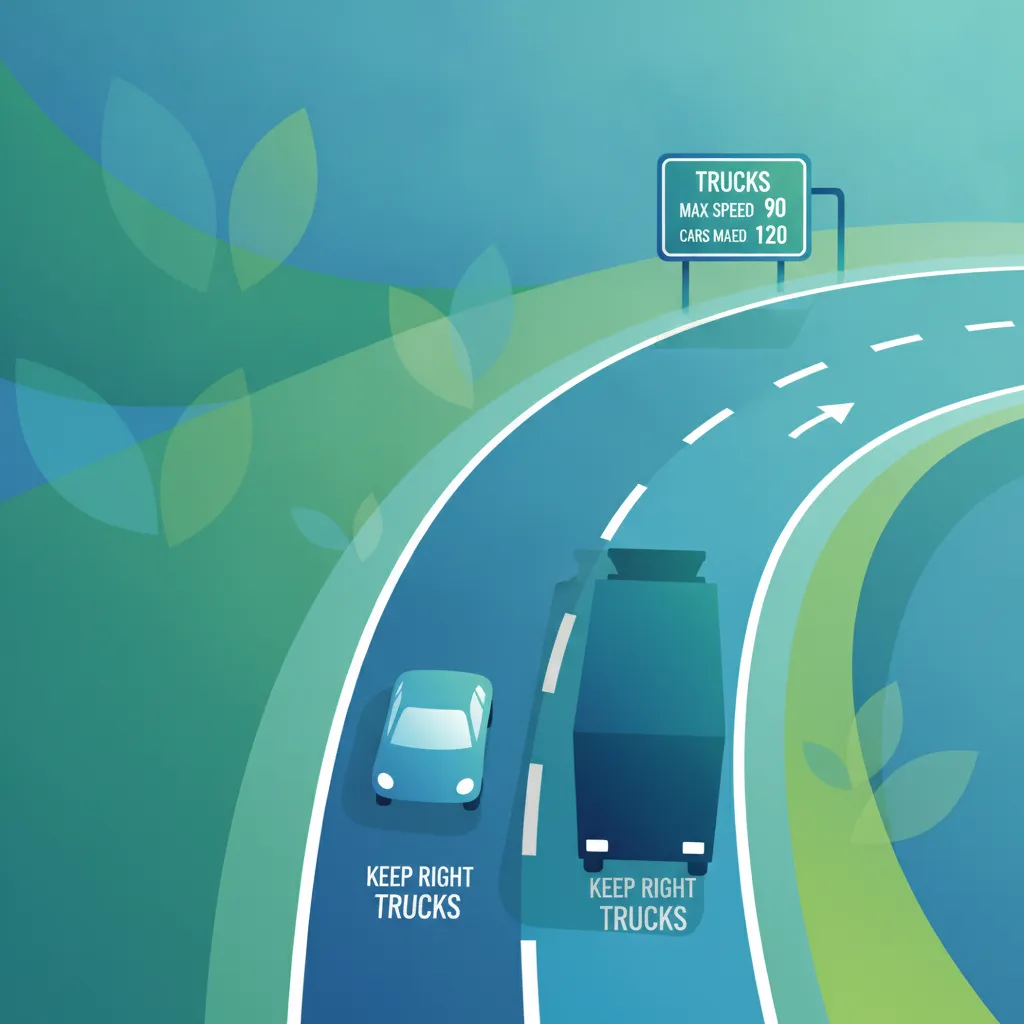
This lesson addresses the specific considerations for goods vehicle operation on highways and expressways, covering speed limits, lane discipline, safe merging, and overtaking. Learners will learn how to adapt to traffic flow, manage heavy vehicle dynamics at higher speeds, and ensure safe operation. The lesson emphasizes the importance of vigilance and proper lane usage to prevent accidents.

This lesson provides a detailed overview of the classification system for goods vehicles in Turkey, focusing on the specific dimensional limits for each category. Learners will become familiar with the maximum allowable length, width, and height for these vehicles, as defined by Turkish law. Understanding these limits is crucial for ensuring compliance with road regulations and avoiding serious violations.
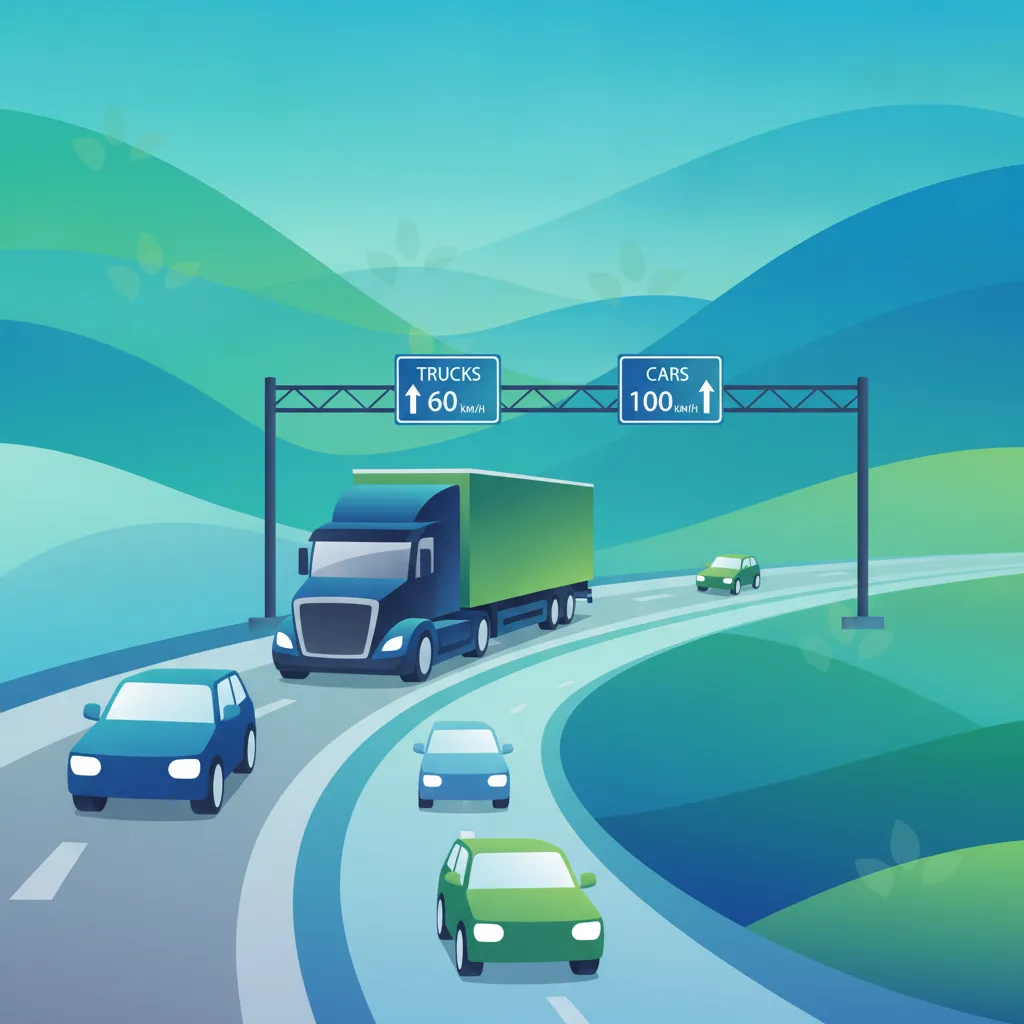
This lesson focuses on speed regulation for goods vehicles, highlighting how vehicle weight, load, and road conditions influence safe operating speeds. Learners will understand legal speed limits for various road types and the necessity of adapting speed to traffic flow and environmental conditions. The lesson also emphasizes the importance of maintaining appropriate speed to ensure vehicle control.
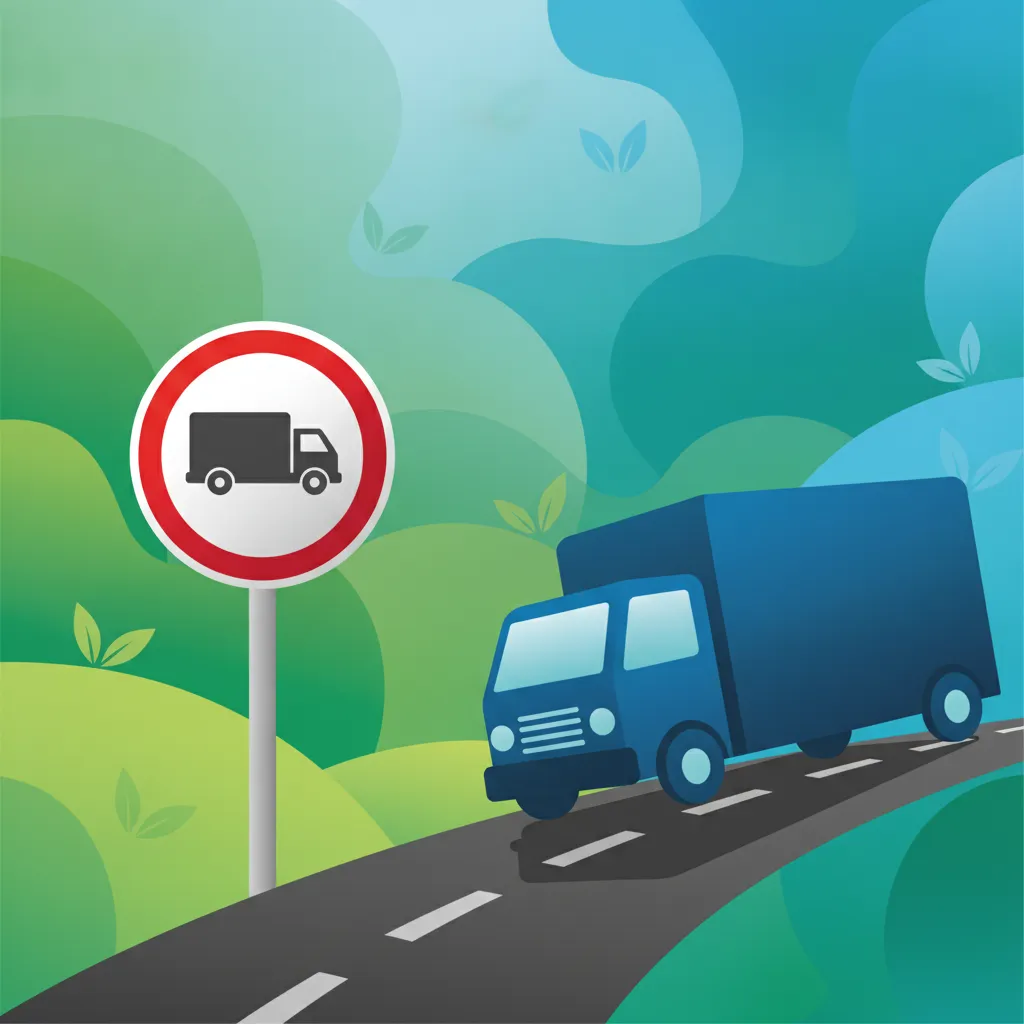
This lesson focuses on traffic signs and road markings that are specifically relevant to goods vehicles in Turkey. Learners will become familiar with signs indicating prohibited routes, weight limits, height restrictions, hazardous material transport, and lane usage regulations. The lesson emphasizes the importance of accurately interpreting these signs to ensure compliance with traffic laws.
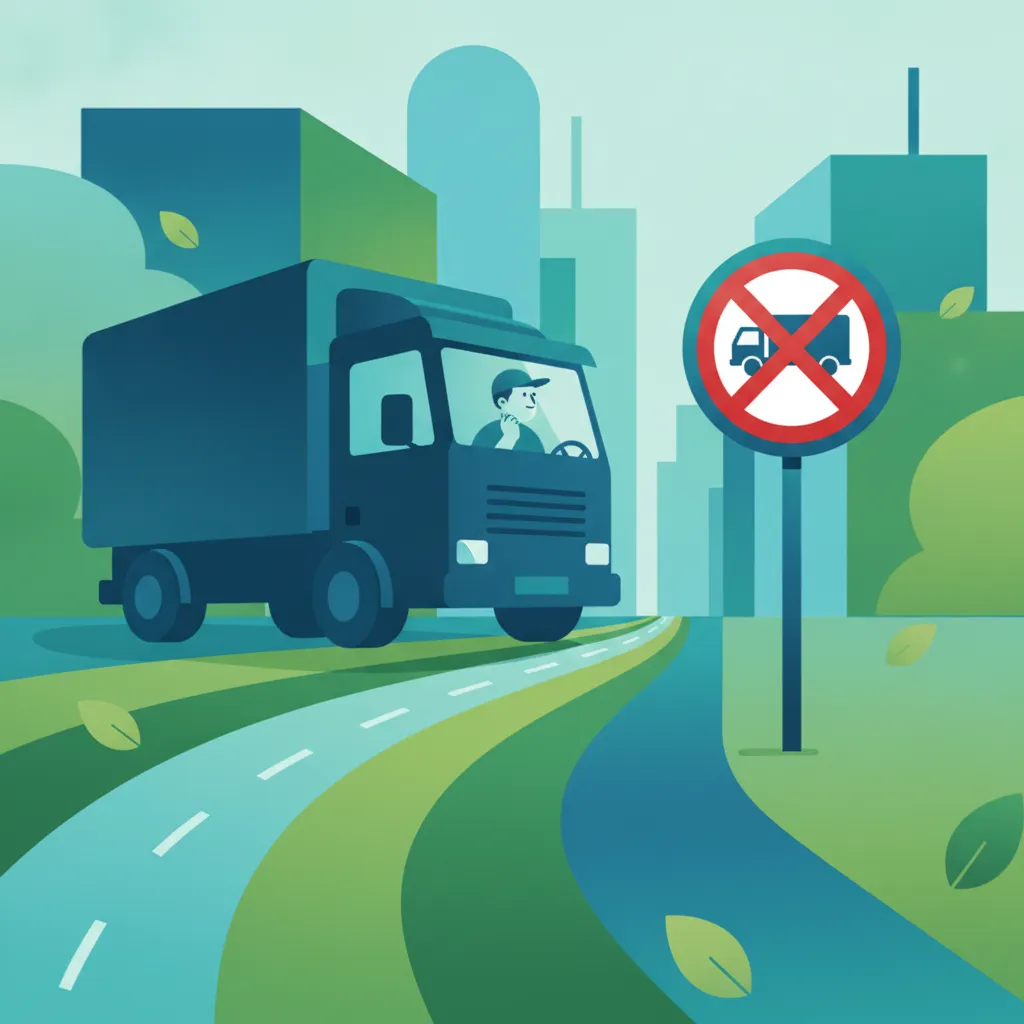
This lesson focuses on the various access restrictions imposed on heavy goods vehicles within Turkish road networks. Learners will understand the reasons for restrictions such as low bridge clearances, tunnel usage, construction zones, and urban delivery area limitations. The lesson also covers how to recognize and comply with legal notices and signage indicating restricted commercial zones.
This lesson examines the specific road space requirements necessary for large goods vehicles to operate safely and efficiently. Topics include the need for adequate lane width, lateral clearance, and turning lanes to accommodate wider and longer vehicles. Learners will explore the proper use of shoulders, overtaking procedures, and the impact of large vehicles on overall road capacity in traffic.

This lesson focuses on the essential principles of load planning and weight distribution for goods vehicles. Learners will understand how to assess cargo weight, determine optimal placement, and maintain a low centre of gravity to ensure vehicle stability. The lesson emphasizes legal load limits, the dangers of overloading, and the impact of uneven load distribution on handling and braking.
Examine the specific hazards faced by heavy vehicle drivers in dense urban areas. This lesson focuses on safely navigating intersections, managing blind spots, and interacting with pedestrians and cyclists to reduce accident risks during daily delivery operations in Turkey.

This lesson explores the unique challenges faced during urban deliveries, such as navigating restricted loading zones, traffic congestion, and narrow streets. Learners will learn strategies for safe maneuvering, efficient loading and unloading, and maintaining situational awareness in high-pedestrian traffic areas. Emphasis is placed on complying with local regulations and optimizing time management.
Find clear answers to common questions learners have about Turning Strategies and Turn Radius Management. Learn how the lesson is structured, which driving theory objectives it supports, and how it fits into the overall learning path of units and curriculum progression in Turkey. These explanations help you understand key concepts, lesson flow, and exam focused study goals.
Because of their length and wheelbase, large goods vehicles exhibit 'off-tracking,' where the rear wheels follow a tighter path than the front wheels. Failing to compensate for this can cause the trailer to mount the curb or collide with obstacles.
A high center of gravity increases the risk of instability during a turn, especially at higher speeds. Proper load distribution ensures your vehicle remains balanced, making steering more predictable and reducing the risk of rollover.
Always check your mirrors and blind spots for vulnerable road users like cyclists or motorcyclists who may attempt to squeeze into the space between your vehicle and the curb during your turn.
Yes, many roads in Turkish city centers have weight or length restrictions. Always look for signage indicating where heavy vehicles are prohibited from turning to avoid fines and dangerous situations.
Use our comprehensive practice search to find exactly the Turkish driving theory questions you need to master. Whether reviewing specific road signs, traffic rules, or first aid scenarios, select your perfect practice set and boost your confidence for the official ehliyet sınavı.