
This lesson guides you through the critical techniques required to operate heavy goods vehicles safely during adverse weather conditions. Building on your knowledge of vehicle control, you will learn how to adapt your driving for rain, fog, snow, and wind to pass your professional C-category theory exam.

Lesson content overview
Operating heavy goods vehicles, such as those requiring C1, C, C1E, or CE licenses, is a highly demanding professional task. When adverse weather conditions strike, the physical challenges and safety risks multiply exponentially. For professional drivers operating under the Turkish Highway Traffic Regulation (Karayolları Trafik Yönetmeliği), adapting to environmental changes is not just a safety recommendation—it is a strict legal obligation.
This lesson provides a comprehensive guide to navigating rain, fog, snow, ice, and strong winds. It explains the physical principles of vehicle control, lighting requirements, and safety strategies necessary to operate commercial vehicles safely across Turkey’s diverse road network, from wet coastal highways to icy mountain passes.
Traction is the frictional force between your vehicle’s tires and the road surface. It is the single physical link that allows you to accelerate, steer, and brake. When weather conditions deteriorate, this grip is severely compromised.
On a dry, clean asphalt road, the coefficient of friction is high, allowing for maximum control. However, when water, ice, or snow covers the road surface, a barrier forms between the rubber and the asphalt.
Hydroplaning occurs when a sheet of water builds up between the tire tread and the road surface. When the tire cannot displace the water quickly enough, the tire actually lifts off the pavement and floats on a thin cushion of water.
During hydroplaning, you lose all steering and braking control. For heavy goods vehicles, hydroplaning is influenced by:
A dangerous driving condition where a layer of water builds up between the vehicle's tires and the road surface, causing a complete loss of traction and rendering steering and braking ineffective.
Operating a heavy vehicle requires a clear line of sight to detect hazards, read traffic signs, and maintain lane positioning. Adverse weather directly degrades visibility, reducing your hazard perception and reaction time.
Turkish traffic regulations strictly define which lights must be active during periods of reduced visibility. Professional drivers must master these rules to ensure they can see and, equally importantly, be seen by others.
Fog Light Regulation: Only activate fog lights when visibility is severely restricted. Keep your dipped beams active simultaneously, and turn off your fog lights as soon as the weather clears to avoid blinding other road users.
Your windshield wipers and washers must be fully operational before departing.
Winter driving in Turkey presents extreme challenges, particularly when traversing high-altitude mountain passes such as the Bolu Mountain Pass (Bolu Dağı Geçidi) or the Taurus Mountains (Toroslar). Operating a C or CE category commercial vehicle in these conditions requires specialized handling techniques.
Do Not Panic or Slam the Brakes: Hard braking locks the wheels, worsening the slide and eliminating steering control.
Depress the Clutch (Manual Vehicles): Disengaging the engine from the drive wheels stops any engine-induced wheel spin or drag, allowing the tires to regain rolling grip.
Steer Gently into the Slide: Point your front tires in the direction you want the vehicle to go. If the rear of the truck is sliding to the right, steer gently to the right.
Avoid Sudden Over-Correction: Sharp, panicked steering adjustments will whip the vehicle in the opposite direction, potentially leading to a jackknife event in trailer combinations.
To ensure safety and maintain traffic flow, Turkey mandates winter tires (kış lastiği) for all commercial goods and passenger vehicles transporting cargo or passengers on intercity roads between December 1st and April 1st of each year.
Heavy goods vehicles are often equipped with auxiliary braking systems, such as engine brakes or retarders. While these are excellent for speed management on dry downhill gradients, they present a massive hazard on icy or snowy surfaces.
Using a retarder or strong engine braking on a slippery road can instantly lock up the drive axle wheels. Because these auxiliary brakes only apply retarding force to the drive wheels (and not the steer or trailer wheels), a drive-axle lockup can cause the drive wheels to lose lateral traction, resulting in an immediate jackknife (makaslama) or spin-out.
High-sided goods vehicles, such as box trucks, curtain-sided trailers, and double-deck vehicle transporters, present a massive surface area to lateral winds. Driving these vehicles during windstorms requires constant vigilance and specialized handling.
When strong winds blow perpendicular to your path of travel, they exert a continuous lateral force on your vehicle.
Crosswinds are rarely constant. They are highly dangerous when they transition from shielded to exposed environments.
The single most effective defense against adverse weather conditions is the active modification of your speed and following distance. Many professional drivers make the critical error of maintaining standard legal speeds during heavy rain or fog, assuming their modern vehicles will compensate.
Turkish speed limits for heavy goods vehicles are set for ideal driving conditions. In adverse weather, you must reduce your speed below these limits.
Your following distance under normal, dry conditions should be a minimum of 2 seconds (or the distance covered in 2 seconds at your current speed). In adverse weather, your reaction time remains the same, but your vehicle’s physical braking distance increases dramatically.
| Road Condition | Recommended Following Distance (Seconds) | Rationale |
|---|---|---|
| Dry Road | 2 Seconds | Standard reaction and braking buffer. |
| Wet Road / Heavy Rain | 4 Seconds (Double) | Compensates for reduced friction and wet brake drums/discs. |
| Packed Snow | 6 to 8 Seconds | Accounts for low tire traction and delayed braking response. |
| Icy Road / Black Ice | 10+ Seconds | Extreme risk of wheel lock; requires maximum available stopping space. |
Understanding where drivers fail helps you avoid identical mistakes. Ensure you recognize these critical scenarios:
Imagine you are driving a fully loaded articulated truck (CE license) on the O-4 highway from Istanbul to Ankara. Suddenly, a severe summer downpour begins, and water starts pooling in the right-hand lane.
You are operating a rigid goods vehicle (C license) carrying perishable cargo through a mountain pass in western Turkey. The fog becomes so dense that you can only see road markings for 40 metres ahead.
You are driving a delivery vehicle down a winding rural road in eastern Turkey during mid-winter. The temperature is -3°C, and parts of the road run through heavily shaded forest areas.
Explore all units and lessons included in this driving theory course.
Lesson content overview
Explore all units and lessons included in this driving theory course.
Explore search topics learners often look for when studying Driving in Adverse Weather Conditions. These topics reflect common questions about road rules, driving situations, safety guidance, and lesson level theory preparation for learners in Turkey.
Browse additional driving theory lessons that cover connected traffic rules, road signs, and common driving situations related to this topic. Improve your understanding of how different rules interact across everyday traffic scenarios.
Learn the specific traffic rules and safety conventions for operating heavy goods vehicles on Turkish motorways. This guide covers lane discipline, overtaking regulations, exit strategies, and managing vehicle stability during high-speed travel on intercity highways.
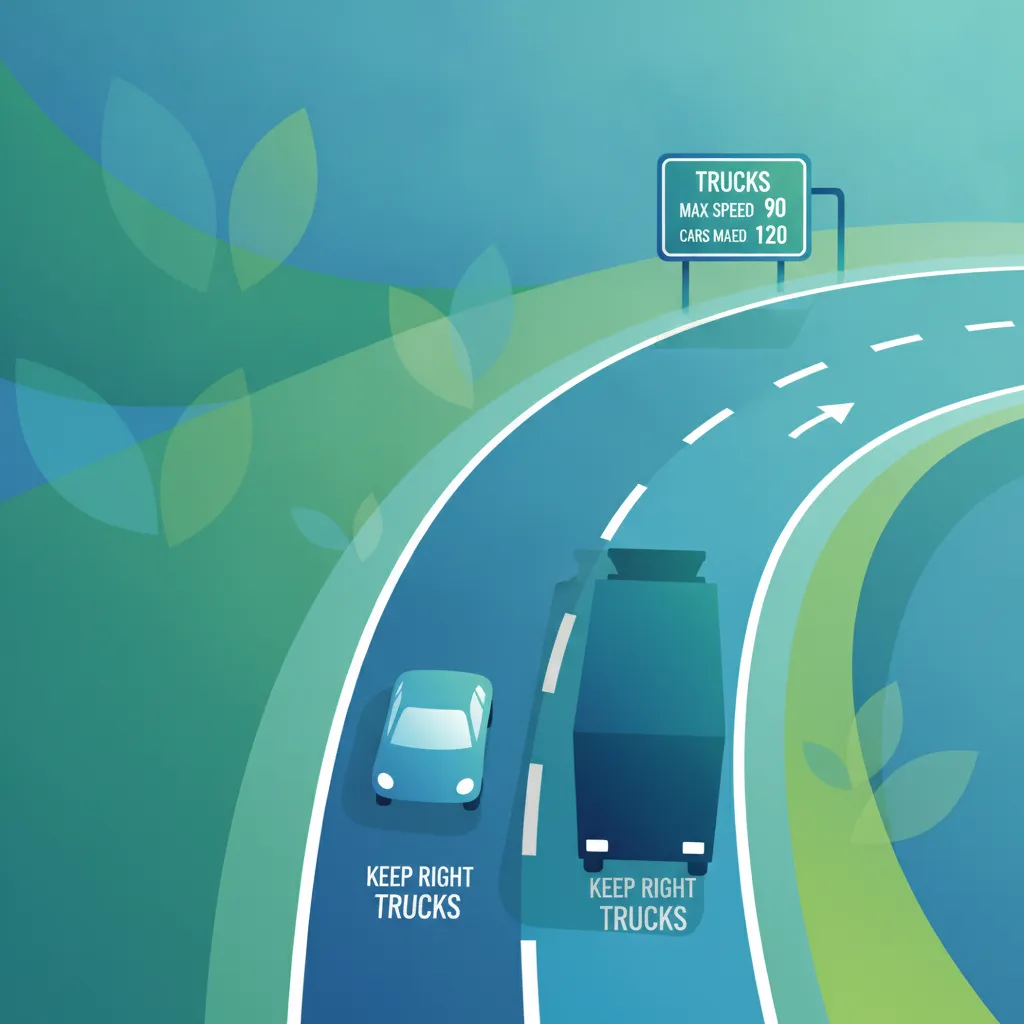
This lesson addresses the specific considerations for goods vehicle operation on highways and expressways, covering speed limits, lane discipline, safe merging, and overtaking. Learners will learn how to adapt to traffic flow, manage heavy vehicle dynamics at higher speeds, and ensure safe operation. The lesson emphasizes the importance of vigilance and proper lane usage to prevent accidents.
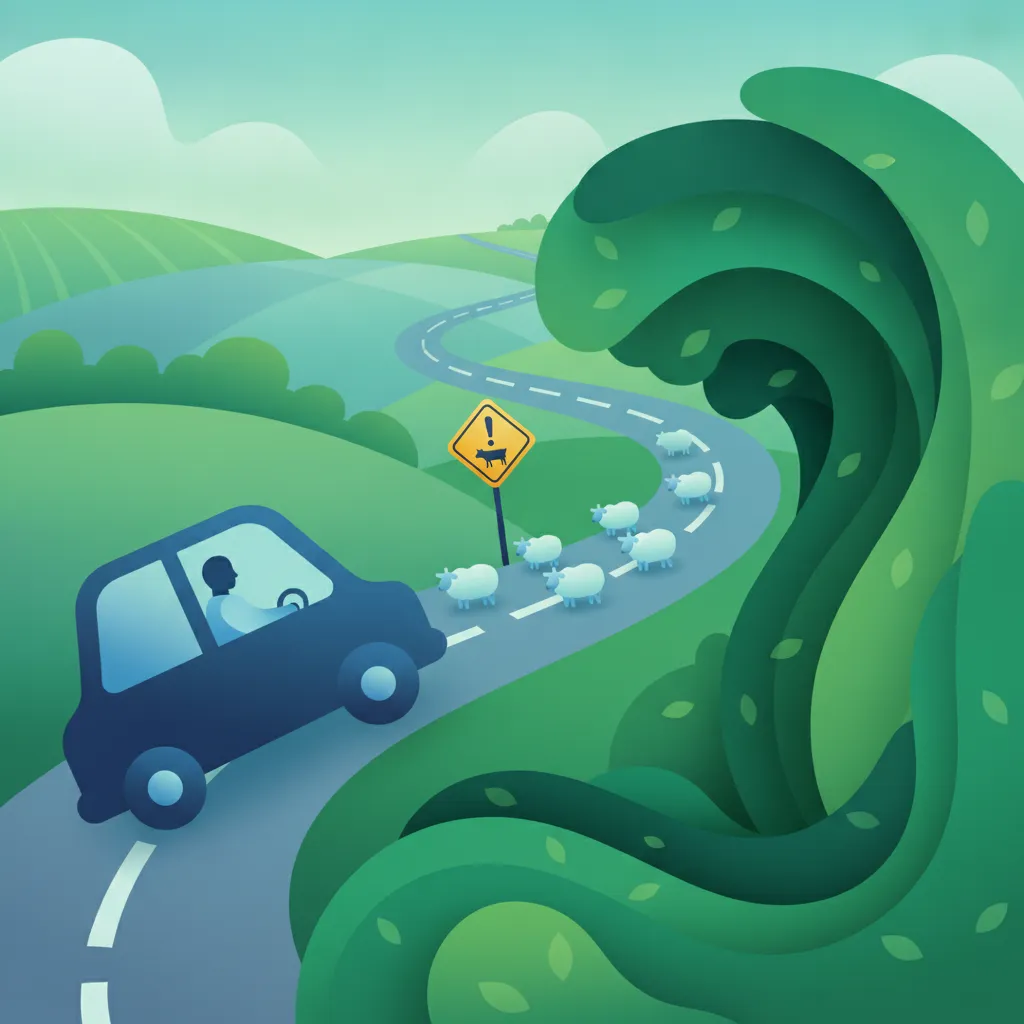
This lesson explores the unique challenges encountered when driving goods vehicles on rural roads, including narrow widths, sharp curves, animal crossings, and varying road surface conditions. Learners will understand the importance of adjusting speed, maintaining vigilance, and respecting road markings. Emphasis is placed on safe navigation practices to mitigate risks associated with rural areas.
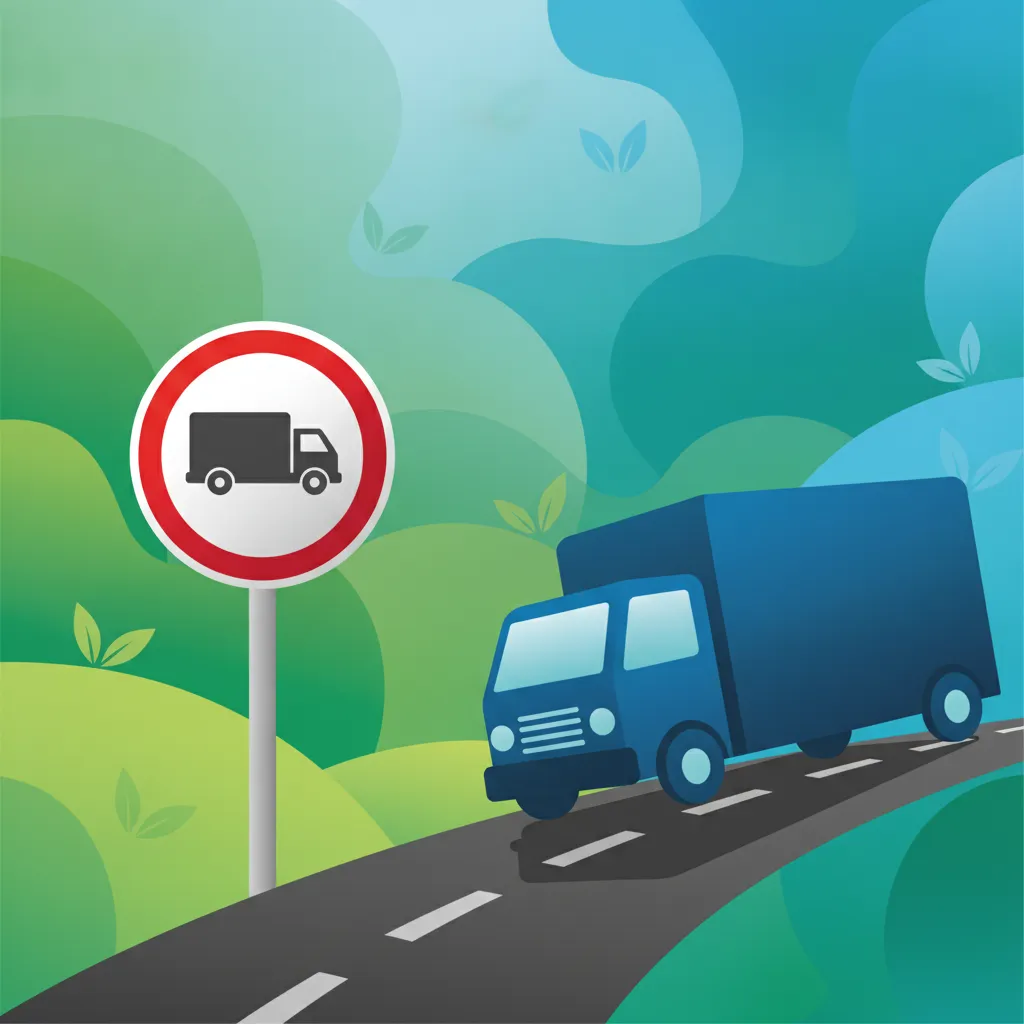
This lesson focuses on traffic signs and road markings that are specifically relevant to goods vehicles in Turkey. Learners will become familiar with signs indicating prohibited routes, weight limits, height restrictions, hazardous material transport, and lane usage regulations. The lesson emphasizes the importance of accurately interpreting these signs to ensure compliance with traffic laws.

This lesson focuses on the unique requirements and best practices for operating passenger vehicles on highways and expressways. Topics include maintaining appropriate speed, adhering to lane discipline, executing safe overtaking maneuvers, and managing merges and exits. Emphasis is placed on ensuring a smooth ride for passengers while integrating safely with faster-moving traffic.

This lesson focuses on the importance of maintaining safe following distances for goods vehicles, taking into account longer braking distances and increased load. Learners will learn how to calculate appropriate gaps based on speed, road conditions, and vehicle dynamics. The lesson emphasizes safe following practices to prevent rear-end collisions and improve overall traffic safety in Turkey.
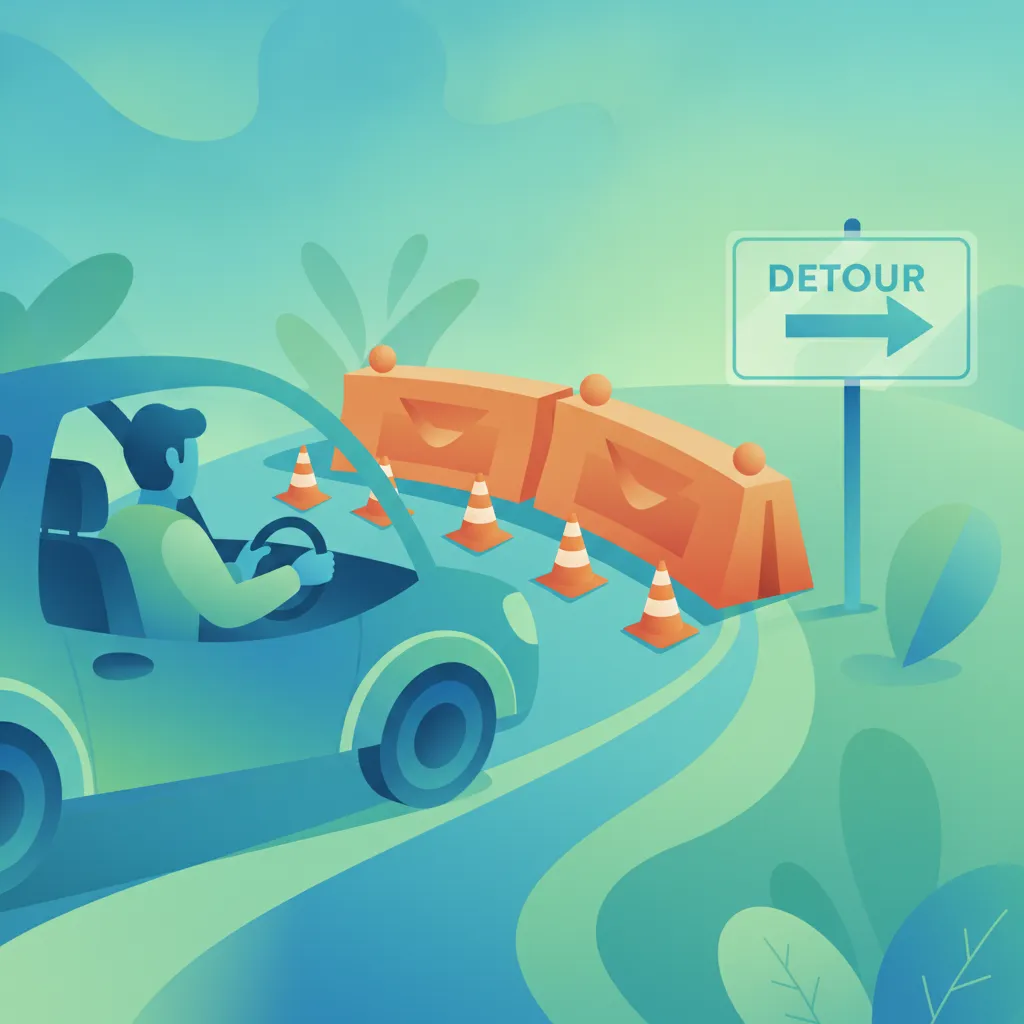
This lesson focuses on effectively managing road closures and detours that affect goods vehicle routes. Learners will explore strategies for obtaining real-time information, updating navigation systems, and planning alternate routes to maintain efficiency and compliance. Emphasis is placed on safety considerations, communication with dispatch centers, and adhering to traffic management.
This lesson focuses on the safe navigation of goods vehicles through roadworks and construction zones. Learners will examine the importance of recognizing temporary signs, adhering to reduced speed limits, and maintaining heightened caution around workers and equipment. The lesson emphasizes the need for special attention due to the altered road environment and hazards specific to heavy vehicles.
This lesson explains the specific rules, driving etiquette, and safety protocols for operating a vehicle on high-speed Turkish motorways. It covers correct lane usage, overtaking procedures, emergency lane restrictions, and how to maintain consistent high speeds safely. Drivers will learn to avoid dangerous tailgating and sudden lane changes.
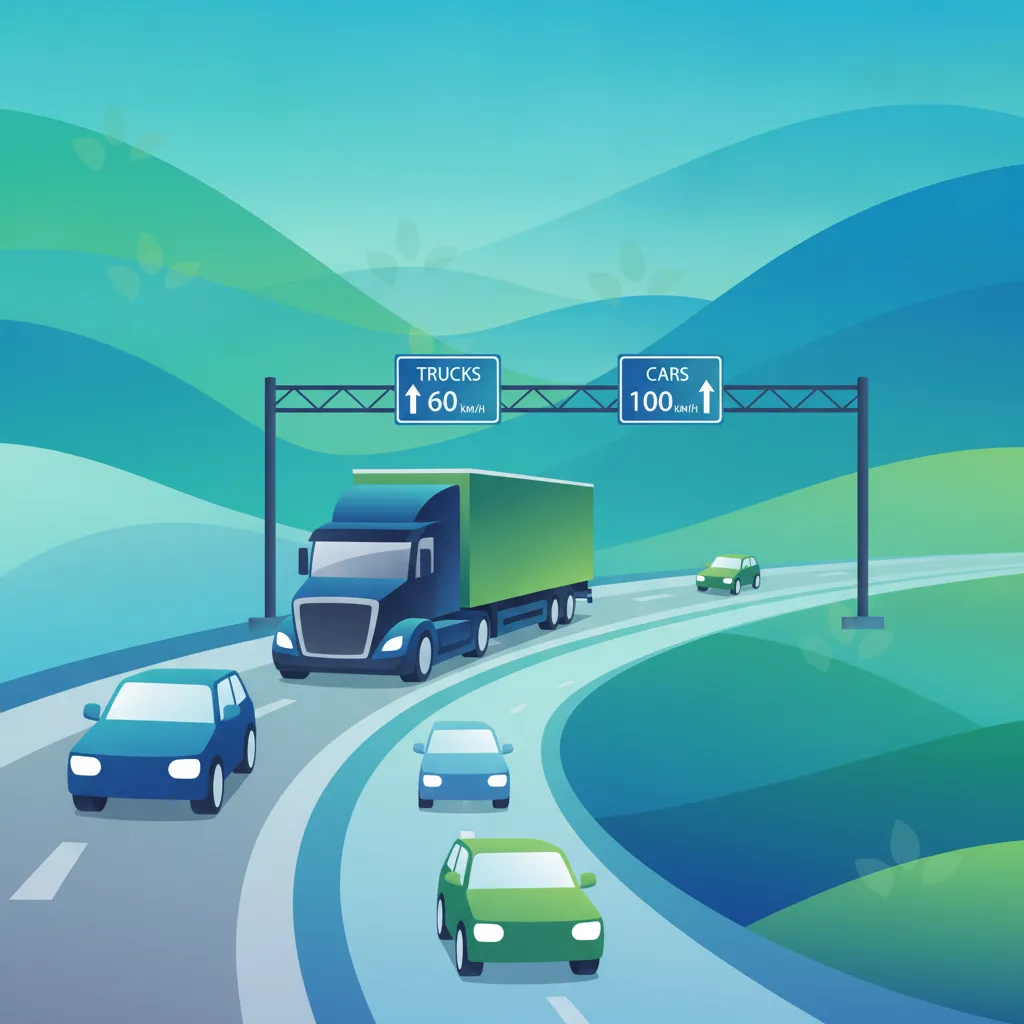
This lesson focuses on speed regulation for goods vehicles, highlighting how vehicle weight, load, and road conditions influence safe operating speeds. Learners will understand legal speed limits for various road types and the necessity of adapting speed to traffic flow and environmental conditions. The lesson also emphasizes the importance of maintaining appropriate speed to ensure vehicle control.
This lesson explores the legal and practical aspects of route planning for goods vehicles, emphasizing the importance of selecting suitable routes that adhere to road restrictions. Learners will learn how to identify roads with weight limits, height clearance, and prohibited zones for heavy vehicles. They will also discover how to use navigation systems and truck-specific GPS effectively.
Improve your hazard awareness by understanding the typical risks encountered by professional drivers in Turkey. This lesson explores the identification of blind spots, interactions with vulnerable road users, and proactive safety measures for navigating complex traffic environments and urban delivery zones.
This lesson examines the integral role of the goods vehicle driver in contributing to overall traffic safety and a positive safety culture. It focuses on proactive driving behaviors, hazard identification, and effective risk management strategies. Communication techniques with other road users, compliance with traffic flow regulations, and competent emergency responses are highlighted as essential skills.

Learners will identify the different categories of vulnerable road users and understand the heightened risks they face. The lesson emphasizes the importance of recognizing these users, anticipating their actions, and taking proactive measures to ensure their safety while operating passenger vehicles. Strategies for mitigating danger and fostering a protective driving environment are explored.

This lesson focuses on protecting vulnerable road users, such as pedestrians, cyclists, and motorcyclists, in mixed traffic environments. Learners will examine specific strategies for increased vigilance, anticipatory driving, and properly yielding to these users. The lesson also covers high-risk zones, such as school areas and public transport stops, emphasizing the need for heightened safety.
This lesson focuses on recognizing the signs of driver fatigue and implementing effective strategies to manage it while operating a goods vehicle. Learners will understand the health risks associated with prolonged driving periods, the importance of regular rest breaks, and techniques to maintain alertness. Emphasis is placed on fatigue mitigation measures to ensure safe driving and prevent accidents.
Learners will examine the complexities of operating in environments where various road users, including pedestrians, cyclists, and motorcyclists, coexist. The lesson emphasizes the need for heightened situational awareness, defensive driving techniques, and proactive hazard anticipation. Strategies for navigating mixed traffic safely, especially in congested urban areas, are highlighted.
This lesson focuses on effectively managing road closures and detours that affect goods vehicle routes. Learners will explore strategies for obtaining real-time information, updating navigation systems, and planning alternate routes to maintain efficiency and compliance. Emphasis is placed on safety considerations, communication with dispatch centers, and adhering to traffic management.

This lesson explores the critical skill of hazard identification and anticipation while driving. Topics include recognizing potential risks in traffic, road conditions, and environmental factors. Learners will develop skills in anticipatory driving to proactively address hazards before they become dangerous. Real-world examples illustrate how to maintain vigilance.

This lesson examines the critical interactions between goods vehicles and vulnerable road users such as pedestrians, cyclists, and motorcyclists, particularly in urban environments. Learners will explore right-of-way rules, maintaining safe distances, and strategies for anticipating the actions of these road users. The lesson emphasizes the importance of clear communication and protective driving.
This lesson focuses on the safe navigation of goods vehicles through roadworks and construction zones. Learners will examine the importance of recognizing temporary signs, adhering to reduced speed limits, and maintaining heightened caution around workers and equipment. The lesson emphasizes the need for special attention due to the altered road environment and hazards specific to heavy vehicles.

This lesson introduces the proper utilization of mirrors, rearview cameras, and additional sensor systems to enhance situational awareness for goods vehicle drivers. Learners will understand the importance of correctly adjusting mirrors for optimal coverage, interpreting camera feeds, and relying on sensor alerts. The lesson emphasizes integrating modern safety technology into daily driving practices.
Find clear answers to common questions learners have about Driving in Adverse Weather Conditions. Learn how the lesson is structured, which driving theory objectives it supports, and how it fits into the overall learning path of units and curriculum progression in Turkey. These explanations help you understand key concepts, lesson flow, and exam focused study goals.
Due to their high mass, heavy goods vehicles have significantly longer stopping distances on wet roads. You must increase your following distance much further than you would in a passenger car to account for the reduced grip and increased momentum.
Avoid sudden braking or steering inputs. Ease off the accelerator to regain traction and steer gently in the direction of the skid if possible. Prevention, such as using engine braking and maintaining low speeds, is your most effective tool.
While general speed limits apply, you are legally and ethically required to adapt your speed to the visibility conditions. If visibility is severely restricted, you must reduce your speed to a level that allows you to stop within the distance you can clearly see.
Ensure all lights, mirrors, and reflective surfaces are clear of snow and ice before departure. Use low-beam headlights even during the day, and check your wipers and defrosters to maintain clear vision throughout your journey.
Use our comprehensive practice search to find exactly the Turkish driving theory questions you need to master. Whether reviewing specific road signs, traffic rules, or first aid scenarios, select your perfect practice set and boost your confidence for the official ehliyet sınavı.